
APULICA / FAITH
Otranto Cathedral
Cathedral · Otranto · Puglia
In brief
- Built between 1080 and 1088, it was consecrated on 1 August 1088. (Arcidiocesi di Otranto - La Cattedrale)
- The mosaic floor, made by the priest Pantaleone between 1163 and 1165, is over 52 metres long and has more than 600,000 tesserae. (Arcidiocesi di Otranto - La Cattedrale · Mosaico di Otranto (Arcidiocesi di Otranto) - Il tessellatum idruntino)
- The Martyrs' Chapel holds the remains of the roughly eight hundred people of Otranto killed in 1480 for refusing to renounce their faith. (Italia.it - Otranto, borgo in Puglia: cosa vedere · Arcidiocesi di Otranto - La storia dei Santi Martiri di Otranto)
- Pope Francis proclaimed Antonio Primaldo and companions saints on 12 May 2013. (Arcidiocesi di Otranto - Santi Martiri di Otranto, patroni dell'Arcidiocesi)
- Declared a national monument in 1870, it was raised to minor basilica in 1945. (Arcidiocesi di Otranto - La Cattedrale)
Festivals and dates
- Feast of the Holy Martyrs of Otranto: 13-15 August (solemnity on 14 August; thirteen-day novena from 31 July) (Arcidiocesi di Otranto - Santi Martiri di Otranto, patroni dell'Arcidiocesi · Arcidiocesi di Otranto - Santi Martiri di Otranto: programma dei festeggiamenti · Comune di Otranto - Santi Martiri di Otranto)
- Summer
From the 1088 consecration to the 1480 siege
The cathedral was built between 1080 and 1088 over Messapian, Roman and early Christian settlements, blending Byzantine, early Christian and Romanesque elements. It was consecrated on 1 August 1088 by the papal legate Roffredo, Archbishop of Benevento. In the 1980s, when the mosaic was lifted and restored, the remains of an early Christian church, a late Roman mosaic and two Messapian tombs came to light beneath the floor.
In the 12th century Archbishop Gionata commissioned the great floor mosaic, and in the 13th century the interior was entirely frescoed. In 1480, when the Ottomans took the city, the cathedral was turned into a mosque and the frescoes were destroyed, except for a few images such as that of the Virgin. In 1481 the Aragonese troops who freed Otranto pulled down the façade and the west side, which were rebuilt that same year.
In later centuries archbishops added the coffered ceiling of 1693, a high altar and other 18th-century furnishings, which covered part of the mosaic. From 1937, and above all from 1953, restoration brought the building back towards its original appearance.
Sources: Arcidiocesi di Otranto - La Cattedrale · Mosaico di Otranto (Arcidiocesi di Otranto) - La cripta
The Holy Martyrs of Otranto
On 28 July 1480 an Ottoman fleet carrying some 15,000 men arrived off Otranto, a city of at most six thousand people left without its Aragonese garrison. After the surrender was refused the city was bombarded and fell on 12 August: Archbishop Stefano Pendinelli, canons and many faithful were killed in the cathedral. The next day about eight hundred men aged fifteen and over were led to the camp and pressed to renounce their faith.
Antonio Primaldo, a humble shoemaker or cloth-cutter, answered for them all: they would rather die a thousand times than deny Christ. They were killed on the Hill of Minerva and their bodies lay unburied for a year, until in 1481 they were gathered and moved to the cathedral.
Venerated at once as martyrs, in 1721 they were declared principal patrons of the city and archdiocese; their cult was confirmed in 1771, John Paul II celebrated the fifth centenary in Otranto in 1980, and Pope Francis canonised them on 12 May 2013. Pilgrims come to pray before their relics and for the message of hope and civic commitment that the diocese renews each year in their memory.
Sources: Arcidiocesi di Otranto - La storia dei Santi Martiri di Otranto · Arcidiocesi di Otranto - Santi Martiri di Otranto, patroni dell'Arcidiocesi · Dicastero delle Cause dei Santi - Antonio Primaldo e compagni · Arcidiocesi di Otranto - Santi Martiri di Otranto: programma dei festeggiamenti
The mosaic, the crypt and the Martyrs' Chapel
The church has a Latin-cross plan and three naves divided by 14 marble columns. Its masterpiece is the mosaic floor, one of the largest medieval stone pavements in Europe: over 52 metres along the nave, presbytery and apse, with more than 600,000 stone tesserae and fragments of glass paste. Latin inscriptions name the maker Pantaleone, the patron Archbishop Gionata and the Norman king William I, and record its completion in 1165.
At its centre grows a great tree of life, a symbol of Christ, among whose branches appear real and fantastic animals, chivalric and mythological heroes, the labours of the months, biblical figures, angels and demons: allegories of vices and virtues that accompany visitors walking up the nave towards the altar.
The crypt, older than the 11th century, extends beneath the apse and transept: 42 monolithic columns of different marbles carry 48 cross-vaulted bays, with capitals ranging from late antiquity to early Romanesque, including an Islamic capital with lions and a Persian one with eagles. In the Martyrs' Chapel, created in the right apse and faced with marble in 1693, seven large cases hold the relics; behind the altar is the stone that tradition identifies as the one used for the beheadings.
Sources: Arcidiocesi di Otranto - La Cattedrale · Mosaico di Otranto (Arcidiocesi di Otranto) - Il tessellatum idruntino · Mosaico di Otranto (Arcidiocesi di Otranto) - La cripta · Italia.it - Otranto, borgo in Puglia: cosa vedere
The Martyrs' feast in August
The Church of Otranto solemnly celebrates the memory of the Martyrs on 14 August, and each year the city holds its feast from 13 to 15 August. Preparation begins on 31 July with the thirteen-day novena: the urn with the relics is exposed in the cathedral and, on the novena evenings, carried to the various neighbourhoods for a moment of prayer.
13 August is devoted to the civic commemoration of the massacre: the archbishop and authorities walk from the town hall to Piazzale degli Eroi to lay a wreath, and in the evening a diocesan vigil is held on the hill of the martyrdom.
On 14 August the archbishop presides over the solemn concelebrated Mass in the cathedral; in the evening the procession crosses the city with the urn of relics carried on the shoulders of the diocese's young priests, together with the statue of St Francis of Paola, co-patron of the city. The civic programme adds concerts and music in the neighbourhoods.
Sources: Arcidiocesi di Otranto - Santi Martiri di Otranto, patroni dell'Arcidiocesi · Arcidiocesi di Otranto - Santi Martiri di Otranto: programma dei festeggiamenti · Comune di Otranto - Santi Martiri di Otranto
Visiting the cathedral
The cathedral stands in Otranto's old town, on a rocky spur above the Adriatic that UNESCO has recognised as a 'Messenger of Peace Site'. It draws scholars, tourists and pilgrims who come to venerate the Holy Martyrs and admire the mosaic.
Visits are organised by the Archdiocese of Otranto through the official Mosaico di Otranto website (www.mosaicodiotranto.com), where cathedral visits are booked; larger groups follow a dedicated procedure. The same site covers the mosaic, the crypt and the Byzantine church of San Pietro, while the archdiocese's website (www.diocesiotranto.it) publishes the programme of the Martyrs' feast each year.
Sources: Arcidiocesi di Otranto - La Cattedrale · Italia.it - Otranto, borgo in Puglia: cosa vedere · Arcidiocesi di Otranto - Santi Martiri di Otranto: programma dei festeggiamenti · Mosaico di Otranto - Prenota la tua visita
The place
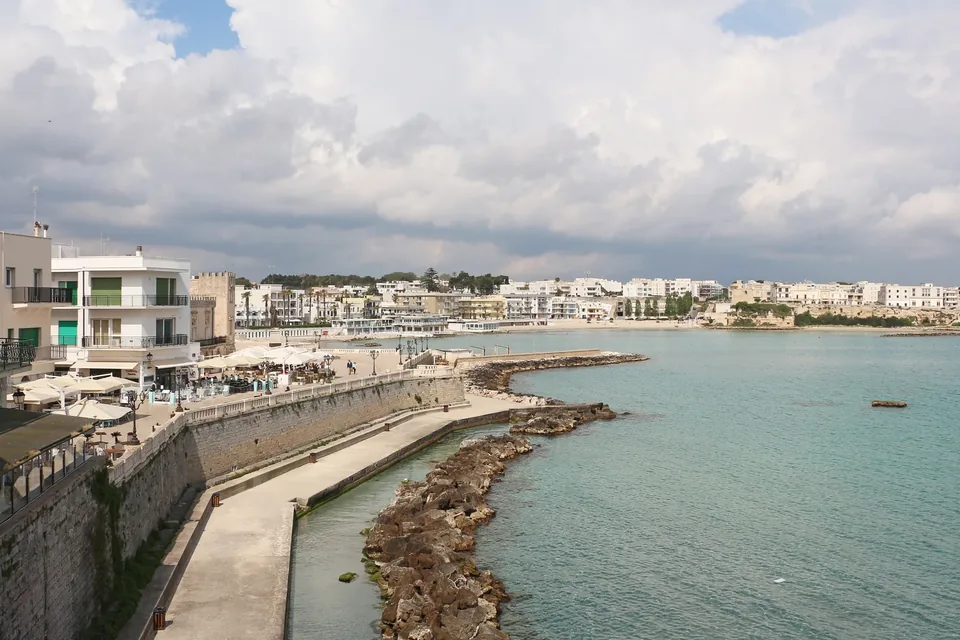
Otranto
The cathedral, Adriatic landscape and time to explore the historic centre.
Read the guide →Photo: Bernard Gagnon / Wikimedia Commons — CC0 · Resized and converted to WebP.

Sources
- Arcidiocesi di Otranto - La Cattedrale
- Mosaico di Otranto (Arcidiocesi di Otranto) - Il tessellatum idruntino
- Mosaico di Otranto (Arcidiocesi di Otranto) - La cripta
- Italia.it - Otranto, borgo in Puglia: cosa vedere
- Arcidiocesi di Otranto - La storia dei Santi Martiri di Otranto
- Arcidiocesi di Otranto - Santi Martiri di Otranto, patroni dell'Arcidiocesi
- Arcidiocesi di Otranto - Santi Martiri di Otranto: programma dei festeggiamenti
- Comune di Otranto - Santi Martiri di Otranto
- Dicastero delle Cause dei Santi - Antonio Primaldo e compagni
- Mosaico di Otranto - Prenota la tua visita