Why go
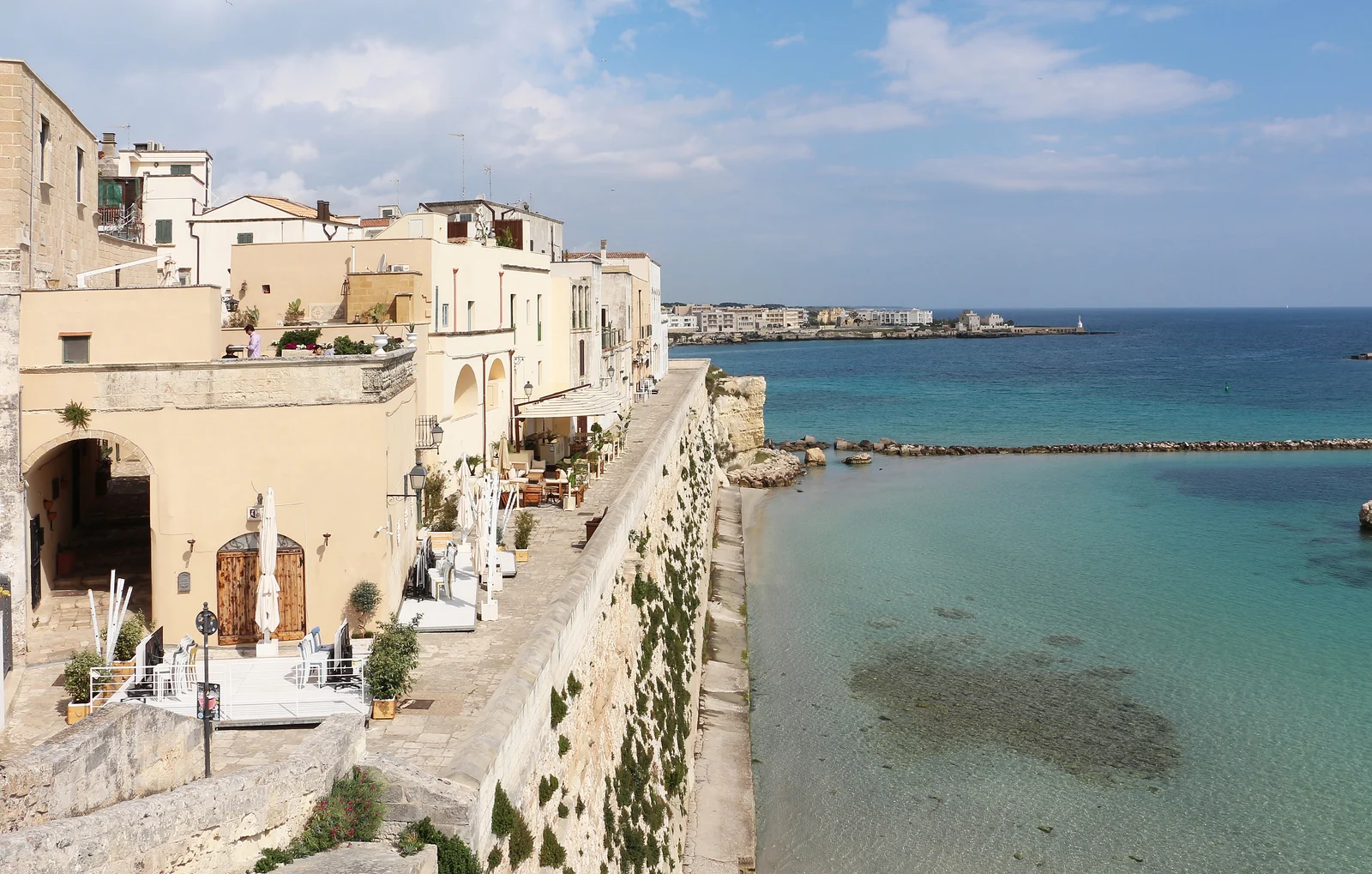
Otranto is the easternmost point of the Italian peninsula, a seaside town enclosed by walls and facing the Adriatic. The municipality's tourism portal presents it as the Gateway to the East: a place where the pedestrian historic centre, the castle and the cathedral tell a long and layered story, and where the sea is just a few steps below the walls.
The first reason to come is the cathedral, with its great twelfth-century floor mosaic covering nave, transept and apse and telling the story of salvation. The second is the coast: to the north the sandy beaches of Alimini and the reserve's lakes, towards Santa Maria di Leuca the cliffs leading to the Punta Palascìa lighthouse and the rocky coves down to Porto Badisco.
The third is the pace. Otranto is explored on foot, inside the walls, between the Aragonese Castle, the small Byzantine church of San Pietro and the walkways overlooking the harbour. It is a place that combines a morning of art with a day by the sea, and it serves as the gateway to the coastal park that runs all the way to Santa Maria di Leuca.
The cathedral holds other records too. The Archdiocese describes the floor mosaic as one of the largest medieval stone pavements in Europe, a story 52 metres long; the cathedral has been a national monument since 1870 and a minor basilica since 12 July 1945. The castle gave its name to the first Gothic novel in history, Horace Walpole’s “The Castle of Otranto”, of 1764. The municipality’s tourism portal also notes that the historic centre holds the title of UNESCO messenger of peace site, linked to the memory of 1480 turned into a commitment to dialogue between faiths and cultures, and that Otranto is among the Borghi più belli d’Italia, the most beautiful villages of Italy.
Capo d’Otranto, with the Punta Palascìa lighthouse, is by convention the point dividing the Ionian from the Adriatic, the park’s profile notes; on the clearest days, the municipality’s portal adds, the coasts of Albania and Greece can be seen from there with the naked eye.
Sources: Discover Otranto (portale turistico del Comune) — Monumenti · Arcidiocesi di Otranto — Cattedrale · Discover Otranto (portale turistico del Comune) — Spiagge · Viaggiare in Puglia — Salento in bici · Arcidiocesi di Otranto, Mosaico di Otranto — il pavimento musivo della Basilica Cattedrale · Discover Otranto (portale turistico ufficiale del Comune di Otranto) — Il Castello Aragonese · Parco naturale regionale Costa Otranto - Santa Maria di Leuca e Bosco di Tricase — I comuni del Parco: Otranto · Discover Otranto (portale turistico ufficiale del Comune di Otranto) — Riconoscimenti · Discover Otranto (portale turistico ufficiale del Comune di Otranto) — Faro di Punta Palascìa
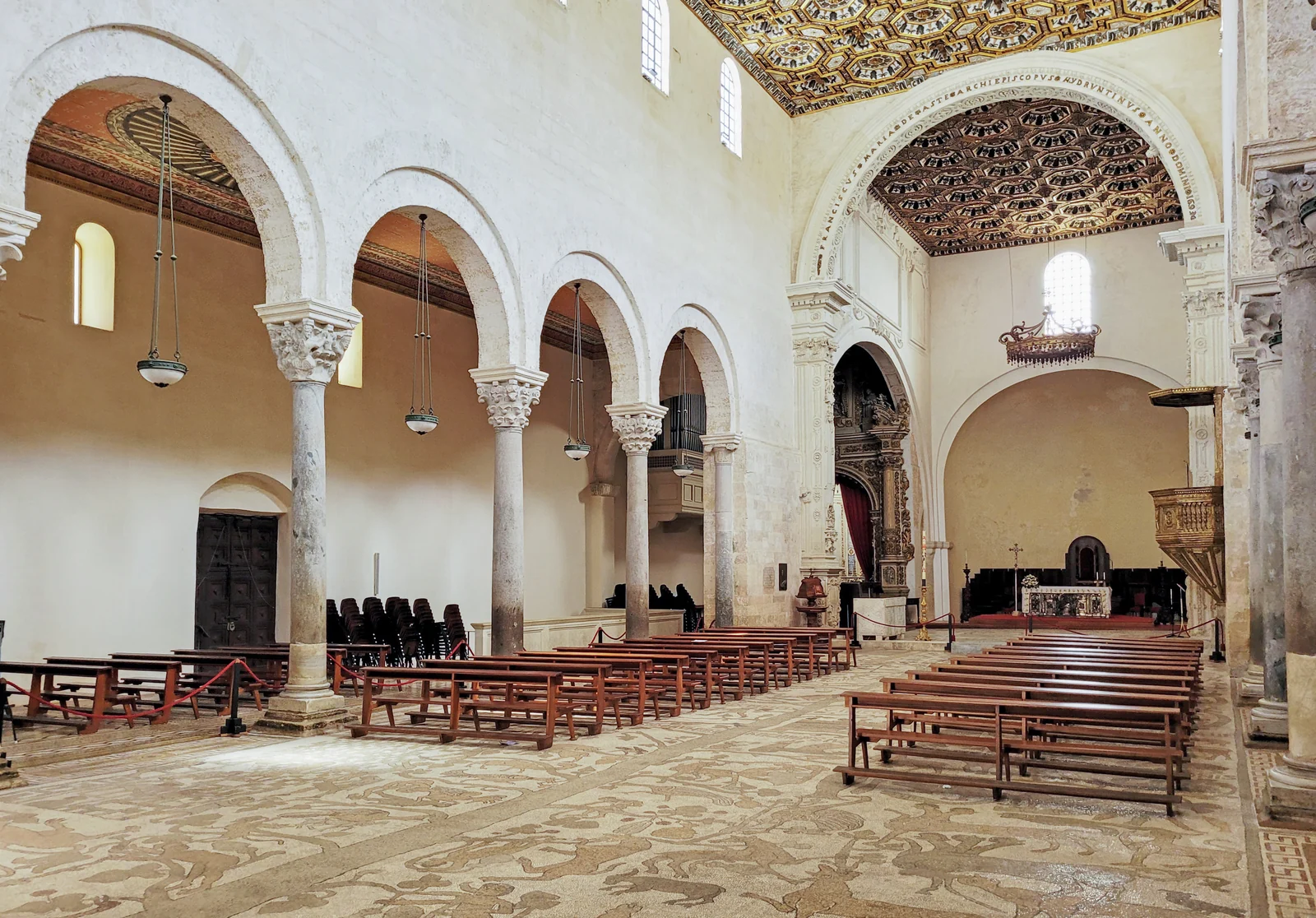
Photo: Bernard Gagnon / Wikimedia Commons — CC0 · Resized and converted to WebP.
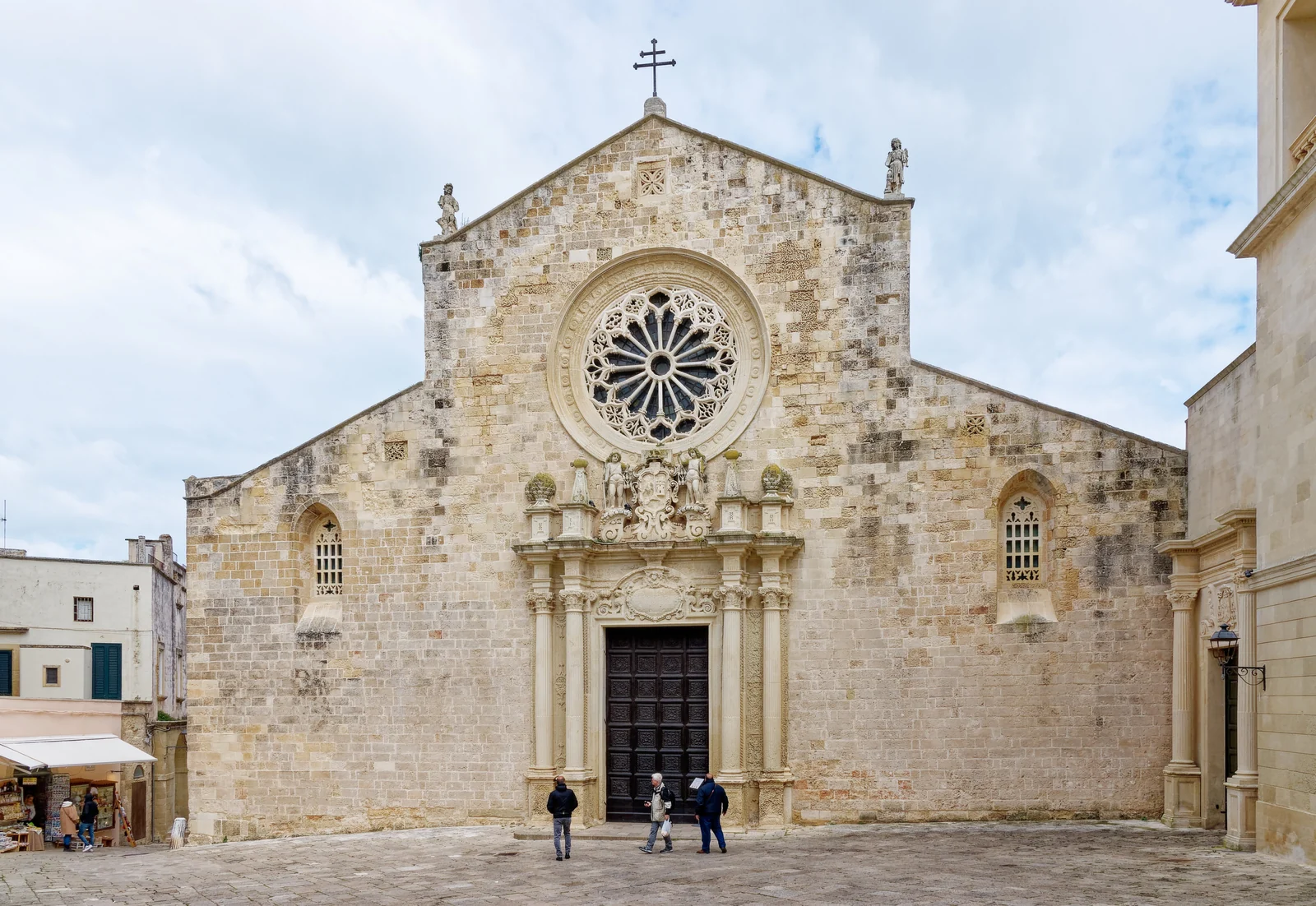
Photo: Holger Uwe Schmitt / Wikimedia Commons — CC BY-SA 4.0 · Resized and converted to WebP.
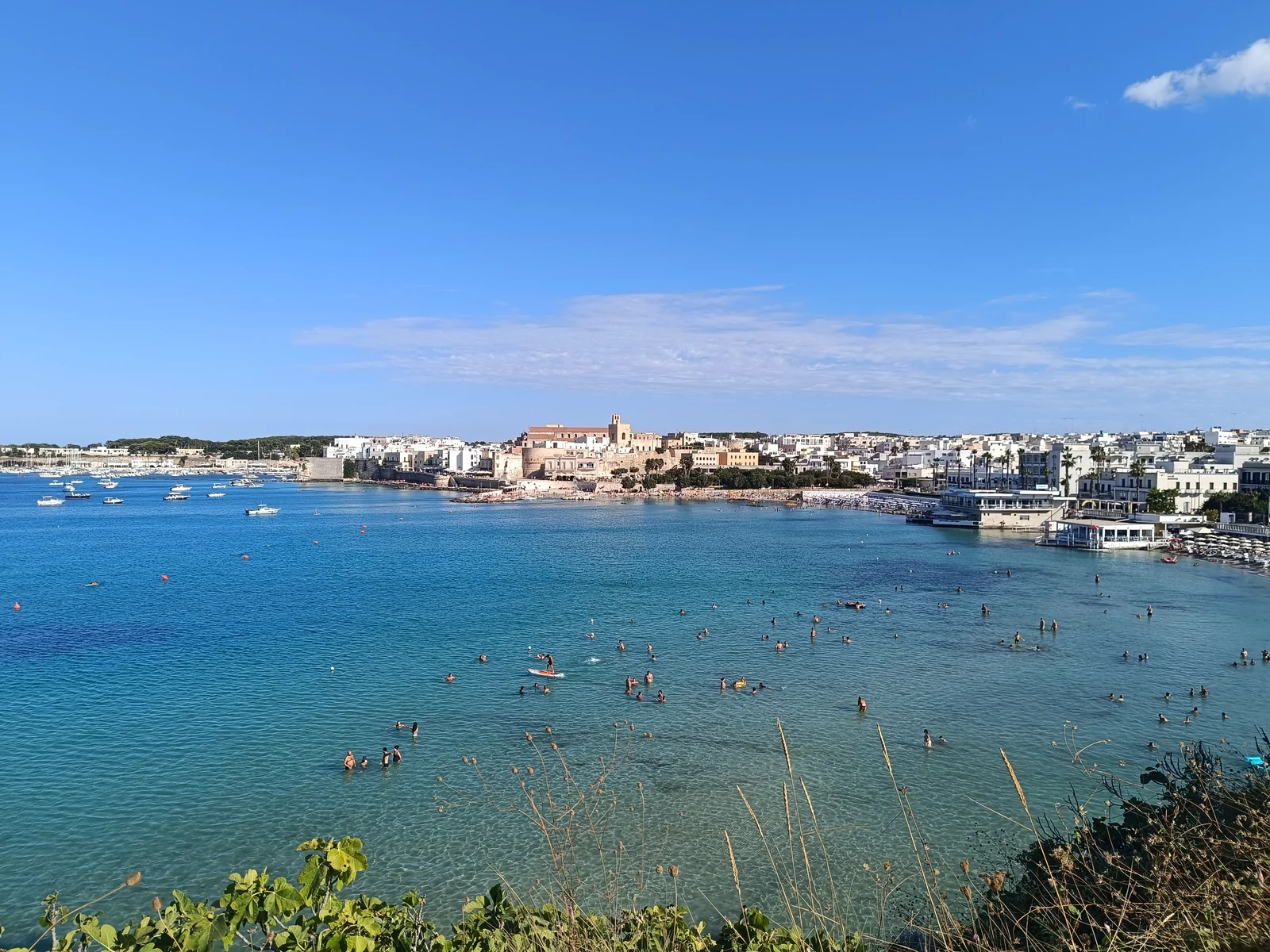
Photo: Hotolmo22 / Wikimedia Commons — CC0 · Resized and converted to WebP.
History
The cathedral was built between 1080 and 1088 on older Messapian, Roman and early Christian layers, and consecrated on 1 August 1088. In 1163 Archbishop Jonathan commissioned the floor mosaic, executed by the priest Pantaleone until 1165. In the thirteenth century the interior was entirely frescoed.
The year that marked the town's memory is 1480. During the Ottoman siege and occupation of Otranto, which lasted until 1481, the cathedral was turned into a mosque and the frescoes were destroyed; many inhabitants were killed on the Minerva hill and are venerated as martyrs of the faith. The Archdiocese recalls that Antonio Primaldo and his companions were proclaimed saints by Pope Francis on 12 May 2013, and that since 1482 their remains have been kept in a chapel of the cathedral.
After the liberation, the troops of Alfonso of Aragon rebuilt the façade and the town was fortified: the Aragonese Castle and the walls, with the Alfonsina Gate, date from this period and still form the defensive system enclosing the historic centre. In the seventeenth and eighteenth centuries the cathedral received a coffered ceiling and new altars; twentieth-century restorations brought the mosaic back to light and, beneath it, late Roman remains and Messapian tombs.
Before the cathedral there was the harbour. The regional nature park’s profile recalls that Otranto was a Messapian town and then a Roman municipium named Hydruntum, one of the most important seafaring towns of Puglia, with workshops producing purple dye and textiles and a Jewish community; in the Byzantine period its harbour outgrew that of Brindisi. In the second half of the twelfth century, according to the travel diary of Benjamin of Tudela quoted by the park, 500 Jewish families lived in the town. The Archdiocese describes the Otranto of those centuries as the easternmost port of the peninsula, busy with pilgrims, merchants and adventurers bound for the Levant and the Holy Land: Greek land under Byzantium, with the Normans, in the eleventh century, it became a meeting place of Latin and Greek culture.
Two kilometres from the town, at Palascìa, stood the Basilian monastery of San Nicola di Casole, founded in the eleventh century: in the twelfth, the Archdiocese writes, it was the most active cultural centre of the Terra d’Otranto, with a library and a scriptorium among the most famous in the West, and Pantaleone himself may have trained there. In 1095, according to the park’s profile, the crusaders leaving under Bohemond of Hauteville were blessed in the cathedral.
For 1480 the park adds the dates of the siege: after fifteen days the troops of Mehmed II took the town on 11 August, and on 14 August eight hundred men were beheaded for refusing to renounce their faith. The Casole monastery was half destroyed, and the codices of its library are now in libraries across Italy and Europe. The castle visited today was designed by Ciro Ciri with Francesco di Giorgio Martini and built between 1485 and 1498, according to the Ministry of Culture; in 1578 the spear-shaped bastion facing the sea was added. Later Ottoman attacks, in 1535, 1537, 1614 and 1644, were repelled.
In the nineteenth century the countryside of the Valle dell’Idro and the Alimini lakes was malarial: the first reclamation plan was drawn up in 1868 by the civil engineers of Bari. On the reclaimed land Otranto became one of the main producers of barbatelle, the rooted cuttings of American vine stock, and in 1971 the first holiday village in Puglia opened here. In the Orte area bauxite was quarried and shipped from the harbour to the plants of Porto Marghera; the quarry was abandoned between 1976 and 1978.
Sources: Arcidiocesi di Otranto — Cattedrale · Arcidiocesi di Otranto — I Santi Martiri di Otranto · Discover Otranto (portale turistico del Comune) — Monumenti · Parco naturale regionale Costa Otranto - Santa Maria di Leuca e Bosco di Tricase — I comuni del Parco: Otranto · Arcidiocesi di Otranto, Mosaico di Otranto — Otranto nel Medioevo, fra Occidente e Oriente · Arcidiocesi di Otranto, Mosaico di Otranto — Monastero di San Nicola di Casole · Ministero della cultura, Luoghi della cultura — Castello Aragonese di Otranto (scheda aggiornata al 2021)
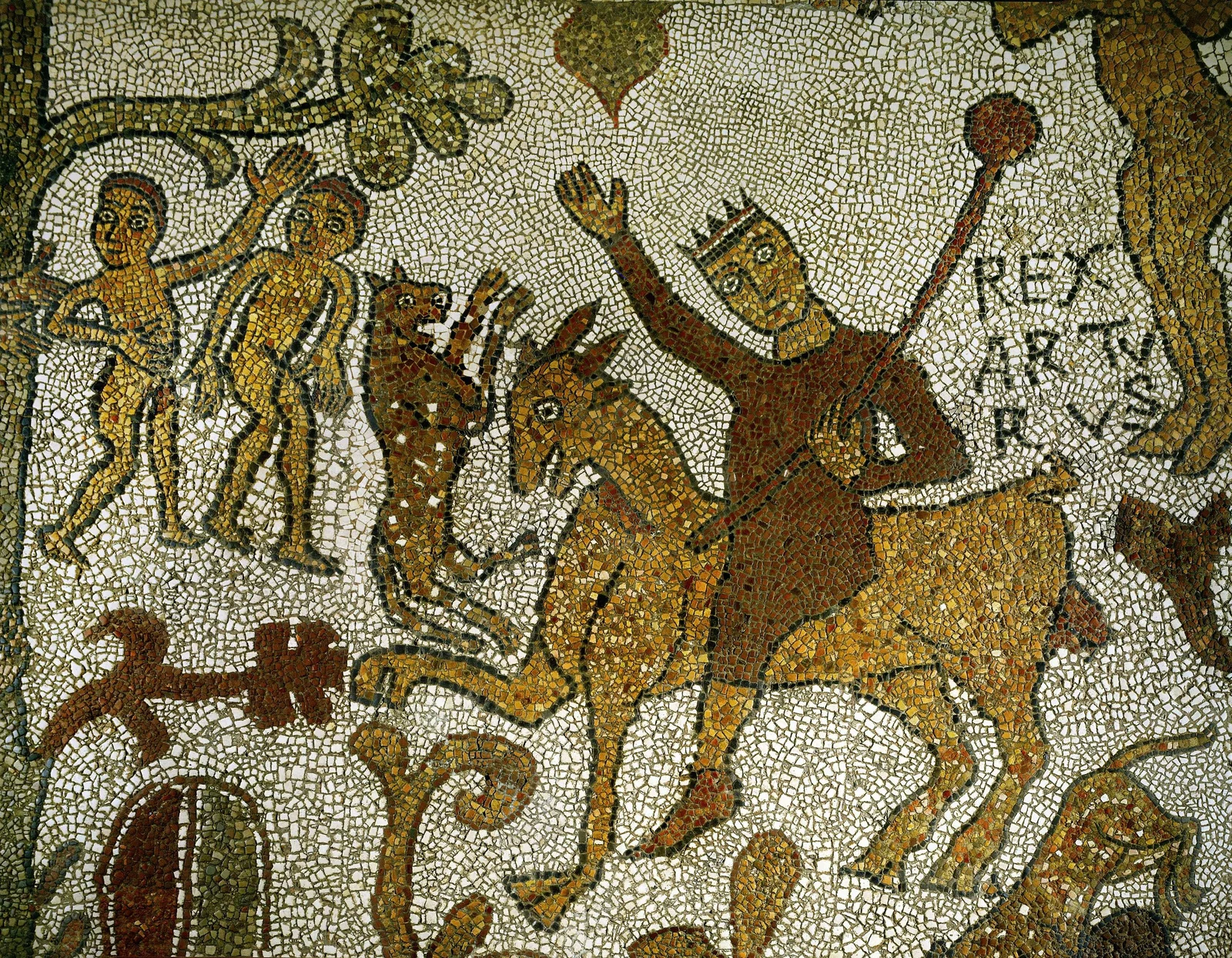
Photo: Pantaleone / Wikimedia Commons — CC BY-SA 4.0 · Resized and converted to WebP.
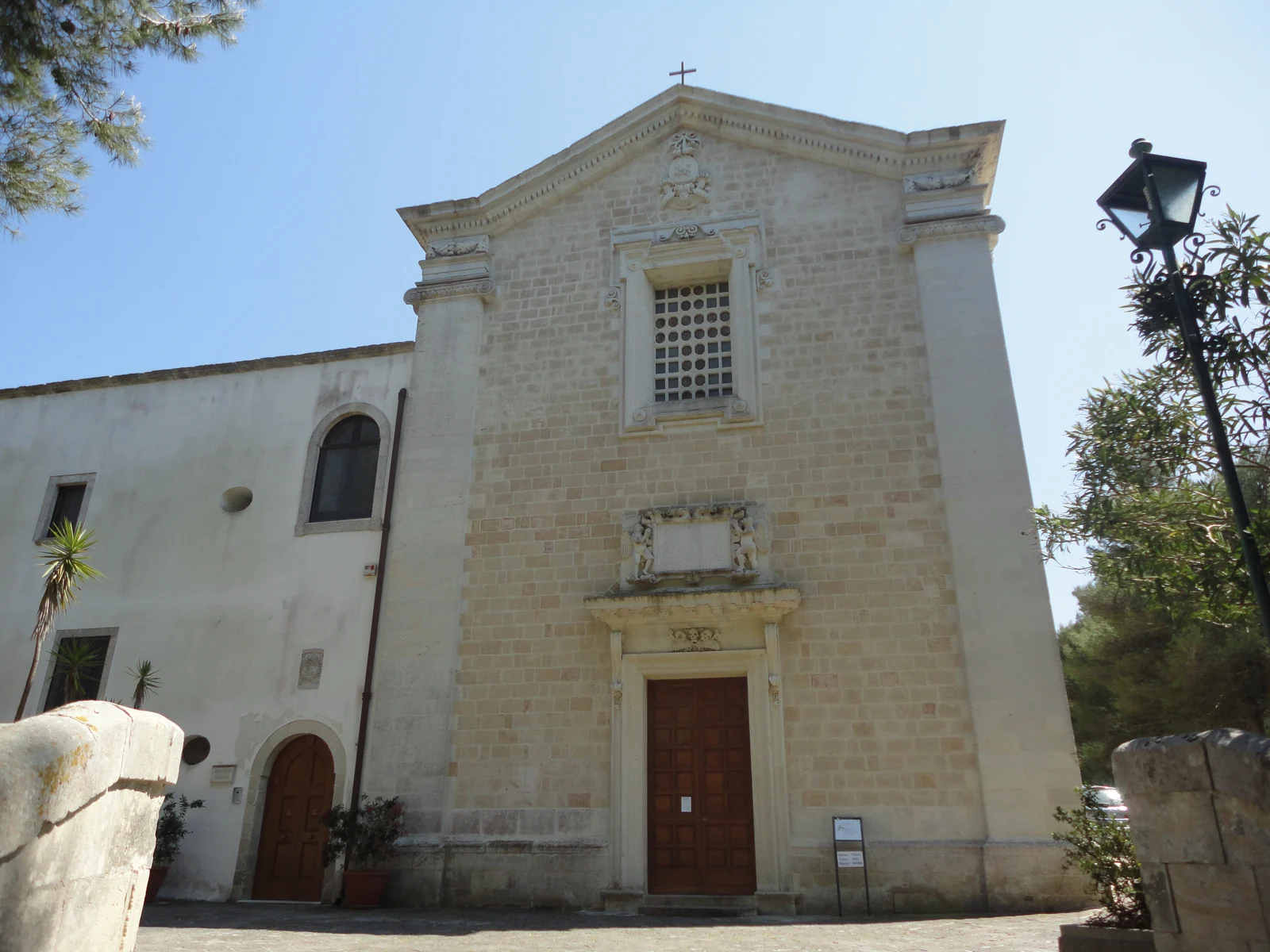
Photo: Lupiae / Wikimedia Commons — CC BY-SA 3.0 · Resized and converted to WebP.
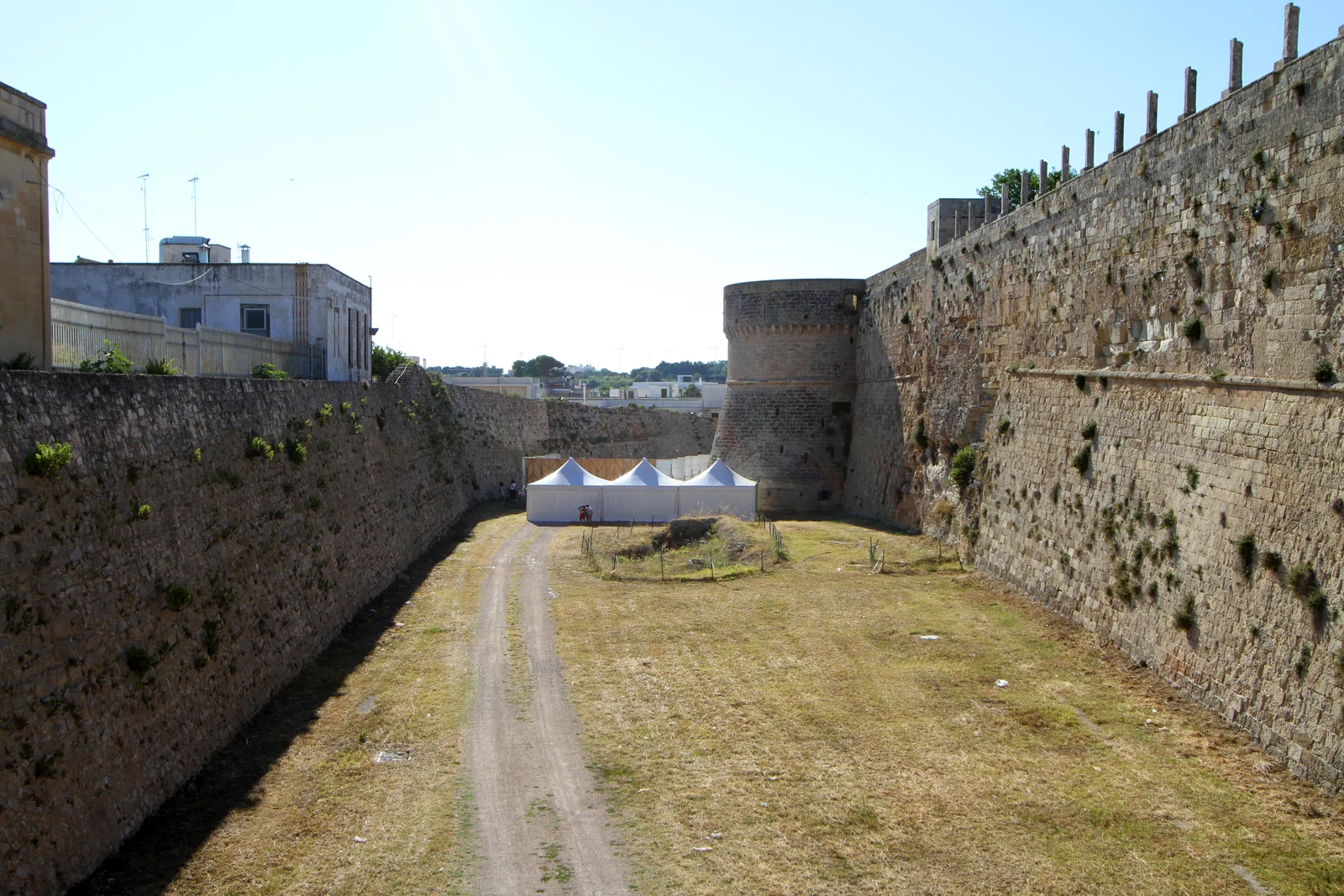
Photo: Carlo Pelagalli / Wikimedia Commons — CC BY-SA 3.0 · Resized and converted to WebP.
What to see
The cathedral has a Latin-cross plan, with three naves divided by fourteen marble columns, three apses and a timber-truss roof. The floor mosaic, the reason for the visit, is best read by first taking in the whole and then a few details; the chapel of the Holy Martyrs holds the remains of those who died in 1480. The crypt lies beneath the presbytery.
The Archdiocese also presents the Diocesan Museum in Palazzo Lopez, with textiles, silverware and stonework: altar elements in local stone, mosaic fragments found during the cathedral excavations and the stele of Glika, evidence of a Jewish presence in the ancient community. These are objects on a different scale, set alongside the great mosaic.
The Aragonese Castle, in Piazza Castello, is today a cultural venue hosting exhibitions and events; the municipality states that it complies with accessibility requirements concerning physical barriers. The tourism portal also points to the walls and the Alfonsina Gate, the megalithic walls, the small Byzantine church of San Pietro, the Monument to the Heroes and Martyrs, the Torre del Serpe, emblem of the coast, and along the coast towards Porto Badisco the Grotta dei Cervi and the Punta Palascìa lighthouse.
The mosaic reads like a book. The municipality’s portal lists its themes: a great tree of life borne by two elephants, on whose branches appear King Arthur, Alexander the Great carried skywards by two griffins, Cain and Abel, the Tower of Babel, the months and the zodiac, Diana and the wounded stag; in the presbytery Adam and Eve, ten wheels with animals and the medallions with the Queen of Sheba and King Solomon. The tesserae are of very hard local limestone. The Archdiocese recalls that works in 1747 covered a few square metres of the mosaic and that the nave was restored by the heritage superintendency between 1986 and 1992. To visit, the Archdiocese’s website devoted to the mosaic asks for a booking by email, with a separate procedure for groups of more than eight people.
The crypt, older than the eleventh century, recalls in miniature the Yerebatan cistern of Constantinople: it rises more than a metre above street level, is lit by five windows and has forty-eight cross-vaulted bays carried by forty-two monolithic columns and twenty-three half-columns, with capitals all different from one another, from late antiquity to early Romanesque. Of the wall paintings, destroyed in 1480, the central apse keeps the Virgin Hodegetria of the eleventh century and Christ the Teacher of the thirteenth, with a few saints along the walls.
The church of San Pietro, in the heart of the historic centre, is among the oldest sacred buildings of the Archdiocese: a tradition links it to the landing of the apostle, other hypotheses date it between the eighth and the twelfth century. It has a Greek-cross plan, three naves with small apses and frescoes from the tenth to the sixteenth century; it kept the Greek rite until the eighteenth century and was consolidated and restored in 2012 and 2013. By the sea, on a tufa spur, stands the church of the Madonna dell’Altomare, rebuilt in 1744; on the Minerva hill the church of Santa Maria dei Martiri, begun in 1614 on the site of the massacre, holds a large painting by Lavinio Zoppo depicting the slaughter.
The municipality’s portal describes the castle’s interior: the deep moat on every side, crossed by a bridge, the entrance hall, the triangular room created by the mid-sixteenth-century enlargements, the chapel with the epitaph of Donna Teresa De Azevedo, who died in 1707, the underground passages unchanged since the late fifteenth century, the round towers with their circular gun rooms and the parapet walks. Above the entrance is the coat of arms of Charles V. ISPRA’s directory reports an exhibition of finds at the castle and a 3D documentary reproducing the interior of the Grotta dei Cervi.
Sources: Arcidiocesi di Otranto — Cattedrale · Arcidiocesi di Otranto — I Santi Martiri di Otranto · Arcidiocesi Otranto — museo e patrimonio · Città di Otranto — Castello Aragonese · Discover Otranto (portale turistico del Comune) — Monumenti · Discover Otranto (portale turistico ufficiale del Comune di Otranto) — Cattedrale Santa Maria Annunziata e il mosaico · Arcidiocesi di Otranto, Mosaico di Otranto — Prenota la visita alla Cattedrale e al mosaico · Arcidiocesi di Otranto, Mosaico di Otranto — La cripta · Arcidiocesi di Otranto, Mosaico di Otranto — La chiesa bizantina di San Pietro · Discover Otranto (portale turistico ufficiale del Comune di Otranto) — Chiesa di San Pietro · Parco naturale regionale Costa Otranto - Santa Maria di Leuca e Bosco di Tricase — I comuni del Parco: Otranto · Discover Otranto (portale turistico ufficiale del Comune di Otranto) — Il Castello Aragonese · Ministero della cultura, Luoghi della cultura — Castello Aragonese di Otranto (scheda aggiornata al 2021) · ISPRA, Repertorio dei musei italiani di scienze della Terra — Grotta dei Cervi
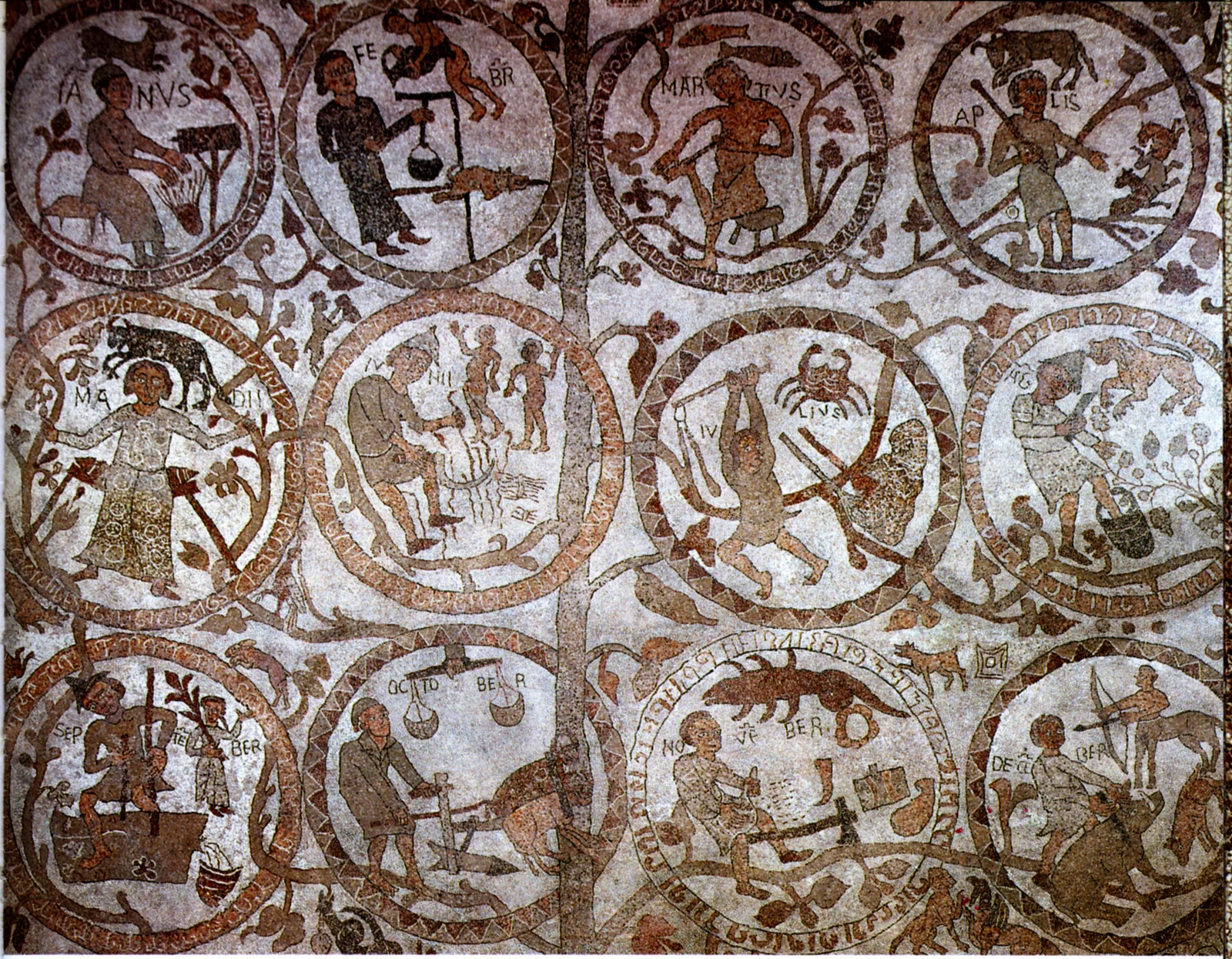
Photo: Framo / Wikimedia Commons — CC BY-SA 3.0 · Resized and converted to WebP.
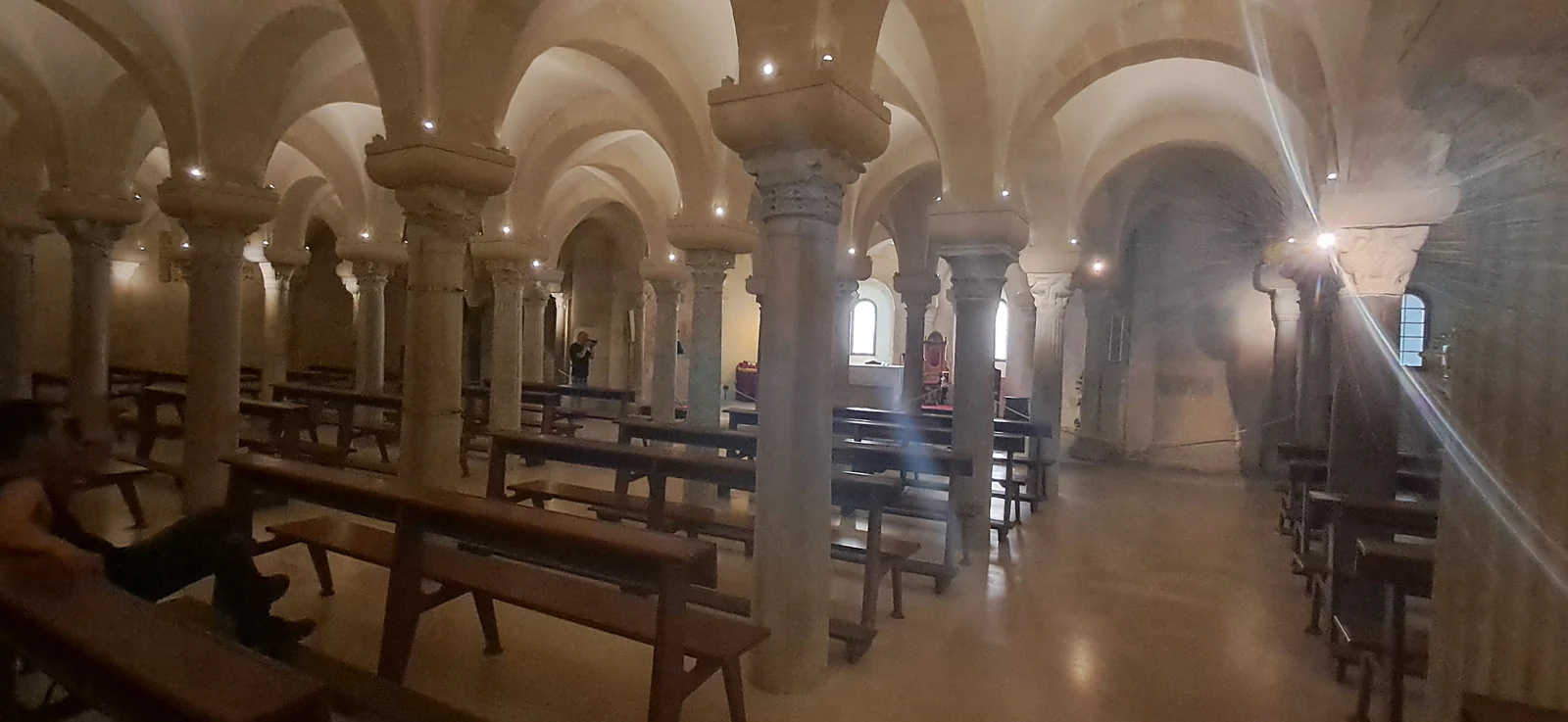
Photo: Bubici / Wikimedia Commons — CC BY-SA 4.0 · Resized and converted to WebP.
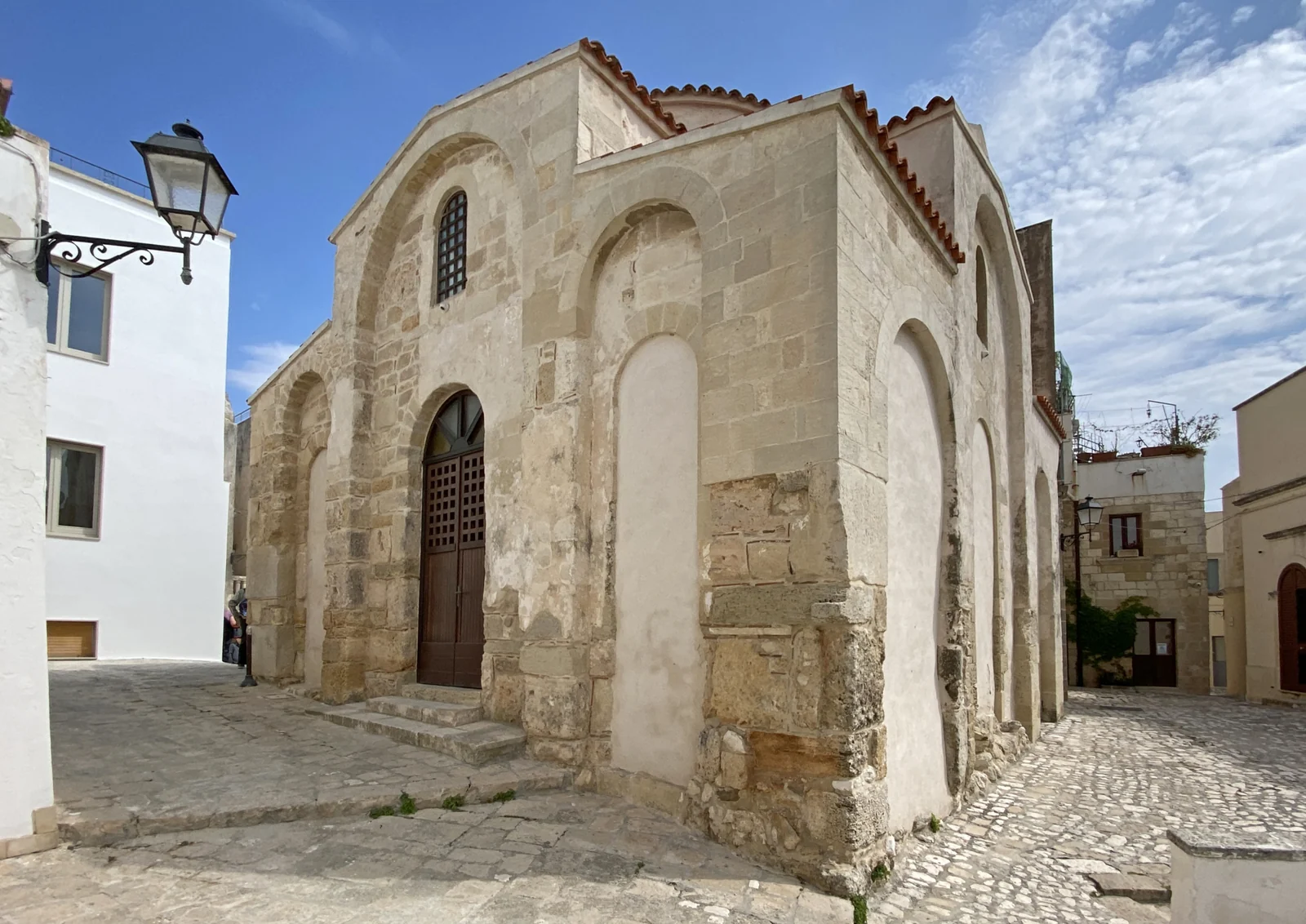
Photo: Bernard Gagnon / Wikimedia Commons — CC0 · Resized and converted to WebP.
Food and wine
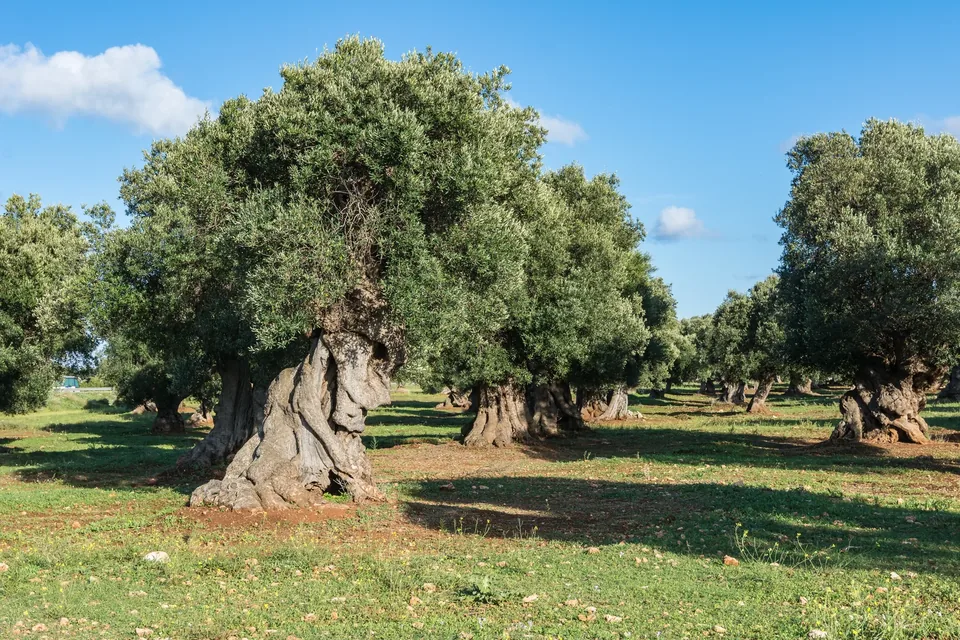
Otranto gives its name to an entire designation: the Terra d'Otranto PDO extra virgin olive oil, produced throughout the province of Lecce and in several towns of the Taranto and Brindisi provinces, mainly from the Cellina di Nardò and Ogliarola Leccese varieties. According to the designation's profile, the olive tree spread across Salento with the Messapians, and the olives must be picked by 15 November: in autumn the new oil can be seen in the mills of the surrounding area.
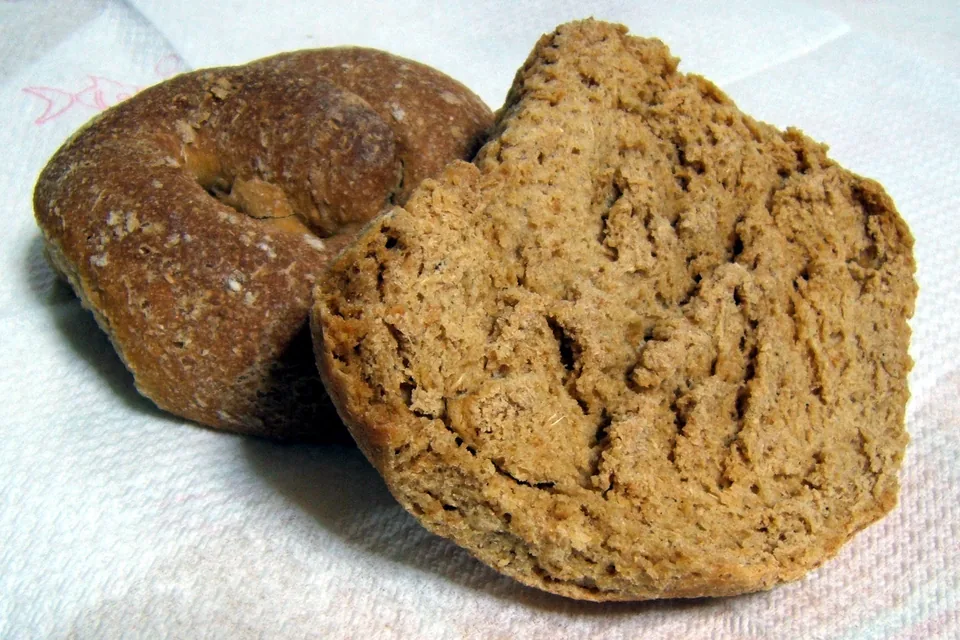
On the home table, oil goes with the frisella, a round barley or wheat bread baked twice: according to the Atlas of traditional Apulian products it is softened in water and dressed with tomato, fresh or hung, and extra virgin oil. Nearby, at Vitigliano in Santa Cesarea Terme, one of the traditional Salento peas protected as a Slow Food Presidium is grown, called quarantinu because the plant stays low.
The sea is the other half of the cuisine. In its food section the municipality's tourism portal lists seafood restaurants, shops selling local produce and wine bars with regional wines, both in the historic centre and along the coast: asking where the fish and the wine come from is the easiest way to find your bearings.
Sources: Qualigeo — Terra d'Otranto DOP · Atlante dei PAT di Puglia — Friselle di orzo e grano · Fondazione Slow Food — Piselli tradizionali salentini · Discover Otranto (portale turistico del Comune) — Scopri Otranto, quando andare
Things to do
Otranto's coast is varied. The municipality's tourism portal describes to the north the long sandy beach of Alimini, part of the Alimini Lakes nature reserve, and the Baia dei Turchi, within the protected oasis; further up is Frassanito, wide and sandy, popular with windsurfers and kitesurfers. Below the walls the town bay offers free beaches, lidos and easy rocks.
Beyond the town, towards Capo d'Otranto and Santa Maria di Leuca, the coast turns rocky: the Baia dell'Orte, between Otranto and the lighthouse, the coves and sea caves, and Porto Badisco, suited to snorkelling and diving. The landscape of the former bauxite quarry, with its contrasting colours, and the cliffs of Punta Palascìa are destinations for walks and photography.
The stretch from Otranto to Santa Maria di Leuca is protected by the Costa Otranto - Santa Maria di Leuca and Bosco di Tricase Regional Nature Park, whose website presents a network of trails and the park's hiking guides. In town, besides the cathedral visit, the castle hosts exhibitions and events through the year.
The park’s profile of Otranto lists the trails of the municipal area: from the bauxite quarry to Punta Palascìa, from Torre Sant’Emiliano to Porto Badisco, from Porto Badisco to the Èrgate coast, as well as the Cammino del Salento. The small lake of the former quarry formed from the water table struck during the digging, and marsh plants such as common reed have grown around it. The Punta Palascìa lighthouse, built in 1867 and inaugurated in 1869, stands on a cliff almost one hundred metres high; abandoned in the 1970s with automation, it has been restored, and the municipality’s portal lists it among the five Mediterranean lighthouses protected and promoted by the European Commission. The Ministry of Culture recorded its enhancement agreement with the municipality, together with that of the castle.
On the headland, about 35 metres above the sea, stands the ruin of the Torre del Serpe: a lighthouse already in Roman times according to some scholars, medieval according to others, later a watchtower linked to the fortifications of Otranto and to the Torre dell’Orte; it was last restored in 1997. The legend of the serpent that climbed the tower to drink the oil of the lamp, putting out the light that guided sailors, has entered the town’s coat of arms.
By bike, the municipality’s portal presents Ladriatica, the cycle route of eastern Salento: a loop of about 240 kilometres from Lecce, 95 per cent on tarmac, with one stage from Lecce to Otranto and one from Otranto to Santa Maria di Leuca, and a day loop starting from Otranto towards the easternmost land of Italy.
For families and accessibility, the same portal reports the Region of Puglia’s Granello d’oro award to two town beaches: the Gradoni, made accessible to everyone through the Abil Beach project, and the Riviera degli Haethey, for water sports; it also mentions the paediatricians’ Green Flag, given to seaside resorts suited to children and families.
Sources: Discover Otranto (portale turistico del Comune) — Spiagge · Parco naturale regionale Costa Otranto - Santa Maria di Leuca e Bosco di Tricase · Città di Otranto — Castello Aragonese · Viaggiare in Puglia — Salento in bici · Parco naturale regionale Costa Otranto - Santa Maria di Leuca e Bosco di Tricase — I comuni del Parco: Otranto · Discover Otranto (portale turistico ufficiale del Comune di Otranto) — Faro di Punta Palascìa · Ministero della cultura — Accordo di valorizzazione per il Castello Aragonese e il Faro di Punta Palascìa di Otranto · Discover Otranto (portale turistico ufficiale del Comune di Otranto) — Torre del Serpe · Discover Otranto (portale turistico ufficiale del Comune di Otranto) — Ladriatica, ciclovia del Salento orientale · Discover Otranto (portale turistico ufficiale del Comune di Otranto) — Riconoscimenti
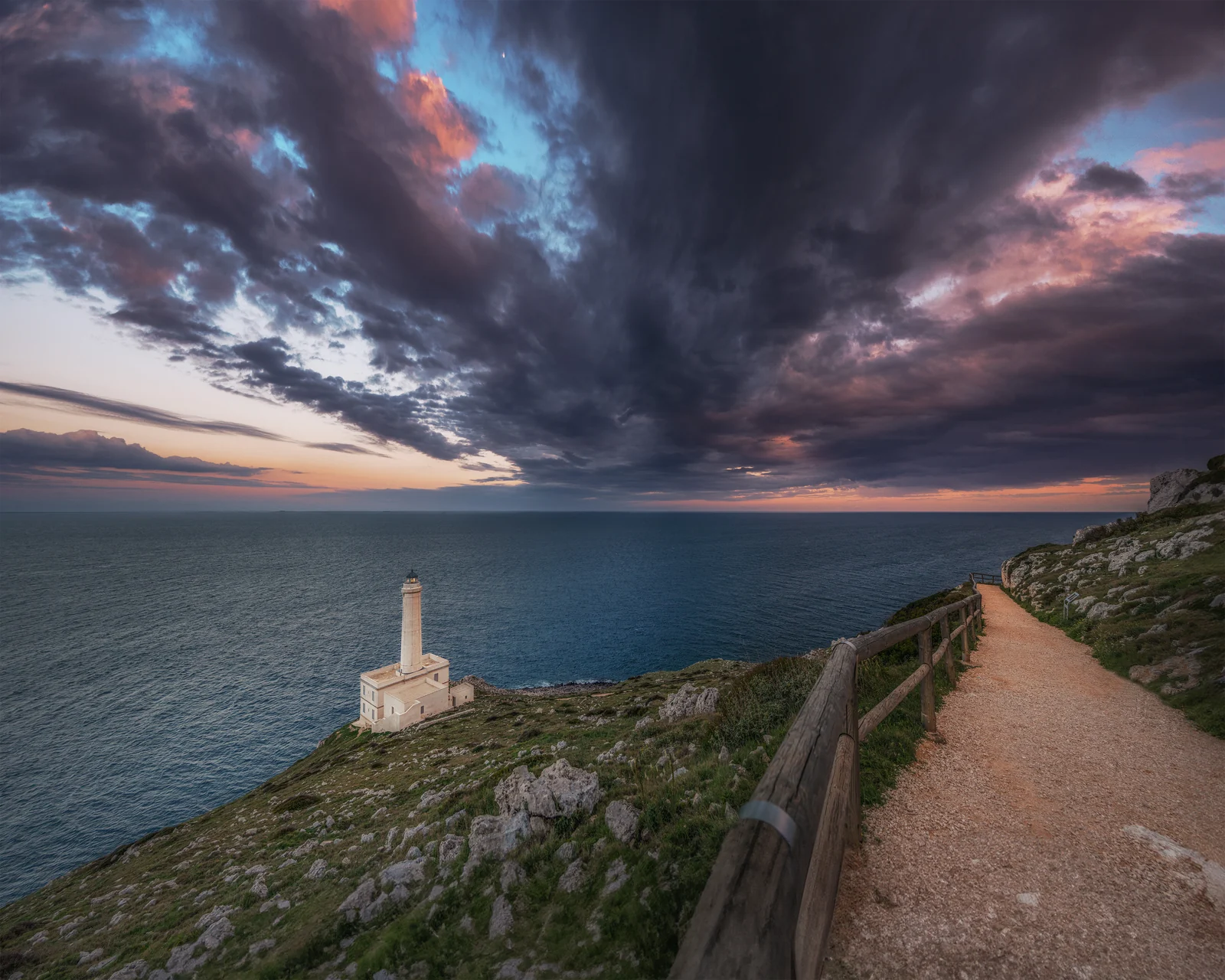
Photo: Abbrey82 / Wikimedia Commons — CC BY-SA 4.0 · Resized and converted to WebP.
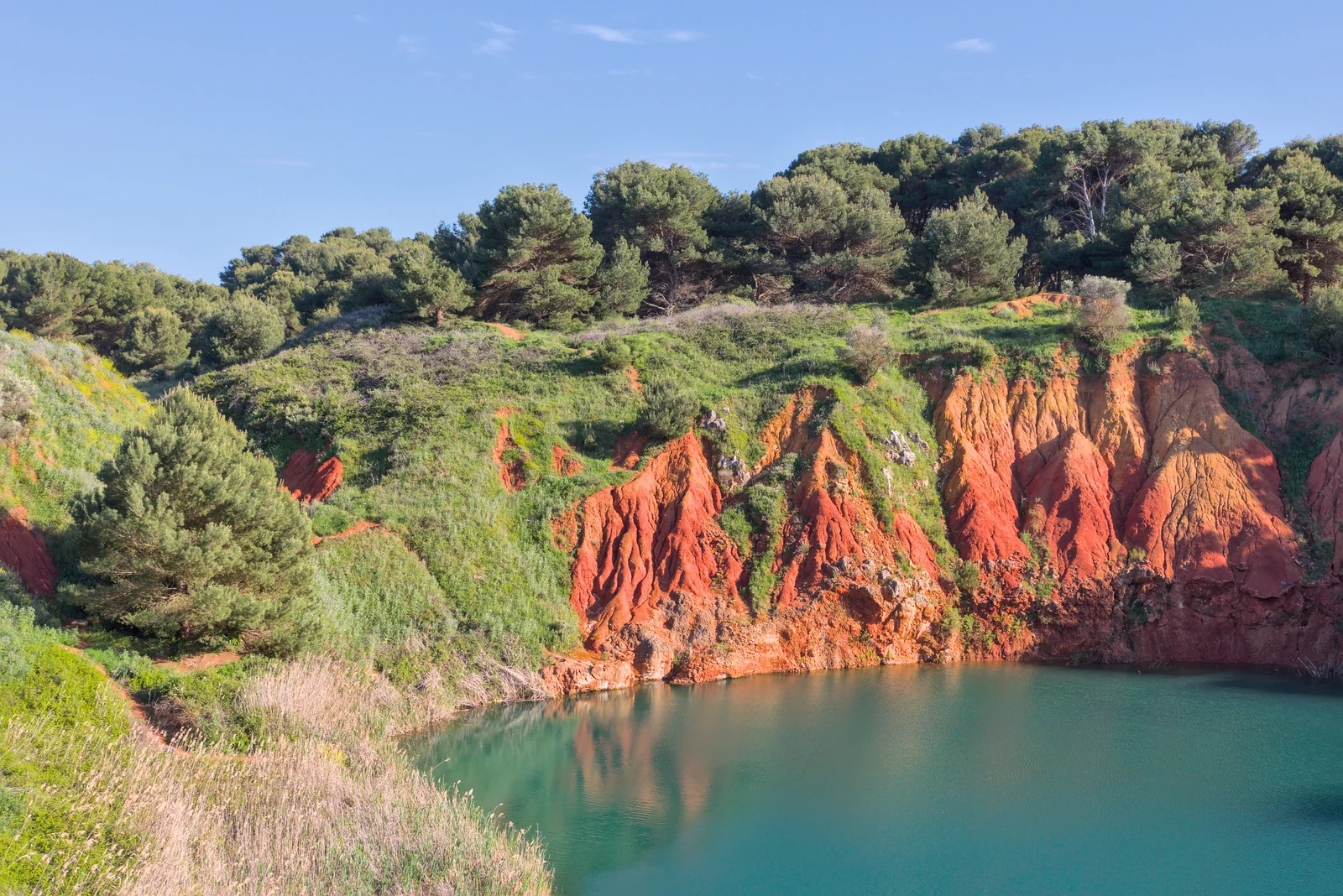
Photo: Benjamin Smith / Wikimedia Commons — CC BY-SA 4.0 · Resized and converted to WebP.
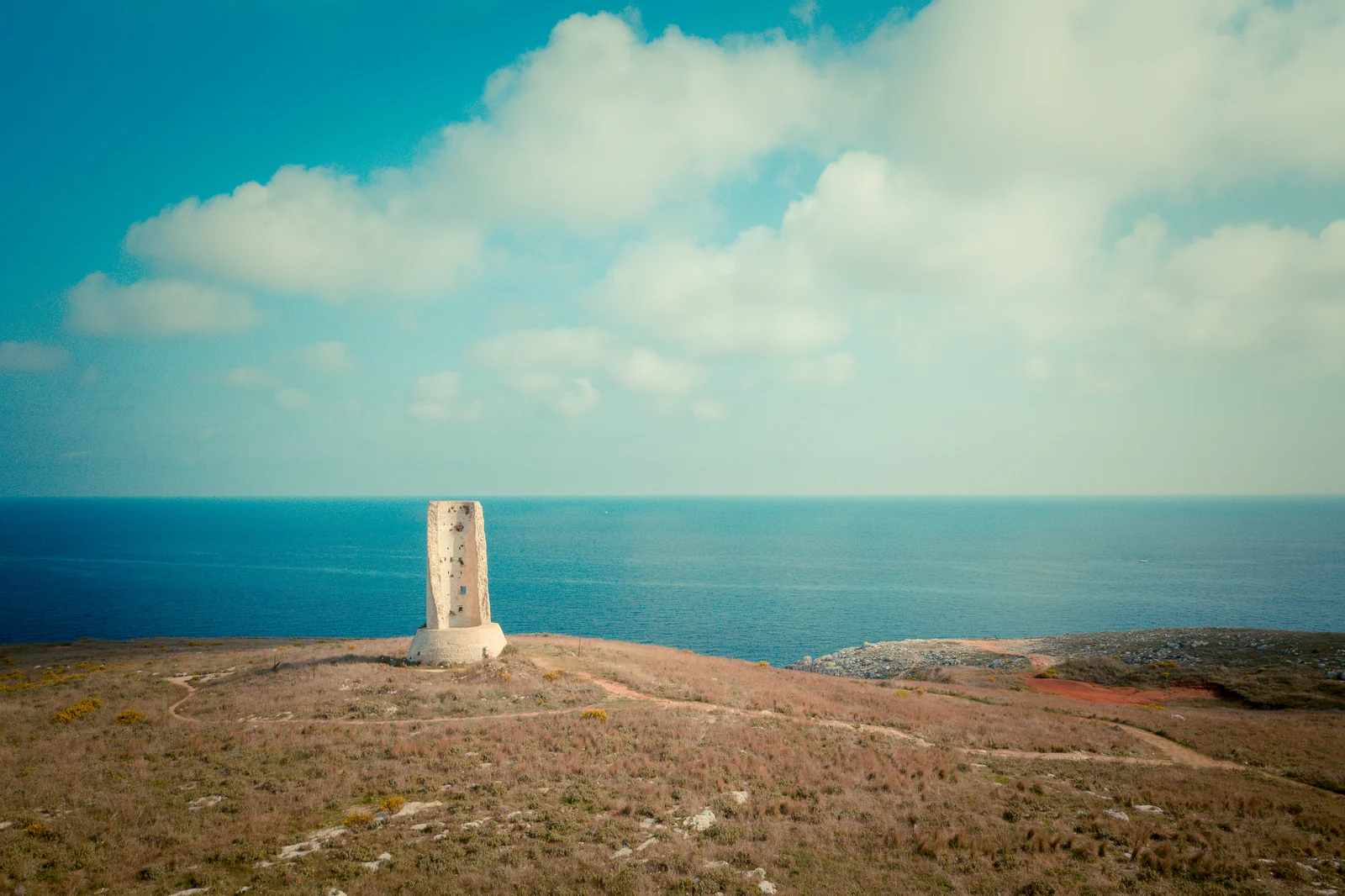
Photo: Paolo Damiano Dolce / Wikimedia Commons — CC BY-SA 4.0 · Resized and converted to WebP.
When to go
The municipality's tourism portal offers a very clear reading of the seasons. Spring, from March to May, brings longer days, moderate temperatures and blossom, with fewer visitors: it is the ideal time for the town and for walks along the coast. Summer, from June to August, is the season for the sea and water sports, with high temperatures, a lively atmosphere and more crowds.
Autumn, from September to November, still offers pleasant temperatures and fewer people: a good choice for those seeking rest and culture together. It is also the season of new oil, as Terra d'Otranto olives must be picked by mid-November. In winter the town remains alive for those who want to see the cathedral and its mosaic in peace.
The most heartfelt date is 14 August, when the Church of Otranto solemnly celebrates the memory of the Holy Martyrs: those travelling then find the town at the time of its most important feast. In summer local public transport is strengthened with dedicated lines towards Salento's resorts.
For summer 2026 the municipality’s portal gives the Salento in Bus service from 13 June to 13 September, linking Otranto, Lecce and Salento’s main resorts; Trenitalia’s Otranto Link, train plus bus from Lecce, is also a summer service. The castle and the Infopoint housed in it are listed by the same portal as open every day.
Sources: Discover Otranto (portale turistico del Comune) — Scopri Otranto, quando andare · Qualigeo — Terra d'Otranto DOP · Arcidiocesi di Otranto — I Santi Martiri di Otranto · Discover Otranto (portale turistico del Comune) — Raggiungere Otranto · Trenitalia — Otranto Link, treno e autobus dalla stazione di Lecce (pagina senza data) · Discover Otranto (portale turistico ufficiale del Comune di Otranto) — Il Castello Aragonese · Discover Otranto (portale turistico del Comune) — Infopoint
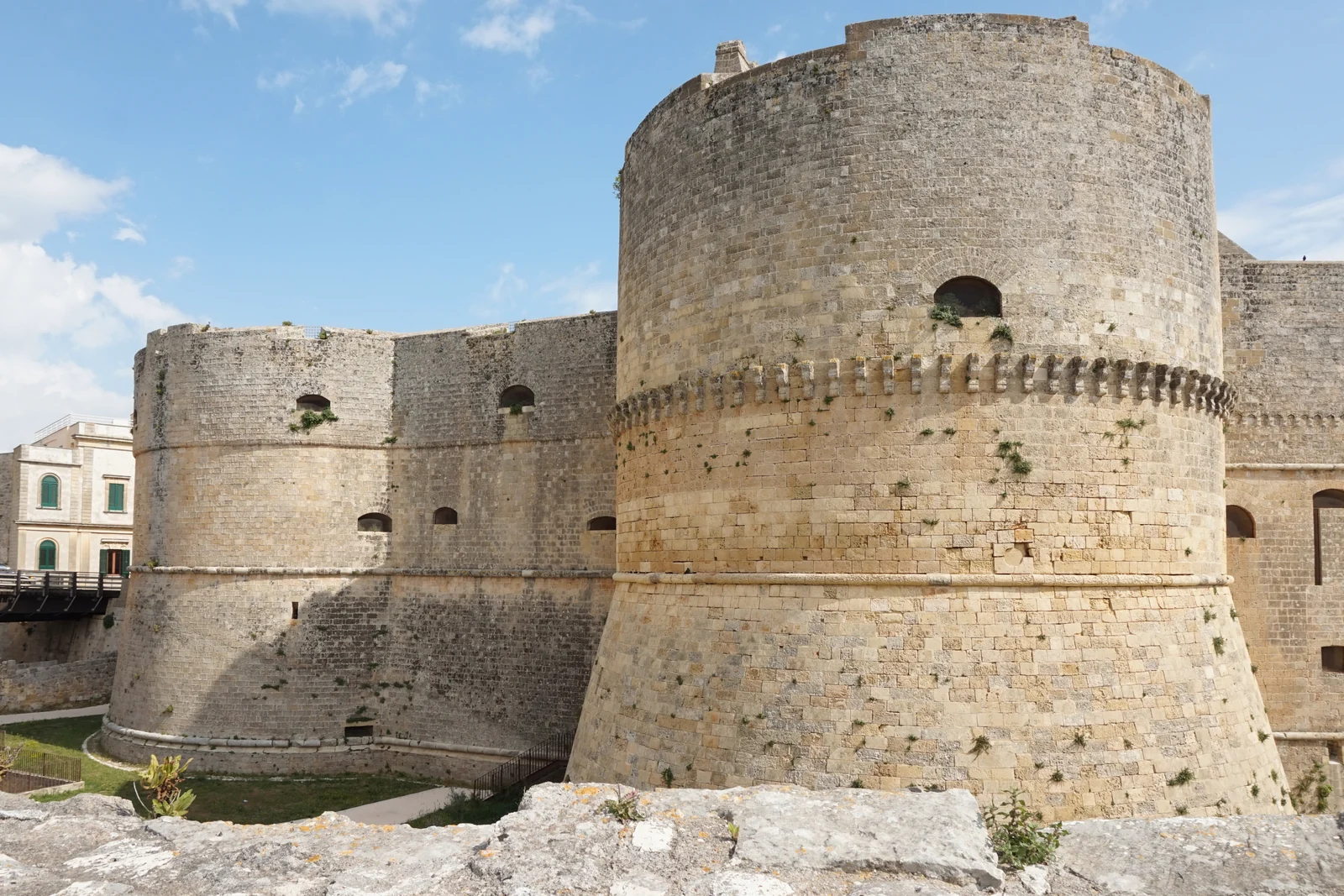
Photo: Bernard Gagnon / Wikimedia Commons — CC0 · Resized and converted to WebP.
Getting there and around
The municipality's tourism portal sums up the options. By train, Lecce station is the hub where long-distance national services arrive; from there you continue on the Ferrovie del Sud Est network, usually changing at Maglie, or with the integrated train-plus-bus or regional-train solutions sold by Trenitalia through to Otranto.
By air, the airport to consider when planning your arrival is Brindisi; from Bari you reach Lecce by coach or train and continue as above. By car, from Lecce follow the signs for Maglie and then the turn-off for Otranto: the route is just under fifty kilometres. In summer a seasonal bus service links Otranto with Lecce and Salento's main resorts.
The historic centre is protected by limited-traffic zones and pedestrian areas, and the portal points to car parks just outside the old town: it is best to leave the car and walk. For the rocky coast in the direction of Leuca, towards the lighthouse and Porto Badisco, you need your own vehicle or an organised excursion; the park's trails allow some stretches to be covered on foot.
The municipality’s portal gives the times: on the local FSE lines 6 and 7 the journey from Lecce takes about ninety minutes, usually with a change at Maglie; by car it takes 35-40 minutes from Lecce and about two and a half hours from Bari, the last stretch on the SP 87. Trenitalia’s Otranto Link sells a single train-plus-bus ticket: the bus leaves near Lecce station, at Via Don Bosco on the corner of Via Oronzo Quarta, and calls at San Foca, Roca, Torre dell’Orso, Sant’Andrea, the Alimini lakes and Torre Santo Stefano before Otranto; Trenitalia points out that train and bus remain separate contracts of carriage.
Useful numbers published by the municipality’s portal: harbour office +39 0836 801073, sea rescue 1530, out-of-hours doctor and outpatient clinic +39 0836 801676, municipal police +39 0836 801735, emergencies 112, fire brigade 115. The castle answers on +39 0836 212745, the Infopoint on +39 0836 212747. The town hall is at Piazza De Gasperi 1, and the citizens’ office has the free number +39 0836 871301.
Sources: Discover Otranto (portale turistico del Comune) — Raggiungere Otranto · RFI — Stazione di Lecce · Parco naturale regionale Costa Otranto - Santa Maria di Leuca e Bosco di Tricase · Trenitalia — Otranto Link, treno e autobus dalla stazione di Lecce (pagina senza data) · Discover Otranto (portale turistico ufficiale del Comune di Otranto) — Contatti utili · Città di Otranto — Castello Aragonese · Discover Otranto (portale turistico del Comune) — Infopoint · Città di Otranto — Luoghi (sede municipale e contatti dell’URP)
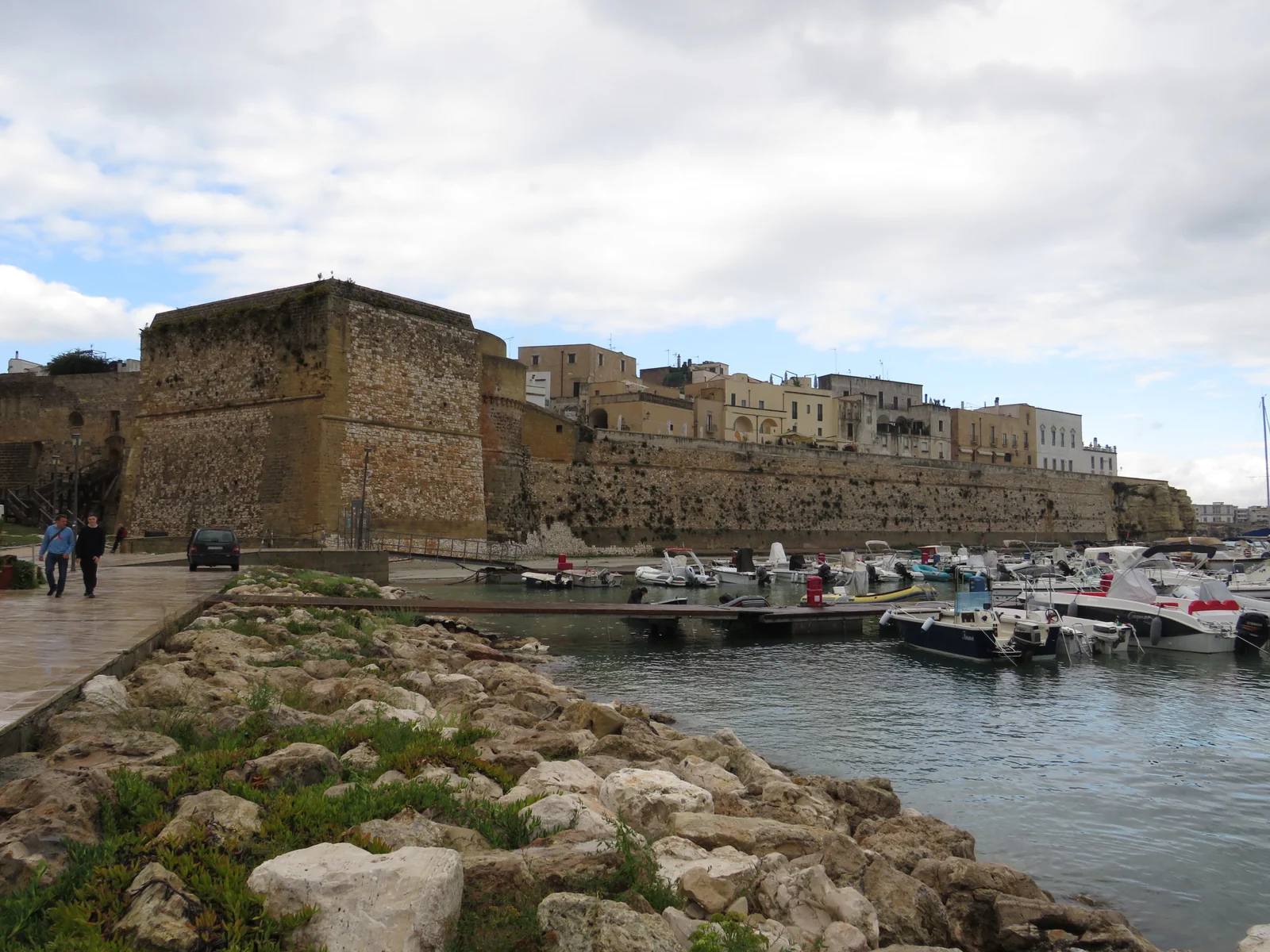
Photo: Enric / Wikimedia Commons — CC BY-SA 4.0 · Resized and converted to WebP.
Where to stay
The municipality's tourism portal lists accommodation by type and by area, and the range is wide: guest rooms, B&Bs, holiday homes, hotels, resorts, holiday villages, campsites, agriturismi and masserie. The areas listed range from the historic centre to Alimini, from the Baia dei Turchi to Frassanito, from Porto Badisco to the Palascìa area, as far as Torre Sant'Andrea and the inland districts.
Staying in the historic centre or right by the walls means having the cathedral, the castle and the seafront a few steps away and enjoying the town in the evening, when the pedestrian streets come alive; the portal notes that many places in the centre are a short distance from the beaches. Families looking mainly for the sea may prefer the Alimini and Frassanito areas, with sandy beaches and facilities.
Countryside masserie and agriturismi suit those travelling by car who want to combine the coast with inland villages such as Martano and the Grecìa Salentina. For orientation, the Infopoint in the Aragonese Castle provides tourist information.
Sources: Discover Otranto (portale turistico del Comune) — Soggiorna · Discover Otranto (portale turistico del Comune) — Spiagge · Discover Otranto (portale turistico del Comune) — Infopoint
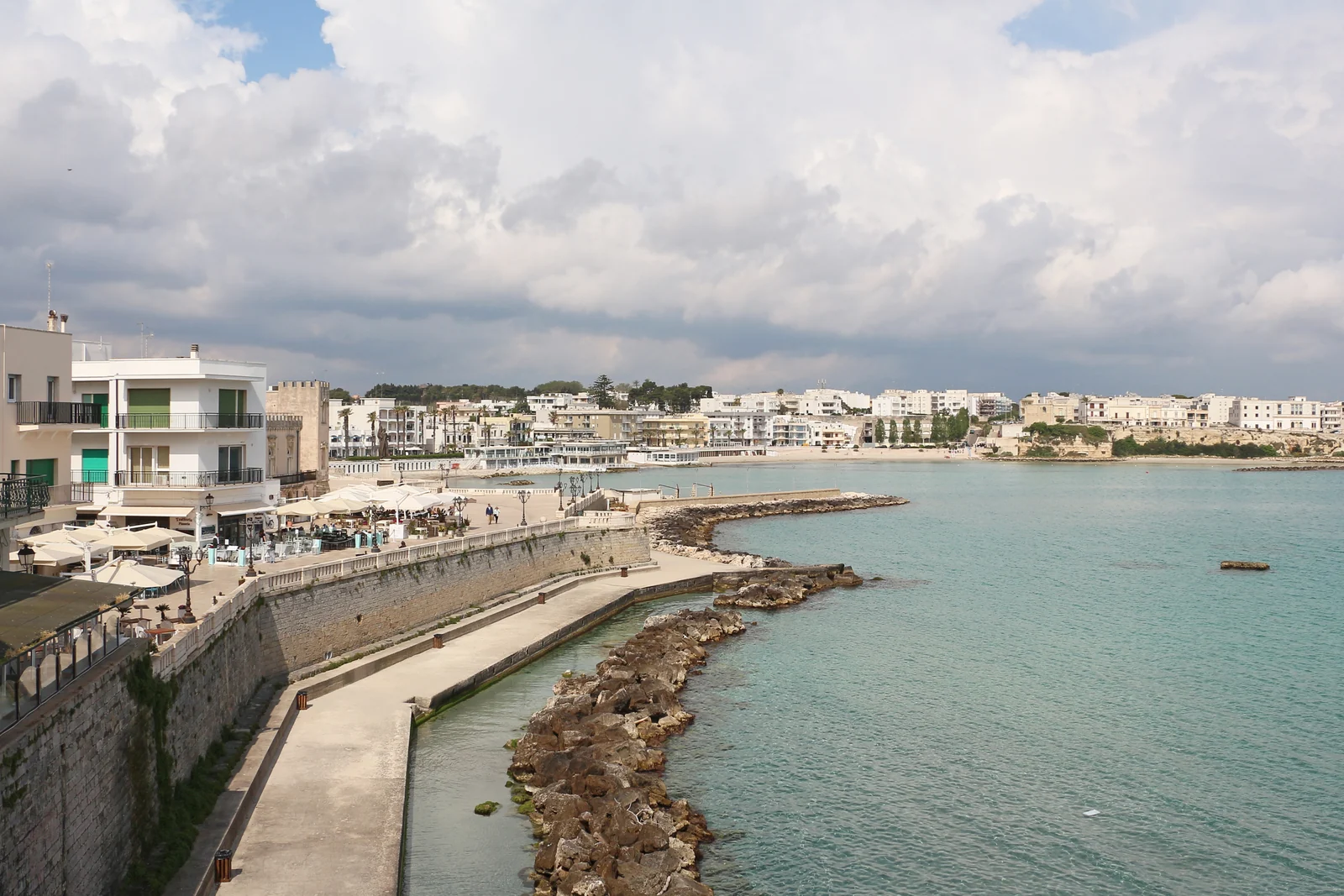
Photo: Bernard Gagnon / Wikimedia Commons — CC0 · Resized and converted to WebP.
Nearby
About 11 kilometres from Otranto, in the direction of Santa Maria di Leuca, Porto Badisco is a small bay between the cliffs, known as Aeneas’ landing place, suited to snorkelling and diving. Nearby is the Grotta dei Cervi, discovered on 1 February 1970 by five cavers of the “Pasquale De Lorentiis” group of Maglie: hundreds of pictograms in bat guano and ochre, with deer-hunting scenes, human figures, spirals and handprints, which ISPRA dates to the Neolithic, between 4000 and 3000 BC. The municipality’s portal states that it cannot be visited, so as not to alter the microclimate that has preserved the paintings for millennia.
North of the town lie the Alimini lakes. According to the park’s profile of Otranto, Alimini Grande is brackish and shaped like a lagoon, while Alimini Piccolo, known as Fontanelle, is the largest freshwater lake in Puglia; the two basins are joined by a channel and host rare plants such as the marsh orchid and the water chestnut.
Inland, the Ladriatica cycle route presented by the municipality’s portal passes the megalithic garden of Giurdignano, with its dolmens and menhirs, and the Parco dei Guerrieri at Vaste. Along the coast, the beaches of Melendugno, Torre dell’Orso included, hold the 2026 Blue Flag, as do Zinzulusa and La Sorgente at Castro, in the direction of Leuca; no Otranto beach appears in FEE’s 2026 list.
Sources: Discover Otranto (portale turistico ufficiale del Comune di Otranto) — Grotta dei Cervi di Porto Badisco · ISPRA, Repertorio dei musei italiani di scienze della Terra — Grotta dei Cervi · Parco naturale regionale Costa Otranto - Santa Maria di Leuca e Bosco di Tricase — I comuni del Parco: Otranto · Discover Otranto (portale turistico ufficiale del Comune di Otranto) — Ladriatica, ciclovia del Salento orientale · Fondazione per l’Educazione Ambientale (FEE) Italia — Spiagge Bandiera Blu 2026
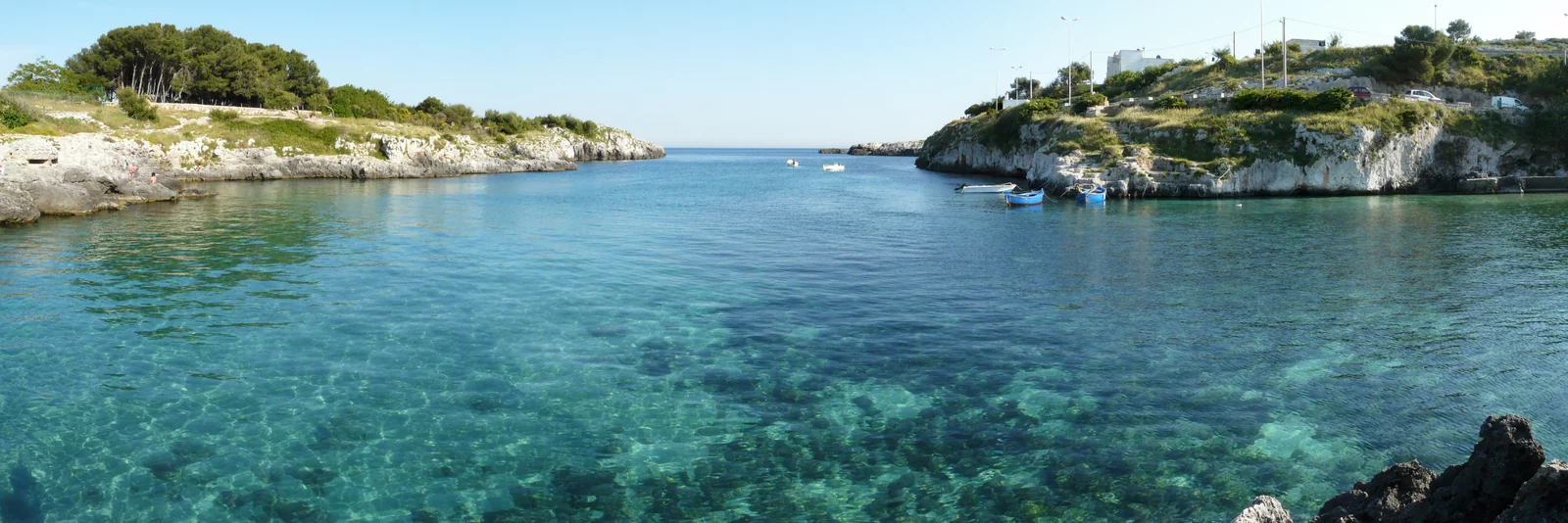
Photo: Hydruntum / Wikimedia Commons — CC BY-SA 3.0 · Resized and converted to WebP.
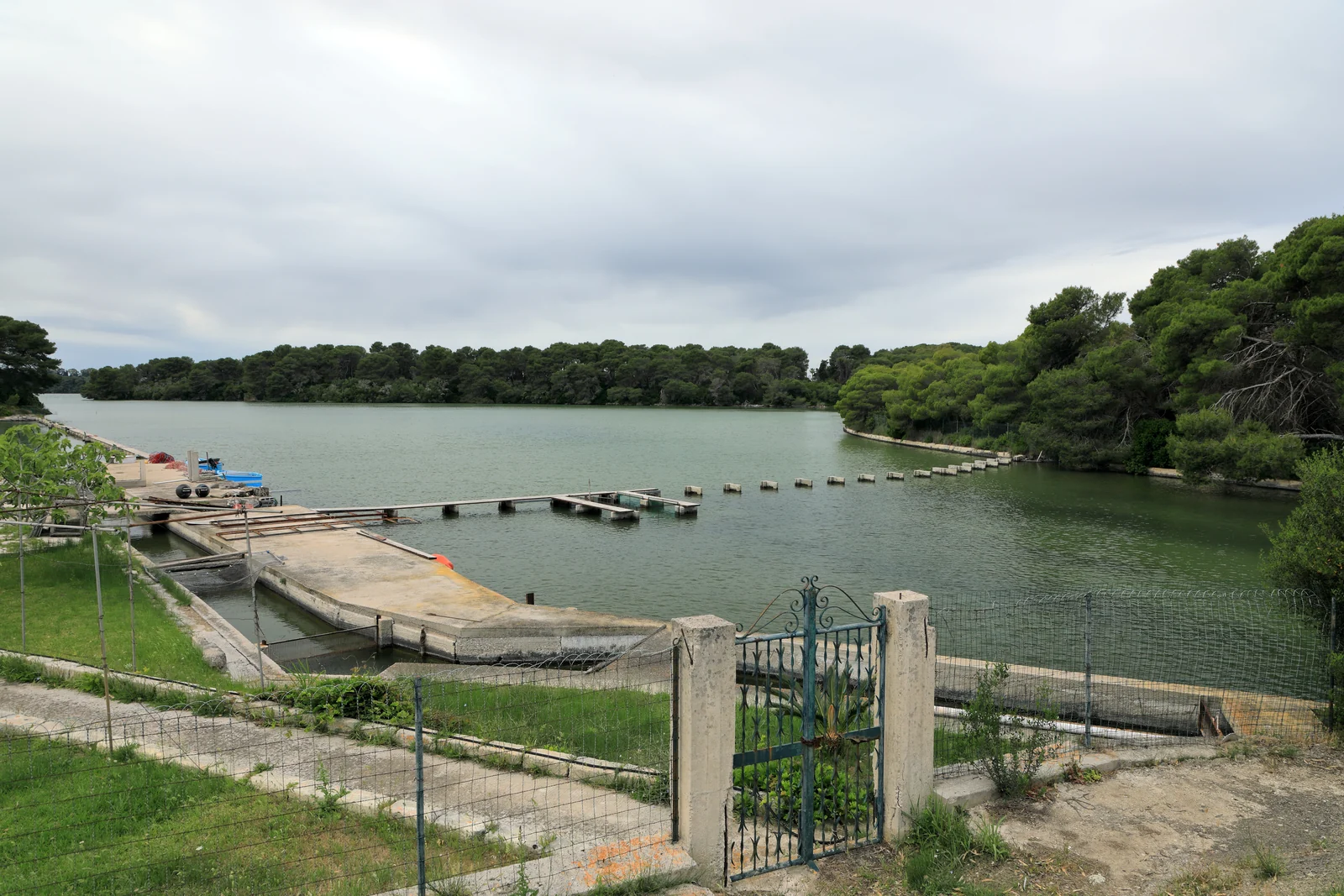
Photo: Falk2 / Wikimedia Commons — CC BY-SA 4.0 · Resized and converted to WebP.
Local tourist information
Local tourist offices help with opening times, events and transport on the day.
- Infopoint turistico di Otranto · Piazza Castello, all'interno del Castello Aragonese, 73028 Otranto (LE) · +39 0836 212747 · Official website
Source: Discover Otranto (portale turistico del Comune) — Infopoint · checked on
Where to stay
In the municipality of Otranto the national database of the Ministry of Tourism lists 1224 accommodation businesses with a verified CIN code: 36 hotels, 296 other licensed accommodation and 892 other types such as B&Bs and private rentals.
Licensed businesses from the official list of accommodation named as the source in this section. Where the list gives it, the property's official identification code appears next to its name: the national CIN code, or the code assigned by the Region or by the body that keeps the list. Private individuals are not listed. This list is the official census of licensed businesses, not a list of Apulica partners: to stay in Otranto you do not have to check one property after another yourself; write to Apulica and we look for the stay that suits your journey, checking availability and conditions before any confirmation.
BAGLIONI MASSERIA MUZZA
Hotel · ★★★★★
CIN IT075057A100075646
29 APARTMENTS
Residence
CIN IT075057B400076483
BLU MARE
Holiday village · ★★★★
CIN IT075057B200021705
Baia dei Micenei
Campsite · ★★★★
CIN IT075057B100057042
AGRICAMPEGGIO DARWIN
Farm stay
CIN IT075057B500021680
A EST B&B OTRANTO
B&B
CIN IT075057B400048059
Affitta camere San Pietro
Guest rooms
CIN IT075057B400067252
ALIMINI VACANZE-SERRA ALIMINI 2
Holiday home
CIN IT075057B400028532
PALAZZO PAPALEO
Hotel · ★★★★★
CIN IT075057A100021276
PROMOSAL
Residence
CIN IT075057B400040094
First the places that presented themselves to Apulica, the latest first; then one place of each type in turn, by official category and stars, then by name. No position is paid for.
All 213 entries in alphabetical order
Page 1 of 22
| Name | Type | CIN |
|---|---|---|
| 29 APARTMENTS | Residence | IT075057B400076483 |
| A EST B&B OTRANTO | B&B | IT075057B400048059 |
| Affitta camere San Pietro | Guest rooms | IT075057B400067252 |
| AFFITTACAMERE BLUOTRANTO | Guest rooms | IT075057B400093959 |
| AFFITTACAMERE CHILOMETRO MILLE | Guest rooms | IT075057B400112302 |
| AFFITTACAMERE DIMORA DEI TURCHI DI CARIDDI ANTONELLA | Guest rooms | IT075057B400108445 |
| AGRICAMPEGGIO DARWIN | Farm stay | IT075057B500021680 |
| Agriresort Murciano | Farm stay | IT075057B500069781 |
| Agriturismo Antico Vigneto | Farm stay | IT075057B500111822 |
| AGRITURISMO LA CAVALLETTA | Farm stay | IT075057B500059680 |
Ask Apulica for a stay in Otranto We reply shortly, within a few hours at most, with a proposal for you to consider.
Sources: Regione Puglia – ARET Pugliapromozione (DMS), CC BY 4.0, 2026-10-12 · Ministero del Turismo – Banca Dati Strutture Ricettive (dashboard pubblica), 2026-10-12
YOUR JOURNEY
How to shape a journey here
Journey idea: connect Otranto and Lecce through different visual languages, mosaic and carved stone. Another chapter can follow the coast towards Leuca, leaving time to stop rather than collecting viewpoints.
Plan your tripKeep exploring
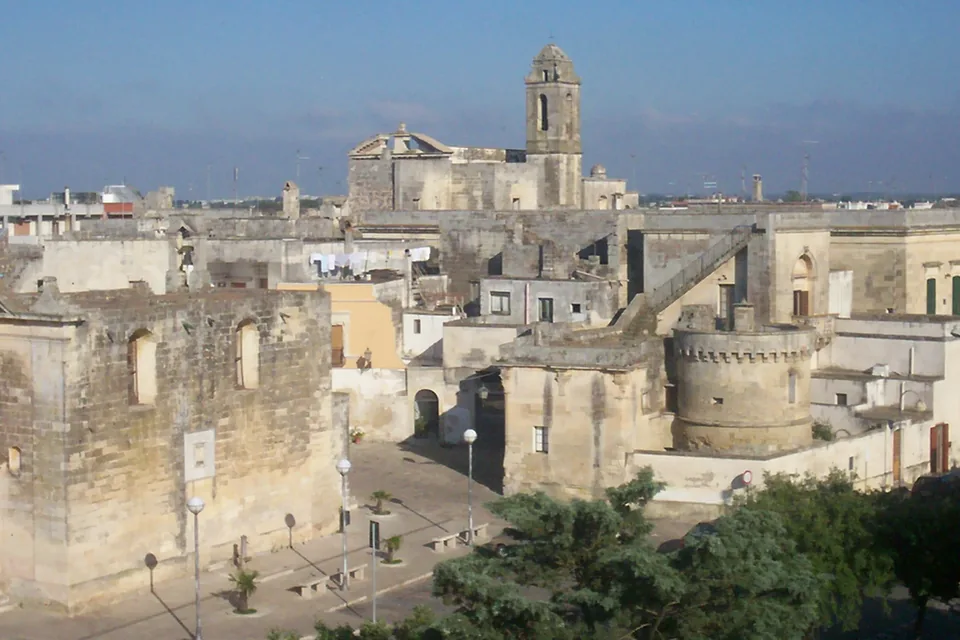
Martano
Courtyards, megalithic heritage and Cistercian culture in Grecìa Salentina. In the Terra, the old centre with its regular blocks, the Aragonese castle, the mother church of 1596 and the early eighteenth-century palaces; in the countryside the Teofilo menhir, 4.70 metres tall, the Specchia dei Mori and the medieval village of Apigliano.
Read the guide →Photo: Freddyballo / Wikimedia Commons — CC BY-SA 3.0 · Resized and converted to WebP.
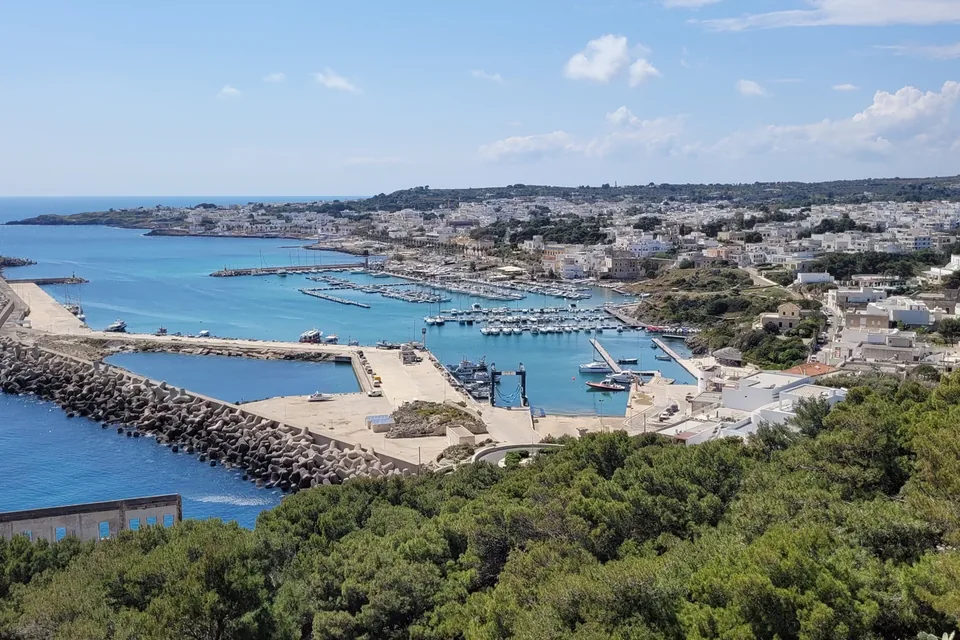
Santa Maria di Leuca
The sanctuary, seafront architecture and the outline of the coast. The cape where the Adriatic embraces the Ionian, the de finibus terrae basilica and frise.
Read the guide →Photo: Bernard Gagnon / Wikimedia Commons — CC0 · Resized and converted to WebP.
Lecce
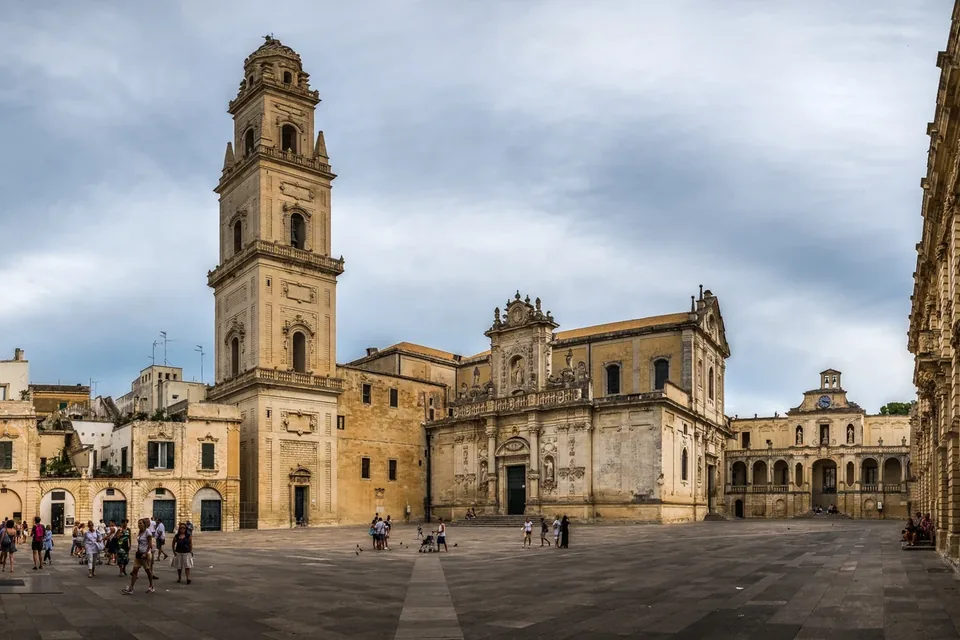
Baroque architecture, papier-mâché and Salento food: a city of telling details.
Read the guide →Photo: Giuseppe Milo / Wikimedia Commons — CC BY 3.0 · Resized and converted to WebP.
Torre dell’Orso
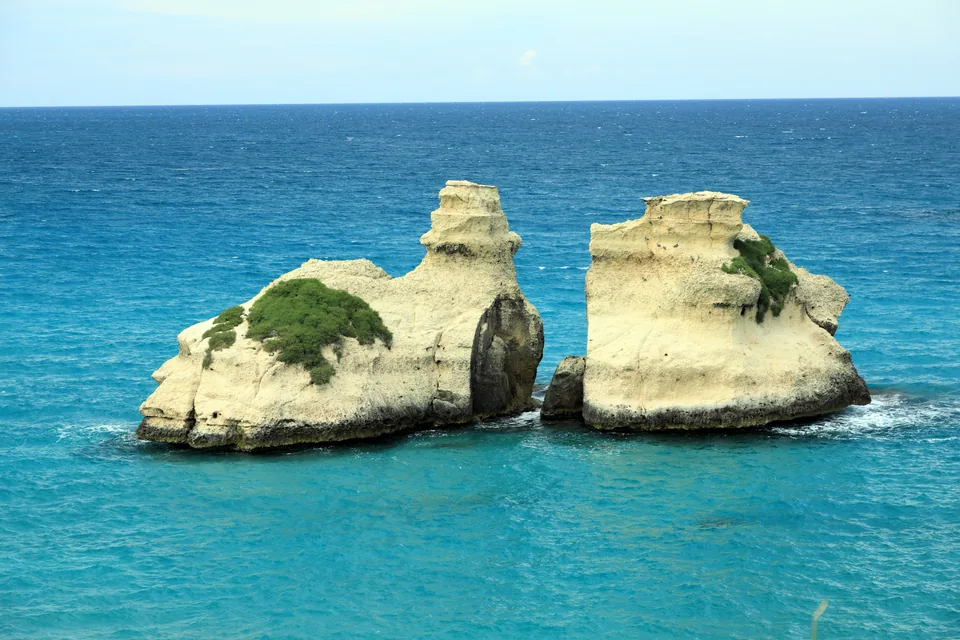
Sea stacks, pine woodland and a contrast with Melendugno’s inland villages. The bay holds the 2026 Blue Flag: to the north stands the 1568 coastal tower that gave it its name, at the other end the cave of San Cristoforo, a seaside sanctuary from the fourth century BC, and the Two Sisters sea stacks.
Read the guide →Photo: Falk2 / Wikimedia Commons — CC BY-SA 4.0 · Resized and converted to WebP.
Melendugno
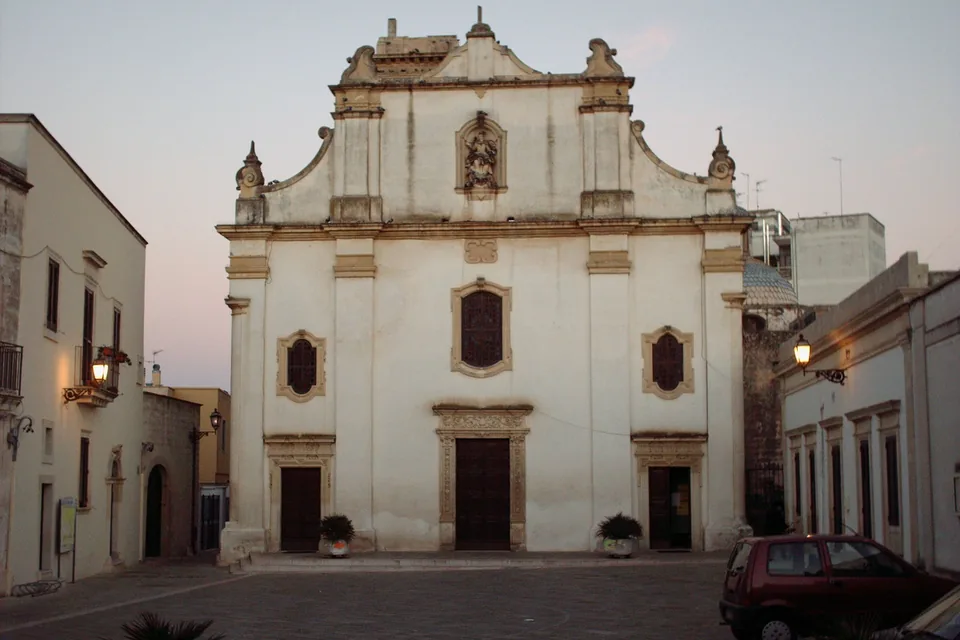
Melendugno (LE), Puglia: 10,055 residents, 92.33 km². The official facts of the municipality, its town council website and its registered accommodation.
Read the guide →Photo: Emanuele Petrachi / Wikimedia Commons — CC BY 3.0 · Resized and converted to WebP.
Giurdignano
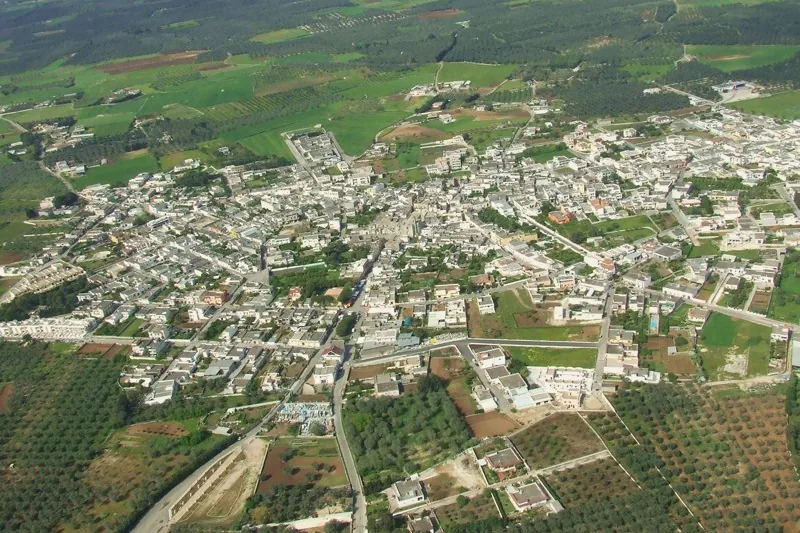
Giurdignano (LE), Puglia: 1,947 residents, 14.04 km². The official facts of the municipality, its town council website and its registered accommodation.
Read the guide →Photo: Lupiae / Wikimedia Commons — CC BY-SA 3.0 · Resized and converted to WebP.
Castro
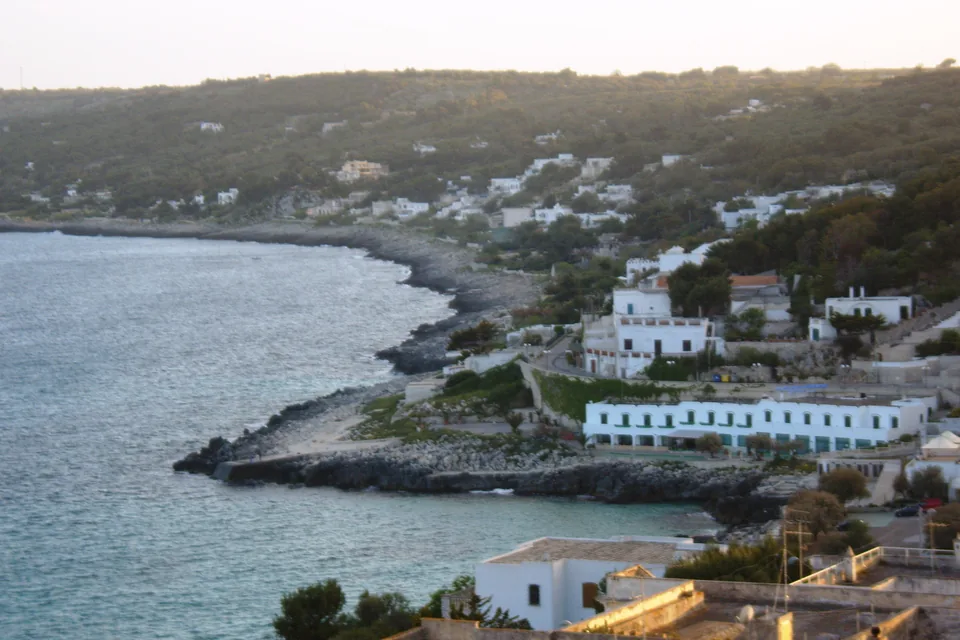
Castro (LE), Puglia: 2,318 residents, 4.57 km². The official facts of the municipality, its town council website and its registered accommodation.
Read the guide →Photo: Freddyballo / Wikimedia Commons — CC BY-SA 3.0 · Resized and converted to WebP.
Brindisi
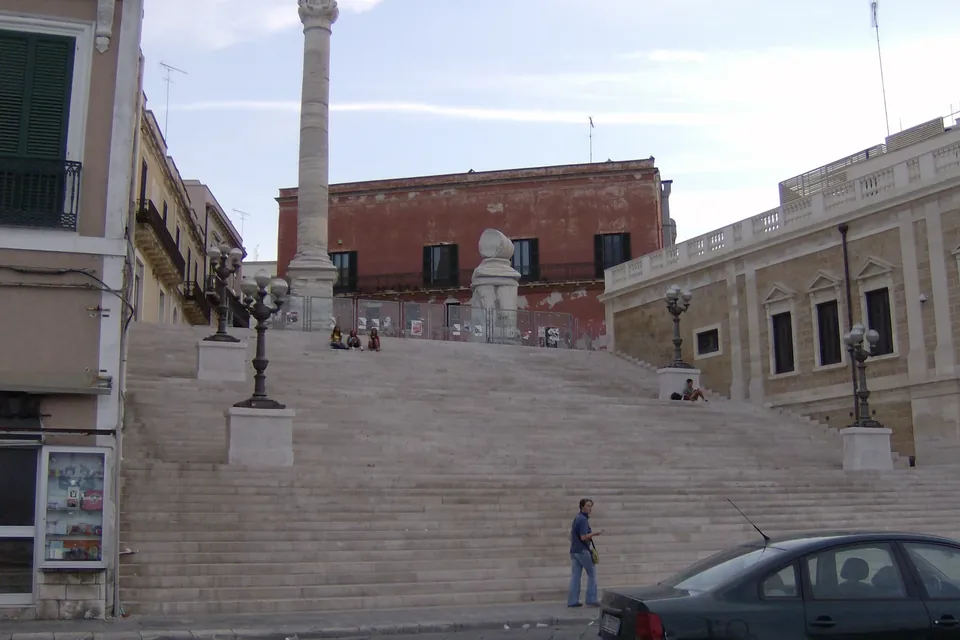
Brindisi: reading the city from its harbour. The Roman Columns above the Virgilian Steps, the castles built to defend the harbour and the Brindisi artichoke.
Read the guide →Photo: Zappuddu / Wikimedia Commons — Public domain · Resized and converted to WebP.
“Come to Otranto as a guest, not as a tourist: that is how these places truly let you know them.”