Barese, Garganica and Cima di Bitonto
The regional register of native genetic resources gives Ogliarola Garganica its own profile and lists its synonyms: Ogliarola Barese, Cima di Bitonto, Ogliarola and Paesana. Its reference area is northern Puglia and the Gargano promontory. The historical note goes back to the Romans, who recognised the olive’s importance, and recalls a coin of Trajan showing a young woman with an olive branch in her lap.
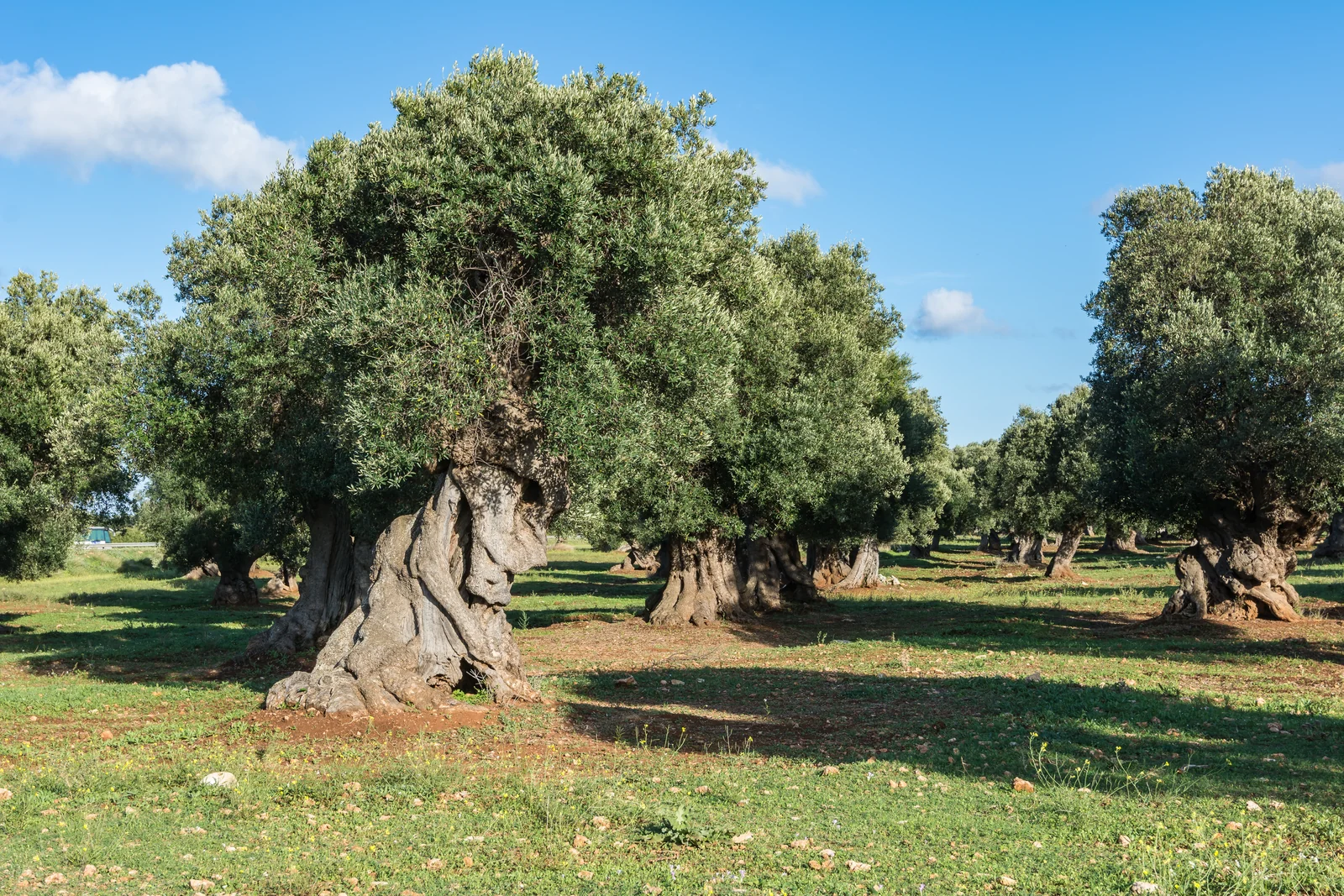
The botanical description is precise: a spreading, vigorous tree, an elliptical and slightly asymmetric fruit, black-violet when ripe, late flowering. Harvest falls between the last ten days of October and the third ten days of November, and a copy of the variety is kept at the regional centre for native fruit trees, olives and vines in Palagiano.
As for the oil, the profile speaks of a delicate, aromatic flavour, tending towards pepperiness, with a fruity aroma close to almond. It is a useful starting point rather than a promise that every bottle will taste the same: vintage, ripeness and the mill all change the result.
Sources: Regione Puglia — Ogliarola garganica
Bitonto, the town of olive trees
The synonym Cima di Bitonto leads straight to a town. The Città dell’Olio association presents Bitonto, on the edge of the Alta Murgia, as the “town of olive trees”, for the groves surrounding the centre and for the variety named after it. The land is mostly hilly, with cold, rainy winters and hot summers that are often dry.
The same variety appears in the Terra di Bari PDO. The regional profile explains that the geographical mention Bitonto is reserved for oil made from Cima di Bitonto, that is Ogliarola Barese, and Coratina for at least 80 per cent. Its colour is green-yellow, its aroma medium fruity and its taste lighter than the Castel del Monte mention, with a sensation of fresh herbs and only a hint of bitterness and pepperiness.
Bitonto also deserves a stop for its historic centre. The association recalls the cathedral in Apulian Romanesque style and the Renaissance buildings, including Palazzo Sylos-Calò, as well as the 1734 battle linked to the history of the Kingdom of Naples. A walk here gives a concrete face to the name printed on a label.
Sources: Associazione nazionale Città dell’Olio — Bitonto · Regione Puglia — Produzioni di qualità: Terra di Bari DOP
The Gargano within the Dauno PDO
In the province of Foggia, Ogliarola Garganica is the protagonist of one of the four mentions of the Dauno PDO. According to Qualigeo’s profile, the Gargano mention requires at least 70 per cent of this variety and describes an oil between green and yellow, with medium fruitiness, a grassy note and a finish that recalls almond.
The other mentions help explain the geography: Alto Tavoliere is based on Peranzana, Basso Tavoliere on Coratina, Subappennino on a blend of Ogliarola Garganica, Coratina and Rotondella. The rules set shared requirements: olives picked straight from the tree by 30 January and processed within three days, with the sub-area and vintage shown on the label.
The profile also notes that the olive has been present in this area since prehistory and that olive growing proper dates from Roman times, expanding over the centuries into one of the territory’s most important activities. For visitors to the Gargano, looking for the mention on the label is a simple way to connect a tasting with the promontory itself and its villages.
Sources: Qualigeo (Fondazione Qualivita) — Dauno DOP, olio extravergine di oliva
The Salento connection
In the regional overview of the Terra d’Otranto PDO, Ogliarola Leccese and Ogliarola Salentina are the local names of the variety that, together with Cellina di Nardò, forms the basis of the designation. The area covers the whole province of Lecce and parts of Brindisi and Taranto, on brown or red soils over limestone. The Region describes notes of olive leaf, cut grass, cardoon, artichoke and chicory for Ogliarola, and tomato and berries for Cellina.
Qualigeo’s profile adds the latest version of the rules, which also admit Leccino, FS17, Lecciana and Leccio del Corno among the main varieties. Olives must be harvested by 15 November and milled within one day.
The historical part is the most evocative. The olive was present in Salento in prehistoric times and spread with the Messapians between the fifth and fourth centuries BC; in the Middle Ages Basilian monks started the oil trade and gave the area the name Terra d’Otranto. It is a geography quite different from northern Bari’s, with its own history and landscape.
Sources: Regione Puglia — Terra d’Otranto DOP · Qualigeo (Fondazione Qualivita) — Terra d’Otranto DOP, olio extravergine di oliva
Another geography: Brindisi country
The regional profile of the Collina di Brindisi PDO places Ogliarola at the centre of the appellation: it must make up at least 70 per cent of the olives, while the rest may come from varieties such as Cellina di Nardò, Coratina, Frantoio, Leccino and Picholine. The area covers certain municipalities in the province of Brindisi, listed in the production rules.
The Region notes that Pliny already called the variety “Olea Iapygia” and explains its spread through its hardiness. Ogliarola adapts both to the soils of the inland limestone plateau and to those of the coastal strip, made of tuff alternating with clay. It is a clear link between one variety and different environments, which you can sense when travelling from the interior towards the sea.
In terms of flavour the profile describes intense fruitiness, with a light leafy sensation and delicate bitterness and pepperiness. The processing rules are strict: hand or mechanical harvesting, washing of the olives and milling within two days of reaching the mill. For storage it recommends cool, dark places away from heat and strong smells.
Read the name without losing sight of the oil
At a tasting, first ask which name the producer uses for the variety and whether the bottle contains a single olive or a blend. The regional profiles show that the same tree can be called by different names a few kilometres apart, and that a designation often admits several varieties alongside the main one.
Then note the growing area, the geographical mention if there is one, and the vintage. These details make even a photograph of the label useful: back home they let you understand what you actually tasted, instead of relying on the memory of a name heard once.
Avoid expecting a compulsory flavour simply because a familiar name appears. The official descriptions indicate tendencies, such as almond for Ogliarola Garganica or cardoon and artichoke for the Salento type, but ripeness, harvest and processing shift the balance. It is better to compare the oils actually served and describe in your own words what you perceive, even when it does not match the profile on paper.
Two samples, one clear question
An interesting comparison could pair an oil from northern Bari with one from Salento, perhaps in the same afternoon. Use the same neutral support for both, such as a piece of plain bread, and leave more strongly flavoured foods until the end, once the comparison is done.
Finding one recognisable difference in aroma and another in persistence is more useful than assigning a score straight away. Smell, taste a small amount, wait a few seconds and ask which sensation lasts longer. Two short notes, one per sample, are enough to remember the difference.
If one of them is a blend, ask what role each variety was meant to play in the final balance: more aroma, more structure, more softness. Producers are usually glad to answer, and the reply explains a great deal about the work in the mill. In the end the difference between two oils also becomes a difference between two landscapes, and that is the most useful memory to take away.
A route following the names
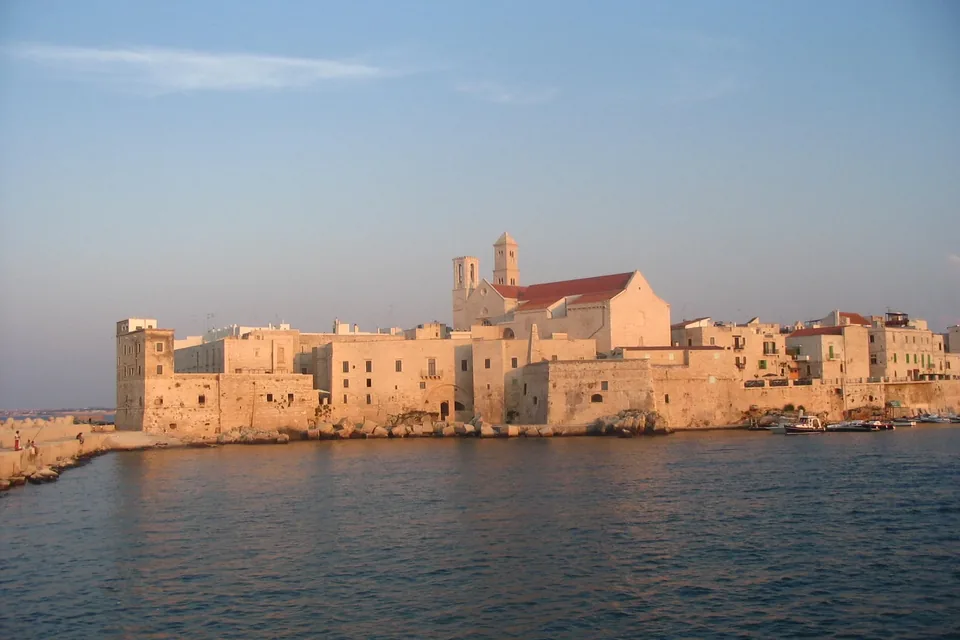
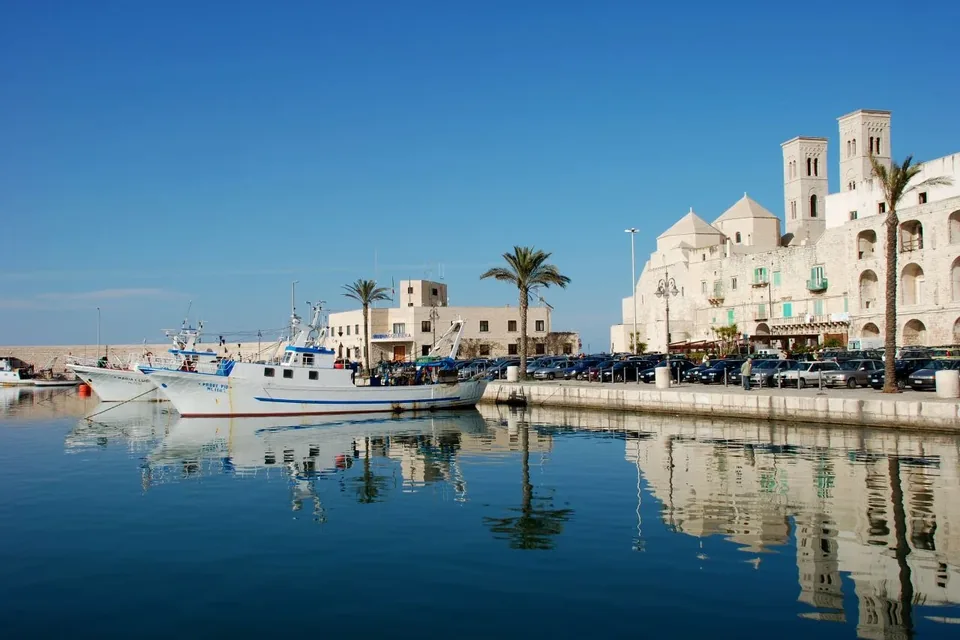
Giovinazzo and Molfetta can form a first chapter on northern Bari. The Città dell’Olio association suggests a walk in Giovinazzo starting from Piazza Vittorio Emanuele II, passing the Arco Traiano, named after the milestones built into it, and reaching the cathedral from around 1100. For Molfetta it recalls the harbour with the medieval cathedral behind it, the Neolithic site of the Pulo and the scent of new oil in the mills beside silvery groves.
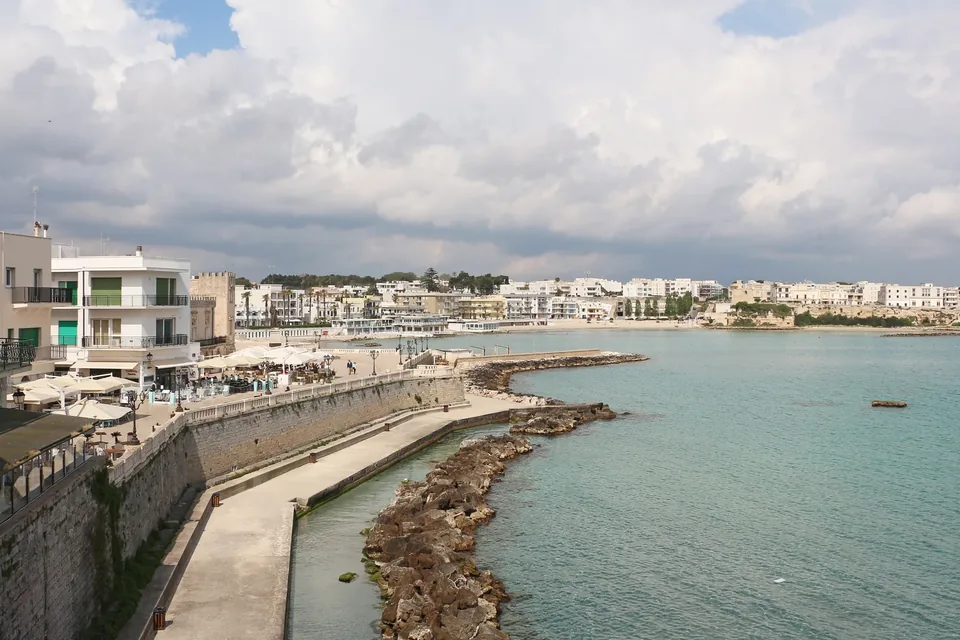
Otranto can be the second chapter, on another day. Italia.it describes it on a rocky spur above the sea and links its history to the siege of 1480 and the eight hundred martyrs, whose remains are kept in a chapel of the cathedral. Around it spreads the Terra d’Otranto with its Salento Ogliarola.
The advantage of this thread is that it avoids racing between mills: one tasting early in the journey and another later let you compare notes and memories. Between them, landscape, food and historic centres give context to the names on the bottles.
Sources: Associazione nazionale Città dell’Olio — Giovinazzo · Associazione nazionale Città dell’Olio — Molfetta · Italia.it (Ministero del Turismo) — Otranto
A thread for your journey
Journey idea: northern Bari and Salento as two chapters, with a comparison between bottles recorded in your notes. Ogliarola becomes a way of recognising places rather than ranking oils.
Talk to us