
APULICA / OILS AND FATS
Terra di Bari extra virgin olive oil
PDO · Oils and fats · Puglia
In brief
- Extra virgin oil from Coratina, Cima di Bitonto (Ogliarola barese) and Cima di Mola, with a mandatory sub-area: Castel del Monte, Bitonto or Murgia dei Trulli e delle Grotte. (Qualigeo (Fondazione Qualivita) — Terra di Bari DOP)
- The area covers the provinces of Bari and Barletta-Andria-Trani. (Qualigeo (Fondazione Qualivita) — Terra di Bari DOP)
- The Castel del Monte sub-area requires at least 80% Coratina and gives an intensely fruity oil. (Qualigeo (Fondazione Qualivita) — Terra di Bari DOP)
- The olives must be harvested by 30 January. (Qualigeo (Fondazione Qualivita) — Terra di Bari DOP)
History and origin
In the Bari area the olive tree has been present since the Neolithic, while true olive growing developed in Roman times, when documents on cultivating and processing olives show its importance. Oil is still one of the pillars of the local food economy today.
The emblematic variety of the area is Coratina. At the end of the eighteenth century the agronomist Giovanni Presta described an olive a racimolo, growing in clusters of three or four fruits, and in 1872 Professor Girolamo Caruso, visiting an olive grove in Barletta, noted that the variety had been brought from Corato, hence its name. From then on its cultivation spread widely.
The Protected Designation of Origin Terra di Bari, registered in the European Union and entrusted to a protection consortium, showcases Coratina together with Cima di Bitonto and Cima di Mola.
Sources: Qualigeo (Fondazione Qualivita) — Terra di Bari DOP · Atlante dei PAT di Puglia — Olio extravergine di oliva coratina · eAmbrosia — Terra di Bari (PDO-IT-1542)
Area and method of production
The area of production, processing and bottling covers the provinces of Bari and Barletta-Andria-Trani. The varieties are Coratina, Cima di Bitonto, also called Ogliarola barese, and Cima di Mola, and the name must always carry a geographical mention: Castel del Monte, Bitonto or Murgia dei Trulli e delle Grotte.
Each mention has its own blend. Castel del Monte requires at least 80% Coratina; Bitonto at least 80% from Cima di Bitonto and Coratina; Murgia dei Trulli e delle Grotte at least 50% Cima di Mola.
The olives are picked from the tree, by hand or mechanically, by 30 January, and must be made into oil within two days of picking.
Sources: Qualigeo (Fondazione Qualivita) — Terra di Bari DOP
How to recognise it
The three mentions give different oils. Castel del Monte is green with yellow glints, with an intense fruitiness and medium bitterness and pungency: it is the boldest expression of Coratina, with its notes of fresh grass, artichoke and almond. Bitonto is green-yellow, with a medium fruitiness on the nose and a light one in the mouth, hints of fresh herbs and a touch of bitterness and pungency. Murgia dei Trulli e delle Grotte is golden yellow with green glints, lightly fruity, with notes of fresh almond.
Maximum acidity ranges from 0.5 to 0.6 grams per 100 grams depending on the mention, and the panel test must score at least 7. The oil is sold in glass or tin up to five litres, with the sub-zone on the label, the year and a seal with a unique code.
Sources: Qualigeo (Fondazione Qualivita) — Terra di Bari DOP · Atlante dei PAT di Puglia — Olio extravergine di oliva coratina
In the kitchen
The designation's record calls it ideal raw, on vegetables, bruschetta and pinzimonio, while in cooking it brings out the flavour of dishes. It pairs perfectly with the fish dishes of Puglia's cooking.
Coratina, with its intense aroma, is valued in two ways: young, to give character and aroma to other oils, and mature as a table oil.
Like every extra virgin oil it should be kept cool, between 14 and 18 degrees, away from light and foreign odours, and preferably used within four to six months of pressing to enjoy all its aromas.
Sources: Qualigeo (Fondazione Qualivita) — Terra di Bari DOP · Atlante dei PAT di Puglia — Olio extravergine di oliva coratina
Where to taste it
The mentions of Terra di Bari are also an itinerary. Castel del Monte, the mention with the most intense oil, is made almost entirely from Coratina and bears the name of one of the best-known places in the province of Barletta-Andria-Trani. Bitonto gives its name both to Cima di Bitonto and to the mention of the same name. The Murgia dei Trulli e delle Grotte, where Cima di Mola dominates, evokes in its name the landscapes inland from Bari.
Corato, which gives Coratina its name, and Barletta, where its spread was tested at the end of the nineteenth century, complete the picture. Visitors to Bari and its province between autumn and January arrive in the middle of the harvest season.
Sources: Qualigeo (Fondazione Qualivita) — Terra di Bari DOP · Atlante dei PAT di Puglia — Olio extravergine di oliva coratina
Protection
- Protected designation of origin (PDO) — PDO-IT-1542 (eAmbrosia — Terra di Bari (PDO-IT-1542))
When
- The sources consulted give no months.
Where
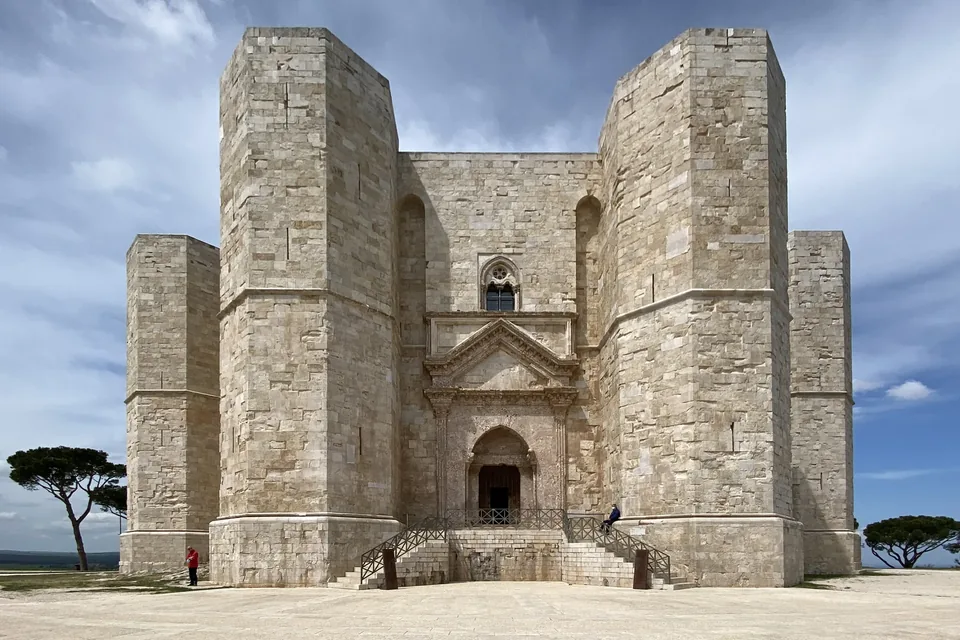
Castel del Monte
Frederick’s architecture within the Murgia landscape.
Read the guide →Photo: Bernard Gagnon / Wikimedia Commons — CC0 · Resized and converted to WebP.


Bari
The old town as a first encounter with Puglia.
Read the guide →Photo: Berthold Werner / Wikimedia Commons — CC BY-SA 3.0 · Resized and converted to WebP.

Read more
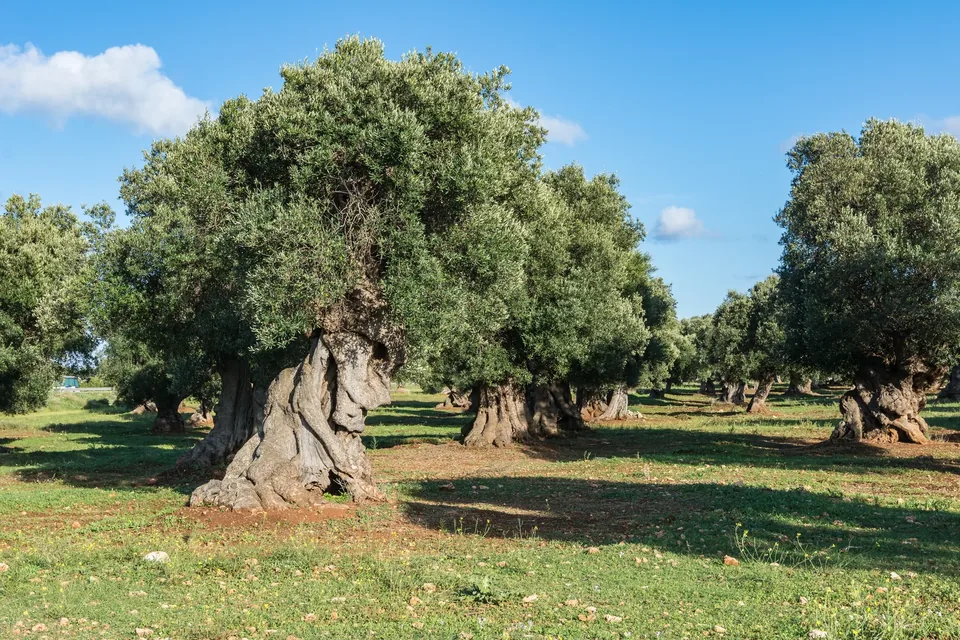
Puglian Ogliarola olives
Barese, Garganica and Salentina Ogliarola: understanding olive names and their regional connections.
Read the guide →Photo: Isiwal / Wikimedia Commons — CC BY-SA 4.0 · Resized and converted to WebP.
