Why go
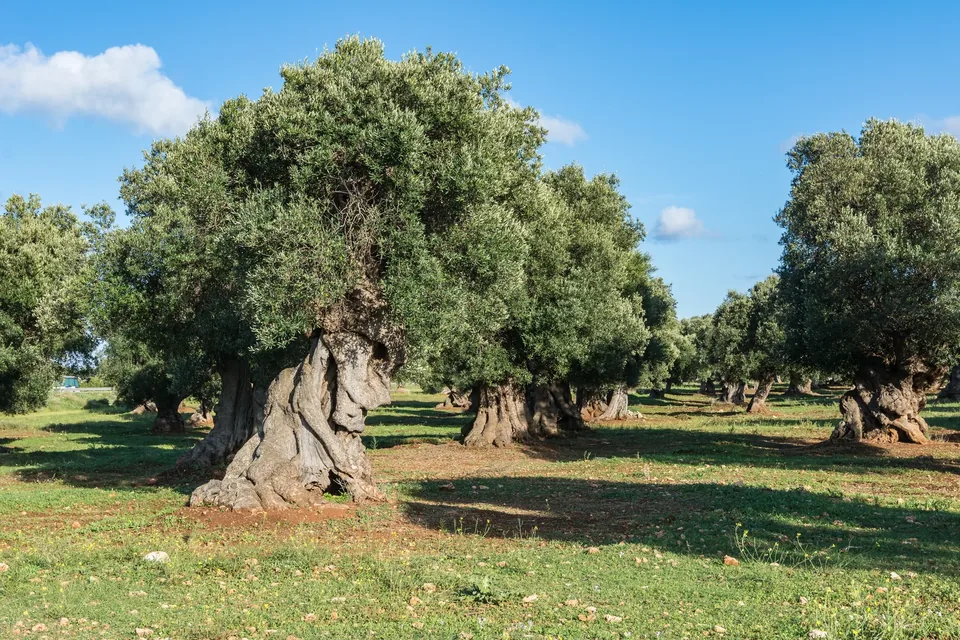
Giovinazzo is an Adriatic town some twenty kilometres north of Bari, bordered by the sea on three sides and backed by countryside of olive, almond and mulberry trees with a few surviving carobs. The old centre sits on a small rocky promontory and splits the seafront into two promenades, one to the west and one to the east. It is a place best understood at a slow pace, because many of its surprises sit above eye level: reliefs, coats of arms, inscriptions and small votive carvings set into the house fronts.
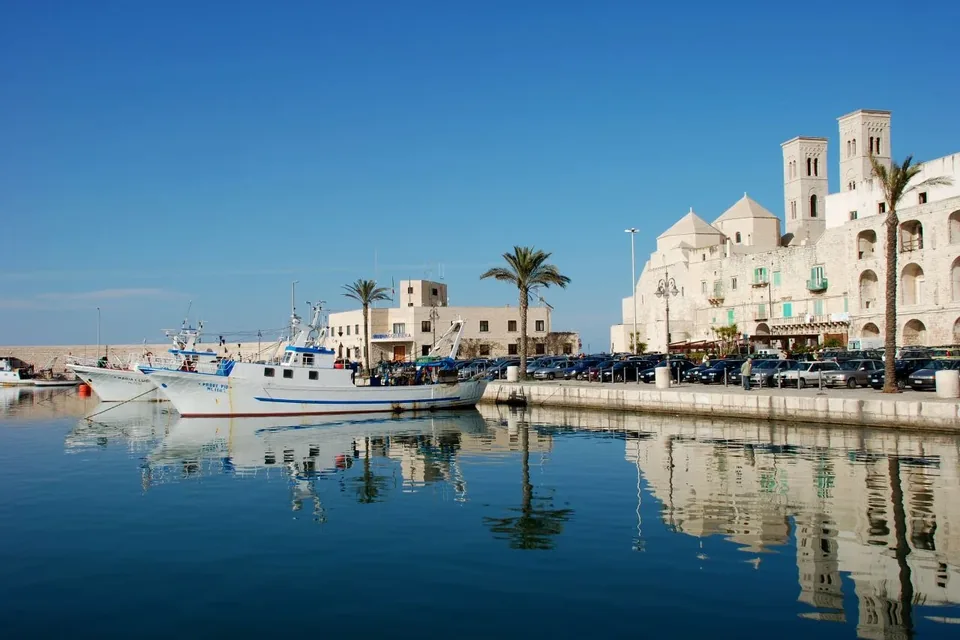
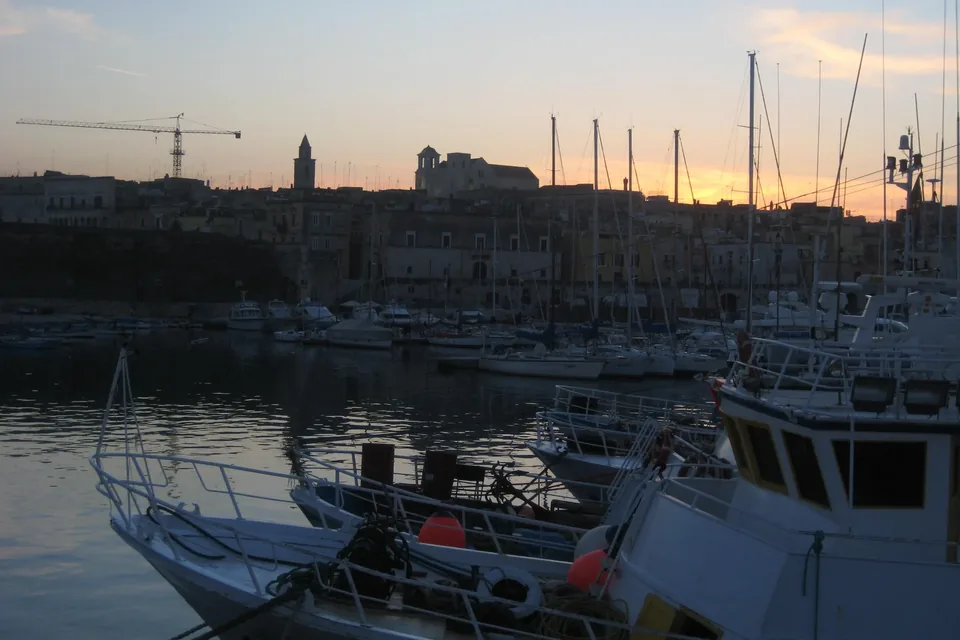
The municipality describes the town as the meeting of two souls: a seafaring one, shaped by the rhythm of fishing, and a farming one, tied to olive groves and rural customs. This double character shows everywhere: in the small harbour with its traditional boats, in the Romanesque cathedral facing the water, in the watchtowers and small country churches scattered across the farmland, and in the San Silvestro dolmen, one of the oldest traces of human presence in the area.
Visitors also find simple, distinctive food: the pizzella of the local bakers, oil from native olive varieties and a long ice-cream tradition. Giovinazzo works well as a day trip from Bari or as a quiet base for the coast north of the regional capital.
Sources: Discover Giovinazzo — visita della città; portale richiamato dal Comune · Comune di Giovinazzo — cultura, gastronomia e territorio · Regione Puglia, Viaggiare in Puglia — Giovinazzo
History
A legend credits the founding to Perseus, son of Jupiter, and derives the name from that "Jovis natio". Historical sources instead tell of families who arrived towards the end of the Roman Republic, after the events that struck the territory of Canosa, and settled on a small rise of rocks: the settlement was called Natiolum, a diminutive suited to its size. The Roman town still lies beneath the medieval one, in a layer about ten metres deep made of wells and cellars, best seen in the cathedral crypt and the foundations of the Ducal Palace.
The shift to medieval Juvenatium is not documented, but from then on the town lived ten centuries under different lords. In 1257 Manfred gave it to Giordano Lancia; the Aragonese followed between 1369 and 1461, then Spanish rule, the Gonzaga and, from 1651, the Giudice Caracciolo, princes of Cellamare, the last feudal lords until the heir Eleonora died in 1770 and the fief returned to the Crown.
The modern town grew from one specific event. In 1797, ahead of a visit to the cathedral by King Ferdinand IV and Queen Maria Carolina, the harbour inlet was partly filled and levelled to create a large square, the Borgo. During the nineteenth century families began building palaces around it, following the Dominicans, who had raised their convent outside the walls in 1704, and the town spread in a fan shape from east to west.
Sources: Discover Giovinazzo (Comune di Giovinazzo) — la storia · Comune di Giovinazzo — cultura, gastronomia e territorio
What to see
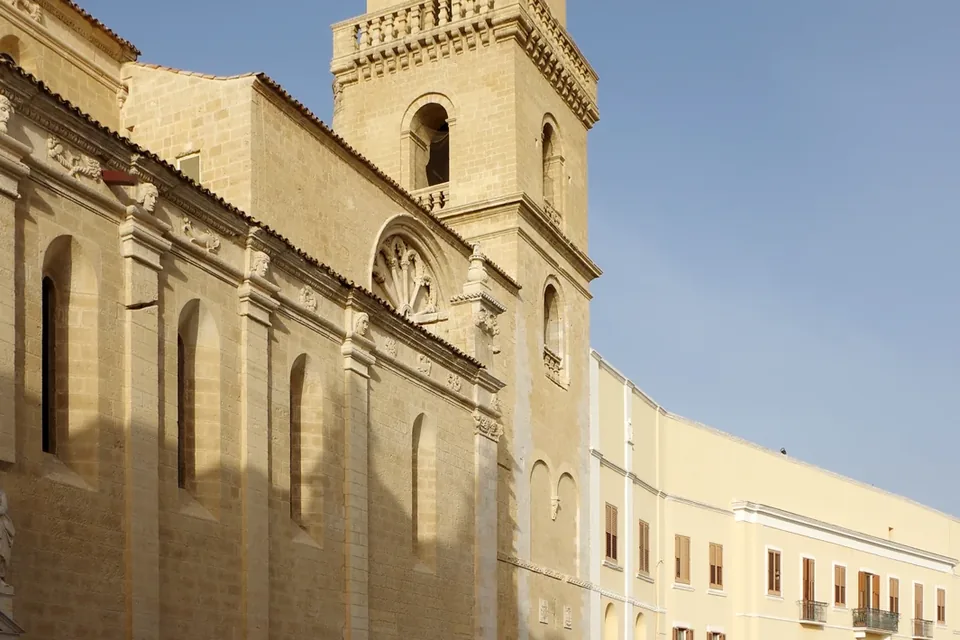
A walk through the old town usually starts at Piazza Umberto I, beside the town hall, where the Arch of Trajan opens the way into the historic core. Built in the fourteenth century as a ceremonial entrance, the arch rests on four Roman milestones topped by medieval capitals; on one the inscription of the Via Traiana can still be made out. Beyond it lies Piazza Costantinopoli, for centuries the setting for markets, assemblies and executions, with a sixteenth-century church dedicated to the Madonna of the sailors who traded with Constantinople. Along Via Cattedrale you pass the small church of Sant'Andrea, among the oldest places of worship in town, and a votive relief linked to a plague epidemic.
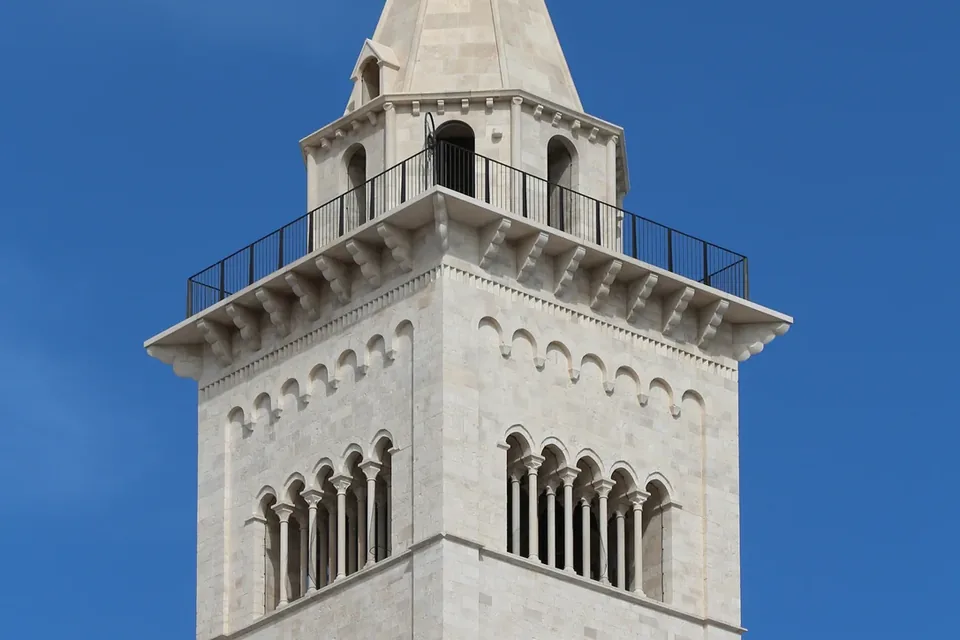
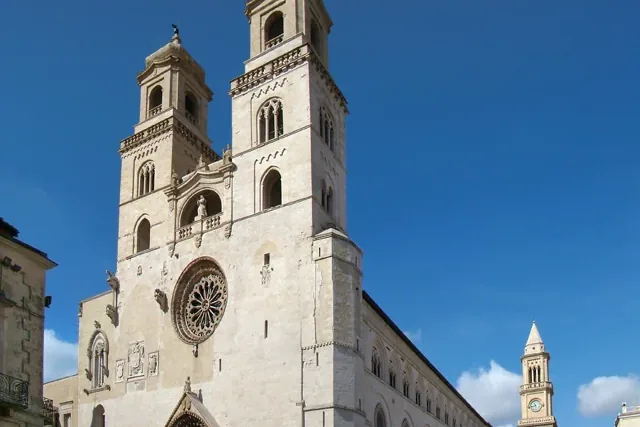
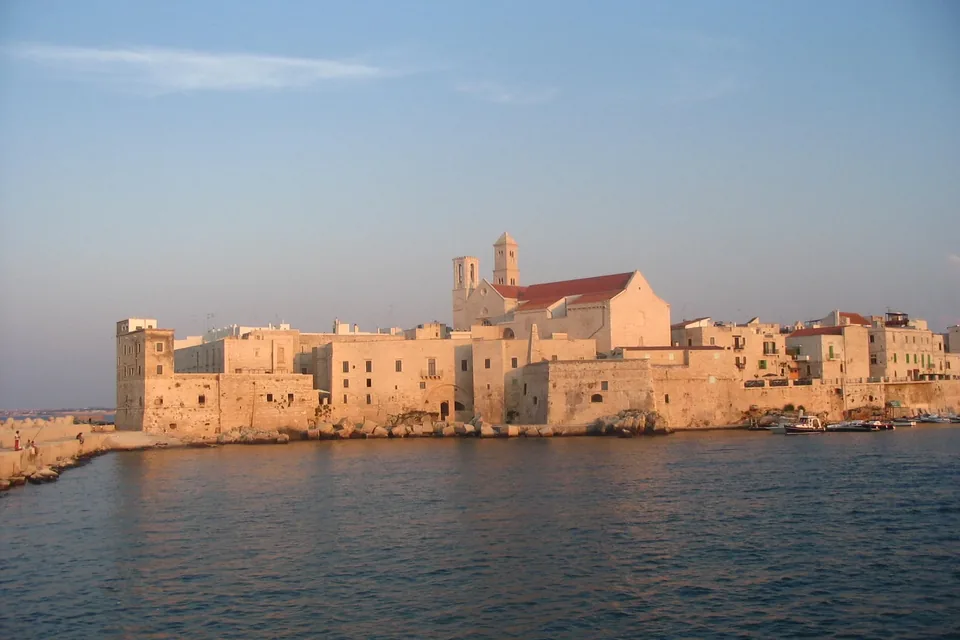
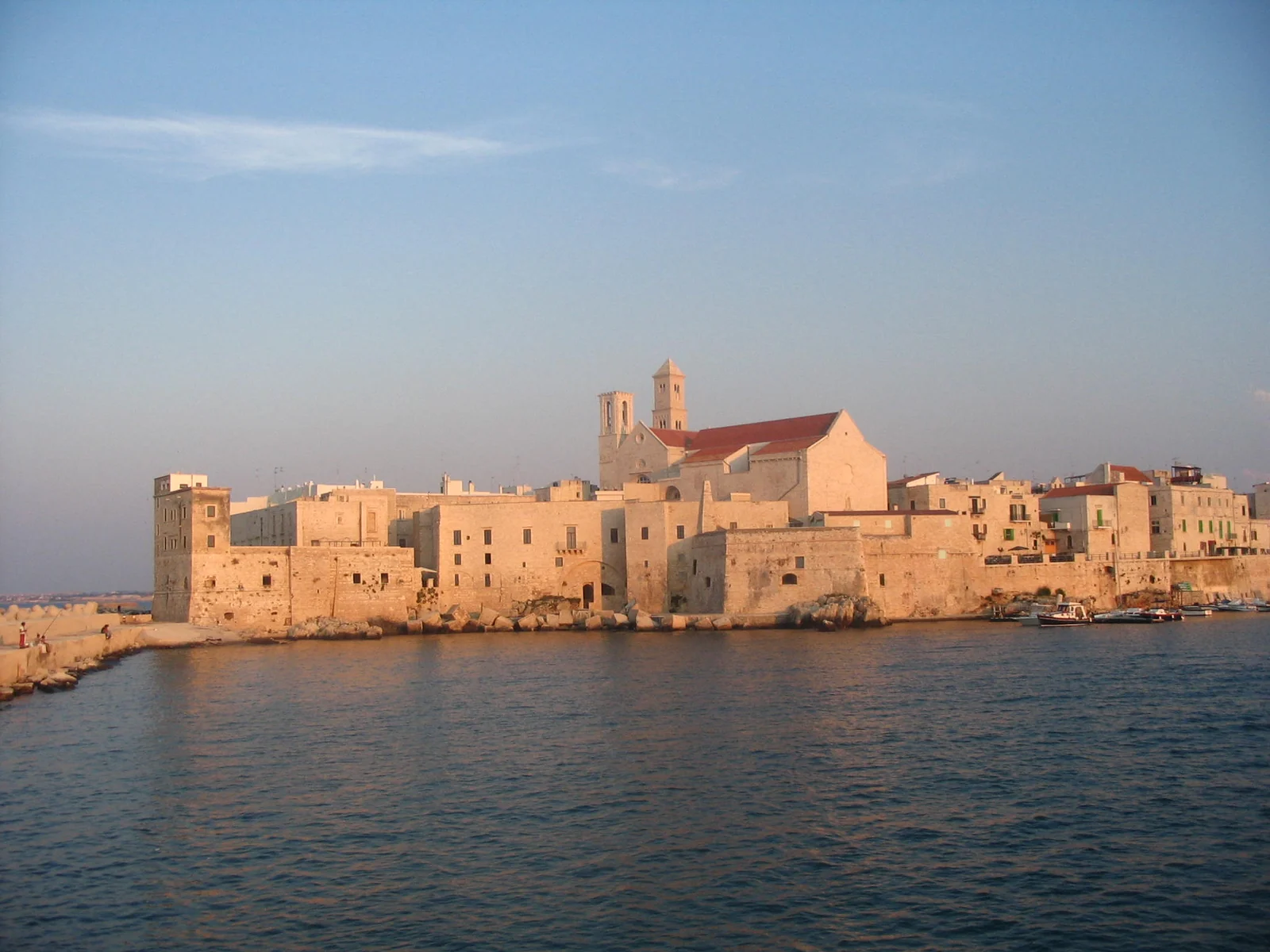
The Co-Cathedral of Santa Maria Assunta, raised above the sea, dates from the Norman period: the crypt was finished in 1150, the upper church around 1180 and the consecration came in 1283. Its two apse towers have become the emblem of the town. The interior was deeply reworked in the eighteenth century, when the original columns gave way to Baroque piers; the crypt, with reused columns of different marbles, the presbytery and the outer transept remain medieval. Twelfth-century mosaics have resurfaced beneath the high altar, and the Byzantine icon of the Madonna di Corsignano is kept at the centre of the apse.
Elsewhere, pause at the Triton Fountain in Piazza Vittorio Emanuele II, made in 1933 by a local sculptor, the sixteenth-century Palazzo Saraceno that houses the town hall, the churches of San Domenico and Spirito Santo, and the Antiquarium run by the Pro Loco, with finds from the old town and the countryside.
Sources: Discover Giovinazzo — visita della città; portale richiamato dal Comune · Ministero della Cultura — Cattedrale di Giovinazzo · Regione Puglia, Viaggiare in Puglia — Giovinazzo · Regione Puglia, Viaggiare in Puglia — Antiquarium di Giovinazzo · Comune di Giovinazzo — cultura, gastronomia e territorio
Food and wine
Giovinazzo's cooking belongs fully to the Apulian tradition, combining sea and land produce with simple ingredients. The municipality lists among its home dishes orecchiette with turnip tops dressed in olive oil, the tiella of rice, potatoes and mussels, and mixed fried small fish. These are everyday recipes in which local oil and Adriatic fish matter more than any elaborate technique.
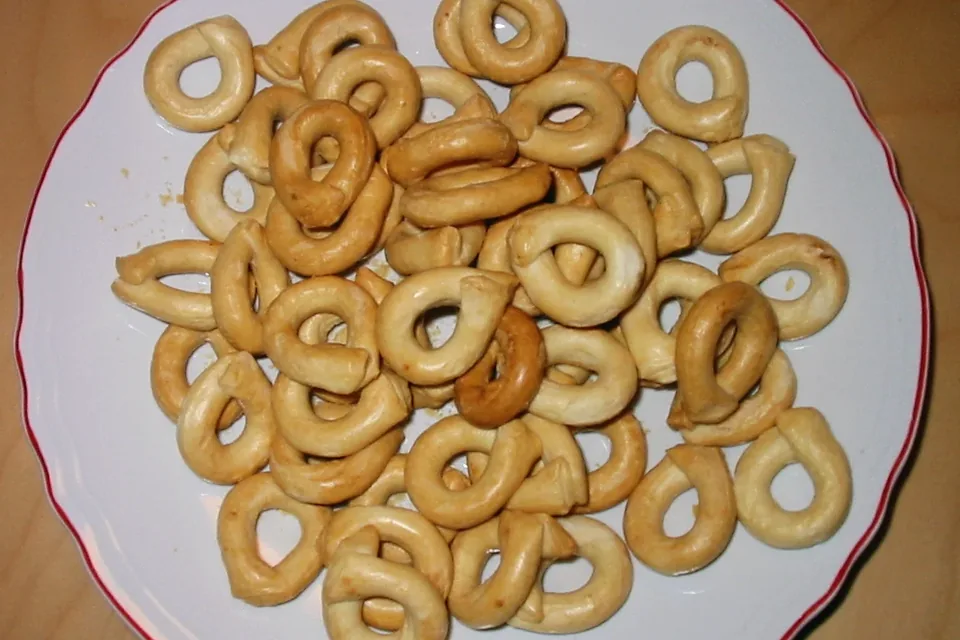
The most recognisable product is the pizzella, a speciality of the town's bakers that the municipal portal is careful to distinguish from both pizza and focaccia: thin, crisp outside and soft inside, with plenty of tomato and no mozzarella, made with durum wheat semolina, oil, salt and yeast. It is a favourite mid-morning snack, on the promenade or aboard one of the traditional boats. Turnip tops, the seasonal green most closely tied to orecchiette, are another direct link with the countryside.
The farmland, about four thousand hectares in the northern Bari area, has always been covered with olive groves of the Ogliarola barese and Coratina varieties, and local mills have won awards in several competitions. For dessert the town boasts a long tradition of artisan ice cream, served in cones and cups or as granita and spumone; one pastry shop in the centre has even turned the cathedral rose window into a chocolate and almond-paste sweet now seen as typical.
Sources: Comune di Giovinazzo — cultura, gastronomia e territorio · Discover Giovinazzo — gastronomia e olio
Things to do
The first experience is the old town itself, walked with your eyes raised. Guides from the tourist Info Point lead visitors among the main monuments, and through the Tesori d'Arte Sacra project the churches and rectories of the old town open as a single spread-out museum, showing works and devotional objects that would otherwise remain closed.
The sea offers a second key. The fortified promenade and the walkway linking the old town to the pier suit a sunset stroll and photographs of the cathedral seen from the water. Along the coast the municipal portal lists stretches of free beach, such as Crocifisso on the western promenade and Arena towards Molfetta, alongside equipped bathing establishments on the rocky shore.
Archaeology lovers can head into the countryside to the San Silvestro dolmen, about six kilometres from town among the olive trees: found in 1961 beneath a pile of stones, it is a Bronze Age megalithic tomb, once covered by a mound forty metres across, with a long inner corridor where the remains of thirteen people were found. The trip also takes in towers, farmhouses and small rural churches. In summer the square and the small harbour host concerts and cultural meetings that liven up the evenings.
Sources: Comune di Giovinazzo — cultura, gastronomia e territorio · Discover Giovinazzo (Comune di Giovinazzo) — mare e spiagge · Regione Puglia, Viaggiare in Puglia — Dolmen di San Silvestro · Discover Giovinazzo — visita della città; portale richiamato dal Comune
When to go
Giovinazzo can be visited all year: the old town, churches and promenade do not depend on the season, while summer adds the sea and a busy calendar of events. Spring and early autumn are the most pleasant times to walk the old town and head into the countryside to the dolmen.
The traditional calendar opens on 17 January with the Fires of Saint Anthony, listed in the regional register of ritual fires: large bonfires are lit in the neighbourhoods, broad beans cook in terracotta pots, olives and wine are offered to guests and music and dancing break out; the date also marks the start of carnival. Holy Week rites follow, celebrated with strong participation.
In August the town honours its patron, Our Lady of Corsignano, whose icon tradition says was given by a French crusader welcomed at the hamlet of Corsignano in the late twelfth century. In the third week of the month the Pro Loco stages the historical procession recalling the transfer of the image, and during those days the cathedral's eighteenth-century organ is played for its only time in the year. From June to September the Giovinazzo summer brings music, dance and theatre, while the Gamberemo Palio pits the five districts against each other, including in a regatta. From 6 December the lighting of the tree in Piazza Vittorio Emanuele II opens the Christmas season.
Sources: Discover Giovinazzo (Comune di Giovinazzo) — eventi della tradizione · Comune di Giovinazzo — cultura, gastronomia e territorio · Discover Giovinazzo — visita della città; portale richiamato dal Comune
Getting there and around
Giovinazzo lies on the coast north of Bari, on the Adriatic railway line. The town station is managed by RFI and served by regional trains; the municipal portal notes that through the Bari hub it is linked to the major Italian cities on the routes to Rome and Milan. RFI lists the station as accessible, with assistance for passengers with reduced mobility arranged by the Bari Sala Blu.
The nearest airport is Bari Palese, less than fifteen kilometres away, reached in a few minutes along the Bari-Foggia main road to the Giovinazzo exit. Drivers on the A14 motorway can leave at Bitonto and follow the signs. STP intercity buses stop on Via Bari, in Piazza Vittorio Emanuele II and on Via Molfetta, and the town also has urban bus lines.
Once there, the old town, harbour and promenade are easy to explore on foot; in summer some parking areas become paid, and it is best to leave the car outside the historic core. For the San Silvestro dolmen and the rural buildings in the countryside you need your own transport. Check timetables and routes on the transport operators' official channels before travelling.
Sources: Discover Giovinazzo (Comune di Giovinazzo) — dove siamo e come raggiungerci · RFI — stazione di Giovinazzo · Discover Giovinazzo (Comune di Giovinazzo) — servizi in città e trasporti
Where to stay
Giovinazzo is small enough to choose accommodation according to the kind of trip. The municipality's tourism portal groups places by category, from overnight stays to campsites, and most of the offer consists of bed and breakfasts and holiday homes, often set in buildings in the old town or in the streets near the harbour and promenade.
Staying in the old town puts the cathedral and the small harbour a few steps away and lets you enjoy the town in the evening, when the promenade fills with bars and small restaurants. Those who prefer space and quiet can look at places along the coast or in the countryside, which also include camping areas, handy for travellers with their own vehicle who want to alternate sea and trips inland.
Thanks to the nearby airport and the station on the Adriatic line, Giovinazzo is also a practical base for visiting Bari and the coastal towns to the north without changing hotel every night. For up-to-date information on accommodation and services, ask at the tourist Info Point in Piazza Umberto I.
Sources: Discover Giovinazzo (Comune di Giovinazzo) — strutture per categoria · Regione Puglia, Viaggiare in Puglia — Giovinazzo · Discover Giovinazzo (Comune di Giovinazzo) — dove siamo e come raggiungerci · Regione Puglia, Viaggiare in Puglia — Info-point Giovinazzo
Nearby
Giovinazzo sits within a string of coastal towns that are worth discovering one at a time. Molfetta, just to the north, offers a close comparison of old town, worship and harbour; further on, Trani puts its seafront cathedral and castle in the foreground. To the south, about twenty kilometres away, Bari adds its old town, the Basilica of San Nicola and a livelier urban life. Rather than linking every harbour in a row, pick one or two comparisons according to your interests.
Inland the landscape changes quickly: from the coast the land rises steadily towards the slopes of the Murgia. In Giovinazzo's own countryside, the San Silvestro dolmen and the watchtowers introduce a reading of stone and olive-growing land. Further away, Altamura and Gravina in Puglia lead into a landscape of wheat and inhabited rock, with a perspective very different from the seafaring one.
This variety makes it easy to build balanced trips, alternating a day of sea and old town with an excursion inland, and returning in the evening to the Adriatic for a walk along the promenade.
Sources: Regione Puglia, Viaggiare in Puglia — Giovinazzo · Discover Giovinazzo (Comune di Giovinazzo) — la storia · Discover Giovinazzo (Comune di Giovinazzo) — dove siamo e come raggiungerci · Regione Puglia, Viaggiare in Puglia — Dolmen di San Silvestro · Discover Giovinazzo — visita della città; portale richiamato dal Comune
Local tourist information
Local tourist offices help with opening times, events and transport on the day.
- Info Point Turistico di Giovinazzo · Piazza Umberto I, 13 — 70054 Giovinazzo (BA) · +39 375 565 3445 · infopointgiovinazzo@gmail.com · Official website
Source: Discover Giovinazzo (Comune di Giovinazzo) — contatti e Info Point turistico · Regione Puglia, Viaggiare in Puglia — Info-point Giovinazzo · checked on
Where to stay
In the municipality of Giovinazzo the national database of the Ministry of Tourism lists 269 accommodation businesses with a verified CIN code: 6 hotels, 62 other licensed accommodation and 201 other types such as B&Bs and private rentals.
Licensed businesses from the official list of Regione Puglia, each with a checked national CIN code: matching municipality and category. Private individuals are not listed. Check directly with the property before booking.
BLU SUN APARTMENT IN COMPLESSO RIVA DEL SOLE
Guest rooms
CIN IT072022B400103388
CASA GIOVINAZZO
Guest rooms
CIN IT072022B400095051
Giovinazzo Historic Apulia
Guest rooms
CIN IT072022B400061356
LA DIMORA DI PERSEO
Guest rooms · Website
CIN IT072022B400128279
LEVANTE LUXURY ROOM
Guest rooms
CIN IT072022B400026424
LEVANTE LUXURY ROOMS
Guest rooms
CIN IT072022B400105891
La Terrazza Blu
Guest rooms
CIN IT072022B400103885
REGIA DOMUS BORGO SETTE TORRI
Guest rooms · Website
CIN IT072022B400060555
RELAIS BELVEDERE
Guest rooms
CIN IT072022B400069415
TENUTA MESSERE DI MESSERE ANNALISA
Guest rooms
CIN IT072022B400024370
YERBABUENA
Guest rooms
CIN IT072022B400098354
B&B DEL FARO
B&B
CIN IT072022B400049058
MAISON LE BLANC
B&B
CIN IT072022B400115600
PORTO DI MARE B&B
B&B · Website
CIN IT072022B400032238
VILLA AL MARE
B&B · Website
CIN IT072022B400032811
CAMPO FREDDO
Campsite · ★★★
CIN IT072022B100021295
ALLE VOLTE MAISON DES VOYAGEURS
Holiday home · Website
CIN IT072022B400125494
BLU MARE CASA VACANZE DI SECLI' SERGIO
Holiday home
CIN IT072022B400129579
BLU SUN APARTMENT 5B IN COMPLESSO RIVA DEL SOLE
Holiday home
CIN IT072022B400104537
BLU SUN APARTMENT 5C IN COMPLESSO RIVA DEL SOLE
Holiday home
CIN IT072022B400104538
BLU SUN APARTMENT 5E IN COMPLESSO RIVA DEL SOLE
Holiday home
CIN IT072022B400104539
CASA VACANZE IL FONDACO
Holiday home
CIN IT072022B400079461
RIVA AZZURRA
Holiday home
CIN IT072022B400123175
VELLO BLU
Holiday home
CIN IT072022B400122505
HOTEL RIVA DEL SOLE
Hotel · ★★★★ · Website
CIN IT072022A100032465
IBIS STYLES BARI GIOVINAZZO
Hotel · ★★★★
CIN IT072022A100020912
LAFAYETTE
Hotel · ★★★★
CIN IT072022A100024127
RESIDENCE RIVA DEL SOLE
Hotel · ★★★★ · Website
CIN IT072022A100032464
S.MARTIN HOTEL
Hotel · ★★★
CIN IT072022A100123993
Torre Domini
Hotel · ★★★
CIN IT072022A100058959
Sources: Regione Puglia – ARET Pugliapromozione (DMS), CC BY 4.0, 2026-10-12 · Ministero del Turismo – Banca Dati Strutture Ricettive (dashboard pubblica), 2026-10-12
YOUR JOURNEY
How to shape a journey here
Harbour, cathedral and pizzella: an Adriatic ending connecting coastal town and olive-growing countryside.
Talk to us about it