Why go
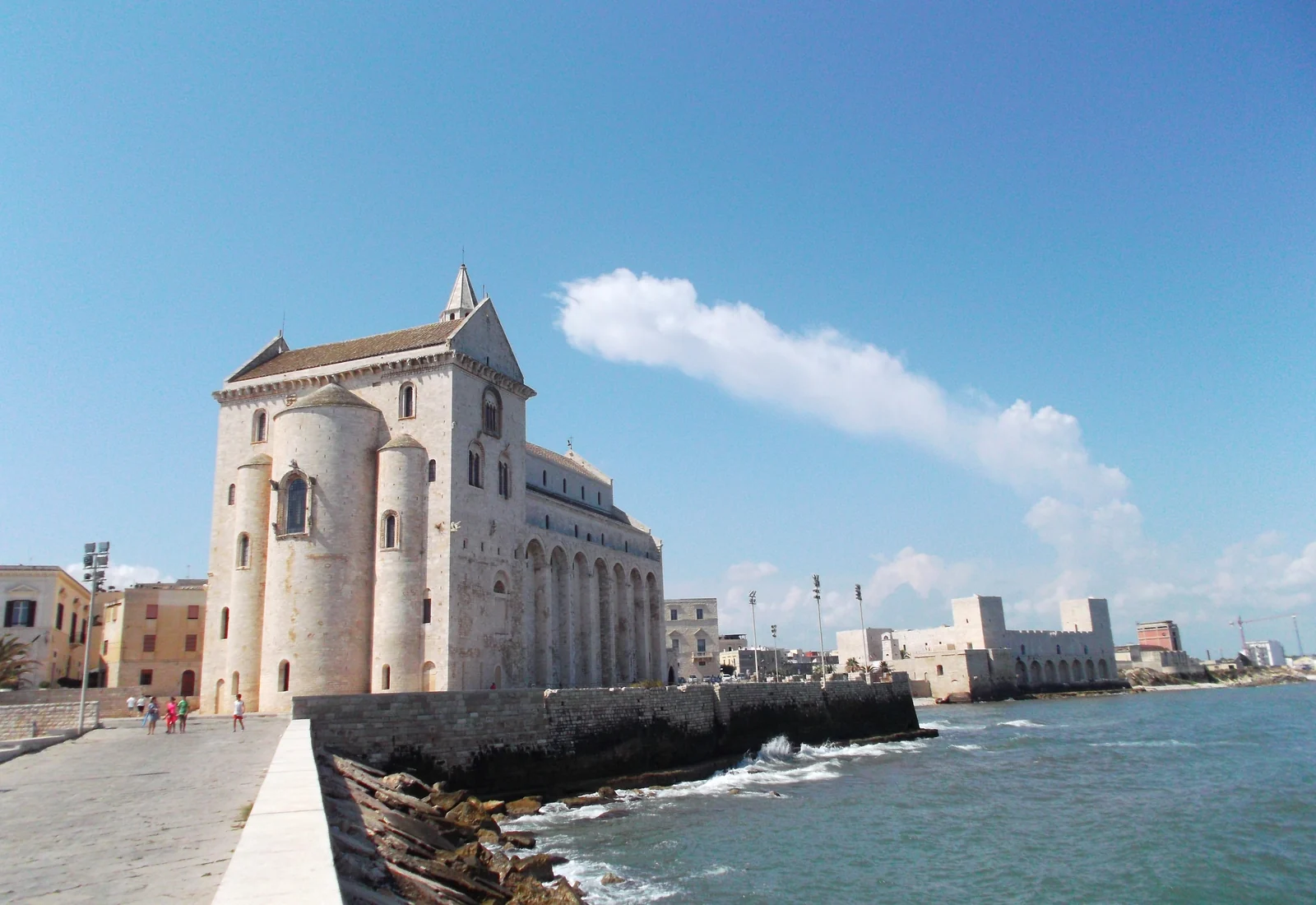
Trani is one of the most elegant towns on Puglia's Adriatic coast. The Region's tourism portal describes it as a “pearl” of white stone, sea and fragrant countryside, about 43 kilometres from Bari, and a provincial capital together with Andria and Barletta. Its best-known image is the Romanesque cathedral standing alone by the sea, among the most famous in the world according to the cathedral itself, with Frederick II's Swabian castle beside it.
But Trani is more than a monument. The old town is a tangle of paved streets with craft workshops, galleries and small fish restaurants; the harbour, enclosed between two piers, is the heart of town life, with colourful fishing boats and the morning fish market. Behind the harbour lies the old Jewish quarter, the Giudecca.
The Region also recalls Trani's vocation as a city of law, with the Ordinamenta et Consuetudo Maris, among the oldest maritime codes in the Mediterranean, and as a place where different faiths live side by side. A member of the slow-city network and a stage on the Via Francigena, it is also the home of Moscato di Trani, the sweet wine of local tradition.
According to the municipality, the cathedral of San Nicola Pellegrino is the mother church of the Archdiocese of Trani-Barletta-Bisceglie, and UNESCO has declared it a “Monument messenger of a culture of peace”. The town’s Jewish memory can be visited in two medieval buildings of the Giudecca: the Scolanova Synagogue, which the municipality describes as the most important testimony of the old Jewish quarter, and the former Great Synagogue of 1247, today the Museo Sinagoga Sant’Anna.
Sources: Viaggiare in Puglia (Regione Puglia) — Trani · Basilica Cattedrale di Trani — storia e struttura · Ministero della Cultura — Castello Svevo di Trani · Comune di Trani — Cattedrale di Trani · Comune di Trani — Sinagoga Scolanova · Comune di Trani — Museo Sinagoga Sant’Anna
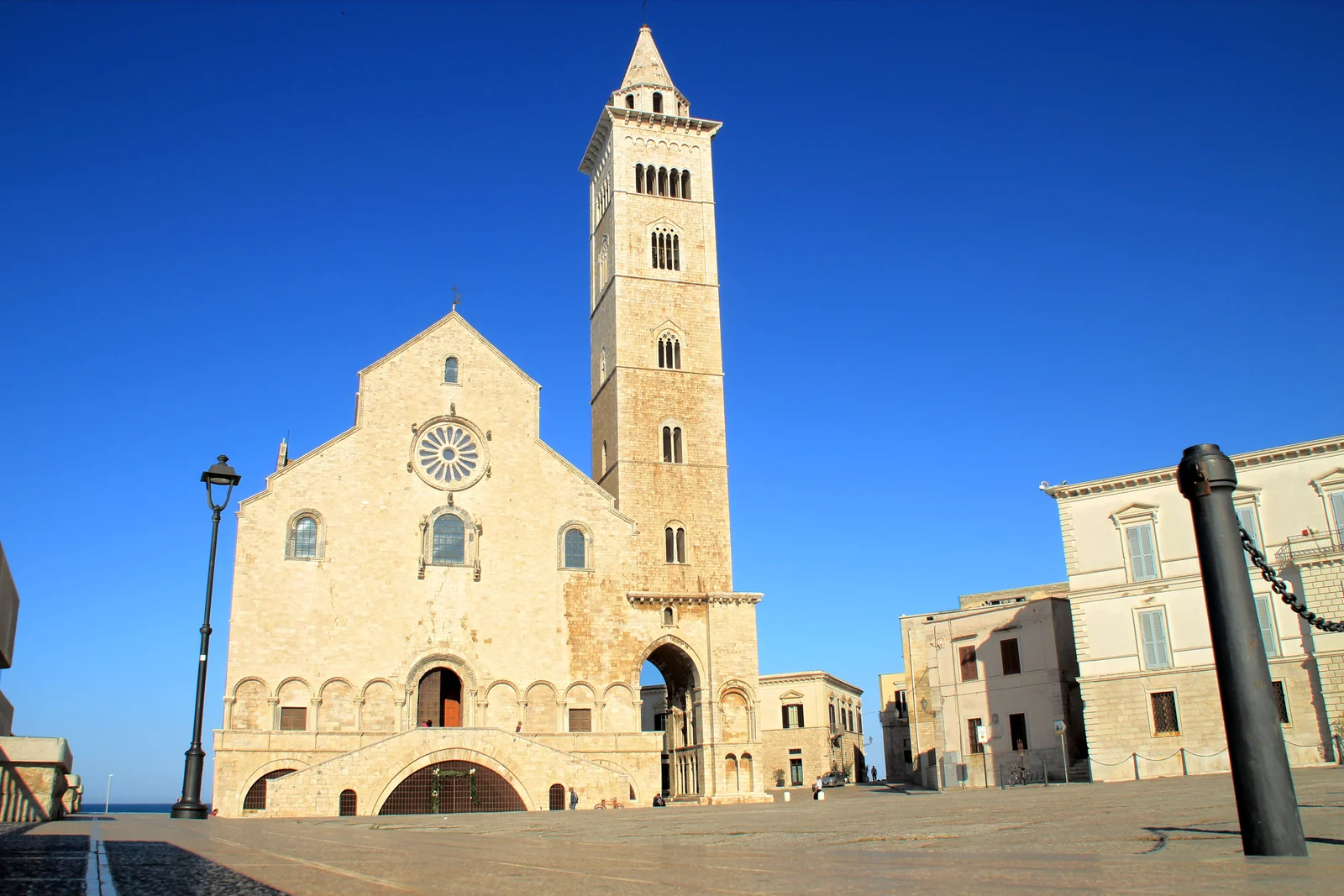
Photo: Pejrò1 / Wikimedia Commons — CC BY-SA 4.0 · Resized and converted to WebP.
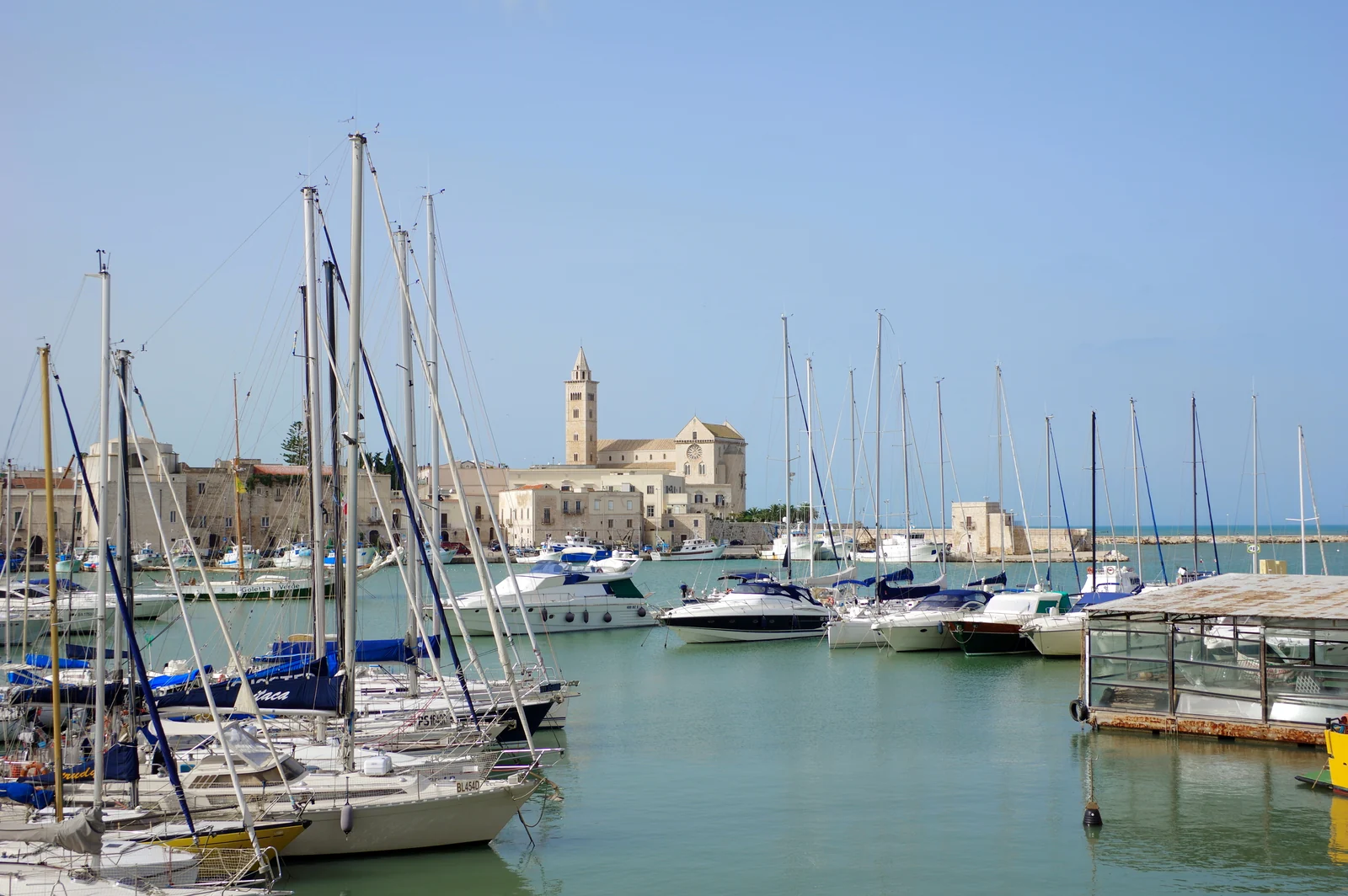
Photo: Berthold Werner / Wikimedia Commons — CC BY-SA 3.0 · Resized and converted to WebP.
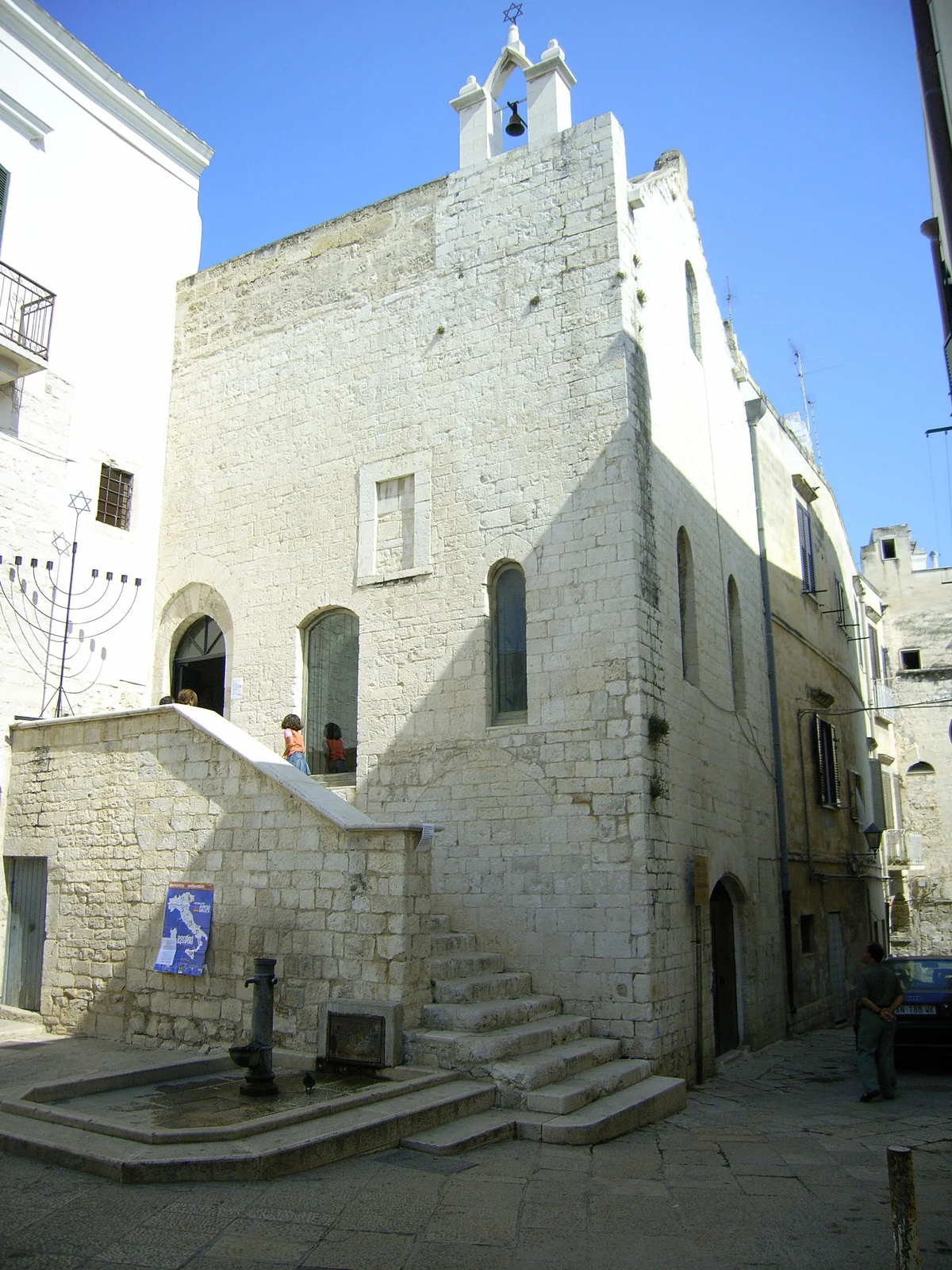
Photo: Aerostrato sig. Giuseppe CALAMITA / Wikimedia Commons — CC BY 3.0 · Resized and converted to WebP.
History
For centuries Trani was one of Puglia's most important ports. The regional portal recalls its role as a Mediterranean crossroads and gateway to the East: in the age of the Crusades it was a port of embarkation for the Holy Land, and Frederick II protected its trade, including that of Jewish merchants bound for the Levant. The Ordinamenta et Consuetudo Maris date from 1063 and are considered the oldest medieval maritime code in the Mediterranean.
The cathedral grew out of a pilgrim's story. In 1099, after the death and canonisation of the young pilgrim Nicholas, who had landed at Trani from Greece, Bishop Bisanzio began the new church on the site of an early Christian cathedral documented from the ninth century, of which the Lombard-era hypogeum of San Leucio and parts of the mosaic floor survive. Work continued until the last decades of the twelfth century.
The castle, built by Frederick II, bears an inscription of 1233 on the portal of the western courtyard. In the sixteenth century it was adapted to firearms with bastions and casemates, in the nineteenth it became a prison, and since the 1970s it has been restored and turned into a museum by the State. In the Jewish quarter, the church of Santa Maria Scolanova, built in the thirteenth century, was one of the town's four synagogues.
The chronology published by the Basilica tells the story of the saint to whom it is dedicated. Nicholas was born in 1075 in Stiri, Greece; driven from home by his mother for calling people to conversion with the motto “Kyrie eleison”, he sailed for Otranto in 1092 and passed through Taranto. On 20 May 1094 he reached Trani, where his preaching in the streets drew the children and Archbishop Bisanzio allowed him to stay; he fell ill and died on 2 June, aged 19. Pope Urban II canonised him in 1099.
The municipality traces the castle’s phases. Built at the wish of Frederick II in 1233, it received its curtain wall in 1249, the work of Stefano di Romualdo Carabarese to a design by Filippo Cinardo. Between 1533 and 1541 Charles V adapted it to firearms: one front was heavily thickened and fitted with gun ports, and two bastions, one spearhead-shaped and one square, protected the corners. From 1586 to 1677 it housed the Sacra Regia Udienza of the Province of Bari; between 1832 and 1844 it became the Central Provincial Prison, and in 1848 the small clock tower was added above the eastern entrance. After the prison closed in 1974, the castle passed in 1976 to the Superintendency, which restored it from 1979 to 1998, the year it reopened to the public.
The Great Synagogue also has a date carved in stone: its foundation inscription gives the year 5007 from the creation of the world in the Hebrew calendar, that is 1247. Towards the end of the same century, under the Angevins, it became a Catholic church, and for five hundred years it has borne the name of Sant’Anna. According to the municipality, in the central centuries of their presence the Jews of Trani numbered more than two hundred families.
The old town already had four gates in the Lombard period. One was Porta Nova: the last stretch of the road leading to it is incorporated in the former San Lorenzo conservatory, a seventeenth-century municipal building on the Via Francigena, standing where the Hospital of the Poor Wayfarers stood until 1600. On the Colonna peninsula, the monastery dates from the early 1100s: it was home first to Benedictines and then, from 1427 to 1867, to Franciscans.
Sources: Viaggiare in Puglia (Regione Puglia) — Trani · Basilica Cattedrale di Trani — storia e struttura · Ministero della Cultura — Castello Svevo di Trani · Regione Puglia — cartoguida Monumenti e Feste · Basilica Cattedrale di Trani — Cronologia della vita di San Nicola Pellegrino · Comune di Trani — Castello Svevo (storia, biglietteria, contatti) · Comune di Trani — Museo Sinagoga Sant’Anna · Comune di Trani — Hub Portanova, ex Conservatorio San Lorenzo · Comune di Trani — Monastero di Colonna
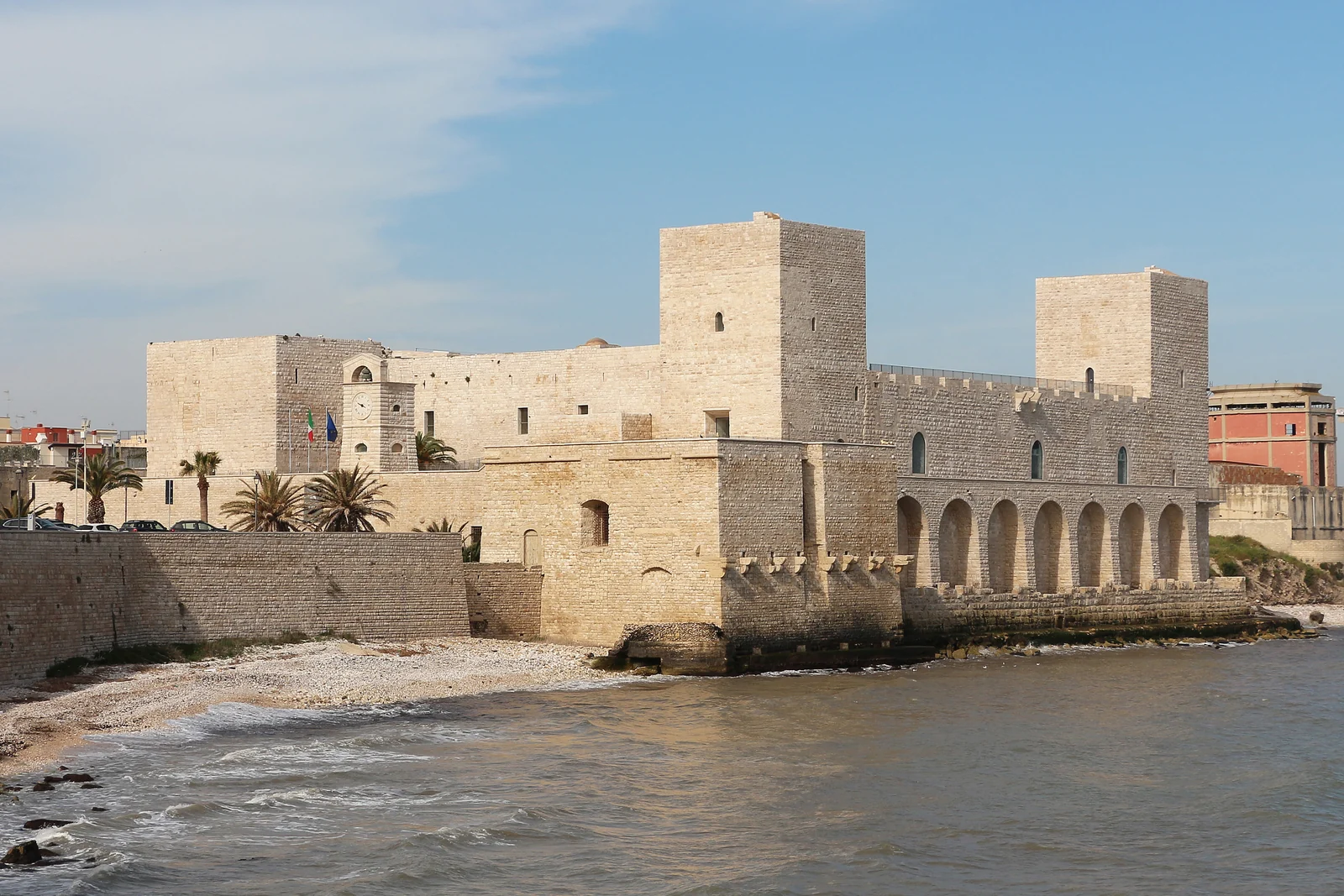
Photo: Bernard Gagnon / Wikimedia Commons — CC0 · Resized and converted to WebP.
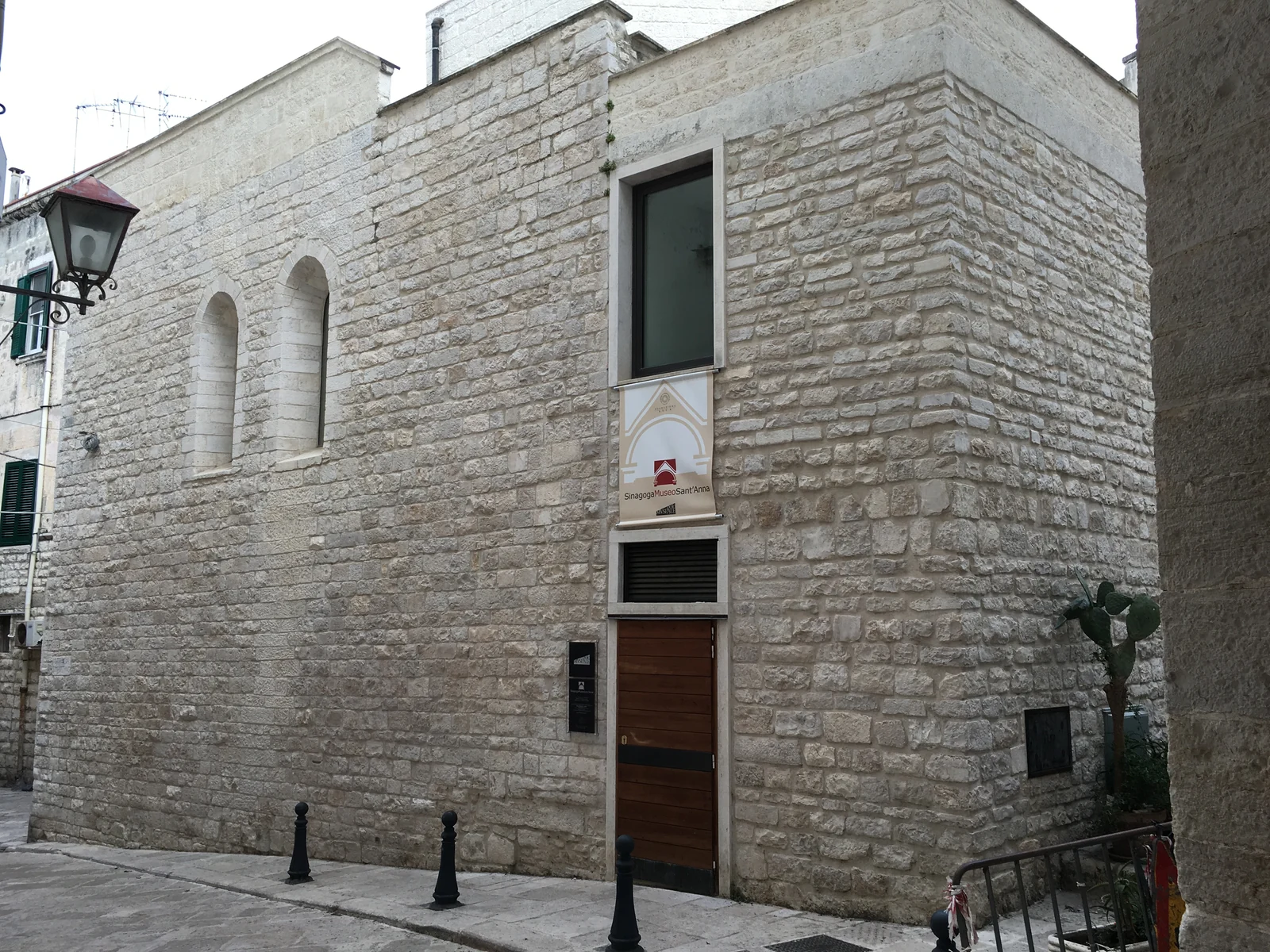
Photo: Olevy / Wikimedia Commons — CC BY-SA 4.0 · Resized and converted to WebP.
What to see
The Cathedral of San Nicola Pellegrino, in pale limestone from local quarries, is an outstanding example of Apulian Romanesque. The design keeps it clear of rising seawater and it stands entirely above ground: the crypt, which holds the saint's relics, is tall and bright, with cross vaults on columns of Greek marble. Beneath the upper church, with three naves, galleries and paired columns, lies a hall church that keeps the name of the old Santa Maria; further down is the hypogeum of San Leucio with its walkway for pilgrims. Traces of the original mosaic floor remain in the presbytery.
Nearby, the Swabian Castle stands in the middle of a bay whose shallow waters were a natural defence. Modelled on Crusader castles, it has a square plan with four corner towers; visitors see the two Frederician halls on the first floor, the courtyards, the Renaissance bastions and the nineteenth-century cells. Among the finds on display are a corbel showing Adam and Eve and fragments of Frederician-era pottery.
In the old town, Palazzo Caccetta stands out with its late Gothic friezes, and Palazzo Telesio overlooks the harbour. In the Giudecca, the church of Santa Maria Scolanova, built entirely of stone with an outside staircase, now belongs to the town's Jewish community.
The Basilica’s website describes the masterpieces of the façade. The marble portal and the bronze door were commissioned by Archbishop Bertrando, who led the diocese from 1157 to 1187, and entrusted to the Trani sculptors Bernardo and Eustasio and to the founder Barisano, who also made the door of Ravello cathedral, dated 1179, and one of the doors of Monreale cathedral. The original door, eight rows of four bronze panels, is kept inside the cathedral, while a copy hangs on the portal; at the feet of Saint Nicholas the Pilgrim the maker portrayed himself, signing “Barisanus tranensis”. The bell tower, begun in the thirteenth century, bears the signature of “Nicolaus sacerdos et protomagister”; in the presbytery, among the surviving pieces of the floor mosaic, are Adam and Eve by the Tree of Knowledge and the flight of King Alexander.
Entry to the Basilica is free, with a voluntary offering; the bell tower is visited for a fixed offering per person. The Crypt of Saint Nicholas, where the saint’s relics lie, is reserved for prayer and tourist visits are not allowed there; inside, photography and filming are not permitted without written authorisation from the Curia, clothing covering shoulders and legs is required, and groups of seven or more book their entry on the Basilica’s website.
At the castle, the museum on the ground floor of the square bastion holds stone and ceramic finds from the excavations carried out during the restorations, such as a fragment of a Frederician-era proto-majolica plate showing a dancer; since 2021 the outer wall walks have been open to the public, recovered with investments totalling 5 million euros. Tickets and hours are those of the regional directorate of the national museums of Puglia, with a combined ticket that includes Castel del Monte.
On Piazza Duomo, the seventeenth-century Palazzo Lodispoto is the heart of the Polo Museale: on its four levels it houses the Diocesan Museum, founded in 1975 at the wish of Archbishop Giuseppe Carata with stone and sculptural material from the cathedral and other Trani churches, the Typewriter Museum of the S.E.C.A. Foundation and a cultural area. In the Giudecca the Museo Sinagoga Sant’Anna shows the dome on its octagonal drum, finds from the twelfth to the sixteenth century including Swabian and Angevin imperial privileges, an old mezuzah and fragments of a Hebrew Bible, and in the eighteenth-century crypt gravestones from the town’s two Jewish cemeteries. The Scolanova Synagogue, an example of Apulian Romanesque, was entrusted by the municipality under a concession to the Jewish Community of Naples in December 2017.
Palazzo delle Arti Beltrani, opened on 30 December 2009, houses on its first floor the picture gallery dedicated to the painter Ivo Scaringi (1937-1998), with the municipal nineteenth-century collections and several donations, as well as temporary exhibitions; today it is run by private operators under concession. The small church of San Martino, two metres below street level, is documented in 1131, when the monks of Saint Ildefonsus served there; used over the centuries as an oven and a storehouse, after restoration it has been entrusted since 2008 to the Romanian Orthodox community.
Sources: Basilica Cattedrale di Trani — storia e struttura · Ministero della Cultura — Castello Svevo di Trani · Regione Puglia — cartoguida Monumenti e Feste · Viaggiare in Puglia (Regione Puglia) — Trani · Basilica Cattedrale di Trani — Visita la Cattedrale (regole, ingresso, campanile) · Comune di Trani — Castello Svevo (storia, biglietteria, contatti) · Ministero della Cultura, Direzione regionale Musei nazionali Puglia — Biglietti e orari dei musei · Comune di Trani — Polo Museale Diocesano · Comune di Trani — Museo Sinagoga Sant’Anna · Comune di Trani — Sinagoga Scolanova · Comune di Trani — Palazzo delle Arti Beltrani — Pinacoteca Ivo Scaringi · Comune di Trani — Chiesa di San Martino
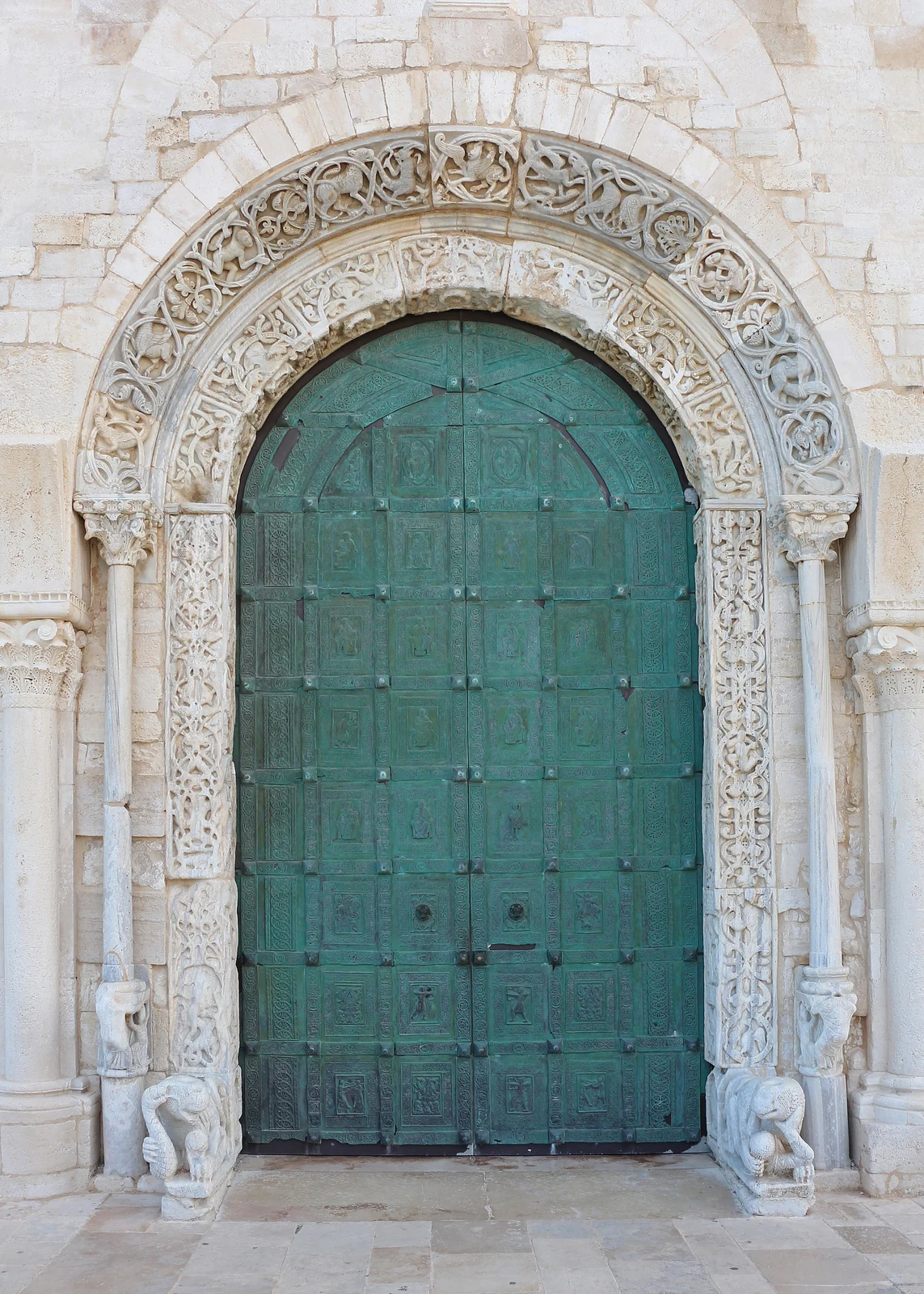
Photo: Bernard Gagnon / Wikimedia Commons — CC0 · Resized and converted to WebP.
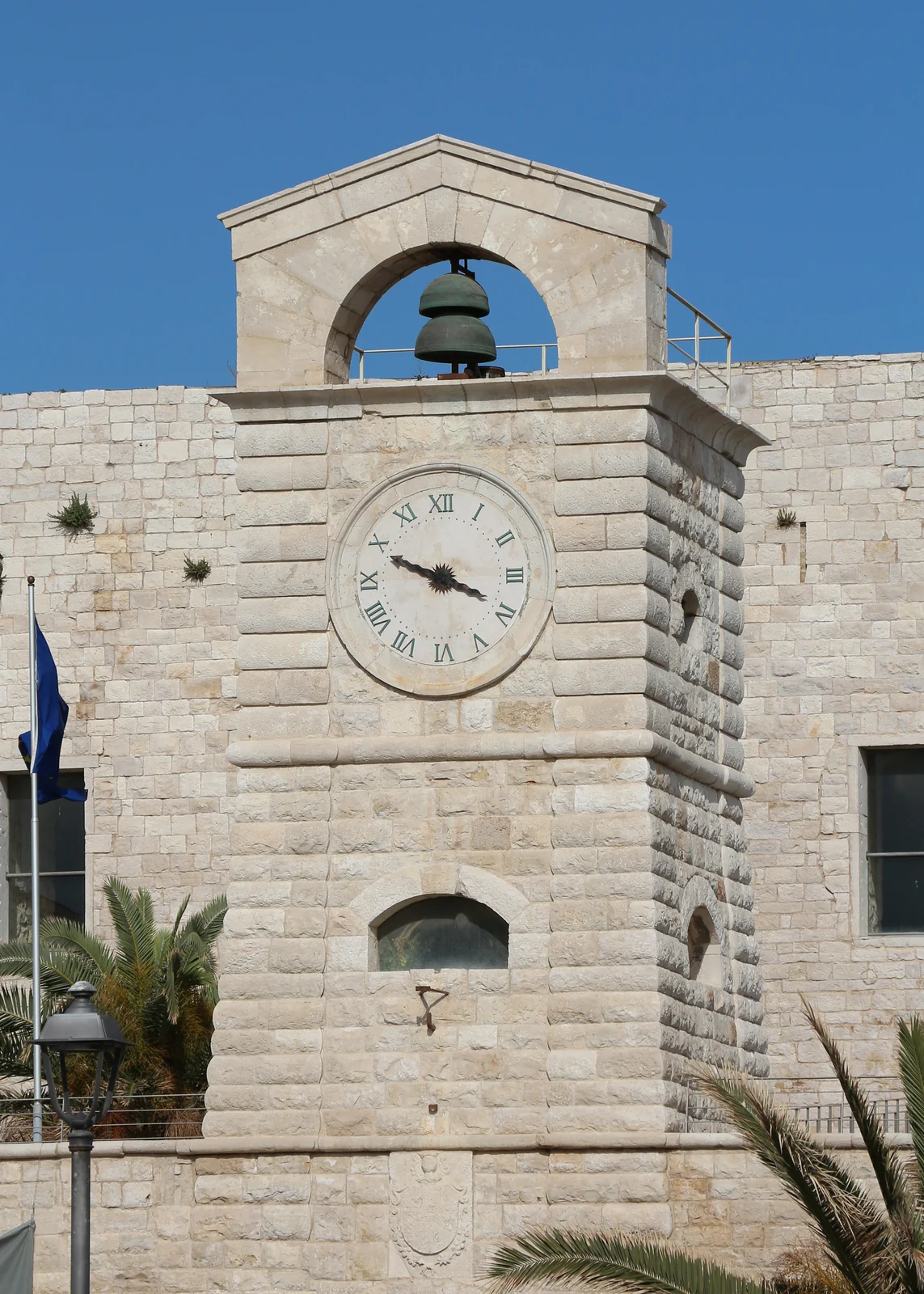
Photo: Bernard Gagnon / Wikimedia Commons — CC0 · Resized and converted to WebP.
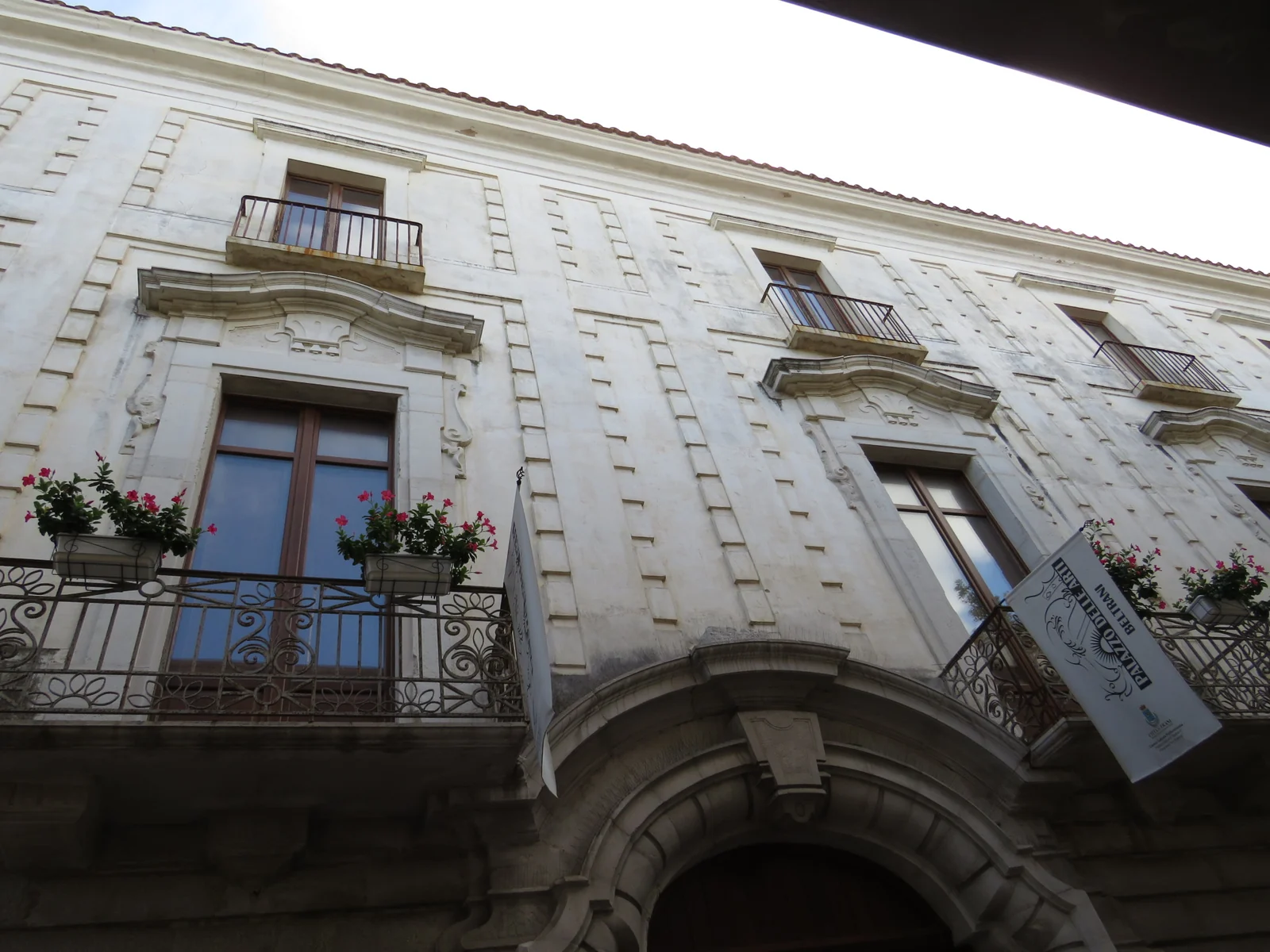
Photo: Enric / Wikimedia Commons — CC BY-SA 4.0 · Resized and converted to WebP.
Food and wine
Trani's signature wine is Moscato di Trani DOC, made with at least 85% Moscato bianco, known locally as Moscato di Trani or Reale. The rules provide for two types: Dolce Naturale, ranging from bright straw yellow to golden, with an aromatic, fruity and spicy nose and a sweet, warm taste; and Liquoroso, golden with amber highlights. The production area extends beyond the town and includes Trinitapoli and many municipalities in the provinces of Bari and Barletta-Andria-Trani.
The regional portal presents it as the pride of the town's wine production and describes the traditional method: the grapes are left to wither on the vine for at least a month and picked at the end of October, which gives the wine its intense apricot aroma. It is a dessert wine, but it also goes well with the area's mature cheeses.
Trani's cooking is mainly of the sea. The harbour, with its fishing boats and morning market, supplies the fish restaurants of the old town and the quayside, where you can taste the Adriatic catch and dishes of the coastal tradition.
Sources: Qualigeo (Fondazione Qualivita) — Moscato di Trani DOP · Viaggiare in Puglia (Regione Puglia) — Trani
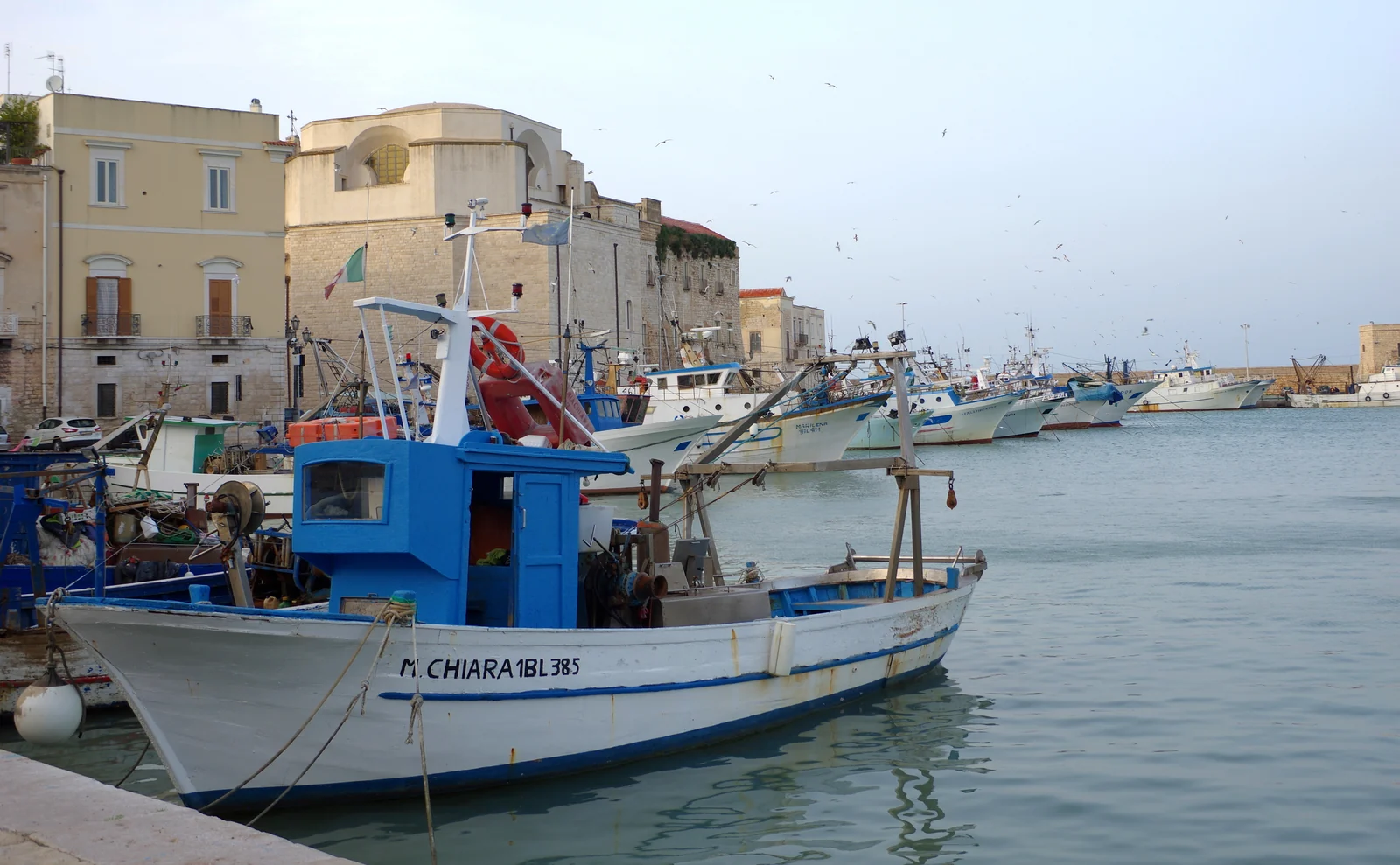
Photo: Berthold Werner / Wikimedia Commons — CC BY-SA 3.0 · Resized and converted to WebP.
Things to do
The first experience is a stroll: from the harbour to the cathedral square along the sea, then into the lanes of the old town among workshops, galleries and palazzi. The harbour, between the Santa Lucia and Sant'Antonio piers, is lively at all hours: in the morning with the fish market, in the evening with the bars and restaurants lining the quay.
The castle offers a multimedia, hands-on visitor route telling the story of defensive techniques from the Middle Ages to the nineteenth century; it also takes part in national initiatives such as the European Night of Museums and European Heritage Days. In the cathedral, going down to the hypogeum of San Leucio reveals three churches stacked in a single building.
The sea offers other activities. The regional portal mentions fishing-tourism trips from the small harbour and, towards Bisceglie, a coastline with clear waters. For sustainable travel there is bike sharing, and a cycle path runs along the eastern seafront between Piazza Plebiscito and Piazza Marinai d'Italia. Those interested in interfaith dialogue can follow a route linking the cathedral, the Orthodox church of San Martino, the Scolanova synagogue and the mosque.
The public gardens, the villa comunale, are a tree-lined terrace on the seafront, with fountains, the war memorial and a stele for the victims of the foibe; inside there are a children’s playground, an outdoor fitness area, the bandstand, a chalet for exhibitions, an aquarium and an aviary. For more outdoor play the municipality lists the Parco dei Cinque Sensi in Via Grecia, almost 3,000 square metres with a themed play area, and Parco Petrarota at Villa Bini, near the Stadio district, with play equipment and a dog run.
The Scolanova Synagogue can be entered without a guide on fixed days and times published by the municipality; guided tours, in Italian, English and French, are by reservation only with at least 48 hours’ notice, and men are asked to bring a head covering.
Sources: Viaggiare in Puglia (Regione Puglia) — Trani · Ministero della Cultura — Castello Svevo di Trani · Basilica Cattedrale di Trani — storia e struttura · Comune di Trani — Villa Comunale · Comune di Trani — Parco dei Cinque Sensi · Comune di Trani — Parco Petrarota · Comune di Trani — Sinagoga Scolanova
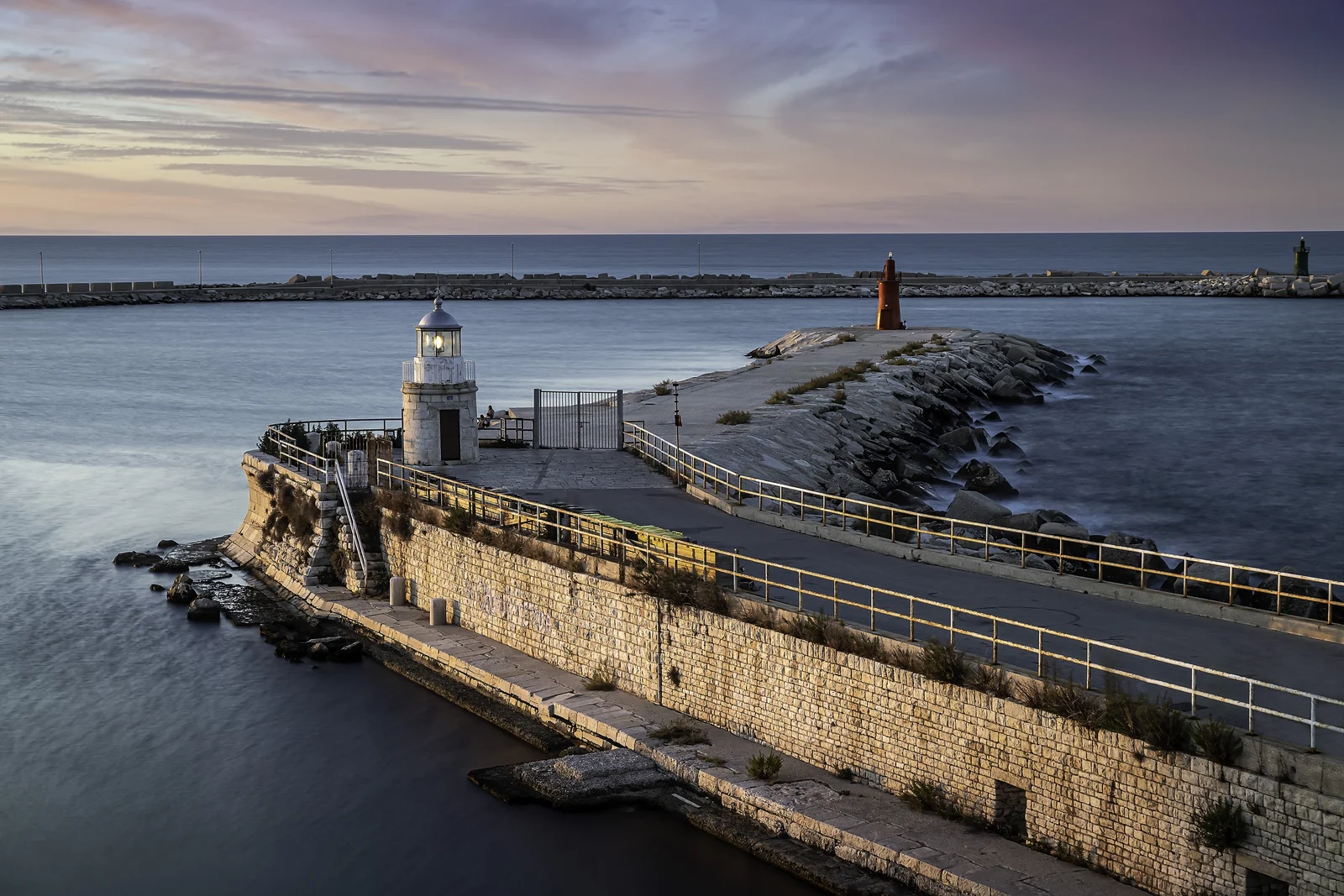
Photo: LucaAffatato / Wikimedia Commons — CC BY-SA 4.0 · Resized and converted to WebP.
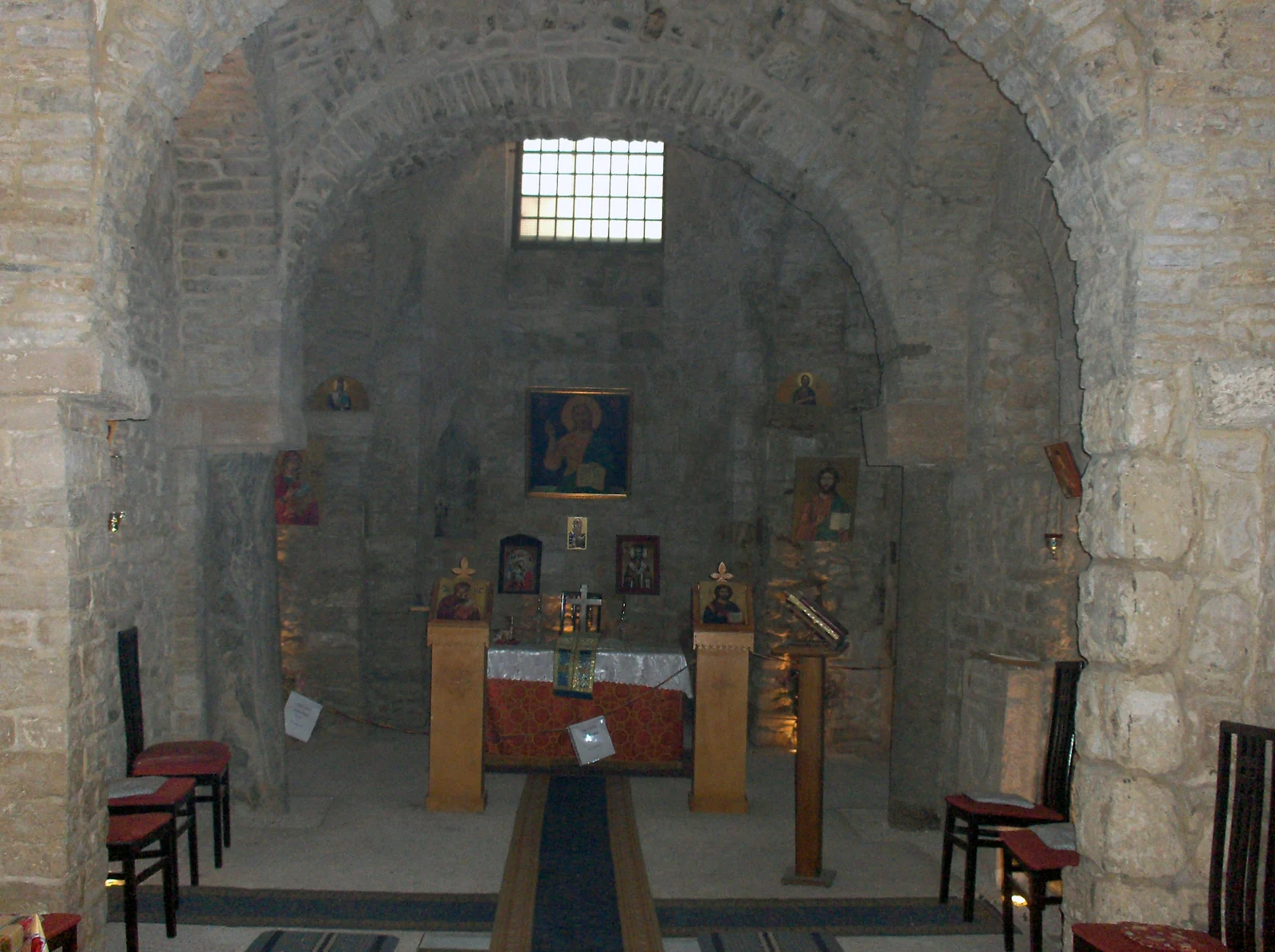
Photo: Tommytrani at Italian Wikipedia / Wikimedia Commons — CC BY 3.0 · Resized and converted to WebP.
When to go
Trani can be visited all year round: the cathedral, the castle and the old town are always accessible. Spring and autumn are ideal for walking around town and along the seafront; summer adds the sea and evenings on the harbour quay, and at the end of October, in the nearby countryside, the withered grapes for Moscato are picked.
Among the festivals, the regional guide mentions the Feast of the Cross of Colonna on 3 May: a procession of boats leaves the Colonna peninsula with the Crucifix aboard a fishing boat, and when the procession lands in the harbour the waters are blessed amid fireworks and bells, before the procession through the streets of the centre. During Holy Week, in the early hours of Good Friday, the procession of Our Lady of Sorrows crosses almost the whole town, passing the Sepulchres in the churches.
For a cultural visit, national museum initiatives such as the European Night of Museums in spring and European Heritage Days at the end of September offer special openings of the castle; dates and programmes should be checked each year.
The Basilica has two opening calendars, one from November to March and a longer one from April to October, and tourist visits are suspended during religious services. The castle opens every day, on Sundays in the morning only. For Saint Nicholas the Pilgrim the Basilica’s chronology recalls two dates: 20 May, the day he arrived in Trani, and 2 June, the day he died.
Sources: Regione Puglia — cartoguida Monumenti e Feste · Viaggiare in Puglia (Regione Puglia) — Trani · Ministero della Cultura — Castello Svevo di Trani · Basilica Cattedrale di Trani — Visita la Cattedrale (regole, ingresso, campanile) · Ministero della Cultura, Direzione regionale Musei nazionali Puglia — Biglietti e orari dei musei · Basilica Cattedrale di Trani — Cronologia della vita di San Nicola Pellegrino
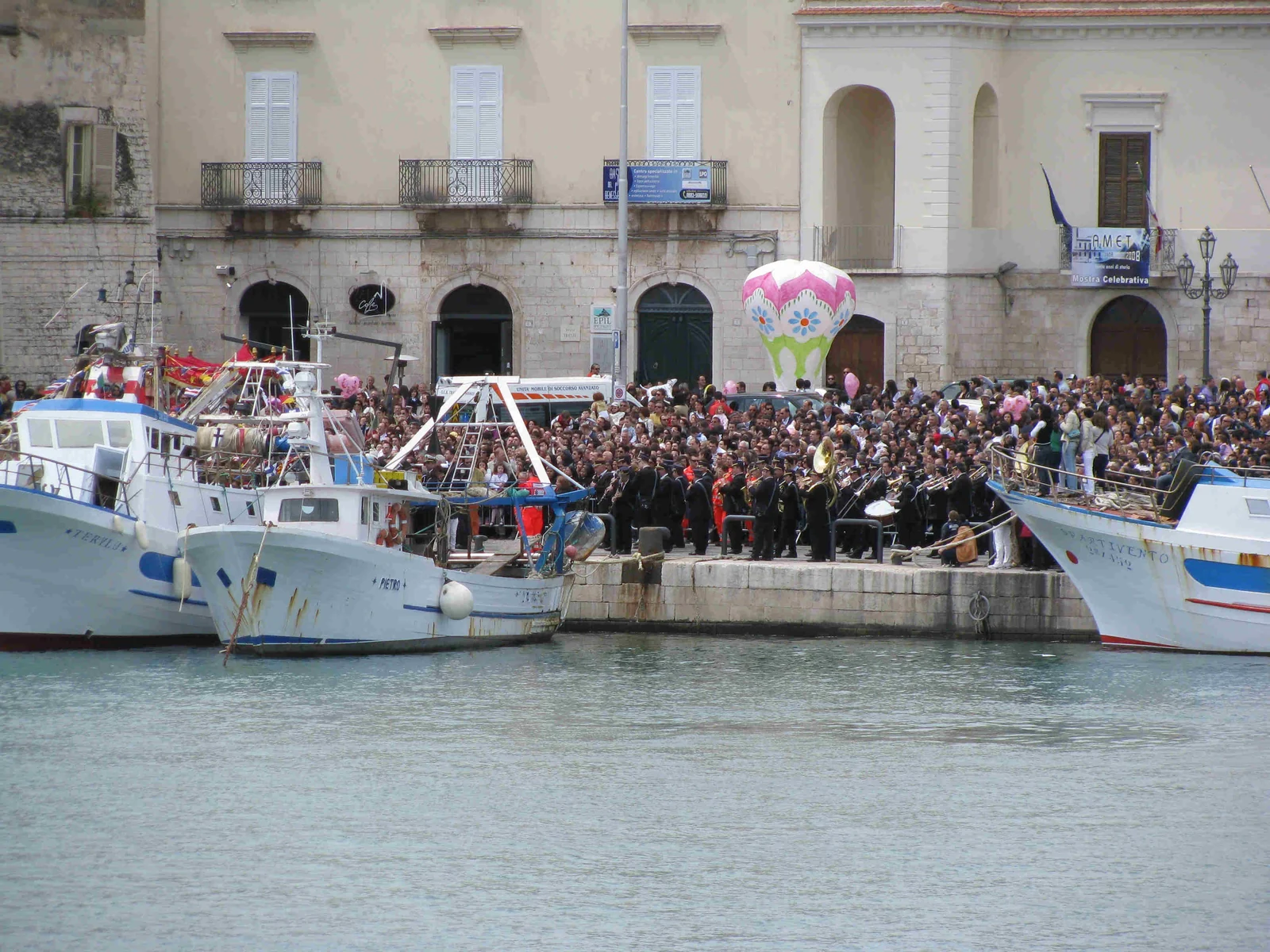
Photo: Savinogiusto / Wikimedia Commons — Public domain · Resized and converted to WebP.
Getting there and around
Trani is on the Adriatic railway line: according to the regional tourism portal, its central station offers connections to every regional and long-distance destination. From the station, the old town and harbour can be reached on foot or by AMET urban buses, running from morning to evening; intercity lines are run by the COTRAP consortium.
The nearest airport is Bari, about 43 kilometres away, reached by transfer; from the airport the Bari-Nord railway runs to central Bari. By car, Trani has its own exit on the A14 motorway, which the Alta Murgia Park also lists as an access point to the Murgia interior.
In town you get around easily on foot, by bike thanks to the bike-sharing scheme and the cycle path on the eastern seafront, or by hiring scooters and cars. For tourist information there is the Trani Info-point in Piazza Trieste.
According to RFI, Trani station has three passenger platforms: the first is reached step-free or by ramp, the second and third by lift. It is a station with assistance for people with disabilities and reduced mobility, to be requested from the Bari Sala Blu up to 12 hours before the train, and it has accessible toilets, parking with reserved spaces, a tourist information point, a bar and a bus stop.
For tour coaches the municipality has a free car park in Via Finanzieri, a few minutes from the northern exits of the SS16 bis, Sant’Angelo and Trani Nord. Those arriving by boat find the municipal marina, equipped since 1984, with part of its services entrusted to AMET, with berths, water and power points, a watch service and VHF radio assistance. The tourist information point in Piazza Trieste has been open since 2016.
Sources: Viaggiare in Puglia (Regione Puglia) — Trani · Viaggiare in Puglia (Regione Puglia) — Info-point Trani · Parco Nazionale dell'Alta Murgia — Come raggiungere il Parco · RFI (Rete Ferroviaria Italiana) — Stazione di Trani · Comune di Trani — Bus Parking Trani · Comune di Trani — Darsena Comunale · Comune di Trani — Infopoint turistico comunale
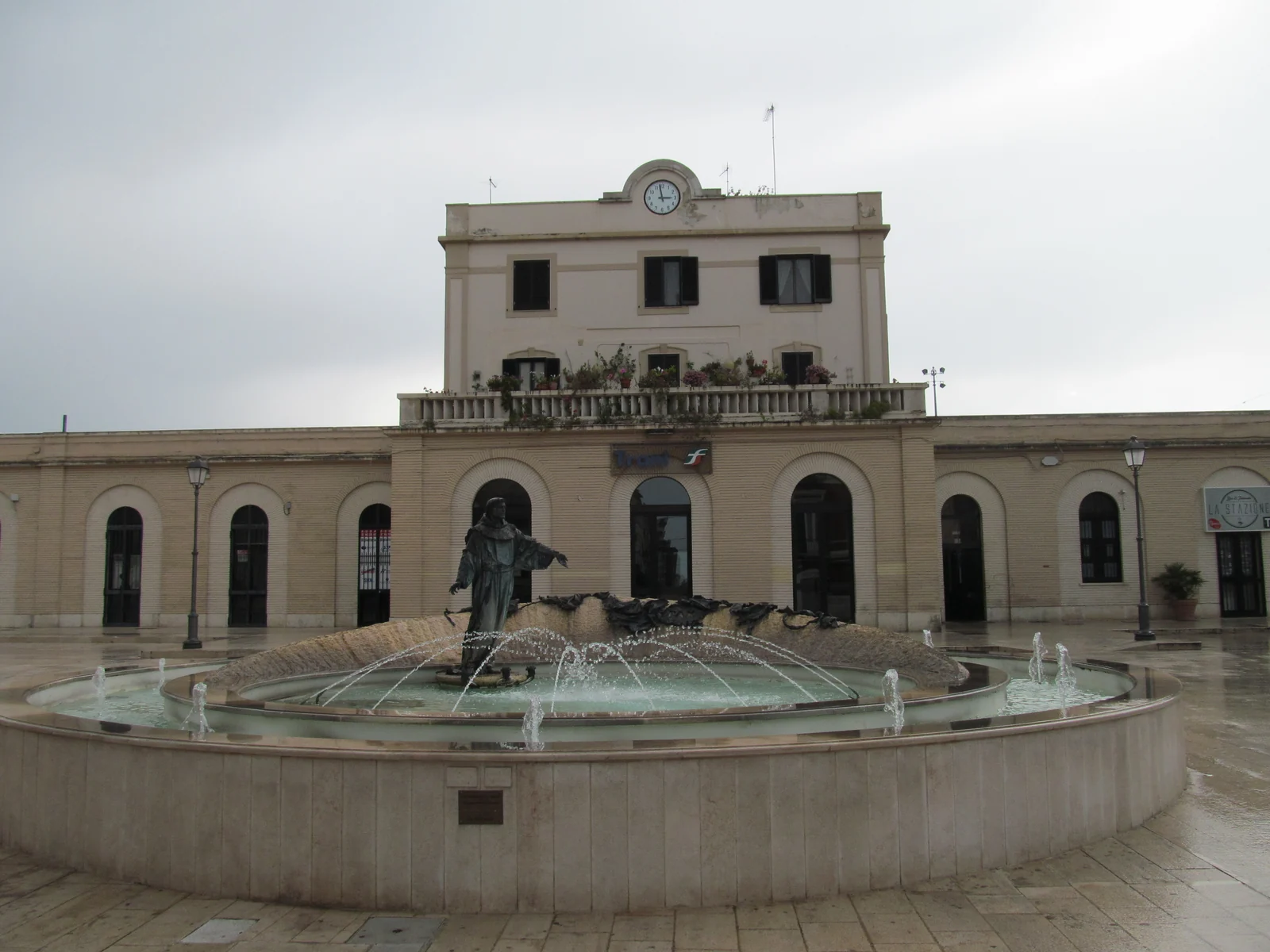
Photo: Chris0693 / Wikimedia Commons — CC BY-SA 3.0 · Resized and converted to WebP.
Tourism
From 2026 Trani applies a tourist tax: the regulation was approved by the town council on 26 January 2026 and takes effect, with the rates, from the first day of the second month after its publication by the Ministry of Economy. It is paid per person and per night, up to a maximum of six consecutive nights in the year, to the accommodation manager before the end of the stay, who issues a receipt; rates and seasons are set by the town’s executive according to the type of accommodation. Exempt among others are young people up to their sixteenth birthday, people with a recognised disability who receive the attendance allowance and one companion, coach drivers and one tour leader for every 20 participants in groups organised by travel agencies; except for minors, the exemption is declared to the accommodation on the council’s form.
“Come to Trani as a guest, not as a tourist: that is how these places truly let you know them.”
Where to stay
Trani's old town is the most atmospheric place to stay: B&Bs, apartments and small hotels in historic palazzi let you experience the town on foot, between the cathedral, the castle and the harbour, and enjoy the quay in the evening when the bars and restaurants around it come alive.
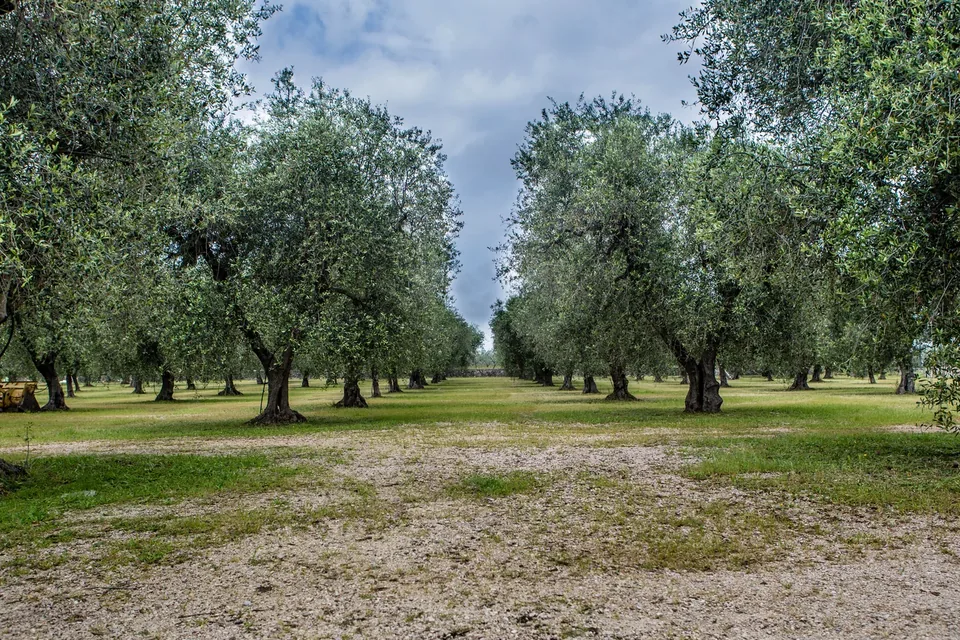
Those who prefer the sea can choose places on the seafront or along the coast towards Bisceglie, where the regional portal notes clear waters and fine sandy beaches. In the surrounding countryside, among olive groves and vineyards, there are masserie and farm stays, suited to travellers with a car who want to combine the town with trips inland.
With its well-connected station and motorway exit, Trani is also a convenient base for exploring the coast between Barletta, Bisceglie and Molfetta and for day trips to Castel del Monte and Andria.
For those walking the Via Francigena, the municipality has created in the former San Lorenzo conservatory, in Via Nigrò, at the entrance to the old town, an eco-hostel with a dining room and a self-catering kitchen, and a mobile bicycle workshop for visitors.
Sources: Viaggiare in Puglia (Regione Puglia) — Trani · Ministero della Cultura — Castello Svevo di Trani · Comune di Trani — Hub Portanova, ex Conservatorio San Lorenzo
Nearby
Trani shares the role of provincial capital with Andria and Barletta, and together they form a small Frederician itinerary. Andria's cathedral holds the tombs of two of Frederick II's wives, and its territory includes Castel del Monte, a UNESCO site since 1996, in the Alta Murgia National Park; Barletta, just to the north, has its castle and the picture gallery devoted to Giuseppe De Nittis.
Along the coast towards Bari, only eight kilometres away, Bisceglie has an old town enclosed by Aragonese walls, a Swabian castle and countryside rich in dolmens; further on, Molfetta has the Old Cathedral of San Corrado, built in the twelfth and thirteenth centuries and among the most significant monuments of Apulian Romanesque.
Inland, Trani's countryside belongs to the Moscato and Castel del Monte wine areas. With two or three days you can alternate the Romanesque coast, the octagonal castle and the towns of Alta Murgia.
Without leaving the municipal territory, about 2 kilometres from the centre, the monastery of Santa Maria di Colonna occupies the peninsula of the same name: abandoned for decades, it has been brought back into use by the municipality and houses an archaeological museum. Along the coast lies the Boccadoro basin, built in the 1820s to supply Trani with drinking water and abandoned when tests showed the water was too salty: cleaned up and restored in 2018, it is a wetland between farmed countryside and a thin strip of beach.
About 3 kilometres away, near Via delle Tufare, the Santa Geffa park preserves a hypogeum complex dug into the tufa, divided into three naves ending in apses, with the central vault largely collapsed. Open since 1998 and run by a social cooperative, it offers activities for children and schools, horse rides and animal care.
Sources: Viaggiare in Puglia (Regione Puglia) — Trani · Direzione regionale Musei nazionali Puglia — Castel del Monte · Regione Puglia — cartoguida Monumenti e Feste · Viaggiare in Puglia (Regione Puglia) — Bisceglie · Comune di Trani — Monastero di Colonna · Comune di Trani — Area Naturalistica di Boccadoro · Comune di Trani — Parco Archeologico di Santa Geffa
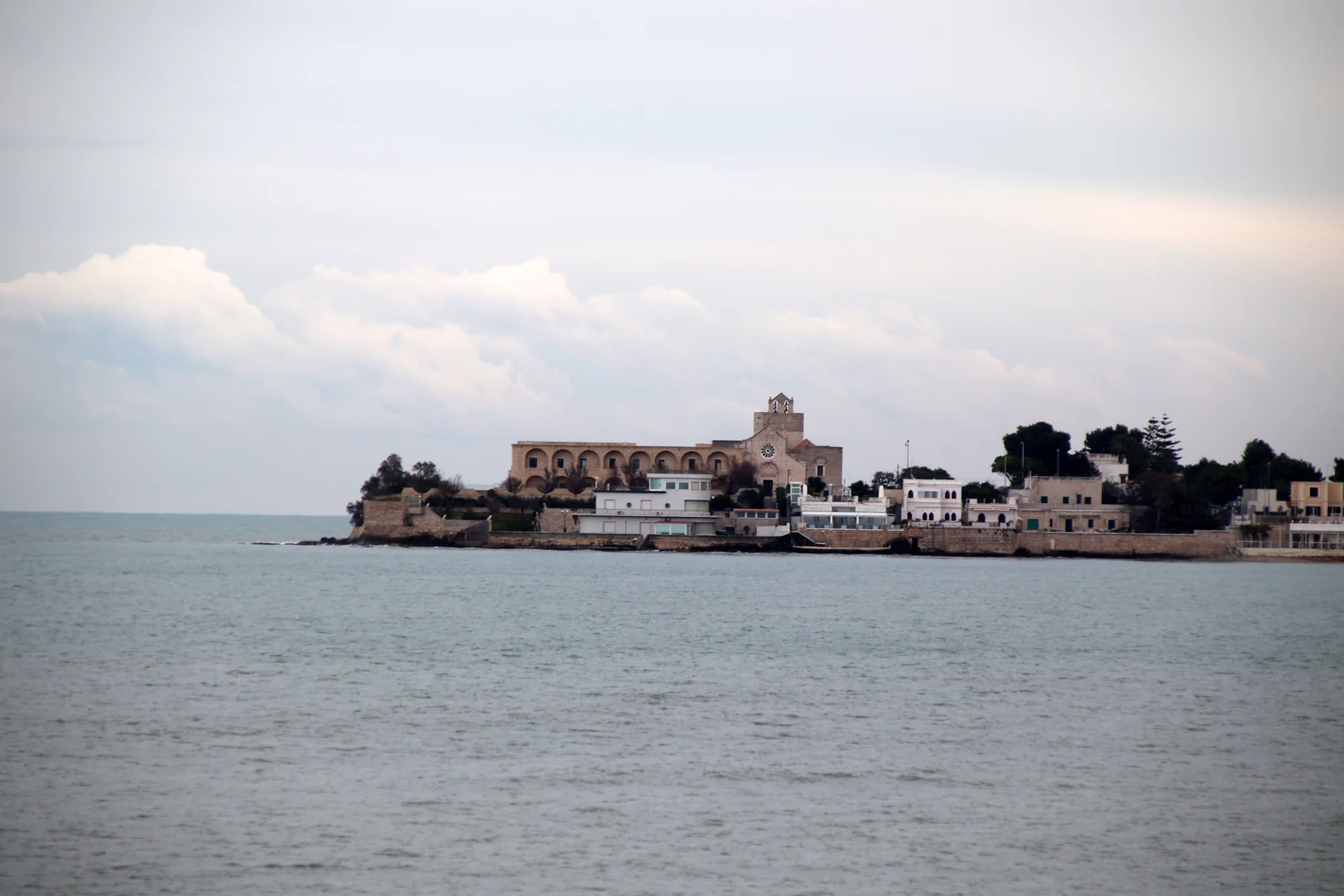
Photo: Lorenzo.Antonicelli / Wikimedia Commons — CC BY-SA 4.0 · Resized and converted to WebP.
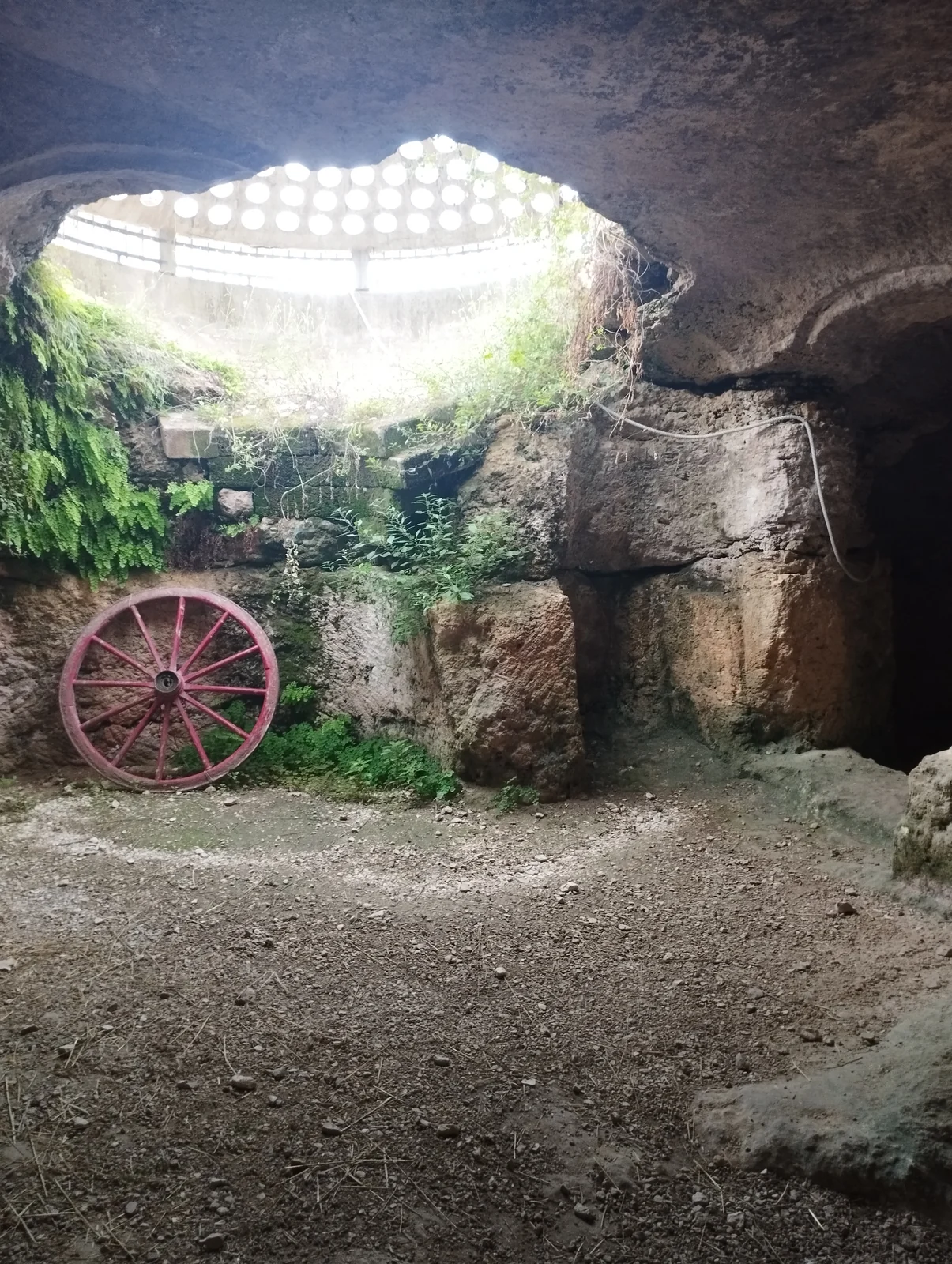
Photo: Mickey83 / Wikimedia Commons — CC BY-SA 4.0 · Resized and converted to WebP.
Local tourist information
Local tourist offices help with opening times, events and transport on the day.
- Info-point Trani · Piazza Trieste 8, 76125 Trani (BT) · +39 375 5575405 · [email protected]
Source: Viaggiare in Puglia (Regione Puglia) — Info-point Trani · checked on
Where to stay
In the municipality of Trani the national database of the Ministry of Tourism lists 572 accommodation businesses with a verified CIN code: 10 hotels, 193 other licensed accommodation and 369 other types such as B&Bs and private rentals.
Licensed businesses from the official list of accommodation named as the source in this section. Where the list gives it, the property's official identification code appears next to its name: the national CIN code, or the code assigned by the Region or by the body that keeps the list. Private individuals are not listed. This list is the official census of licensed businesses, not a list of Apulica partners: to stay in Trani you do not have to check one property after another yourself; write to Apulica and we look for the stay that suits your journey, checking availability and conditions before any confirmation.
HOTEL SAN PAOLO AL CONVENTO
Hotel · ★★★★
CIN IT110009A100028068
AMMARE B&B
B&B
CIN IT110009B400130212
4 CAMERE A TRANI
Guest rooms
CIN IT110009B400022894
CHE VISTA
Holiday home
CIN IT110009B400096798
Ostello Hub Porta Nova
Hostel
CIN IT110009B600095245
CITTADELLA SANGUIS CHRISTI
Holiday house
CIN IT110009B700106887
MARE' RESORT
Hotel · ★★★★
CIN IT110009A100023500
ASCOSA 1904
B&B
CIN IT110009B400026281
Almarea
Guest rooms
CIN IT110009B400086293
DIMORA SAN FRANCESCO
Holiday home
CIN IT110009B400128320
First the places that presented themselves to Apulica, the latest first; then one place of each type in turn, by official category and stars, then by name. No position is paid for.
All 121 entries in alphabetical order
Page 1 of 13
| Name | Type | CIN |
|---|---|---|
| 4 CAMERE A TRANI | Guest rooms | IT110009B400022894 |
| Almarea | Guest rooms | IT110009B400086293 |
| AMMARE B&B | B&B | IT110009B400130212 |
| ASCOSA 1904 | B&B | IT110009B400026281 |
| B&B BAIA DEL GRUCCIONE | B&B | IT110009B400059429 |
| B&B CHILOMETRO 06 | B&B | IT110009B400024447 |
| B&B PALAZZO PACIOTTI | B&B | IT110009B400022202 |
| B&B PORT'ANTICA TRANI - AFFITTACAMERE | Guest rooms | IT110009B400122329 |
| B&B PORTA VETERE | B&B | IT110009B400066347 |
| B&B PORTADAMARE | B&B | IT110009B400111878 |
Ask Apulica for a stay in Trani We reply shortly, within a few hours at most, with a proposal for you to consider.
Sources: Regione Puglia – ARET Pugliapromozione (DMS), CC BY 4.0, 2026-10-12 · Ministero del Turismo – Banca Dati Strutture Ricettive (dashboard pubblica), 2026-10-12
YOUR JOURNEY
How to shape a journey here
We can design a day connecting the cathedral, a second cultural visit and a Moscato tasting, with onward links to the coast or Frederick II’s inland landscape.
Plan your tripKeep exploring
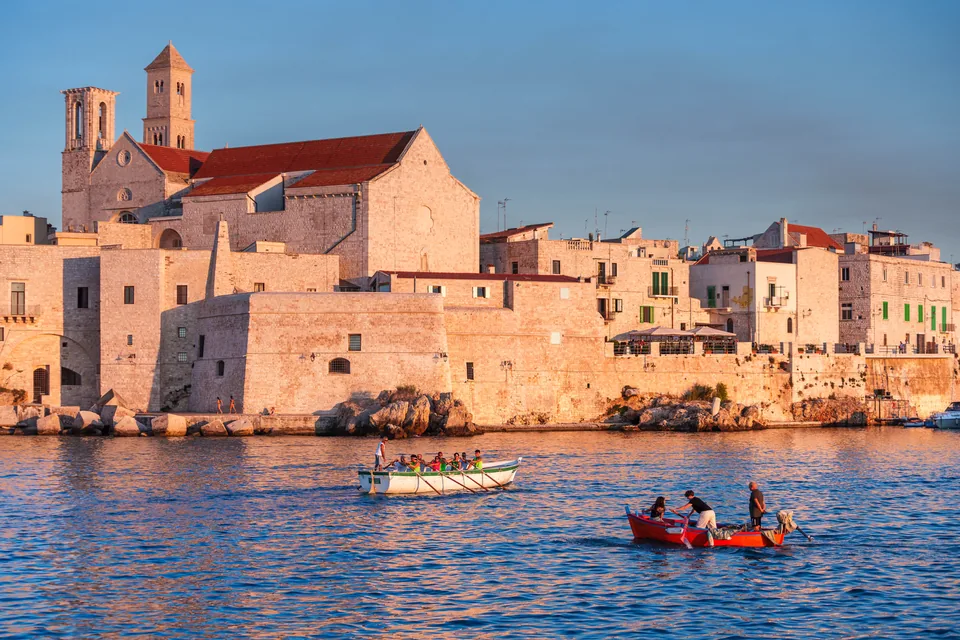
Giovinazzo
The old town, harbour and cooking shaped by farming and fishing traditions. A centre on a rocky promontory, the cathedral and a rice, potato and mussel tiella.
Read the guide →Photo: Pakycassano / Wikimedia Commons — CC BY-SA 4.0 · Resized and converted to WebP.
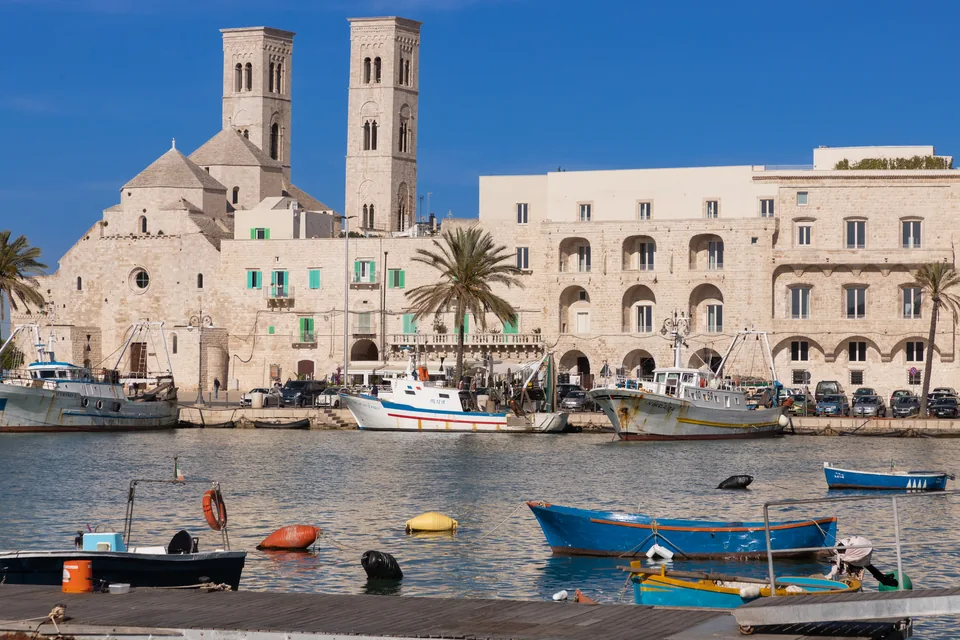
Molfetta
Romanesque architecture and karst landscape beyond the coast. The cathedral on the harbour, a fishing fleet among the lower Adriatic’s largest and the Pulo. In town the cathedral born from the Jesuit church, the Diocesan Museum and the Apulian Regional Seminary; outside the old town the basilica of the Madonna dei Martiri, a pilgrims’ stop since 1162, and the oil of the Terra di Bari PDO.
Read the guide →Photo: Genesis5663 / Wikimedia Commons — CC BY-SA 4.0 · Resized and converted to WebP.
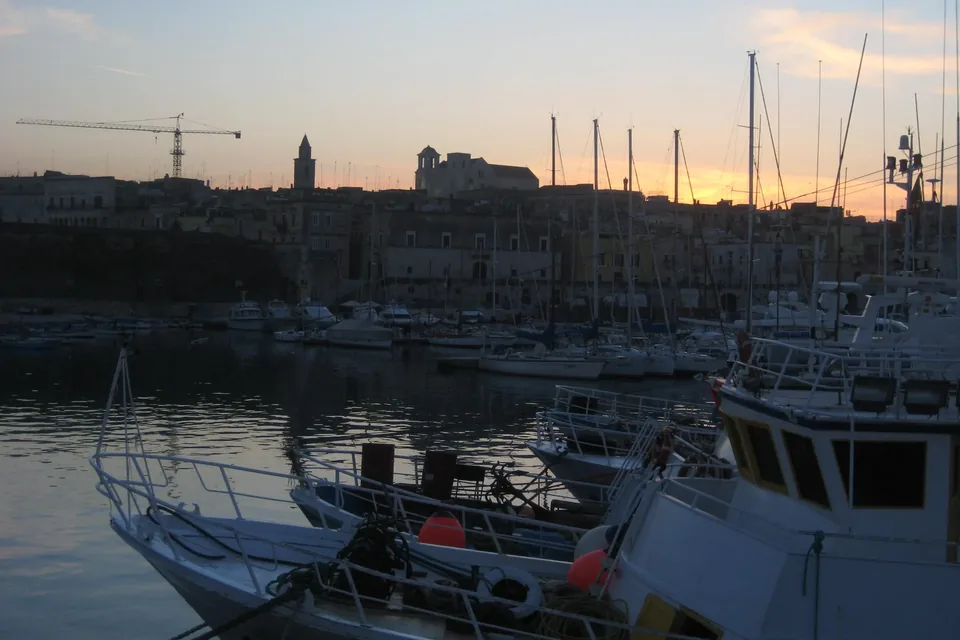
Bisceglie
From the La Chianca dolmen to the Romanesque town and harbour. Aragonese walls, a Swabian castle, Romanesque churches and the sospiro, a Slow Food Presidium.
Read the guide →Photo: Geppisimone at Italian Wikipedia / Wikimedia Commons — CC BY-SA 3.0 · Resized and converted to WebP.
Andria
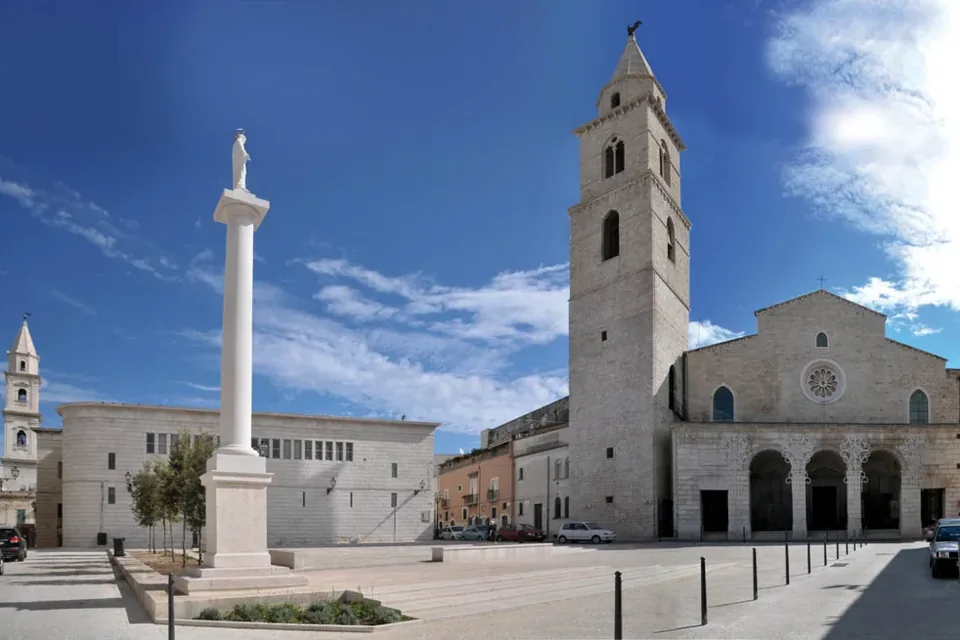
A town worth exploring beyond its famous castle. Imperial memory, the Cathedral of Santa Maria Assunta, burrata, which was born here, and confectionery.
Read the guide →Photo: Marcoleo11 / Wikimedia Commons — CC BY-SA 4.0 · Resized and converted to WebP.
Castel del Monte
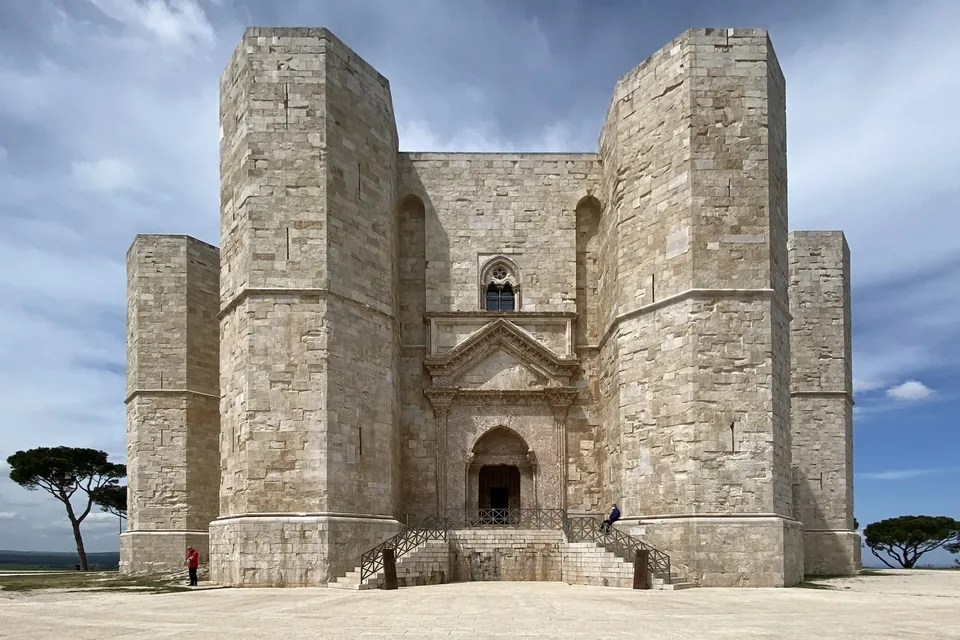
Frederick’s architecture within the Murgia landscape. The octagonal castle, on the UNESCO list since 1996, inside the Alta Murgia National Park.
Read the guide →Photo: Bernard Gagnon / Wikimedia Commons — CC0 · Resized and converted to WebP.
Barletta
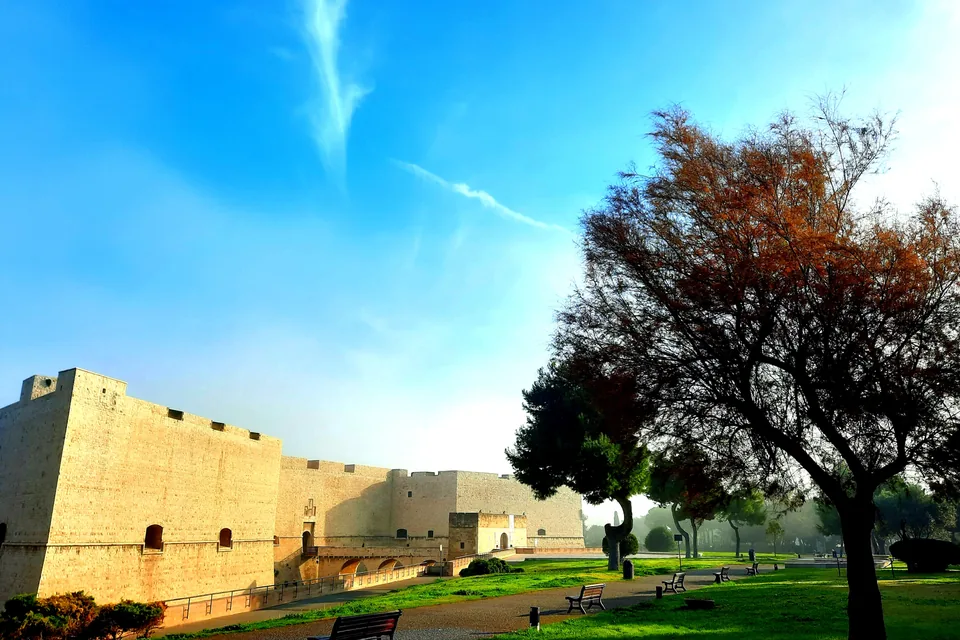
On the Adriatic: the castle with Charles V’s bastions and the Museo civico, the Romanesque cathedral, the bronze Colossus, the De Nittis picture gallery in Palazzo della Marra, the story of the 1503 Disfida and, within the municipality, Canne della Battaglia.
Read the guide →Photo: Nick Borisenko / Wikimedia Commons — CC BY-SA 4.0 · Resized and converted to WebP.