Why go
Bisceglie faces the Adriatic between Trani and Molfetta, about twenty kilometres from Barletta and just eight from Trani. The Region's tourism portal describes it as a town with a charming coastline and a rich historical heritage: an old centre enclosed by Aragonese walls and watched over by the Swabian castle, Romanesque churches and noble palazzi, and around it a countryside that keeps Bronze Age dolmens, prehistoric caves and old hamlets.
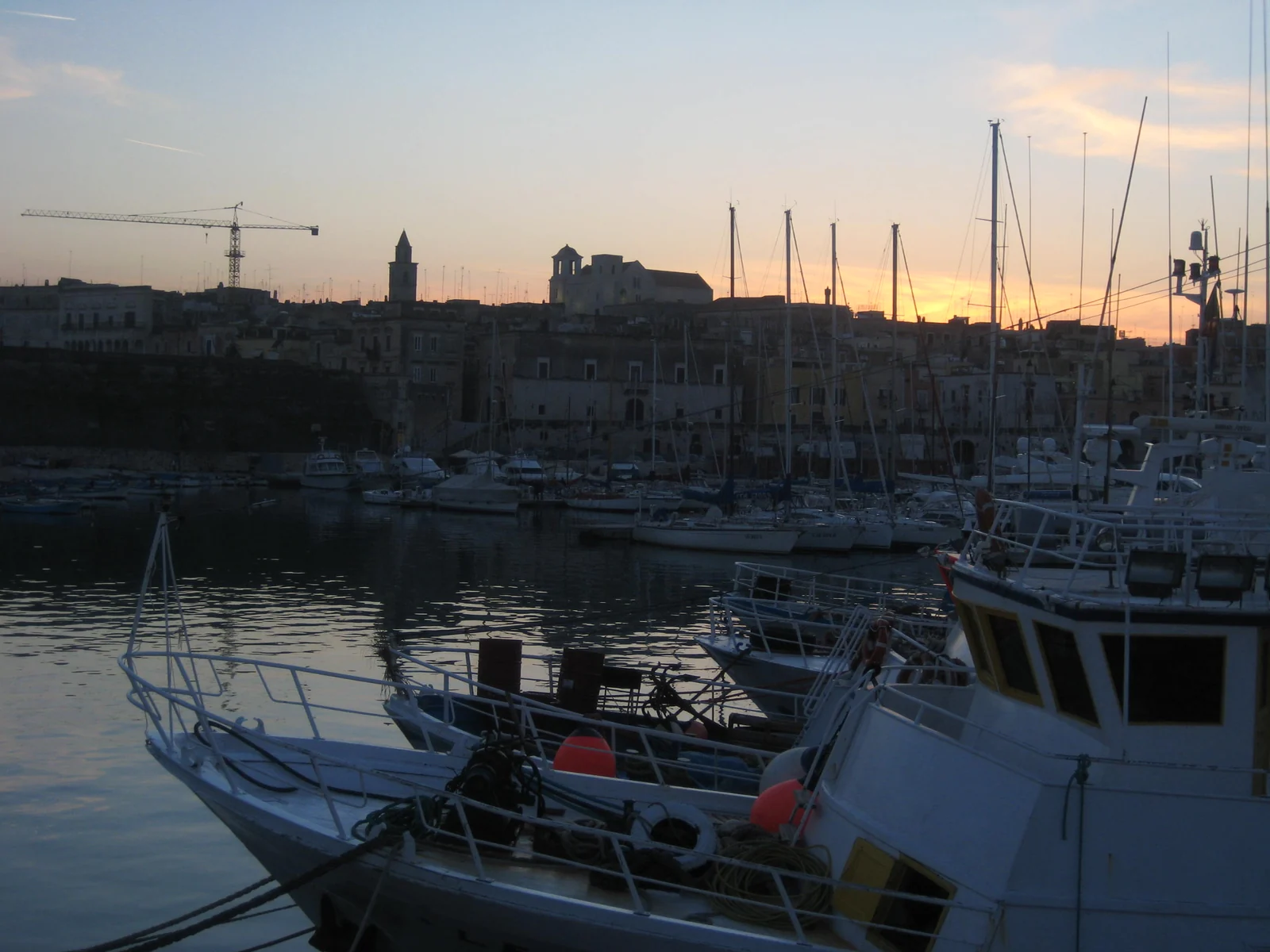
The municipality describes a town born “barricaded against the sea” around a harbour still in use, with very narrow, tall streets spanned by arches and dominated by the cathedral at the highest point: a monumental core so compact it seems carved out of a single block of stone.
Add to this the sea, with sandy beaches and coves such as Cala Pantano and the Ripalta caves, and a pastry tradition with a clear symbol: the sospiro, a Slow Food presidium, found in the town's bakeries and pastry shops. Bisceglie is an ideal stop for those who want to combine archaeology, historic towns and coast in one trip.
Sources: Viaggiare in Puglia (Regione Puglia) — Bisceglie · Comune di Bisceglie — monumenti e luoghi d’interesse · Italia.it — Bisceglie
History
The Bisceglie area has been inhabited since very remote times. In the Santa Croce cave, discovered in 1937 by Francesco Saverio Majellaro, thousands of Mousterian stone tools, a Neanderthal femur, Pleistocene fauna and finds up to the Bronze and Iron Ages have come to light. The Chianca dolmen, a Bronze Age passage tomb, was excavated from 1909 and yielded several burials.
The town's origins are less documented. The Ministry of Tourism's portal suggests it grew from a cluster of rural settlements after the Saracen raids. Around 1060 the Norman count Peter of Trani had the Torre Maestra built, 27 metres tall and still a landmark of the townscape; in 1074 Sant'Adoeno was built, dedicated to the bishop of Rouen and linked to the Normans, and between 1073 and 1295 the Co-cathedral of San Pietro rose. In 1167 the relics of the patron saints Mauro, Sergio and Pantaleone were found.
The castle, probably Swabian, with a square enclosure and corner towers, was later altered; at the end of the fifteenth century the Aragonese built the fortifications still visible today. In the countryside stood the casali, small walled medieval settlements with a church and cemetery.
Sources: Ministero della Cultura — Dolmen La Chianca · Comune di Bisceglie — casali, dolmen e grotte · Comune di Bisceglie — monumenti e luoghi d’interesse · Italia.it — Bisceglie
What to see
In the old town, the Romanesque Co-cathedral of San Pietro Apostolo has three naves, galleries, a transept above the crypt holding the patron saints' relics and a porch on the façade; inside, the walnut choir stalls from the abbey of Santa Maria dei Miracoli in Andria stand out. Nearby, Sant'Adoeno is one of the Italian churches most directly derived from French models, with a small rose window adorned with Romanesque lions. The twelfth-century church of Santa Margherita has a cross plan with a pyramidal dome. Over everything rises the Torre Maestra, next to the castle, whose main tower houses, according to the Ministry of Tourism, an exhibition of folk art and culture. The regional portal also mentions Palazzo Tupputi with its fine rusticated stonework.
Outside town is one of Europe's most important dolmens: the Chianca, with a burial chamber formed by three large upright slabs and a capstone of about 2.4 by 3.8 metres, preceded by an east-facing corridor. The Frisari and Albarosa dolmens are also recorded in the countryside.
The casali tell of medieval rural life: Pacciano keeps the eleventh-century chapel of Ognissanti; Giano a small Roman-era temple; Zappino a chapel within its wall; San Nicola a portal of Arab origin set into its walls.
Sources: Comune di Bisceglie — monumenti e luoghi d’interesse · Italia.it — Bisceglie · Ministero della Cultura — Dolmen La Chianca · Comune di Bisceglie — casali, dolmen e grotte · Viaggiare in Puglia (Regione Puglia) — Bisceglie
Food and wine
The town's signature sweet is the sospiro di Bisceglie, a Slow Food presidium since 2014 and a municipal trademark. It is made with simple ingredients, eggs, sugar and flour, whisking whites and yolks separately: the resulting sponge, shaped as two small domes, is filled with custard and covered with a sugar glaze called giulebbe. The tradition is protected by the consortium of Bisceglie pastry makers.
The municipality carefully separates history from legend. It is said that as early as the fifteenth century the Poor Clares made “nuns' little sighs”, and a legend without historical support links them to the called-off wedding of Lucrezia Borgia and Alfonso of Aragon: the guests, sighing as they waited, were consoled with these cakes. More solid are the Arabic origin of the word giulebbe and the account of the historian Leandro Alberti, who in 1526 praised an aromatic sweet tasted in Bisceglie.
A seaside town and an important fishing centre, Bisceglie also offers fish cooking: the regional portal mentions sardines, mackerel, anchovies and hake. The surrounding countryside lies in the Moscato di Trani area, a sweet wine that goes well with local pastries.
Sources: Comune di Bisceglie — Il Sospiro · Fondazione Slow Food — Presidio Sospiro di Bisceglie · Viaggiare in Puglia (Regione Puglia) — Bisceglie · Qualigeo (Fondazione Qualivita) — Moscato di Trani DOP
Things to do
The sea is a stone's throw from the centre. The fully renovated western seafront has a jagged profile of coves and caves, some reachable only by sea; the beaches are mostly sandy, with clear water. The regional portal points to Cala Pantano, a small wetland with a natural inlet, the Ripalta caves and the Cassa, an old landing islet; on the seafront, at Trullo Verde, is the Teatro del Mediterraneo.
For lovers of ancient history, a countryside route links the Chianca dolmen, the medieval casali and the area of the Santa Croce cave, letting you read in a few hours a landscape inhabited from prehistory to the Middle Ages. The town has named its Civic Archaeological Museum after the cave's discoverer, Francesco Saverio Majellaro.
By bike, a cycle path runs along the seafront from the harbour to the amphitheatre, and electric bikes can be hired in town. An evening stroll in the old centre, between the cathedral, the arches spanning the lanes and the old harbour, rounds off the day.
Sources: Viaggiare in Puglia (Regione Puglia) — Bisceglie · Ministero della Cultura — Dolmen La Chianca · Comune di Bisceglie — casali, dolmen e grotte
When to go
Bisceglie can be visited all year round: the old town, the churches and the dolmen landscape do not depend on the season, and the sospiro is made and sold in every period. Summer is the season of the sea, the sandy beaches and the coves along the seafront; spring and autumn are best for countryside routes among dolmens and casali.
Among the festivals, the Region's guide mentions the Procession of the Meeting on Good Friday: from early morning people gather at the Palazzuolo to watch the meeting between the statues of Jesus and the Virgin, accompanied by all the town's confraternities.
The town is bound to its three patron saints, Mauro, Sergio and Pantaleone, whose relics are kept in the cathedral crypt: the municipality recalls that the people entrusted themselves to them during the plague of 1736 and the cholera of 1836. For the dates of the patronal feasts, check the municipal calendar each year.
Sources: Regione Puglia — cartoguida Monumenti e Feste · Viaggiare in Puglia (Regione Puglia) — Bisceglie · Comune di Bisceglie — monumenti e luoghi d’interesse
Getting there and around
Bisceglie lies on the Adriatic railway line: according to the Region's tourism portal, its central station offers connections to every regional and long-distance destination. Urban and intercity bus lines run by STP serve the town and neighbouring municipalities.
The airport to consider when planning your arrival is Bari, reached by transfer. In town you can hire scooters and cars to get around independently; for cyclists, a cycle path runs along the seafront from the harbour to the amphitheatre, and electric bikes can be rented.
The old town is best explored on foot, and from the station the harbour and seafront are easy to reach. For the dolmens and casali in the countryside you need your own transport or an organised visit, as they lie a few kilometres from the centre along the roads to Andria, Corato, Ruvo and Terlizzi. For information there is the Bisceglie Info-point in Via Ottavio Tupputi.
Sources: Viaggiare in Puglia (Regione Puglia) — Bisceglie · Viaggiare in Puglia (Regione Puglia) — Info-point Bisceglie
Where to stay
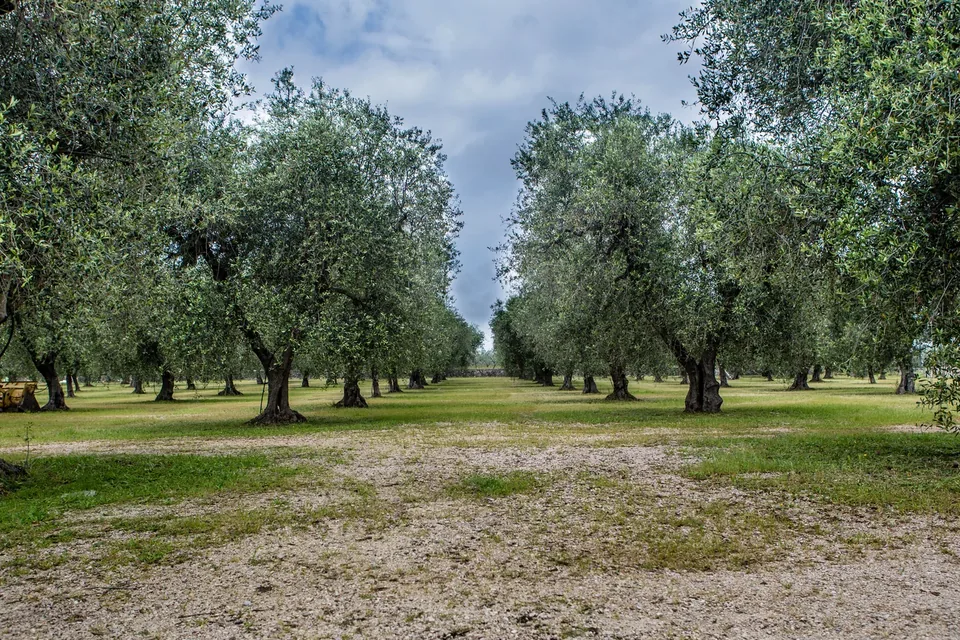
For an overnight stay you can choose between the old town, with its narrow streets and arches, and accommodation near the western seafront, convenient in summer for walking to beaches and coves. In the countryside, among olive groves and old casali, there are masserie and farm stays suited to travellers with a car who want to explore the dolmens and rural landscape.
A stop at a pastry shop is part of the visit. Bar Cattedrale, at Via Cardinale dell'Olio 25, lists on its website the large sospiro and the classic small sospiretto, as well as coffee and limoncello versions and an Easter range. It is an editorial reference, not an Apulica partnership; the sospiro can be found in pastry shops and bakeries all over town.
With its station and central position on the coast, Bisceglie is also a convenient base for visiting Trani and Molfetta and for day trips to Andria and Castel del Monte.
Sources: Bar Cattedrale — pasticceria e indirizzo ufficiali · Viaggiare in Puglia (Regione Puglia) — Bisceglie · Comune di Bisceglie — monumenti e luoghi d’interesse
Nearby
Eight kilometres away, Trani offers its Romanesque cathedral by the sea, its Swabian castle and harbour; a little further north, Barletta has its castle with Charles V's bastions and the picture gallery devoted to Giuseppe De Nittis. Along the coast towards Bari, Molfetta has the Old Cathedral of San Corrado, one of the most significant monuments of Apulian Romanesque, and the sanctuary of the Madonna dei Martiri.
Inland, the Bisceglie countryside continues towards Ruvo di Puglia, Corato and Terlizzi, along the same roads where dolmens and casali stand. Further away, Andria and Castel del Monte, a UNESCO site in the Alta Murgia National Park, let you move from the coast to the Frederician landscape of the interior.
A trip of several days can alternate the towns of the coast north of Bari, each with its harbour and cathedral, with days inland among archaeology, olive groves and vineyards.
Sources: Viaggiare in Puglia (Regione Puglia) — Bisceglie · Regione Puglia — cartoguida Monumenti e Feste · Direzione regionale Musei nazionali Puglia — Castel del Monte
Local tourist information
Local tourist offices help with opening times, events and transport on the day.
- Info-point Bisceglie · Via Ottavio Tupputi 1, 76011 Bisceglie (BT) · +39 080 3968554 · [email protected]
Source: Viaggiare in Puglia (Regione Puglia) — Info-point Bisceglie · checked on
Where to stay
In the municipality of Bisceglie the national database of the Ministry of Tourism lists 304 accommodation businesses with a verified CIN code: 7 hotels, 75 other licensed accommodation and 222 other types such as B&Bs and private rentals.
Licensed businesses from the official list of accommodation named as the source in this section. Where the list gives it, the property's official identification code appears next to its name: the national CIN code, or the code assigned by the Region or by the body that keeps the list. Private individuals are not listed. This list is the official census of licensed businesses, not a list of Apulica partners: to stay in Bisceglie you do not have to check one property after another yourself; write to Apulica and we look for the stay that suits your journey, checking availability and conditions before any confirmation.
HOTEL VILLA E RESORT
Hotel · ★★★★
CIN IT110003A100020952
ART VILLAGE SRL - RESIDENCE
Residence
CIN IT110003B400024079
CAMPING CALA BATTERIA
Campsite · ★★★
CIN IT110003B100098029
AGRICAMPEGGIO BREZZA TRA GLI ULIVI
Farm stay
CIN IT110003B500023146
B&B BISCEGLIE
B&B
CIN IT110003B400073726
AFFITTACAMERE AL PORTO NOVO DI POVIA MORENA
Guest rooms
CIN IT110003B400092635
ARCO SANT'ANTONIO
Holiday home
CIN IT110003B400026195
Nicotel Hotel Bisceglie
Hotel · ★★★★
CIN IT110003A100102135
LE VEDUTE
Farm stay
CIN IT110003B500020917
B&B Gentile
B&B
CIN IT110003B400097289
First the places that presented themselves to Apulica, the latest first; then one place of each type in turn, by official category and stars, then by name. No position is paid for.
All 52 entries in alphabetical order
Page 1 of 6
| Name | Type | CIN |
|---|---|---|
| AFFITTACAMERE AL PORTO NOVO DI POVIA MORENA | Guest rooms | IT110003B400092635 |
| AFFITTACAMERE CALA BATTERIA | Guest rooms | IT110003B400118484 |
| AGRICAMPEGGIO BREZZA TRA GLI ULIVI | Farm stay | IT110003B500023146 |
| APARTHOTEL LE MARINE | Hotel | IT110003A100093656 |
| ARCO SANT'ANTONIO | Holiday home | IT110003B400026195 |
| ART VILLAGE SRL - RESIDENCE | Residence | IT110003B400024079 |
| B&B BISCEGLIE | B&B | IT110003B400073726 |
| B&B Gentile | B&B | IT110003B400097289 |
| B&B INTRA MOENIA | B&B | IT110003B400084979 |
| B&B Villa Garden | B&B | IT110003B400066632 |
Ask Apulica for a stay in Bisceglie We reply shortly, within a few hours at most, with a proposal for you to consider.
Sources: Regione Puglia – ARET Pugliapromozione (DMS), CC BY 4.0, 2026-10-12 · Ministero del Turismo – Banca Dati Strutture Ricettive (dashboard pubblica), 2026-10-12
YOUR JOURNEY
How to shape a journey here
We can design a stop connecting dolmen, old centre and pastry, with heritage interpretation and time for the sospiro along a route between Molfetta and Trani.
Plan your tripKeep exploring
Molfetta
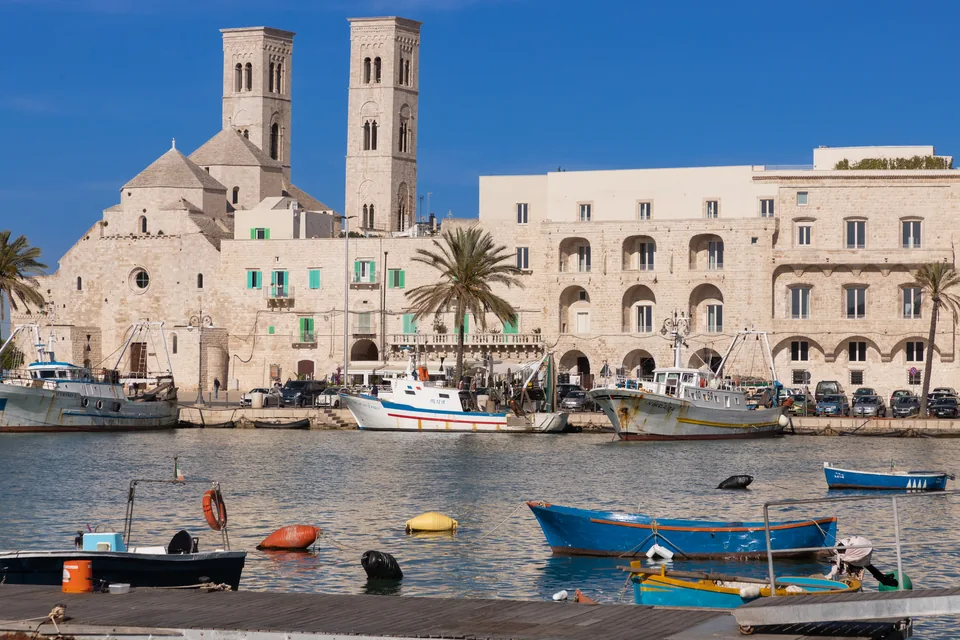
Romanesque architecture and karst landscape beyond the coast. The cathedral on the harbour, a fishing fleet among the lower Adriatic’s largest and the Pulo. In town the cathedral born from the Jesuit church, the Diocesan Museum and the Apulian Regional Seminary; outside the old town the basilica of the Madonna dei Martiri, a pilgrims’ stop since 1162, and the oil of the Terra di Bari PDO.
Read the guide →Photo: Genesis5663 / Wikimedia Commons — CC BY-SA 4.0 · Resized and converted to WebP.
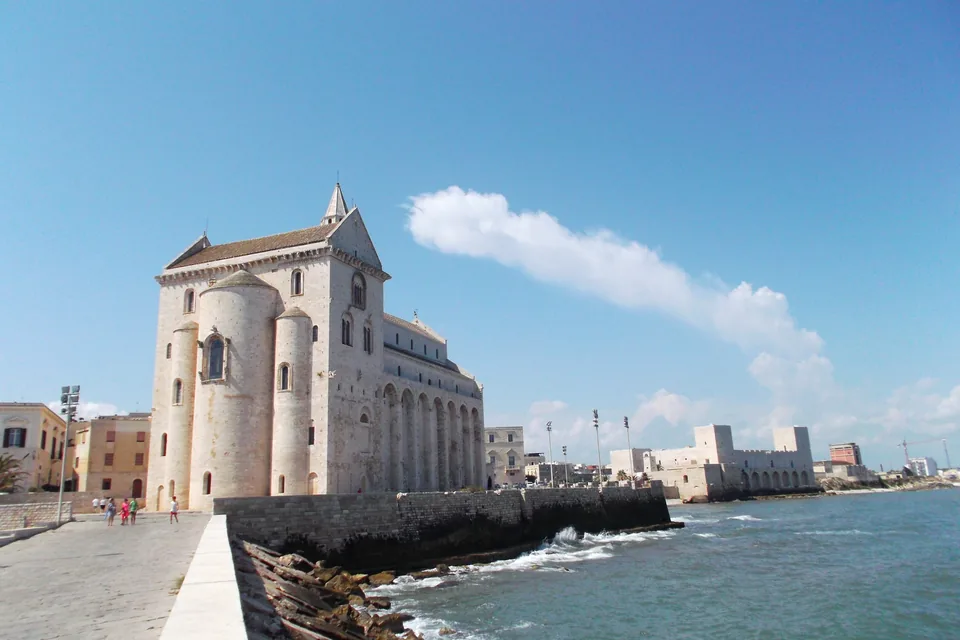
Trani
Cathedral, castle and Jewish heritage for a coastal ending with cultural depth. The Romanesque cathedral on the sea with Barisano’s bronze door, Frederick II’s castle of 1233, the two medieval synagogues of the Giudecca, the harbour and the monastery of Colonna on its peninsula.
Read the guide →Photo: Termauri / Wikimedia Commons — CC BY-SA 4.0 · Resized and converted to WebP.
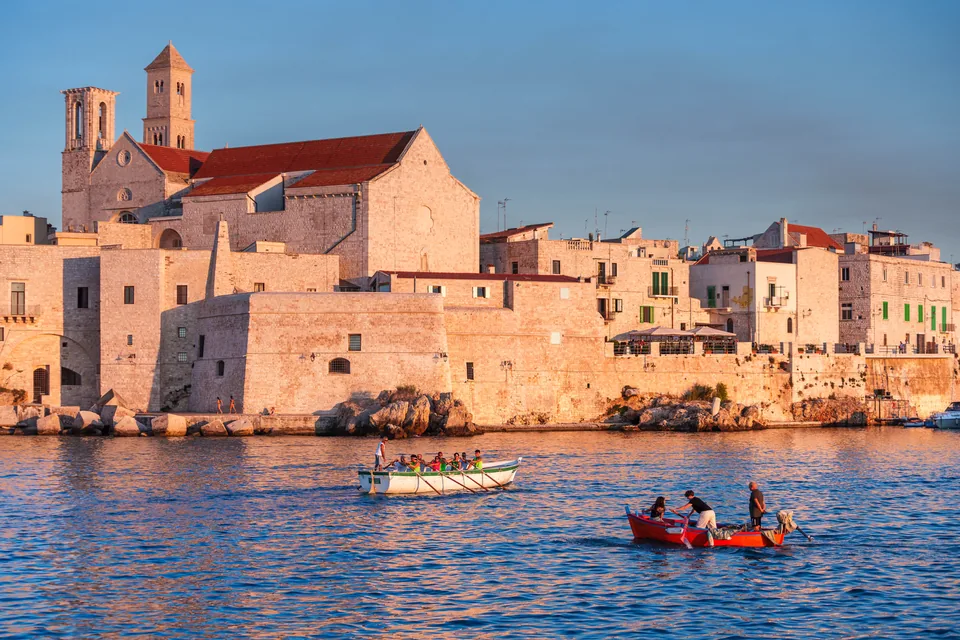
Giovinazzo
The old town, harbour and cooking shaped by farming and fishing traditions. A centre on a rocky promontory, the cathedral and a rice, potato and mussel tiella.
Read the guide →Photo: Pakycassano / Wikimedia Commons — CC BY-SA 4.0 · Resized and converted to WebP.
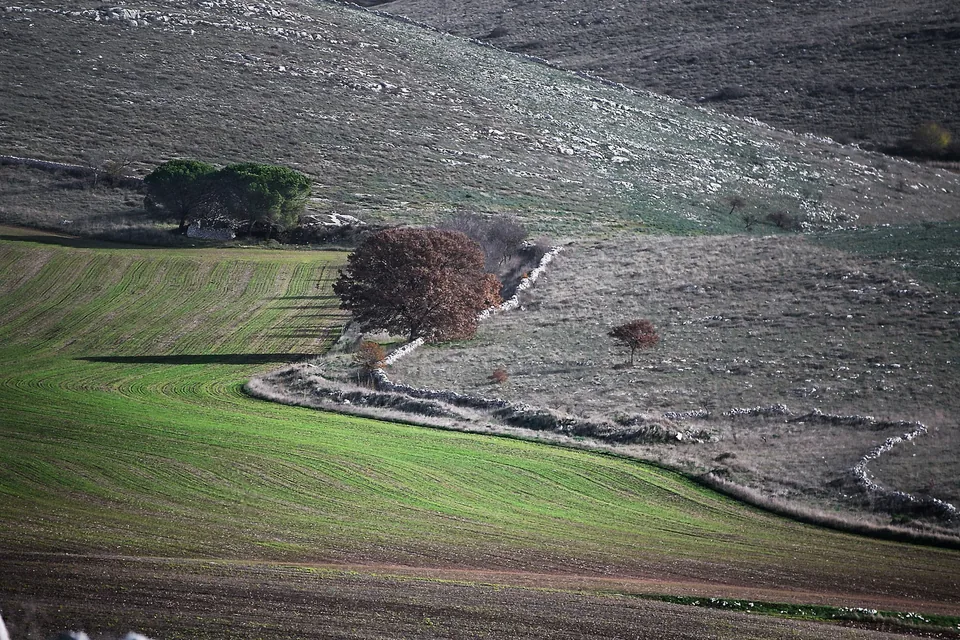
Alta Murgia
Stone, pasture and farming to explore the landscape beyond the towns. A national park of Mediterranean steppe, durum-wheat bread and cardoncello mushrooms.
Read the guide →Photo: Acquario51 / Wikimedia Commons — CC BY-SA 4.0 · Resized and converted to WebP.
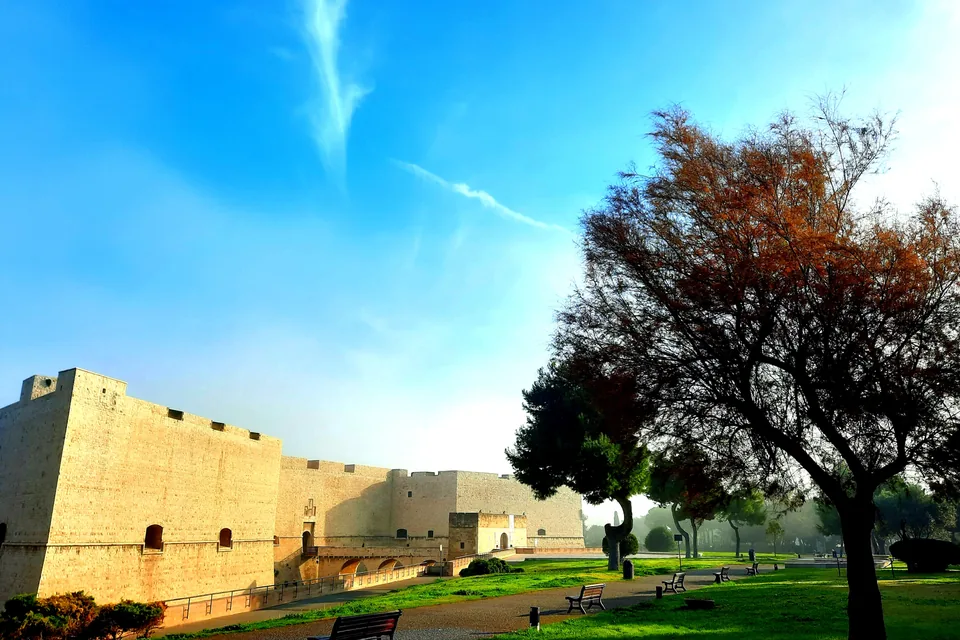
Barletta
On the Adriatic: the castle with Charles V’s bastions and the Museo civico, the Romanesque cathedral, the bronze Colossus, the De Nittis picture gallery in Palazzo della Marra, the story of the 1503 Disfida and, within the municipality, Canne della Battaglia.
Read the guide →Photo: Nick Borisenko / Wikimedia Commons — CC BY-SA 4.0 · Resized and converted to WebP.
Bitonto
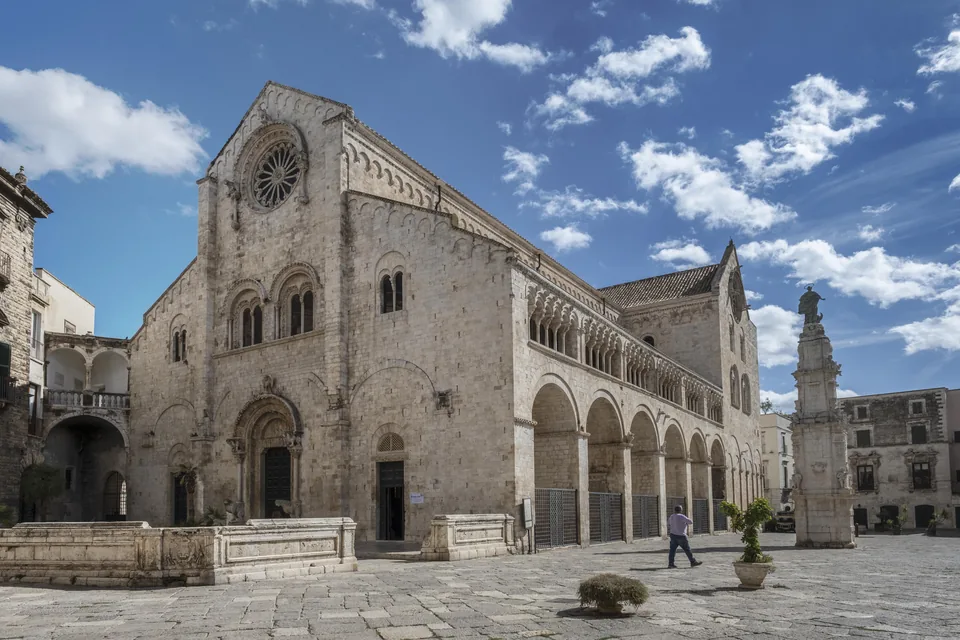
Bitonto (BA), Puglia: 52,958 residents, 174.34 km². The official facts of the municipality, its town council website and its registered accommodation. The Romanesque co-cathedral, the National Gallery of Puglia in Palazzo Sylos Calò, the Angevin round tower, the “Terra di Bari” PDO oil with the “Bitonto” mention, the feast of the Santi Medici and the Lama Balice.
Read the guide →Photo: Giugi30 / Wikimedia Commons — CC BY-SA 4.0 · Resized and converted to WebP.
Ruvo di Puglia
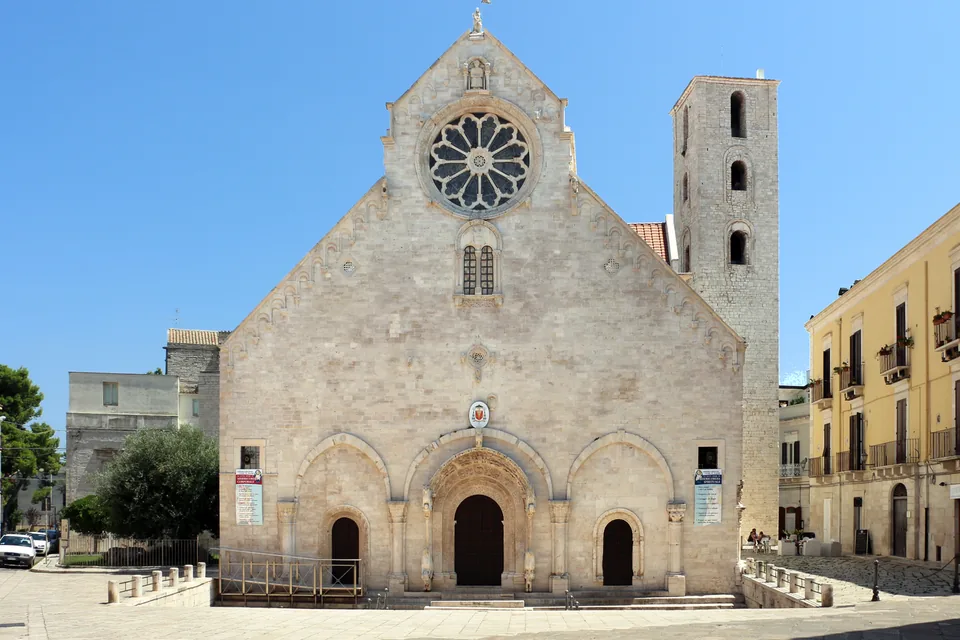
Ruvo di Puglia (BA), Puglia: 24,254 residents, 223.83 km². The official facts of the municipality, its town council website and its registered accommodation. The Romanesque co-cathedral, the Museo nazionale Jatta with the Talos vase, the old town, the Alta Murgia, the Holy Week rites and the cardoncello mushroom festival.
Read the guide →Photo: Sailko / Wikimedia Commons — CC BY 3.0 · Resized and converted to WebP.
“Come to Bisceglie as a guest, not as a tourist: that is how these places truly let you know them.”