

In brief
- Table grapes of the Italia, Regina, Victoria, Michele Palieri and Red Globe varieties. (Qualigeo (Fondazione Qualivita) — Uva di Puglia IGP)
- It may come from anywhere in Puglia, but only from vineyards below 330 metres. (Qualigeo (Fondazione Qualivita) — Uva di Puglia IGP)
- Picking runs from early July for Victoria to 15 December for Italia grapes. (Qualigeo (Fondazione Qualivita) — Uva di Puglia IGP)
- Because it keeps well, it was already exported abroad by the late nineteenth century. (Qualigeo (Fondazione Qualivita) — Uva di Puglia IGP)
History and origin
Puglia is a land of choice for table grapes, thanks to its soil, its climate and the great skill of its growers, who have carried on this tradition for over two centuries. As early as the late nineteenth century Apulian grapes, which keep well, were being exported beyond Italy's borders.
For a long time table grapes such as baresana or imperatore were grown mainly for home use. The turning point came in the province of Bari around the 1960s: with the introduction of varieties such as Regina and Mennavacca, farms moved from wheat, olives and pulses to a highly specialised crop, and the overhead tendone system spread, making the work far more efficient.
Since then production and above all exports have grown steadily. The name Uva di Puglia is now a Protected Geographical Indication of the European Union, safeguarded by a consortium.
Sources: Qualigeo (Fondazione Qualivita) — Uva di Puglia IGP · Atlante dei PAT di Puglia — Uva da tavola · eAmbrosia — Uva di Puglia (PGI-IT-0653)
Area and method of production
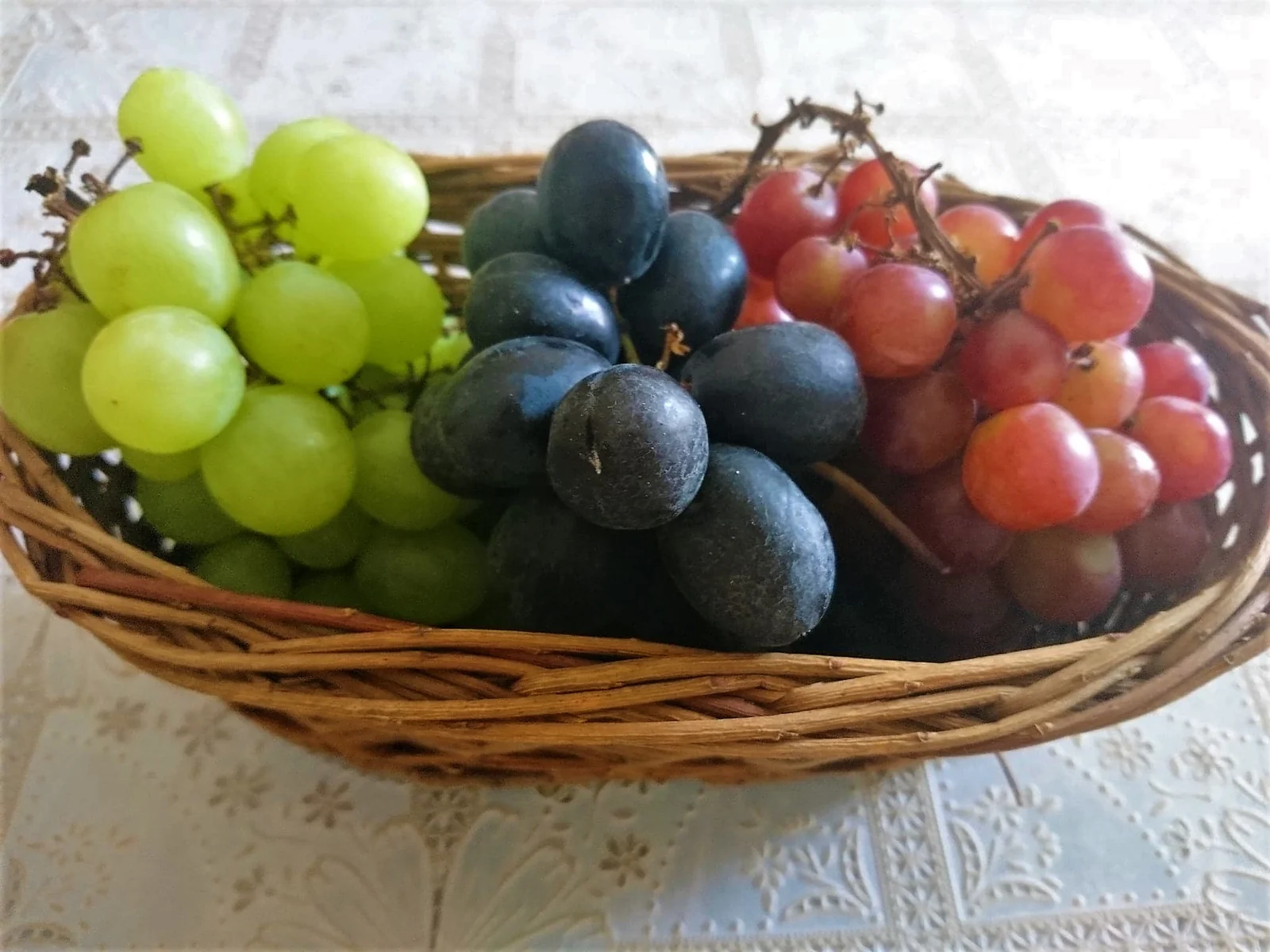
Uva di Puglia PGI covers five varieties: Italia, Regina and Victoria, which are white, Michele Palieri, which is black, and Red Globe, which is pink. It may come from every province of the region, but only from vineyards below 330 metres.
The vines are trained on a horizontal overhead pergola, the Apulian tendone. Winter pruning takes place from December to the end of February; vineyards may be covered with nets or plastic film, and even grown under glass, both to shield the bunches from hail, wind and rain and to bring ripening forward or delay it. Through the year come tying of shoots, summer pruning, bunch thinning and leaf removal near the grapes to keep them airy.
Picking starts when the bunches meet the quality requirements and varies with the variety: Victoria from early July to the end of August, Regina from mid-July to the end of September, Michele Palieri from late July to the end of October, Red Globe from mid-August to the end of November and Italia from the first week of September to 15 December.
Sources: Qualigeo (Fondazione Qualivita) — Uva di Puglia IGP · Atlante dei PAT di Puglia — Uva da tavola
How to recognise it
The colour of the berries varies with the variety: pale straw yellow for Italia, Regina and Victoria, pinkish gold for Red Globe, a deep velvety black for Michele Palieri. It is a very sugary grape, sweet in taste and markedly fragrant, especially the Italia.
Besides the beauty of the bunch, even and brightly coloured, it is prized for the crispness of its flesh, which allows it to keep longer.
It is sold in the Extra and Class I categories, and each pack must contain bunches of one variety only: buyers always know which grape they are choosing.
Sources: Qualigeo (Fondazione Qualivita) — Uva di Puglia IGP
In the kitchen
Uva di Puglia is enjoyed above all fresh, and should be kept cool to preserve its qualities longer. Its sweetness and intense fragrance also make it an ingredient in many dishes, from desserts to first courses: tarts, puddings and ice creams, but also starters, pasta dishes and salads.
The berries also make excellent distilled spirits.
With a season running from early July to mid-December, Apulian grapes stay on the table for almost six months: early varieties such as Victoria open the summer, while Italia is picked until mid-December.
Sources: Qualigeo (Fondazione Qualivita) — Uva di Puglia IGP
Where to taste it
Table grapes are the main crop in five large areas of Puglia. The Ofanto area includes Trinitapoli, San Ferdinando di Puglia and parts of Cerignola, Canosa and Minervino. West of Bari are Trani, Bisceglie, Molfetta, Terlizzi, Corato, Ruvo di Puglia and Giovinazzo; between Bari, the coast at Mola and Polignano and the hills of Conversano and Turi are Rutigliano, Mola di Bari, Noicattaro, Conversano, Turi, Adelfia, Acquaviva and Polignano, among others.
On the Ionian side grapes grow at Ginosa, Castellaneta, Palagianello, Palagiano, Massafra and Taranto, and between the provinces of Taranto and Brindisi at Grottaglie, Francavilla Fontana, Mesagne, Latiano, San Vito dei Normanni and Carovigno.
Between July and December, travelling across Puglia from Trani to Polignano a Mare, from Castellaneta to Grottaglie, you pass tendone vineyards, often protected by nets or sheeting: this is table-grape country.
Sources: Atlante dei PAT di Puglia — Uva da tavola · Qualigeo (Fondazione Qualivita) — Uva di Puglia IGP
Protection
- Protected geographical indication (PGI) — PGI-IT-0653 (eAmbrosia — Uva di Puglia (PGI-IT-0653))
When
- Harvest: July–December (Qualigeo (Fondazione Qualivita) — Uva di Puglia IGP)
- Winter
- Summer
- Autumn
Where
Trani
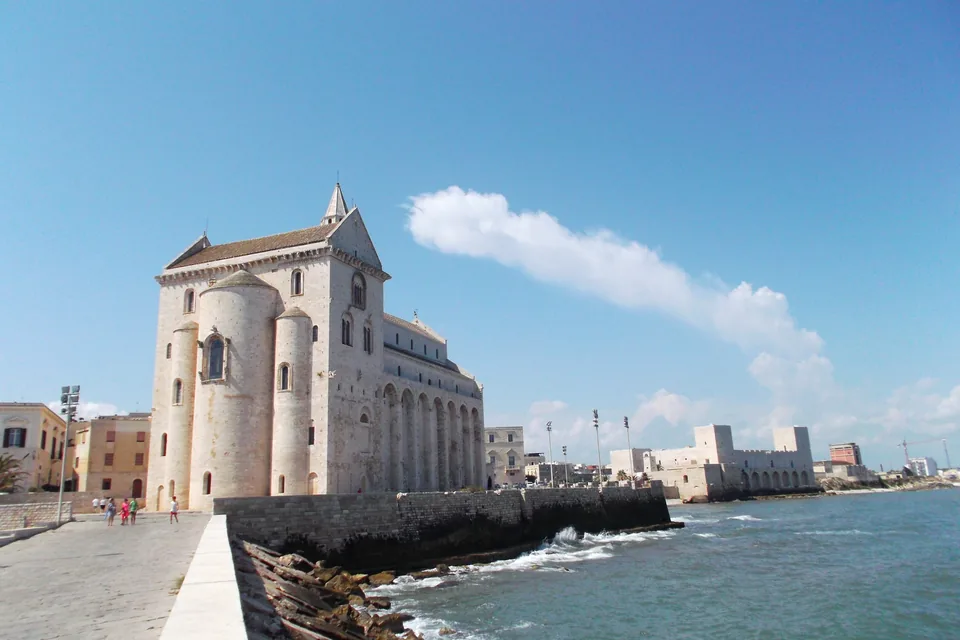
Cathedral, castle and Jewish heritage for a coastal ending with cultural depth. The Romanesque cathedral on the sea with Barisano’s bronze door, Frederick II’s castle of 1233, the two medieval synagogues of the Giudecca, the harbour and the monastery of Colonna on its peninsula.
Read the guide →Photo: Termauri / Wikimedia Commons — CC BY-SA 4.0 · Resized and converted to WebP.

Bisceglie
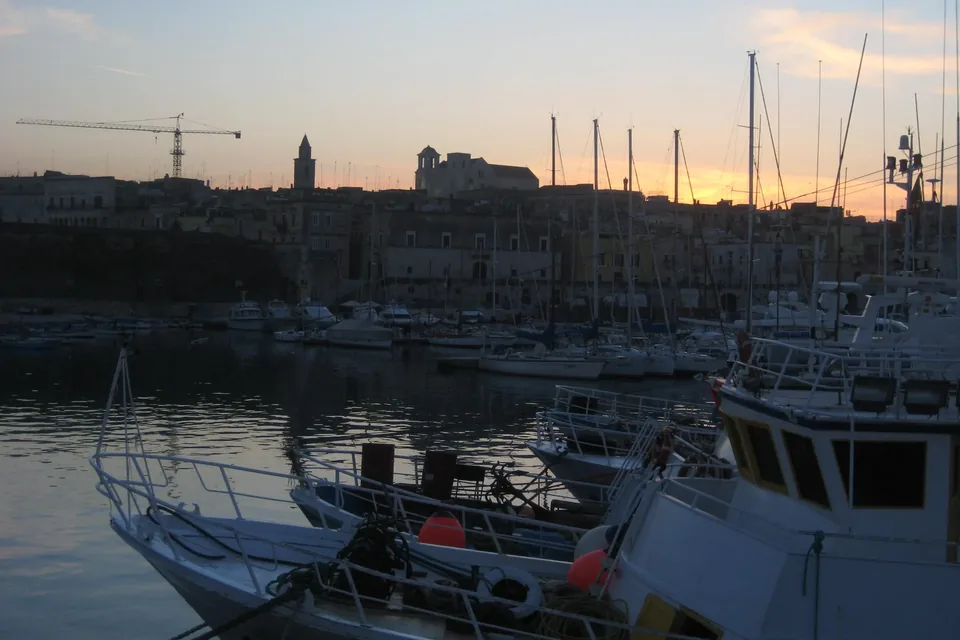
From the La Chianca dolmen to the Romanesque town and harbour. Aragonese walls, a Swabian castle, Romanesque churches and the sospiro, a Slow Food Presidium.
Read the guide →Photo: Geppisimone at Italian Wikipedia / Wikimedia Commons — CC BY-SA 3.0 · Resized and converted to WebP.

Molfetta
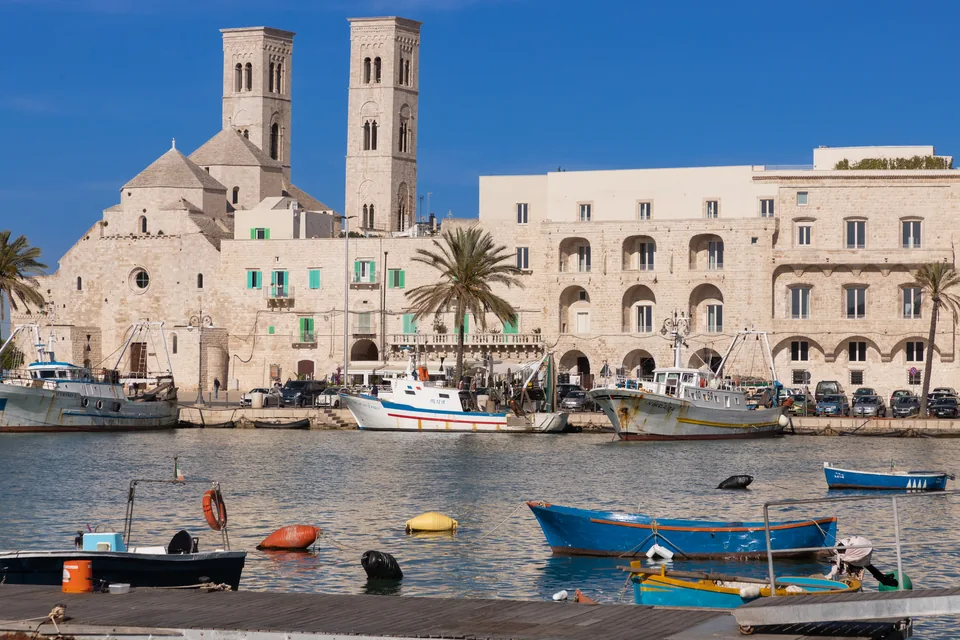
Romanesque architecture and karst landscape beyond the coast. The cathedral on the harbour, a fishing fleet among the lower Adriatic’s largest and the Pulo. In town the cathedral born from the Jesuit church, the Diocesan Museum and the Apulian Regional Seminary; outside the old town the basilica of the Madonna dei Martiri, a pilgrims’ stop since 1162, and the oil of the Terra di Bari PDO.
Read the guide →Photo: Genesis5663 / Wikimedia Commons — CC BY-SA 4.0 · Resized and converted to WebP.

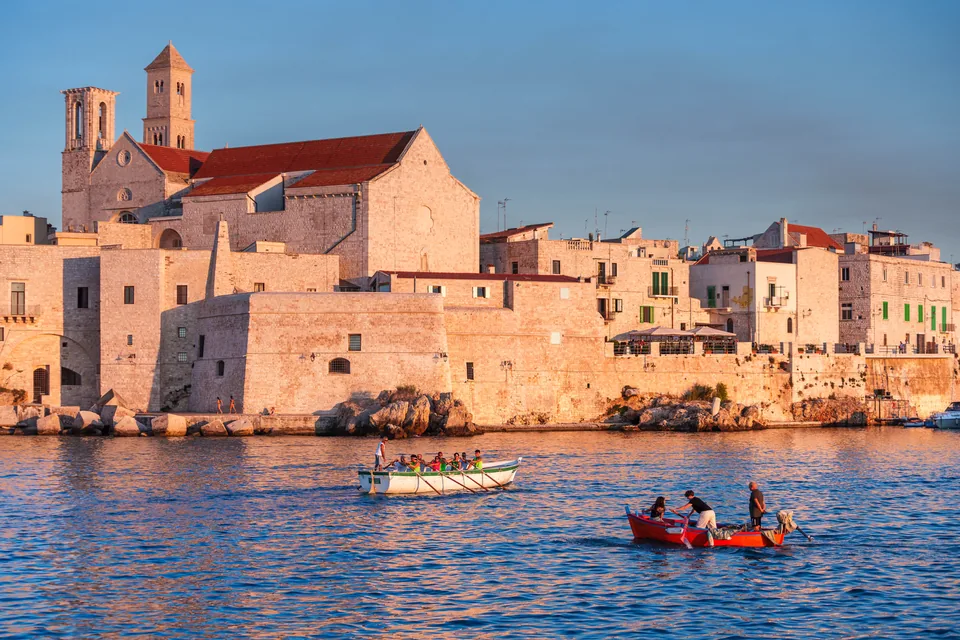
Giovinazzo
The old town, harbour and cooking shaped by farming and fishing traditions. A centre on a rocky promontory, the cathedral and a rice, potato and mussel tiella.
Read the guide →Photo: Pakycassano / Wikimedia Commons — CC BY-SA 4.0 · Resized and converted to WebP.

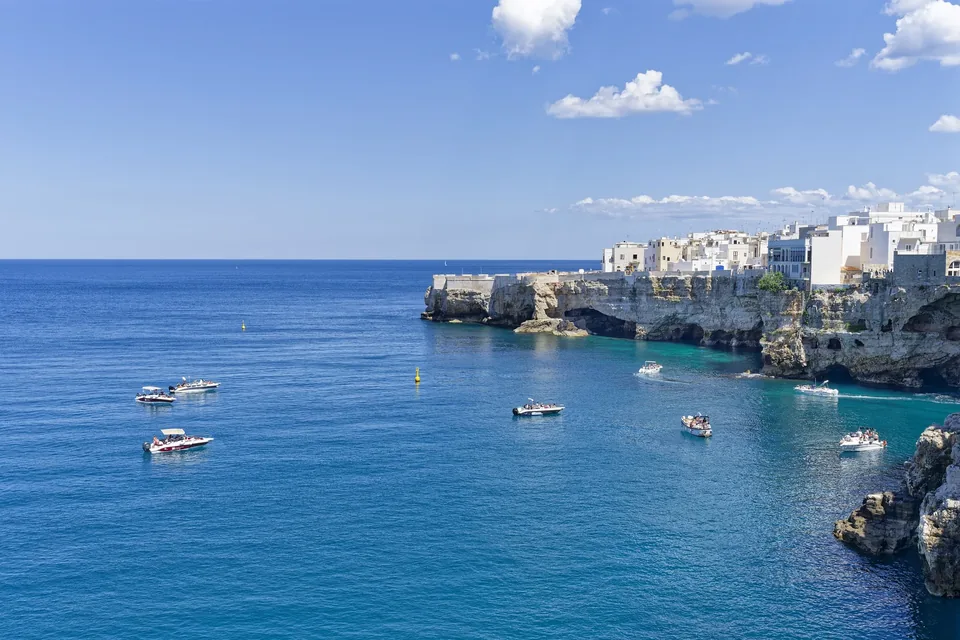
Polignano a Mare
Old town, viewpoints and a coffee as a travel pause. A white town on a cliff, the Arco Marchesale, contemporary art and the multicoloured Polignano carrot. And then the history of the mother church, the Pino Pascali museum, the dives from the houses of the old town, the feast of Saint Vitus and the Costa Ripagnola nature park.
Read the guide →Photo: Maksimsokolov / Wikimedia Commons — CC BY-SA 4.0 · Resized and converted to WebP.

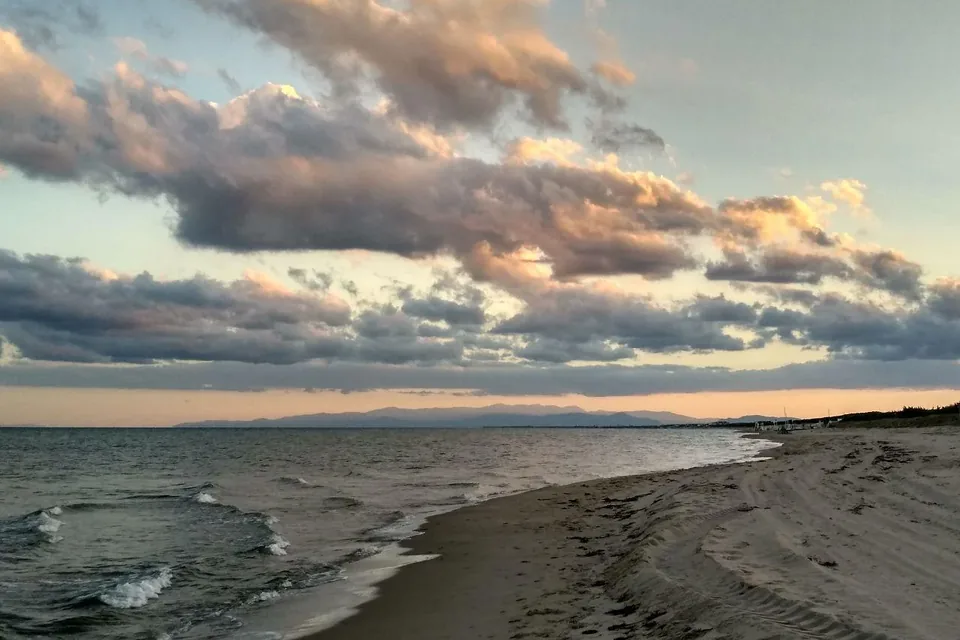
Castellaneta
The historic centre and Rudolph Valentino’s story in inland Puglia. A town on the edge of the Gravina Grande ravine and its frugal ciallèdda bread.
Read the guide →Photo: Archeolucia / Wikimedia Commons — CC BY-SA 4.0 · Resized and converted to WebP.

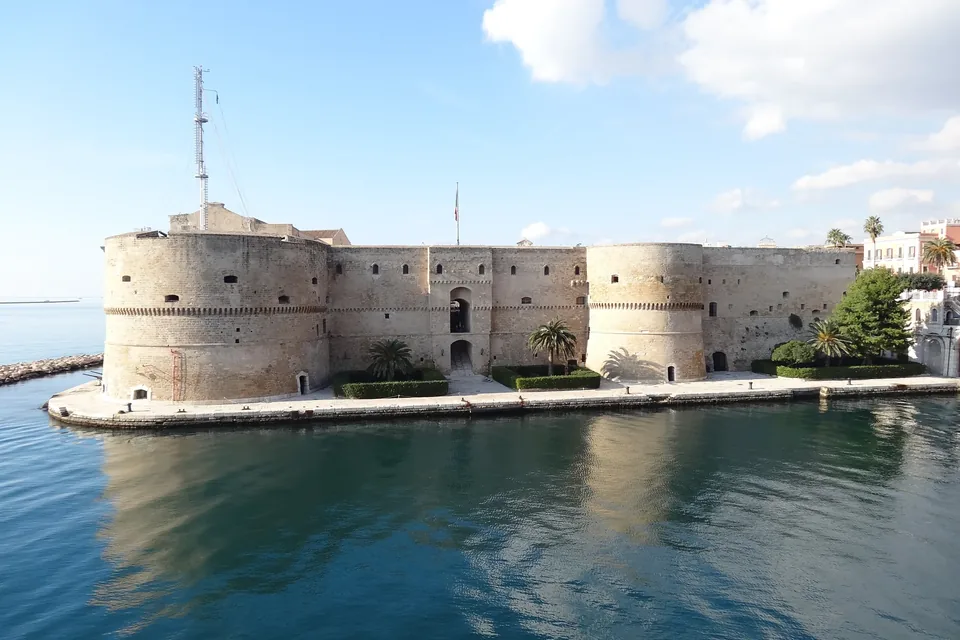
Taranto
Taranto: two seas and archaeology. The Mar Grande and Mar Piccolo, a polis founded by Spartan colonists, the MArTA museum and Taranto’s mussels.
Read the guide →Photo: Livioandronico2013 / Wikimedia Commons — CC BY-SA 3.0 · Resized and converted to WebP.

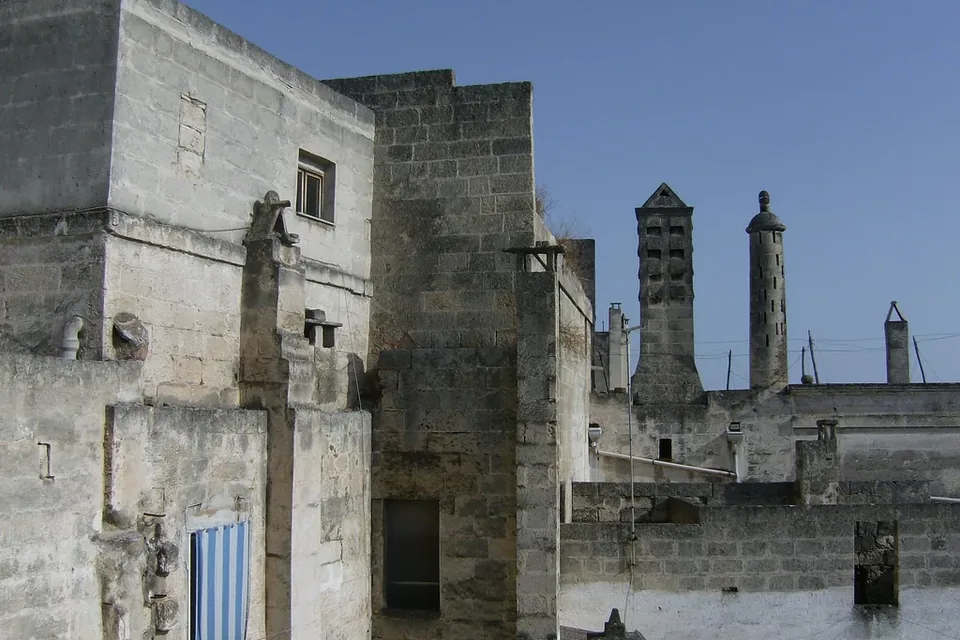
Grottaglie
Grottaglie: ceramics and rock. A ceramics quarter round the old town, a historic centre carved into the tuff and ravines a few kilometres from Taranto.
Read the guide →Photo: gunzapper / Wikimedia Commons — CC BY 2.0 · Resized and converted to WebP.

In Bottega
Puglia table grapes has its own page in Bottega Apulica, the space on apulica.eu for typical products: there you find its story, its protection, the production areas and the producers where they are already listed. Purchases are not open yet: the page shows what will be on sale at opening.