
Why go
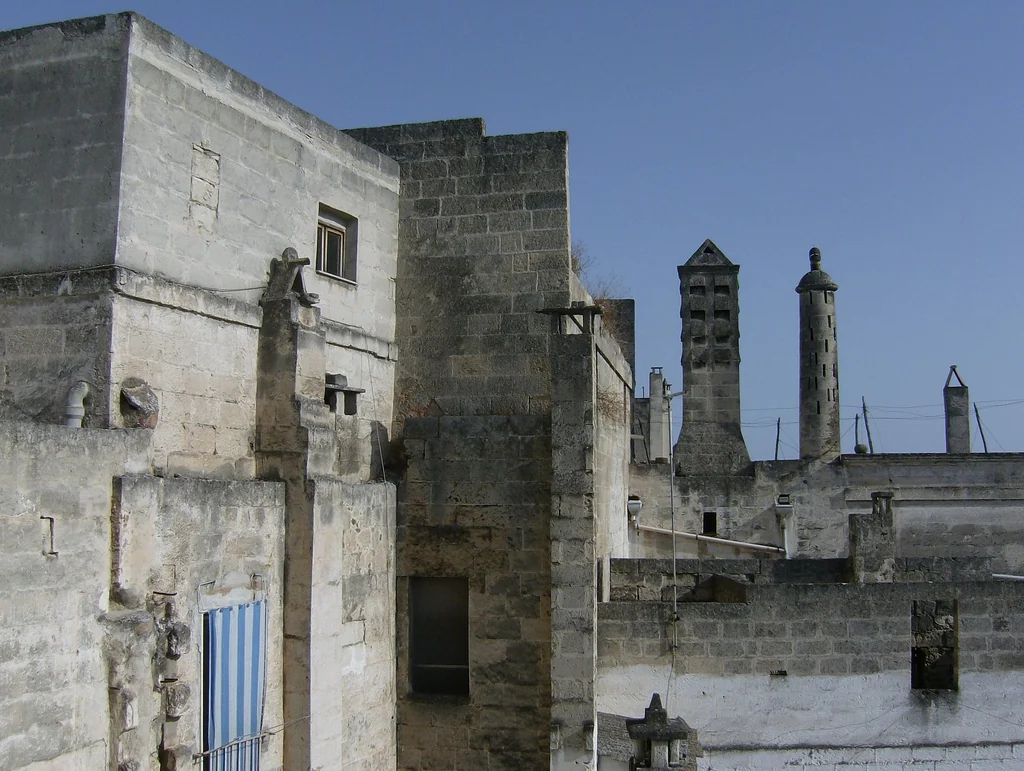
Grottaglie stands on a low hill a few kilometres from Taranto, on the edge of the Murgia terrace descending towards the Mar Piccolo, in a landscape marked by ravines. The name itself, the Ministry of Tourism notes, comes from the thousands of caves inhabited since prehistory, and much of the historic centre is carved into the tuff.
The reason to come is ceramics. Around the old centre spreads the ceramics quarter, where, according to the regional tourism portal, potters' wheels still turn in more than fifty workshops, some with their old kilns carved into the rock. Here generations of craftsmen produce plates, vessels, holy-water stoups, figures of ladies and knights and the characteristic glazed ceramic 'pumi'. The national portal notes that Grottaglie is the only Apulian ceramics centre protected by the DOC mark.
Beside the workshops are the Castello Episcopio with the Ceramics Museum, the mother church with its majolica dome, and outside town the Riggio and Fantiano ravines, with rock churches and medieval settlements. It is a stop for lovers of craft, contemporary art and rock landscapes.
Sources: Viaggiare in Puglia, Regione Puglia — Grottaglie · Grottaglie — fonte istituzionale · Viaggiare in Puglia, Regione Puglia — Quartiere delle ceramiche
History
The Ministry of Tourism notes that Grottaglie was known in antiquity as Kriptalys and that by territory, culture and dialect it belongs to the historic region of Salento. In the Middle Ages, probably because of invasions, the inhabitants went back to living in caves, organising the town with stairs, paths and works for collecting and draining water. In the fifteenth century the town was surrounded by walls and protected by a castle.
The Castello Episcopio was for centuries the symbol of the feudal power of the archbishops of Taranto. The municipality considers it plausible that by the early fifteenth century the keep, the fortified walls, the two curtain towers and the first-floor rooms for the archbishop already existed; today the inner tower rises more than twenty-eight metres over four independent floors.
The ceramic tradition began in the Middle Ages and has been handed down from generation to generation. The ceramics quarter developed along the San Giorgio ravine, where workshops and kilns were set in underground spaces once also used as olive mills: the Bottega Dormiente underground mill keeps traces of all three phases, medieval cave dwelling, early modern olive mill and contemporary workshop.
Sources: Grottaglie — fonte istituzionale · Comune di Grottaglie — Castello Episcopio · Viaggiare in Puglia, Regione Puglia — Quartiere delle ceramiche · Viaggiare in Puglia, Regione Puglia — Frantoio Ipogeo Bottega Dormiente
What to see
The ceramics quarter spreads across the lower part of town, beside the Castello Episcopio. Along its lanes are about fifty workshops, some carved into the rock, where you can watch the stages of production; from above, the regional portal points to the view of workshop terraces crowded with vases and containers, bearing the typical symbols of the Grottaglie style: the cockerel, the knights and the colourful 'pupe'.
In its south-eastern wing, in rooms once used as stables, the Castello Episcopio houses the Ceramics Museum: about four hundred pieces from the eighth century BC to the present, in five sections ranging from everyday ware to majolica, from archaeological finds to nativity scenes and contemporary ceramics. The municipality also points to the castle's two gardens, the Mediterranean garden and the Giacomo d'Atri garden.
In the old town, the mother church on piazza Regina Margherita has a late Romanesque façade with a rose window and an eighteenth-century dome clad in green, ochre and blue majolica; inside, the great chapel of San Ciro holds about forty paintings. Beneath the Carmine church you can visit the rock church of Santa Maria della Grotta, with frescoes of Saint Catherine and Saint Apollonia.
Sources: Viaggiare in Puglia, Regione Puglia — Quartiere delle ceramiche · Viaggiare in Puglia, Regione Puglia — Museo della Ceramica di Grottaglie · Comune di Grottaglie — Castello Episcopio · Viaggiare in Puglia, Regione Puglia — Chiesa Madre di Grottaglie · Viaggiare in Puglia, Regione Puglia — Chiesa rupestre di Santa Maria della Grotta
Food and wine
Grottaglie's countryside, according to the Ministry of Tourism, favours olive and vine growing: old cultivars produce a fine oil, and table grape cultivation has brought the area into the zone of Uva di Puglia PGI, which covers the Italia, Regina, Victoria, Michele Palieri and Red Globe varieties, requires vineyards below 330 metres and has harvests running from early July to mid-December.
Ceramics also enters the kitchen. The Ceramics Museum devotes a section to traditional everyday ware, with household pieces: looking at a plate or jug beside a dish helps you understand how vessels and food developed together, from storing oil to serving at table.
Elsewhere in the province of Taranto there are other products from the registry, such as the Capra jonica, a Salento goat breed and Slow Food Presidium whose milk gives ricotta, cacioricotta and cheeses, and the Cozza tarantina mussel from the nearby Mar Piccolo. Grottaglie, on the terrace descending towards that sea, is a good place from which to discover them.
Sources: Grottaglie — fonte istituzionale · Commissione europea, eAmbrosia — Uva di Puglia IGP · Viaggiare in Puglia, Regione Puglia — Museo della Ceramica di Grottaglie · Fondazione Slow Food — Capra jonica · Fondazione Slow Food — Cozza nera tarantina
Things to do
The main experience is stepping into the workshops of the ceramics quarter: in each one, the regional portal writes, you can watch the different stages of production and buy the finished piece. It is worth choosing a few different objects, a tableware vessel, a decorative form and a glazed piece, and asking which step determines the result.
Contemporary art is part of the same story. Every year the municipality organises the Mediterraneo Contemporary Ceramics Competition: its thirty-third edition, in 2026, received 410 works from artists in 48 countries and exhibited the selected works at the Castello Episcopio, with the new Grande Opera section devoted to sculptures and installations designed to engage with the town.
Outside town, the ravines offer excursions combining nature and history. The Gravina di Riggio is a deep valley with a waterfall, a small lake and a stream, the church of San Nicola with traces of frescoes and the Cenobio, nine caves on two levels; the Caggione is a chasm with a cave village on three levels. To the south, the Gravina di Fantiano preserves a medieval rock settlement among pines and scrub, partly used by the municipality for cultural events.
Sources: Viaggiare in Puglia, Regione Puglia — Quartiere delle ceramiche · Comune di Grottaglie — ceramica contemporanea · Viaggiare in Puglia, Regione Puglia — Gravina di Riggio · Viaggiare in Puglia, Regione Puglia — Gravina di Fantiano
When to go
Grottaglie can be visited all year, and the Castello Episcopio calendar offers two recurring events listed by the municipality: the Ceramics Exhibition, between August and September, and the Nativity Exhibition, between December and January, with representative works of local pottery; on these occasions the castle's upper rooms can also be visited.
The most heartfelt feast is that of the patron saints, especially Saint Cyrus: according to the regional portal the town's devotion peaks in the celebrations and the lighting of the great bonfire on 31 January. The Mediterraneo Contemporary Ceramics Competition is held every year with an exhibition in the summer and autumn months; dates should be checked on the municipality's website.
Spring and autumn are the best seasons for excursions in the Riggio and Fantiano ravines, with mild temperatures and more water in the Riggio stream. In summer it is best to visit the workshops and museum in the cooler hours.
Sources: Comune di Grottaglie — Castello Episcopio · Viaggiare in Puglia, Regione Puglia — Grottaglie · Comune di Grottaglie — ceramica contemporanea · Viaggiare in Puglia, Regione Puglia — Gravina di Riggio
Getting there and around
According to the regional tourism portal, Grottaglie station, part of the RFI network, mainly serves nearby towns; for long journeys beyond the province or the region it is best to go to Taranto station.
In town and the surrounding area you travel on urban bus lines and COTRAP consortium intercity services; taxis and bike, scooter and car hire are also available. For Brindisi airport, managed by Aeroporti di Puglia, the regional portal mentions the Puglia Airbus shuttle.
The historic centre and ceramics quarter are explored on foot, starting from the Castello Episcopio; some lanes in the quarter slope. For the Riggio and Fantiano ravines and the sanctuary of the Madonna della Mutata, on the provincial road to Martina Franca, you need your own or a hired vehicle. The regional portal also lists several cycling routes nearby.
Sources: Viaggiare in Puglia, Regione Puglia — Grottaglie · RFI — Stazione di Grottaglie · Aeroporti di Puglia — Aeroporto di Brindisi · Viaggiare in Puglia, Regione Puglia — Quartiere delle ceramiche · Viaggiare in Puglia, Regione Puglia — Santuario di Santa Maria Mutata
Where to stay
Grottaglie suits a stay of one or two nights for those who want to give the workshops, the museum and the ravines time without hurry. Staying in the centre lets you walk to the ceramics quarter and the Castello Episcopio, and see the town in the evening, when the workshops close and the streets grow quiet.
The area, which the regional portal places within Magna Grecia, Murgia and Gravine, also offers countryside options among olive groves and vineyards, where many masserie of the province welcome visitors; from there Taranto, Crispiano and the Itria Valley are a short drive away.
Alternatively you can choose a base in Taranto or in a nearby masseria and give Grottaglie a full day of workshops, museum and a walk in a ravine. We do not list specific properties: accommodation is chosen according to dates and type of trip.
Sources: Viaggiare in Puglia, Regione Puglia — Quartiere delle ceramiche · Viaggiare in Puglia, Regione Puglia — Magna Grecia, Murgia e Gravine · Grottaglie — fonte istituzionale
Nearby
Taranto, a few kilometres away, is the natural complement to a visit to Grottaglie: its National Archaeological Museum displays finds and goldwork from Magna Graecia, and the old town looks out between the Mar Grande and the Mar Piccolo. Crispiano, to the north-west, leads into the land of the hundred masserie and the giallorosso tomato.
To the north, the provincial road to Martina Franca passes the sanctuary of Santa Maria della Mutata, linked, according to the regional portal, to a stone bearing the image of the Virgin that in the fourteenth century is said to have turned to face Grottaglie; its floor is decorated with seventeenth-century majolica from the town. Further on, the Itria Valley opens up.
The regional portal groups Grottaglie, Taranto and the ravines in the Magna Grecia, Murgia and Gravine area, with canyons, crypts, villages and craft workshops down to the Ionian Sea. The Terra delle Gravine regional nature park, spread across twelve municipalities of the province, offers more rock villages and trails.
Sources: Viaggiare in Puglia, Regione Puglia — Taranto · Viaggiare in Puglia, Regione Puglia — Crispiano · Viaggiare in Puglia, Regione Puglia — Santuario di Santa Maria Mutata · Viaggiare in Puglia, Regione Puglia — Magna Grecia, Murgia e Gravine · Viaggiare in Puglia, Regione Puglia — Parco Naturale Regionale Terra delle Gravine
Local tourist information
Local tourist offices help with opening times, events and transport on the day.
- Info-point Grottaglie · Castello Episcopio, 74023 Grottaglie (TA) · +39 099 5620427 · infopoint@comune.grottaglie.ta.it
Source: Viaggiare in Puglia, Regione Puglia — Info-point Grottaglie · Viaggiare in Puglia, Regione Puglia — Grottaglie · checked on
Where to stay
In the municipality of Grottaglie the national database of the Ministry of Tourism lists 108 accommodation businesses with a verified CIN code: 2 hotels, 27 other licensed accommodation and 79 other types such as B&Bs and private rentals.
Licensed businesses from the official list of Regione Puglia, each with a checked national CIN code: matching municipality and category. Private individuals are not listed. Check directly with the property before booking.
CASA MAGA
Guest rooms
CIN IT073008B400112221
DIMORA SAN FRANCESCO
Guest rooms
CIN IT073008B400074988
IL PUMO
Guest rooms
CIN IT073008B400021635
VILLA DEA B&B
Guest rooms
CIN IT073008B400031883
MASSERIA ROSARIO
Farm stay
CIN IT073008B500024243
Masseria Galeasi
Farm stay · Website
CIN IT073008B500125837
Antica Masseria Le Monache
B&B · Website
CIN IT073008B400085411
B&B GROTTAGLIE
B&B · Website
CIN IT073008B400026144
B&B Leoncavallo
B&B
CIN IT073008B400084873
B&B MASTROPAOLO 42
B&B
CIN IT073008B400059862
B&B MICCOLI
B&B
CIN IT073008B400043787
CORTE MOPPS B&b
B&B
CIN IT073008B400058465
Casa MarFe
B&B · Website
CIN IT073008B400097646
IL MELOGRANO BED & BREAKFAST
B&B
CIN IT073008B400023495
IL VICOLO GROTTAGLIE
B&B
CIN IT073008B400090447
LA DIMORA DEL PRINCIPE DI MASCIULLO FRANCESCO
B&B · Website
CIN IT073008B400032752
LE MAIOLICHE B&B DI CARLUCCI TERESA
B&B · Website
CIN IT073008B400070107
RELAIS D'ITRIA
B&B
CIN IT073008B400049238
Bbatà
Holiday home · Website
CIN IT073008B400099201
RESIDENCE "BORGO DEL CAVALIERE"
Holiday home · Website
CIN IT073008B400022176
MONUN HOTEL
Hotel · ★★★★ · Website
CIN IT073008A100027117
RE SOLE RESORT
Hotel · ★★
CIN IT073008A100093496
Sources: Regione Puglia – ARET Pugliapromozione (DMS), CC BY 4.0, 2026-10-12 · Ministero del Turismo – Banca Dati Strutture Ricettive (dashboard pubblica), 2026-10-12
YOUR JOURNEY
How to shape a journey here
Look first at the relationship between workshop and setting, then at the shapes of the objects. A conversation about ceramic work is more rewarding than rushing between shops.
Talk to us about it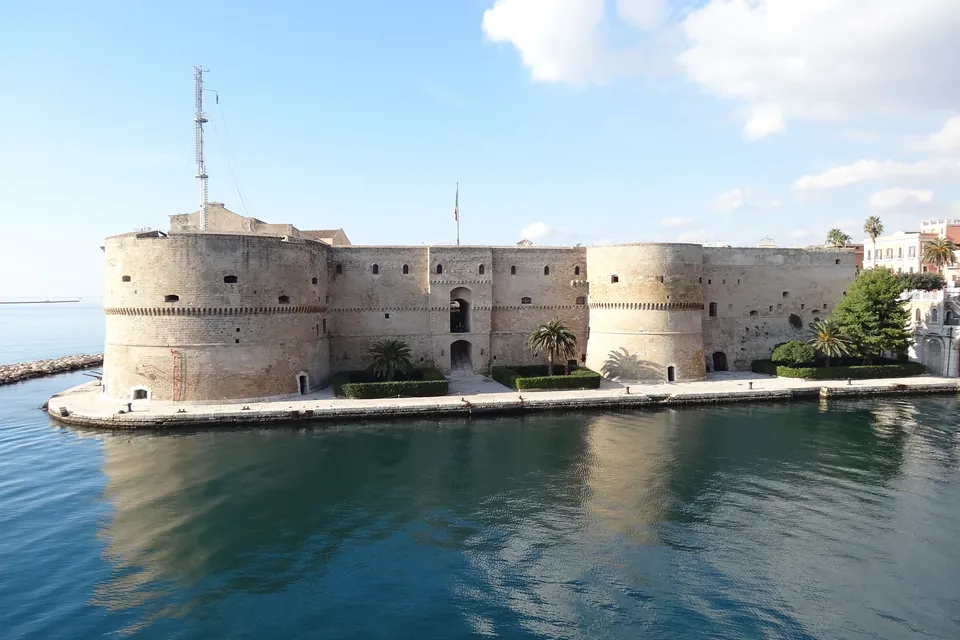

.JPG)

