
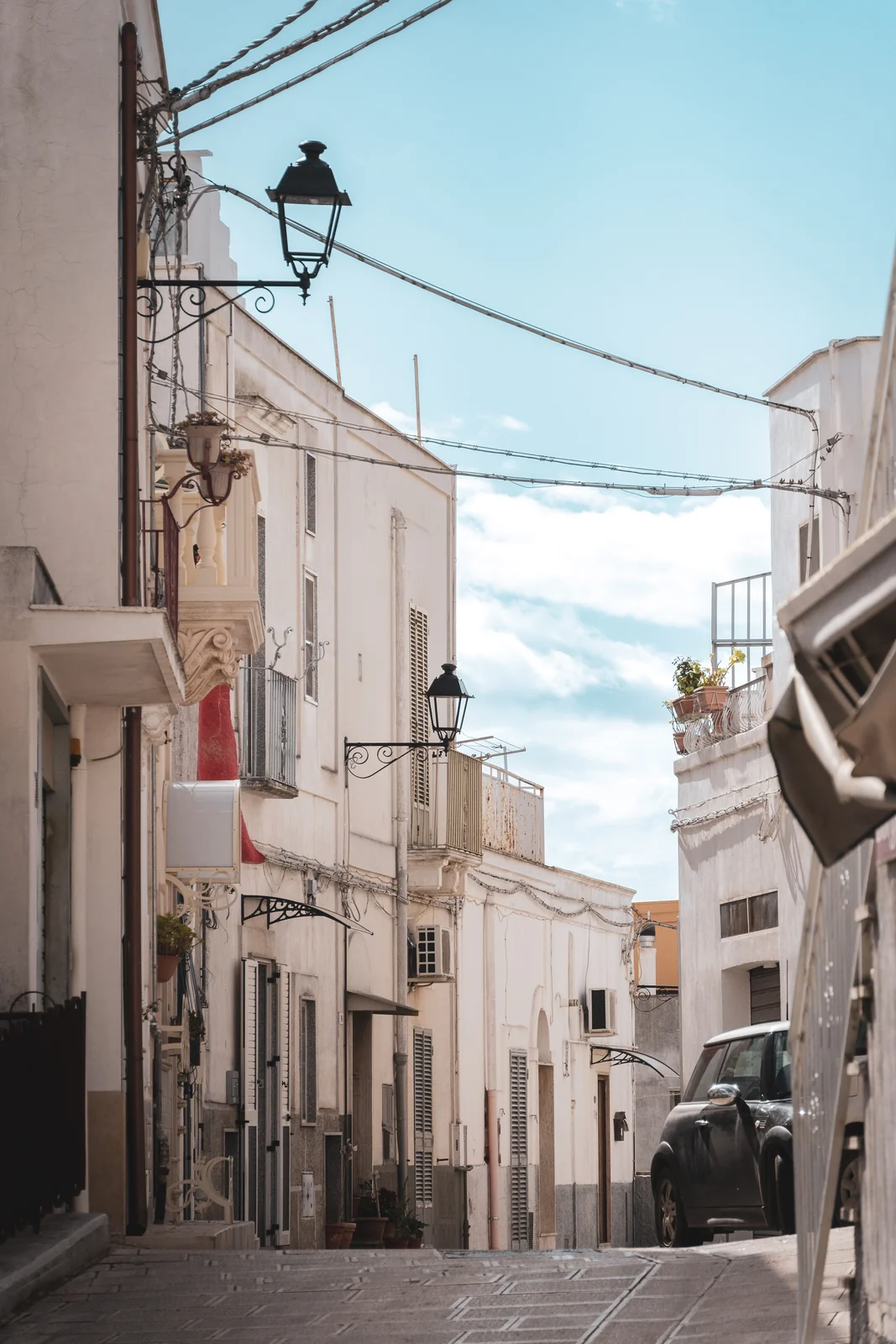
Why go
Crispiano lies about fifteen kilometres from Taranto, between the Itria Valley and the gulf, at the foot of the Murgia. The Ministry of Tourism describes it as famous above all for the masserie that surround it, about a hundred, differing in size, style and activity: some converted into places to stay, others still the working centre of the fields around them.
That is the main reason to come. The regional tourism portal notes that the territory of the Hundred Masserie was recognised in 2015 as a European Destination of Excellence for tourism and local gastronomy, under the European Commission's EDEN project, and is listed as a distinctive feature of the Puglia Region. Along the country roads, among Mediterranean hills and ancient olive trees, you meet masserie built between the fifteenth and nineteenth centuries, from small rural houses to closed-courtyard complexes with fortified walls.
The town also has a soul in the rock: the Grotte del Vallone, once a refuge for monks and later the homes of farm labourers, are the foundations of the modern village. Around it, the Pianelle woods and the edge of the Terra delle Gravine Park add nature and trails to a trip devoted to the countryside.
Sources: Crispiano — fonte istituzionale · Viaggiare in Puglia, Regione Puglia — Crispiano
History
The regional portal notes that Crispiano has been inhabited since prehistory, as many finds from the Greek period show; among them a fourth-century BC grave assemblage considered one of the most important pieces of the so-called Gold of Taranto. The small town stands on both banks of the wooded Vallone Lizzitello.
The Grotte Vallonee, the portal writes, were once a refuge for Basilian monks fleeing iconoclast persecution and later became the homes of farm labourers, forming the foundations of modern Crispiano. Dated to the twelfth and thirteenth centuries, in July 2016 they obtained Herity certification. Just outside town, the rock church of Saints Crispin and Crispinian, made an abbey around the year 1000, keeps frescoes of Greek saints, including Saint Michael, Saint Nicholas and Christ Pantocrator.
Rural history is written in the masserie, built between the fifteenth and nineteenth centuries; some were fortified against pirate raids. In 1988 the municipality devoted the exhibition The Hundred Masserie of Crispiano to them, and the name by which the area is known grew out of that initiative.
Sources: Viaggiare in Puglia, Regione Puglia — Crispiano · Viaggiare in Puglia, Regione Puglia — Chiesa rupestre dei Santi Crispo e Crispiniano · Viaggiare in Puglia, Regione Puglia — Museo della Civiltà Contadina Masseria Lupoli
What to see
The first place to visit is the countryside itself. The masserie appear kilometre after kilometre along roads between hills and plains of olive trees, and the regional portal suggests getting to know them through guided visits, which also take in the ravines, the historic centre and the Grotte del Vallone.
The Museum of Rural Life, at Masseria Lupoli at the foot of the Taranto Murge, gathers objects, tools and farm machinery in nine themed rooms inside the masseria's medieval tower, with reconstructions of a kitchen with its hearth and of the owner's bedroom from the early twentieth century. The collection began in 1967, when Edmondo Perrone started gathering the masseria's objects.
In and around town the heritage is carved into the rock: the Crypt of Santa Maria, the rock church of Saints Crispin and Crispinian, with two chambers, the first divided into three aisles, and an old olive mill beside it, and the Grotte del Vallone. Among natural caves the Ministry of Tourism points to the Stinge cave, also called the Cave of Pearls, rich in stalactites and stalagmites; the regional portal mentions its rounded karst formations.
Sources: Viaggiare in Puglia, Regione Puglia — Crispiano · Viaggiare in Puglia, Regione Puglia — Museo della Civiltà Contadina Masseria Lupoli · Viaggiare in Puglia, Regione Puglia — Chiesa rupestre dei Santi Crispo e Crispiniano · Crispiano — fonte istituzionale
Food and wine
Crispiano's countryside produces oil, wine and fruit in abundance, the Ministry of Tourism notes, naming Negroamaro and Primitivo among the red grape varieties. The whole municipality also lies within the zone of the white wine Martina or Martina Franca DOP, which the regional specification bases on Verdeca and Bianco d'Alessano.
The signature product is the Pomodoro giallorosso di Crispiano, a Slow Food Presidium: an old variety selected in the Vallone, the most fertile farming area of the municipality, grown among dry-stone walls. The fruit is round, with thick yellow-orange skin and soft flesh with a tart, grassy taste; it is harvested from late July to early September and kept for winter tied in garlands called 'nzerte', hung under the porticoes of the masserie.
The regional portal describes the masserie as destinations for food and wine tours and recalls the summer Carnival of the Fegatino, where the festivities come with the area's tastiest specialities. The themed routes offered in the area let you taste the products of this countryside where they are made.
Sources: Crispiano — fonte istituzionale · Regione Puglia — Martina o Martina Franca DOP · Fondazione Slow Food — Pomodoro giallorosso di Crispiano · Viaggiare in Puglia, Regione Puglia — Crispiano
Things to do
The main experience is exploring the territory of the Hundred Masserie, by car, by bike or on a guided visit, observing how rural architecture changes: from small farmhouses to closed-courtyard complexes with towers and walls. The regional portal points to themed cultural, nature, archaeological and food and wine routes, with visits to the masserie, the ravines, the historic centre and the Grotte del Vallone.
Nature is close at hand. The Ministry of Tourism mentions the great Pianelle woods along the municipal boundary: the regional reserve, according to the regional portal, covers about 1,205 hectares between Martina Franca, Crispiano and Massafra, with more than fifteen kilometres of trails for walking or cycling. Crispiano also lies on the eastern edge of the Terra delle Gravine regional nature park, the system of karst gorges descending from the plateau to the sea.
For cyclists, the regional portal mentions a cycle route linking Crispiano to Noci. A stop at the Museum of Rural Life at Masseria Lupoli rounds off the day with the story of country life.
Sources: Viaggiare in Puglia, Regione Puglia — Crispiano · Crispiano — fonte istituzionale · Viaggiare in Puglia, Regione Puglia — Riserva naturale regionale Bosco delle Pianelle · Viaggiare in Puglia, Regione Puglia — Parco Naturale Regionale Terra delle Gravine · Viaggiare in Puglia, Regione Puglia — Museo della Civiltà Contadina Masseria Lupoli
When to go
The most distinctive event is the summer Carnival of the Fegatino, which according to the regional portal takes place in the second half of July with allegorical floats, masked groups and the area's food specialities. Exact dates change every year and should be checked with the municipality or the info-point.
Summer is also the season of the giallorosso tomato, harvested from late July to early September and then hung in nzerte for winter: those travelling in autumn or winter may find it preserved, following the tradition described by Slow Food.
Spring and autumn are the best periods for the masserie routes and for walking in the Pianelle woods or along the ravines, with mild temperatures and the countryside in full activity. In winter the landscape is quieter and visits focus on museums, rock churches and the masserie table.
Sources: Viaggiare in Puglia, Regione Puglia — Crispiano · Fondazione Slow Food — Pomodoro giallorosso di Crispiano · Viaggiare in Puglia, Regione Puglia — Info-point Crispiano · Viaggiare in Puglia, Regione Puglia — Riserva naturale regionale Bosco delle Pianelle
Getting there and around
The regional tourism portal states that Crispiano station mainly serves nearby towns; for long journeys beyond the province or the region it is best to go to Taranto station, on the national network. For intercity travel there are COTRAP consortium buses, as well as taxis and bike, scooter and car hire.
The reference airports are Bari and Brindisi, managed by Aeroporti di Puglia; for the transfer the regional portal suggests private services.
The town centre is visited on foot, but to discover the masserie, the Pianelle woods and the ravines you need your own or a hired vehicle, or a guided tour. The cycle route linking Crispiano to Noci is an alternative for those travelling by bike. Taranto, about fifteen kilometres away, is the nearest city for rail connections and services.
Sources: Viaggiare in Puglia, Regione Puglia — Crispiano · RFI — Stazione di Taranto · Aeroporti di Puglia — Aeroporto di Bari · Aeroporti di Puglia — Aeroporto di Brindisi
Where to stay
In Crispiano the stay most in keeping with the territory is in the countryside. The Ministry of Tourism notes that several masserie have been converted into places to stay, specialising in food, wine and wellness tourism, while the regional portal describes them as restored with elegance and respect for the past. Sleeping in a masseria lets you live the farming landscape beyond the visits.
As an identified example we mention Masseria Le Mesole, which on its website presents accommodation in houses and suites, outdoor spaces and production of oil and honey, with its contact address on the SP44 in Crispiano. This is an editorial reference checked on 6 October 2026, not a confirmed Apulica partner: type of accommodation and conditions are defined in the specific enquiry.
Those who prefer an urban setting can choose Taranto or Martina Franca and reach Crispiano on a day trip. Either way you need transport to move between masserie.
Sources: Crispiano — fonte istituzionale · Viaggiare in Puglia, Regione Puglia — Crispiano · Masseria Le Mesole — sito ufficiale
Nearby
Crispiano lies between two landscapes. To the north, beyond the Pianelle woods, Martina Franca opens the Itria Valley with its baroque and shares the white wine denomination with Crispiano. To the south, Taranto, about fifteen kilometres away, offers the city of two seas and the National Archaeological Museum, where the Gold of Taranto is displayed.
To the east, Grottaglie is the town of ceramics, with its quarter of workshops carved into the rock and the museum in the Castello Episcopio. To the west, the Terra delle Gravine Park spreads across twelve municipalities of the province of Taranto, with karst gorges, rock villages, crypts and sanctuaries decorated with Byzantine-style icons; Massafra is one of the gateways to the Park.
The regional portal sums up this area, Magna Grecia, Murgia and Gravine, as canyons, crypts, vineyards, olive groves, villages and craft workshops down to the Ionian Sea. From a base in Crispiano you can alternate masserie, ravines, art towns and coast.
Sources: Viaggiare in Puglia, Regione Puglia — Riserva naturale regionale Bosco delle Pianelle · Viaggiare in Puglia, Regione Puglia — Martina Franca · Regione Puglia — Martina o Martina Franca DOP · Viaggiare in Puglia, Regione Puglia — Taranto · Viaggiare in Puglia, Regione Puglia — Grottaglie · Viaggiare in Puglia, Regione Puglia — Parco Naturale Regionale Terra delle Gravine · Viaggiare in Puglia, Regione Puglia — Magna Grecia, Murgia e Gravine
Local tourist information
Local tourist offices help with opening times, events and transport on the day.
- Info-point Crispiano · Via Roma 9, 74012 Crispiano (TA) · +39 099 612251 · contact@crispianoturismo.it
Source: Viaggiare in Puglia, Regione Puglia — Info-point Crispiano · Viaggiare in Puglia, Regione Puglia — Crispiano · checked on
Where to stay
In the municipality of Crispiano the national database of the Ministry of Tourism lists 63 accommodation businesses with a verified CIN code: 2 hotels, 18 other licensed accommodation and 43 other types such as B&Bs and private rentals.
Licensed businesses from the official list of Regione Puglia, each with a checked national CIN code: matching municipality and category. Private individuals are not listed. Check directly with the property before booking.
AFFITTACAMERE B&B DEL CORSO
Guest rooms
CIN IT073004B400027514
Essenza Rooms
Guest rooms
CIN IT073004B400130254
TERRAROSSA
Guest rooms
CIN IT073004B400115004
affittacamere "suite il vicoletto"
Guest rooms
CIN IT073004B400085384
AMASTUOLA
Farm stay
CIN IT073004B500025440
IMPRESA AGRICOLA PASANISI MARIA PILAR ROSARIA
Farm stay · Website
CIN IT073004B500044125
MASSERIA LE MESOLE
Farm stay
CIN IT073004B500023187
MASSERIA PILANO
Farm stay
CIN IT073004B500022959
SANTORO ANGELA CARMELA
Farm stay
CIN IT073004B500023769
BENVENUTI IN PUGLIA
B&B
CIN IT073004B400050542
BORGO ANTICO
B&B
CIN IT073004B400022306
taffetà b&b
B&B
CIN IT073004B400075967
CASA FORTUNA VIA ROMA 26
Holiday home
CIN IT073004B400049934
Corte Dioniso
Holiday home · Website
CIN IT073004B400095949
Loft 45
Holiday home
CIN IT073004B400130315
Masseria Triglie
Holiday home · Website
CIN IT073004B400089909
MASSERIA QUIS UT DEUS
Hotel · ★★★★
CIN IT073004A100027755
PARCO DELLE QUERCE
Hotel · ★★★★ · Website
CIN IT073004A100050870
VILLA MARIA
Hotel · ★★★★ · Website
CIN IT073004A100020381
Sources: Regione Puglia – ARET Pugliapromozione (DMS), CC BY 4.0, 2026-10-12 · Ministero del Turismo – Banca Dati Strutture Ricettive (dashboard pubblica), 2026-10-12
YOUR JOURNEY
How to shape a journey here
Working countryside, farm architecture and flavours preserved for winter.
Talk to us about it


.JPG)
