Why go
Martina Franca stands on the eastern hills of the Murgia, equidistant from the Ionian and Adriatic seas, and is one of the most populous towns in the province of Taranto. The Ministry of Tourism presents it as the baroque town of the Itria Valley: a tangle of stone lanes opening suddenly into small squares, churches and palaces with wrought-iron balconies, in a panoramic position over the valley.
It suits those who want to combine architecture and town life. From the Ducal Palace to the basilica of San Martino, from the semicircular piazza Maria Immacolata to the white houses rising vertically along the lanes, the historic centre reads as a sequence of public spaces. In summer the Festival della Valle d'Itria brings opera and vocal music to town, in one of the oldest summer festivals devoted to the genre.
Then there is the countryside: the regional portal invites you to follow rural roads where trulli and fields bounded by dry-stone walls still appear, and towards Crispiano and Massafra the Pianelle woods offer trails and nature. Among the specialities of the table, both the capocollo and the white wine bear the town's name.
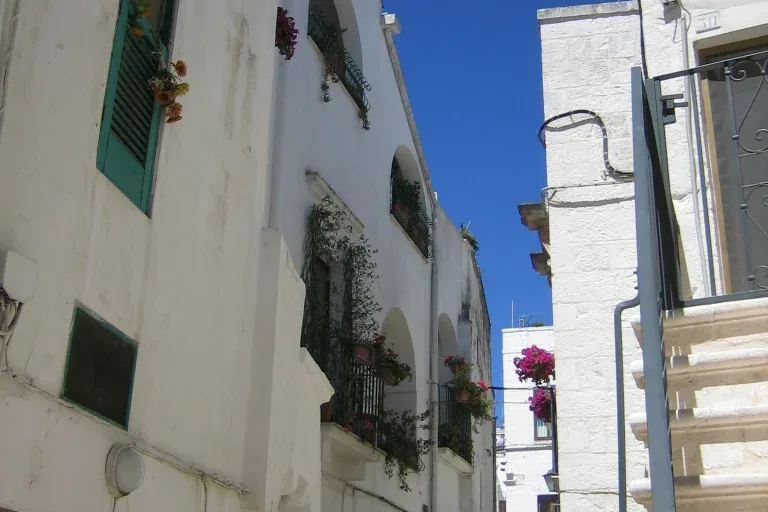
The municipality describes a historic centre with an unusual layout: houses grow vertically, with craft workshops or small cellars at street level, often a few steps below the road, and the living quarters on the first floor. This web of stairs, arches and courtyards is what makes a walk so varied, even away from the main monuments.
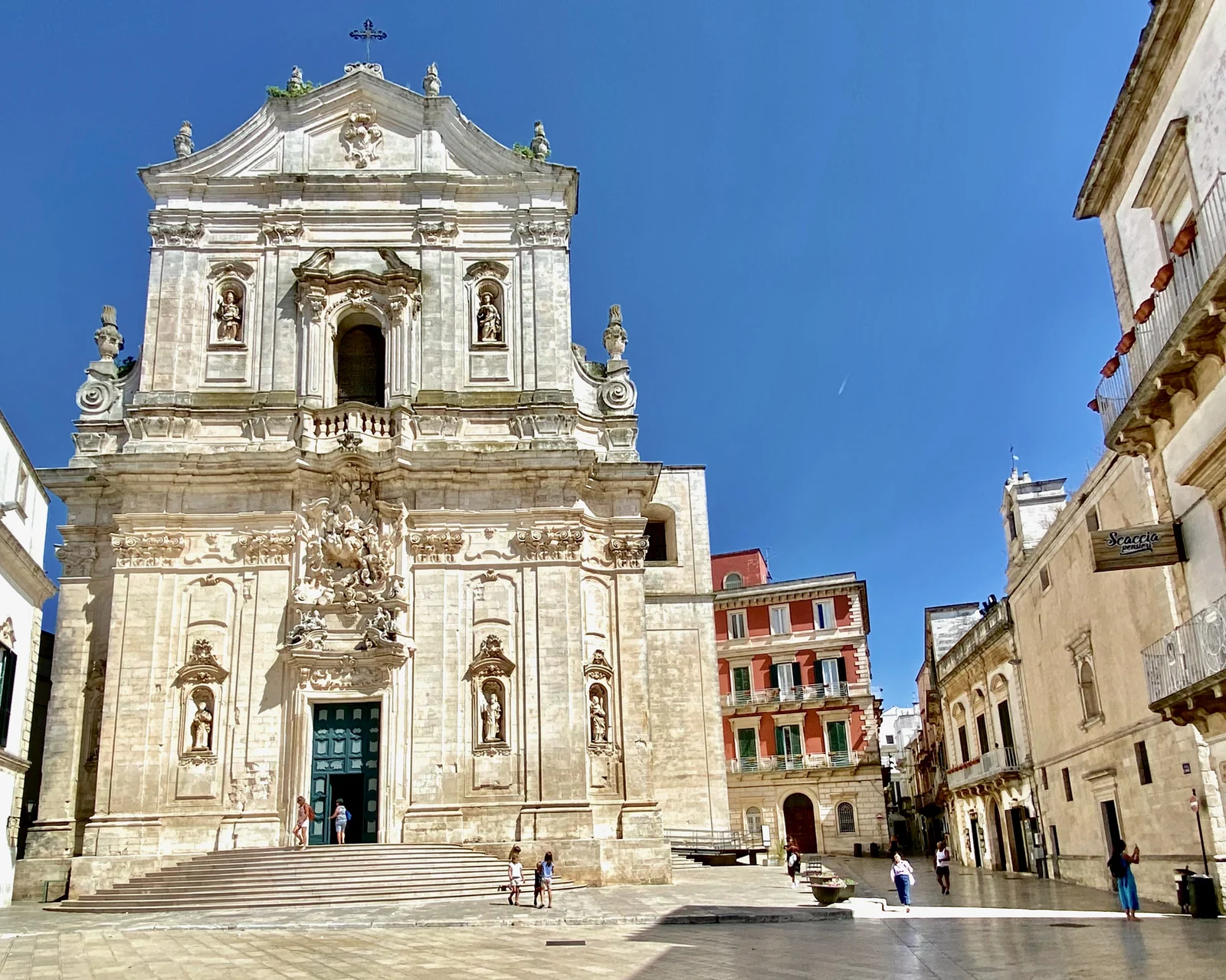
The basilica of San Martino, which the municipality calls the outstanding symbol of Martina's rococo, raises a 37-metre façade over piazza Plebiscito, once named after the patron saint. During the Festival, the municipality writes, the town becomes a large stage spread across its spaces, with performances in the courtyard of the Ducal Palace and in the cloisters: architecture and music meet in the same places.
Sources: Viaggiare in Puglia, Regione Puglia — Martina Franca · Italia.it — Martina Franca · Festival della Valle d’Itria — programma 2026 · Viaggiare in Puglia, Regione Puglia — Riserva naturale regionale Bosco delle Pianelle · Comune di Martina Franca — Centro storico · Comune di Martina Franca — Basilica di San Martino · Comune di Martina Franca — Piazza Plebiscito · Comune di Martina Franca — Festival della Valle d’Itria, 52ª edizione (2026)
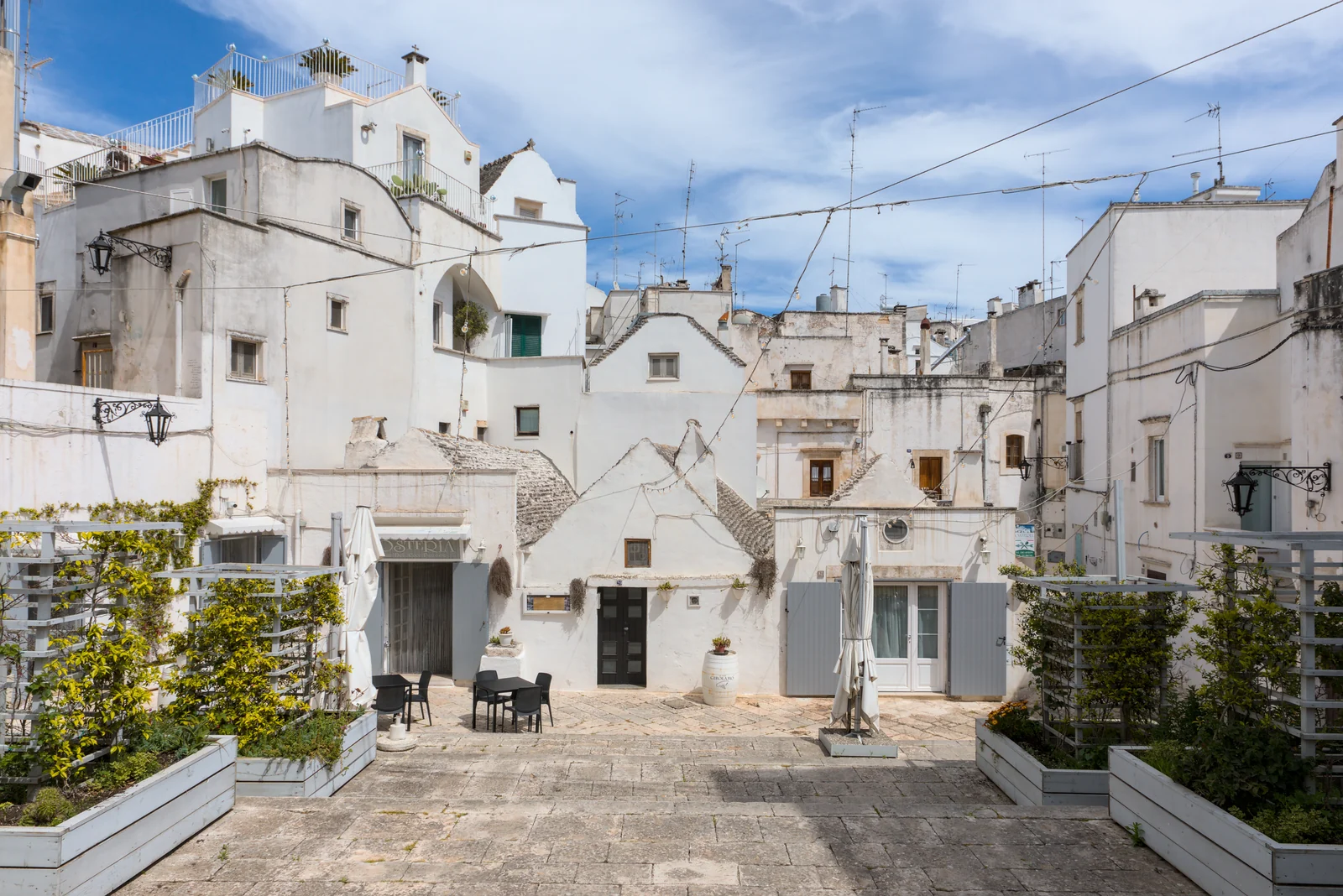
Photo: Benjamin Smith / Wikimedia Commons — CC BY-SA 4.0 · Resized and converted to WebP.
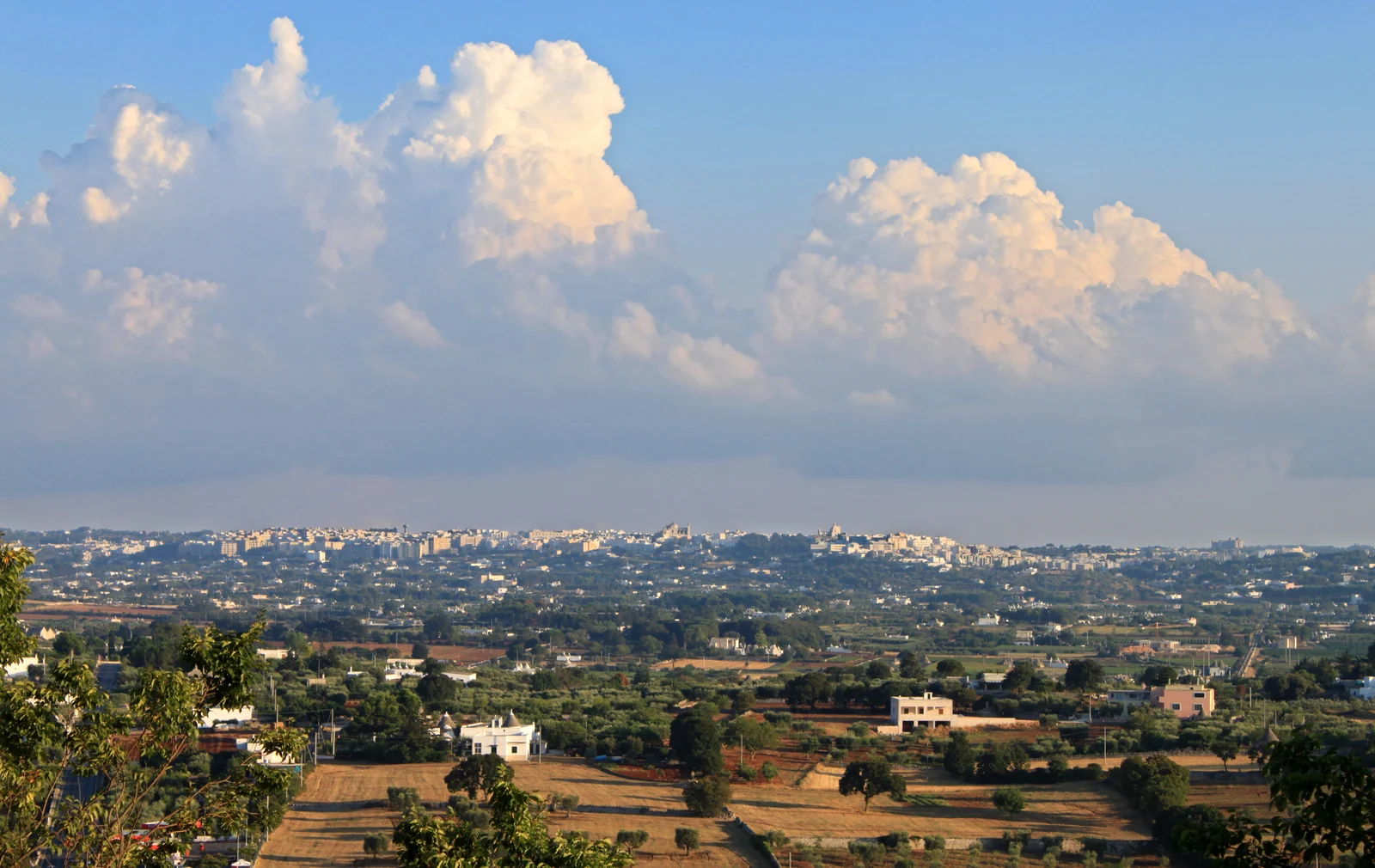
Photo: Carlo Pelagalli / Wikimedia Commons — CC BY-SA 3.0 · Resized and converted to WebP.
History
The regional portal explains the origin of the name: partly devotion to Saint Martin, who according to tradition saved the inhabitants from invaders, and partly the tax exemptions granted by Philip of Anjou. The Ministry of Tourism links the same legend to the Santo Stefano gate, also known as Sant'Antonio, which recalls the saint's help in defending the town against mercenaries.
The municipality notes that in 1388 Raimondo Orsini del Balzo, Prince of Taranto, built a castle; on its site Petracone V Caracciolo raised the Ducal Palace in 1668, a symbol of the family's power and of the town's passage from medieval to baroque art. According to the Ministry of Tourism the Caracciolo family held the fief for more than three hundred years, until 1827, and shaped the baroque soul of the centre.
Civic institutions left their mark too. The Palazzo dell'Università, from 1761, beside the civic tower of 1734, takes its name from the term used in the Kingdom of Naples for local government; the regional portal notes that the town statutes date back to the Aragonese organisation of 1478. In 1872 the building was raised by a storey to house offices and a small prison.
The oldest document the municipality cites is the privilege of 12 August 1310 by which Philip I of Anjou, Prince of Taranto, recognised the Casale della Franca Martina, which already had its own representative body, the Universitas civium. The archaeological excavations of April 2018 in the area of the duke's gardens uncovered the paving of a medieval road that left the San Francesco postern, walled up in 1696, towards the cave of Santa Maria d'Itria, a dependency of the monastery of San Nicola di Càsole near Otranto; above the cave the Capuchin convent was built in 1546.
According to the municipality, the Caracciolo family, from Buccino near Salerno, received the title of Duke of Martina in 1507: the first duke was Petracone III, the last Placido, whose duchy ended in 1806 with the abolition of feudalism under Napoleonic rule. In 1827, with the death of Petracone VIII, the male line died out and his sister Argentina, marrying Riccardo III de Sangro, began the Caracciolo-De Sangro line; Riccardo de Sangro, who died in 1978, donated the most important part of the family archive to the municipality, and it is now kept in the town library.
The palace was designed by Giovanni Andrea Carducci from Bergamo and approved by Gian Lorenzo Bernini, then superintendent in the Kingdom of Naples. The plan was a U open towards the countryside, with gardens and fountains, but it was never completed: Petracone V closed the works around 1700 with the great wrought-iron railing, Francesco III resumed work on the Gallery and in 1773 built the eastern wing, and the western wing came in the nineteenth century. In the early twentieth century the heirs sold the palace, and since 1928 much of it has housed the town hall.
The present basilica is the third building on the same site. After the earthquake of 1743 the archpriest Isidoro Chirulli had the first stone laid on 5 May 1747 to a design by the engineer Giovanni Mariani from Bergamo; when Mariani died a few months later, the design was revised by Giuseppe Morgese of Ostuni, who carved the sculpture of the façade with his sons Francesco and Gaetano and with Pasquale Montanini of Francavilla Fontana. The works went ahead without demolishing the medieval church at once, so that services could continue, and the church was consecrated on 22 October 1775. A collegiate church since 1594, a title confirmed in 1842, it has been a minor basilica since 22 April 1998.
The twentieth century added music. The Festival della Valle d'Itria was born in 1975 on the initiative of a group of enthusiasts led by Alessandro Caroli, with the support of the mayor Franco Punzi and of Paolo Grassi, then superintendent of La Scala, whose father came from Martina. The first edition, from 27 August to 5 September 1975, opened in the courtyard of the Ducal Palace with Gluck's Orfeo ed Euridice. From 1980, under the artistic direction of Rodolfo Celletti, the festival focused on bel canto and the Neapolitan school; since 1975 it has staged more than one hundred operas and has received the Abbiati Prize of the Italian music critics' association thirteen times.
Sources: Viaggiare in Puglia, Regione Puglia — Martina Franca · Italia.it — Martina Franca · Comune di Martina Franca — Palazzo Ducale · Italia.it, Ministero del Turismo — La Valle d'Itria: i luoghi da non perdere · Viaggiare in Puglia, Regione Puglia — Palazzo dell'Università · Comune di Martina Franca — Orti e giardini del duca Caracciolo · Comune di Martina Franca — Palazzo del Municipio, Palazzo Ducale · Comune di Martina Franca — Basilica di San Martino · Festival della Valle d’Itria — Chi siamo · Festival della Valle d’Itria — Le origini: Paolo Grassi e la sua visione · Festival della Valle d’Itria — 1975, la prima edizione · Festival della Valle d’Itria — Il Festival
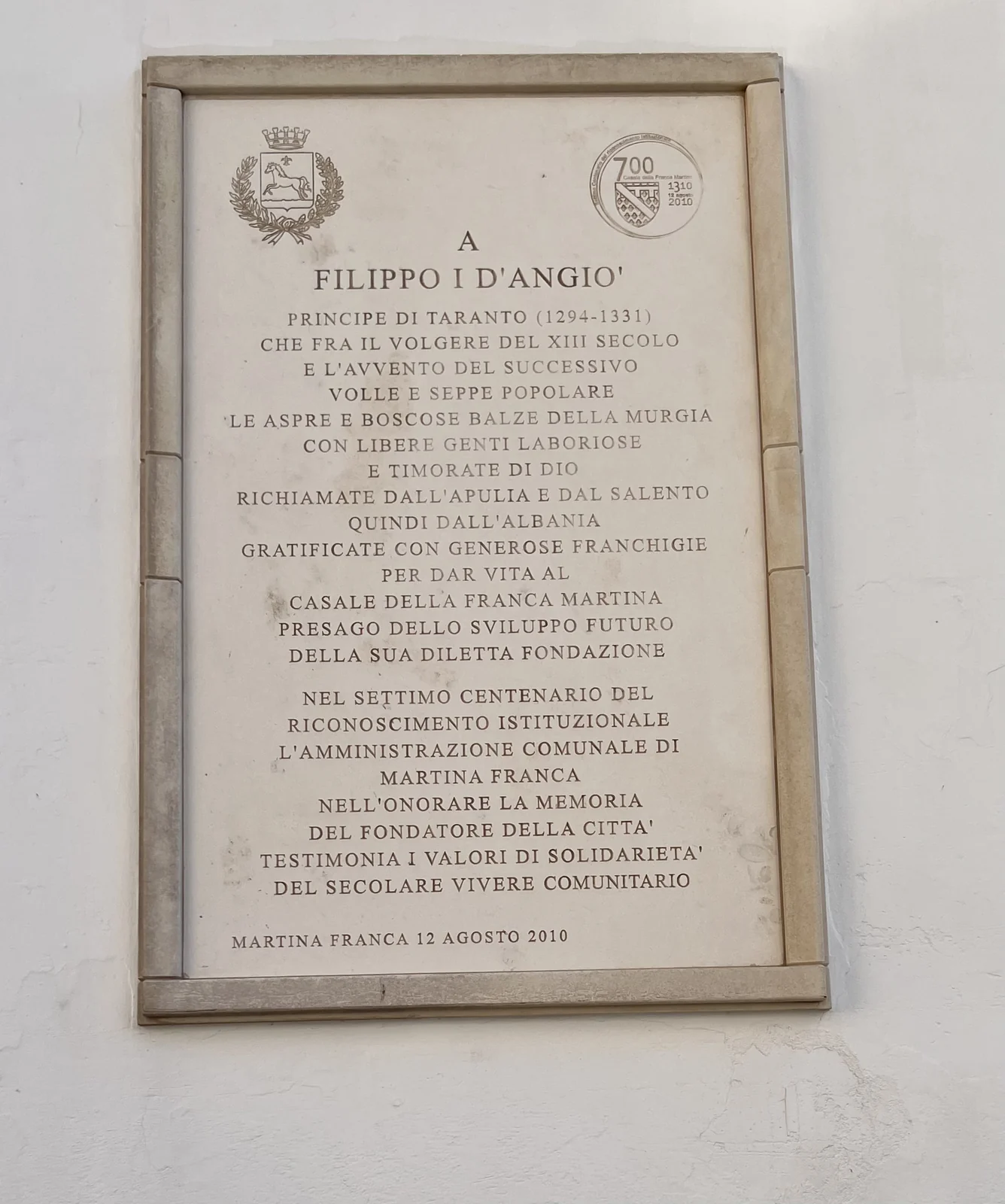
Photo: Ferdi2005 / Wikimedia Commons — CC BY-SA 4.0 · Resized and converted to WebP.
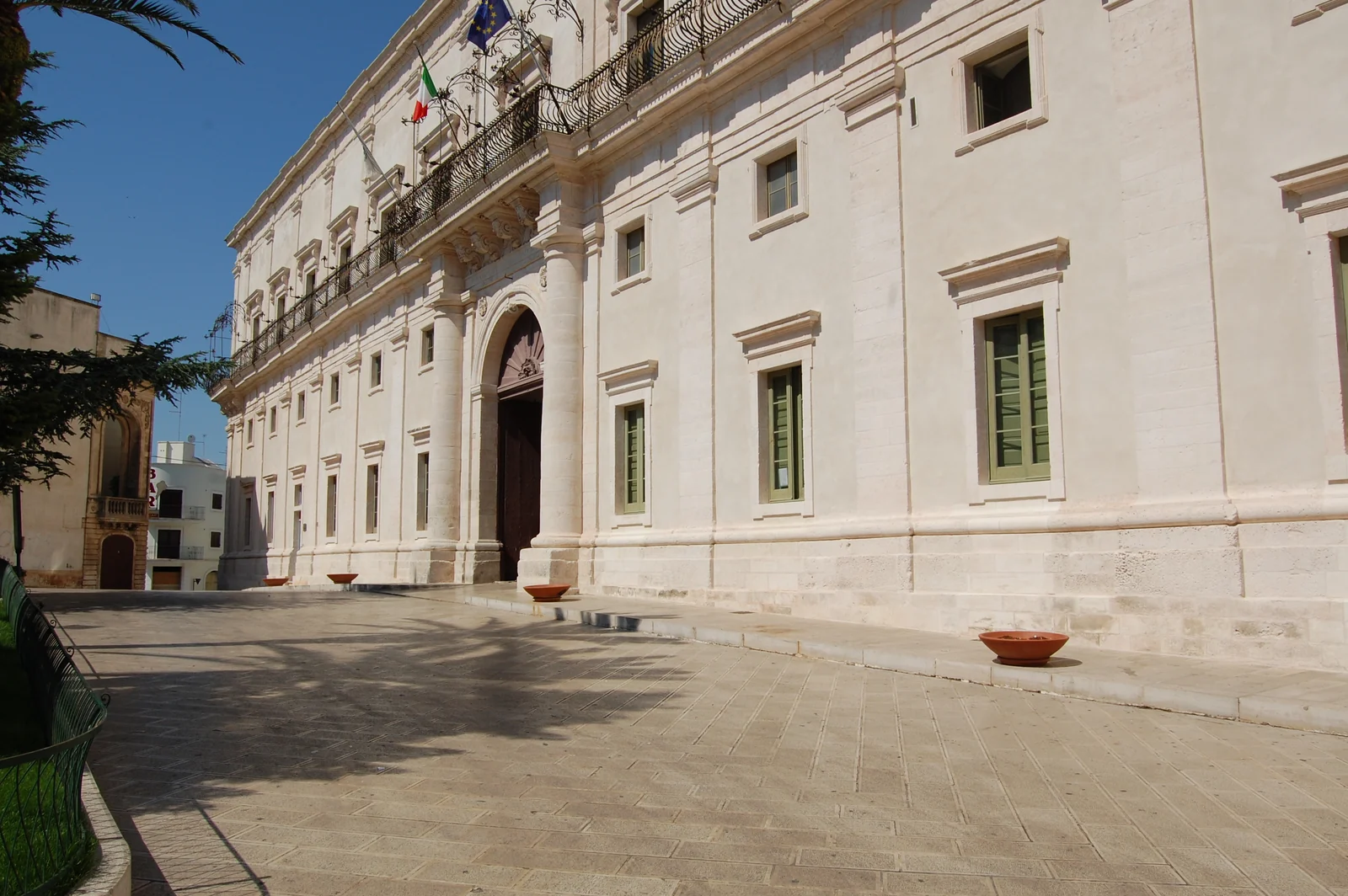
Photo: Anna Marangi / Wikimedia Commons — CC BY-SA 4.0 · Resized and converted to WebP.
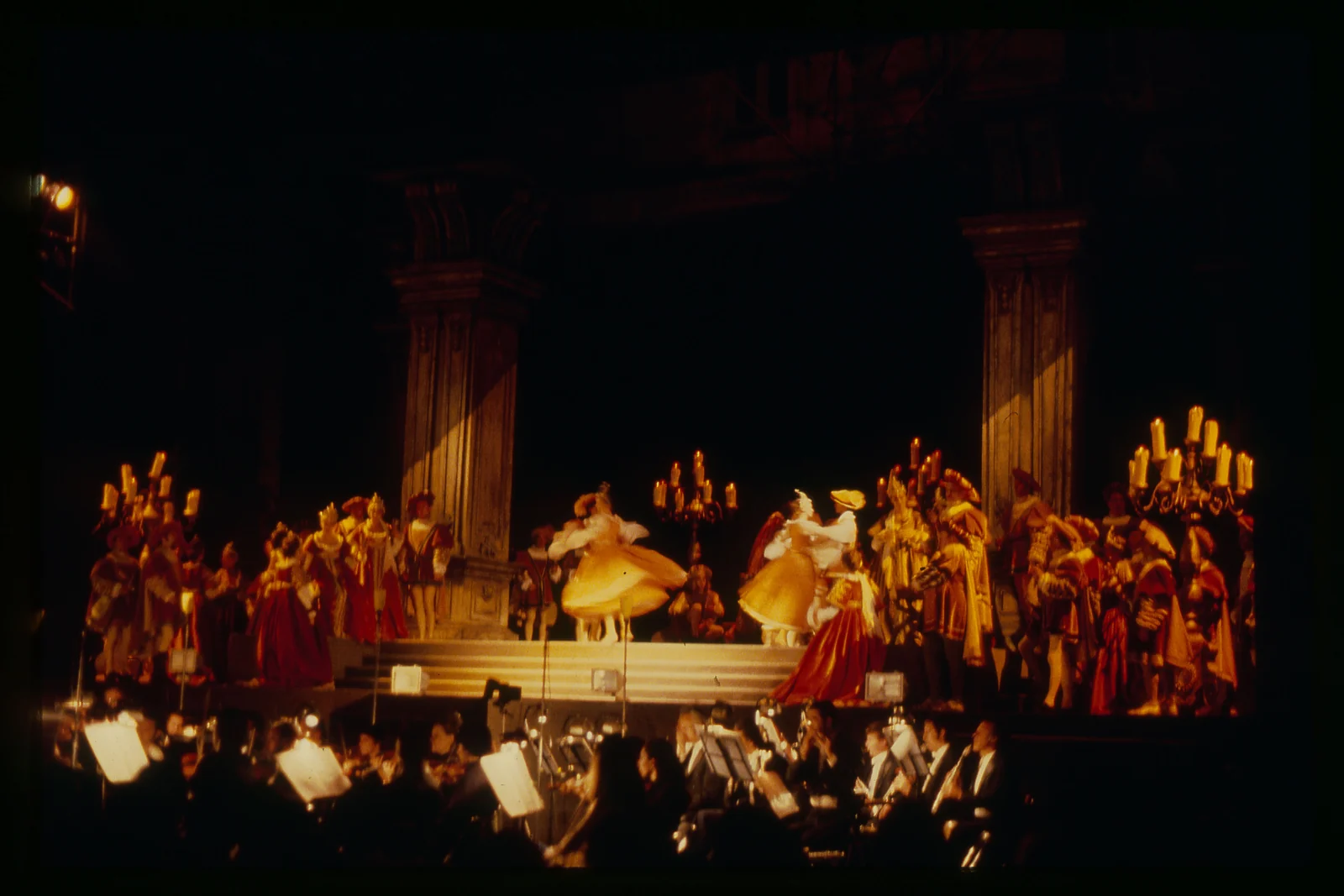
Photo: Walter Vitale / Wikimedia Commons — CC BY-SA 4.0 · Resized and converted to WebP.
What to see
The Ducal Palace dominates piazza Roma with a tall baroque façade, a long wrought-iron balcony and a doorway with apotropaic masks. The Ministry of Tourism notes that the grand design was never finished: only the eastern wing was built. A staircase leads to the noble apartment, with rooms decorated in 1771-1776 by Domenico Carella with biblical, mythological and pastoral scenes; the palace houses the town hall and the Pianelle Museum, devoted to the nature reserve.
Through the Santo Stefano gate you enter corso Vittorio Emanuele, known as the Ringo, where the main sights are concentrated. The eighteenth-century basilica of San Martino shows on its façade a high relief of the saint dividing his cloak; inside, a single nave keeps the silver statues of the patron saints Martin and Comasia and, according to the regional portal, sculptures by Stefano da Putignano and Giuseppe Sammartino.
Nearby open piazza Plebiscito, with the Palazzo dell'Università and the civic tower, and the semicircular piazza Maria Immacolata, with the neoclassical portico where the market was once held. Outside the centre, the rock church of Cristo alla Grotta keeps frescoes by Carella from 1791.
The façade of the basilica is divided into two orders. In the centre, inside a large rococo shell, the high relief shows Saint Martin cutting his cloak with his sword for a beggar; in the niches of the lower order are Saint Joseph, Saint Paul, Saint Peter and Saint John the Baptist, in those of the upper order Saint Comasia, the town's co-patron, and Saint Martina. On via Masaniello stands the late-Romanesque bell tower of the earlier church, cut down in 1768 after damage from earthquakes and lightning, with hanging arches and single-light windows.
Inside, a Latin cross with a single nave, the municipality points out Marcello Avenali's stained-glass window of 1956 showing the liberation of Martina from the legendary siege of the Cappelletti in 1529, the polychrome stone Nativity attributed to Stefano da Putignano and, on the high altar designed by Gennaro Sanmartino and built by Giuseppe Varriale in 1773, the statue of Saint Martin carved by Stefano himself in 1518, between the marble figures of Abundance and Charity by Giuseppe Sanmartino. The olive-wood Christ at the Column is by Giacomo Genovivi, from 1622; in the chapel of the Holy Sacrament Domenico Carella signed the Last Supper in 1804, and the Evangelists of the dome, from 1785, are also his. The silver reliquary statues of Saint Martin and Saint Comasia come from the Neapolitan workshop of Andrea De Blasio, from 1700 and 1714.
Next to the basilica, in the eighteenth-century Palazzo Stabile, the MuBa, the basilica museum, displays liturgical furnishings and documents spanning five centuries of the history of the town and its collegiate church.
In the Ducal Palace the Gallery rooms open to visitors are the ducal chapel and the rooms of Arcadia, Myth and the Bible, painted in tempera by Domenico Carella in 1776. In the Arcadia room the painter portrays the Caracciolo court in a pastoral landscape, with Duke Francesco III, his wife Stefanina Pignatelli, his mother Isabella d'Avalos and, lying on the grass, the physician and poet Giambattista Lanucara. To the left of the doorway of the old ballroom, now the council chamber, opens the d'Avalos wing, built by Francesco III for his mother: it holds the d'Avalos Corridor, now an exhibition space, and the Chinese Salon, also called the Room of the Birds, with grotesques and chinoiseries. On the second floor the Pianelle Museum, founded in 1999, introduces the nature reserve.
Outside the old walls, the church of the Carmine was rebuilt from 15 March 1727 at the wish of Friar Pietro Tommaso Carbotti: the inscription A SOLO ERECTA 1730 marks the completion of the first order, while the church was finished around 1758. The architect is still debated, and several scholars suggest Mauro Manieri of Lecce because of the façade's echoes of Borromini. Next to it, the cloister of the former convent hosts concerts, meetings and exhibitions.
Among the palaces of the centre the municipality points out Palazzo Motolese on via Principe Umberto, built in 1775 for the physician Domenico Motolese to a design by Paolino Damiani of Lecce, with a Latin inscription dedicating the house to its founder and his friends, «if there is a true friend». Piazza XX Settembre, once the market square, was laid out at the end of the nineteenth century in front of the Santo Stefano arch; it is overlooked by the Cinema Teatro Verdi, opened in 1920 as the municipal theatre and renovated after the fire of 1932.
Sources: Italia.it — Palazzo Ducale di Martina Franca · Italia.it — Martina Franca · Viaggiare in Puglia, Regione Puglia — Basilica di San Martino · Viaggiare in Puglia, Regione Puglia — Martina Franca · Viaggiare in Puglia, Regione Puglia — Palazzo dell'Università · Italia.it, Ministero del Turismo — La Valle d'Itria: i luoghi da non perdere · Viaggiare in Puglia, Regione Puglia — Chiesa rupestre del Cristo alla Grotta · Comune di Martina Franca — Basilica di San Martino · Comune di Martina Franca — MuBa, Museo della Basilica di San Martino · Comune di Martina Franca — Palazzo Stabile · Comune di Martina Franca — Palazzo del Municipio, Palazzo Ducale · Comune di Martina Franca — Corridoio d’Avalos · Comune di Martina Franca — Museo Parco delle Pianelle, Palazzo Ducale · Comune di Martina Franca — Chiesa del Carmine · Comune di Martina Franca — Chiostro del Carmine · Comune di Martina Franca — Palazzo Motolese · Comune di Martina Franca — Piazza XX Settembre · Comune di Martina Franca — Cinema Teatro Verdi
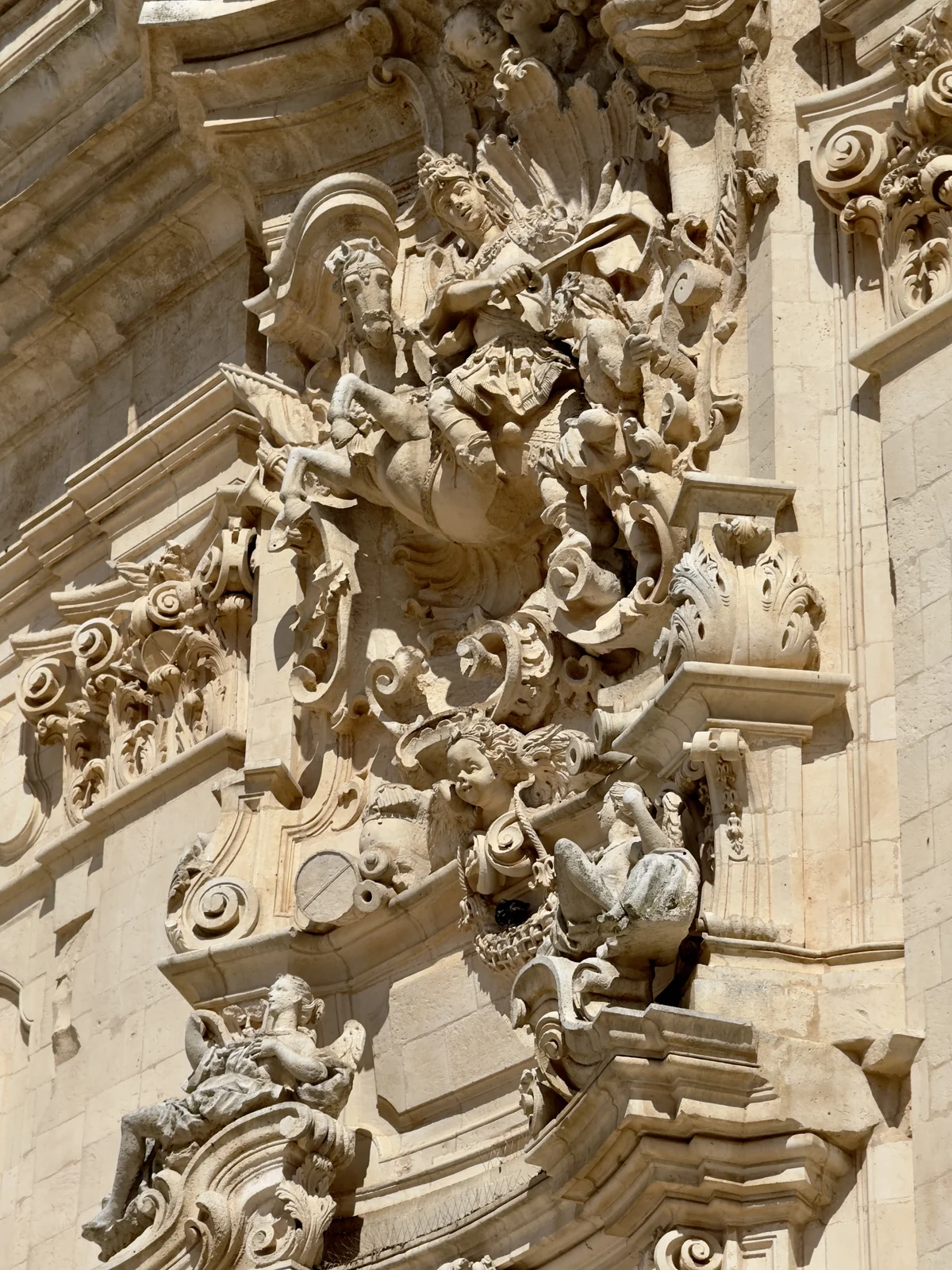
Photo: Kgbo / Wikimedia Commons — CC BY-SA 4.0 · Resized and converted to WebP.
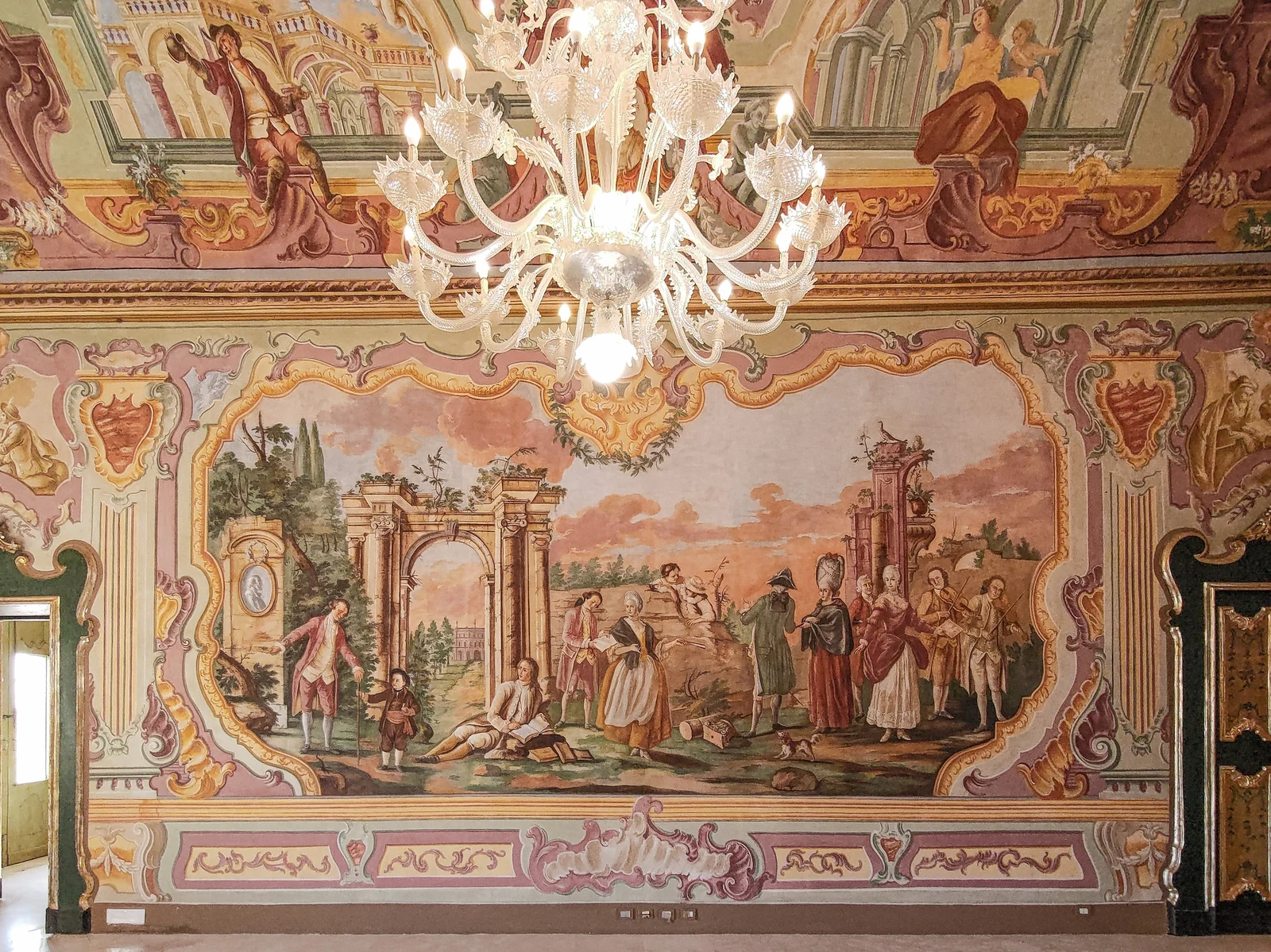
Photo: Giacomo Resta / Wikimedia Commons — CC BY-SA 4.0 · Resized and converted to WebP.
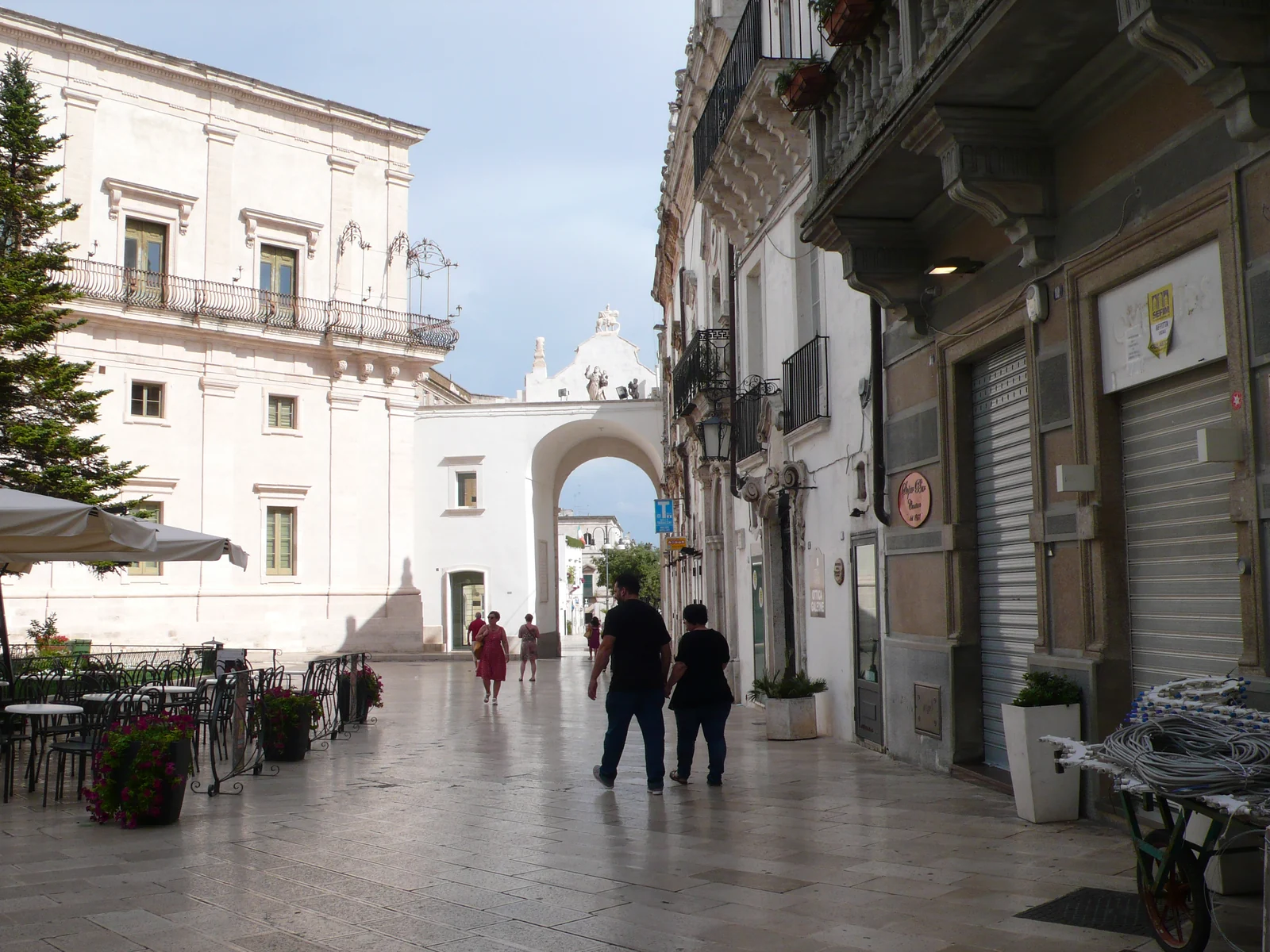
Photo: RatMan1234 / Wikimedia Commons — CC BY-SA 4.0 · Resized and converted to WebP.
Food and wine
Two products have carried the name of Martina Franca beyond the region, writes the regional tourism portal: the white wine and the capocollo. According to the regional page, the Martina or Martina Franca DOP is based on Verdeca and Bianco d'Alessano, with small shares of Fiano, Bombino and Malvasia bianca; the zone covers Martina Franca, Crispiano, Alberobello and part of Ceglie Messapica and Ostuni, and the specification also allows a sparkling version.
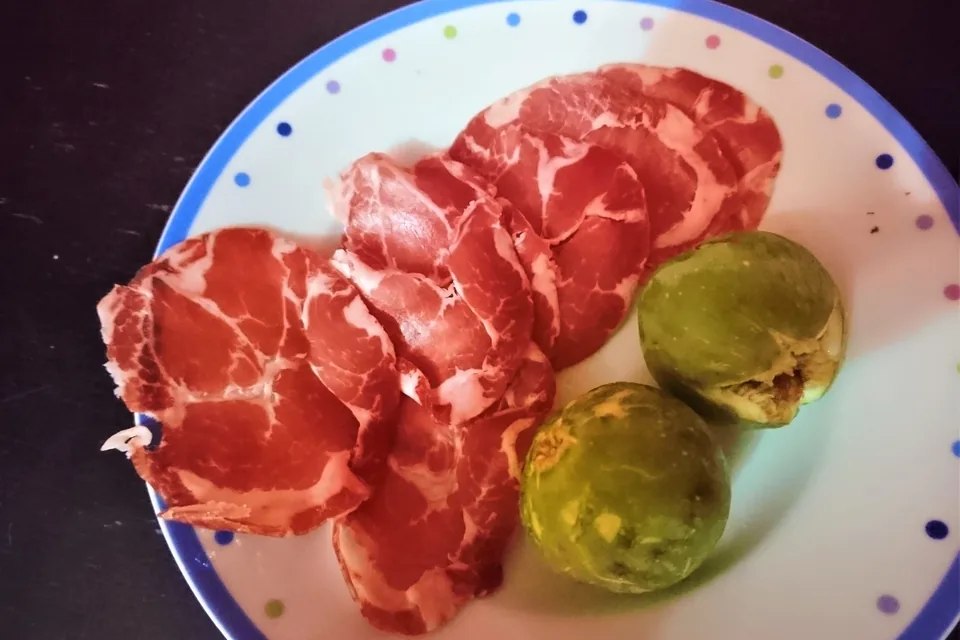
Capocollo di Martina Franca is a Slow Food Presidium: the pork neck is salted, washed in cooked wine must, stuffed and smoked over fragno, the oak of the local woods, and almond husks, before a long maturation. The same meat gives the Bombetta di Martina Franca, a roll of capocollo filled with cheese, which the regional atlas of traditional products places in the Itria Valley with Martina at its centre.
For a cooked tasting we mention, as an editorial reference and not as a partner, Osteria Origini: on 6 October 2026 its online menu listed orecchiette with tomato and cacioricotta at €12, the price of that single dish and not of a full meal.
Since 2026 capocollo has European recognition too. With Commission Implementing Regulation (EU) 2026/2293 of 8 October 2026, published in the Official Journal of the European Union on 15 October, «Capocollo di Martina Franca» was entered in the register of protected geographical indications (PGI): Italy's application, published on 22 June, had received no opposition. The municipality recalls that the process began at the end of 2020, led by the Capocollo di Martina Franca producers' association with the support of the town administration. The regulation grants two companies that had used the name for more than five years, but are located outside the production area, a transitional period of five years.
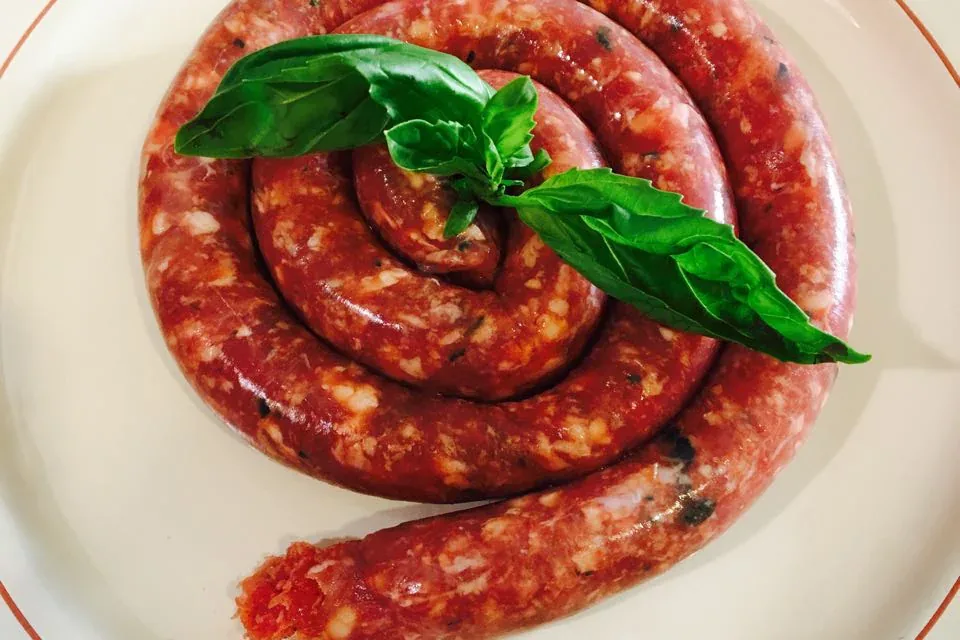
The bombetta has its own festival: the third Festa della Bombetta, organised by the «Bombetta di Martina Franca» association under the patronage of the municipality and the Region, was held in piazza d'Angiò from 28 to 31 August 2026, with bombette made to order by master butchers, grilled over embers and served with local wines.
In 2026 the municipality approved the De.Co. mark, the municipal designation of origin, for typical products and dishes that a committee of experts will enter in a dedicated register: at its centre is the Santo Stefano arch, at its base an olive leaf and an oak leaf, and its wine-red colour recalls wine, meat and capocollo. The project was also presented during the evenings of the Festa della Terra, organised in August 2026 by Slow Food Trulli e Grotte with the municipality in piazza Mario Pagano and in the rural districts of San Paolo, Specchia Tarantina and Carpari.
For shopping, the Saturday fruit and vegetable market is held in piazza Filippo d'Angiò, which on Wednesdays also hosts the weekly market; 11 November, the feast of Saint Martin, is the day of the saint's historic fair.
Sources: Viaggiare in Puglia, Regione Puglia — Martina Franca · Regione Puglia — Martina o Martina Franca DOP · Fondazione Slow Food — Capocollo di Martina Franca · Atlante dei prodotti tradizionali di Puglia — Bombetta · Osteria Origini — menù ufficiale · Regolamento di esecuzione (UE) 2026/2293 della Commissione, 8 ottobre 2026 — iscrizione del «Capocollo di Martina Franca» (IGP), GU L del 15 ottobre 2026 (edizione spagnola, copia ufficiale del BOE) · Comune di Martina Franca — Capocollo di Martina Franca, pubblicata la domanda IGP (22 giugno 2026) · Comune di Martina Franca — Festa della Bombetta, terza edizione (2026) · Comune di Martina Franca — Marchio De.Co. per prodotti e piatti tipici (2026) · Comune di Martina Franca — Festa della Terra tra piazze e contrade (2026) · Comune di Martina Franca — Mercato ortofrutticolo del sabato (agosto 2026) · Comune di Martina Franca — Piazza d’Angiò · Comune di Martina Franca — Mercato settimanale e Fiera di San Martino (novembre 2026)
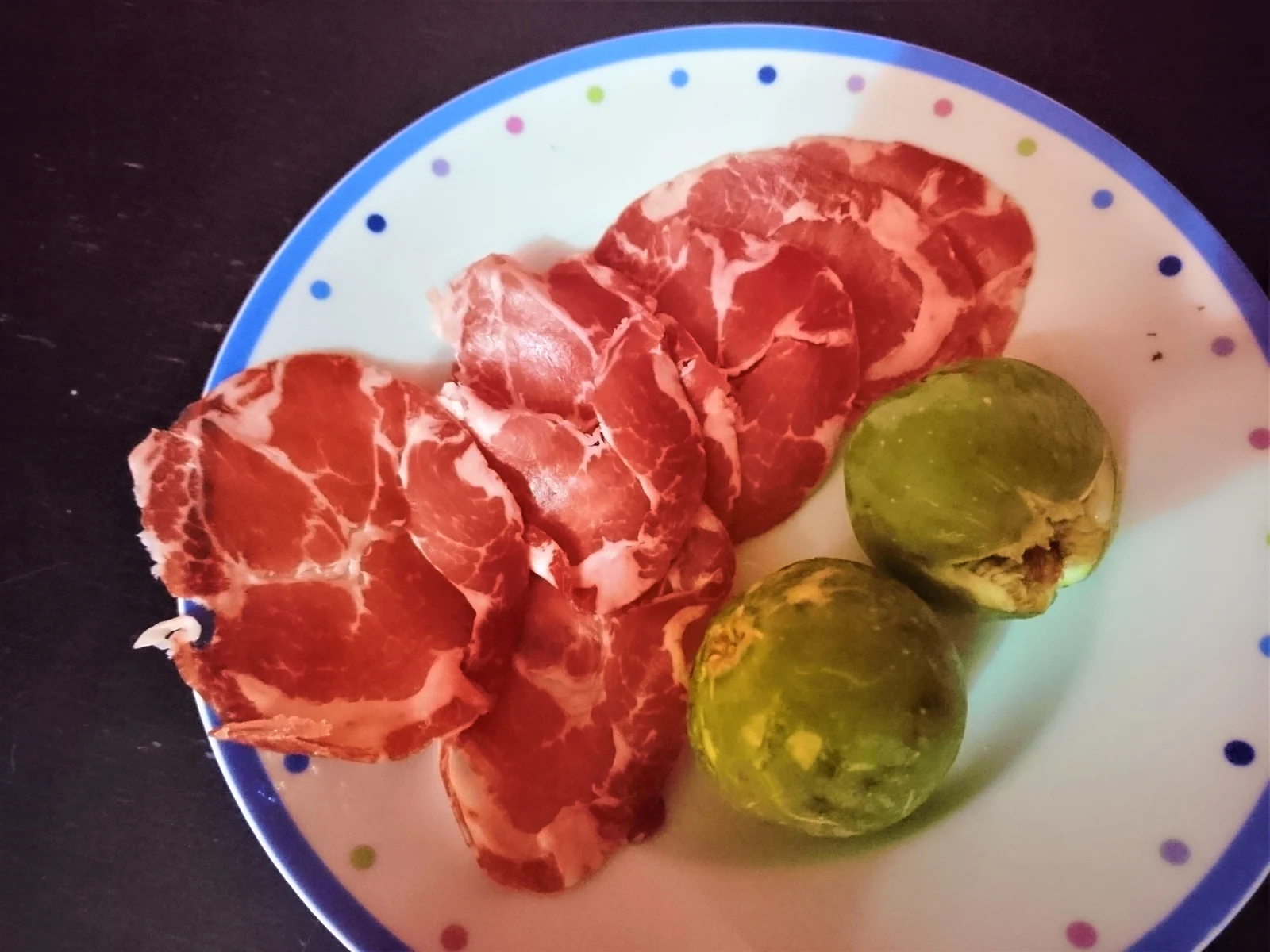
Photo: AntonioCaso93 / Wikimedia Commons — CC BY-SA 4.0 · Resized and converted to WebP.
Things to do
Walking through the historic centre is the main experience: from piazza XX Settembre, which the Ministry of Tourism calls the antechamber of the centre, you pass through the Santo Stefano gate and follow the Ringo to the basilica and piazza Maria Immacolata, worth seeing again in the evening when the lighting brings out the stone.
Nature is a few kilometres away. The Bosco delle Pianelle regional nature reserve, according to the regional portal, covers about 1,205 hectares on the border with Crispiano and Massafra, with more than fifteen kilometres of trails for walking or cycling, picnic areas and a guesthouse; it also includes the Gravina del Vuolo with the cave linked to the brigand Sergente Romano. The Murge Orientali state reserve, about 733 hectares between Martina Franca and Massafra, protects fragno oak woods and many bird species.
The Apulian Aqueduct cycle route also starts from Martina Franca, described by the regional portal as a loop around the Itria Valley. In summer, an evening at the Festival della Valle d'Itria can become the centrepiece of a stay.
The municipality describes the Pianelle as a regional nature reserve established by regional law 27 of 23 December 2002, entirely within the territory of Martina Franca, among woods, ravines, gullies and karst caves, with holm oak, fragno oak and downy oak woods. For centuries the wood was a common resource from which the community took timber, grazing, charcoal, lime and acorns, and the landscape keeps the traces: old paths, masserie, trulli, cisterns, charcoal pits and lime kilns. According to the municipality the reserve now lists 25 routes and about 30 kilometres of marked trails, with a Visitor Centre for information and activities; trails on natural ground can be difficult for people with reduced mobility.
The municipality also supports loop routes in the countryside, the tratturi (drove roads) of the wood, the vineyards and the fragno oaks. Between November 2025 and January 2026 it offered guided walks of about two hours, starting from piazza Roma and booked through the tourist office, devoted for example to the cult of Saint Martin, the works of Domenico Carella, the stonemasons and the votive shrines of the historic centre. For Sunday 6 December 2026 the municipal calendar announces the «Tratturi dei fragni» loop, about 8 kilometres in the Bosco delle Pianelle with qualified hiking guides.
In town, the urban park of the Duke Caracciolo's gardens, known as Vignale al Bolo, is open to everyone: it stands above an underground car park and keeps the medieval paving and the old structures for collecting rainwater, now restored; nearby is the small church of the Holy Spirit, restored in 1598. Next to the church of the Carmine, Villa Carmine has play areas for children and a panoramic view over the Itria Valley.
Sources: Italia.it — Martina Franca · Viaggiare in Puglia, Regione Puglia — Riserva naturale regionale Bosco delle Pianelle · Viaggiare in Puglia, Regione Puglia — Riserva naturale statale Murge Orientali · Viaggiare in Puglia, Regione Puglia — Martina Franca · Festival della Valle d’Itria — programma 2026 · Comune di Martina Franca — Bosco delle Pianelle · Comune di Martina Franca — Passeggiate turistiche guidate tra natura e cultura (2025-2026) · Comune di Martina Franca — Alla scoperta dei Tratturi del Bosco (6 dicembre 2026) · Comune di Martina Franca — Orti e giardini del duca Caracciolo · Comune di Martina Franca — Villa Carmine
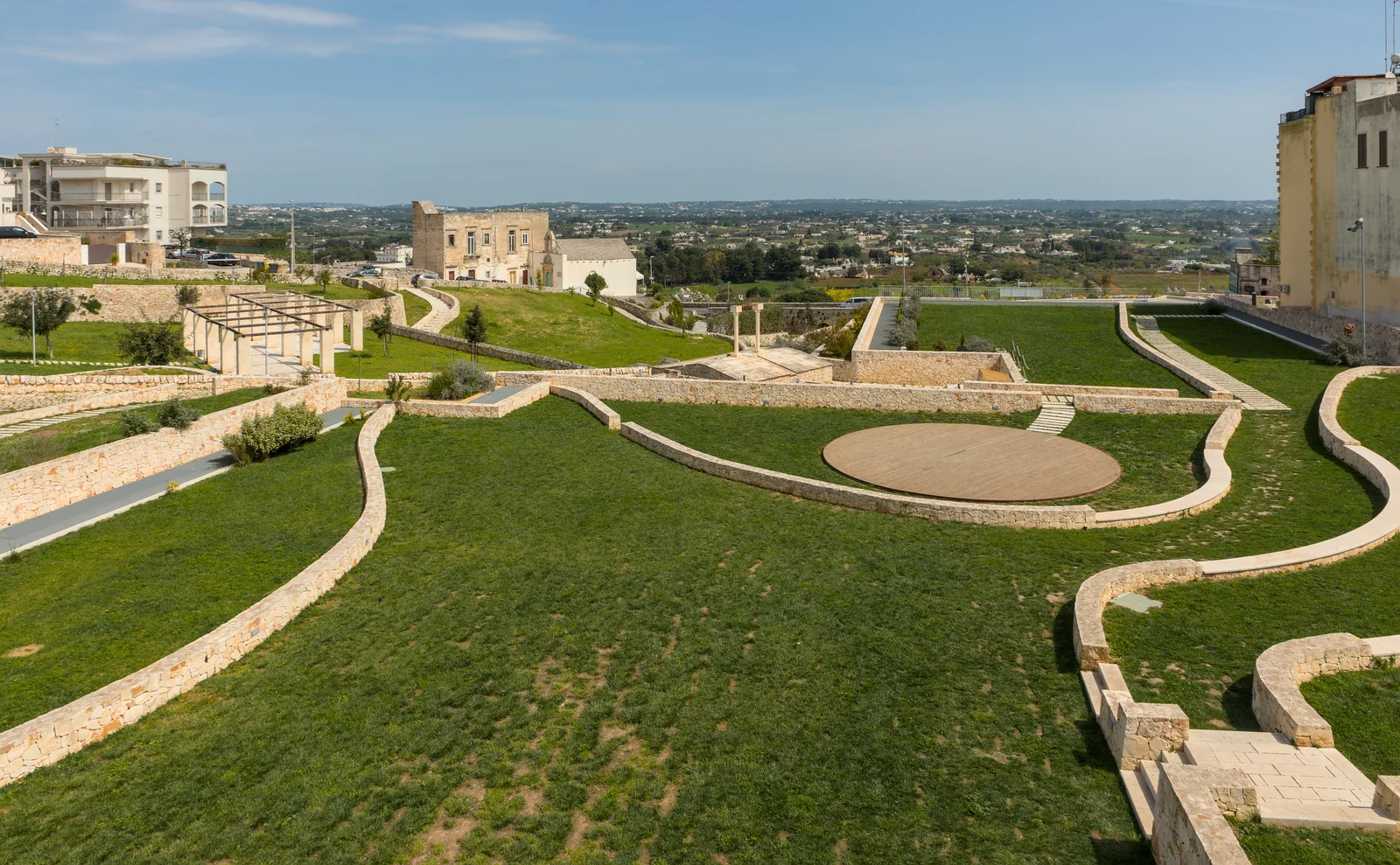
Photo: Benjamin Smith / Wikimedia Commons — CC BY-SA 4.0 · Resized and converted to WebP.
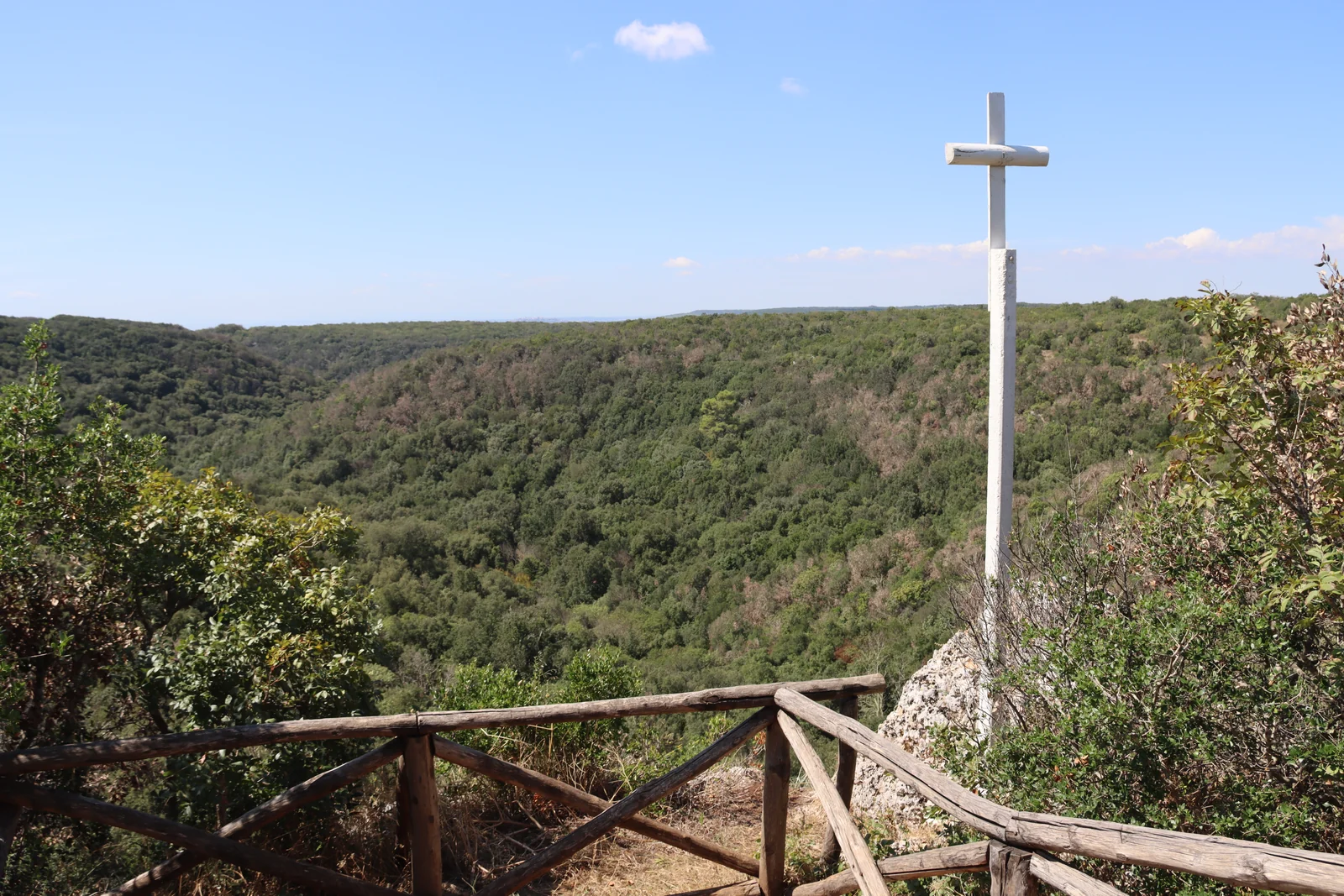
Photo: FrDr / Wikimedia Commons — CC BY-SA 4.0 · Resized and converted to WebP.
When to go
Martina Franca can be visited all year, but summer has a fixed appointment. The official programme of the 52nd Festival della Valle d'Itria listed 14 July to 2 August 2026, with a Mediterranean theme and performances in venues across town; the festival describes itself as one of the oldest summer events devoted to opera and vocal music, with a focus on bel canto and rarely performed works. At the time of writing the 2026 edition has ended: anyone planning an opera trip should start from the next edition's programme once it is published.
Spring and autumn are ideal for walks in the Pianelle woods and rides on the cycle route, with mild temperatures; the production season of capocollo described by Slow Food runs from September to May.
In winter the town is quieter and suits visits to the Ducal Palace and the churches. For the events calendar, ask at the info-point in piazza XX Settembre.
The town's calendar has two fixed dates. The patronal feast of Saint Martin and Saint Comasia is celebrated at the beginning of July: in 2025 the stalls opened along via Recupero, viale Carella and piazza Crispi, and in 2026 the funfair in the Pergolo area was linked to the centre by shuttle buses from 3 to 6 July. On 11 November, the feast of Saint Martin, the municipal offices close and the saint's historic fair is held.
Summer 2026 shows how full the calendar is. Besides the Festival, the municipality announced the 25th Antiquariato in Valle d'Itria, a fair of antiques, modern collectables and vintage at the Istituto Marconi from 8 to 16 August; the third Festa della Bombetta in piazza d'Angiò from 28 to 31 August; the fifth Valle d'Itria Guitar Festival, from 2 to 6 September across Martina Franca, Cisternino and Locorotondo, opening in the Carmine cloister; and the 29th La Ghironda, a festival of folk art and culture from five continents, on 4 and 5 September in the squares and lanes of the historic centre. According to the municipality, since 2000 the courtyard of the Ducal Palace has also hosted the Festival del Cabaret on the last weekend of August.
In winter the most deeply rooted event is the Mercato Concorso del Cavallo Murgese e dell'Asino di Martina Franca, a show and fair of the two local horse and donkey breeds at the livestock ground in the Ortolini area: in December 2025 it celebrated its 70th edition and the centenary of the breeders' national association. A guided hike in the Bosco delle Pianelle is announced for 6 December 2026. Dates of future editions should be checked on the municipality's channels once published.
Sources: Festival della Valle d’Itria — programma 2026 · Viaggiare in Puglia, Regione Puglia — Riserva naturale regionale Bosco delle Pianelle · Fondazione Slow Food — Capocollo di Martina Franca · Viaggiare in Puglia, Regione Puglia — Info-point Martina Franca · Comune di Martina Franca — Solenni festeggiamenti dei Santi Patroni (2025) · Comune di Martina Franca — Festa di San Martino, luna park e bus navetta (luglio 2026) · Comune di Martina Franca — Festa di San Martino, 11 novembre 2026 · Comune di Martina Franca — Mercato settimanale e Fiera di San Martino (novembre 2026) · Comune di Martina Franca — Antiquariato in Valle d’Itria, XXV edizione (2026) · Comune di Martina Franca — Festa della Bombetta, terza edizione (2026) · Comune di Martina Franca — Valle d’Itria Guitar Festival (2026) · Comune di Martina Franca — La Ghironda, 29ª edizione (2026) · Comune di Martina Franca — Palazzo del Municipio, Palazzo Ducale · Comune di Martina Franca — Mercato Concorso del Cavallo Murgese e dell’Asino di Martina Franca, 70ª edizione (2025) · Comune di Martina Franca — Alla scoperta dei Tratturi del Bosco (6 dicembre 2026)
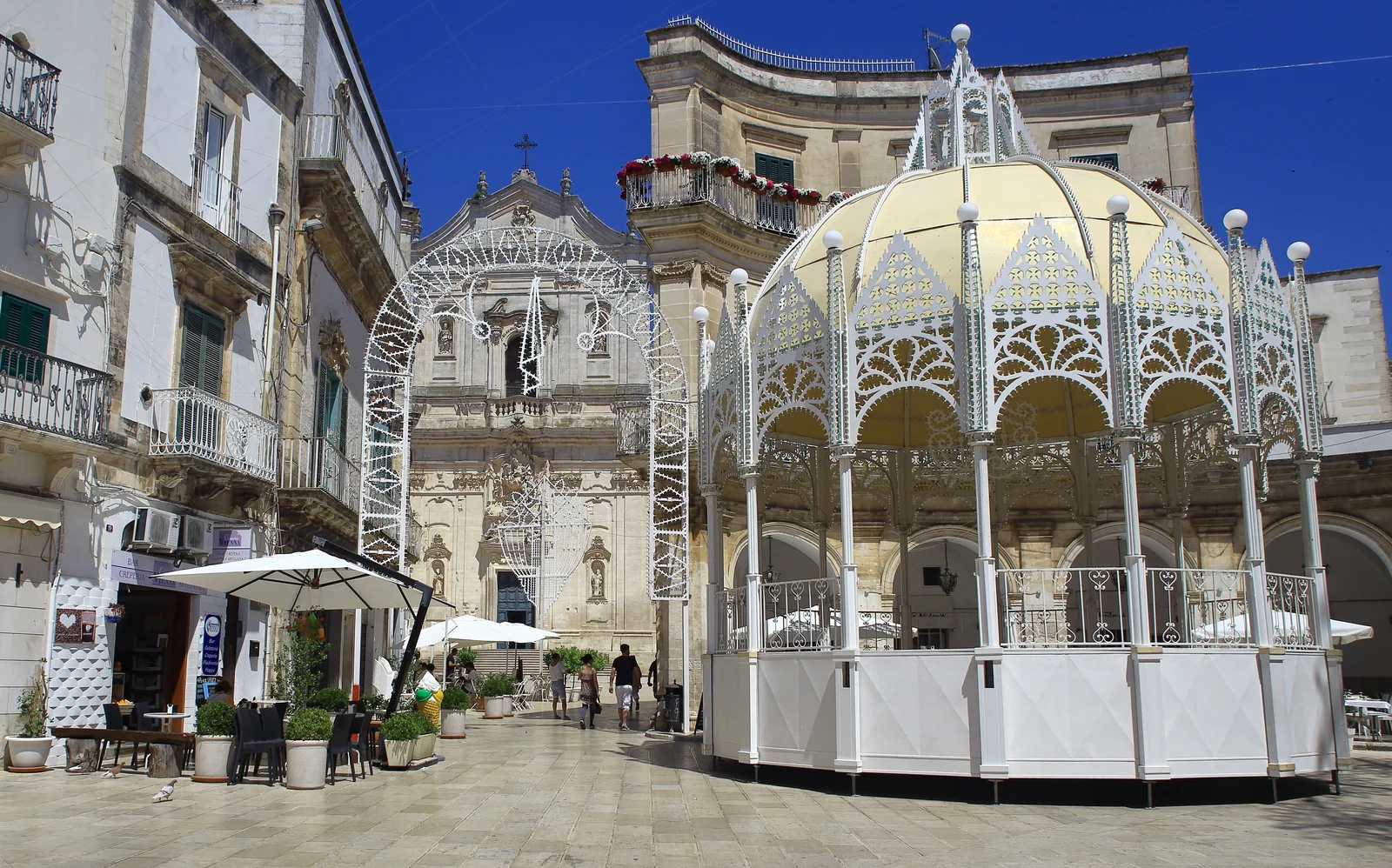
Photo: Eletto Luigi / Wikimedia Commons — CC BY-SA 4.0 · Resized and converted to WebP.
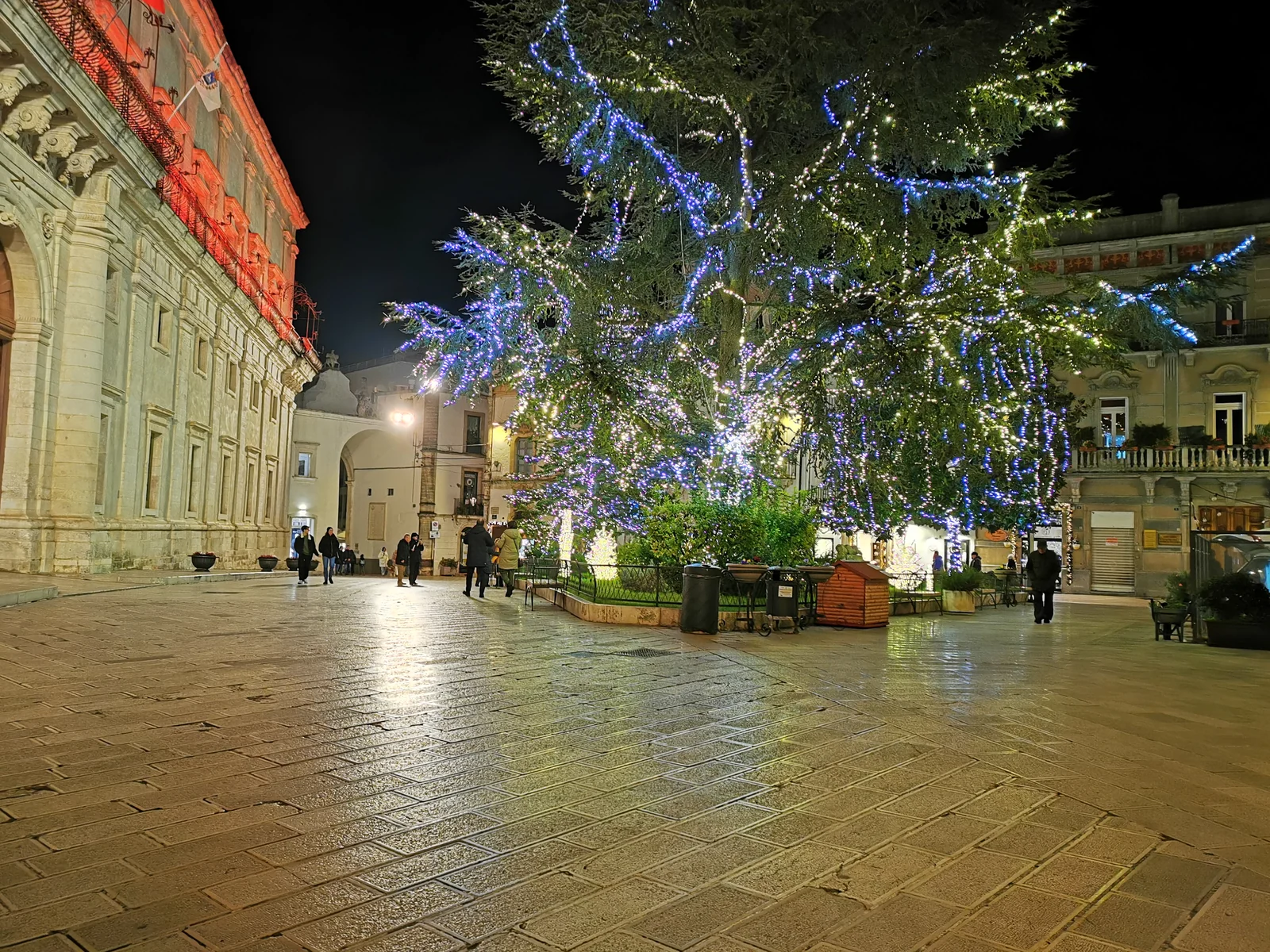
Photo: Saggittarius A / Wikimedia Commons — CC BY 4.0 · Resized and converted to WebP.
Getting there and around
The regional tourism portal states that Martina Franca station mainly serves links with nearby towns; for long journeys beyond the province or the region it is best to go to Taranto station, on the national network.
In town and the surrounding area you travel by bus: the regional portal lists urban lines and intercity services of the COTRAP consortium, as well as taxis and bike, scooter and car hire. Shared e-scooters, e-bikes and electric mopeds are also available.
The airports to consider when planning your arrival are Bari and Brindisi, managed by Aeroporti di Puglia; for the transfer the regional portal suggests private services. Cyclists can use the Apulian Aqueduct cycle route, which runs from Martina Franca through the valley towards Locorotondo, Cisternino and Ostuni. The historic centre is visited on foot, starting from piazza XX Settembre or piazza Roma.
The historic centre is a limited traffic zone. According to the municipality round-the-clock access is reserved for residents, while temporary permits for exceptional, justified needs can be requested through the MUVIN platform; loading and unloading windows apply on weekdays only.
To leave the car near the centre the municipality lists the Orti del Duca car park on via Giacomo Puccini, beneath the urban park of the same name; the multi-storey car park in piazza Mario Pagano, known as the San Francesco car park, whose two covered floors follow from 1 September 2026 the parking charges of the areas around the historic centre; and the via Pietro del Tocco car park, opened in 2021, with 135 car spaces on two levels, an exit on corso Messapia and a green area with a children's playground of about 1,300 square metres. Piazza Filippo d'Angiò is a large parking area, with limited access on Wednesdays, market day.
Motorhome travellers find a serviced area in part of the car park between via Maria d'Enghien and via Olindo Ruggeri, entered from the latter, close to viale De Gasperi and the link to the SS172 road: it has water supply, a drainage point and electric hook-up columns. For major feasts the municipality runs shuttle buses: in July 2026, for the patronal feast, they linked piazza Marconi, the railway station and the Pergolo area.
Sources: Viaggiare in Puglia, Regione Puglia — Martina Franca · RFI — Stazione di Taranto · Aeroporti di Puglia — Aeroporto di Bari · Aeroporti di Puglia — Aeroporto di Brindisi · Viaggiare in Puglia, Regione Puglia — Cisternino · Italia.it — Martina Franca · Comune di Martina Franca — Piattaforma MUVIN per i pass ZTL (agosto 2026) · Comune di Martina Franca — Parcheggio Orti del Duca · Comune di Martina Franca — Parcheggio San Francesco in piazza Mario Pagano (settembre 2026) · Comune di Martina Franca — Parcheggio via Pietro del Tocco · Comune di Martina Franca — Piazza d’Angiò · Comune di Martina Franca — Area camper attrezzata in via Olindo Ruggeri · Comune di Martina Franca — Festa di San Martino, luna park e bus navetta (luglio 2026)
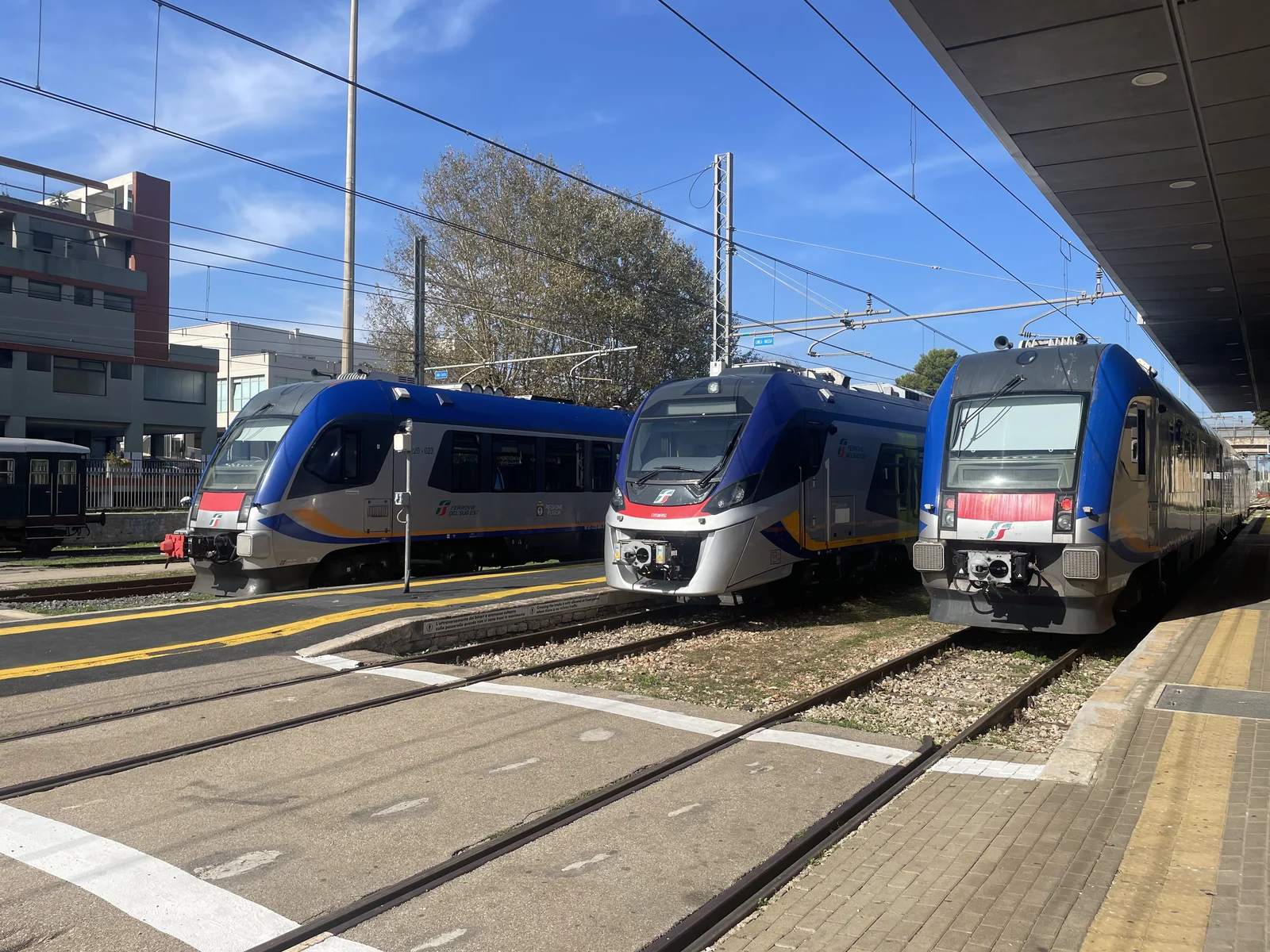
Photo: Giov.c / Wikimedia Commons — Public domain · Resized and converted to WebP.
Where to stay
Martina Franca offers two ways to stay. The historic centre lets you enjoy the town in the evening, walk out to the squares and, in summer, reach the Festival venues without transport. The countryside, dotted with trulli and masserie among the dry-stone walls described by the regional portal, offers space and quiet but requires a car.
The Bosco delle Pianelle has, according to the regional portal, a guesthouse for those who wish to spend the night in the reserve, an option for travellers who come to walk or cycle.
To choose, start from the role the town plays in your itinerary: as a base for the whole Itria Valley, a well-connected spot on the edge of town shortens transfers to Locorotondo, Cisternino and Alberobello; for a music-centred stay, being close to the Ducal Palace and the centre makes evenings easier. We do not list specific properties: the choice depends on dates and the services required.
The municipal Info-Point in piazza XX Settembre, according to the municipality, provides information in several languages and also handles accommodation availability and bookings and guided itineraries, including tailor-made ones: it is the first point of reference for anyone arriving without accommodation or wanting to plan their days. Motorhome travellers can rely on the serviced area on via Olindo Ruggeri.
The rural districts offer another idea of countryside. San Paolo, about 6.5 kilometres from the centre, grew from the sixteenth century around a fortified masseria and is linked to the breeding of the Murgese horse and the Martina Franca donkey; Specchia Tarantina, on the border with Ceglie Messapica, Villa Castelli and Grottaglie, is made of scattered houses, masserie and trulli among ancient olive groves and vineyards.
Sources: Viaggiare in Puglia, Regione Puglia — Martina Franca · Viaggiare in Puglia, Regione Puglia — Riserva naturale regionale Bosco delle Pianelle · Italia.it — Palazzo Ducale di Martina Franca · Comune di Martina Franca — Info-Point · Comune di Martina Franca — Area camper attrezzata in via Olindo Ruggeri · Comune di Martina Franca — Località San Paolo · Comune di Martina Franca — Frazione di Specchia Tarantina
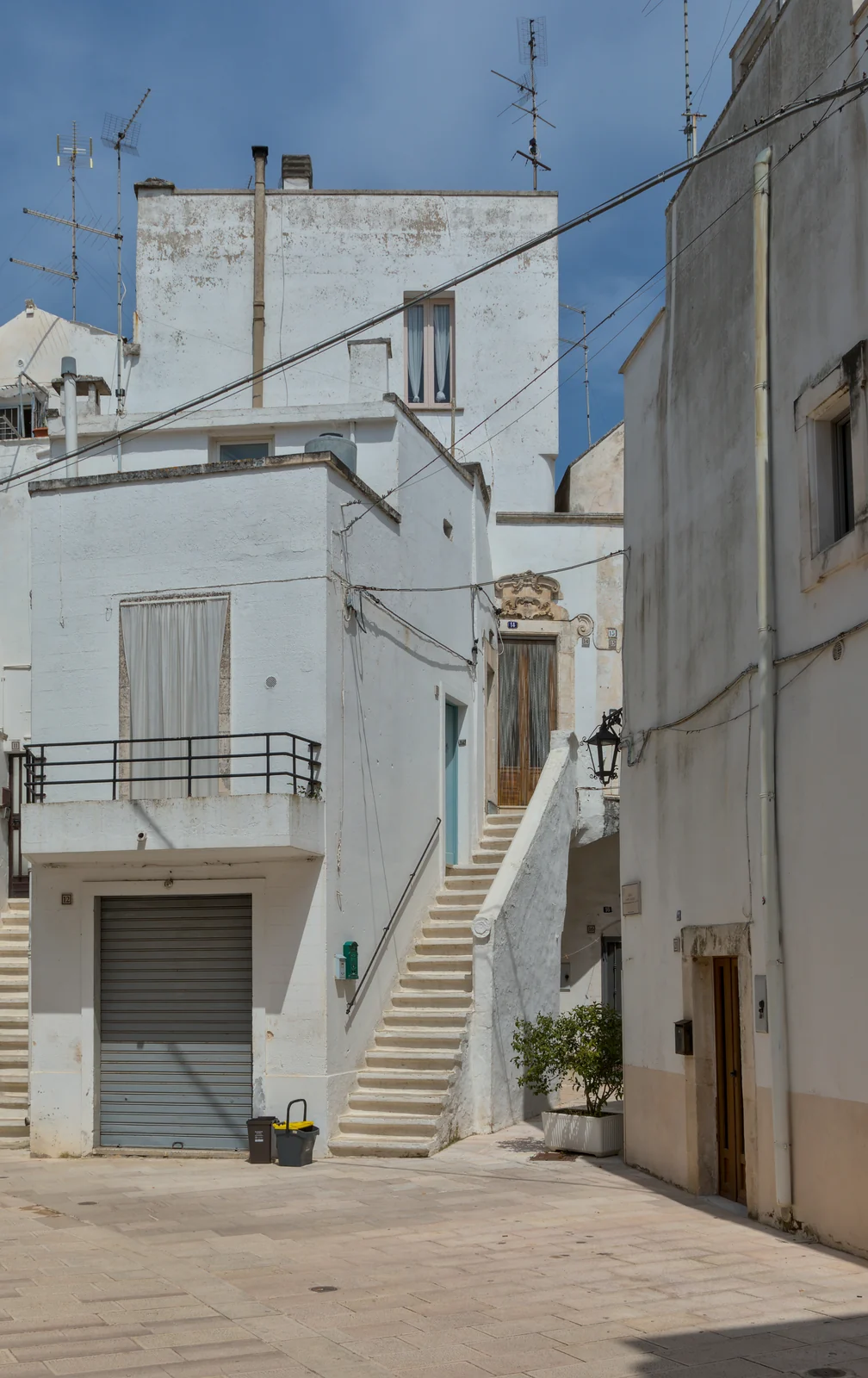
Photo: Benjamin Smith / Wikimedia Commons — CC BY-SA 4.0 · Cropped, resized and converted to WebP.
Nearby
Martina Franca is the natural starting point for the Itria Valley. The Ministry of Tourism suggests an itinerary that from here takes in Locorotondo, with its circular centre and view over the vineyards, Alberobello with its UNESCO-listed trulli, the Castellana Caves and finally Cisternino with its grills.
On the side of Taranto and its gulf, the town looks towards the Ionian Sea. Crispiano, which shares the wine denomination with Martina and borders the Pianelle woods, is known for the hundred masserie of its territory; Massafra, reached through the Murge Orientali reserve, opens the landscape of the gravine (ravines), with the Gravina Madonna della Scala and its rock settlements.
Further on, Taranto offers the National Archaeological Museum and the old town between two seas. From a base in Martina Franca, valley, ravines and the Ionian coast can alternate on different days.
The municipality defines the Itria Valley, in the strict sense, as the karst depression between Locorotondo, Cisternino and Martina Franca, straddling the metropolitan city of Bari and the provinces of Brindisi and Taranto, with trulli, masserie, dry-stone walls and red earth. The same bond shows in the calendar: in 2026 the Valle d'Itria Guitar Festival took its concerts to Martina Franca, Cisternino and Locorotondo.
On the road to Villa Castelli, the sanctuary of the Madonna della Sanità was built in 1942 to a design by the engineer Antonio Semeraro, next to the older small church documented since 1618; since 1940 the Madonna della Sanità has been patron of the town with equal standing alongside Saint Martin and Saint Comasia. Further away, in Taranto, the MArTA National Archaeological Museum also appears among the places listed by the municipality, with accessible routes and tactile itineraries on booking.
Sources: Italia.it, Ministero del Turismo — La Valle d'Itria: i luoghi da non perdere · Regione Puglia — Martina o Martina Franca DOP · Viaggiare in Puglia, Regione Puglia — Riserva naturale regionale Bosco delle Pianelle · Viaggiare in Puglia, Regione Puglia — Crispiano · Viaggiare in Puglia, Regione Puglia — Riserva naturale statale Murge Orientali · Viaggiare in Puglia, Regione Puglia — Taranto · Comune di Martina Franca — Valle d’Itria · Comune di Martina Franca — Valle d’Itria Guitar Festival (2026) · Comune di Martina Franca — Santuario della Madonna della Sanità · Comune di Martina Franca — MArTA, Museo Archeologico Nazionale di Taranto
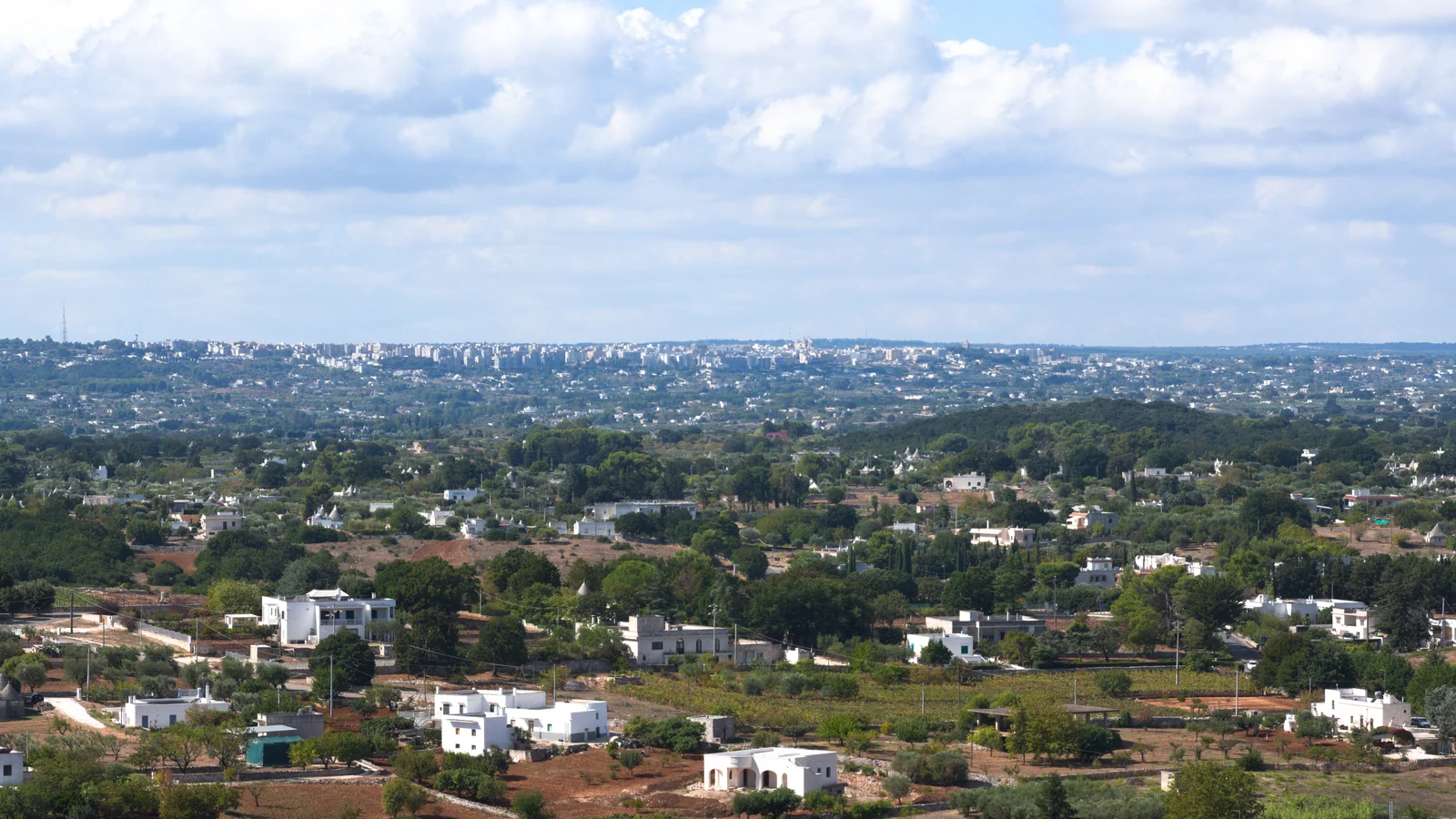
Photo: Mussklprozz / Wikimedia Commons — CC BY-SA 4.0 · Resized and converted to WebP.
Local tourist information
Local tourist offices help with opening times, events and transport on the day.
- Info-point Martina Franca · Piazza XX Settembre 3, 74015 Martina Franca (TA) · +39 080 4116554 · [email protected]
Source: Viaggiare in Puglia, Regione Puglia — Info-point Martina Franca · Viaggiare in Puglia, Regione Puglia — Martina Franca · Comune di Martina Franca — Info-Point · checked on
Where to stay
In the municipality of Martina Franca the national database of the Ministry of Tourism lists 955 accommodation businesses with a verified CIN code: 9 hotels, 207 other licensed accommodation and 739 other types such as B&Bs and private rentals.
Licensed businesses from the official list of accommodation named as the source in this section. Where the list gives it, the property's official identification code appears next to its name: the national CIN code, or the code assigned by the Region or by the body that keeps the list. Private individuals are not listed. This list is the official census of licensed businesses, not a list of Apulica partners: to stay in Martina Franca you do not have to check one property after another yourself; write to Apulica and we look for the stay that suits your journey, checking availability and conditions before any confirmation.
We open the list with those who have introduced themselves to Apulica, most recent first, each with a description we wrote from the information they sent or published. Those who introduced themselves are part of the census too, with their official category; neither their position in the list nor the description indicates any commercial relationship.
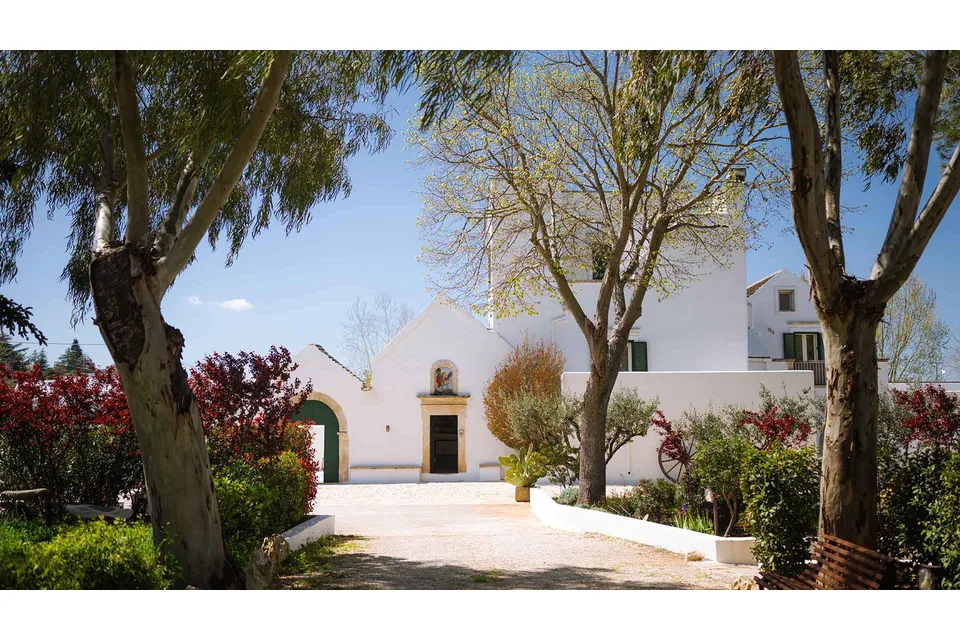
Masseria San Michele
B&B
An eighteenth-century masseria in the countryside of Martina Franca, in the heart of the Valle d'Itria. Lorenzo Antonacci, from Puglia, came back after years in fashion and turned his family's holiday home into a boutique hotel. It has seven rooms, an independent manor house, a garden with a pool and, among its buildings, a small eighteenth-century chapel.
CIN IT073013B400023963
Photo: Masseria San Michele · Resized and converted to WebP.
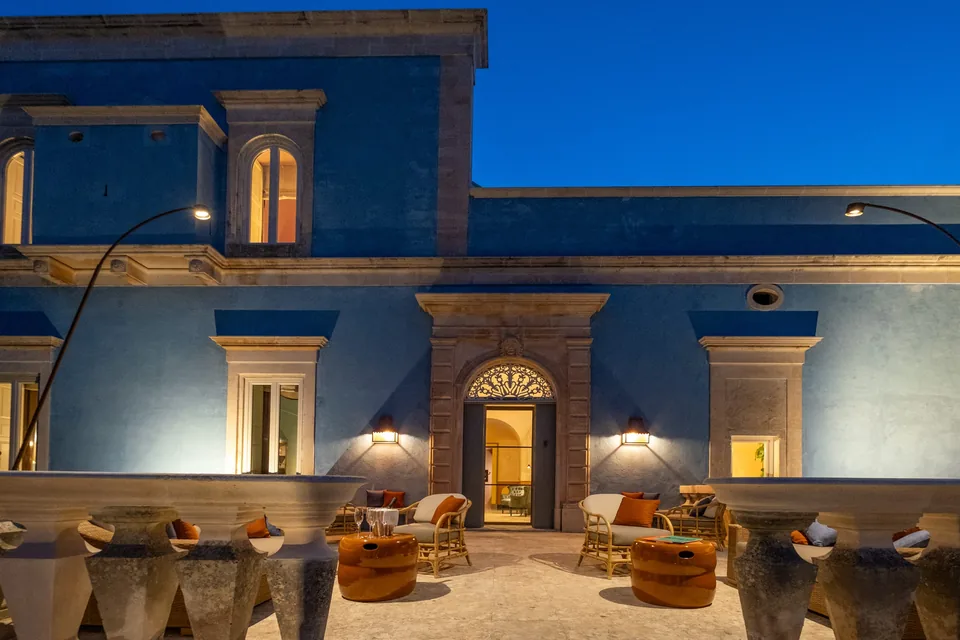
Palazzo Ceraselli
Guest rooms
A historic residence built in 1893 on a hill in Martina Franca, less than one kilometre from the historic centre. It was the holiday home of Raffaele Ceraselli; closed for about fifty years, it was reopened by Elio Manca, a descendant of the family. Its five suites, each for two guests, are arranged according to Feng Shui principles.
CIN IT073013B400127253
Photo: Palazzo Ceraselli · Resized and converted to WebP.
RELAIS VILLA SAN MARTINO
Hotel · ★★★★★
CIN IT073013A100049889
AGRITURISMO ARCO DI SOLE
Farm stay
CIN IT073013B500023368
B&B CHIANCARO
B&B
CIN IT073013B400032163
ARCHETTO BIANCO
Guest rooms
CIN IT073013B400066634
ANTICHE DIMORE TERRAROSSA
Holiday home
CIN IT073013B400027364
HOTEL VILLA ROSA
Hotel · ★★★★
CIN IT073013A100022589
AGRITURISMO MASSERIA CASEDDE VECCHIE
Farm stay
CIN IT073013B500023037
Bed & breakfast Magica Valle
B&B
CIN IT073013B400098220
First the places that presented themselves to Apulica, the latest first; then one place of each type in turn, by official category and stars, then by name. No position is paid for.
All 136 entries in alphabetical order
Page 1 of 14
| Name | Type | CIN |
|---|---|---|
| AGRITURISMO ARCO DI SOLE | Farm stay | IT073013B500023368 |
| AGRITURISMO MASSERIA CASEDDE VECCHIE | Farm stay | IT073013B500023037 |
| AGRITURISMO MASSERIA CATUCCI | Farm stay | IT073013B500024007 |
| AGRITURISMO PACE - MASSERIA GUARINI | Farm stay | IT073013B500024244 |
| ANTICHE DIMORE TERRAROSSA | Holiday home | IT073013B400027364 |
| Apulian Charm Trulli & Cottage | Holiday home | IT073013B400108254 |
| ARCHETTO BIANCO | Guest rooms | IT073013B400066634 |
| B&B CHIANCARO | B&B | IT073013B400032163 |
| Bed & breakfast Magica Valle | B&B | IT073013B400098220 |
| BQ | Holiday home | IT073013B400026224 |
Ask Apulica for a stay in Martina Franca We reply shortly, within a few hours at most, with a proposal for you to consider.
Sources: Regione Puglia – ARET Pugliapromozione (DMS), CC BY 4.0, 2026-10-12 · Ministero del Turismo – Banca Dati Strutture Ricettive (dashboard pubblica), 2026-10-12
YOUR JOURNEY
How to shape a journey here
We can organise Martina Franca around baroque architecture, a charcuterie encounter and food, or design a musical stay around a published Festival edition.
Plan your tripKeep exploring
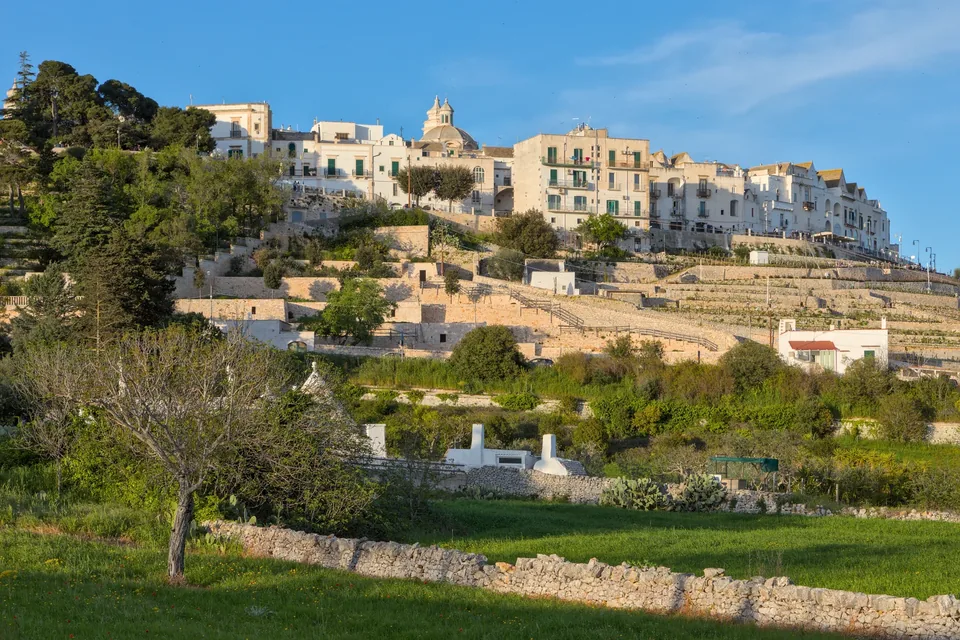
Locorotondo
Cummerse roofs as a way to distinguish the Itria Valley’s towns. A circular old centre on a hilltop and Locorotondo DOP wine.
Read the guide →Photo: Benjamin Smith / Wikimedia Commons — CC BY-SA 4.0 · Resized and converted to WebP.
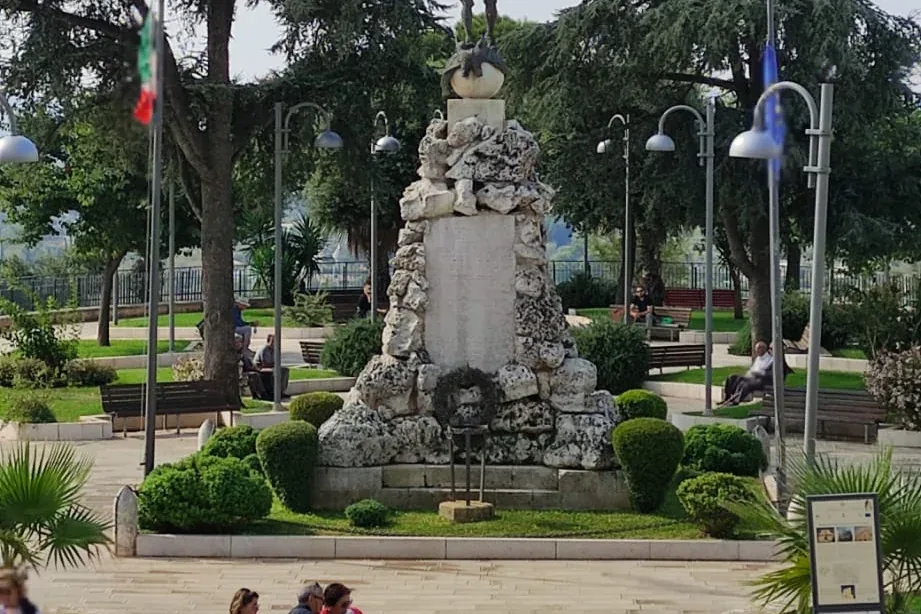
Cisternino
Fornello pronto, bombette and a walk through the town. A white, paved village with the Orange Flag and the mother church of San Nicola di Pàtara.
Read the guide →Photo: Kiuz / Wikimedia Commons — CC BY-SA 4.0 · Resized and converted to WebP.
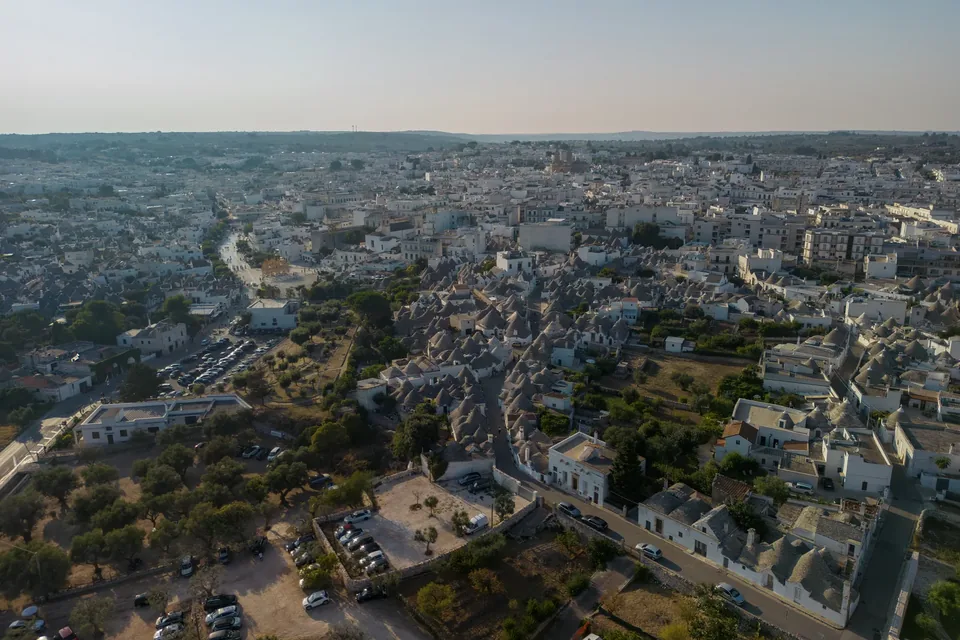
Alberobello
Trulli through their shape, space and everyday use. The Monti and Aia Piccola districts hold more than a thousand trulli, a World Heritage Site since 1996.
Read the guide →Photo: ParisTaras / Wikimedia Commons — CC BY-SA 4.0 · Resized and converted to WebP.
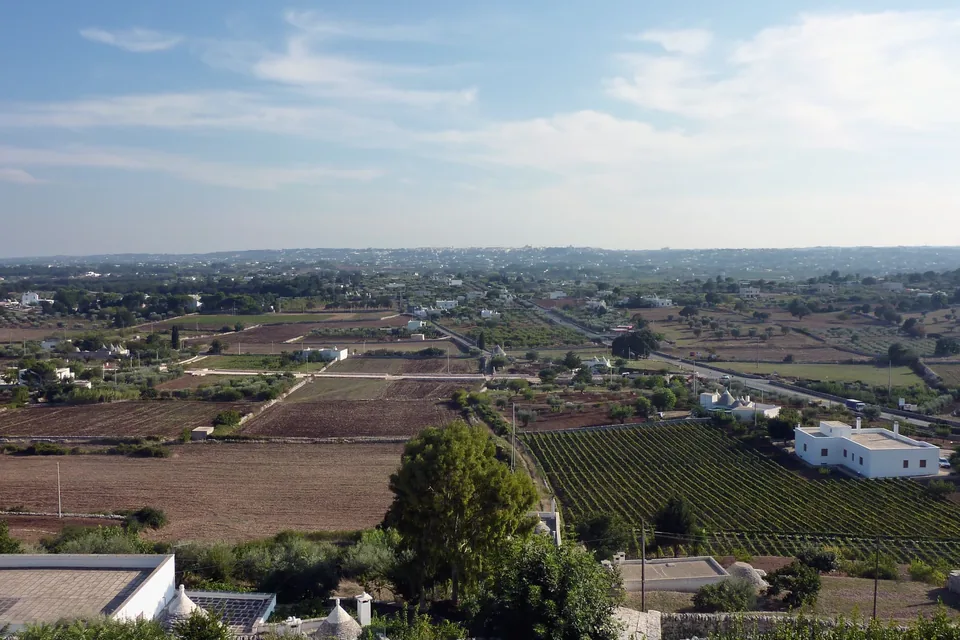
Itria Valley
Rural architecture, towns and food as parts of the same journey. Trulli across the countryside, Locorotondo, Cisternino, Martina Franca and Slow Food capocollo.
Read the guide →Photo: Adbar / Wikimedia Commons — CC BY-SA 3.0 · Resized and converted to WebP.
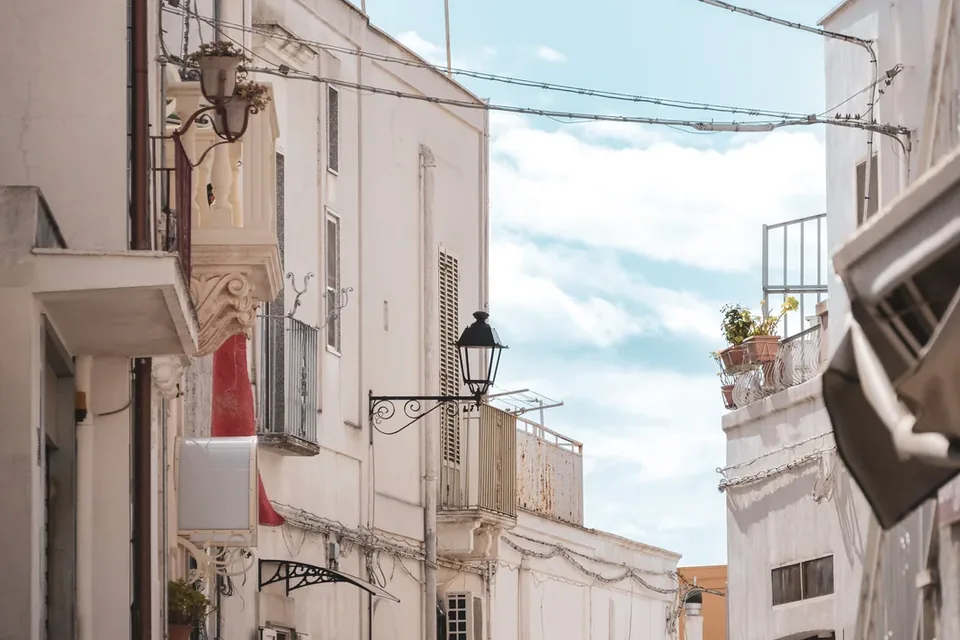
Crispiano
Crispiano: farm estates and the Ionian countryside. About a hundred masserie at the foot of the Murgia, fifteen kilometres from Taranto, amid oil and wine.
Read the guide →Photo: Azelf Lele / Wikimedia Commons — CC BY-SA 4.0 · Resized and converted to WebP.
“Come to Martina Franca as a guest, not as a tourist: that is how these places truly let you know them.”