
APULICA / WALKS
Via Francigena in Southern Italy
Rome → Santa Maria di Leuca · more than 900 km from Rome to Santa Maria di Leuca · No reachable source gives the overall number of stages. In Puglia the regional guide splits its four described itineraries into 5, 5, 6 and 7 walking days.
Key facts
| Start and finish | Rome → Santa Maria di Leuca |
|---|---|
| Length | more than 900 km from Rome to Santa Maria di Leuca (In cammino - Cammini di Puglia (guida Pugliapromozione / Regione Puglia, 2020)) |
| Stages | No reachable source gives the overall number of stages. In Puglia the regional guide splits its four described itineraries into 5, 5, 6 and 7 walking days. (In cammino - Cammini di Puglia (guida Pugliapromozione / Regione Puglia, 2020)) |
| Credential | According to the press review published by the Ministry of Tourism, on the Francigena those who walk at least 100 km receive the stamped Testimonium. The source gives no details specific to the southern section. (Alla ricerca di fede e sostenibilità - rassegna stampa, Ministero del Turismo (nov.-dic. 2024)) |
| Regions | Puglia, Campania (The walk starts in Rome, in Lazio. The Apulian regional guide lists Lazio, Molise, Campania, Basilicata and Puglia as the regions it crosses.) |
| Official website | www.viefrancigene.org |
In brief
- It is the southernmost branch of the cultural route recognised by the Council of Europe: from Rome it runs for more than 900 km down to Santa Maria di Leuca. (In cammino - Cammini di Puglia (guida Pugliapromozione / Regione Puglia, 2020))
- In Puglia the route enters at Celle San Vito/Faeto and splits at Troia into two lines, the Via Traiana and the Via Michaelica, which meet again in Bari. (In cammino - Cammini di Puglia (guida Pugliapromozione / Regione Puglia, 2020))
- Since 2019 the Via Francigena's European certification also covers the Apulian ports of Brindisi and Santa Maria di Leuca. (Alla scoperta della via Francigena in Puglia - italia.it (Ministero del Turismo / ENIT))
- The Troia – Monte Sant'Angelo stretch is 107 km over 5 days according to the regional guide; italia.it puts it at about 110 km. (In cammino - Cammini di Puglia (guida Pugliapromozione / Regione Puglia, 2020) · Alla scoperta della via Francigena in Puglia - italia.it (Ministero del Turismo / ENIT))
- The Ministry of Tourism's catalogue of religious walks lists the Via Francigena, among others, under Puglia, Campania and Basilicata. (Catalogo Cammini Religiosi - italia.it (Ministero del Turismo))
Why walk it
The Apulian regional guide sums up the essence of its walks in four words: history, culture, spirituality and nature. On the Via Francigena you move at a slow pace along country lanes and ancient drove roads, through villages and art towns and beside a sea that faces the East, in the footsteps of the pilgrims once bound for Jerusalem. Italia.it describes a walk among centuries-old olive groves and wide views, culminating at Santa Maria di Leuca, where the Adriatic and the Ionian meet.
There is the spiritual goal: the shrine of St Michael at Monte Sant'Angelo, reached along a ridge that opens onto the sea, the shrine of St Pio at San Giovanni Rotondo, the basilica of St Nicholas in Bari and, at the end, the basilica at Leuca. And there are the encounters: the guide notes that walkers from all over the world still come to the Via Michaelica, and that on the Gargano pastures you cross paths with Podolica cattle; italia.it stresses the warmth with which the people of Puglia welcome those passing through.
Food is part of the journey. The guide gives each itinerary a "pilgrim's satchel": Podolico caciocavallo and Nero di Troia on the Gargano, the filled ostia sweet at Monte Sant'Angelo, Andria burrata and Rosso Canosa on the Traiana, Polignano carrots and Rosso Brindisi along the coast, frise and pasticciotti in Salento.
Sources: In cammino - Cammini di Puglia (guida Pugliapromozione / Regione Puglia, 2020) · Alla scoperta della via Francigena in Puglia - italia.it (Ministero del Turismo / ENIT)
The walk
The Council of Europe has included the Via Francigena among its cultural routes. Its southern extension starts in Rome and reaches Santa Maria di Leuca, the far tip of Italy, after more than 900 km. In the Middle Ages it was the road of pilgrims from all over Europe heading for the ports where they could sail to the Holy Land, and it largely follows road lines dating from Roman times.
The Apulian regional guide lists Lazio, Molise, Campania, Basilicata and Puglia among the regions it crosses. The catalogue of religious walks promoted by the Ministry of Tourism includes the Via Francigena, among others, in its Puglia, Campania and Basilicata entries. In Puglia the route can be walked, and the guide also presents it for cycling and horse riding.
According to italia.it, in Puglia the Francigena is the closing section of the long journey towards the Holy Land: it passes through centuries-old olive groves and historic towns such as Troia, Lucera and Bari and ends at the basilica of Santa Maria di Leuca, where the Adriatic and Ionian seas meet. Along the way, layers of different ages show through, from Roman and medieval roads to Byzantine traces in sacred buildings, while Apulian Romanesque and Lecce's Baroque accompany the final stretch.
Sources: In cammino - Cammini di Puglia (guida Pugliapromozione / Regione Puglia, 2020) · Alla scoperta della via Francigena in Puglia - italia.it (Ministero del Turismo / ENIT) · Catalogo Cammini Religiosi - italia.it (Ministero del Turismo)
The route in Puglia
According to the regional guide, the walk enters Puglia at Celle San Vito/Faeto and reaches Troia, where it divides: one branch follows the ancient Via Traiana, the other the Via Michaelica towards the Gargano. The two rejoin in Bari by way of the Via Litoranea; the coast then leads to Brindisi and the Via Traiana Calabra to Otranto and Leuca. The guide describes four itineraries split into walking days; each day ends in a stage town, listed below with its distance.
Itinerary 1, Via Michaelica, 107 km over 5 days: Troia – Lucera 19 km, Lucera – San Severo 20, San Severo – Stignano sanctuary 21, Stignano – San Giovanni Rotondo 23, San Giovanni Rotondo – Monte Sant'Angelo 24. For the same stretch of about 110 km, italia.it gives 22, 25, about 20, 20 and 24 km instead. Itinerary 2, Via Traiana, 90.5 km over 5 days: Canosa di Puglia – Andria 24.3 km, Andria – Corato 14, Corato – Ruvo di Puglia 12.1, Ruvo – Bitonto 18.4 (with a variant via Terlizzi), Bitonto – Bari 21.7.
Itinerary 3, coastal Via Traiana, 99.9 km over 6 days: Polignano a Mare – Monopoli 11.5 km, Monopoli – Savelletri 20.8, Savelletri – Torre Canne 10.03, Torre Canne – Torre Santa Sabina 25, Torre Santa Sabina – Torre Guaceto 11.31, Torre Guaceto – Brindisi 21.3.
Itinerary 4, Via Traiana Calabra, 158.4 km over 7 days: Brindisi – Torchiarolo 23 km, Torchiarolo – Lecce 22, Lecce – Martano 30, Martano – Otranto 29.7, Otranto – Vignacastrisi 21.9, Vignacastrisi – Tricase 14.3, Tricase – Santa Maria di Leuca 17.5.
Sources: In cammino - Cammini di Puglia (guida Pugliapromozione / Regione Puglia, 2020) · Alla scoperta della via Francigena in Puglia - italia.it (Ministero del Turismo / ENIT)
Terrain and effort
In the regional guide, the Apulian walking days range from about 10 to 30 km, with estimated walking times of 3 to 8.5 hours; the longest are in Salento, between Lecce, Martano and Otranto. On the Via Michaelica the surface is described as mostly unpaved, while the other three itineraries mix dirt tracks and asphalt, along country roads, drove roads, paths behind the dunes and seafront stretches.
The most mountainous part is on the Gargano. Italia.it describes the San Severo to Stignano stage as largely unpaved, leading from the Tavoliere plain to the edge of the Gargano, and the Stignano to San Giovanni Rotondo stage as demanding because of steep height differences; the guide notes uphill mule tracks there and a passage over Coppa L'Arena, at 939 m. The final stage climbs a ridge with wide sea views before Monte Sant'Angelo. On the first day walkers ford the Vulgano stream, which is usually easy for most of the year.
As for waymarking, the guide says that on the Via Michaelica the official signs begin at the junction with the SS272 towards San Marco in Lamis and continue as far as Monte Sant'Angelo; another Francigena sign appears on the Sant'Egidio plain, just after San Giovanni Rotondo.
Sources: In cammino - Cammini di Puglia (guida Pugliapromozione / Regione Puglia, 2020) · Alla scoperta della via Francigena in Puglia - italia.it (Ministero del Turismo / ENIT)
Hospitality and logistics
A press review published by the Ministry of Tourism reports that on the Francigena those who walk at least 100 km receive the stamped Testimonium. The same article encourages walkers to reach starting points by public transport and mentions agreements made with the railways to help pilgrims travel out and back, along with the advice to support local economies by buying food and products along the way.
The reachable sources say little about types of lodging: none lists pilgrim hostels, parish hospitality or agriturismi along the line. The Apulian regional guide does point out two forms of welcome: religious hospitality at the sanctuary of Santa Maria di Stignano, between San Severo and San Giovanni Rotondo, where walkers can ask to stay the night, and civic hospitality in Torchiarolo, which, on the Via Traiana Calabra, the guide notes as one of the first municipalities to welcome present-day pilgrims.
For each itinerary the guide indicates railway stations and bus stops and names the operators: Ferrovie del Gargano and Sita Sud on the Via Michaelica, Ferrovie Nord Barese and Ferrovie del Gargano on the Via Traiana between Canosa and Bari, Trenitalia on the coast between Polignano and Brindisi, Ferrovie del Sud-Est and the COTRAP bus lines in Salento.
Sources: In cammino - Cammini di Puglia (guida Pugliapromozione / Regione Puglia, 2020) · Alla ricerca di fede e sostenibilità - rassegna stampa, Ministero del Turismo (nov.-dic. 2024)
History and meaning
Italia.it recalls that Archbishop Sigeric, in 990, recorded the 79 stages of his return from Rome to Canterbury, giving the route its shape; in 2024 the Francigena marked thirty years since its certification as a European Cultural Route, which since 2019 has extended to the Apulian ports of Brindisi and Santa Maria di Leuca.
In Puglia the line was reconstructed from historical itineraria: the Itinerarium Burdigalense of AD 333, Nikulas Munkathvera (1151-1154), Philip Augustus of France (1191), the Anonymous Englishman (1344-1345), Mariano di Nanni of Siena (1431), Anselmo and Giovanni Adorno (1470-1471). The Via Traiana was built by Emperor Trajan between AD 108 and 110 to reach Brindisi more easily than the Appia, keeping to the plains; the Via Traiana Calabra extended it to Otranto and gained importance under Byzantine control.
The Via Michaelica linked Mont Saint-Michel with the Archangel's shrine on the Gargano, venerated since the 5th century; pilgrims bound for the Holy Land habitually made a detour there, and the route preserves runic inscriptions from the 7th century. In Lucera a mosque stood for about seventy years where the cathedral now rises, a result of Frederick II's deportation of 20,000 Sicilian Muslims. At Leuca a column reminds travellers that, to go on to Jerusalem, they must now cross the sea.
Sources: In cammino - Cammini di Puglia (guida Pugliapromozione / Regione Puglia, 2020) · Alla scoperta della via Francigena in Puglia - italia.it (Ministero del Turismo / ENIT)
Places along the route

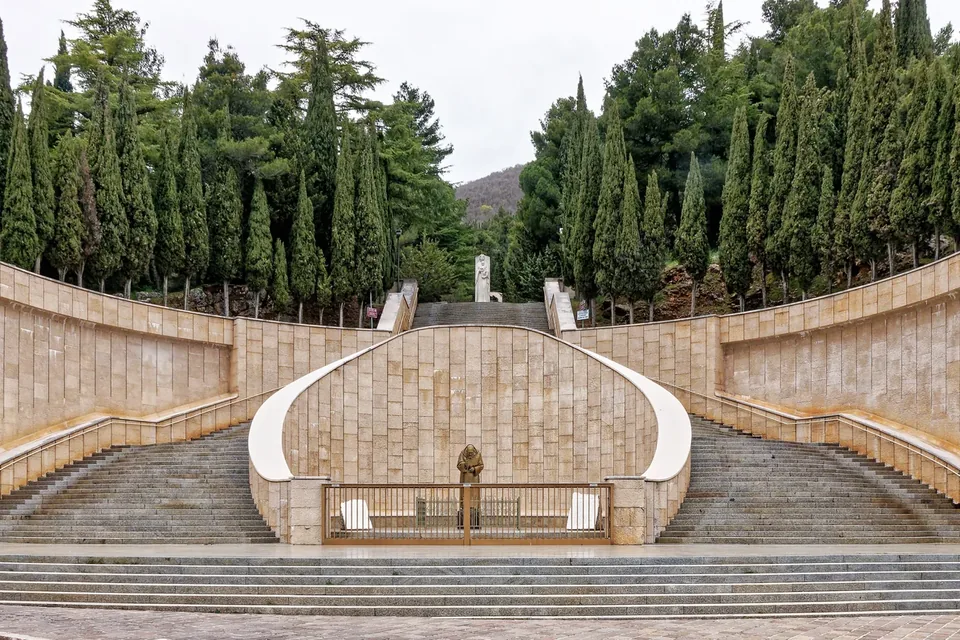
Gargano
Gargano: villages, woodland and coast.
Read the guide →Photo: Bernard Gagnon / Wikimedia Commons — CC0 · Resized and converted to WebP.

San Giovanni Rotondo
San Giovanni Rotondo: pilgrimage and town.
Read the guide →Photo: Holger Uwe Schmitt / Wikimedia Commons — CC BY-SA 4.0 · Resized and converted to WebP.

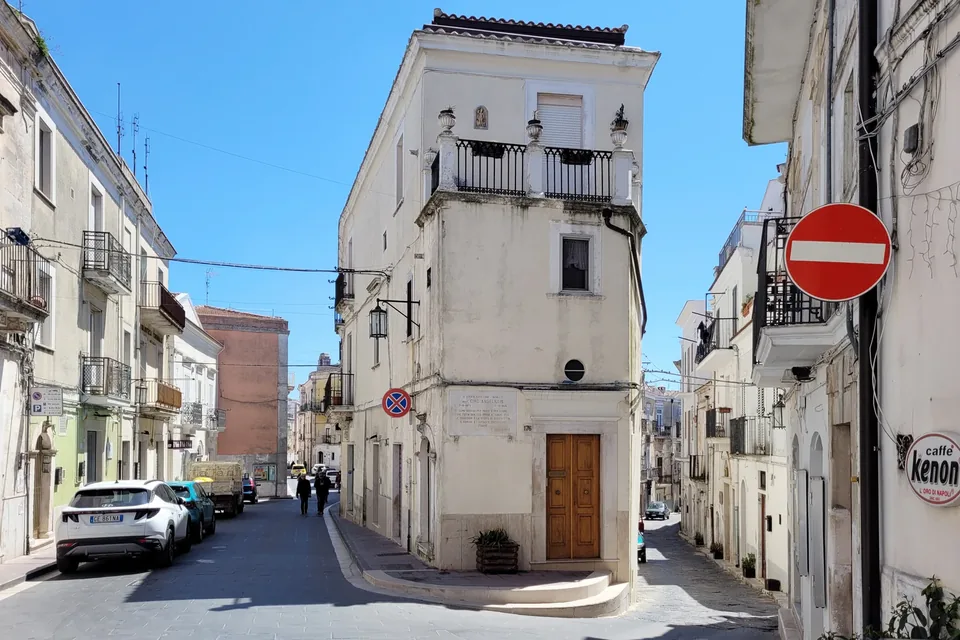
Monte Sant’Angelo
Monte Sant’Angelo: the cave and Junno quarter.
Read the guide →Photo: Bernard Gagnon / Wikimedia Commons — CC0 · Resized and converted to WebP.

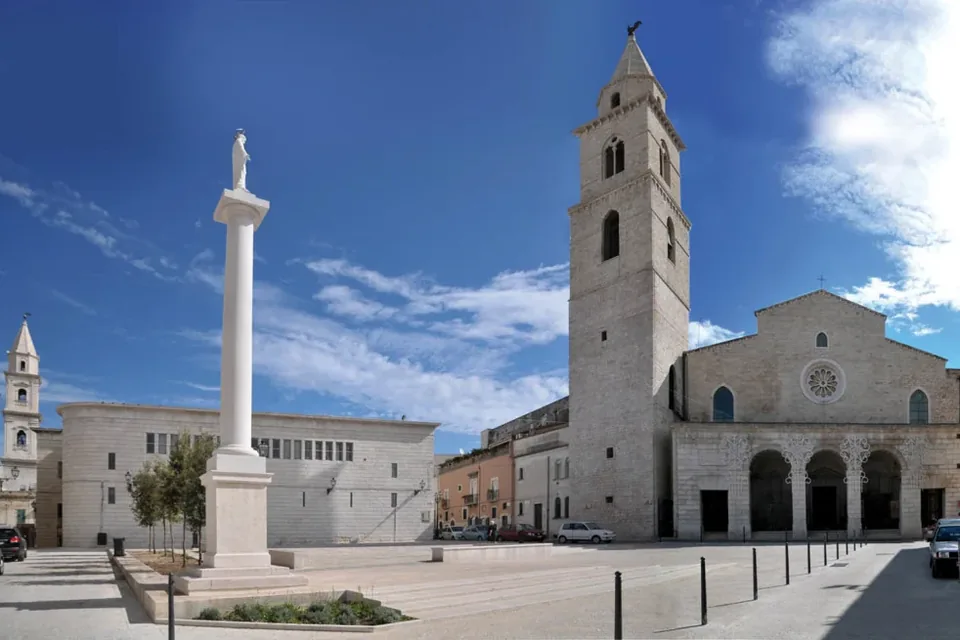
Andria
A town worth exploring beyond its famous castle.
Read the guide →Photo: Marcoleo11 / Wikimedia Commons — CC BY-SA 4.0 · Resized and converted to WebP.


Bari
The old town as a first encounter with Puglia.
Read the guide →Photo: Berthold Werner / Wikimedia Commons — CC BY-SA 3.0 · Resized and converted to WebP.

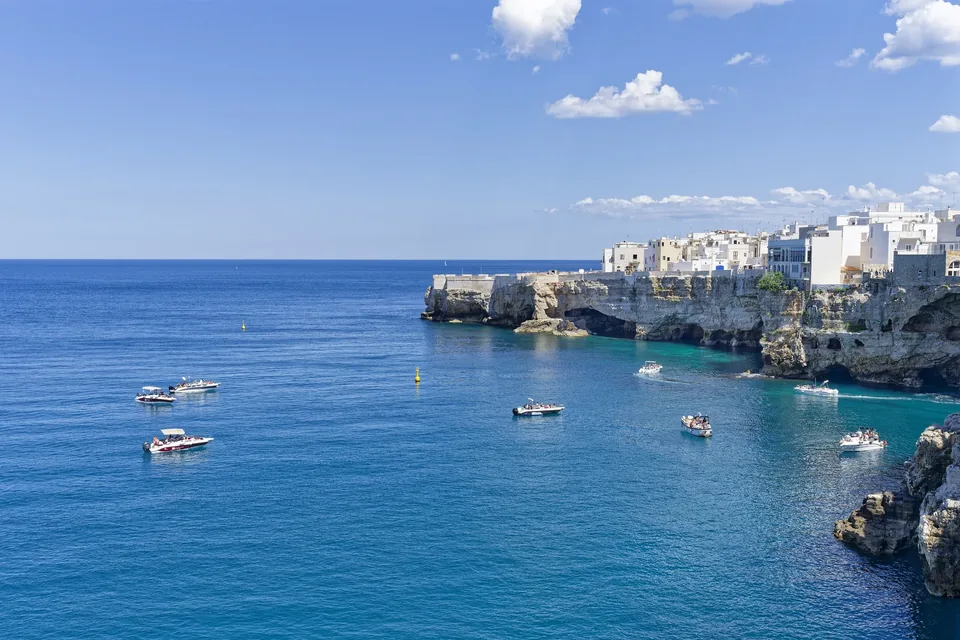
Polignano a Mare
Old town, viewpoints and a coffee as a travel pause.
Read the guide →Photo: Maksimsokolov / Wikimedia Commons — CC BY-SA 4.0 · Resized and converted to WebP.

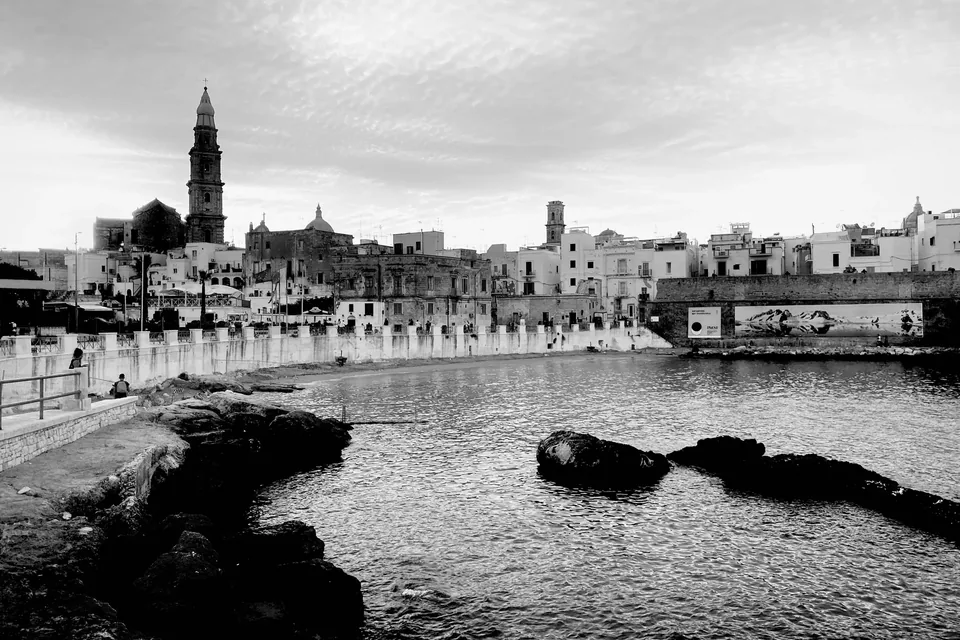
Monopoli
An Adriatic conclusion connected to the rural landscape.
Read the guide →Photo: RaTio65 / Wikimedia Commons — CC BY-SA 4.0 · Resized and converted to WebP.

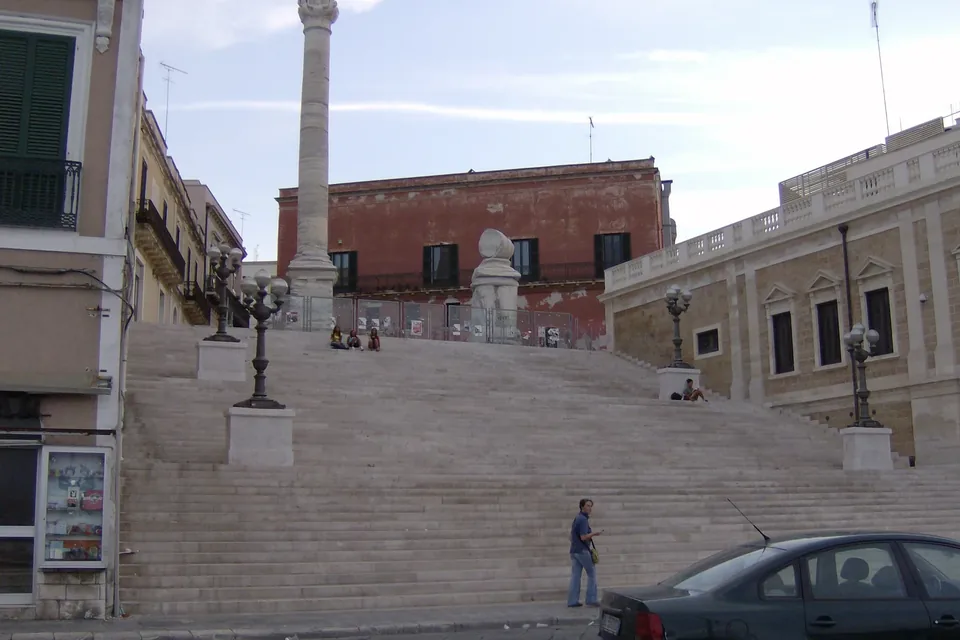
Brindisi
Brindisi: reading the city from its harbour.
Read the guide →Photo: Zappuddu / Wikimedia Commons — Public domain · Resized and converted to WebP.

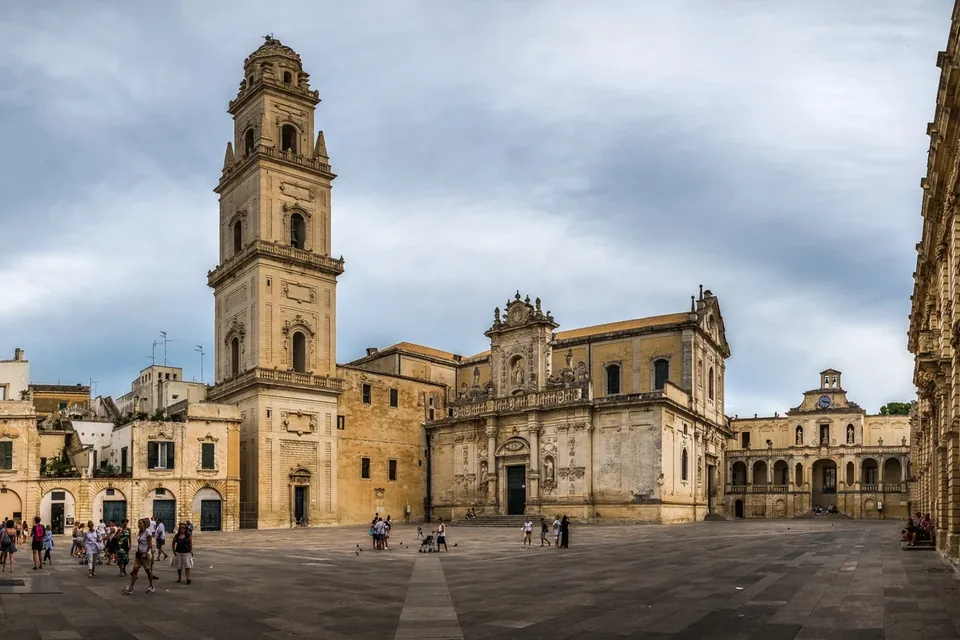
Lecce
Baroque architecture, papier-mâché and Salento food: a city of telling details.
Read the guide →Photo: Giuseppe Milo / Wikimedia Commons — CC BY 3.0 · Resized and converted to WebP.
.jpeg)
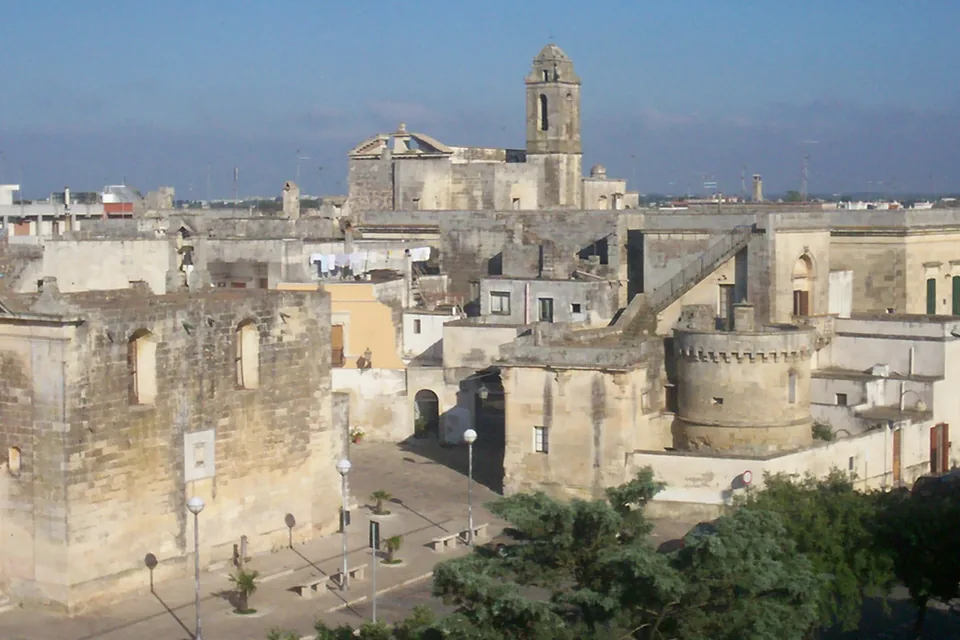
Martano
Courtyards, megalithic heritage and Cistercian culture in Grecìa Salentina.
Read the guide →Photo: Freddyballo / Wikimedia Commons — CC BY-SA 3.0 · Resized and converted to WebP.

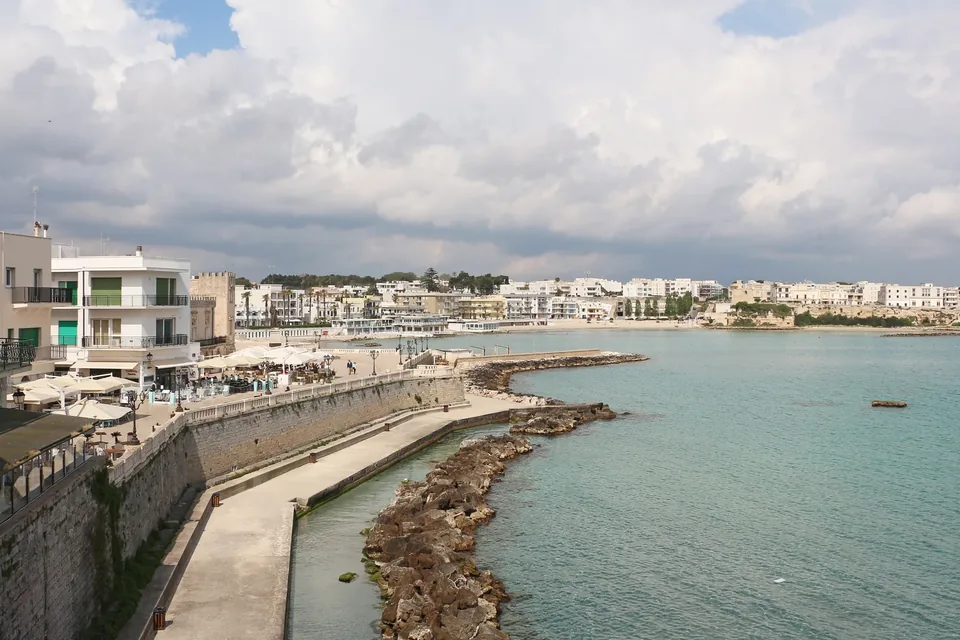
Otranto
The cathedral, Adriatic landscape and time to explore the historic centre.
Read the guide →Photo: Bernard Gagnon / Wikimedia Commons — CC0 · Resized and converted to WebP.

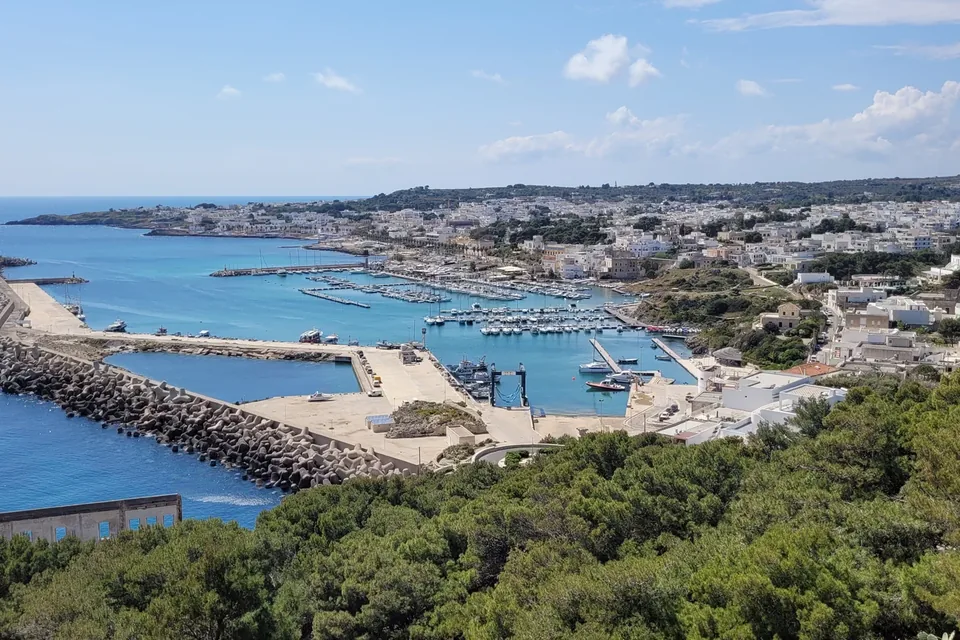
Santa Maria di Leuca
The sanctuary, seafront architecture and the outline of the coast.
Read the guide →Photo: Bernard Gagnon / Wikimedia Commons — CC0 · Resized and converted to WebP.

Places of faith on the route
Sanctuary of Saint Michael the Archangel
Cave sanctuary · Monte Sant'Angelo · San Michele Arcangelo, San Lorenzo Maiorano
Sanctuary of Saint Pio of Pietrelcina
Sanctuary · San Giovanni Rotondo · Padre Pio
Basilica of St Nicholas
Basilica · Bari · San Nicola di Mira
Basilica Sanctuary of Santa Maria de Finibus Terrae
Basilica · Santa Maria di Leuca (Castrignano del Capo) · Madonna de Finibus Terrae, San Pietro
To taste along the way
Gargano orange
PGI · Slow Food Presidium · Fruit, vegetables and pulses
Open the product page →Brindisi (wine)
DOC · Wines
Open the product page →Burrata di Andria
PGI · PAT · Cheeses
Open the product page →Caciocavallo podolico of the Gargano
Slow Food Presidium · Cheeses
Open the product page →Garganica goat
Slow Food Presidium · Meats and cured meats
Open the product page →Polignano carrot
PAT · Slow Food Presidium · Fruit, vegetables and pulses
Open the product page →Dauno extra virgin olive oil
PDO · Oils and fats
Open the product page →Carpino broad bean
PAT · Slow Food Presidium · Fruit, vegetables and pulses
Open the product page →Focaccia barese
PAT · Fresh pasta, bread and pastry
Open the product page →Fruttone
PAT · Fresh pasta, bread and pastry
Open the product page →Altamura lentil
PGI · Fruit, vegetables and pulses
Open the product page →Gargano Femminello lemon
PGI · Slow Food Presidium · Fruit, vegetables and pulses
Open the product page →Ostie ripiene (filled wafers of Monte Sant'Angelo)
PAT · Fresh pasta, bread and pastry
Open the product page →Pane di Monte Sant'Angelo (Gargano bread)
PAT · Fresh pasta, bread and pastry
Open the product page →Pasticciotto
PAT · Fresh pasta, bread and pastry
Open the product page →Rustico leccese (Lecce puff pastry)
PAT · Fresh pasta, bread and pastry
Open the product page →Terra d'Otranto extra virgin olive oil
PDO · Oils and fats
Open the product page →Terra di Bari extra virgin olive oil
PDO · Oils and fats
Open the product page →Podolica cow of the Gargano
Slow Food Presidium · Meats and cured meats
Open the product page →Sources
- In cammino - Cammini di Puglia (guida Pugliapromozione / Regione Puglia, 2020)
- Alla scoperta della via Francigena in Puglia - italia.it (Ministero del Turismo / ENIT)
- Catalogo Cammini Religiosi - italia.it (Ministero del Turismo)
- Alla ricerca di fede e sostenibilità - rassegna stampa, Ministero del Turismo (nov.-dic. 2024)