
APULICA / FAITH
Sanctuary of Saint Pio of Pietrelcina
Sanctuary · San Giovanni Rotondo · Puglia
In brief
- Padre Pio lived in the Capuchin friary of San Giovanni Rotondo from 1916 until his death on 23 September 1968. (Santuario di Padre Pio da Pietrelcina - Italia.it · Padre Pio: vita, storia e miracoli di San Pio da Pietrelcina - padrepio.it)
- His visible stigmata appeared on 20 September 1918 while he was praying in the choir of the old church of Santa Maria delle Grazie. (Padre Pio: vita, storia e miracoli di San Pio da Pietrelcina - padrepio.it · Il Convento - Convento Santuario di San Pio)
- The Church of Saint Pio, designed by Renzo Piano, was inaugurated on 1 July 2004 and holds more than 6,500 worshippers. (Santuario di Padre Pio da Pietrelcina - Italia.it)
- The saint's remains rest in the crypt of the new church, decorated with mosaics by Marko Rupnik. (Visita San Giovanni Rotondo, borgo in Puglia - Italia.it · La Chiesa di San Pio da Pietrelcina - Convento Santuario di San Pio)
- John Paul II declared Padre Pio Blessed on 2 May 1999 and a saint on 16 June 2002. (Padre Pio: vita, storia e miracoli di San Pio da Pietrelcina - padrepio.it)
Festivals and dates
- Novena of Saint Pio: 14 to 21 September (2026 programme) (Novena e Veglia di San Pio da Pietrelcina 2026 - Convento Santuario di San Pio)
- Vigil of Saint Pio: 22 September (Novena e Veglia di San Pio da Pietrelcina 2026 - Convento Santuario di San Pio)
- Liturgical feast of Saint Pio of Pietrelcina: 23 September (Padre Pio: vita, storia e miracoli di San Pio da Pietrelcina - padrepio.it)
- Autumn
From the 1540 friary to Padre Pio's town
The Capuchin Friars Minor have been in San Giovanni Rotondo since 1540, when a local benefactor, Orazio Antonio Landi, gave them a small plot of land. The little cross still standing in front of the old church recalls that beginning. The town, which grew up in the 11th century on the road taken by pilgrims heading to the cave of the Archangel Michael, now lies within the Gargano National Park.
Padre Pio first arrived on 28 July 1916, aged 29, to escape the heat of Foggia that was worsening his health. He came back on 4 September that year on a supposedly temporary basis, and instead stayed until his death in the night between 22 and 23 September 1968. When a transfer was discussed in 1923, the townspeople collected signatures to keep him.
The growing number of faithful soon made the small friary church too small: the sanctuary of Santa Maria delle Grazie was consecrated on 1 July 1959. Since 2004 it has stood beside the large Church of Saint Pio, wanted by the Capuchins and the devotees to receive the saint's relics and the most crowded celebrations.
Sources: Santuario di Padre Pio da Pietrelcina - Italia.it · Padre Pio e San Giovanni Rotondo: la storia di un legame lungo 52 anni - padrepio.it · Il Santuario di Santa Maria delle Grazie - Convento Santuario di San Pio · La Chiesa antica - Convento Santuario di San Pio · La Chiesa di San Pio da Pietrelcina - Convento Santuario di San Pio · Visita San Giovanni Rotondo, borgo in Puglia - Italia.it
Padre Pio, friar and confessor
Born Francesco Forgione in Pietrelcina on 25 May 1887, he joined the Capuchins very young and was ordained a priest in 1910. In San Giovanni Rotondo his day revolved around the Mass he celebrated at dawn and the long hours spent in the confessional: at certain times people waited several days to confess to him. The stigmata, visible from 20 September 1918 for about fifty years, contributed enormously to his fame.
Around him grew the Prayer Groups, now present in many countries, and Casa Sollievo della Sofferenza, the hospital inaugurated on 5 May 1956. John Paul II, who had met him as a young priest in 1948, declared him Blessed in 1999 and a saint in 2002.
Because of his mission as a confessor, a plenary indulgence can be obtained in the old church since 2002. Millions of pilgrims come to the town every year to pray before his remains.
Sources: Padre Pio: vita, storia e miracoli di San Pio da Pietrelcina - padrepio.it · Padre Pio e San Giovanni Rotondo: la storia di un legame lungo 52 anni - padrepio.it · La Chiesa antica - Convento Santuario di San Pio
The two churches, the friary and the crypt
The visit starts at the friary, which has remained essentially as it was in 1916: you can see Padre Pio's cell and the choir of the old church where he received the stigmata. The old church, where he carried out most of his ministry, keeps the icon of Our Lady of Grace, much venerated in the town.
The three-aisled sanctuary of Santa Maria delle Grazie is dominated by an apse mosaic from the Vatican school showing Our Lady of Grace among the angels together with Saint Pio. The high altar, consecrated in 2008, incorporates the altar table on which the saint celebrated from 1959 to 22 September 1968; the side aisles hold the wooden statue of Our Lady of Grace and mosaics of John Paul II and Mother Teresa of Calcutta.
Renzo Piano's Church of Saint Pio, with a plan inspired by the Archimedean spiral, walls of Apricena stone and a green pre-oxidised copper roof, is the second largest church in Italy. The churchyard continues inside with the same paving, divided only by a glass wall showing a scene from the Apocalypse. The lower church, decorated with mosaics by Marko Rupnik, holds the saint's remains.
Sources: Il Convento - Convento Santuario di San Pio · La Chiesa antica - Convento Santuario di San Pio · Il Santuario di Santa Maria delle Grazie - Convento Santuario di San Pio · Santuario di Padre Pio da Pietrelcina - Italia.it · Visita San Giovanni Rotondo, borgo in Puglia - Italia.it · La Chiesa di San Pio da Pietrelcina - Convento Santuario di San Pio
Saint Pio's September and the Marian torchlight procession
Saint Pio's liturgical feast falls on 23 September, the day of his death, regarded as his birth into Heaven; John Paul II set his memorial on that date and added it to the General Roman Calendar. Every year faithful from many countries come to San Giovanni Rotondo to celebrate it.
The sanctuary prepares the feast with a novena: in the 2026 programme, from 14 to 21 September, there is a daily meditated Rosary and the novena at the relic of the saint's body. On 20 September the stigmata are commemorated with a procession carrying the habit of the stigmata from Santa Maria delle Grazie to the Church of Saint Pio. On the evening of 22 September the open-air church hosts the vigil, with a welcome liturgy, catechesis, Eucharistic adoration, the Rosary and the novena until midnight.
From Low Sunday to the last Saturday of October, unless otherwise arranged, every Saturday evening the wooden statue of Our Lady of Grace is carried in a torchlight procession from Santa Maria delle Grazie to the Church of Saint Pio, accompanied by the faithful.
Sources: Padre Pio: vita, storia e miracoli di San Pio da Pietrelcina - padrepio.it · Novena e Veglia di San Pio da Pietrelcina 2026 - Convento Santuario di San Pio · Fiaccolata Mariana - Convento Santuario di San Pio
How the pilgrimage works
The sanctuary complex lies along Viale Padre Pio in San Giovanni Rotondo, in the province of Foggia, in the inland Gargano. The sanctuary describes Mass and confession as the heart of the pilgrimage, completed by the welcome liturgy and a guided visit.
The point of reference for visitors is the sanctuary's Pilgrimage Office (Ufficio Pellegrinaggi), located on the churchyard of the Church of Saint Pio (official website: conventosantuariopadrepio.it). It hands out maps of the sanctuary and guides to the new church, and arranges guided visits to Saint Pio's places with staff trained by the Capuchins, in Italian, English, French, German, Spanish and Polish, as well as a tour of the new church for individuals and families starting from the churchyard of the Church of Saint Pio. Groups can agree in advance on a welcome liturgy, normally in the church of Santa Maria delle Grazie, and on spiritual itineraries tailored to young people, the sick, Prayer Groups, parishes and families.
Pilgrims who wish to take an active part in the Saturday Marian torchlight procession, as bearers of the statue or of the torches, can contact the same office.
Sources: Ufficio Pellegrinaggi - Convento Santuario di San Pio · Liturgia di accoglienza - Convento Santuario di San Pio · Visite Guidate - Convento Santuario di San Pio · Fiaccolata Mariana - Convento Santuario di San Pio · Visita San Giovanni Rotondo, borgo in Puglia - Italia.it
Walks that reach it
The Way of Peace
L'Aquila, Basilica of Santa Maria di Collemaggio → Monte Sant'Angelo, Church of St Michael the Archangel · The official site gives 543 km on foot in its summary figures, but its descriptive text speaks of more than 520 km, and the waymarking page of 520 marked km. The cycling version measures 440 km. · The official site gives 37 stages in its summary figures and 35 stages in its descriptive text. The stage list numbers 29 main stages (13 and 14 are merged) plus eight variants marked "bis"; the guidebook describes 29 stages plus 3 stages of a mountain variant. By bike there are 9 stages.
Abruzzo, Molise, Puglia
Via Francigena in Southern Italy
Rome → Santa Maria di Leuca · more than 900 km from Rome to Santa Maria di Leuca · No reachable source gives the overall number of stages. In Puglia the regional guide splits its four described itineraries into 5, 5, 6 and 7 walking days.
Puglia, Campania
The place
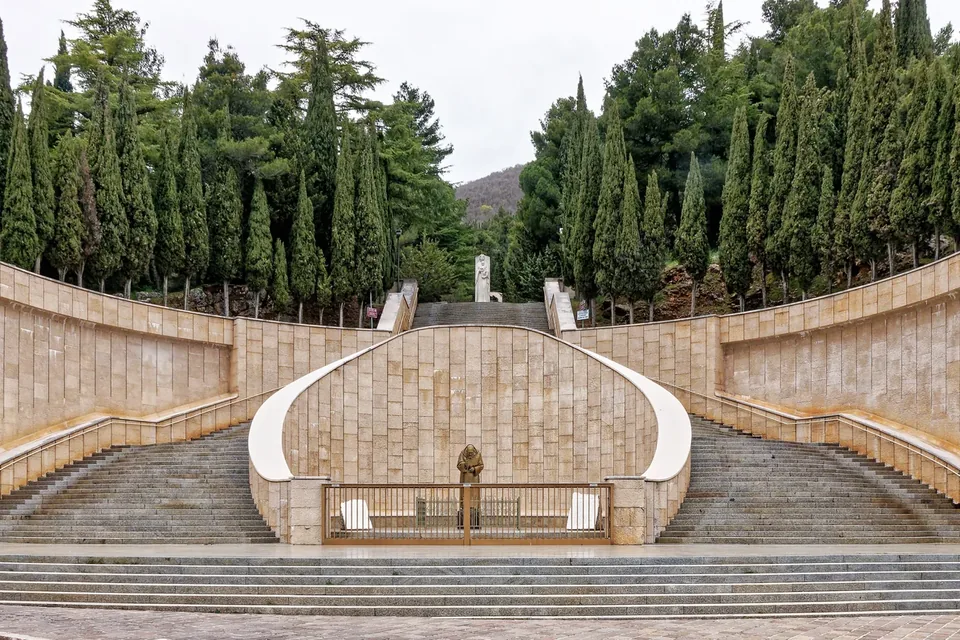
San Giovanni Rotondo
San Giovanni Rotondo: pilgrimage and town.
Read the guide →Photo: Holger Uwe Schmitt / Wikimedia Commons — CC BY-SA 4.0 · Resized and converted to WebP.

Sources
- Santuario di Padre Pio da Pietrelcina - Italia.it
- Visita San Giovanni Rotondo, borgo in Puglia - Italia.it
- Padre Pio: vita, storia e miracoli di San Pio da Pietrelcina - padrepio.it
- Padre Pio e San Giovanni Rotondo: la storia di un legame lungo 52 anni - padrepio.it
- La Chiesa di San Pio da Pietrelcina - Convento Santuario di San Pio
- Il Santuario di Santa Maria delle Grazie - Convento Santuario di San Pio
- La Chiesa antica - Convento Santuario di San Pio
- Il Convento - Convento Santuario di San Pio
- Novena e Veglia di San Pio da Pietrelcina 2026 - Convento Santuario di San Pio
- Visite Guidate - Convento Santuario di San Pio
- Fiaccolata Mariana - Convento Santuario di San Pio
- Ufficio Pellegrinaggi - Convento Santuario di San Pio
- Liturgia di accoglienza - Convento Santuario di San Pio