Why go
Martano, Martána in Griko, is one of the largest towns of the Grecìa Salentina and lies at a crossing point: here the ancient Via Traiana Calabra, linking Brindisi, Lecce and Otranto, met the road from Otranto towards Galatina and Gallipoli. It stands on a rise about twenty kilometres from Lecce, in a landscape of olive groves and fields where oil and tobacco long sustained the economy.
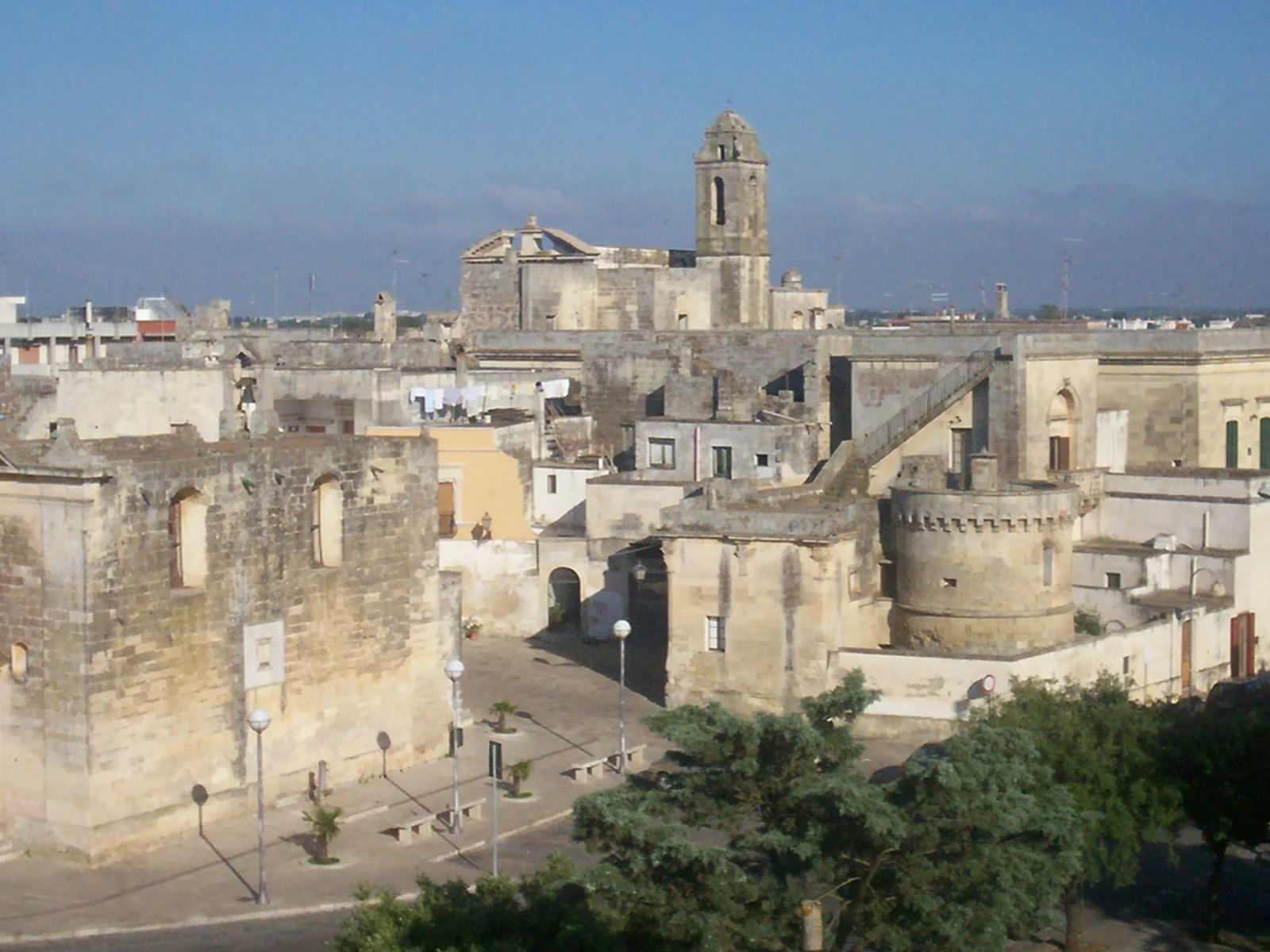
The main reason to stop is the old centre, called the Terra, which the municipality considers one of the most interesting in Salento for its state of preservation and its regular grid of rectangular blocks. Among courtyard houses and early eighteenth-century mansions, balconies borne on carved corbels show the skill of local stonemasons, and over everything loom the Aragonese castle and the mother church.
Around the town lie further layers of history: the Teofilo menhir, the tallest in the region, the Specchia dei Mori, a medieval village excavated and turned into an archaeological park, and the Cistercian monastery of Santa Maria della Consolazione, known for its liqueurs and herbal infusions. Since 2017 Martano has also been a city of aloe.
Sources: Unione dei Comuni della Grecìa Salentina — Martano · Comune di Martano — La città · Comune Martano — Arte e monumenti
History
Martano's origins are uncertain, and history and legend intertwine. One tradition links its founding to the Roman centurion Martius, who is said to have received these lands after the Roman conquest of Salento around 267 BC; the town's coat of arms indeed shows a centurion taming a horse. The scholar Gino Pisanò proposed another reading of the Latin inscription that accompanied the arms, seeing in Martius Pegaseus the pen name of a local humanist poet.
The oldest traces, however, are prehistoric: the Teofilo menhir, 4.70 metres high, is thought to be linked to the rituals of the Iapygian peoples at the start of the Iron Age. After the fall of Rome the town lived for five centuries under Byzantine influence, which changed its customs and left the Griko language; the Union of Municipalities of the Grecìa Salentina recalls the arrival of many Greek clergy between the ninth and tenth centuries.
In 1190 King Tancred granted the fief to Giorgio Roma; various families followed until 1748. In the fifteenth century the Aragonese built the castle, with walls, six watchtowers and a moat, to defend the town from raids; over time the fortress became a lordly residence. The seventeenth and eighteenth centuries saw a flowering of Baroque churches, convents and palaces.
Sources: Comune di Martano — Cenni storici · Comune Martano — Arte e monumenti · Unione dei Comuni della Grecìa Salentina — Martano · Unione dei Comuni della Grecìa Salentina — Cenni storici · Comune di Martano — La città
What to see
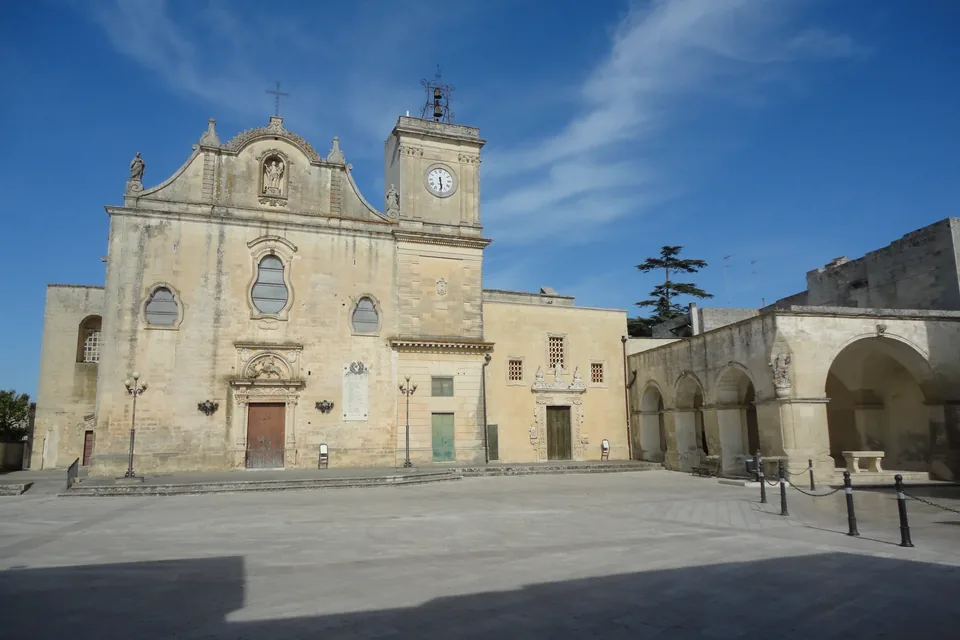
The Terra, the old centre, was enclosed by walls with a moat, towers and castle; it was entered through two gates now lost, at either end of today's Via Roma. Of the Aragonese castle the round towers and sloping walls remain. The mother church of the Assumption, rebuilt in 1596, has a portal with column-bearing lions and an upper section crowded with angels, garlands and masks; inside are seventeenth and eighteenth-century altars, an Annunciation by Oronzo Tiso and a wooden ceiling with 75 panels.
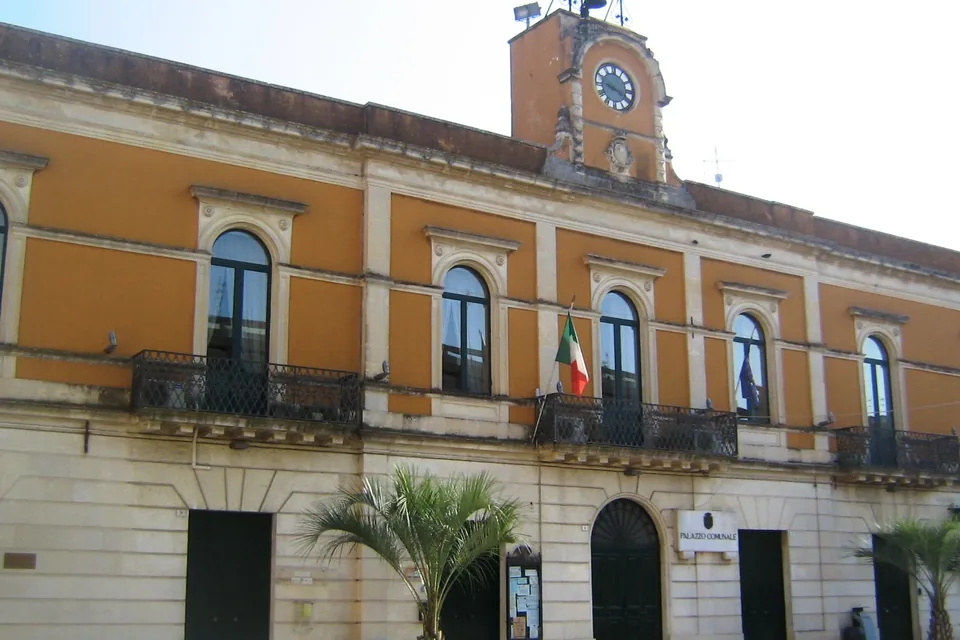
The municipality invites you to look at the palaces: Palazzo Moschettini, built between 1710 and 1720, has a balcony on seven corbels and a crowning gallery of small arches, each different, with loopholes for watching the sea; Palazzo Micali, from 1719, carries a statue of the Archangel Michael on its mullioned window; Palazzo Pino has a late eighteenth-century pierced balcony and a coat of arms with an inscription in Greek letters. San Domenico, whose former convent is now the town hall, and the chapel of the Immacolata complete the walk.
Outside the town lie the Teofilo menhir, the Specchia dei Mori, an old watchtower with a view of the Adriatic, the archaeological park of the medieval village and, towards Borgagne, the convent of Santa Maria della Consolazione with its high altar of 1691.
Sources: Comune Martano — Arte e monumenti · Comune di Martano — La città · Comune di Martano — Chiese e cappelle · Unione dei Comuni della Grecìa Salentina — Martano
Food and wine
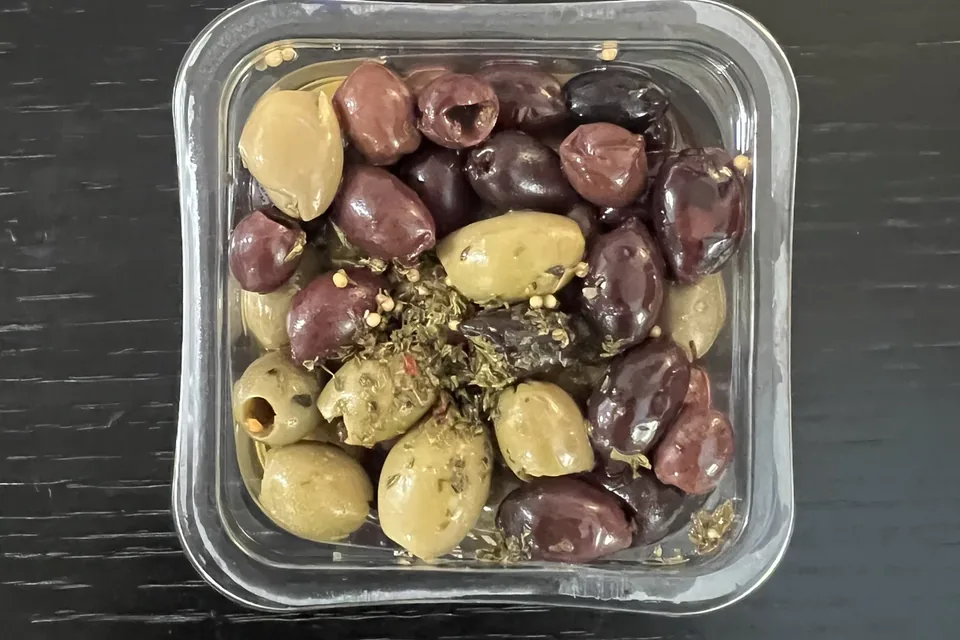
Martano's economy long relied on farming, especially oil and tobacco, as the municipality recalls. The oil is that of the Terra d'Otranto PDO, produced across the province of Lecce from Cellina di Nardò and Ogliarola Leccese with olives picked by mid-November; the palaces and farms around the town still bear the marks of this activity.
The Cistercian monastery of Santa Maria della Consolazione, home to monks since 1926, is known well beyond the area for its liqueur-making: it produces the San Bernardo digestive bitter, the Goccia Imperiale following an old eighteenth-century recipe, herbal infusions, as well as oil and jams. Since 2017 Martano has been a city of aloe, thanks to the growth of this crop in the area.
Home cooking follows that of the Grecìa Salentina, based on pulses and vegetables: the dwarf pea of Zollino, a Slow Food Presidium grown in the Grecìa villages and eaten only dried, and dishes such as ciceri e tria, pasta partly boiled and partly fried with chickpeas, which the Atlas of traditional Apulian products links to Saint Joseph's feast.
Sources: Comune di Martano — La città · Qualigeo — Terra d'Otranto DOP · Unione dei Comuni della Grecìa Salentina — Martano · Monastero cistercense di Santa Maria della Consolazione — Martano · Fondazione Slow Food — Piselli tradizionali salentini · Atlante dei PAT di Puglia — Ciciri e tria
Things to do
Martano lends itself to an architectural walk. The tip is to follow the regular grid of the Terra in search of details: the corbels of Palazzo Moschettini, each different from the next, the archangel of Palazzo Micali that seems to hang from the cornice, the Greek-letter inscription on Palazzo Pino, which according to the municipality may refer to a lost love. It is a concrete way to recognise the work of Martano's stonemasons.
In the countryside you can seek out the oldest stones: the Teofilo menhir, known as Santu Totaru, and the Specchia dei Mori on the ridge between Caprarica and Martano, which legend says guards a treasure of a golden hen with twelve chicks. From its top, on clear days, you can see the Adriatic. Not far from the town the archaeological park of the medieval village displays the results of excavations carried out every summer since 1997.
A visit to the Cistercian monastery introduces a religious community that keeps a valuable archive and library and maintains a tradition of work. From Martano it is easy to reach Calimera, the other Grecìa villages and the coast towards Otranto.
Sources: Comune Martano — Arte e monumenti · Comune di Martano — La città · Unione dei Comuni della Grecìa Salentina — Martano · Monastero cistercense di Santa Maria della Consolazione — Martano
When to go
Martano can be visited all year. The main festival is that of the Assumption, the town's patron, celebrated on 15 August, when the community gathers around the mother church, and the church shows off its altars and the Annunciation canvas.
Spring and autumn are the best seasons for walks in the historic centre and the countryside, towards the menhir, the Specchia dei Mori and the monastery, with mild temperatures and light that brings out the details carved in stone. Autumn is also the olive harvest season, which for the Terra d'Otranto PDO must end by mid-November.
In summer the archaeological park of the medieval village is where the excavation campaigns take place, which the municipality and the Union of Municipalities describe as carried out every summer since 1997. For summer visitors, Martano offers a quiet inland base from which to reach the Adriatic for the day and return to the town in the evening.
Sources: Comune di Martano — La città · Qualigeo — Terra d'Otranto DOP · Unione dei Comuni della Grecìa Salentina — Martano
Getting there and around
The municipality explains clearly how to arrive. By car from the north, take the A14 motorway to Bari and then the dual carriageway towards Lecce; from Lecce follow the SS16 Adriatica towards Maglie, and after about seventeen kilometres you reach the Martano exit.
By train you reach Salento along the Adriatic line or from Rome via Caserta, as far as Lecce station, run by RFI, which offers assistance to passengers with reduced mobility and a bus stop; from Lecce, Ferrovie del Sud Est buses run to the centre of Martano. By air you land at Brindisi: from the airport you can take the bus to Lecce, listed among the connections on the airport's website, and continue on Ferrovie del Sud Est buses, or hire a car.
The old centre is explored on foot. For the menhir, the Specchia dei Mori, the archaeological park and the monastery, which lie outside the town, and for moving between the villages of the Grecìa Salentina, a car or a bicycle is advisable.
Sources: Comune di Martano — Arrivare a Martano · RFI — Stazione di Lecce · Aeroporti di Puglia — Aeroporto di Brindisi, collegamenti bus · Comune di Martano — La città
Where to stay
The municipality's page of tourist services lists a broad offer for an inland town, and the variety is useful for those choosing Martano as a base for the Grecìa Salentina. In the countryside there are masserie, some turned into relais, agriturismi, country estates and a resort; in the centre, many bed and breakfasts and homes carved out of village buildings, including in the streets of the old Terra.
Staying in a masseria means being among the olive trees and needing a car for every outing, but also living in the farming landscape that shaped the area's history. A B&B in the centre lets you walk out in the evening into the Terra, when the lit palaces and courtyards show their character.
Martano is about twenty kilometres from Lecce, close to Calimera and the other Grecìa villages, and a short distance from the Adriatic coast and Otranto: a position that lets you alternate village visits, beach days and an evening in the city without changing lodgings.
Sources: Comune di Martano — Servizi per il turista · Comune di Martano — La città
Where to stay
In the municipality of Martano the national database of the Ministry of Tourism lists 79 accommodation businesses with a verified CIN code: 0 hotels, 27 other licensed accommodation and 52 other types such as B&Bs and private rentals.
Licensed businesses from the official list of Regione Puglia, each with a checked national CIN code: matching municipality and category. Private individuals are not listed. Check directly with the property before booking.
BORGOINCORTE
Guest rooms
CIN IT075040B400061332
BORGOTERRA
Guest rooms
CIN IT075040B400021594
CORTE KALI'NORA
Guest rooms
CIN IT075040B400023440
CORTE SAN GIORGIO
Guest rooms
CIN IT075040B400122432
Corinna Secret Rooms
Guest rooms
CIN IT075040B400116976
Corte AD 1791
Guest rooms
CIN IT075040B400103766
LA LANTERNA
Guest rooms
CIN IT075040B400020866
LUXORA BOUTIQUE
Guest rooms · Website
CIN IT075040B400126673
Ore liete
Guest rooms · Website
CIN IT075040B400069664
Palazzo Terra d'Otranto
Guest rooms
CIN IT075040B400085065
Sideros
Guest rooms
CIN IT075040B400085820
TEOFILO CASE
Guest rooms
CIN IT075040B400023250
Tamborrino rooms "Casa Frea Dimora Storica"
Guest rooms
CIN IT075040B400056586
AGRITURISMO CIPONORCO
Farm stay
CIN IT075040B500023971
MASSERIA DON AGOSTINO
Farm stay · Website
CIN IT075040B500025690
MASSERIA GIOVANNI 1751
Farm stay
CIN IT075040B500094773
MASSERIA SUCE'A
Farm stay · Website
CIN IT075040B500127205
NATURALIS BIO RESORT
Farm stay · Website
CIN IT075040B500023437
TENUTA CAMPI'
Farm stay
CIN IT075040B500023902
VILLA COLUCCIA
Farm stay
CIN IT075040B500023684
Dimora Storica Casa Sicuro
B&B
CIN IT075040B400085315
BORGOTERRA
Holiday home
CIN IT075040B400021593
Sources: Regione Puglia – ARET Pugliapromozione (DMS), CC BY 4.0, 2026-10-12 · Ministero del Turismo – Banca Dati Strutture Ricettive (dashboard pubblica), 2026-10-12
YOUR JOURNEY
How to shape a journey here
Courtyards and monastic culture, connected with Calimera or Martignano. Visits and encounters are arranged for the travel period.
Talk to us about it