A fruit from far away
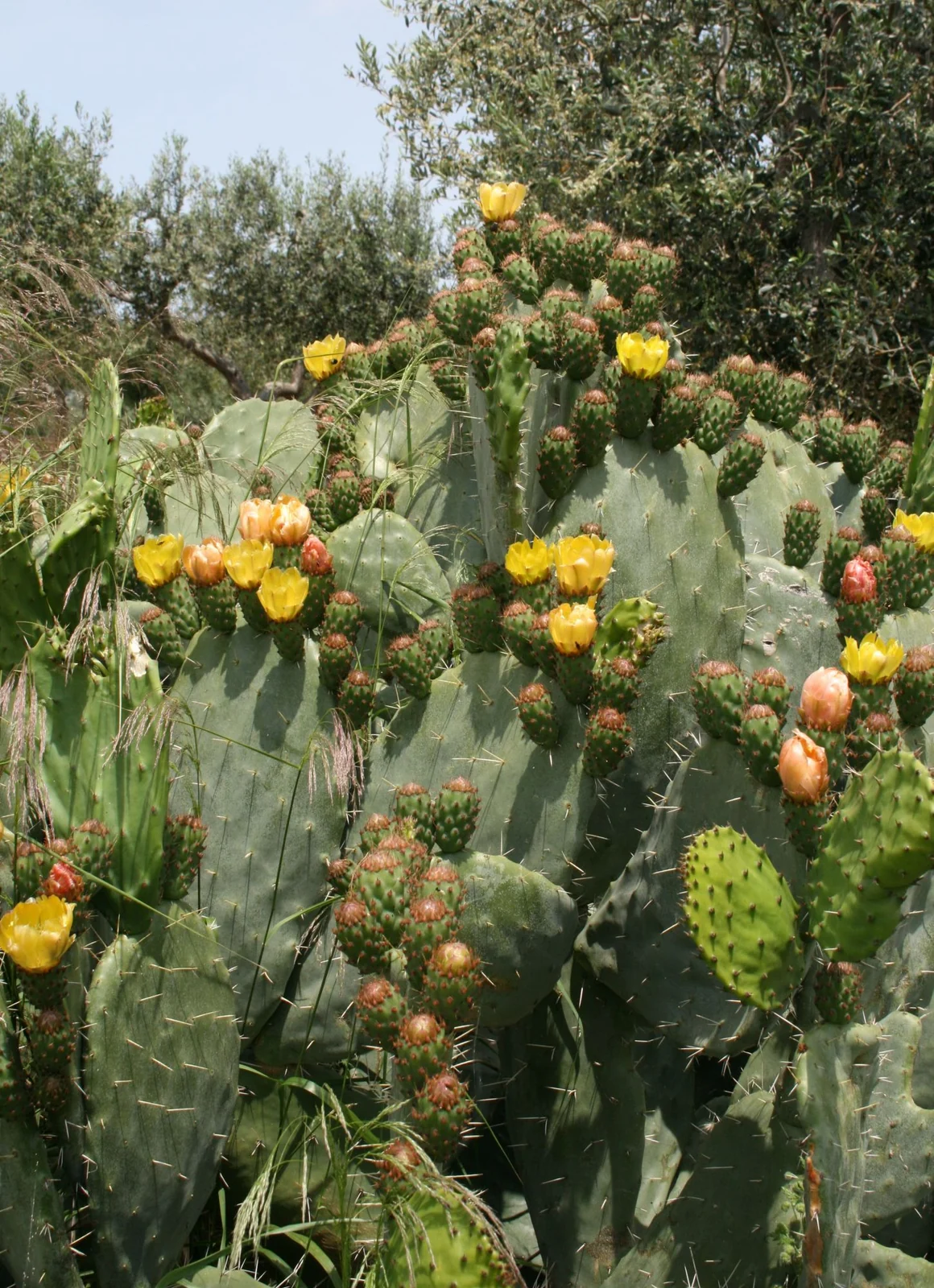
Puglia’s atlas of traditional foods presents the prickly pear, Opuntia ficus-indica, as a succulent of the cactus family, native to Central America and naturalised throughout the Mediterranean basin. The profile regards it as traditional across the whole of Puglia, with fresh fruit available from August to October.
The fruit is a fleshy berry full of seeds, which can weigh a few hundred grams. The plant withstands drought well, adapts to different soils provided they are light and free-draining, and grows from low hills to medium altitudes; it suffers instead from prolonged cold, which reduces its yield.
Propagation is simple: the pads, or cladodes, are cut, left to dry for a few days and then planted, where they root easily. Pruning, in spring or late summer, keeps the pads from touching and removes damaged ones. These features explain why the prickly pear is so widespread in the region’s driest countryside and on its stony margins.
Sources: PAT Puglia — Fico d’India
Along the dry-stone walls
The PAT profile of prickly pear liqueur adds some details on the plant’s history. It notes that it grows throughout the Andes and the Mexican sierras and was probably brought to Europe by Christopher Columbus on his return from the Americas; for its arrival in Italy it suggests the Saracens.
More interesting for travellers is its description of the landscape. According to the atlas, the plants give an exotic touch to parts of Puglia, especially the Gargano promontory and certain places in Salento, where they grow most luxuriantly. In the past, farmers planted them against dry-stone walls, on slopes too steep to farm and on difficult embankments.
The pads, the profile notes, take root easily in almost any soil: this is why prickly pears often occupy spaces no other crop would have used. Looking at these spiny hedges along a country road means reading an old way of using the land, in which every corner could yield fruit.
Sources: PAT Puglia — Liquore di fico d’India
A documented history in Capitanata and Salento
The PAT profile of the prickly pear gathers several written records. In an 1846 book on the activities of Capitanata, the author lists it among the fruit trees grown on the plain, beside plum, fig, pomegranate and almond, noting that the fruit was smaller but very fragrant and tasty.
An 1898 periodical from San Severo describes the plantations around Manfredonia, a fine sight, and observes that the plant thrives in dry, stony places, lives more than half a century and gives fruit that keeps for a long time or can be preserved. In 1928 another author named the prickly pear as one of the main sources of wealth for Manfredonia and described large-scale cultivation in the province of Lecce too, with fruit eaten fresh and used to make jams and syrups.
Finally, the atlas notes that the prickly pear appears among the fruit species illustrated in the regional atlas of typical products and in the ceramics made by many Salento craftspeople: a sign of how deeply it has entered the region’s very image.
Sources: PAT Puglia — Fico d’India
Harvesting and peeling without thorns
The prickly pear demands some care, and the PAT profile describes the steps precisely. Harvesting uses a special tool that detaches the fruit without the hands touching the spines. The fruit then sits in water at room temperature for at least half an hour, is brushed while wearing gloves to remove most of the fine hairs, and is rinsed under running water.
To peel it, the atlas suggests scoring the skin lengthwise, cutting off both ends and rolling the fruit on itself to release the rind, always gently, since a few spines may remain. It is a skill many families learn in childhood.
For travellers, the practical rule is simple: better to taste fruit already prepared by someone who knows how, rather than picking it from the plant. The profile names on-farm sales, food festivals and fairs as places to find it, and mentions dedicated festivals in Barletta and Marina di Ginosa: check each year whether and when they take place.
Sources: PAT Puglia — Fico d’India
A liqueur from the Gargano
Among the fruit’s transformations, the atlas records prickly pear liqueur, linked to the province of Foggia and particularly the Gargano. It is made by peeling the ripest, sweetest fruit and steeping it in alcohol; the infusion is then filtered and a syrup of spring water and sugar is added.
The profile describes its yellow-pink colour and very intense aroma, and recommends serving it well chilled at the end of a meal. It is made all year depending on the fruit available, and often appears at village festivals and fairs, as an accompaniment or digestif.
It is a different preparation from the fresh fruit and from jam, which the atlas also lists among traditional uses. That is precisely why it can become a small comparison: the fruit on its own, then the preserve, then the liqueur, to see how much of the original flavour survives the transformation. A well-chosen liqueur can also be a travel souvenir, if you remember which territory it comes from.
Sources: PAT Puglia — Liquore di fico d’India
When the fruit takes centre stage
If you are looking for fresh prickly pears, August to October is the window to plan around; the actual tasting will depend on what is available. Take a short break with fruit already prepared, noticing flesh, seeds and sweetness, perhaps chilled on the hottest days.
Only afterwards add a preserve, so as to separate what belongs to the fruit from what comes from processing. Between jam, syrup and liqueur, choose the comparison according to a real use: breakfast, a dessert or a drink. Keep tastings small and try the preserve on its own first, then on the base you have in mind.
The question is whether the fruit’s flavour remains recognisable in the result, not how intense the sweetness is. A single product chosen with care tells the story of a journey better than a bag of souvenirs, and the same question can accompany other fruit preserves encountered along the way.
The Gargano and Manfredonia
The historical sources collected by the atlas often lead to Manfredonia, and the Gargano is a good chapter for this theme. Italia.it describes Manfredonia at the foot of the promontory, on its gulf, with the Swabian-Angevin fortress overlooking the sea and a fishing and commercial port that is the starting point for exploring the Gargano; in the cathedral’s archaeological museum, a section is devoted to underwater archaeology.
Continuing along the coast, Italia.it recalls Mattinata, surrounded by centuries-old olive groves and called the “land of almond trees”, then Vieste with its white old town and the Pizzomunno monolith, and Peschici on its cliff. The national park also includes the Foresta Umbra, the Tremiti Islands and the lakes of Lesina and Varano.
On this route, use the prickly pear as a detail to follow rather than a plant hunt. A photograph of pads along a wall and a taste of the local liqueur are two different ways of keeping the same memory of the promontory.
Sources: Italia.it (Ministero del Turismo) — Gargano · Italia.it (Ministero del Turismo) — Manfredonia
Giovinazzo and Otranto’s Salento
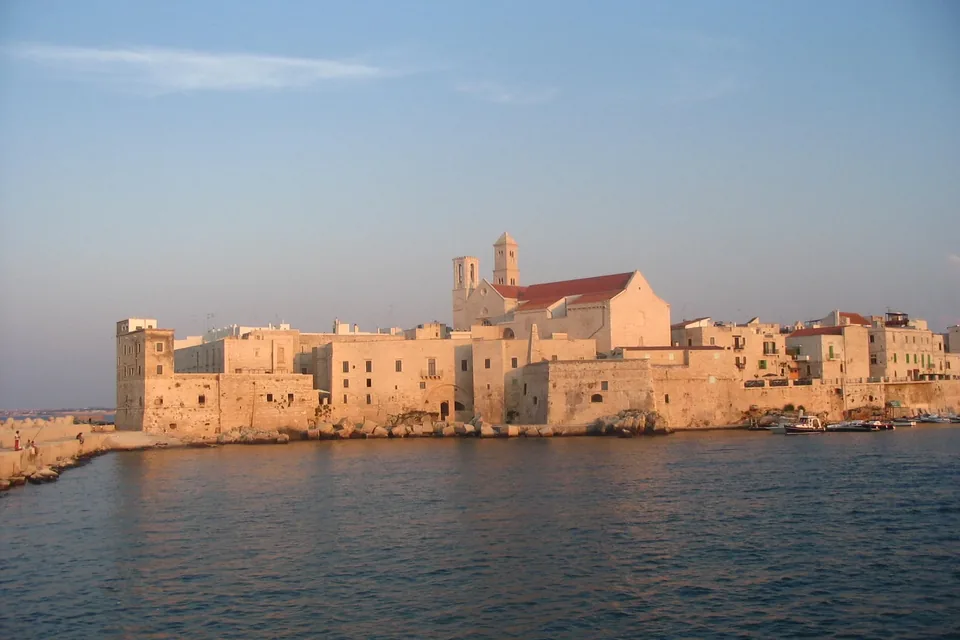
On the route between Giovinazzo and the Bari countryside, prickly pears appear along the roads leading out of town. For Giovinazzo, the Città dell’Olio association suggests a walk through the old centre, from the Arco Traiano to the church of the Madonna di Costantinopoli and on to the cathedral of about 1100: a short stop, to complete with a drive into the countryside among olive groves and walls.
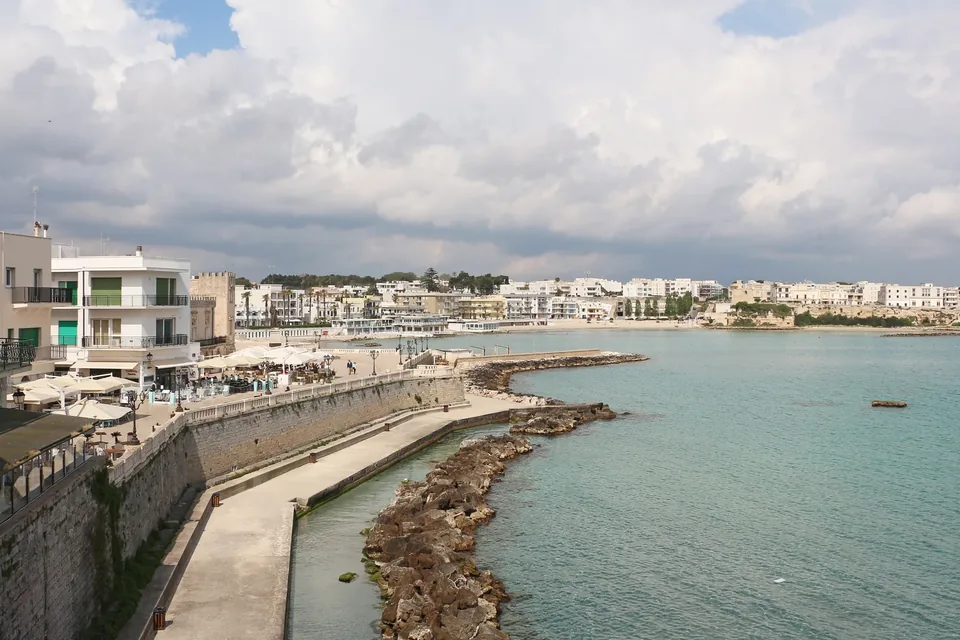
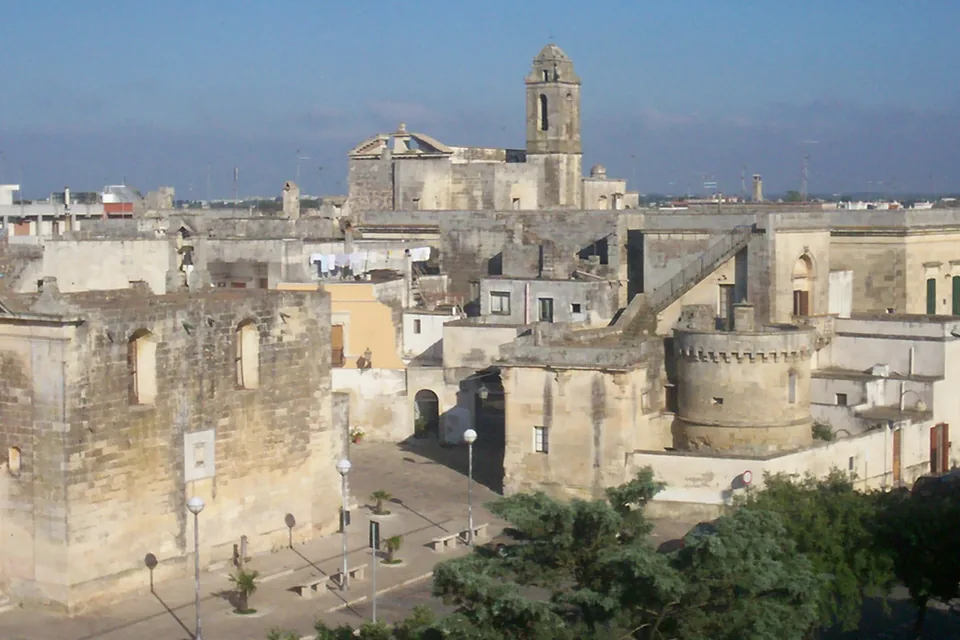
In a Salento chapter you can head down to Otranto and the inland villages. Italia.it describes Otranto on a rocky spur above the sea, with the cathedral that preserves the memory of the eight hundred martyrs of 1480 and a bond with the sea that brought trade and cultures. Salento’s countryside, the atlas notes, is among the places where the prickly pear grows most luxuriantly.
The journey needs no harvesting demonstration to work: the interest lies in recognising how something seen at the roadside reaches the table, fresh or transformed. Late summer and early autumn are when fruit and landscape meet.
Sources: Associazione nazionale Città dell’Olio — Giovinazzo · Italia.it (Ministero del Turismo) — Otranto · PAT Puglia — Liquore di fico d’India
A thread for your journey
Journey idea: a countryside walk and a comparison between seasonal fresh fruit and one transformation. August–October concerns the fruit; outside that window, the thread shifts to preserves and cooking.
Talk to us