

Why go
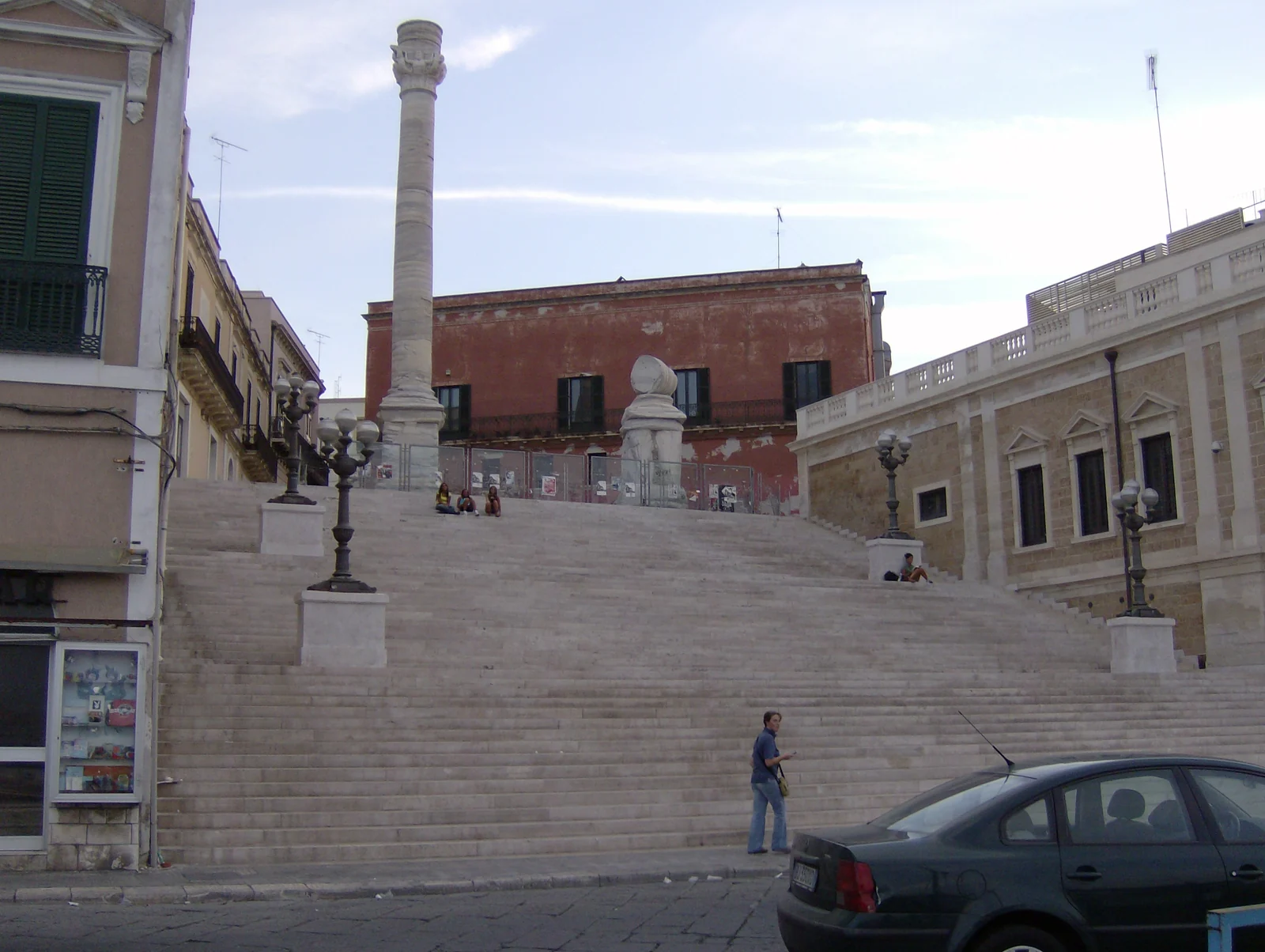
Brindisi is a city best understood from the sea. Its deep, sheltered harbour made it for centuries a point of departure towards the East, and the historic centre still bears the marks: the Roman Columns at the top of the Virgilian Steps, the seafront with its quays, the castles built to defend the harbour entrance. The national portal calls it the Gateway to the East and describes it as a blend of ancient Roman remains, traces of later rulers and modern spaces.
Many people only pass through, for a flight or a ferry. Yet it deserves a full day, because the municipality itself stresses the coexistence of old and new: Roman houses beneath a contemporary theatre, Romanesque churches a few steps from the shopping streets, a small round church linked to pilgrims bound for the Holy Land.
The centre is easy to explore on foot, and a short motorboat crossing takes you to the other side of the harbour to look at the city from the top of the Sailor's Monument. It is also a convenient base for the coast to the north, towards Torre Guaceto, and the villages of upper Salento.
Even the name comes from the harbour. According to the tradition reported by the Regional Directorate for Cultural and Landscape Heritage of Puglia, Brunda in the Messapian language meant "stag's head", for the shape of the inner harbour, whose two arms, the western and eastern inlets, enclose the city to the north and east. Since 27 July 2024 the Via Appia, which was extended as far as Brindisi, has been a UNESCO World Heritage Site; and between 1943 and 1944 the city was the capital of Italy.
Sources: Italia.it — Brindisi, le meraviglie della Porta d'Oriente · Brindisi — fonte istituzionale · Comune di Brindisi — Itinerari turistici · Direzione regionale per i beni culturali e paesaggistici della Puglia: Brindisi, il litorale tra porti, spiagge e turismo (opuscolo, PDF del 2009 nel portale turistico della Regione Puglia) · Ministero della Cultura: UNESCO, la Via Appia è nella Lista del Patrimonio Mondiale (27 luglio 2024) · Comune di Brindisi: «Via Appia. Regina Viarum», coordinamenti territoriali e governance (6 dicembre 2025) · Comune di Brindisi: Hotel Internazionale
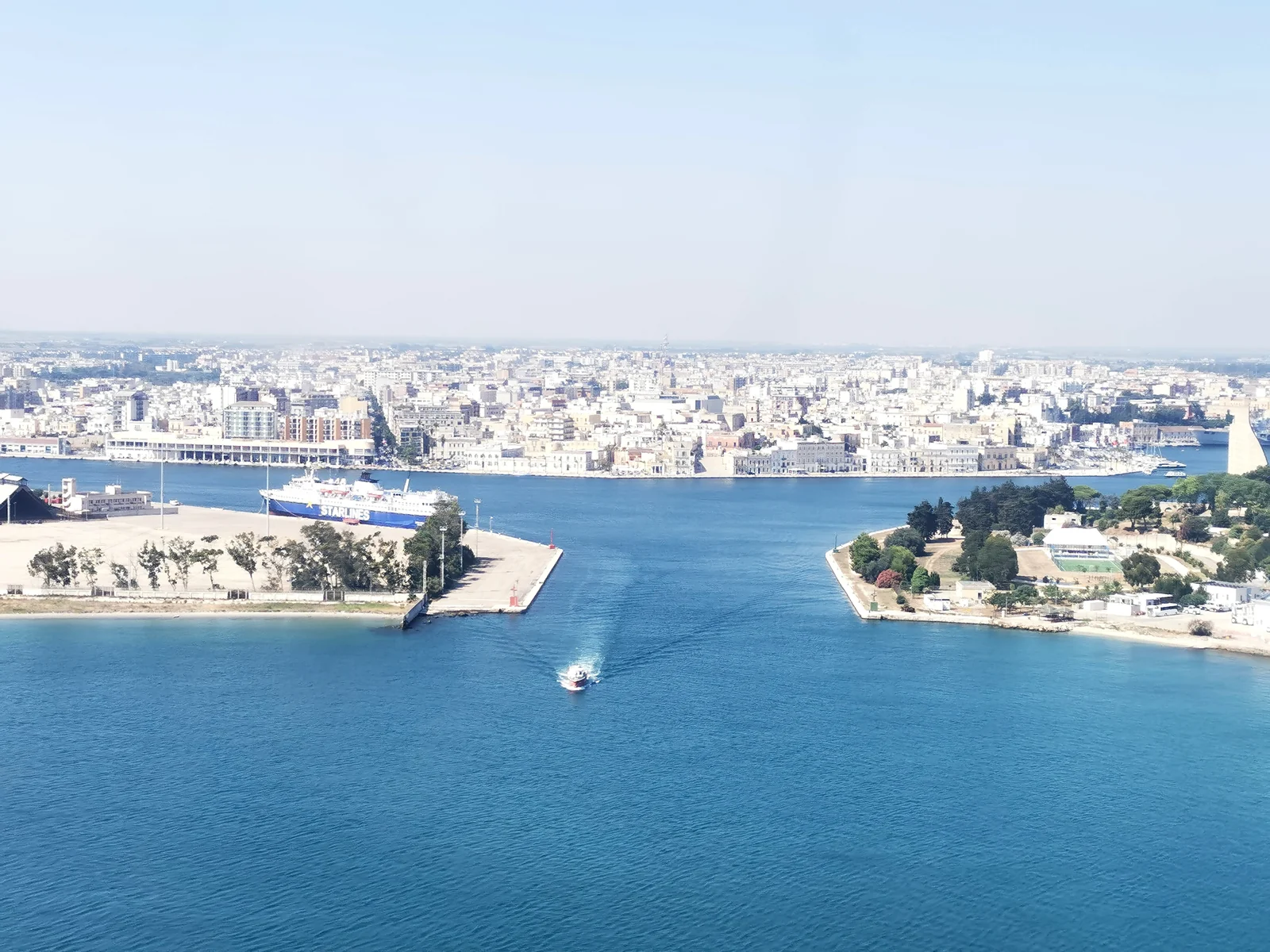
Photo: Saggittarius A / Wikimedia Commons — CC BY 4.0 · Resized and converted to WebP.
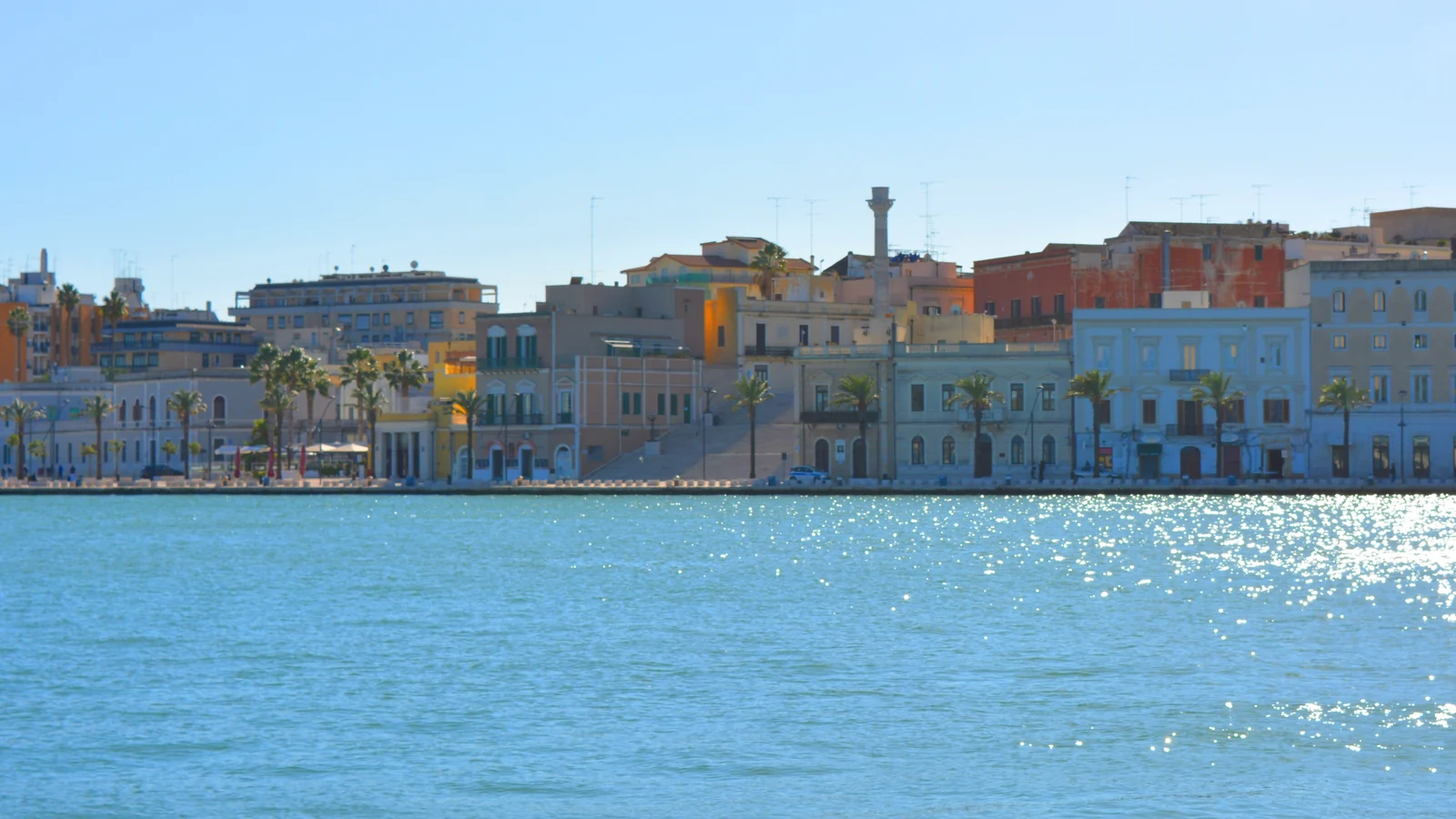
Photo: Fiurl11 / Wikimedia Commons — CC BY-SA 4.0 · Resized and converted to WebP.
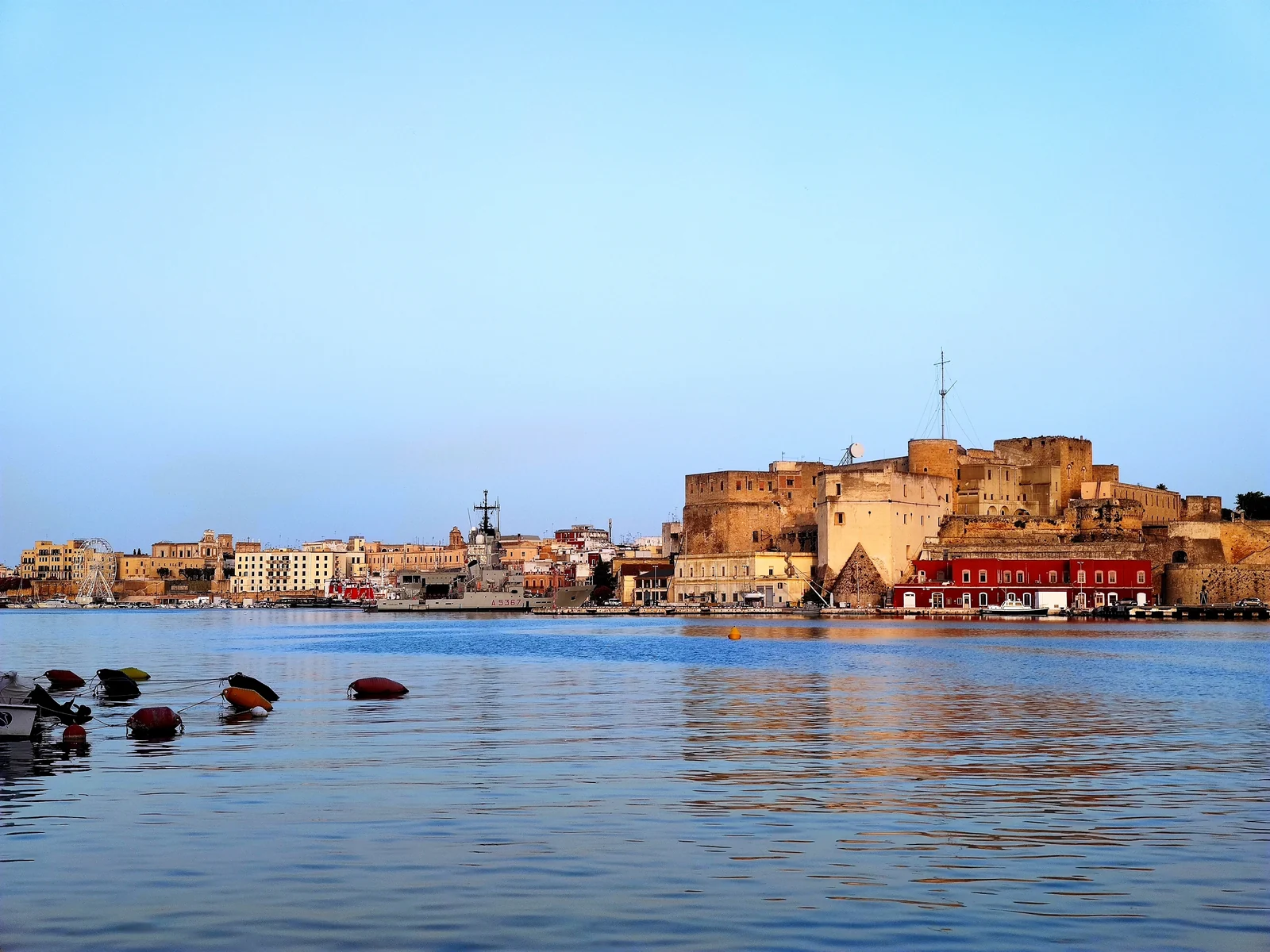
Photo: Chiaracat93 / Wikimedia Commons — CC BY-SA 4.0 · Resized and converted to WebP.
History
According to the municipality's historical notes, the city's story begins in the Messapian era, between the seventh-sixth and third centuries BC, when megalithic walls were built, stretches of which survive at Corte Capozziello and Via Camassa. A Latin colony from 244 BC, Brindisi grew as the terminus of the Via Appia and Via Appia Traiana: from that period come the Roman Columns, the remains in the San Pietro degli Schiavoni quarter and those of a house beneath Palazzo Granafei-Nervegna. One of the two columns collapsed in 1528.
Destroyed by the Lombards in the seventh century, the city revived under the Normans: the cathedral was built between 1089 and 1132, and between the eleventh and twelfth centuries San Giovanni al Sepolcro rose, regarded as the most faithful copy of the Anastasis in Jerusalem. Frederick II, who married Yolande of Brienne here in 1225, had the land castle built; Santa Maria del Casale, with its Last Judgement frescoes, dates from the fourteenth century.
After the fall of Otranto in 1480 the defences were strengthened: work on the Alfonsino Castle on the island of Sant'Andrea had already begun in 1445, and over the following centuries walls, gates and bastions were completed. The earthquake of 1743 forced the rebuilding of the cathedral and the restoration of the seminary.
With the Crusades, between the 11th and 13th centuries, the harbour became the main embarkation point for knights and pilgrims bound for the Holy Sepulchre: Bohemond and Tancred of Hauteville sailed from here, and later the emperor Frederick II. The Swabian Castle, commissioned by Frederick II in 1227, keeps its trapezoidal plan; Ferdinand I of Aragon added the outer wall and the four great towers. Joachim Murat turned it into a prison, a role it kept until the early 20th century, when the Italian Navy bought it.
The Virgilian Steps are named after the poet: according to the municipality, Virgil died in 19 BC in the house that stood on this spot. The municipality writes that the Columns, usually considered the end of the Via Appia, were in fact the culmination of an ancient monumental area, the Roman arx; the Regional Directorate's booklet instead describes them as marking the end of the road. The drums of the column that collapsed in 1528 were given to Lecce in 1657 for the column of Sant'Oronzo, while the original capital of the surviving column has been kept since 2007 in the former Court of Assizes in Palazzo Granafei-Nervegna.
Between 1870 and 1914 the steamers of the Indian Mail, linking London and Bombay, called at the harbour: the 19th-century Hotel Internazionale on the seafront was built for those travellers. In the First World War the harbour was the scene of 207 military actions, which earned the city the War Merit Cross. On 10 September 1943 King Victor Emmanuel III landed at Brindisi with the queen and stayed until February 1944: in those months the city was the capital of Italy, and the Hotel Internazionale hosted the king for important meetings.
Sources: Comune di Brindisi — storia della città · Comune di Brindisi — Castello Alfonsino-Aragonese · Direzione regionale per i beni culturali e paesaggistici della Puglia: Brindisi, il litorale tra porti, spiagge e turismo (opuscolo, PDF del 2009 nel portale turistico della Regione Puglia) · Comune di Brindisi: Castello Svevo · Comune di Brindisi: Colonne romane e Scalinata Virgiliana · Comune di Brindisi: Hotel Internazionale
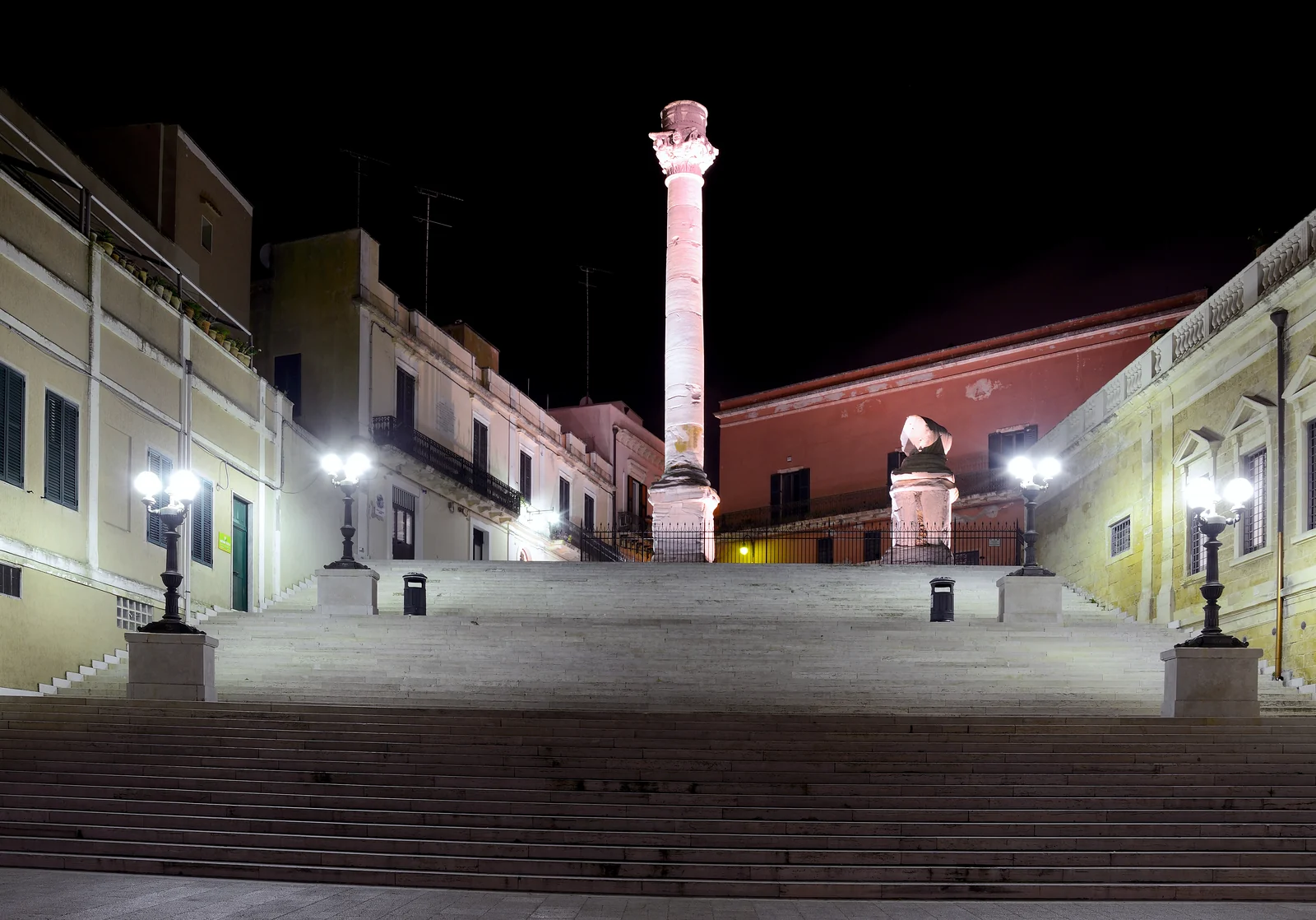
Photo: Livioandronico2013 / Wikimedia Commons — CC BY-SA 4.0 · Resized and converted to WebP.
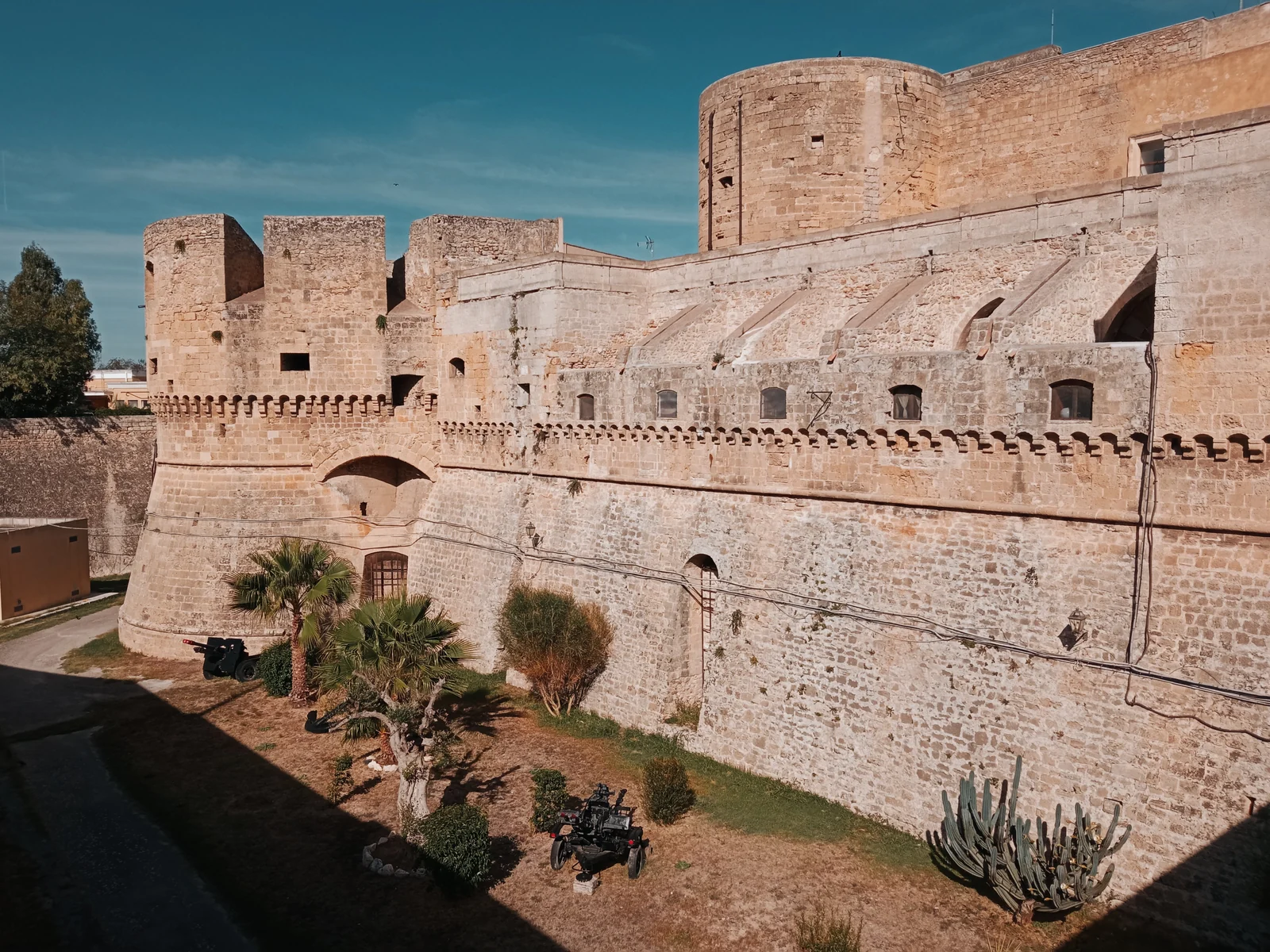
Photo: Farfalla 40 / Wikimedia Commons — CC BY-SA 4.0 · Resized and converted to WebP.
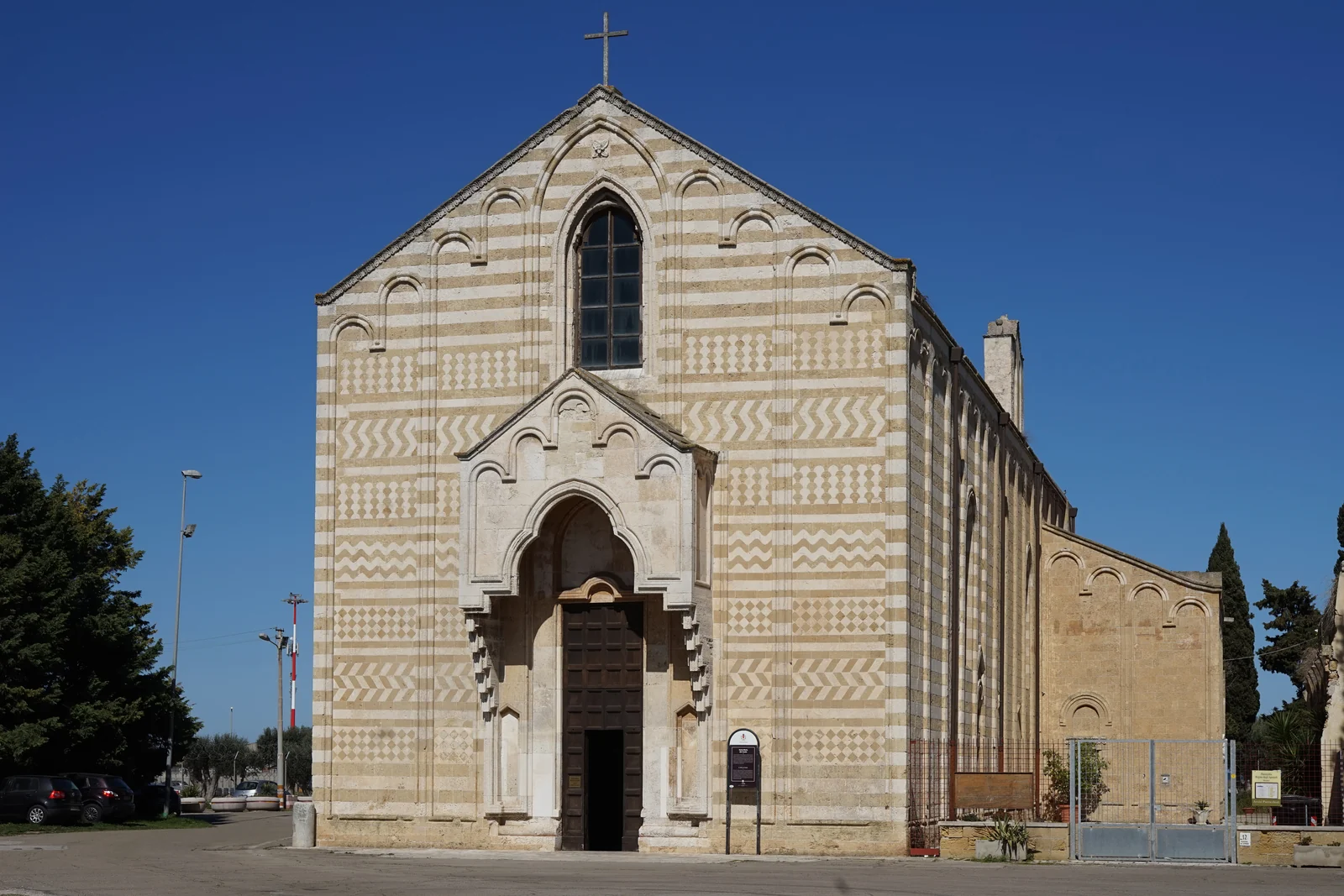
Photo: Fabrizio Garrisi / Wikimedia Commons — CC0 · Resized and converted to WebP.
What to see
The route suggested by the municipality starts from the small square of the Roman Columns above the harbour and descends into the heart of the city. Piazza Duomo, the oldest square, brings together the cathedral, the Portico of the Knights Templar and the Francesco Ribezzo Archaeological Museum. The museum, founded in 1884, is arranged in six routes, including the epigraphic, statuary and numismatic sections, and above all the underwater exhibition with the Punta del Serrone Bronzes, found in 1992 two miles from the port and displayed with a large aquarium and a reconstructed ship's prow.
From the square you enter the San Pietro degli Schiavoni quarter, where the remains of Roman houses emerge beneath the Nuovo Teatro Verdi, and reach the small round church of San Giovanni al Sepolcro. Opposite the theatre, Palazzo Granafei-Nervegna keeps the original capital of the city's emblematic monument in its Column Room.
Along the seafront you pass the Virgilian Steps, the Faldetta Archaeological Collection and Palazzo Montenegro. The Alfonsino Castle, also called the Red Castle for the colour its tufa takes on at sunset, stands on an islet at the harbour mouth: according to the municipality it is closed for restoration, so for now it is admired from outside.
On the far side of the harbour, the Sailor's Monument of Italy was inaugurated on 4 November 1933 in the presence of the king: it is shaped like a ship's rudder, stands 54 metres high and can be climbed inside to the top. In the crypt shrine, black marble slabs bear the 6,850 names of the sailors of the Navy and the Merchant Navy who died from 1860 onwards; it holds the stern bell of the battleship Benedetto Brin, sunk in the harbour in 1915, and the upper terrace has two anchors and two guns from the Austro-Hungarian ships Tegetthoff and Viribus Unitis. The municipality lists it as accessible without architectural barriers, like San Giovanni al Sepolcro, where a circular opening in the floor reveals the remains of a Roman house.
The Swabian Castle, home of the San Marco Marine Brigade, can be visited thanks to an agreement between the Navy and the municipality one weekend a month, on Saturday and Sunday, with compulsory booking on the portal indicated by the municipality. In Piazza Duomo, the Cathedral of St John the Baptist, whose perimeter was consecrated by Pope Urban II in 1089, saw the wedding of Frederick II and Yolande of Brienne on 9 November 1225; next to it, the Seminary palace designed in 1720 by Mauro Manieri has eight stone statues on its balcony. The Giovanni Tarantini Diocesan Museum, split between the churches of San Paolo Eremita and Santa Teresa, keeps the reliquary chest of St Theodore of Amasea, with embossed silver panels, and a parchment of 1219 signed by Frederick II.
Beneath the Nuovo Teatro Verdi, the archaeological area of San Pietro degli Schiavoni preserves a stretch of Roman road about six metres wide, with the ruts of cart wheels, also visible from the foyer through a glass floor. On the seafront, the archaeological museum of the Salvatore Faldetta Foundation ends with a viewpoint over the harbour. The Ministry of Culture notes that the Ribezzo Museum was founded in 1884 in the church of San Giovanni al Sepolcro and opened to the public in 1958; Palazzo Granafei-Nervegna is the centre of the "Appia Immersiva" project, funded by the Puglia Region and under way, which will turn the ground floor into a tactile, multisensory museum space, with video mapping in the Column Room. Of the city walls, Porta Napoli and Porta Lecce survive, with the bastions of the Inferno, Charles V, San Giacomo and the Arruinado.
Sources: Comune di Brindisi — Itinerari turistici · Comune di Brindisi — Museo Ribezzo · Comune di Brindisi — Castello Alfonsino-Aragonese · Comune di Brindisi — storia della città · Comune di Brindisi: Monumento al Marinaio d'Italia · Comune di Brindisi: Tempio di San Giovanni al Sepolcro · Comune di Brindisi: Castello Svevo · Comune di Brindisi: piazza Duomo · Comune di Brindisi: Museo Diocesano G. Tarantini · Comune di Brindisi: Nuovo Teatro Verdi e area archeologica di San Pietro degli Schiavoni · Comune di Brindisi: Museo archeologico Fondazione S. Faldetta · Ministero della Cultura: Museo archeologico Francesco Ribezzo di Brindisi · Comune di Brindisi: Sala della Colonna e «Appia Immersiva» (3 settembre 2026) · Comune di Brindisi: sistema difensivo, bastioni e mura
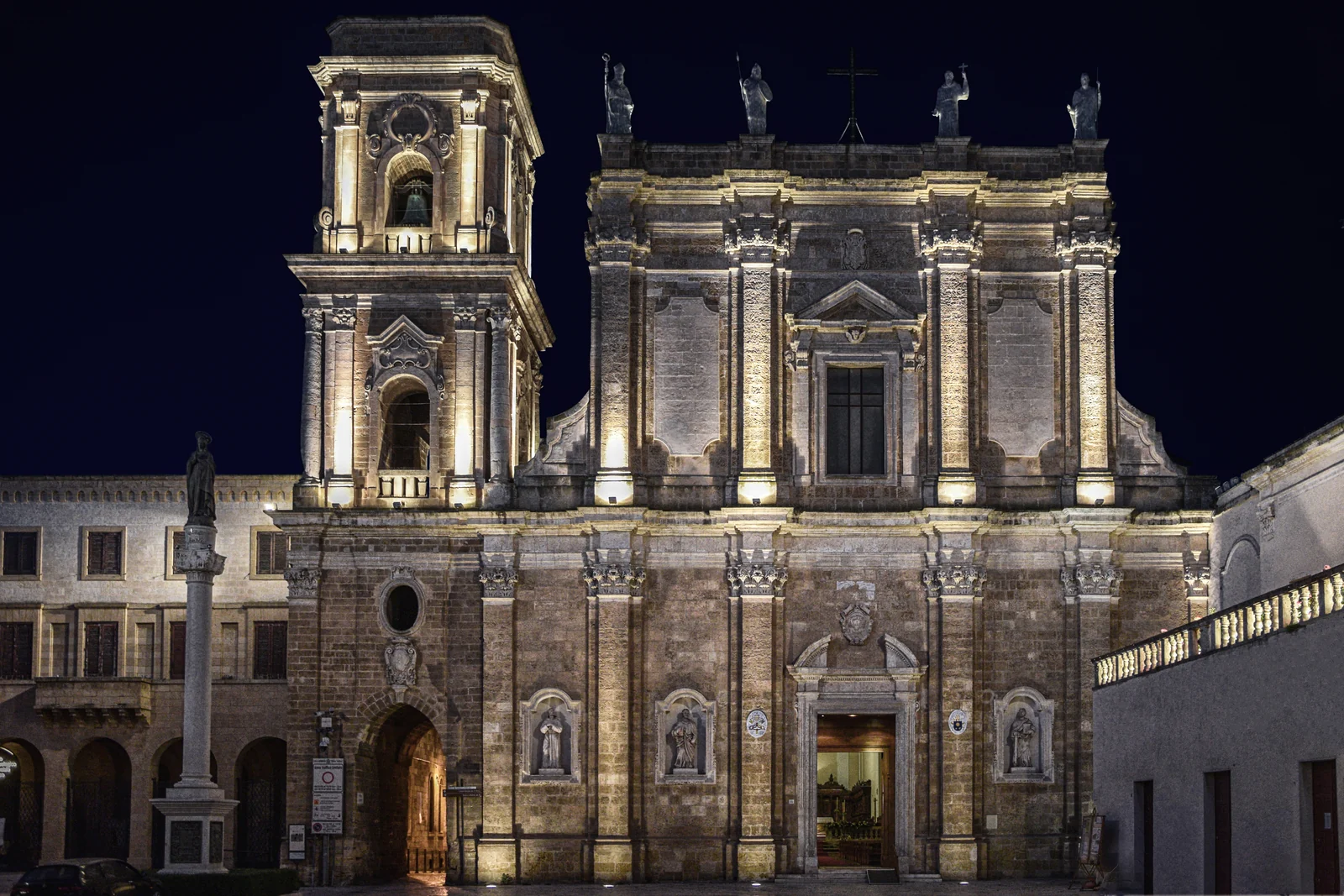
Photo: Teo1965 / Wikimedia Commons — CC BY-SA 4.0 · Resized and converted to WebP.
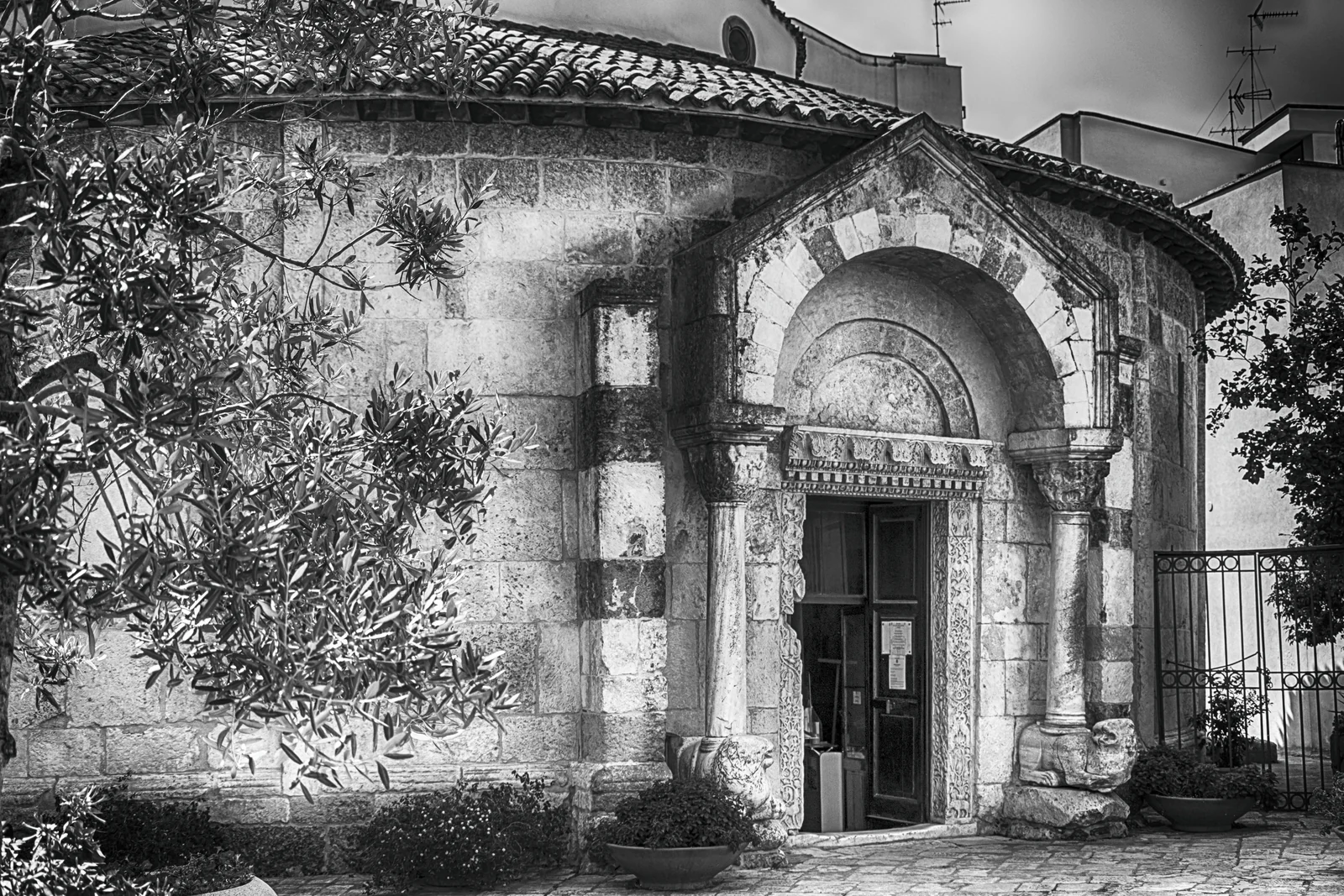
Photo: Teo1965 / Wikimedia Commons — CC BY-SA 4.0 · Resized and converted to WebP.
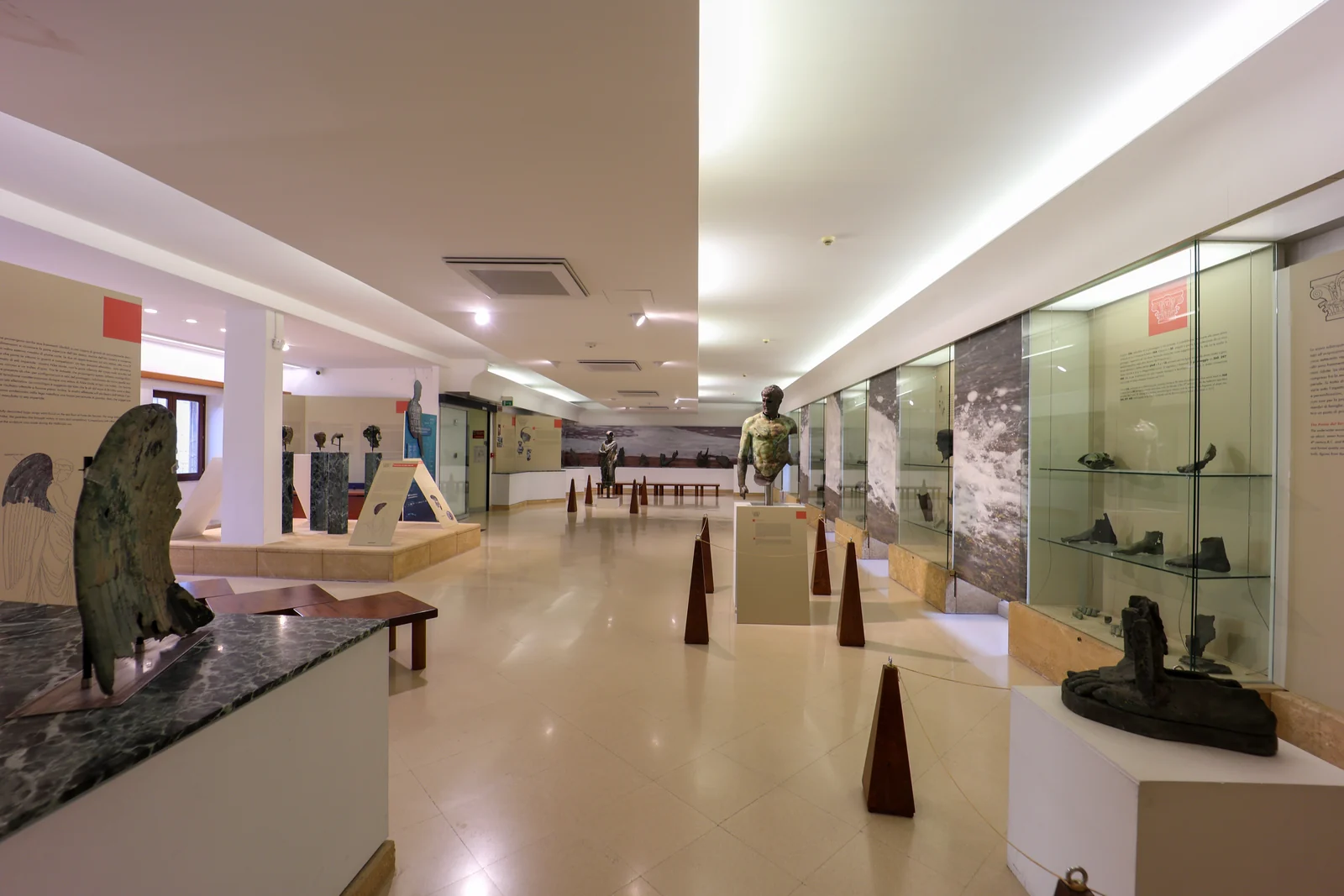
Photo: Fabrizio Garrisi / Wikimedia Commons — CC0 · Resized and converted to WebP.
Food and wine
Brindisi's table brings together sea and countryside. The product most closely tied to the area is the Carciofo Brindisino PGI, an artichoke with a cylindrical head and green-violet outer bracts, grown in several towns of the province: it is planted in summer and harvested from November to May, and eighteenth-century recipe books kept in the seminaries of Otranto and Oria already record its use in cooking.
The wine bears the city's name: the Brindisi PDO, registered since 1981, covers only the towns of Brindisi and Mesagne and produces white, red, rosé and sparkling wines; the red is based mainly on Negroamaro, with Malvasia Nera di Brindisi or Susumaniello. On the hills to the north-west, towards Ostuni and Carovigno, comes the extra virgin olive oil of the Collina di Brindisi PDO, made mostly from Ogliarola Salentina.
The sea at Torre Guaceto provides two Slow Food Presidia: small-scale artisanal fishing in the marine protected area, carried out with boats only a few metres long under rules agreed with the managing body, and the fiaschetto tomato, a preserving landrace recovered in the reserve and grown with little brackish water. The national portal also mentions the seafront venues where Apulian specialities can be tasted.
Sources: Qualigeo — Carciofo Brindisino IGP · Qualigeo — Brindisi DOP · Qualigeo — Collina di Brindisi DOP · Fondazione Slow Food — Piccola pesca di Torre Guaceto · Fondazione Slow Food — Pomodoro fiaschetto di Torre Guaceto · Italia.it — Brindisi, le meraviglie della Porta d'Oriente

Photo: Nino Barbieri / Wikimedia Commons — CC BY-SA 2.5 · Resized and converted to WebP.
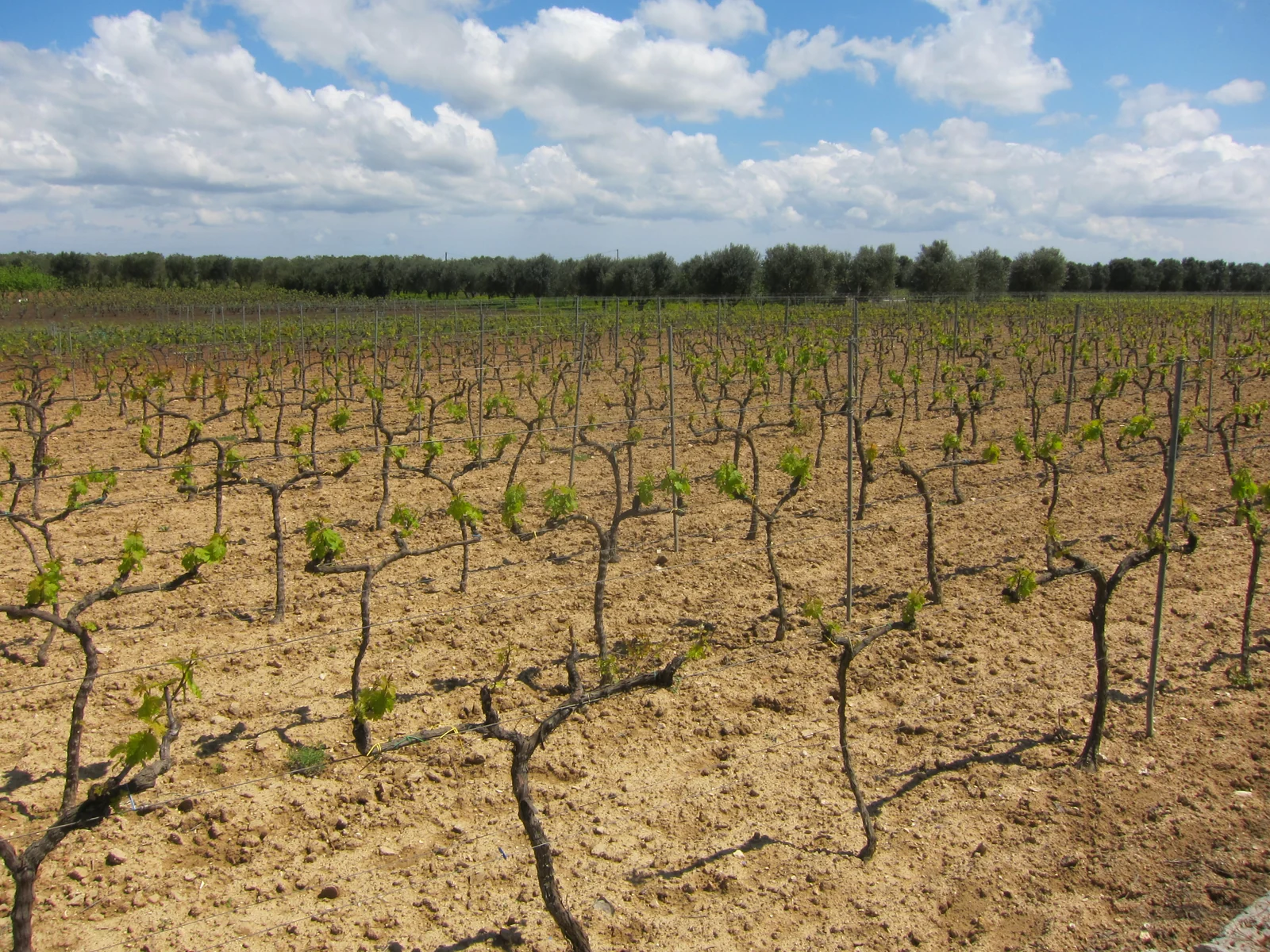
Photo: Art Anderson / Wikimedia Commons — CC BY-SA 3.0 · Resized and converted to WebP.
Things to do
The simplest and loveliest experience is the walk along the seafront, which the municipality offers as a route dedicated to the relationship between the city and its port: the quays, places to stop, the Virgilian Steps and finally the view from Piazza Santa Teresa. On the steps, the national portal notes, up to nine hundred people can sit during events and celebrations.
Public motorboat services cross the harbour to the Casale district, home to the Monument to the Italian Sailor, inaugurated in 1933: its terrace, reached by lift and a few steps, offers a view over the port and the whole city. Near the monument there is a long-standing playground, handy for families with children.
In the historic centre, the maze of San Pietro degli Schiavoni and a visit to the Ribezzo Museum combine well with an exhibition at Palazzo Granafei-Nervegna, which hosts them periodically. The three main shopping streets start from Piazza della Vittoria. Outside the city, the Torre Guaceto reserve is a chance to discover a marine protected area and the fishing carried out there under shared rules.
The weekly market in the Sant'Elia district is held on Thursdays: when a date falls on a public holiday or is cancelled because of bad weather, the municipality moves it by ordinance, as with the market of 25 December 2025, postponed to Sunday the 28th, and that of Thursday 16 October 2025, held instead on Sunday 14 December.
For the sea, look north: the municipality describes the Brindisi shoreline as a coastal system of more than 12 kilometres between Torre Guaceto and the edges of the airport and the port, with stretches of cliff along provincial road 41 between Torre Testa and Giancola, now the subject of a project against erosion. Along the coast stand the watchtowers, among them Torre Guaceto, Torre Testa, Torre Punta Penne and Torre Cavallo, whose name the Regional Directorate links to the legend of the landing of Louis IX.
Sources: Comune di Brindisi — Itinerari turistici · Italia.it — Brindisi, le meraviglie della Porta d'Oriente · Fondazione Slow Food — Piccola pesca di Torre Guaceto · Comune di Brindisi: recupero del mercato di S. Elia del 16 ottobre 2025 (4 dicembre 2025) · Comune di Brindisi: posticipo del mercato di S. Elia del 25 dicembre 2025 · Comune di Brindisi: opere di difesa dall'erosione del litorale, tratto Torre Guaceto-Punta Penne (3 ottobre 2025) · Direzione regionale per i beni culturali e paesaggistici della Puglia: Brindisi, il litorale tra porti, spiagge e turismo (opuscolo, PDF del 2009 nel portale turistico della Regione Puglia)
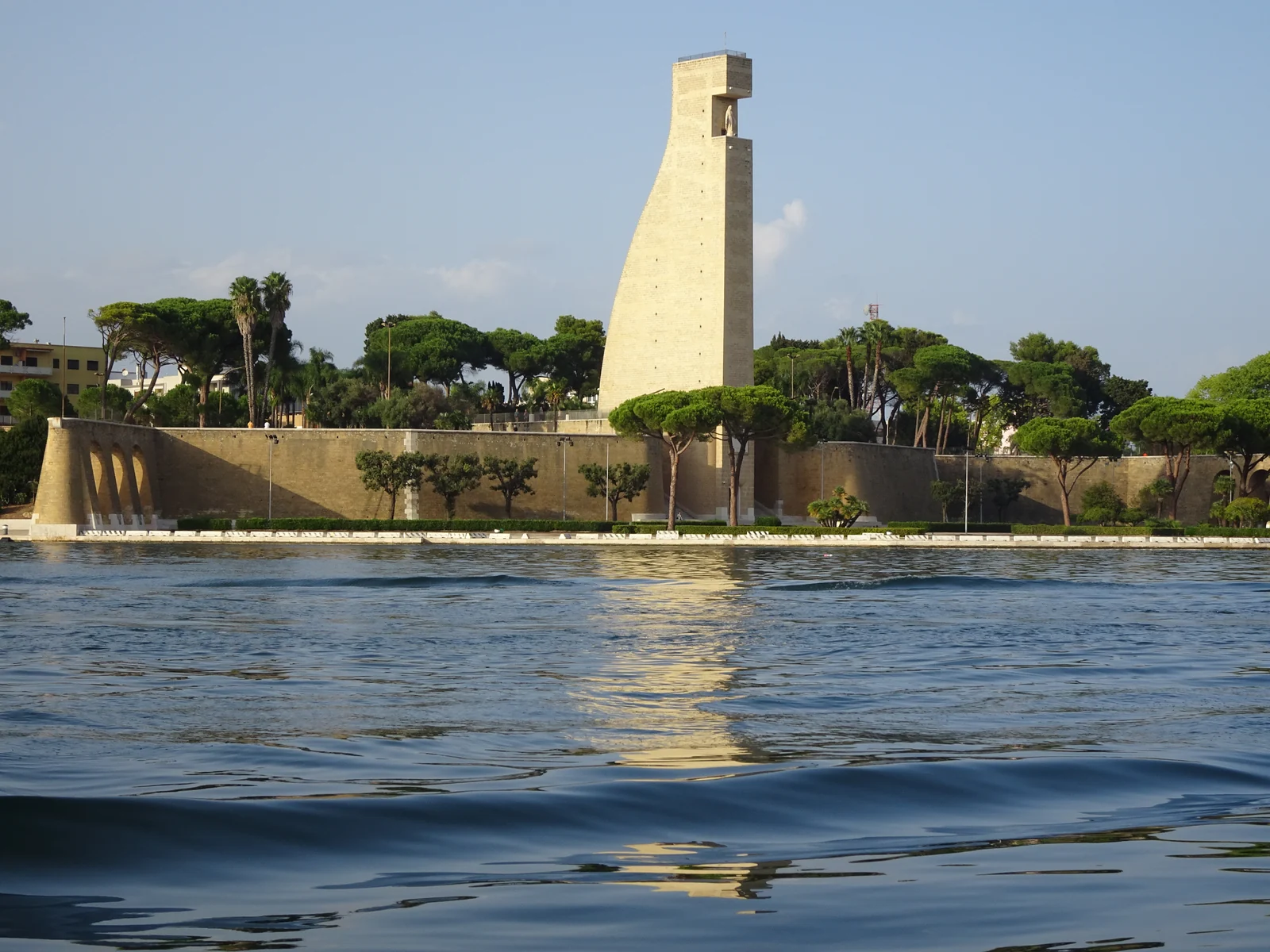
Photo: Ale zena / Wikimedia Commons — CC BY-SA 4.0 · Resized and converted to WebP.
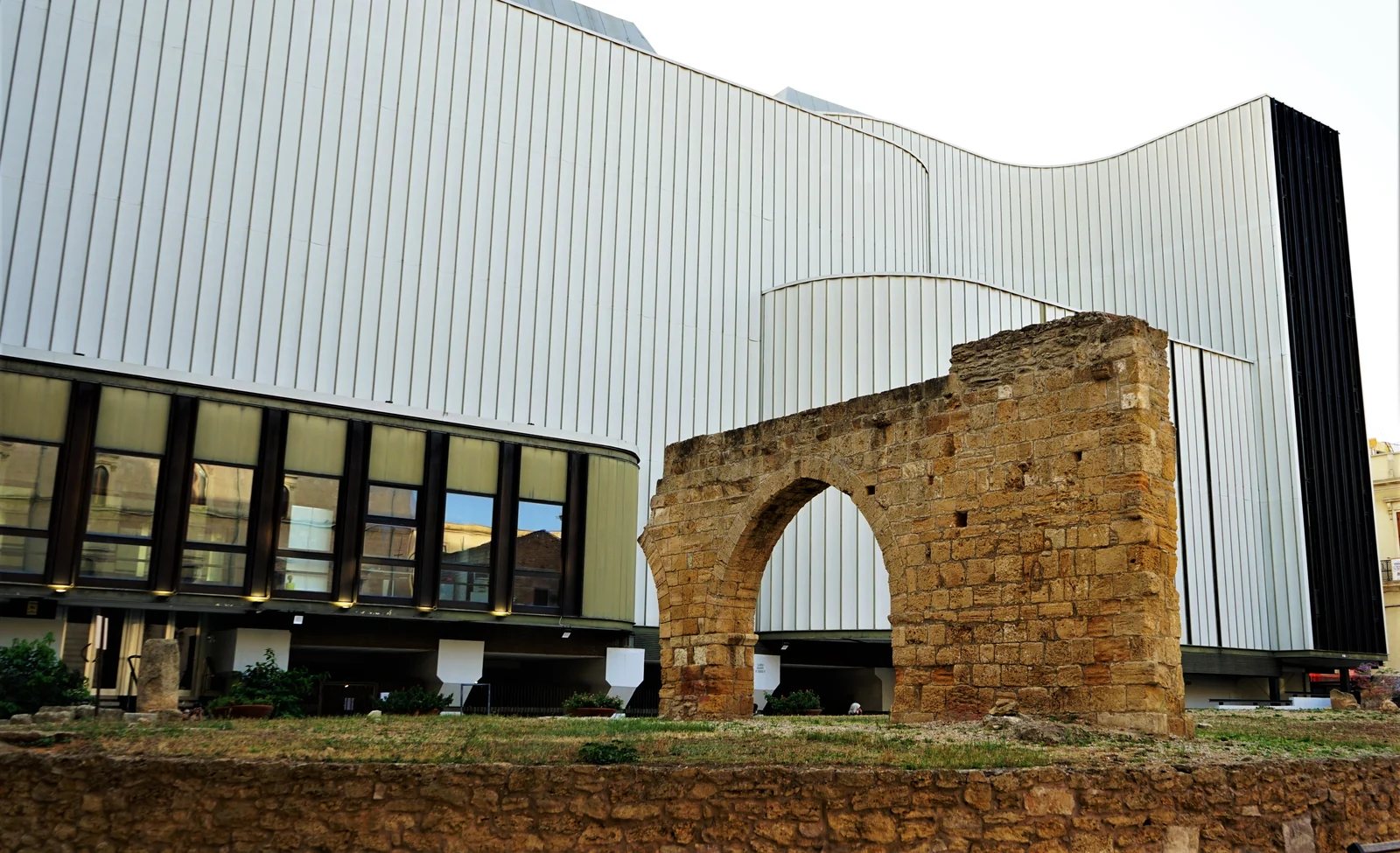
Photo: Piazzavittoria / Wikimedia Commons — CC BY-SA 4.0 · Resized and converted to WebP.
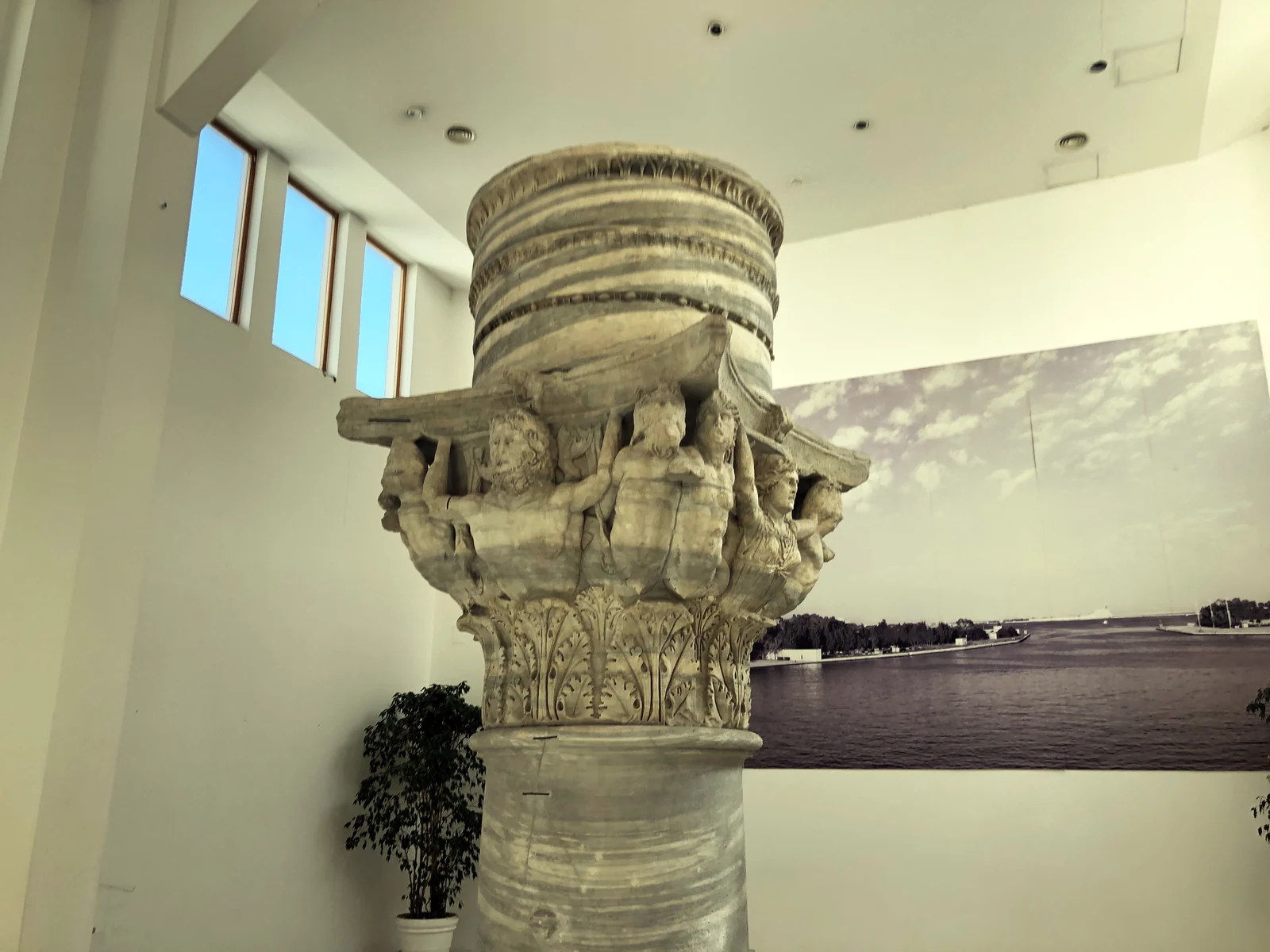
Photo: Davide Mauro / Wikimedia Commons — CC BY-SA 4.0 · Resized and converted to WebP.
When to go
Brindisi can be visited all year round. The historic centre, museums and churches do not depend on the beach season, and the city keeps a life of its own in winter too, when the port and seafront remain the places where people meet.
Spring and autumn are the best times for long walks between Piazza Duomo, San Pietro degli Schiavoni and the seafront, and for combining the visit with a day in the countryside of upper Salento. In summer it is best to move around in the cooler hours and leave the middle of the day for the museum or the sea; sunset is when the Alfonsino Castle takes on the reddish hue that gave it its name.
At the table the season changes the menu: the Carciofo Brindisino is harvested from November to May, while the fiaschetto tomato of Torre Guaceto arrives from the second half of June and lasts all summer. The Virgilian Steps often become the stage for city events and celebrations: the calendar is available in the events section of the municipal website.
On the feast of Corpus Christi the procession of the "cavallo parato" (the caparisoned horse) is renewed: the archbishop carries the Blessed Sacrament on horseback. The Archdiocese traces its origin to 1254, to the difficult landing of St Louis IX, King of France, returning from the crusade, and to Archbishop Pietro III who, being very old, rode out on horseback to receive the Eucharist and carried it in procession to the cathedral; the Regional Directorate's booklet dates the landing to 1248. In early September the feast of the patron saints Theodore and Lawrence opens with the landing of the saints' relics and images and with the archbishop's address to the city. In mid-September the Casale district celebrates the feast of the Ave Maris Stella, with stalls and evenings in the square in front of the church.
Sources: Comune di Brindisi — Itinerari turistici · Comune di Brindisi — Castello Alfonsino-Aragonese · Qualigeo — Carciofo Brindisino IGP · Fondazione Slow Food — Pomodoro fiaschetto di Torre Guaceto · Italia.it — Brindisi, le meraviglie della Porta d'Oriente · Arcidiocesi di Brindisi-Ostuni: la solennità del Corpus Domini e il «cavallo parato» · Direzione regionale per i beni culturali e paesaggistici della Puglia: Brindisi, il litorale tra porti, spiagge e turismo (opuscolo, PDF del 2009 nel portale turistico della Regione Puglia) · Arcidiocesi di Brindisi-Ostuni: festa patronale di Brindisi · Arcidiocesi di Brindisi-Ostuni: discorso alla città nella festa dei santi patroni Teodoro e Lorenzo (2026) · Comune di Brindisi: festa dell'Ave Maris Stella al Casale (8 settembre 2026)
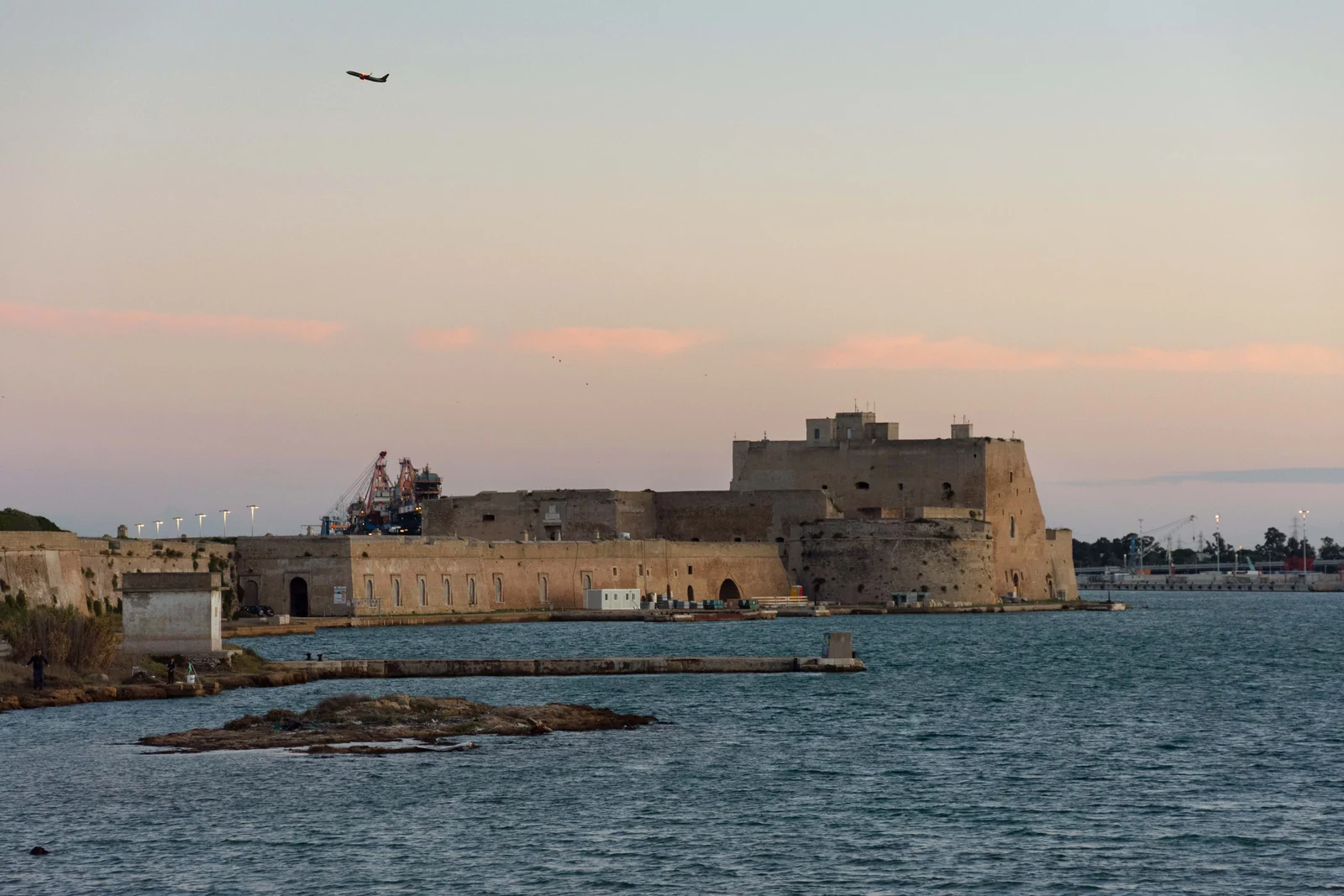
Photo: Adele.pennetta / Wikimedia Commons — CC BY-SA 4.0 · Resized and converted to WebP.
Getting there and around
Brindisi airport, run by Aeroporti di Puglia, is the airport to consider when planning to arrive by air: the official website lists bus, taxi, car and bike hire connections to the city and the wider area in its dedicated section. If you fly out from here, it is worth keeping at least a few hours for the city before the flight.
The railway station, run by RFI, is served by the national rail network and has five passenger tracks, an assistance service for people with disabilities and reduced mobility with the Sala Blu based in Bari, parking with reserved spaces and audio and visual information systems.
In town the historic centre is walked, from the station towards Piazza della Vittoria, Piazza Duomo and the seafront. To reach the opposite side of the harbour, the Casale district and the Sailor's Monument, both the municipality and the national portal point to the public motorboat service. For the Torre Guaceto reserve and the inland villages a car or an organised service is the practical choice.
Between the airport, the station and the port, STP Brindisi runs the AP line: it starts from Salento Airport at Papola-Casale, calls at the railway station in Piazza Crispi and at Via del Mare, and reaches Costa Morena, where the ferries berth. It runs every day with a bus every 30 minutes, but only between 8.15 and 20.45 does it go on to Costa Morena; from the airport to the station it takes 10 to 15 minutes, depending on traffic.
The STP motorboat is a public transport line on the inner waters of the harbour, using the same ticket or pass as the buses: it links the Centre and the Casale district, stopping at Stazione Marittima, Ammiraglio Millo, Villaggio Pescatori and Montenegro, and the 2026-27 winter timetable has a boat about every twenty minutes on weekdays; tickets can also be bought on board. The Lungomare Regina Margherita is a limited traffic zone; blue-line parking and residents' permits are managed by Brindisi Multiservizi.
Sources: Aeroporti di Puglia — Aeroporto di Brindisi · Aeroporti di Puglia — Aeroporto di Brindisi, collegamenti bus · RFI — Stazione di Brindisi · Comune di Brindisi — Itinerari turistici · Italia.it — Brindisi, le meraviglie della Porta d'Oriente · STP Brindisi: bus Aeroporto - Stazione FS - Costa Morena · STP Brindisi: servizio motobarca · STP Brindisi: orario invernale della motobarca, 25 ottobre 2026 - 27 marzo 2027 · Comune di Brindisi: lungomare Regina Margherita · Comune di Brindisi: rinnovo dei pass residenti e degli abbonamenti per le strisce blu
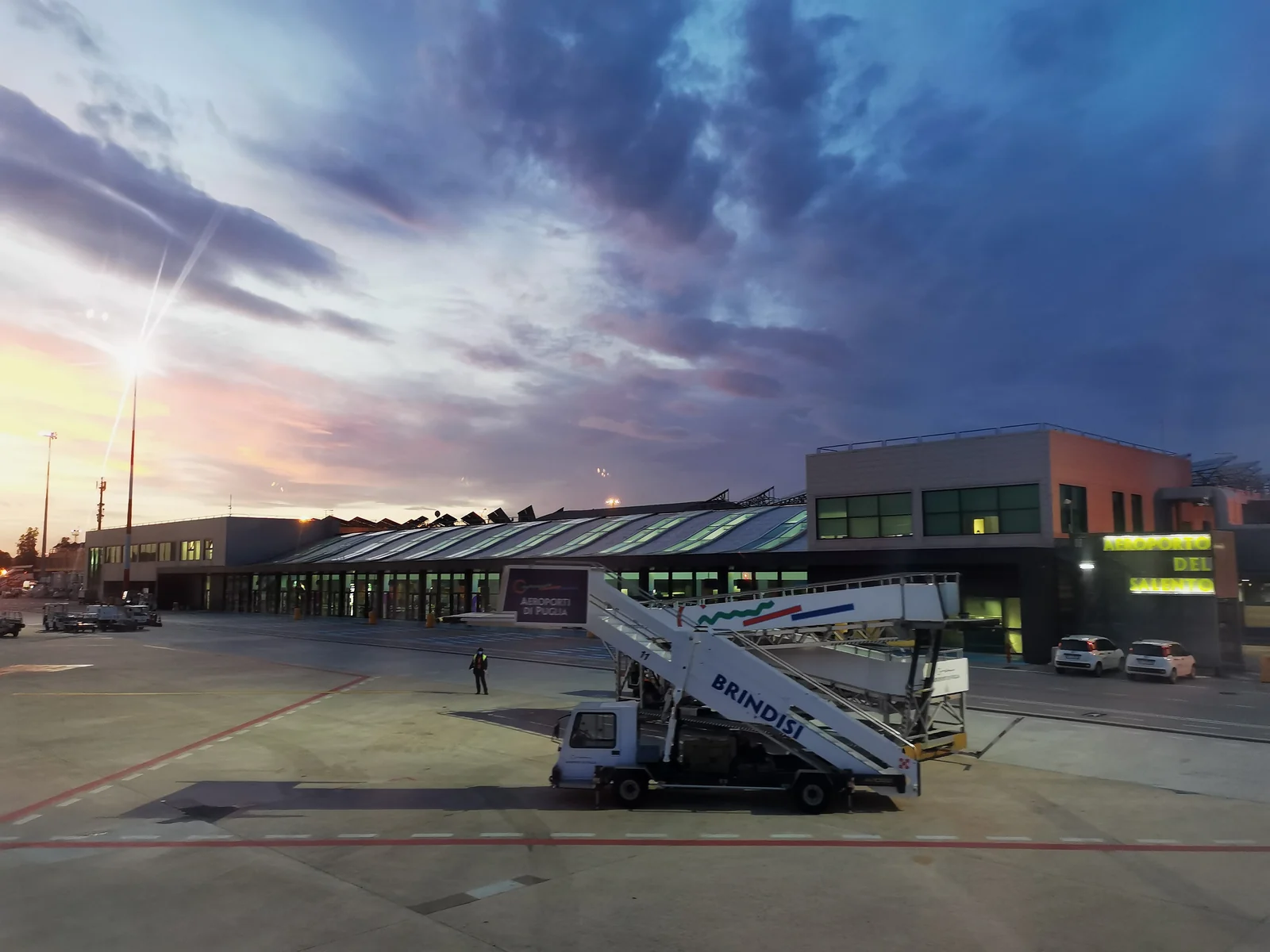
Photo: Saggittarius A / Wikimedia Commons — CC BY-SA 4.0 · Resized and converted to WebP.
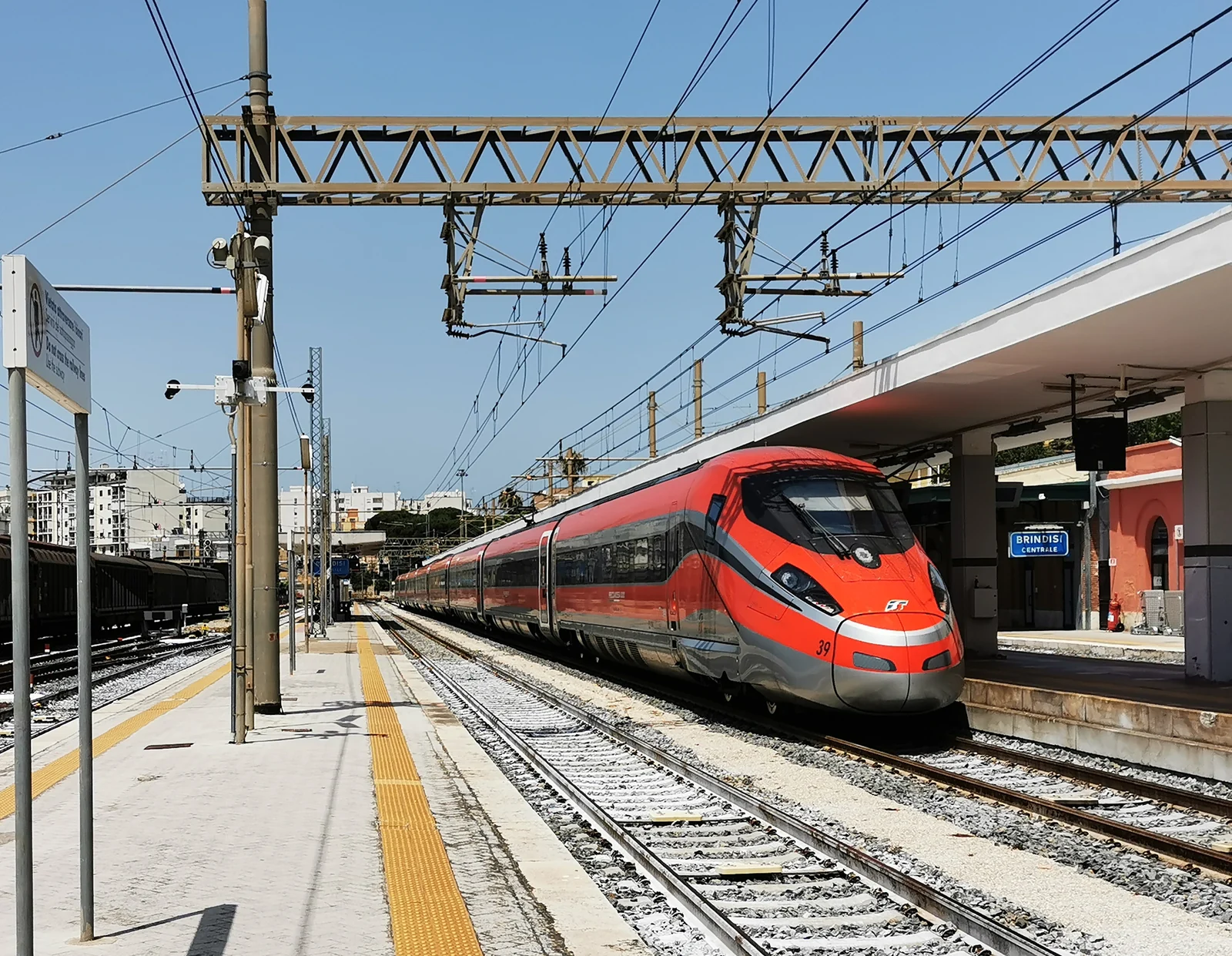
Photo: Saggittarius A / Wikimedia Commons — CC BY-SA 4.0 · Resized and converted to WebP.
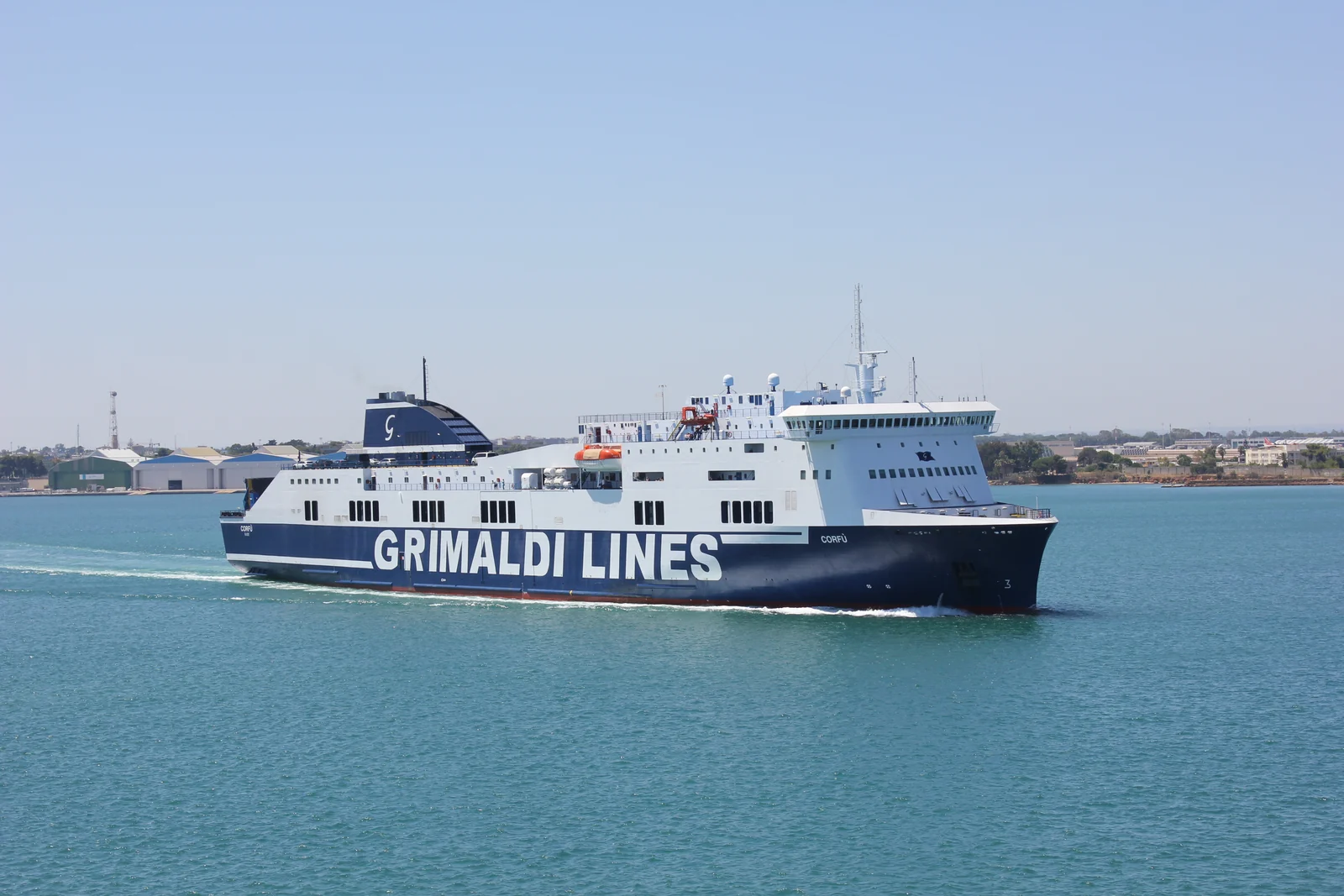
Photo: Eustace Bagge / Wikimedia Commons — CC BY 3.0 · Resized and converted to WebP.
Tourism
The sea of the Torre Guaceto reserve has a regulation approved by the Ministry of the Environment by decree of 26 January 2009, and it applies to day visitors too. Throughout the marine protected area anchoring is not allowed, nor are jet skis, water scooters, water-skiing, night diving or spearfishing, and spearfishing gear may not be carried on board. In zones B and C swimming is free from dawn to dusk and boats may move only under sail, by oar, by pedal or with an electric motor; in the A zones there is no swimming and no navigation.
Scuba diving is allowed only in zone C, with the managing body’s authorisation, without touching the seabed or taking anything away; in zone C boats may moor, with authorisation, only at the buoys of the mooring fields laid by the managing body. Recreational fishing from the shore in zone C is allowed with the managing body’s authorisation only from 16 September to 14 May, from dawn to dusk, with at most two rods and up to 3 kilos of catch a day per person.
On land, the official list of the regional info-point network updated by Pugliapromozione on 8 July 2026 gives Brindisi three: the council’s at Via Duomo 20 (0831 229784, [email protected]), one in the arrivals area of the airport (080 5800200) and one in the arrivals area of the port (0831 562649, extension 231).
Sources: DM 26 gennaio 2009, Approvazione del regolamento di esecuzione ed organizzazione dell’area marina protetta «Torre Guaceto» · Agenzia Regionale del Turismo Pugliapromozione — Elenco degli info-point turistici della rete regionale, elenco ufficiale dell’8 luglio 2026 (prot. n. 12142/2026)
“Come to Brindisi as a guest, not as a tourist: that is how these places truly let you know them.”
Nearby
North of the city the coast leads to the Torre Guaceto nature reserve and marine protected area, in the territories of Brindisi and Carovigno. It is a place where nature and work meet: the Slow Food Foundation follows the small-scale artisanal fishing there, allowed only in one of the protected area's three zones, and the organic cultivation of the fiaschetto tomato. Archaeological finds show that fishing took place here as early as the Bronze Age.
Inland you climb into the olive hills of the Collina di Brindisi PDO, which include Ostuni, Carovigno, Ceglie Messapica, Cisternino, Fasano, San Michele Salentino, San Vito dei Normanni and Villa Castelli: a landscape of olive groves and white towns well suited to a country day after a city one. Ostuni in particular is among the closest destinations.
Staying with wine, Mesagne shares with Brindisi the PDO that bears the city's name. Continuing down the Salento peninsula you reach Lecce and from there Otranto: Brindisi can therefore open or close a journey through Salento.
The Ministry of the Environment decree of 4 December 1991, which established the Torre Guaceto marine protected area, states that the reserve covers the coastal sea off Torre Guaceto and the neighbouring territories of the municipalities of Brindisi and Carovigno, out to the 50-metre depth line, and recalls the designation of part of the area as a wetland of international importance. In February 2026, for the 25th anniversary of the reserve's management consortium, the municipality opened the consortium's Brindisi office in Palazzo Granafei-Nervegna.
Sources: Fondazione Slow Food — Piccola pesca di Torre Guaceto · Fondazione Slow Food — Pomodoro fiaschetto di Torre Guaceto · Qualigeo — Collina di Brindisi DOP · Qualigeo — Brindisi DOP · RFI — Stazione di Brindisi · Ministero dell'Ambiente: decreto 4 dicembre 1991 istitutivo dell'area marina protetta Torre Guaceto · Comune di Brindisi: i 25 anni del Consorzio di gestione di Torre Guaceto (6 febbraio 2026)
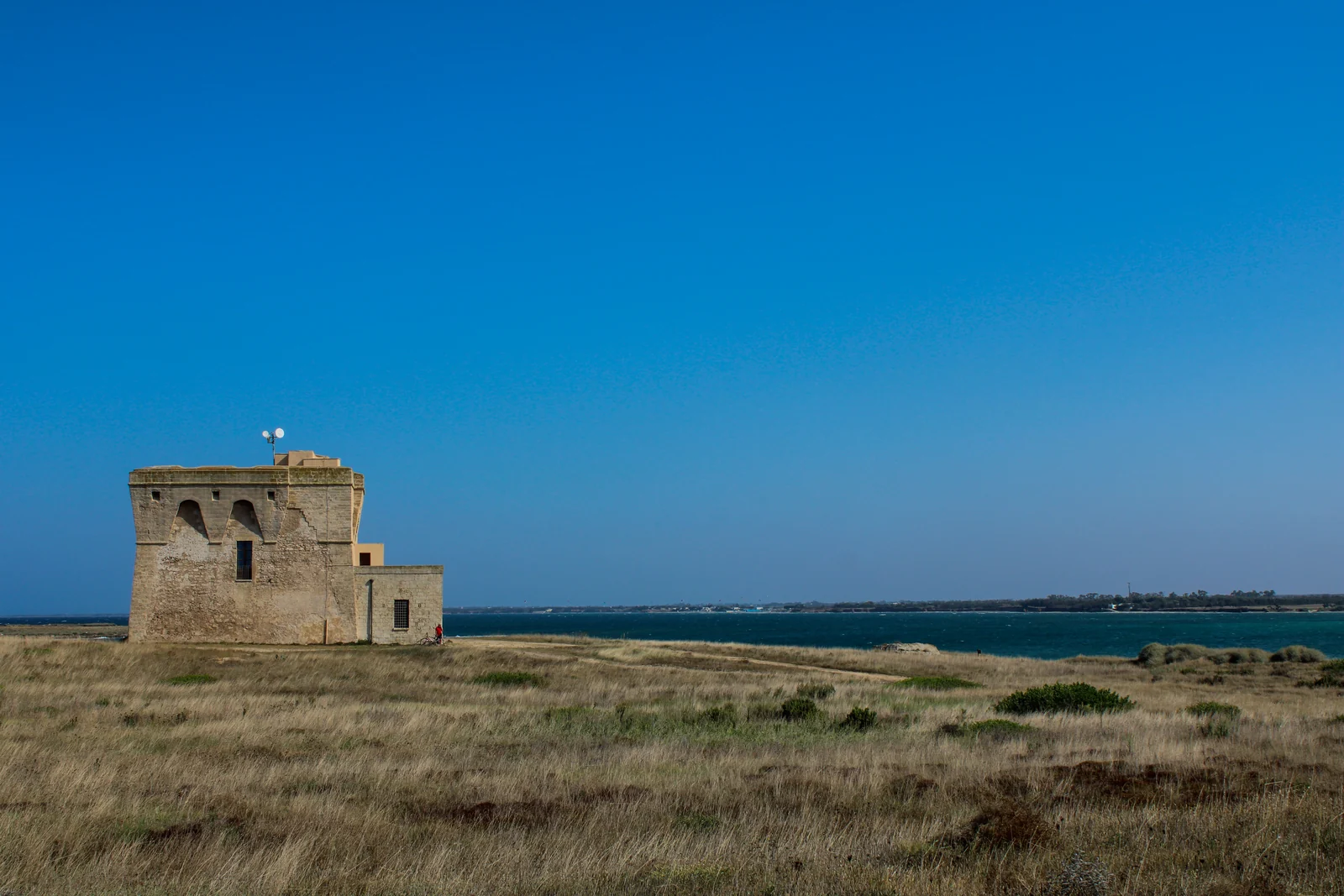
Photo: Carovale3 / Wikimedia Commons — CC BY-SA 4.0 · Resized and converted to WebP.
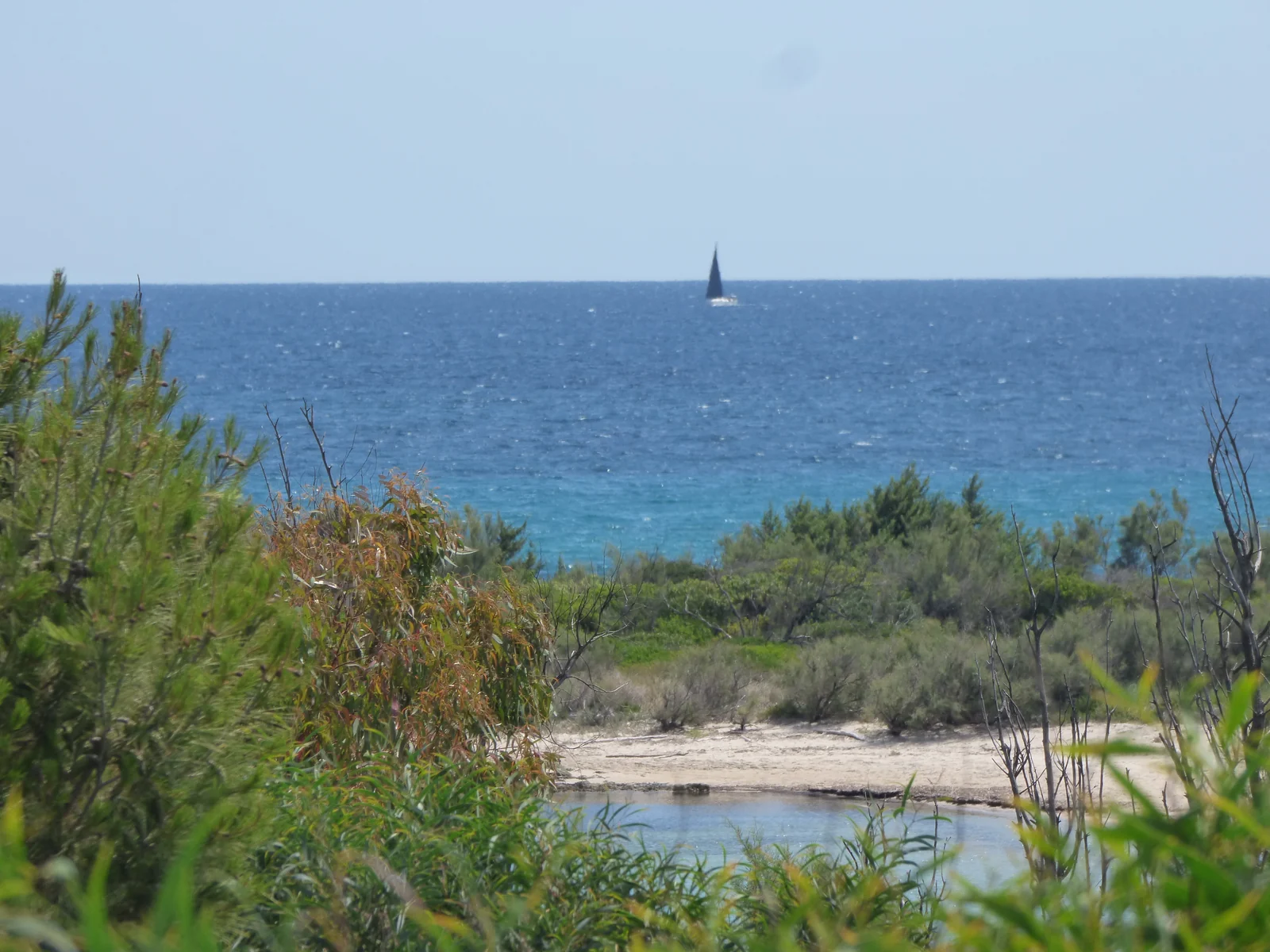
Photo: Mfran22 / Wikimedia Commons — CC BY-SA 4.0 · Resized and converted to WebP.
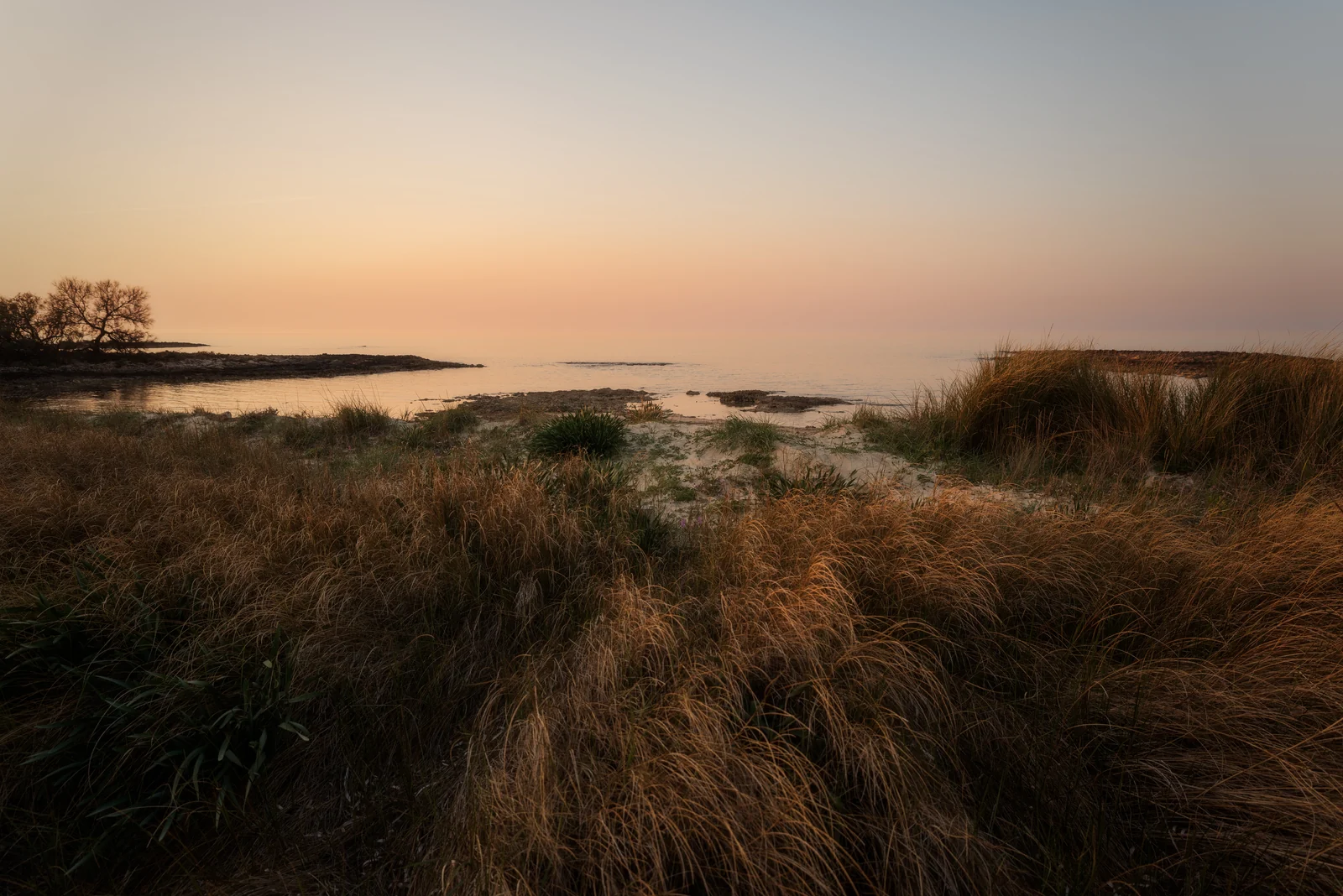
Photo: Lanottegiuseppe / Wikimedia Commons — CC BY-SA 4.0 · Resized and converted to WebP.
Where to stay
In the municipality of Brindisi the national database of the Ministry of Tourism lists 553 accommodation businesses with a verified CIN code: 14 hotels, 117 other licensed accommodation and 422 other types such as B&Bs and private rentals.
Licensed businesses from the official list of accommodation named as the source in this section. Where the list gives it, the property's official identification code appears next to its name: the national CIN code, or the code assigned by the Region or by the body that keeps the list. Private individuals are not listed. This list is the official census of licensed businesses, not a list of Apulica partners: to stay in Brindisi you do not have to check one property after another yourself; write to Apulica and we look for the stay that suits your journey, checking availability and conditions before any confirmation.
EXECUTIVE INN
Hotel · ★★★★
CIN IT074001A100024093
ALEKSANDR
Residence
CIN IT074001B400022960
MASSERIA BARONI NUOVI
Farm stay
CIN IT074001B500021752
ALEKSANDR
B&B
CIN IT074001B400022743
AFFITTACAMERE " IL PORTO "
Guest rooms
CIN IT074001B400060596
Comfort House
Holiday home
CIN IT074001B400123997
Ostello della Gioventù
Hostel
CIN IT074001B600091046
HOTEL ORIENTALE
Hotel · ★★★★
CIN IT074001A100020758
MASSERIA INCANTALUPI
Farm stay
CIN IT074001B500062232
B&B ALIS HOME
B&B
CIN IT074001B400064890
First the places that presented themselves to Apulica, the latest first; then one place of each type in turn, by official category and stars, then by name. No position is paid for.
All 85 entries in alphabetical order
Page 1 of 9
| Name | Type | CIN |
|---|---|---|
| AFFITTACAMERE " IL PORTO " | Guest rooms | IT074001B400060596 |
| AGORA' CONNECT SPACE | Guest rooms | IT074001B400096927 |
| Al centro di Altobello Stefania | Guest rooms | IT074001B400067645 |
| ALEKSANDR | B&B | IT074001B400022743 |
| ALEKSANDR | Residence | IT074001B400022960 |
| Alivi Indipendent Apartment | Guest rooms | IT074001B400108950 |
| ALLE VOLTE | Guest rooms | IT074001B400099873 |
| ALMA GRANDE | Guest rooms | IT074001B400126911 |
| B&B ALIS HOME | B&B | IT074001B400064890 |
| B&B BRINDESI | B&B | IT074001B400101695 |
Ask Apulica for a stay in Brindisi We reply shortly, within a few hours at most, with a proposal for you to consider.
Sources: Regione Puglia – ARET Pugliapromozione (DMS), CC BY 4.0, 2026-10-12 · Ministero del Turismo – Banca Dati Strutture Ricettive (dashboard pubblica), 2026-10-12
YOUR JOURNEY
How to shape a journey here
Brindisi deserves time before or after an arrival rather than serving only as a transit point. Alternate the waterfront with the smaller streets of the centre.
Plan your tripKeep exploring
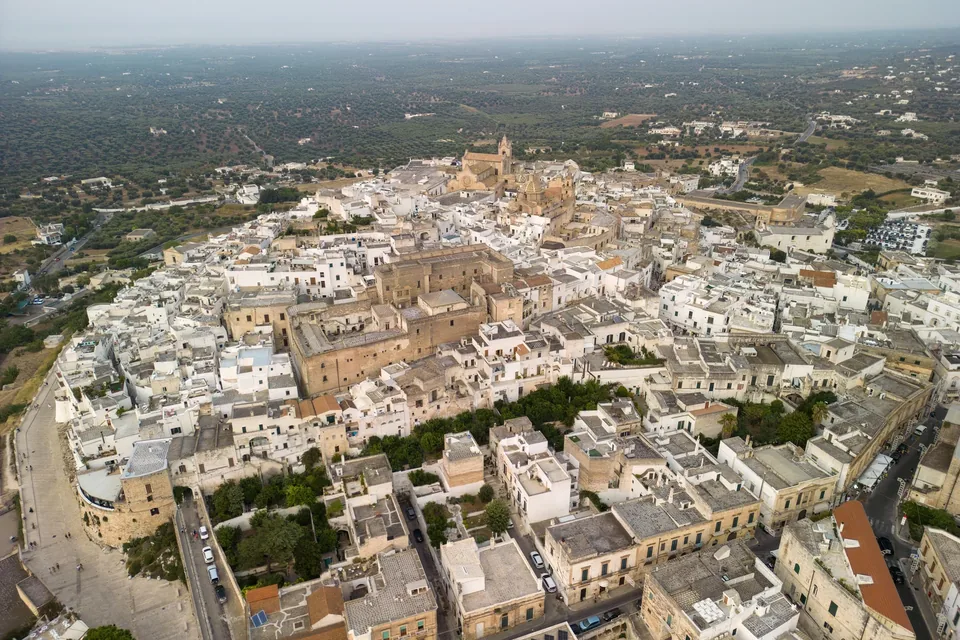
Ostuni
Houses, steps and agricultural landscape within one visit. The White City on three hills, its cathedral, the olive plain and Collina di Brindisi DOP oil.
Read the guide →Photo: ParisTaras / Wikimedia Commons — CC BY 4.0 · Resized and converted to WebP.

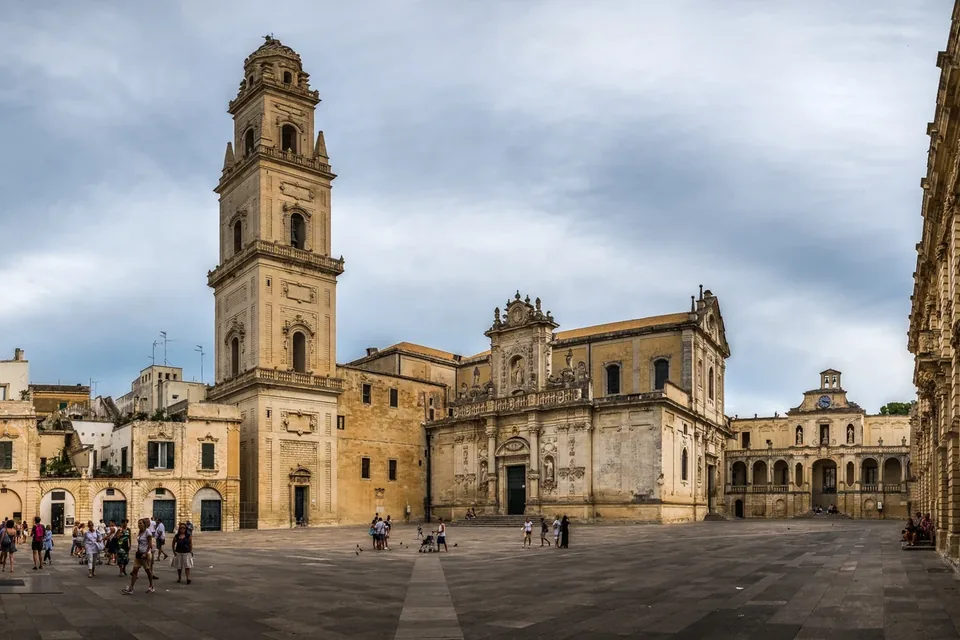
Lecce
Baroque architecture, papier-mâché and Salento food: a city of telling details.
Read the guide →Photo: Giuseppe Milo / Wikimedia Commons — CC BY 3.0 · Resized and converted to WebP.

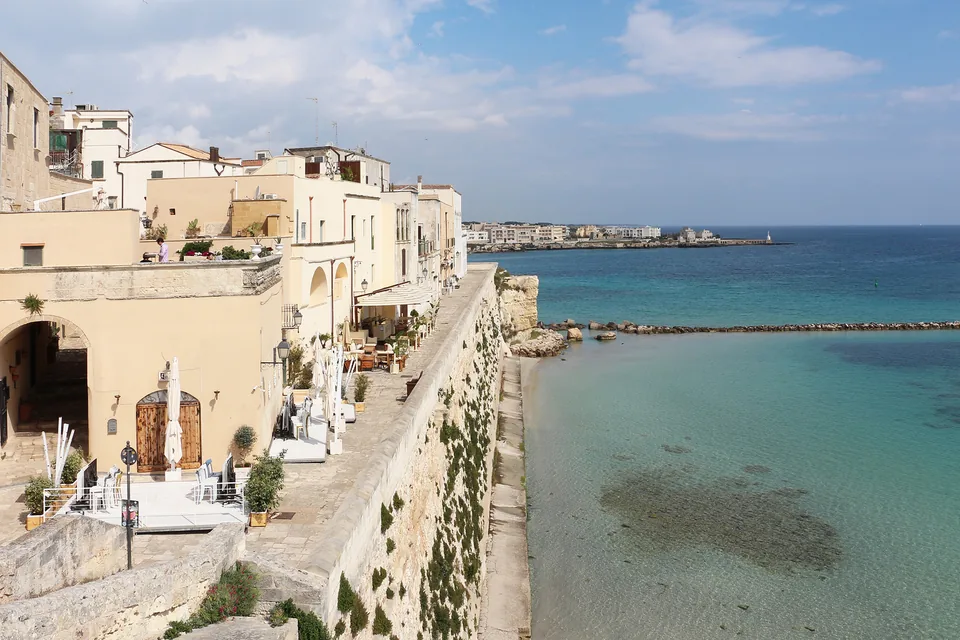
Otranto
The cathedral, Adriatic landscape and time to explore the historic centre. Inside and around the walls: Pantaleone’s mosaic of 1163-1165, the crypt with its forty-two columns, the Byzantine church of San Pietro, the Aragonese castle of Walpole’s novel, the Punta Palascìa lighthouse and the Grotta dei Cervi at Porto Badisco.
Read the guide →Photo: Bernard Gagnon / Wikimedia Commons — CC0 · Resized and converted to WebP.

Manduria
The Messapian city of three wall circuits and the Fonte Pliniano, the home of Primitivo and an Ionian coast of reserves, submerged Roman sarcophagi and towers.
Read the guide →Photo: Andrea Fistetto / Wikimedia Commons — CC BY-SA 4.0 · Resized and converted to WebP.

Squinzano
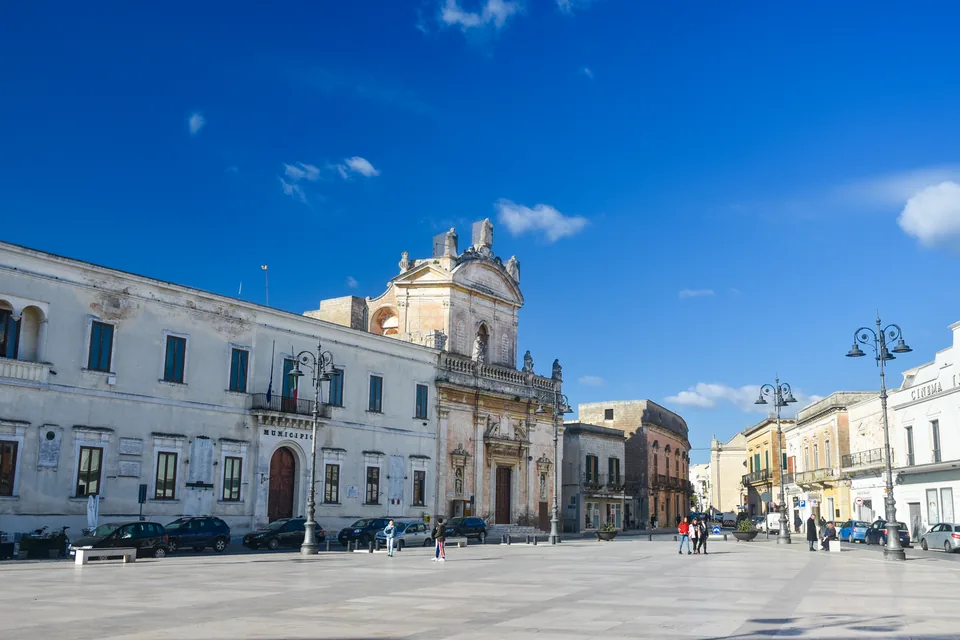
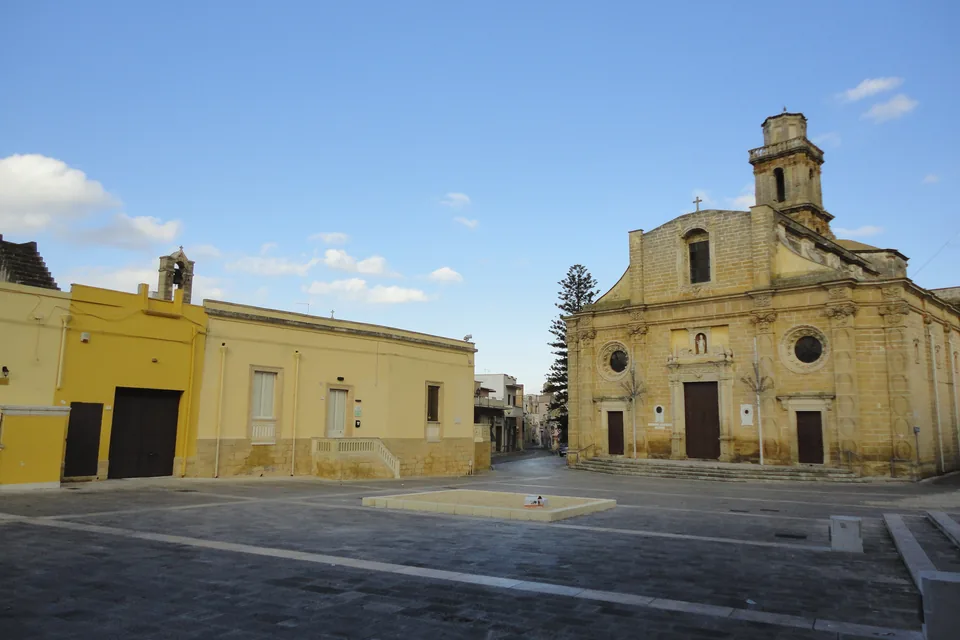
Squinzano (LE), Puglia: 13,320 residents, 31.16 km². The official facts of the municipality, its town council website and its registered accommodation. The “Squinzano” DOC wine made mainly from Negroamaro, the town band founded in 1876, the mother church of San Nicola, the sanctuary of the Madonna del Garofano and the seaside village of Casalabate.
Read the guide →Photo: Lupiae / Wikimedia Commons — CC BY-SA 3.0 · Resized and converted to WebP.
