Why go
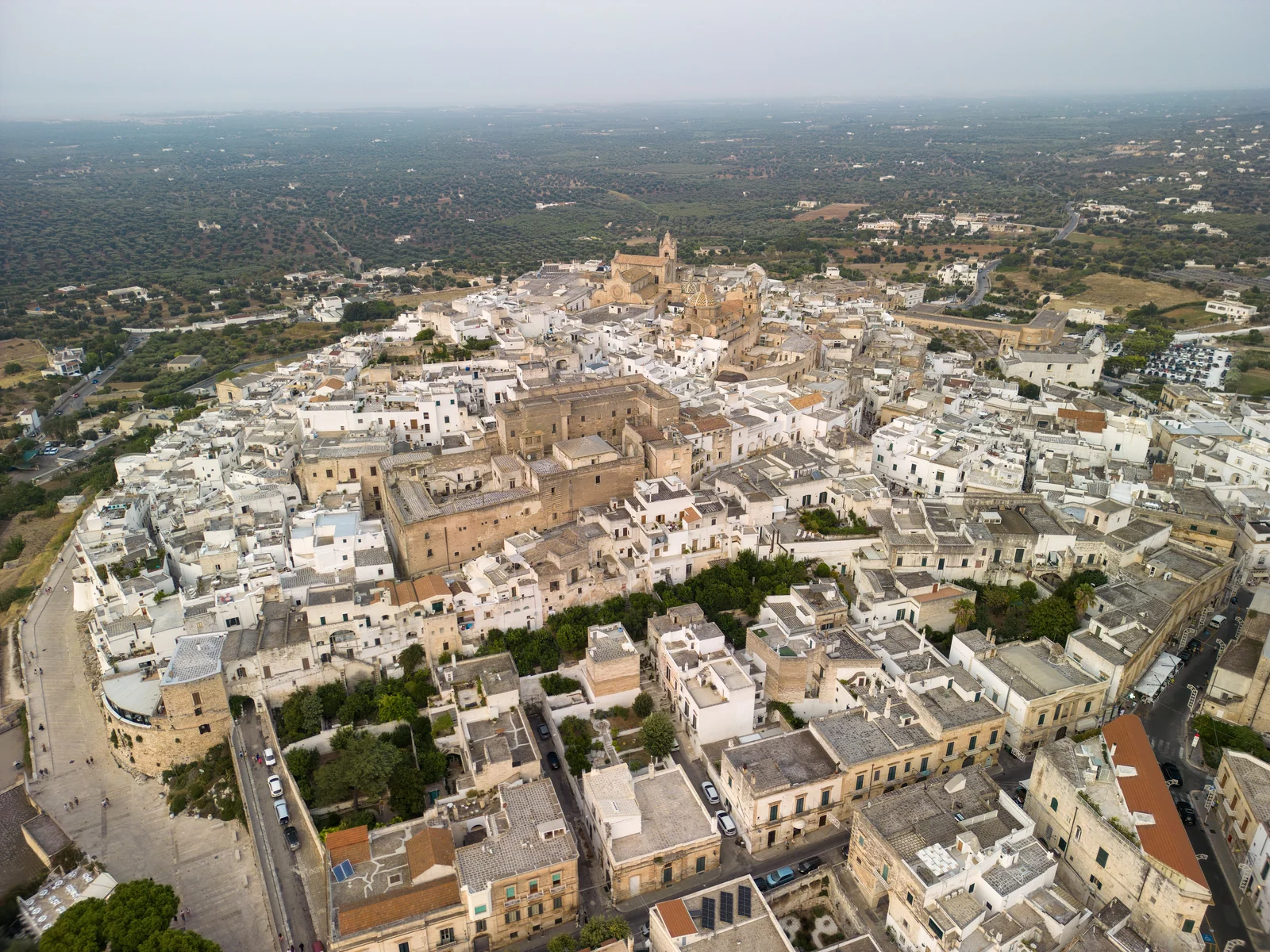
Ostuni stands on three hills at 218 metres above sea level, about eight kilometres from the Adriatic coast and forty-two from Brindisi. The old town, which locals call 'la Terra' to set it apart from the newer 'Marina', is whitewashed with lime, a practice the regional tourism portal says residents still keep to strictly: hence the name White City, alongside Queen of the Olive Trees and Nativity Town recalled by the municipality.
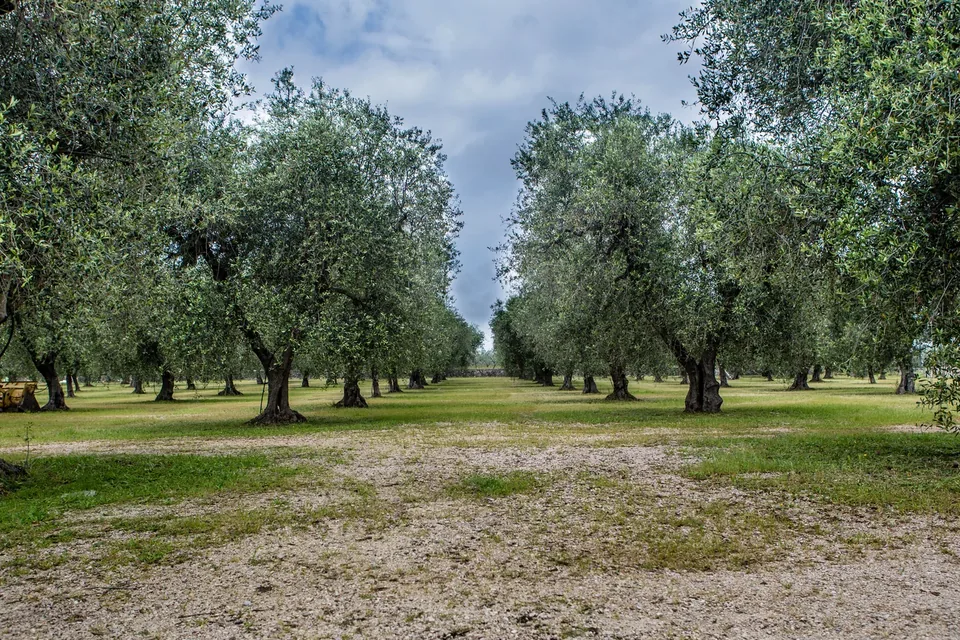
The centre is a web of lanes, steep stairways, courtyards and small squares climbing up to the fifteenth-century cathedral, from where the view sweeps down over the plain of ancient olive trees to the sea. But Ostuni is not only its white skyline: in the cave of Santa Maria di Agnano archaeologists found the burial of a young woman who lived more than twenty-five thousand years ago, now at the heart of the town museum.
And there is the coast: seventeen kilometres of beaches, coves, rocks and dunes, with the Dune Costiere regional nature park. It is a destination that combines a historic centre to explore on foot, a countryside of masserie and olive groves, and the sea, all within a few kilometres.
Sources: Viaggiare in Puglia, Regione Puglia — Ostuni · Comune di Ostuni — la città, portale turistico storico · Musei di Ostuni — Parco archeologico Santa Maria di Agnano
History
The municipality describes a territory inhabited since prehistory and occupied around 1000 BC by Iapygians and Messapians; the old core, perched on a hill, was probably the Messapian acropolis. The town was destroyed by Hannibal during the Second Punic War and rebuilt, then passed to Ostrogoths, Lombards, Normans and Swabians; in 1507 it joined the duchy of Bari of Isabella of Aragon. The Aragonese walls, of which eight of the original fifteen towers survive, still trace the elliptical plan of the centre.
The most remote past is documented at Agnano: research begun in 1991 showed that the cave was a place of ritual for about thirty thousand years, and the burial known as Ostuni 1, a pregnant young woman, dates to the Upper Pleistocene. The museum that keeps its cast is housed in the former Carmelite monastery beside the church of San Vito Martire, known as the Monacelle.
In the modern age the town lived its devotion to Saint Oronzo, patron since the eighteenth century for having protected it, according to tradition, from an epidemic. Finally, the municipality recalls 26 August 1860, when Ostuni was the first town in Puglia to tear down the Bourbon coats of arms and fly the tricolour.
Sources: Comune di Ostuni — la città, portale turistico storico · Musei di Ostuni — Parco archeologico Santa Maria di Agnano · Viaggiare in Puglia, Regione Puglia — Museo di Civiltà preclassiche della Murgia meridionale · Ministero della Cultura — Museo di civiltà preclassiche · Viaggiare in Puglia, Regione Puglia — Ostuni
What to see
The climb to the cathedral of Santa Maria Assunta follows via Cattedrale, the only true street reaching the top of the hill and dividing the centre in two. The church, built in the fifteenth century and a national monument since 1902, has a façade with three portals and three rose windows; the central one, with twenty-four spokes, shows Christ among the apostles at its centre. On the small square in front, the Bishop's Palace and the old Seminary face each other, joined by the Scoppa arch.
On the ground floor of the bishop's palace the Diocesan Museum displays Messapian finds, seventeenth-century silverware, eighteenth-century vestments and a rare anatomical wax Christ, ending in the Bishops' Garden at the highest point of the town. Along via Cattedrale, in the former Carmelite monastery, the Museum of Pre-Classical Civilisations of the Southern Murgia keeps the casts of the Agnano burials, including that of the pregnant woman who lived about twenty-five thousand years ago.
Piazza della Libertà, the largest square in town, is the natural starting point: it is overlooked by Palazzo San Francesco, a former monastery now the town hall, and the eighteenth-century obelisk of Saint Oronzo. In the Aragonese walls open Porta Nova and Porta San Demetrio.
Sources: Comune di Ostuni — la città, portale turistico storico · Viaggiare in Puglia, Regione Puglia — Cattedrale di Santa Maria Assunta di Ostuni · Comune di Ostuni — Cattedrale · Viaggiare in Puglia, Regione Puglia — Ostuni · Viaggiare in Puglia, Regione Puglia — Museo Diocesano di Ostuni · Viaggiare in Puglia, Regione Puglia — Museo di Civiltà preclassiche della Murgia meridionale · Viaggiare in Puglia, Regione Puglia — Piazza della Libertà
Food and wine
The municipality calls Ostuni the Queen of the Olive Trees, and the plain stretching to the sea is the landscape of olive oil. The territory lies within the zone of Collina di Brindisi DOP extra virgin oil, made mainly from Ogliarola olives. In the countryside, the medieval underground olive mill of Lacopagliaro keeps its kitchen with the hearth, animal shelters, wooden presses and stone millstones, and the quarters of the workers who stayed there from October to June.
Ostuni DOP wine, registered since 1973, includes a white from Impigno and Francavilla grapes and a red from Ottavianello. Among garden produce, the Melanzana Violetta di Ostuni is a Slow Food Presidium: an old variety with thin pale-violet skin and a sweet taste, used in the aubergine bake prepared for the feast of Saint Oronzo. The Mandorla Tondina almond, known as 'ostunese', and the Pomodoro regina di Torre Canne, grown on coastal land in the Dune park and hung in bunches in the masserie, are also Presidia of the area.
Finally, the regional portal recalls the masserie of the countryside, many turned into farm stays, where the table continues the story of the land.
Sources: Comune di Ostuni — la città, portale turistico storico · Commissione europea, eAmbrosia — Collina di Brindisi DOP · Viaggiare in Puglia, Regione Puglia — Frantoio ipogeo Lacopagliaro · Commissione europea, eAmbrosia — Ostuni DOP · Fondazione Slow Food — Melanzana Violetta di Ostuni · Fondazione Slow Food — Mandorla Tondina · Fondazione Slow Food — Pomodoro regina di Torre Canne · Viaggiare in Puglia, Regione Puglia — Ostuni
Things to do
The first experience is getting lost in the Terra: dead-end lanes, stairways and arches acting as buttresses, cube-shaped houses sometimes carved into the rock, doorways with noble crests. Then you head down towards the countryside and the sea.
The Dune Costiere regional nature park, from Torre Canne to Torre San Leonardo between Ostuni and Fasano, combines beaches, dunes, the Fiume Morelli wetland with brackish pools, and karst ravines; according to the regional portal the Park House, in the former Fontevecchia station, is the starting point for walks and guided visits, and along the ancient via Traiana you reach the Montalbano dolmen. Ostuni's coast has been awarded the Blue Flag several times.
The Santa Maria di Agnano archaeological park, about two kilometres from town, can be visited according to the civic museum's arrangements. For cyclists the regional portal lists three routes nearby, including a stretch of the via Francigena towards Torre Santa Sabina and the via Traiana, as well as the Apulian Aqueduct cycle route. The sanctuary of Sant'Oronzo, three kilometres away on the Monti della Badessa, combines a walk with a visit to the Basilian crypt.
Sources: Comune di Ostuni — la città, portale turistico storico · Viaggiare in Puglia, Regione Puglia — Parco naturale regionale Dune Costiere · Viaggiare in Puglia, Regione Puglia — Ostuni · Musei di Ostuni — Parco archeologico Santa Maria di Agnano · Viaggiare in Puglia, Regione Puglia — Cisternino · Viaggiare in Puglia, Regione Puglia — Santuario di Sant'Oronzo
When to go
The most awaited moment is the feast of Saint Oronzo, patron of Ostuni since, according to tradition, he saved it from the epidemic that struck Puglia in the eighteenth century. The regional portal places the celebrations from 25 to 27 August; on the 26th the Cavalcata takes place, with civil authorities and clergy parading on caparisoned horses, accompanied by ladies and knights in medieval dress, escorting the saint's statue through the historic centre.
Summer is also the season for the sea, with the beaches and coves of the coast, and the busiest period. Spring and autumn are ideal for climbing to the cathedral and walking among the olive trees, with mild temperatures and fewer people.
The Agnano archaeological park has regular openings set by the civic museum and visits by appointment: it is worth checking before you go. In winter the centre is quiet and intimate, suited to a calm visit to the museums. For events, ask at the info-point in piazza della Libertà.
Sources: Viaggiare in Puglia, Regione Puglia — Ostuni · Viaggiare in Puglia, Regione Puglia — Cattedrale di Santa Maria Assunta di Ostuni · Musei di Ostuni — Parco archeologico Santa Maria di Agnano · Viaggiare in Puglia, Regione Puglia — Info-point Ostuni
Getting there and around
According to the regional tourism portal, Ostuni station, which is listed on the RFI network, mainly serves nearby towns; for long journeys it is best to go via Brindisi or Bari stations.
Local public transport includes urban and suburban lines and intercity services by STP Brindisi and the COTRAP consortium, running every day. The nearest airport is Brindisi, managed by Aeroporti di Puglia; for the transfer the regional portal suggests private services.
The old town is explored on foot, starting from piazza della Libertà; its slopes and stairways call for a slow pace. For the Marina, the beaches and the Dune Costiere park you need your own vehicle, a hired car, scooter or e-bike, or public buses. Cyclists will find nearby the via Francigena, via Traiana and Dune park routes listed by the regional portal.
Sources: Viaggiare in Puglia, Regione Puglia — Ostuni · RFI — Stazione di Ostuni · Aeroporti di Puglia — Aeroporto di Brindisi · Viaggiare in Puglia, Regione Puglia — Piazza della Libertà
Where to stay
The regional portal notes that the countryside around Ostuni is dotted with masserie, many converted into farm stays and resorts: some are fortified and keep tall towers, others gather clusters of trulli around their courtyard. Choosing a masseria means space, quiet and olive groves all around, with the centre and the sea a few kilometres away; staying in the Terra lets you enjoy the lanes in the evening and move around on foot.
Stopping in Ostuni also means sitting down to eat in the upper part of the centre. As an identified reference we mention Osteria Piazzetta Cattedrale, at largo Arcidiacono Teodoro Trinchera 7, which describes small vaulted rooms opposite the cathedral. This is an editorial mention and implies no menu agreed with Apulica.
It is worth building the meal around an ingredient already met on the trip, such as oil from the plain or a garden product, and choosing your base according to transfers and the rhythm of your days rather than an abstract category.
Sources: Viaggiare in Puglia, Regione Puglia — Ostuni · Osteria Piazzetta Cattedrale — presentazione e contatti
Nearby
Ostuni is the only town in the Itria Valley with an outlet to the sea, and from here the valley opens inland. Cisternino, linked by the Apulian Aqueduct cycle route, is a few kilometres away, with its belvedere and grills; Martina Franca, Locorotondo and Alberobello complete the circuit of towns.
Along the coast, the Dune Costiere park continues towards Fasano, where the regional portal points to the Montalbano dolmen, along the ancient via Traiana, and the area of Egnazia, with its archaeological excavations overlooking the water. Along the coast towards Brindisi, the Torre Guaceto marine protected area is indicated by the regional portal as a place to swim in a protected natural setting.
Brindisi, some forty kilometres away, is the provincial capital and the area's air gateway. From a base in Ostuni you can alternate days at the sea, in the countryside and in the towns without changing accommodation.
Sources: Italia.it, Ministero del Turismo — Valle d'Itria · Viaggiare in Puglia, Regione Puglia — Cisternino · Viaggiare in Puglia, Regione Puglia — Parco naturale regionale Dune Costiere · Viaggiare in Puglia, Regione Puglia — Valle d'Itria e Murgia dei trulli · Viaggiare in Puglia, Regione Puglia — Ostuni
Local tourist information
Local tourist offices help with opening times, events and transport on the day.
- Info-point Ostuni · Piazza della Libertà 69, 72017 Ostuni (BR) · +39 0831 331994 · [email protected]
Source: Viaggiare in Puglia, Regione Puglia — Info-point Ostuni · Viaggiare in Puglia, Regione Puglia — Ostuni · checked on
Where to stay
In the municipality of Ostuni the national database of the Ministry of Tourism lists 2579 accommodation businesses with a verified CIN code: 24 hotels, 695 other licensed accommodation and 1860 other types such as B&Bs and private rentals.
Licensed businesses from the official list of accommodation named as the source in this section. Where the list gives it, the property's official identification code appears next to its name: the national CIN code, or the code assigned by the Region or by the body that keeps the list. Private individuals are not listed. This list is the official census of licensed businesses, not a list of Apulica partners: to stay in Ostuni you do not have to check one property after another yourself; write to Apulica and we look for the stay that suits your journey, checking availability and conditions before any confirmation.
LA SOMMITA' RELAIS
Hotel · ★★★★★
CIN IT074012A100023951
Il 5 Elemento
Residence
CIN IT074012B400069216
CALA DEI GINEPRI
Campsite · ★★★
CIN IT074012B100028603
ANTICA MASSERIA BRANCATI
Farm stay
CIN IT074012B500023602
B&b Aurasia
B&B
CIN IT074012B400127265
26 suite home
Guest rooms
CIN IT074012B400059759
1940 LUXURY ACCOMMODATIONS
Holiday home
CIN IT074012B400055046
Masseria Montalbano
Hotel · ★★★★★
CIN IT074012A100090807
RESIDENCE BARBARA
Residence
CIN IT074012B400020780
PILONE
Campsite · ★★★
CIN IT074012B100020783
First the places that presented themselves to Apulica, the latest first; then one place of each type in turn, by official category and stars, then by name. No position is paid for.
All 288 entries in alphabetical order
Page 1 of 29
| Name | Type | CIN |
|---|---|---|
| 1940 LUXURY ACCOMMODATIONS | Holiday home | IT074012B400055046 |
| 21 MQ SUITE HOME APPARTAMENTO CON TERRAZZA | Holiday home | IT074012B400123680 |
| 21 MQ SUITE HOME APPARTAMENTO DELUXE | Holiday home | IT074012B400123682 |
| 21 MQ SUITE HOME APPARTAMENTO MONOLOCALE | Holiday home | IT074012B400123678 |
| 21 MQ SUITE HOME PETROLLA | Holiday home | IT074012B400123679 |
| 21MQ SUITE HOME | Holiday home | IT074012B400042318 |
| 26 suite home | Guest rooms | IT074012B400059759 |
| 4 CHIANCHE APARTMENTS TERRA | Holiday home | IT074012B400127980 |
| ALBERGO DA ANNA | Hotel | IT074012A100127184 |
| ALBIA | Holiday home | IT074012B400103368 |
Ask Apulica for a stay in Ostuni We reply shortly, within a few hours at most, with a proposal for you to consider.
Sources: Regione Puglia – ARET Pugliapromozione (DMS), CC BY 4.0, 2026-10-12 · Ministero del Turismo – Banca Dati Strutture Ricettive (dashboard pubblica), 2026-10-12
YOUR JOURNEY
How to shape a journey here
We can design Ostuni around its centre, prehistory and olive-oil work, with coherent food and accommodation and the sea as a possible addition.
Plan your tripKeep exploring
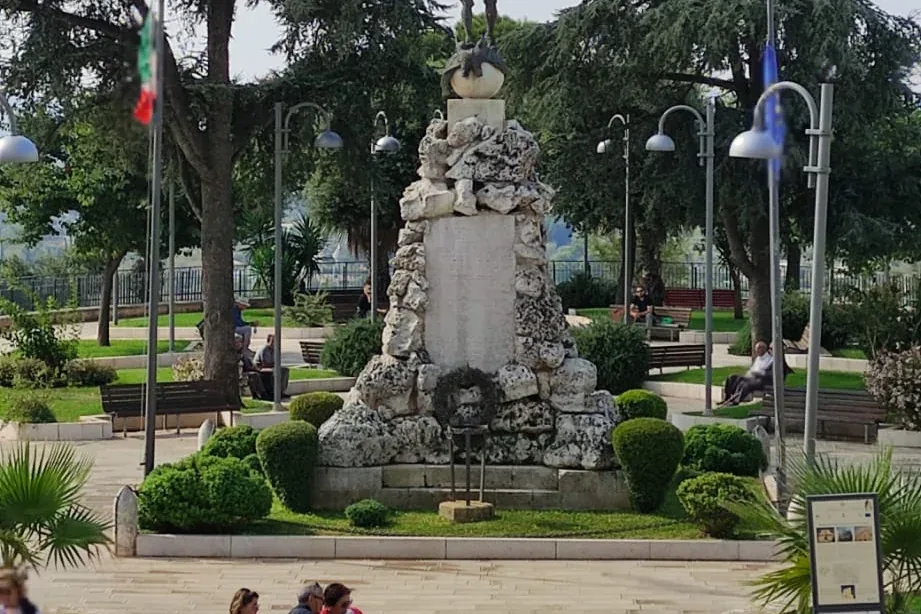
Cisternino
Fornello pronto, bombette and a walk through the town. A white, paved village with the Orange Flag and the mother church of San Nicola di Pàtara.
Read the guide →Photo: Kiuz / Wikimedia Commons — CC BY-SA 4.0 · Resized and converted to WebP.
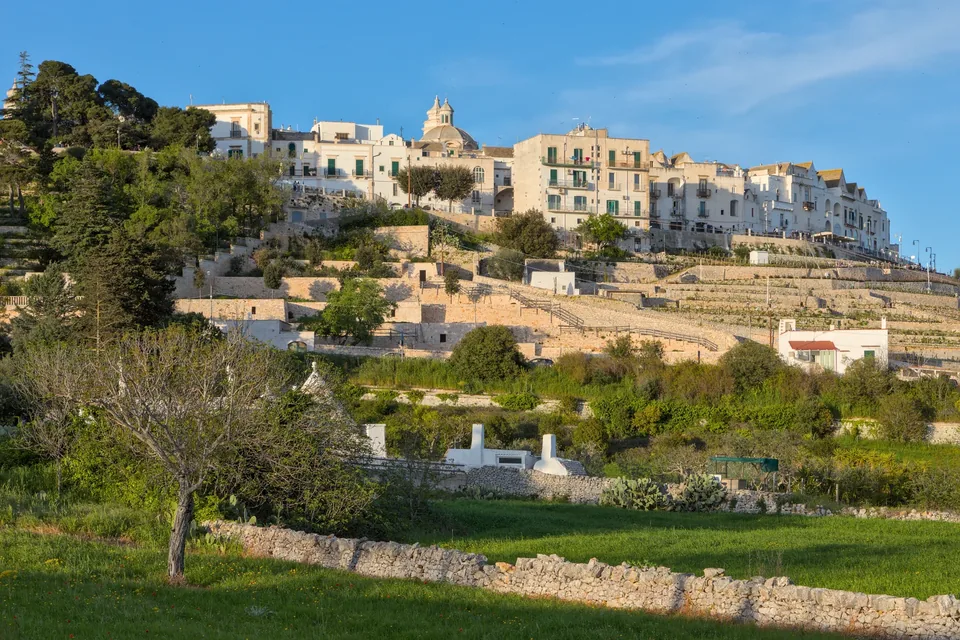
Locorotondo
Cummerse roofs as a way to distinguish the Itria Valley’s towns. A circular old centre on a hilltop and Locorotondo DOP wine.
Read the guide →Photo: Benjamin Smith / Wikimedia Commons — CC BY-SA 4.0 · Resized and converted to WebP.
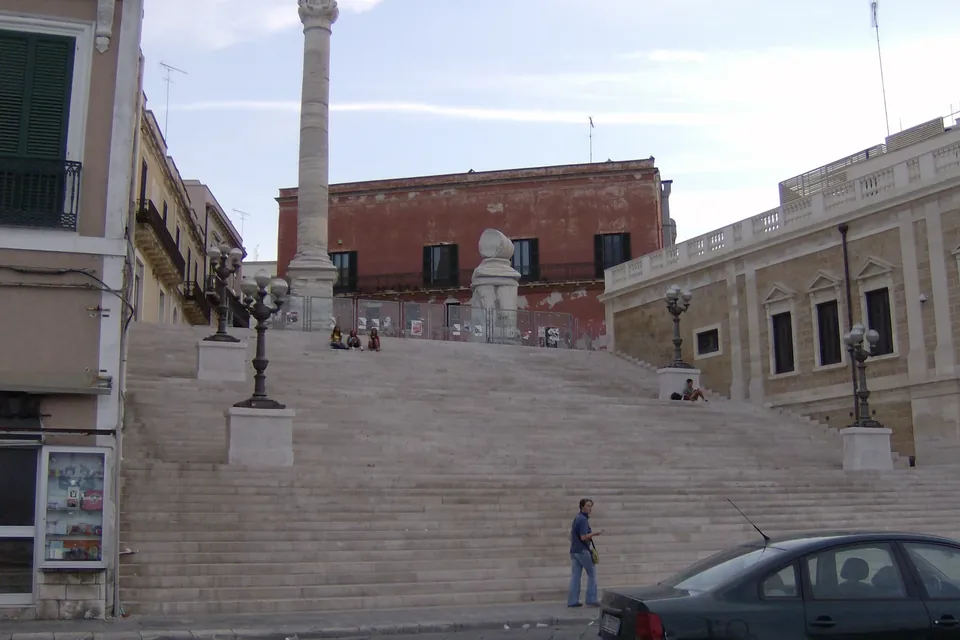
Brindisi
Brindisi: reading the city from its harbour. The Roman Columns above the Virgilian Steps, the castles built to defend the harbour and the Brindisi artichoke.
Read the guide →Photo: Zappuddu / Wikimedia Commons — Public domain · Resized and converted to WebP.
Itria Valley
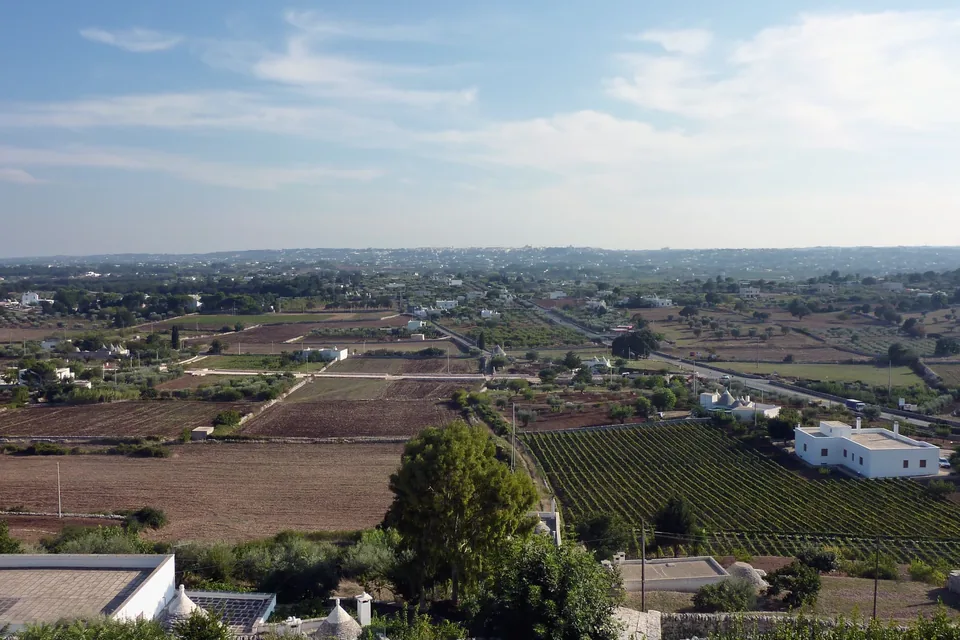
Rural architecture, towns and food as parts of the same journey. Trulli across the countryside, Locorotondo, Cisternino, Martina Franca and Slow Food capocollo.
Read the guide →Photo: Adbar / Wikimedia Commons — CC BY-SA 3.0 · Resized and converted to WebP.
Torre Canne
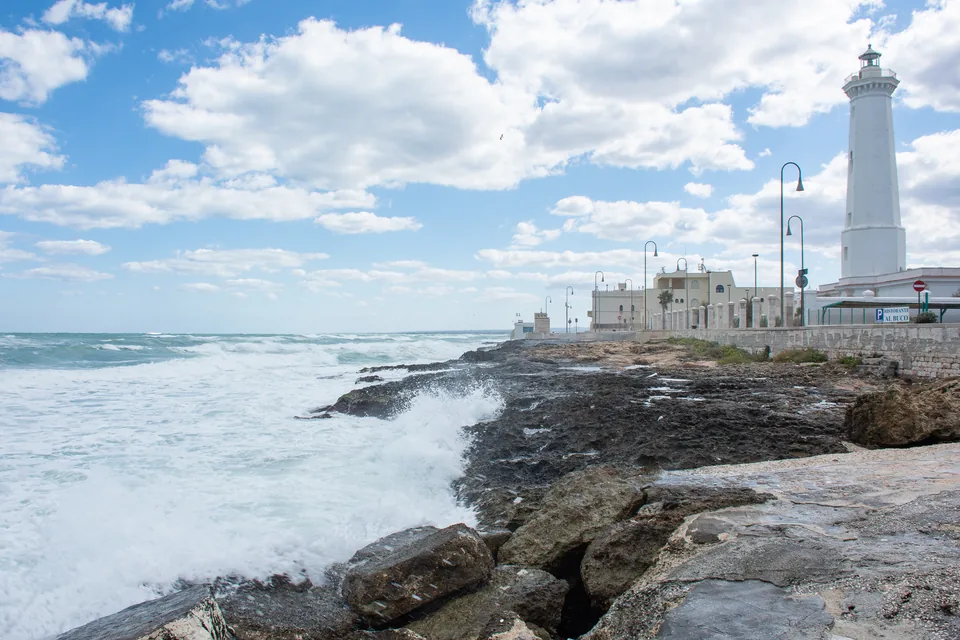
The seaside village of Fasano with the Punta Torre Canne lighthouse, a long sandy beach with shallow water, the Coastal Dunes Park, the thermal waters, the fiorone fig and the regina tomato.
Read the guide →Photo: Okidoki1982 / Wikimedia Commons — CC BY-SA 4.0 · Resized and converted to WebP.
“Come to Ostuni as a guest, not as a tourist: that is how these places truly let you know them.”