One regional oil, many cultivars
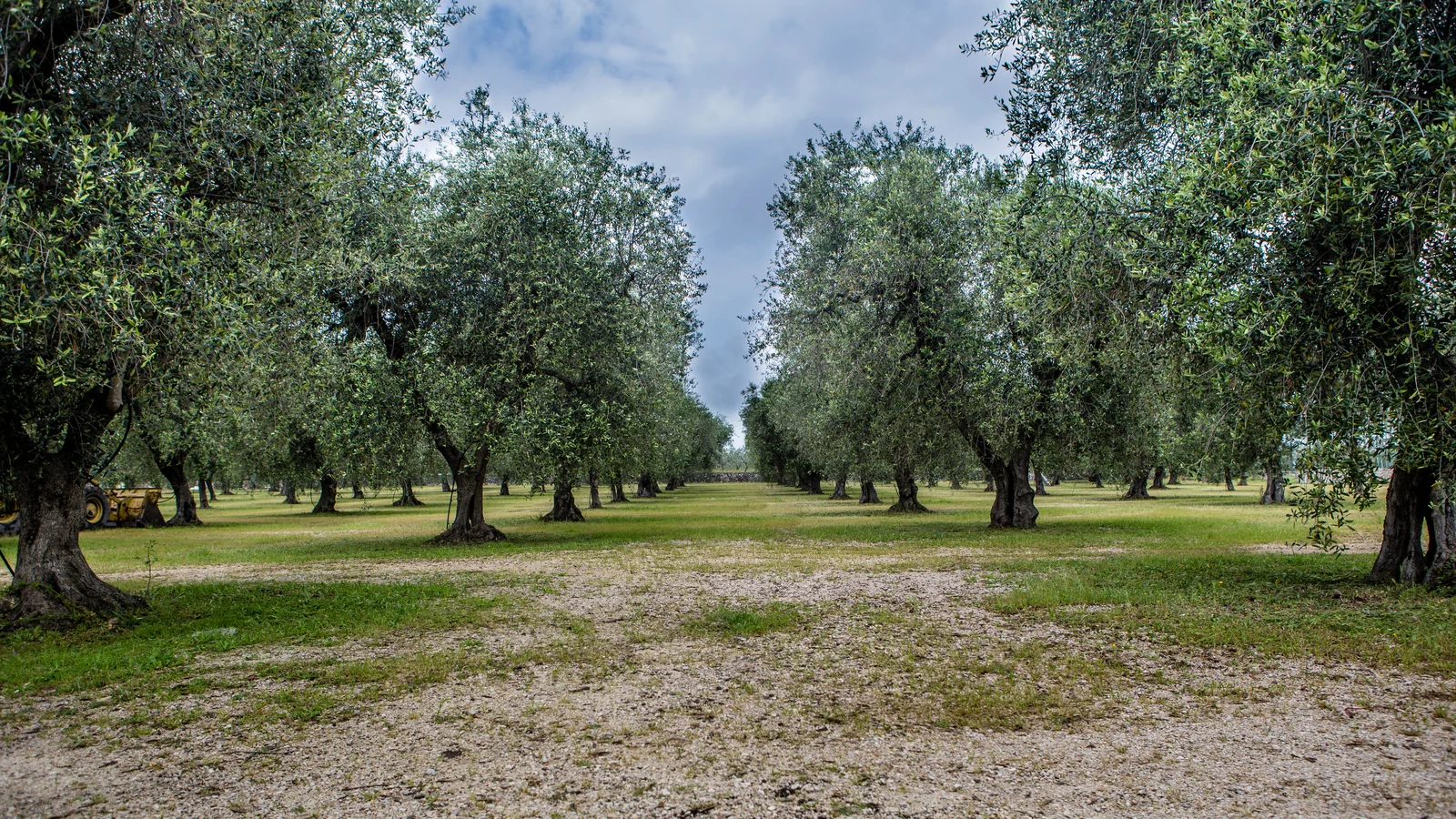
The regional profile of Olio di Puglia PGI explains the designation through variety rather than uniformity. Differences come from the genetic heritage of many native cultivars, from soils, climate and environment, and from the growing and extraction techniques typical of the region. The outcome is a wide range of oils whose colour runs from green to straw yellow and changes over time.
On the palate the Region describes a clear olive fruitiness of varying intensity, with vegetal notes of freshly cut grass or leaf, fresh almond and artichoke. Bitterness and pepperiness appear with different strength, and green almond or cardoon may join them, with a finish recalling grass and vegetables.
The indication was registered at the end of 2019 and has a protection consortium based in Bari. For travellers the useful point is simple: saying “Puglian oil” means speaking of a family of flavours, and each tasting should be read as one voice within that family rather than as the whole region in a glass.
Sources: Regione Puglia — Olio di Puglia IGP
Coratina: the story of a name
Puglia’s atlas of traditional foods explains that Coratina was once known as the “racioppe” olive, because its fruit hangs in small clusters. In the late eighteenth century the agronomist Giovanni Presta described an olive “a racimolo”, placing it in the wider family of Puglian olive growing without giving it a precise home.
Evidence of its origin came a century later. In September 1872 Professor Girolamo Caruso, invited to an estate near Barletta, observed the variety and noted that he had been told it was brought from Corato; he wrote about it in his 1883 monograph on the olive, recommending it for its great productivity. The advice was followed, and Coratina was planted more and more widely across the provinces of Bari and Foggia.
The profile also recalls the double use that explains its success. Young and intensely aromatic, the oil was used to give character to other oils; once mature, it went to the table. Today its profile combines bitterness and pepperiness with notes of fresh grass, artichoke and almond.
Sources: Atlante dei PAT di Puglia (Regione Puglia, Università di Bari) — Olio extravergine di oliva coratina
From tree to mill
Both the PAT profile published by the Region and the atlas describe Coratina processing as an orderly sequence. Sound olives reach the mill and are first separated from leaves and twigs, then washed to remove soil and small impurities. Crushing follows, either with traditional stone mills or with hammer, disc or knife crushers.
The resulting paste is separated with two- or three-phase decanters, or with presses; the oil is then left to settle naturally or passes through a separator or inert filters. The sources stress the final steps as well: dark containers and a cool, dry place. That advice still applies once the bottle is in your kitchen.
Following this sequence on a journey changes the way you taste. During a visit arranged with a mill you can recognise each stage, ask which extraction method is used and link what you see to the freshness or intensity you later notice in the glass. Processing becomes a more useful key than packaging, and the mill visit becomes part of the tasting itself.
Sources: Regione Puglia — Scheda PAT olio Coratina · Atlante dei PAT di Puglia (Regione Puglia, Università di Bari) — Olio extravergine di oliva coratina
The north: Terra di Bari and Dauno
Two protected designations of origin cover the north of the region. Terra di Bari concerns the provinces of Bari and Barletta-Andria-Trani and is divided into three geographical mentions. Castel del Monte comes largely from Coratina and is described as green with yellow highlights, intensely fruity, with medium bitterness and pepperiness. Bitonto combines Cima di Bitonto, also called Ogliarola Barese, with Coratina, giving a lighter fruitiness and a note of fresh herbs. Murgia dei Trulli e delle Grotte is based on Cima di Mola, golden with green glints and a hint of fresh almond.
Further north, the Dauno PDO belongs to the province of Foggia. Here too the mentions link varieties and places: Peranzana for Alto Tavoliere, Coratina for Basso Tavoliere, Ogliarola Garganica for the Gargano, while Sub-Appennino combines Ogliarola, Coratina and Rotondella. The rules allow only mechanical and physical extraction.
Reading these mentions on a label is the quickest way to understand which landscape a bottle comes from and to choose which part of the north to explore.
Sources: Regione Puglia — Produzioni di qualità: Terra di Bari DOP · Regione Puglia — Produzioni di qualità: Dauno DOP
Southwards: Brindisi, Taranto and Salento
Moving down the region, varieties and soils change. The Collina di Brindisi PDO requires at least 70 per cent Ogliarola, alongside varieties such as Cellina di Nardò, Coratina, Frantoio and Leccino. The Region attributes Ogliarola’s spread to its hardiness, adapting both to the inland limestone plateau and to the tuff soils of the coast; the fruit must be milled within two days of reaching the mill.
On the Ionian arc, the Terre Tarentine PDO brings together Leccino, Coratina, Ogliarola and Frantoio in some municipalities of the province of Taranto. The profile describes deep sandy soils, often red-brown, a hot dry climate and a fruity oil with medium bitterness and light pepperiness; it also mentions centuries-old trees regarded as environmental and historical heritage.
The Terra d’Otranto PDO covers the whole province of Lecce and parts of Brindisi and Taranto, with Cellina di Nardò and Ogliarola Salentina. The Region notes a temporary change to the rules linked to Xylella, which has hit Salento’s groves hard: worth remembering when looking at this landscape today.
Sources: Regione Puglia — Produzioni di qualità: Collina di Brindisi DOP · Regione Puglia — Produzioni di qualità: Terre Tarentine DOP · Regione Puglia — Produzioni di qualità: Terra d’Otranto DOP
A tasting in three stages
Start with just two oils, without bread or seasoning. Pour a small amount, warm the glass in your hand, smell and then taste, letting the oil cover the whole palate. Pause on the sensations: first the aroma, then bitterness, finally the pepperiness that reaches the throat.
Only afterwards return to the same samples with an identical bite of bread for each. For every oil, note one aromatic word, the intensity of bitterness and how long the pepperiness lasts, using a simple personal scale. If an oil comes from a geographical mention, write it down alongside: it helps you trace the link back to the land later.
This compares preferences rather than providing a professional taster’s assessment. The aim is to understand which oil you would want on your table and why, and which you enjoy on its own but would not use every day. Two samples compared carefully teach more than six tasted in a hurry, and they leave clearer memories once you are home.
From tasting spoon to plate
For the second comparison choose a simple base: pulses, a cooked vegetable or toasted bread. Divide the same dish into two small portions and change only the oil, added raw at the last moment. The difference then comes from one element alone and becomes easy to recognise.
Ask which pairing keeps the ingredient clear and which transforms it more. A very intense oil may stand up to a pulse soup and overwhelm a delicate vegetable; a lighter one may do the opposite. There is no single right answer for everyone: what matters is what you prefer to eat and how you cook at home.
Recording a specific use also helps with buying. The oil you prefer on its own may differ from the one you want for everyday cooking, and writing beside the bottle’s name the dish it suited best helps you decide calmly, at the end of the trip, what to take home. A short note of this kind is worth more than an armful of bottles chosen at random.
Andria, Bisceglie and Ostuni
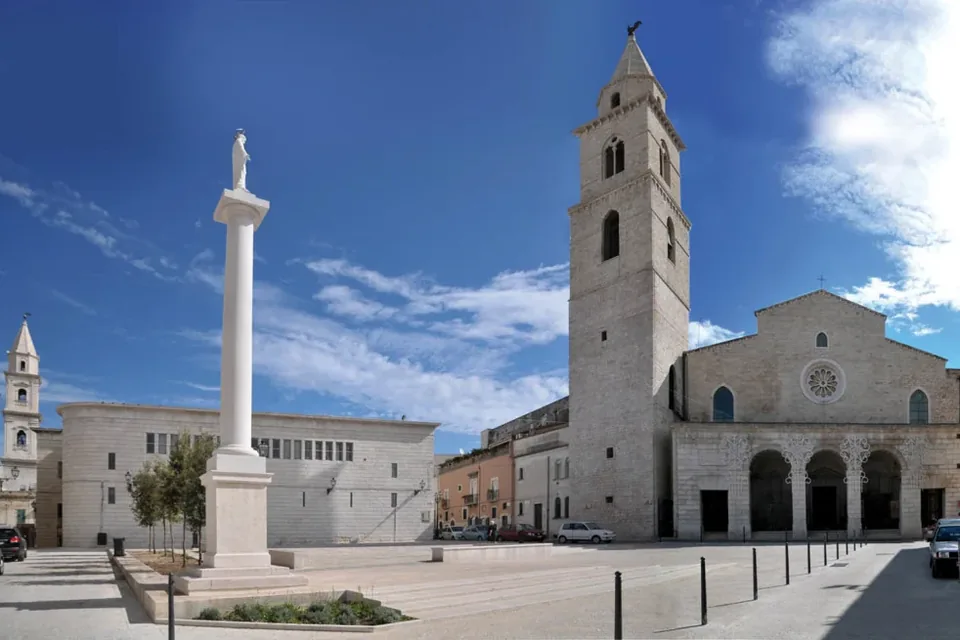
For a route, choose Andria as the centre of the theme. The Città dell’Olio association presents it as the town of Coratina, locally called “racioppa”, and notes that agriculture, with olives and vines, remains the main activity. Nearby on the Murgia stands Castel del Monte, the octagonal castle commissioned by Frederick II and listed by UNESCO, which also gives its name to one of the mentions of the Terra di Bari PDO.
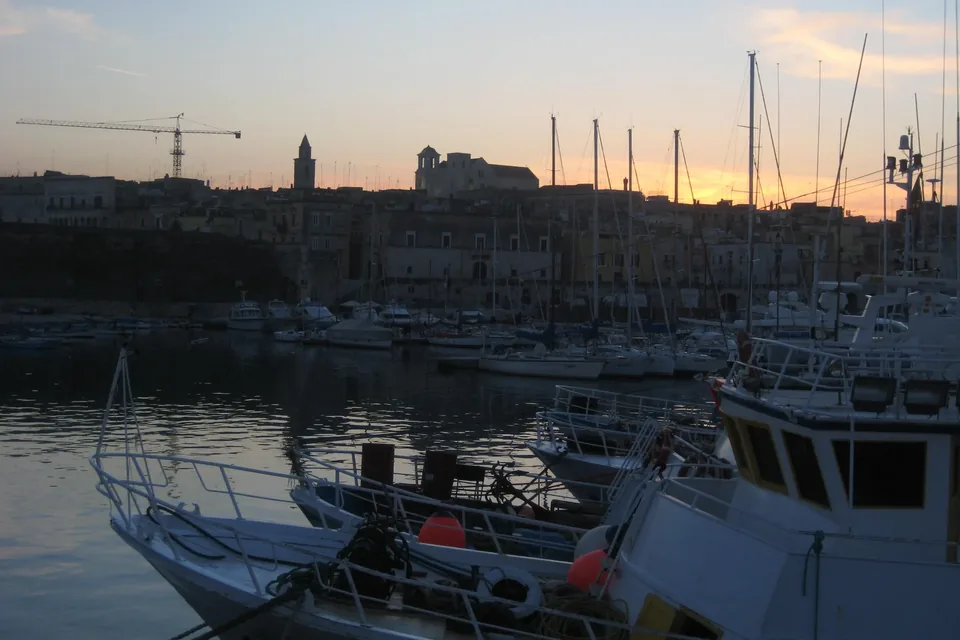
Bisceglie lets you pair countryside with town. The same association describes the old quarter gathered around the harbour, with the castle, the cathedral and churches from the late eleventh century, and Bronze Age dolmens in the surrounding area, such as Chianca and Albarosa. A food stop can sit between two walks, allowing time to relate what you saw to what you taste.
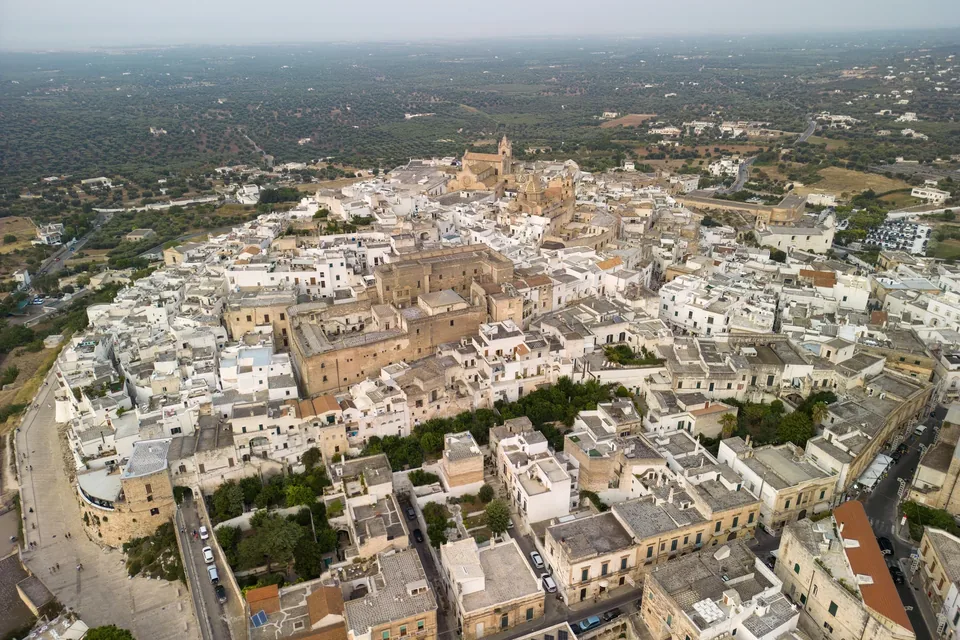
If the journey continues towards Ostuni, in the province of Brindisi, keep the comparison open: asking about variety and origin at the next tasting avoids treating the whole region as one flavour and turns each stop into a new chapter.
Sources: Associazione nazionale Città dell’Olio — Andria · Associazione nazionale Città dell’Olio — Bisceglie · Regione Puglia — Produzioni di qualità: Terra di Bari DOP
A thread for your journey
Journey idea: Andria and Bisceglie with one comparative tasting, followed by dinner using one oil on a simple dish. The day’s thread moves from landscape to processing and finally to flavour.
Talk to us