Why go
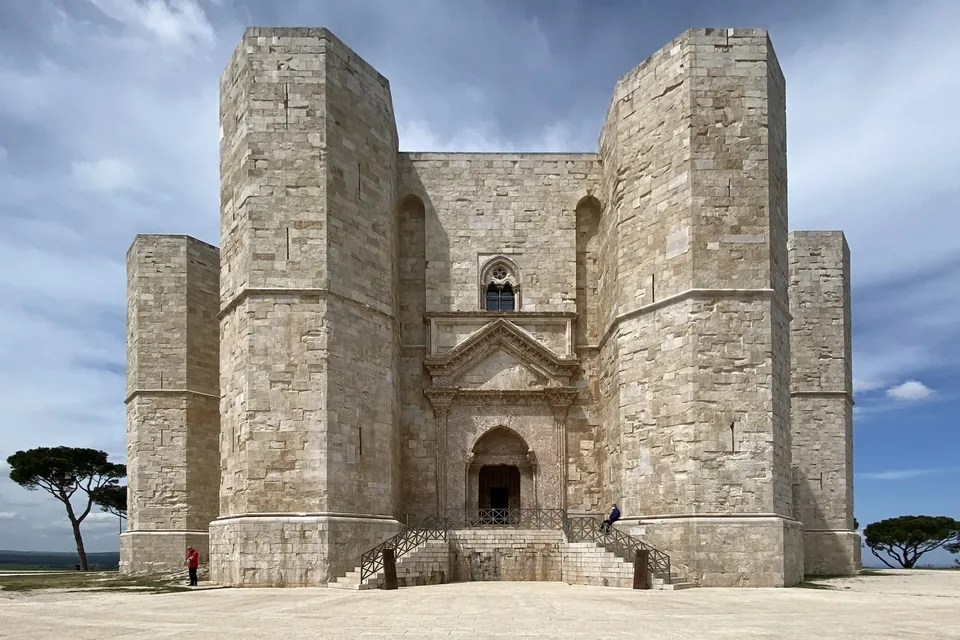
Andria is one of the three capitals of the province of Barletta-Andria-Trani, inland in northern Puglia between the Adriatic coast and the Murgia plateau. The Region's tourism portal presents it as the town of Castel del Monte, Frederick II's UNESCO-listed fortress that stands within its territory, and as a town famous for its food products.
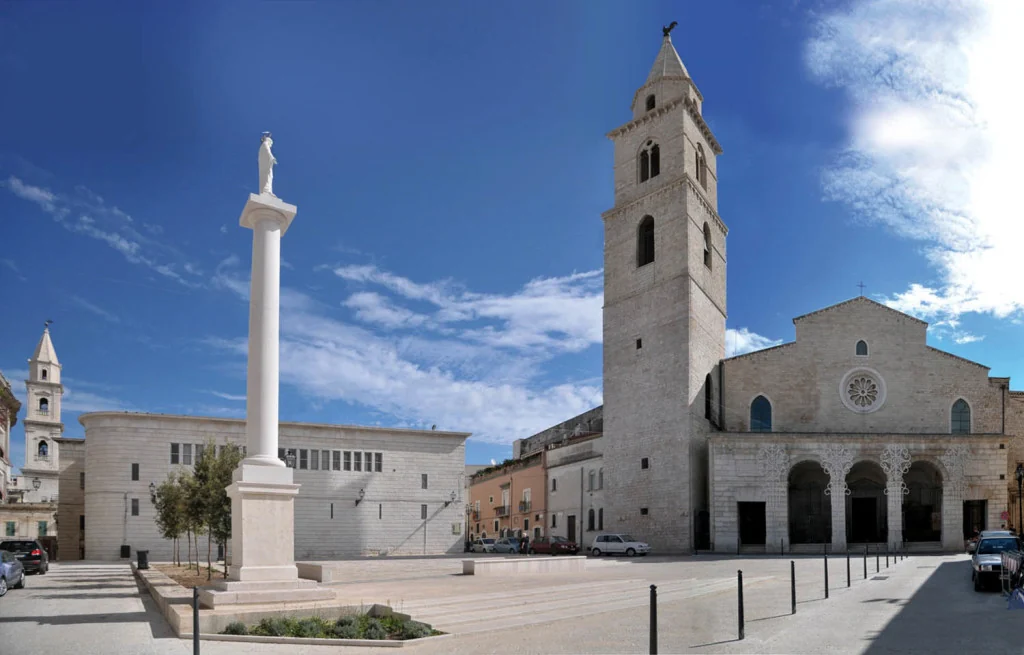
Its skyline is marked by three bell towers in local stone, those of the Cathedral, San Francesco and San Domenico, each about fifty metres tall: this is why the municipality calls it the “city of bell towers”. The old town is a web of lanes and airy squares, with votive shrines, noble coats of arms, grotesque masks and the Casalino quarter.
Andria deserves a visit of its own, not just as a stop on the way to the castle. Here the memory of the Swabian court, kept in the cathedral crypt, meets a living food tradition: the burrata born in its countryside, sugared almonds and the oil of a “City of Oil”. A day in town and a day at the castle make up a complete portrait of this corner of Puglia.
Law no. 148 of 11 June 2004, which created the province of Barletta-Andria-Trani, places its capital in the three towns of Barletta, Andria and Trani and leaves the choice of the legal seat to the statute. The municipal territory climbs up to the plateau: according to the Park authority, Andria contributes 12,070 hectares to the Alta Murgia National Park, the largest share after Altamura among the park's thirteen municipalities.
Castel del Monte stands within the municipality of Andria, as the Ministry of Culture's UNESCO Office notes: the site inscribed in 1996 covers 3.1 hectares, surrounded by a buffer zone of 10,847 hectares. Visitors staying in town can reach the castle without a car too, by city bus and a shuttle up to the entrance.
Sources: Viaggiare in Puglia (Regione Puglia) — Andria · Comune di Andria — I tre campanili · UNESCO World Heritage Centre — Castel del Monte · Legge 11 giugno 2004, n. 148: istituzione della provincia di Barletta-Andria-Trani · Parco Nazionale dell'Alta Murgia: l'Ente · Ministero della Cultura, Ufficio UNESCO: Castel del Monte · Comune di Andria: Navetta per Castel del Monte (scheda aggiornata il 4/8/2026)
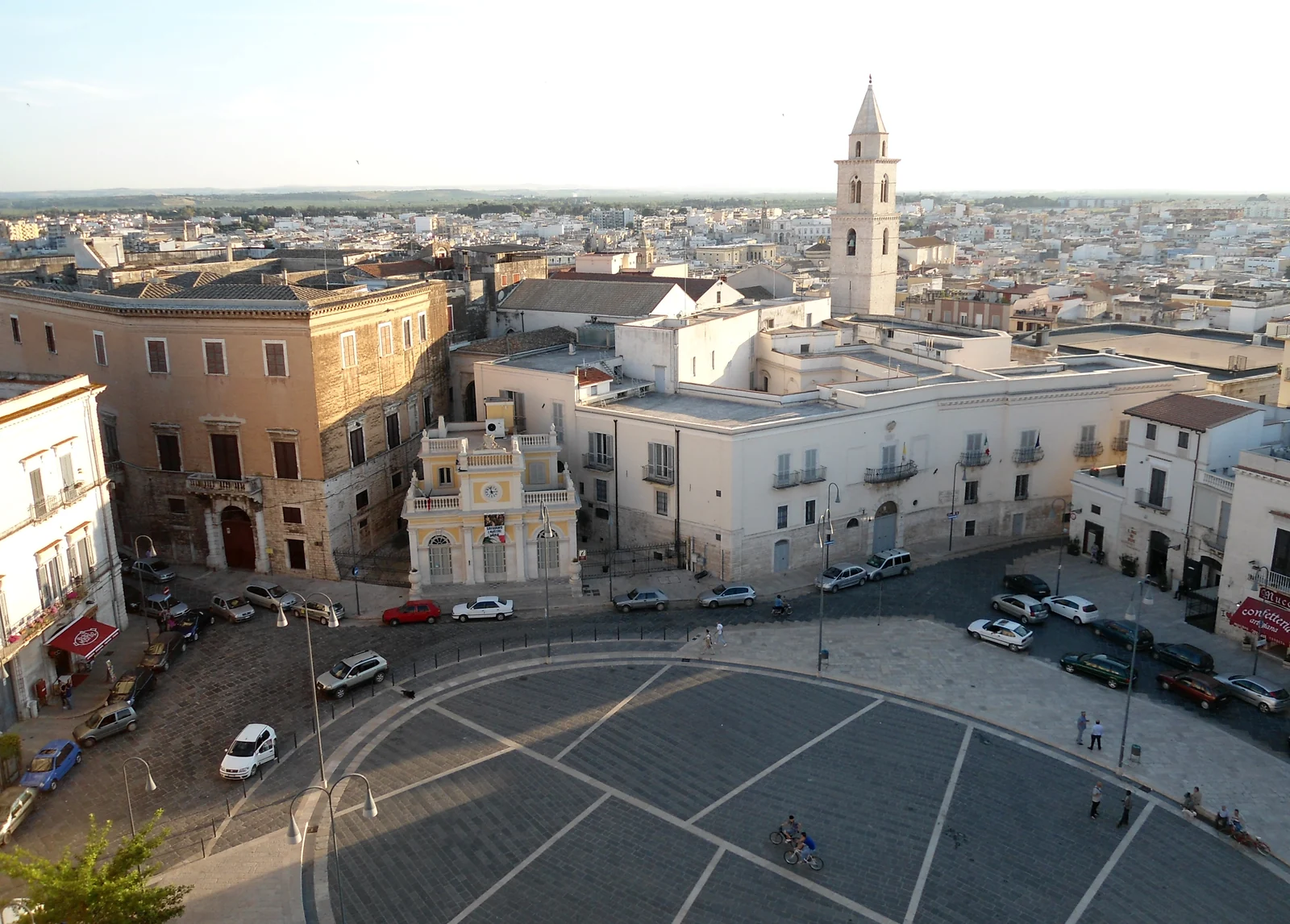
Photo: Andrisano / Wikimedia Commons — CC BY-SA 3.0 · Resized and converted to WebP.
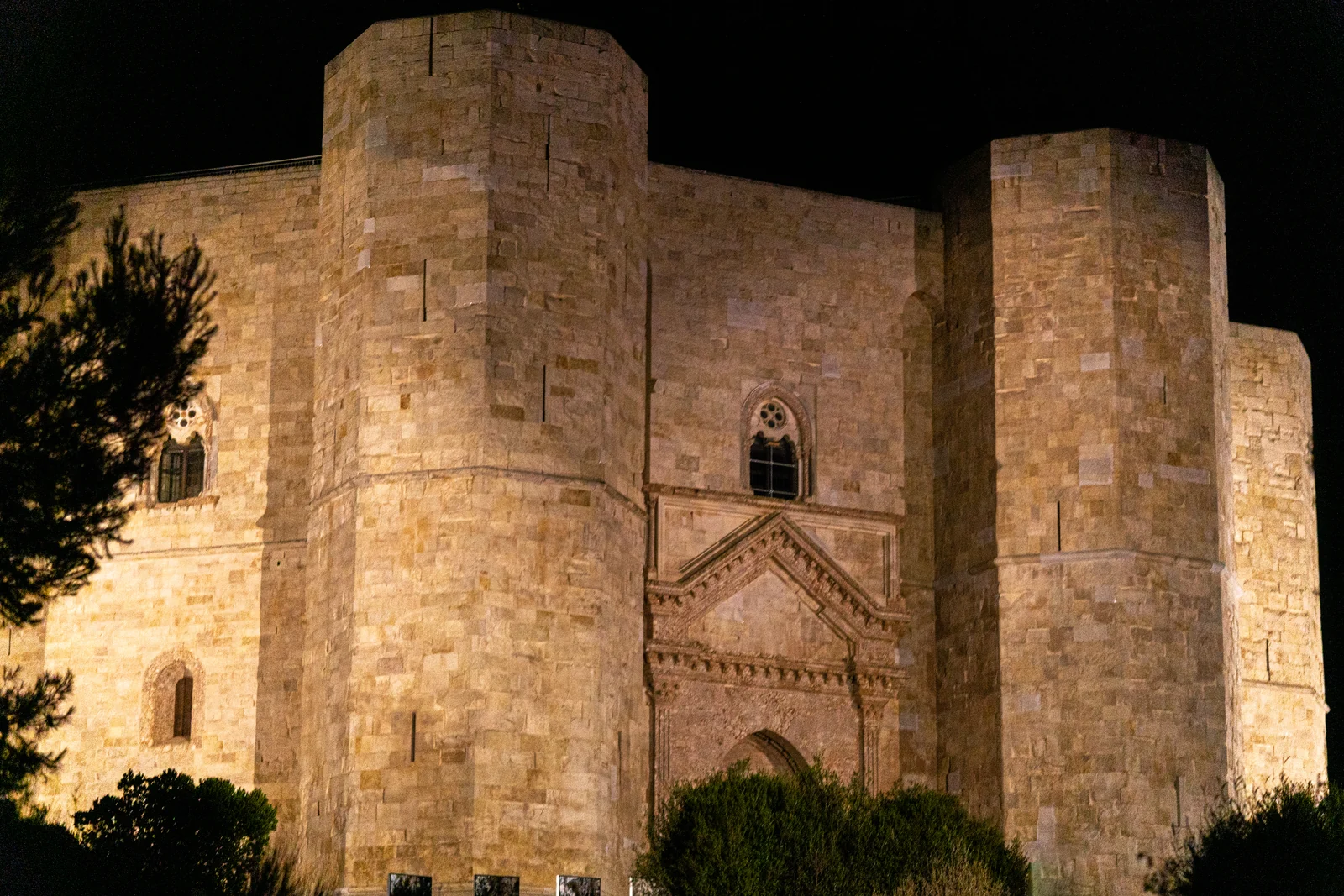
Photo: Ste.photos03 / Wikimedia Commons — CC BY-SA 4.0 · Resized and converted to WebP.
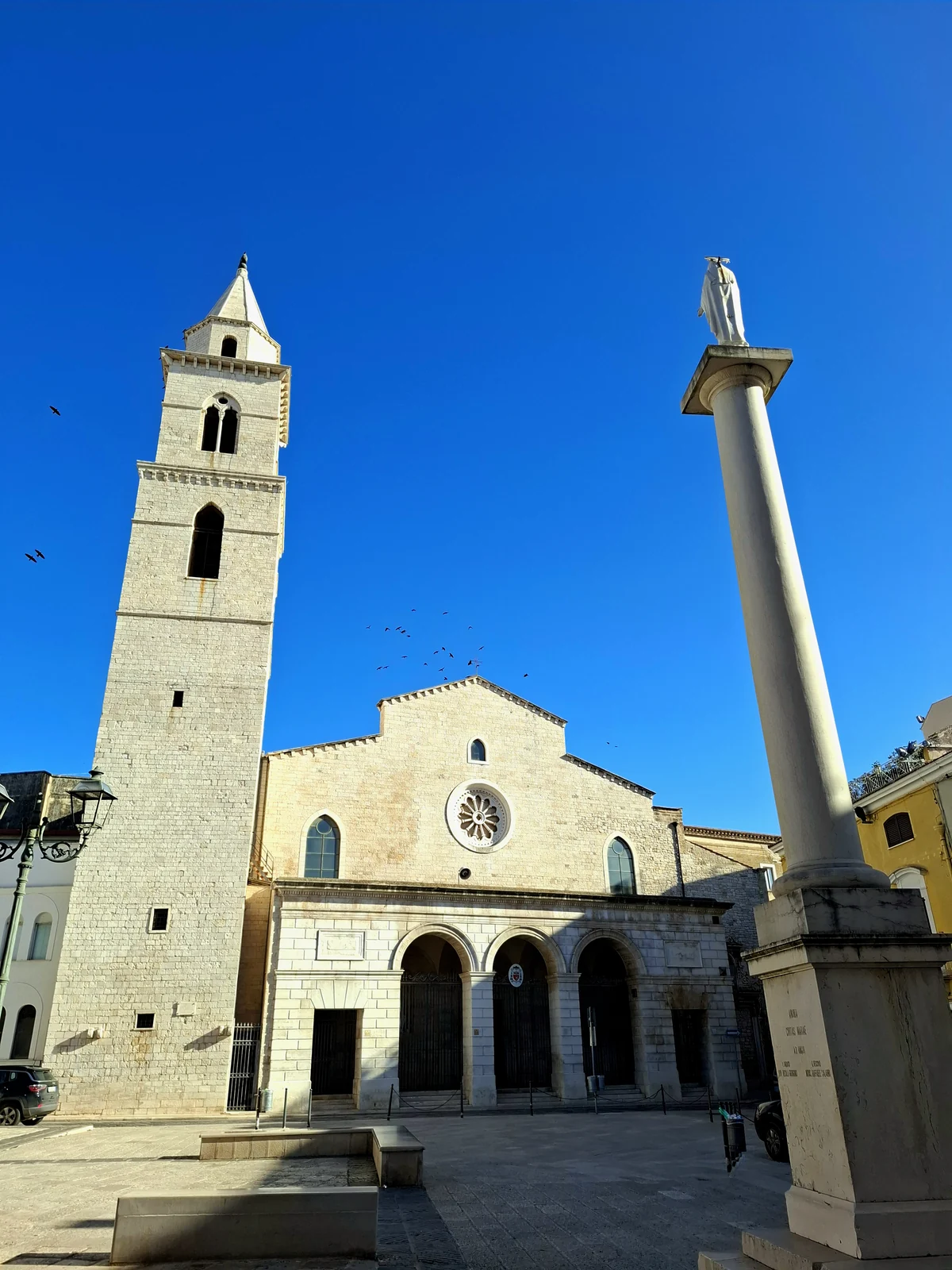
Photo: Nick Borisenko / Wikimedia Commons — CC0 · Resized and converted to WebP.
History
Andria's history can be read in its churches. The Cathedral of Santa Maria Assunta, seat of the diocese of Andria-Canosa-Minervino, is of Norman origin: according to the regional portal it was rebuilt from the fifteenth century, altered in the seventeenth and eighteenth centuries and in the mid-nineteenth with its neoclassical portico, and last restored in 1965. Its bell tower grew out of an old Lombard tower raised in Norman times; the oldest bell, called the Campanella, is dated 1310.
The link with Frederick II runs deep. According to tradition, two of his wives, Yolande of Brienne and Isabella of England, rest in the cathedral crypt, and a few kilometres away stands Castel del Monte, documented from 1240, which according to the museums directorate lay near the route between Andria and Garagnone. The cathedral also venerates the Holy Thorn, a relic that tradition links to Christ's crown, donated in 1308 by Beatrice of Anjou, and the relics of the patron saint, Saint Richard.
In the eighteenth century the town gained the bell towers of San Francesco and San Domenico, built by the local master builders Vito and Domenico Ieva. The regional portal also mentions the church of Sant'Agostino as one of the oldest places of worship, which the Diocesan Museum and the municipality link to the Teutonic Knights.
According to the Diocesan Museum, the cathedral was built in the eleventh century by the Norman counts over a smaller Byzantine church, which is now its crypt. In the twelfth century Countess Emma, wife of Count Richard II of Hauteville, was buried there; according to tradition, the two empresses rest in the crypt. Partly destroyed in 1350 by the mercenaries of King Louis of Hungary, its presbytery was rebuilt in the fifteenth century; in 1438 Francesco II Del Balzo had the chapel of Saint Richard built, and in 1844 the architect Federico Santacroce designed the neoclassical façade.
The diocese explains that the Holy Thorn came to Andria as the wedding gift of Beatrice of Anjou, daughter of Charles II, bride of Bertrand del Balzo. In 1799, when the French put the town to fire and sword, the reliquary was taken and sold at auction; the relic returned to the cathedral in 1837. Tradition holds that the Thorn changes its appearance in the years when 25 March falls on Good Friday: the first written account dates from 1633, the latest cases from 2005 and 2016, and the next coincidence will fall in 2157.
The patron saint, Richard, was a bishop of English origin who took part in the Third Lateran Council in 1179; he was recognised as the town's patron in 1438, under Eugene IV, at the request of Duke Francesco II Del Balzo. The co-patron is Our Lady of Miracles: her cult dates from 10 March 1576, when the carpenter Giannantonio Tucchio found the image in the cave of Saint Margaret; the icon was crowned on 3 May 1857 and Pius IX declared her patron of Andria and of the diocese on 14 August 1858.
Of the town walls that Count Peter had built in the eleventh century, the record of the national heritage catalogue states, only one gate survives: Porta Sant'Andrea, transformed in 1585 and restored in 1891. Its inscription attributes to Frederick II the words addressed to the people of Andria «Andria fidelis nostri affixa medullis», with the date 1230; the same record notes that the epigraph perhaps recalls an older, lost one and that the date may come from the nineteenth-century restoration.
The church of Sant'Agostino, the Diocesan Museum recalls, was dedicated to Saint Leonard while it belonged to the Teutonic Knights, from 1230 to about 1358; the complex then passed to the Benedictines and finally to the Augustinians, to whom Duke Francesco I del Balzo entrusted it. In 1398 Sveva Orsini, widow of Francesco del Balzo, left the funds for the church and convent of San Domenico.
Sources: Comune di Andria — Cattedrale Santa Maria Assunta · Comune di Andria — I tre campanili · Viaggiare in Puglia (Regione Puglia) — Andria · Direzione regionale Musei nazionali Puglia — Castel del Monte · Museo Diocesano di Andria: Cattedrale · Diocesi di Andria: Reliquia della Sacra Spina · Diocesi di Andria: Santi Patroni · Catalogo generale dei Beni Culturali (ICCD): Porta S. Andrea, Andria · Museo Diocesano di Andria: Chiesa di Sant'Agostino · Museo Diocesano di Andria: Chiesa di San Domenico
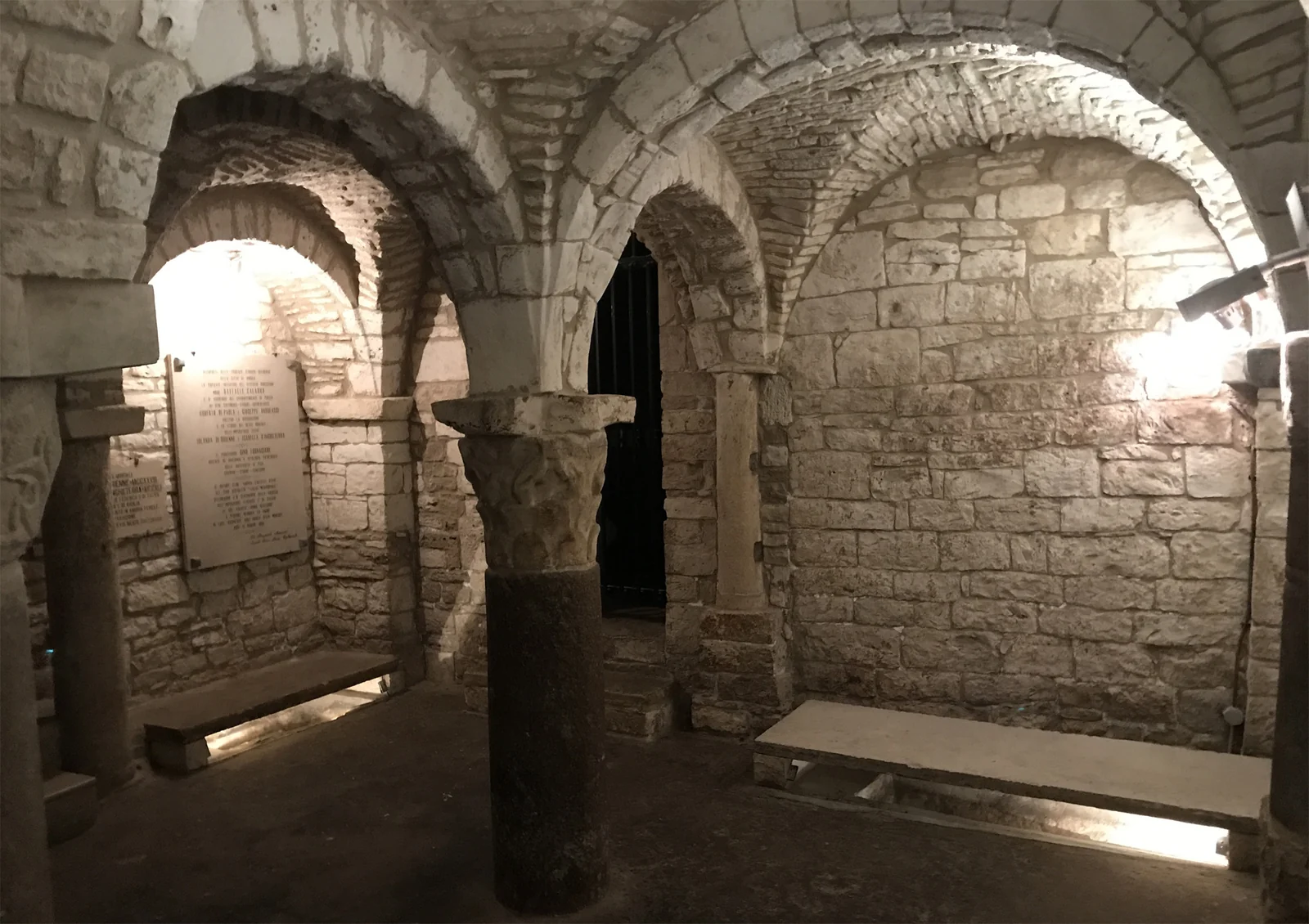
Photo: Geak / Wikimedia Commons — CC BY-SA 4.0 · Resized and converted to WebP.
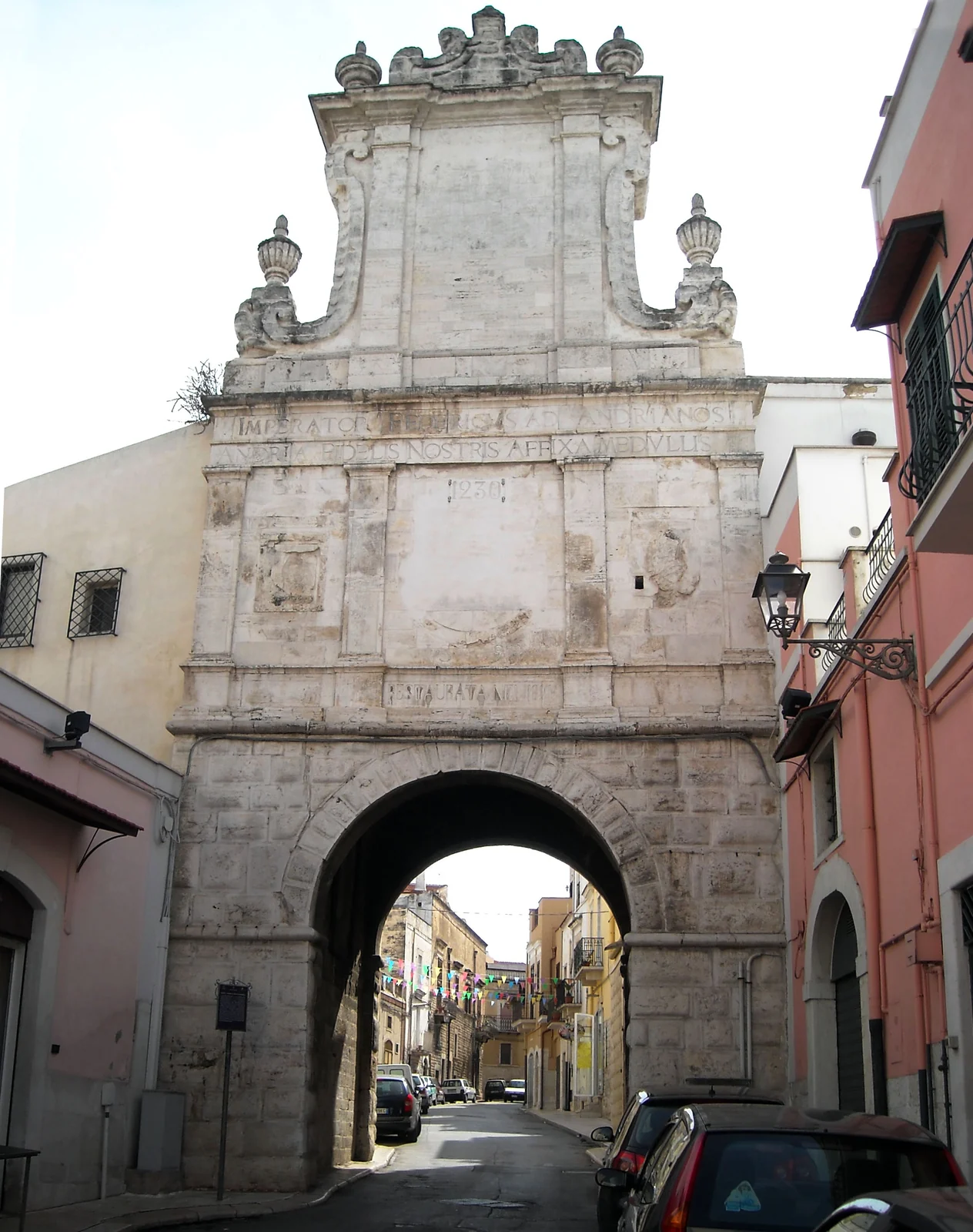
Photo: Marcoleo11 / Wikimedia Commons — CC BY-SA 4.0 · Resized and converted to WebP.
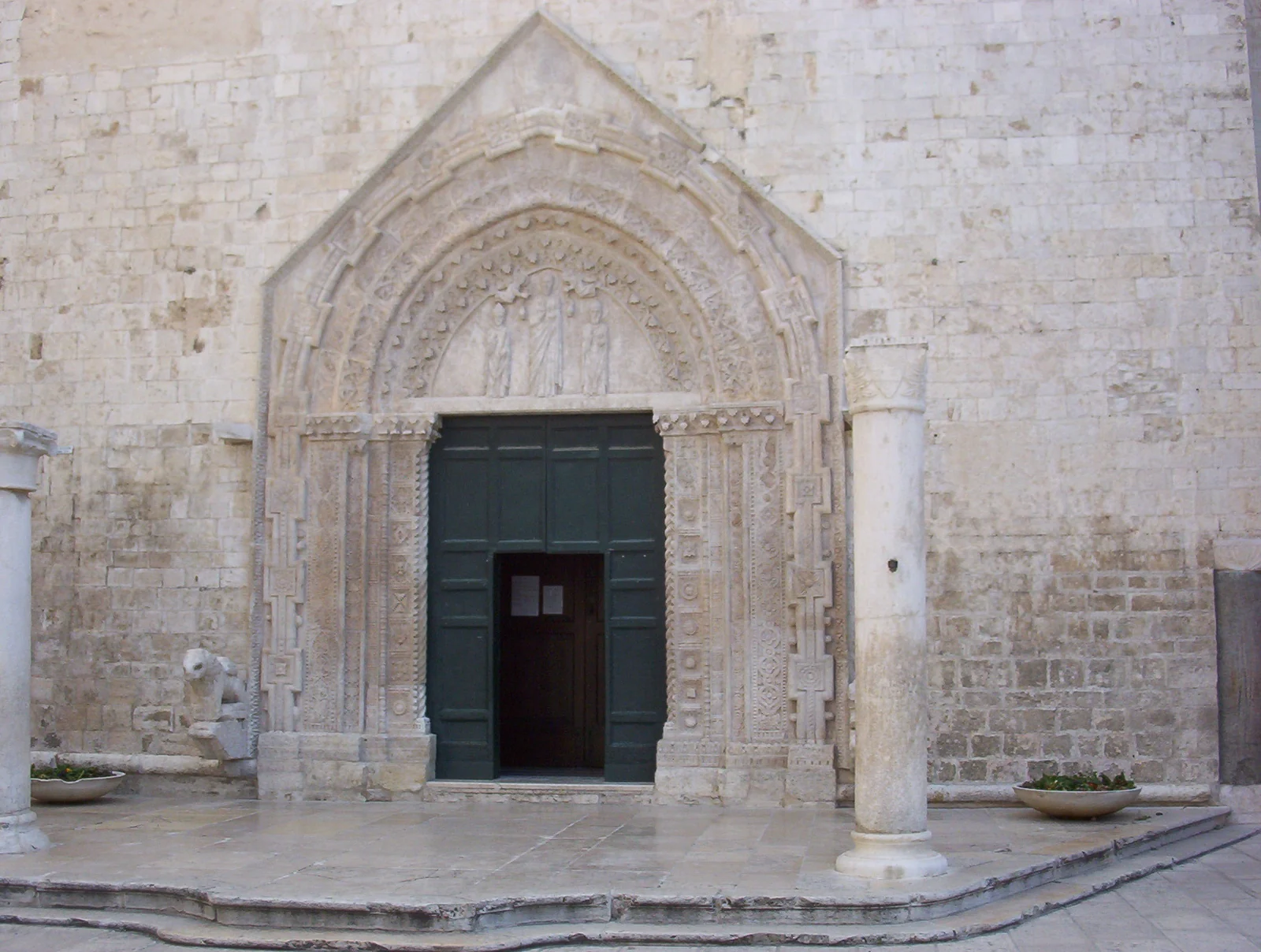
Photo: Andrisano~commonswiki / Wikimedia Commons — CC BY-SA 3.0 · Resized and converted to WebP.
What to see
The starting point is the Cathedral, with the chapel of the Holy Thorn, the so-called Cappellone of Saint Richard and the crypt with the tombs that tradition assigns to the two empresses; the building is free of architectural barriers. From the forecourt rises the Norman bell tower, about fifty metres tall with its pyramidal spire.
The other two bell towers guide a walk through the old town. That of San Francesco, built between 1760 and 1772, combines two square storeys with an octagonal third storey and spire; that of San Domenico, the tallest in town, is Baroque and ends in a pear-shaped dome topped by a bronze sphere and a weathervane shaped like a dog holding a torch. Between towers you cross paved lanes, squares, votive shrines and palazzi bearing coats of arms; in the Casalino quarter, according to the regional portal, is one of the narrowest streets in Europe.
A few steps from the cathedral, the “Giovanni Mucci” Confetti Museum occupies the premises of a historic sugared-almond factory active since 1894 and, in four sections with documents, tools, machines and moulds, tells the story of making confetti, sweets and chocolate; in 2011 the Ministry recognised it as a place of special historical interest.
At the cathedral, the bell tower, built between the twelfth and fourteenth centuries, keeps four pointed single windows from the older building and four later double windows. The municipality recalls that the 1310 Campanella was recast from a bell of 1118, and that the largest, the bell of Saint Richard of 1809, measures 133 centimetres across and weighs 1.8 tonnes. Next door, in the Bishop's Palace at Via De Anellis 46, the “San Riccardo” Diocesan Museum, founded in 1972, reopened to the public on 10 June 2019 after modernisation works; it holds the nineteenth-century reliquary of the Holy Thorn.
San Domenico, founded in 1398, has on its façade a finely decorated sixteenth-century portal topped by a Madonna and Child set in a shell; the municipality notes that the body of Duke Francesco II Del Balzo is kept in the sacristy. Sant'Agostino is known for its thirteenth-century portal, which records sculpture's move towards the Gothic: in the lunette Christ between Saint Leonard and Saint Nicholas, at the sides two column-bearing lions, on the side portal the coats of arms of the Teutonic Knights and of the House of Anjou. The former convent now houses the municipal library, and the outer cloister is used as a food market.
The sanctuary of Our Lady of Miracles rises on three levels: the cave with the fresco of the Madonna, enclosed in a small temple of polychrome marble; the middle church, decorated by the Benedictines with scenes of the Passion, prophets and sibyls; and Cosimo Fanzago's upper church, with three naves under a coffered wooden ceiling of 1633. The sanctuary was built quickly thanks to Duke Fabrizio Carafa and Bishop Luca Fieschi.
Santa Maria di Porta Santa, in Via Porta Santa, takes its name from the gate through which, according to tradition, Saint Richard entered the town. The church's first phase would date from the Swabian period, but documents mention it only from 1517; today it has a sixteenth-century layout, with the carved portal below the rose window, a single nave covered by two octagonal domes and, on the first altar on the left, the fresco of the Madonna del Latte.
The Ducal Palace, which the ministry record of the town walls attributes to the son of Fabrizio Carafa, the duke who bought the town in 1552, is described by the municipality as undergoing recovery and redevelopment. In Via Flavio Giugno, the former municipal market opened in 1931 reopened in June 2025, after restoration, as a social and cultural venue.
Sources: Comune di Andria — Cattedrale Santa Maria Assunta · Comune di Andria — I tre campanili · Viaggiare in Puglia (Regione Puglia) — Andria · Comune di Andria — Museo del Confetto Giovanni Mucci · Museo Diocesano di Andria: Cattedrale · Diocesi di Andria: Museo Diocesano · Comune di Andria: Museo Diocesano «San Riccardo» · Diocesi di Andria: Reliquia della Sacra Spina · Museo Diocesano di Andria: Chiesa di San Domenico · Comune di Andria: Chiesa di San Domenico · Museo Diocesano di Andria: Chiesa di Sant'Agostino · Comune di Andria: Chiesa di Sant'Agostino · Museo Diocesano di Andria: Chiesa di Santa Maria dei Miracoli · Comune di Andria: Santuario della Madonna dei Miracoli · Museo Diocesano di Andria: Chiesa della Porta Santa · Catalogo generale dei Beni Culturali (ICCD): Chiesa di Santa Maria di Porta Santa, Andria · Catalogo generale dei Beni Culturali (ICCD): mura urbiche di Porta Castello, Andria · Comune di Andria: Palazzo Ducale · Comune di Andria: ex Mercato di via Flavio Giugno
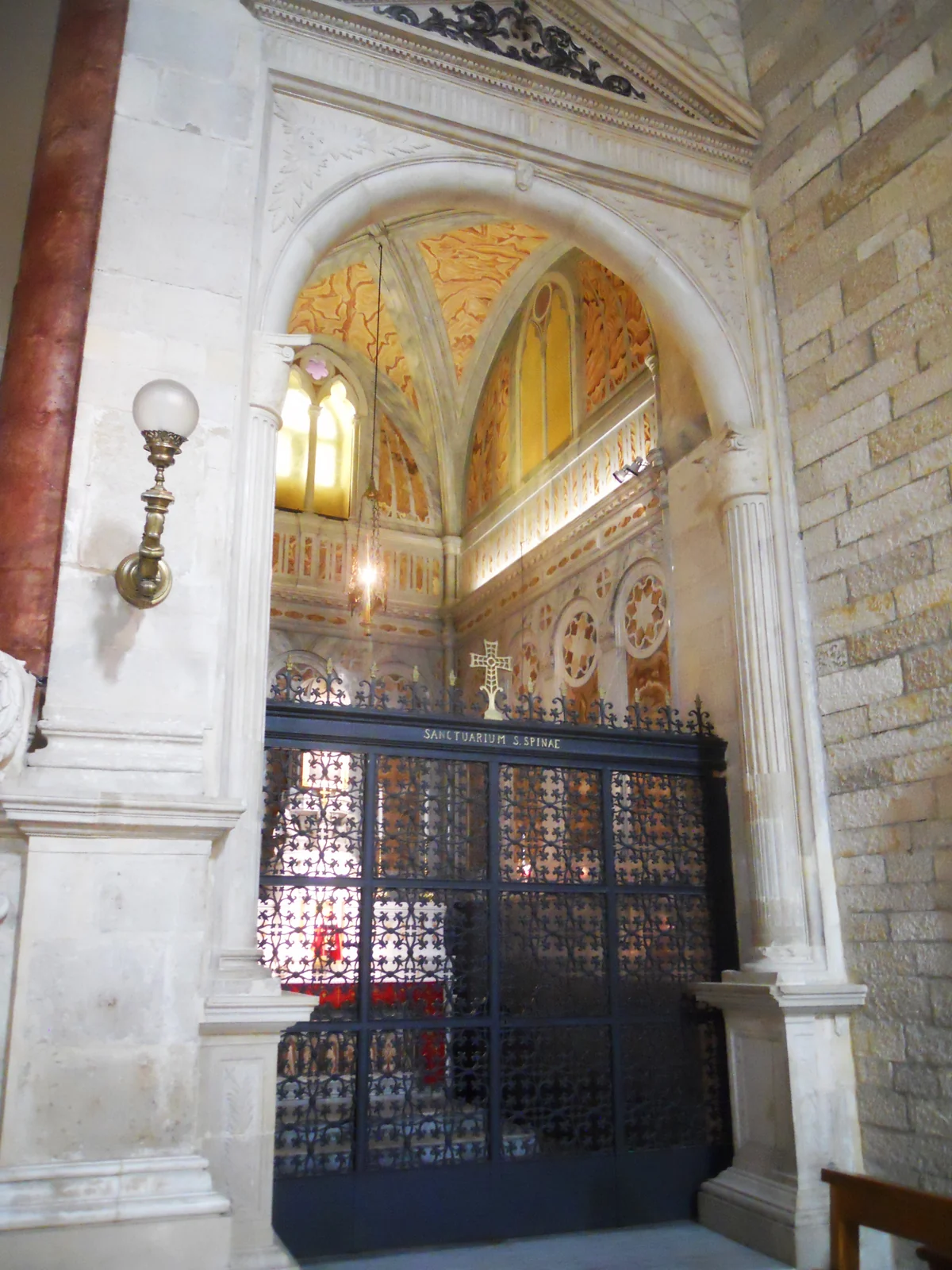
Photo: Pufui PcPifpef / Wikimedia Commons — CC BY-SA 4.0 · Resized and converted to WebP.
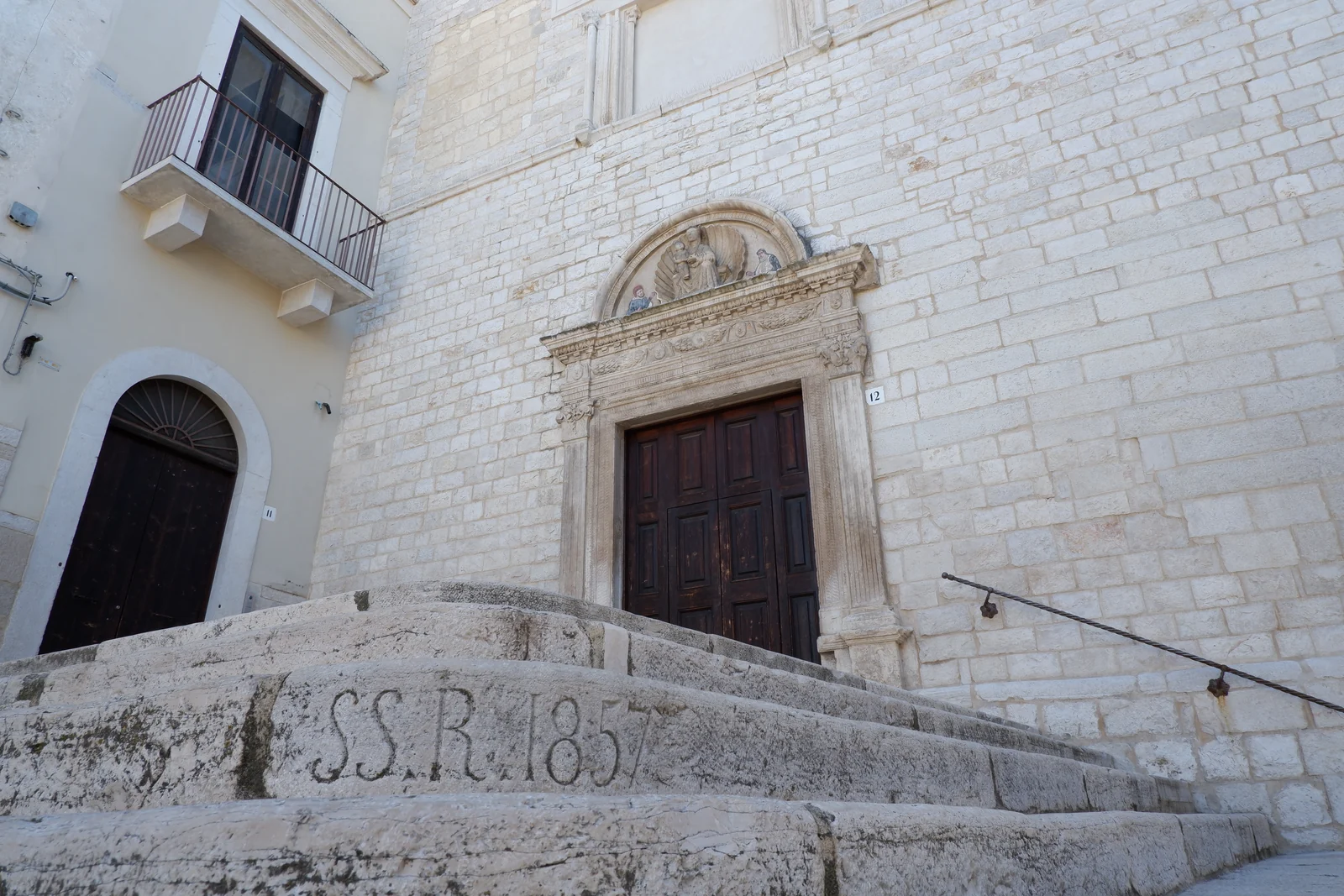
Photo: Vincenza Sgaramella / Wikimedia Commons — CC BY-SA 4.0 · Resized and converted to WebP.
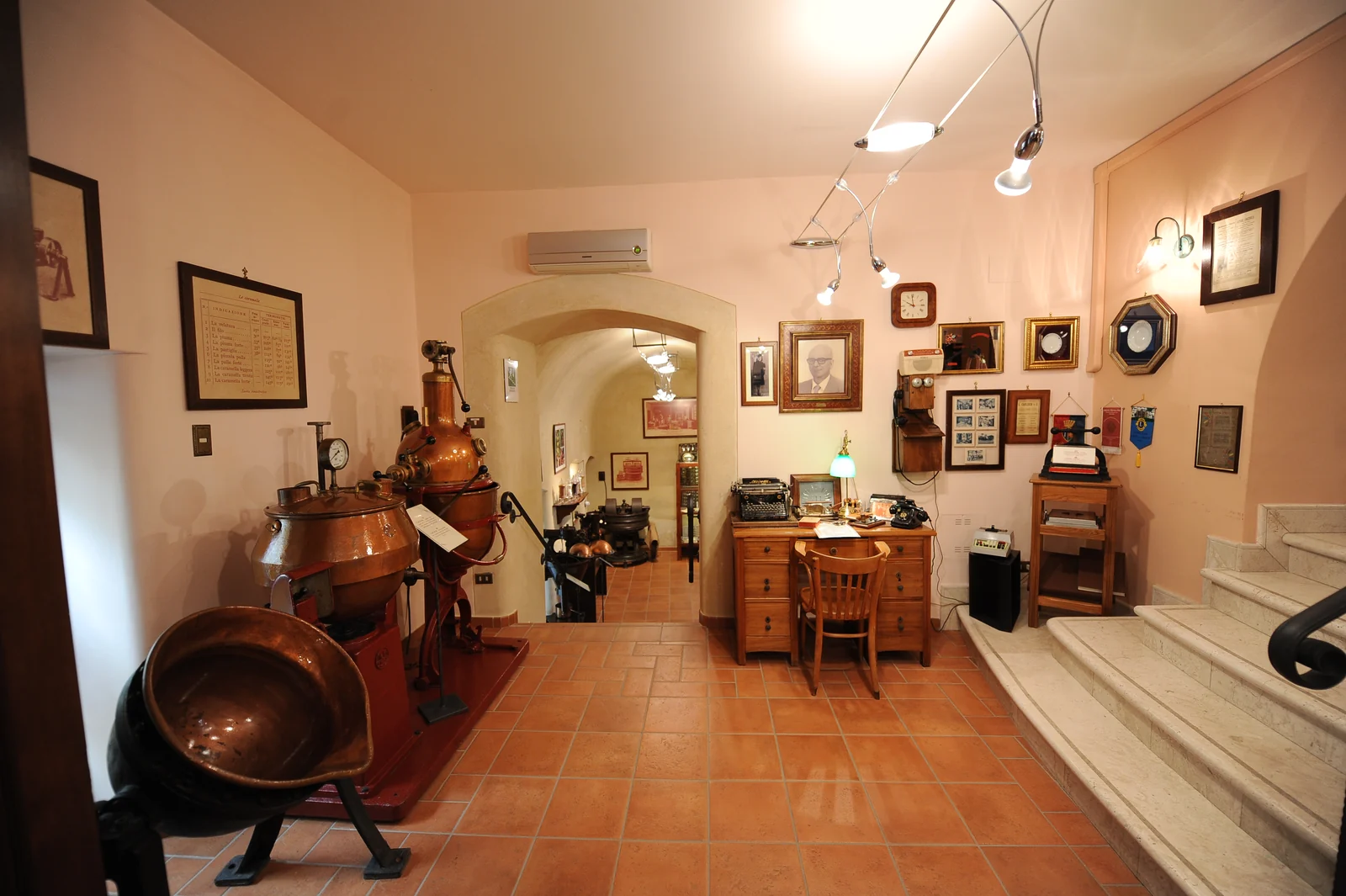
Photo: Fabio Straniero / Wikimedia Commons — CC BY-SA 3.0 · Resized and converted to WebP.
Food and wine
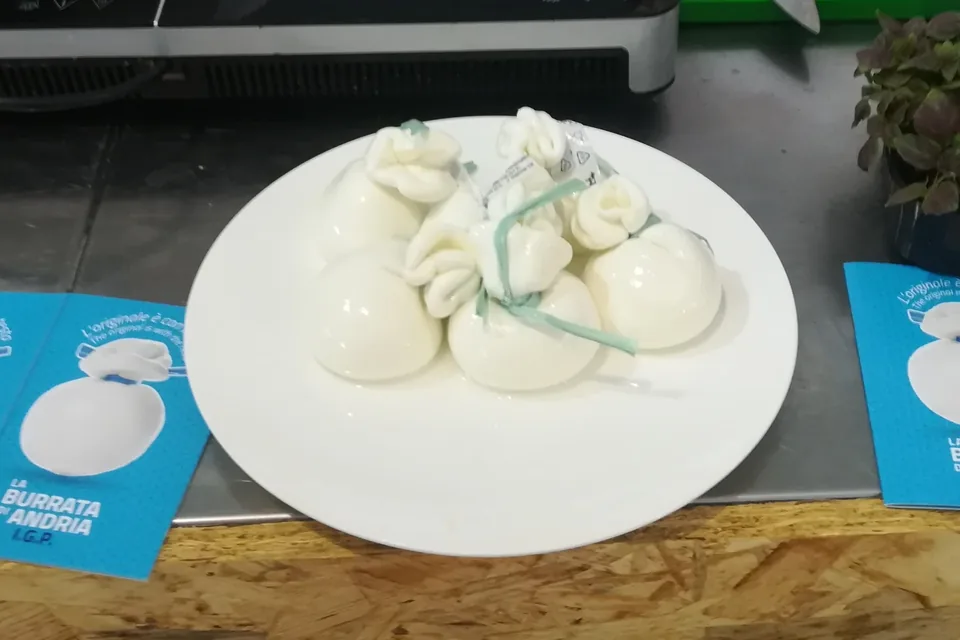
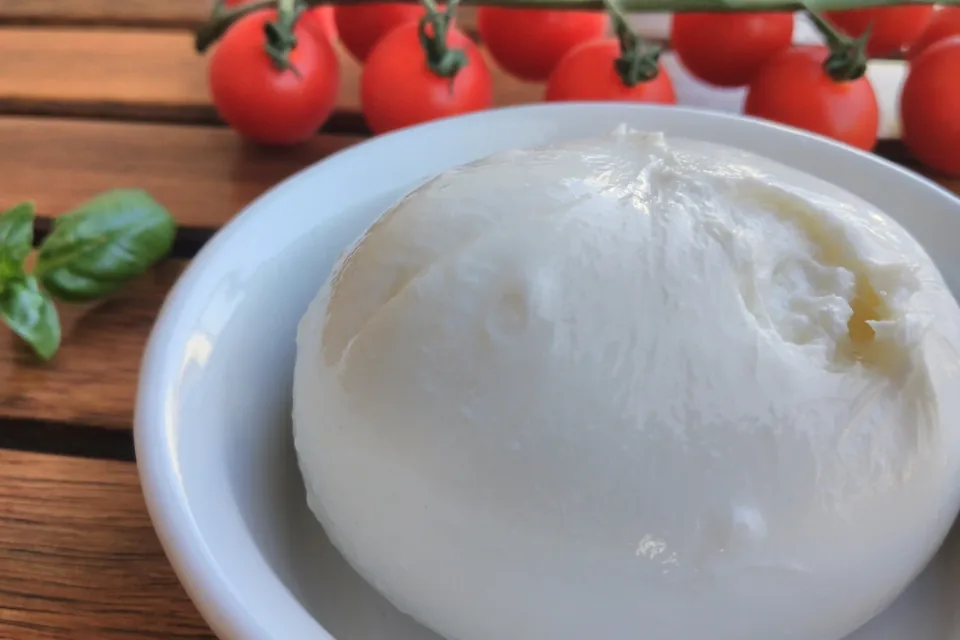
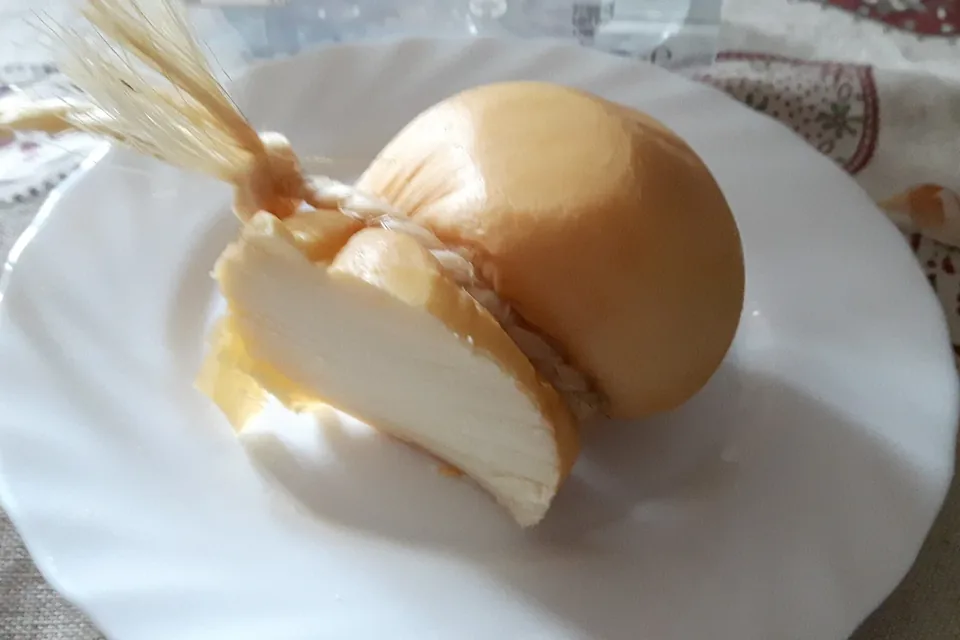
Andria is the home of burrata. According to the protection consortium, it was born in the early 1930s from an idea of the Andria cheesemaker Lorenzo Bianchino: during a heavy snowfall, to keep and transport his dairy products, he created a pouch of pasta filata enclosing shreds of mozzarella and cream. The name recalls the buttery taste of the filling, not added butter. Burrata was once wrapped in asphodel leaves gathered on the Murgia. Today Burrata di Andria has been an EU PGI since 2016.
The town also has a long confectionery tradition. The municipality recalls that in the 1930s, in the historic factory in the centre, the “tenerelli” were created, an Andria speciality of Puglia almonds and hazelnuts covered with a double layer of chocolate; the regional portal suggests a tasting during a visit to the Confetti Museum.
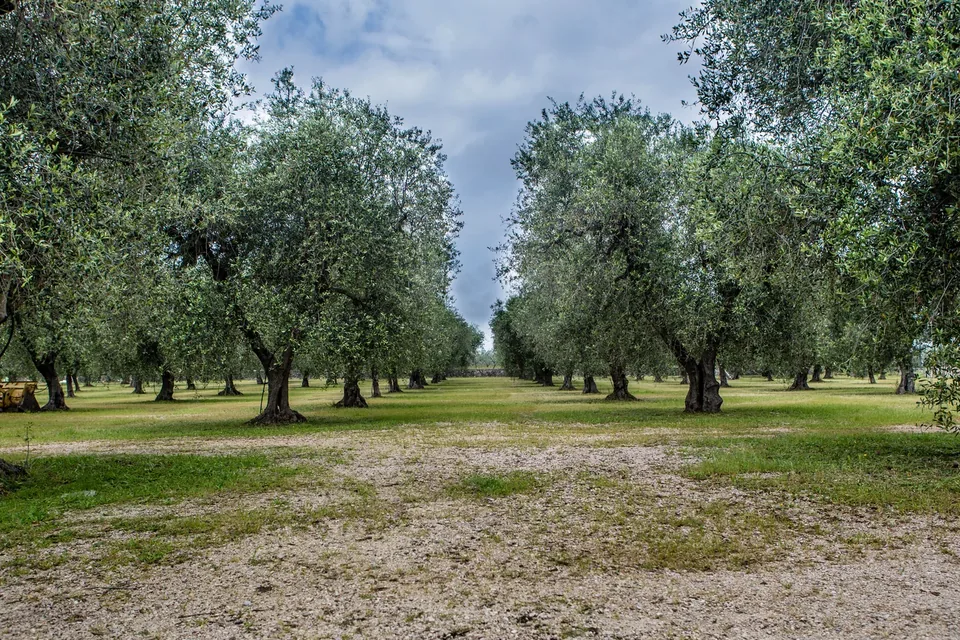
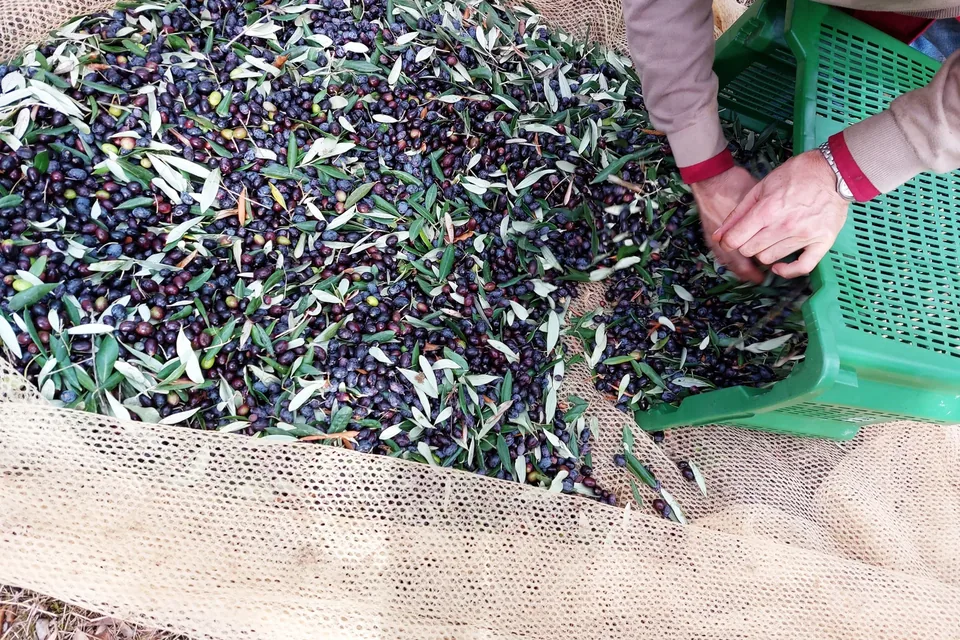
The sign at the town entrance presents Andria as a City of Oil. The surrounding countryside lies within the area of Terra di Bari PDO extra virgin olive oil with the Castel del Monte mention, made with at least 80% Coratina olives, and within that of the Castel del Monte wines, including the Rosso Riserva based on Nero di Troia.
The PGI specification, published by the Ministry of Agriculture, defines Burrata di Andria as a cow's milk cheese: a casing of pasta filata enclosing the stracciatella, that is pasta filata shredded by hand and cream. It weighs between 100 grams and one kilo, is made all year round, and the area of production and packing is the whole of Puglia, not Andria alone. The pouch is sealed with boiling water or tied, and kept at about 4 degrees; checks are entrusted to the CSQA certification body. The specification notes that one of the first mentions of burrata appears in the 1931 Touring Club guide; according to the consortium, founded on 17 February 2017, it should be taken out of the fridge at least an hour before eating.
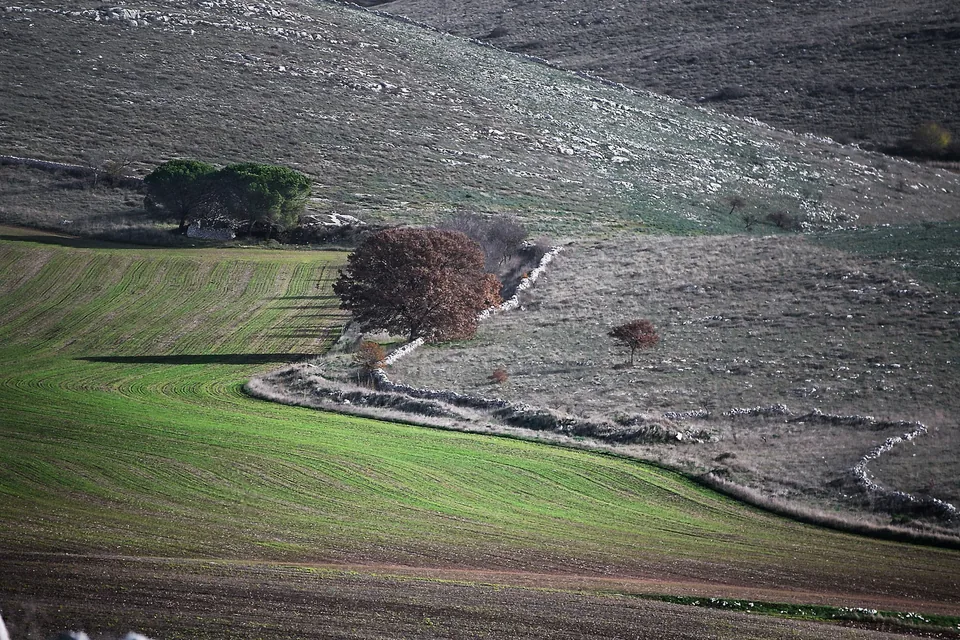
For oil, the Terra di Bari PDO specification lists the municipalities of the Castel del Monte mention: Andria, Barletta, Canosa, Minervino, Corato, Trani, Bisceglie, Altamura, Poggiorsini, Gravina and Spinazzola. Oil with this mention, made from at least 80% Coratina olives, must be green with yellow glints, intensely fruity, with a medium sensation of bitterness and pungency. The municipality describes the landscape it comes from: almond trees on the Murgia, vines and olives on the plain towards the sea.
Sources: Consorzio Burrata di Andria IGP — prodotto e lavorazione · eAmbrosia (Commissione europea) — Burrata di Andria IGP · Comune di Andria — Museo del Confetto Giovanni Mucci · Viaggiare in Puglia (Regione Puglia) — Andria · Qualigeo (Fondazione Qualivita) — Terra di Bari DOP · Qualigeo (Fondazione Qualivita) — Castel del Monte Rosso Riserva DOP · Ministero dell'agricoltura (MASAF): disciplinare di produzione della IGP «Burrata di Andria» · Consorzio della Burrata di Andria IGP: storia · Ministero dell'agricoltura (MASAF): disciplinare dell'olio extravergine di oliva DOP «Terra di Bari» (D.M. 4 settembre 1998) · Comune di Andria: la campagna andriese e la Murgia
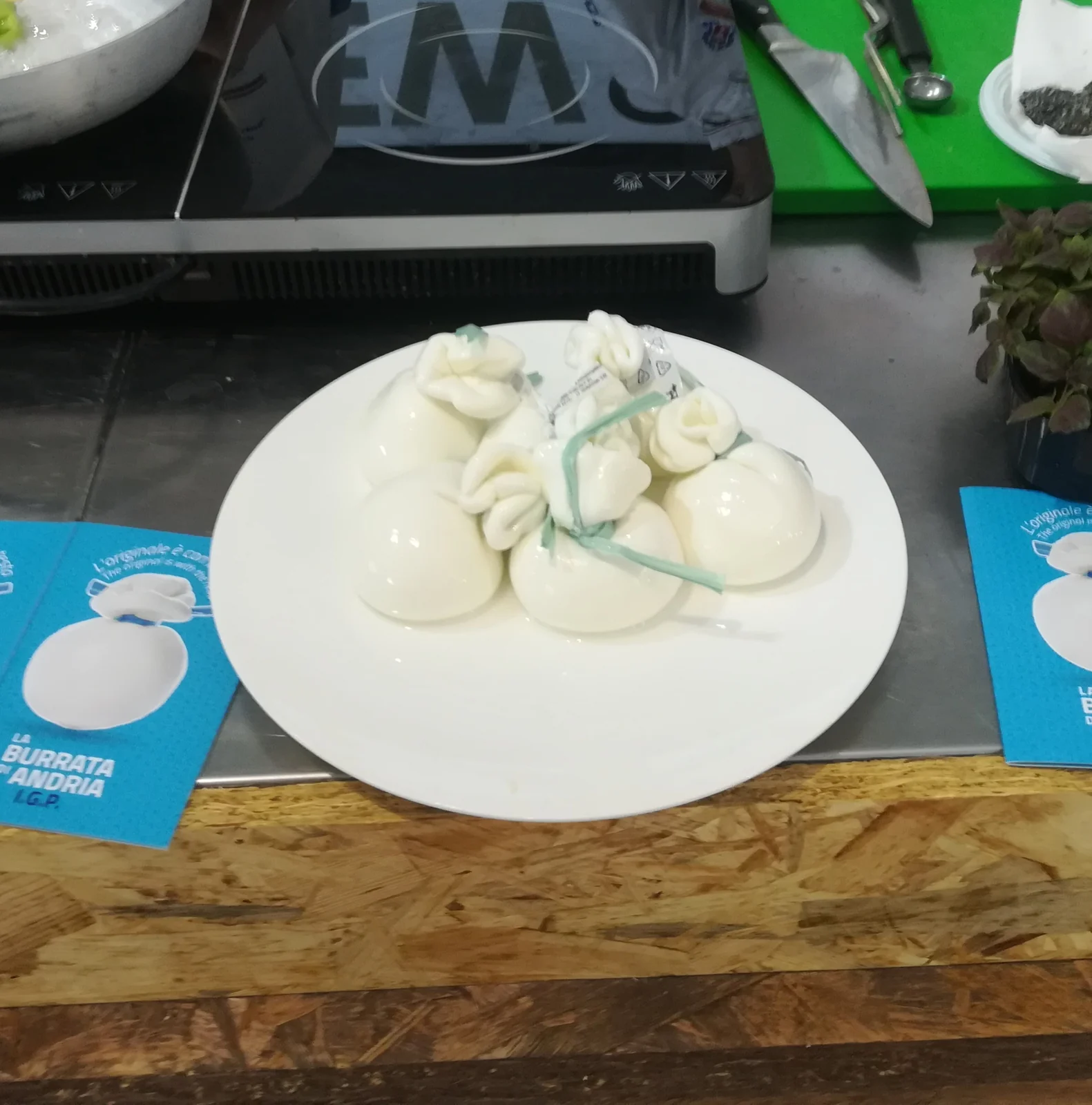
Photo: FM433 / Wikimedia Commons — CC BY-SA 4.0 · Resized and converted to WebP.
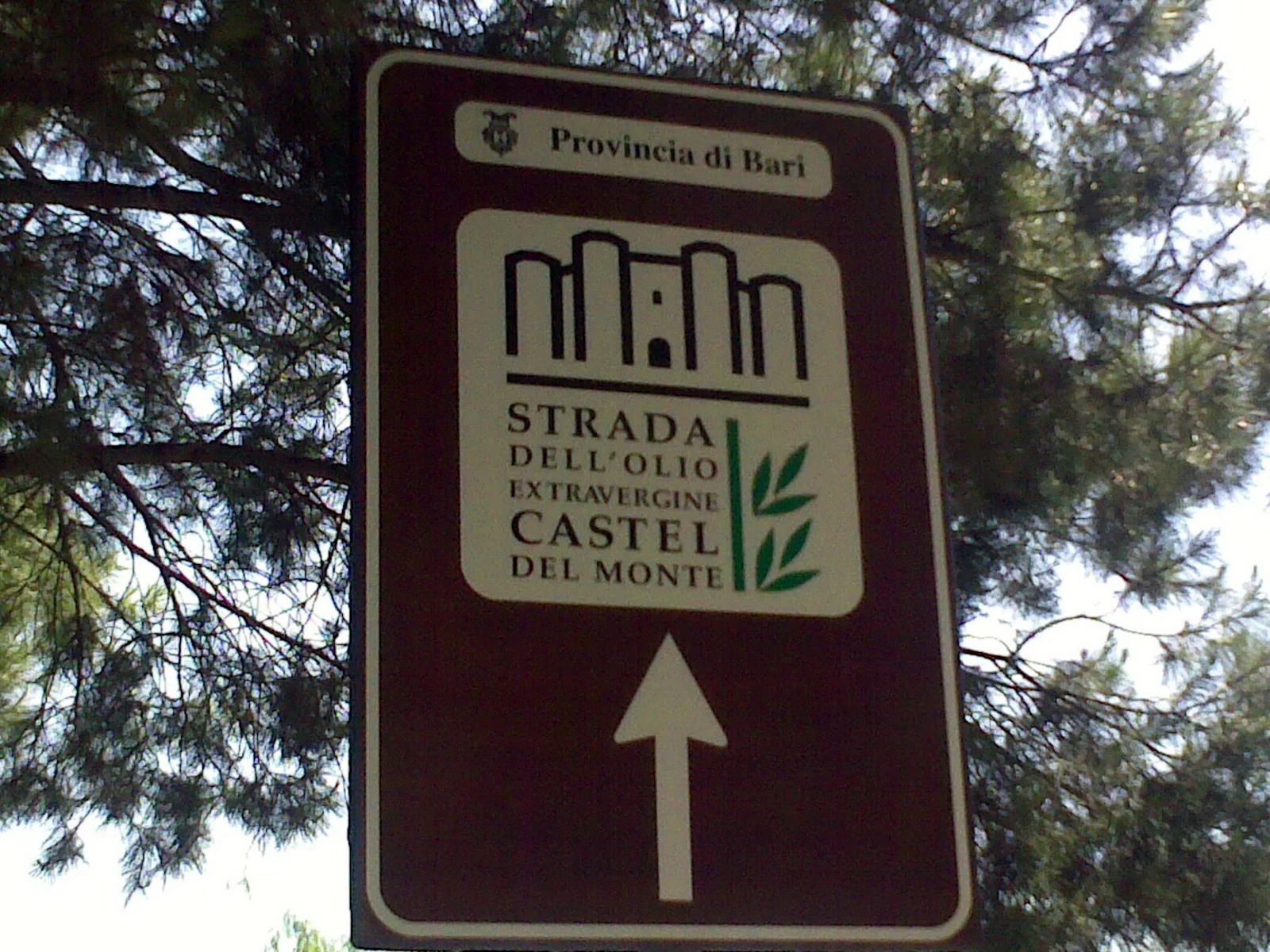
Photo: Deblu68 / Wikimedia Commons — Public domain · Resized and converted to WebP.
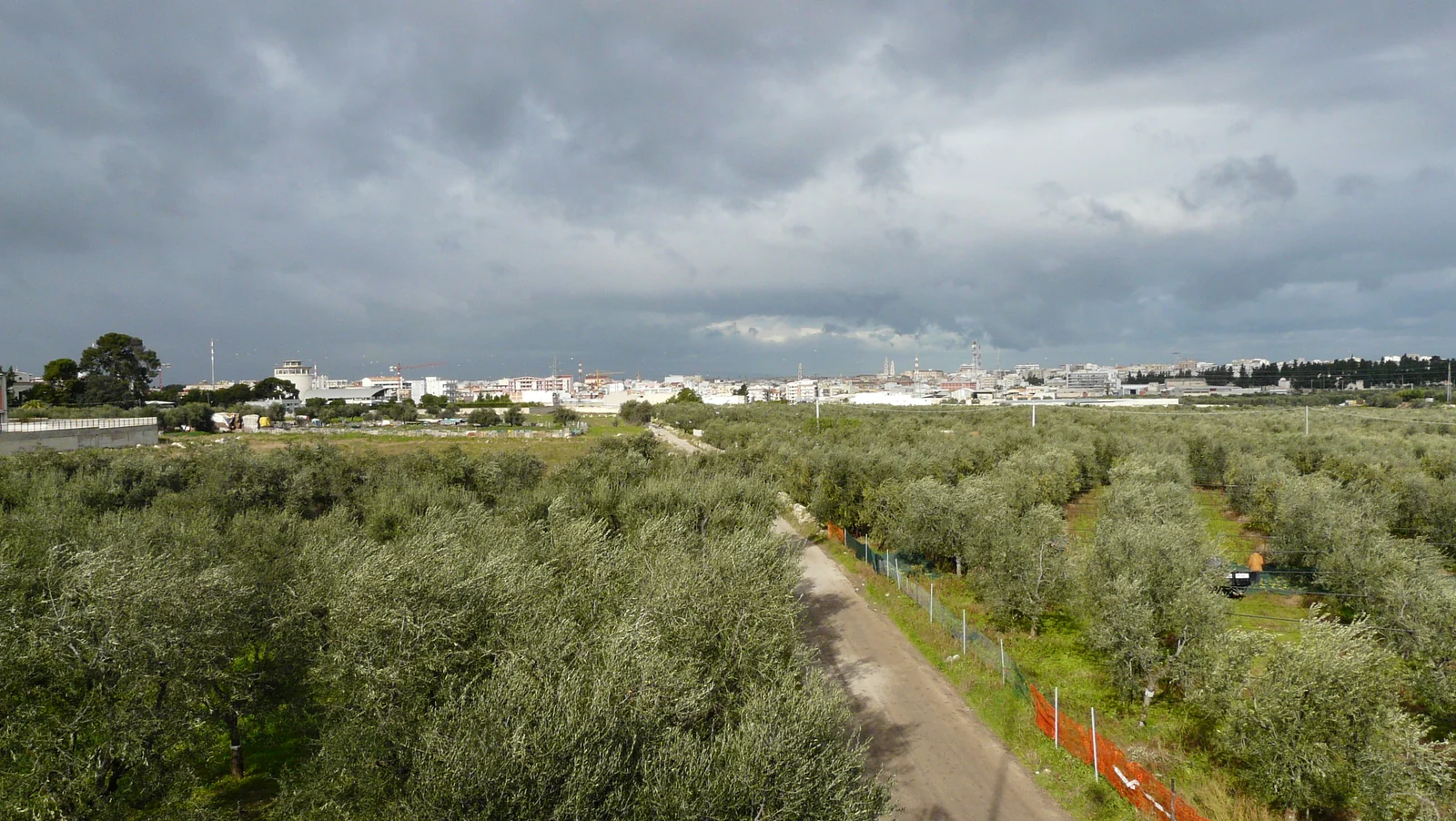
Photo: Deblu68 / Wikimedia Commons — CC BY-SA 3.0 · Resized and converted to WebP.
Things to do
The classic visit starts in town and climbs to Castel del Monte, in the Alta Murgia National Park: Frederick II's octagonal fortress, with its sixteen rooms and the coral breccia of its doorways, is about twenty kilometres from the centre. The regional portal recommends experiencing it at sunset, when the sun sinks behind the towers.
In town, a walk following the three bell towers helps you find your way around the old centre and discover churches, palazzi and the Casalino quarter. Food lovers can build a route between the Confetti Museum and the trattorias serving burrata: the regional portal suggests exactly this tour of the town's specialities, and the protection consortium explains the stages of production, from curd to stretching in hot water and sealing the pouch.
For lovers of contemporary culture, in August the Castel dei Mondi Festival brings new voices in playwriting to Andria. By bike, the town has several urban cycle routes listed by the regional portal.
Inside Castel del Monte, the regional Museums Directorate points out what to look for: the eight towers and the octagonal courtyard, the sixteen trapezoidal rooms arranged eight per floor, the slab with the procession of knights, the falconer's tower, the telamons and a fragment of mosaic in the eighth room. Two hypotheses remain on the castle's purpose, defensive or residential and representative. Tickets also come in a combined version with Trani castle, and admission is free on the first Sunday of the month.
The Andria countryside can be explored through rock-cut churches and traces of transhumance. The municipality lists among the best preserved Santa Croce, Santa Sofia, now Madonna dell'Altomare, and Sant'Angelo in Gurgo, now Santissimo Salvatore, next to a karst sinkhole about two kilometres from the centre; the Santa Margherita ravine keeps painted caves. The stations of Titolo and San Leonardo recall five centuries of transhumance from the fifteenth century onwards, and on the hills of Monte Faraone and Monte Santa Barbara, near the ancient Via Traiana, an archaeological area spans at least five millennia, with two large burial-mound necropolises.
In town, besides the Confetti Museum, visited by booking, the Casamuseo Borgomurgia in Via Corrado IV di Svevia offers, also by booking, a route through the layers of a small palazzo in the centre, which the municipality calls “underground Andria”.
Sources: Viaggiare in Puglia (Regione Puglia) — Andria · Direzione regionale Musei nazionali Puglia — Castel del Monte · Consorzio Burrata di Andria IGP — prodotto e lavorazione · Comune di Andria — I tre campanili · Comune di Andria: Castel del Monte (scheda aggiornata il 18/11/2024) · Direzione regionale Musei nazionali Puglia: biglietti e orari · Comune di Andria: chiese rupestri e lama di Santa Margherita · Comune di Andria: la campagna andriese e la Murgia · Comune di Andria: Casamuseo Borgomurgia (scheda aggiornata il 13/1/2025) · Comune di Andria — Museo del Confetto Giovanni Mucci
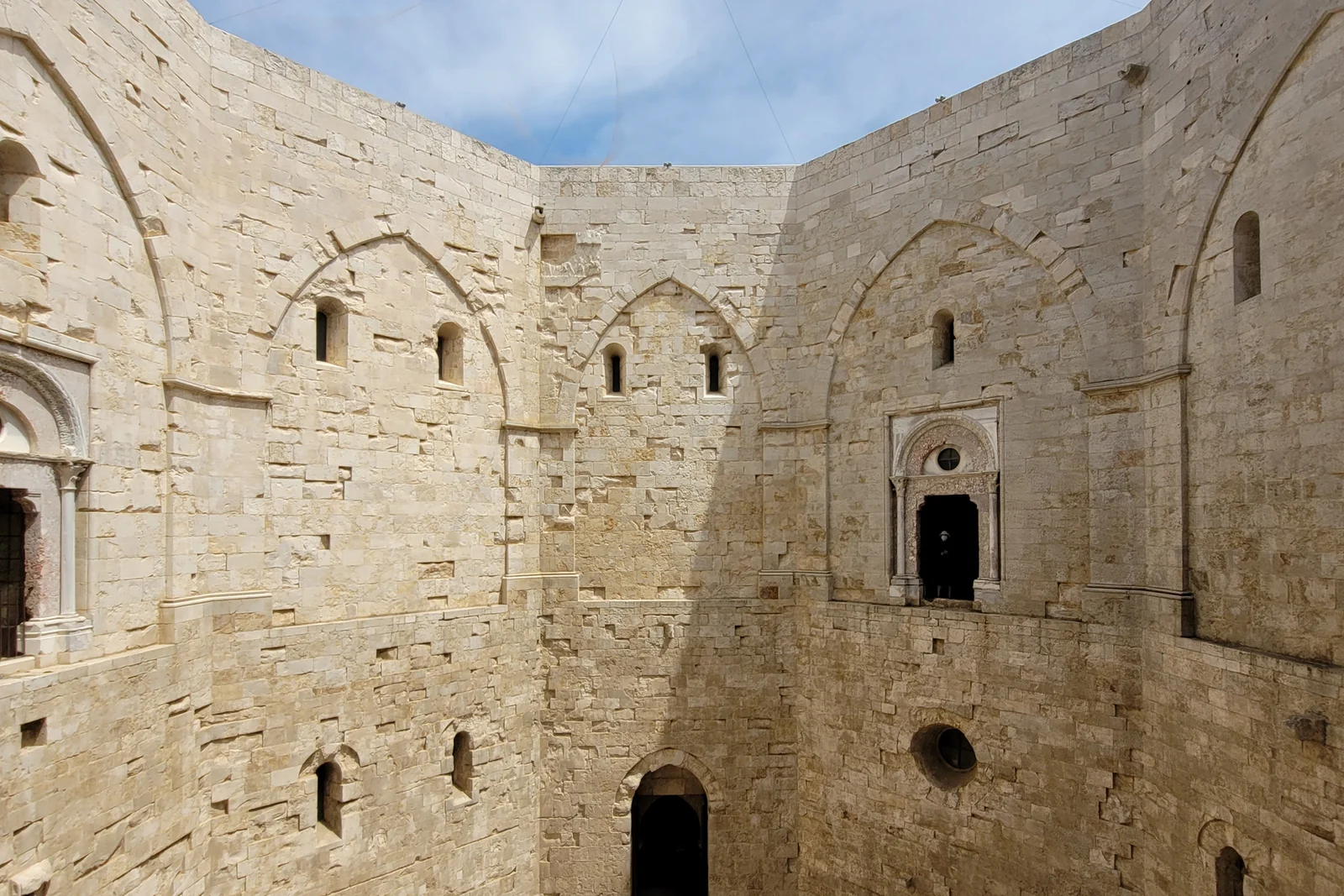
Photo: Bernard Gagnon / Wikimedia Commons — CC0 · Resized and converted to WebP.
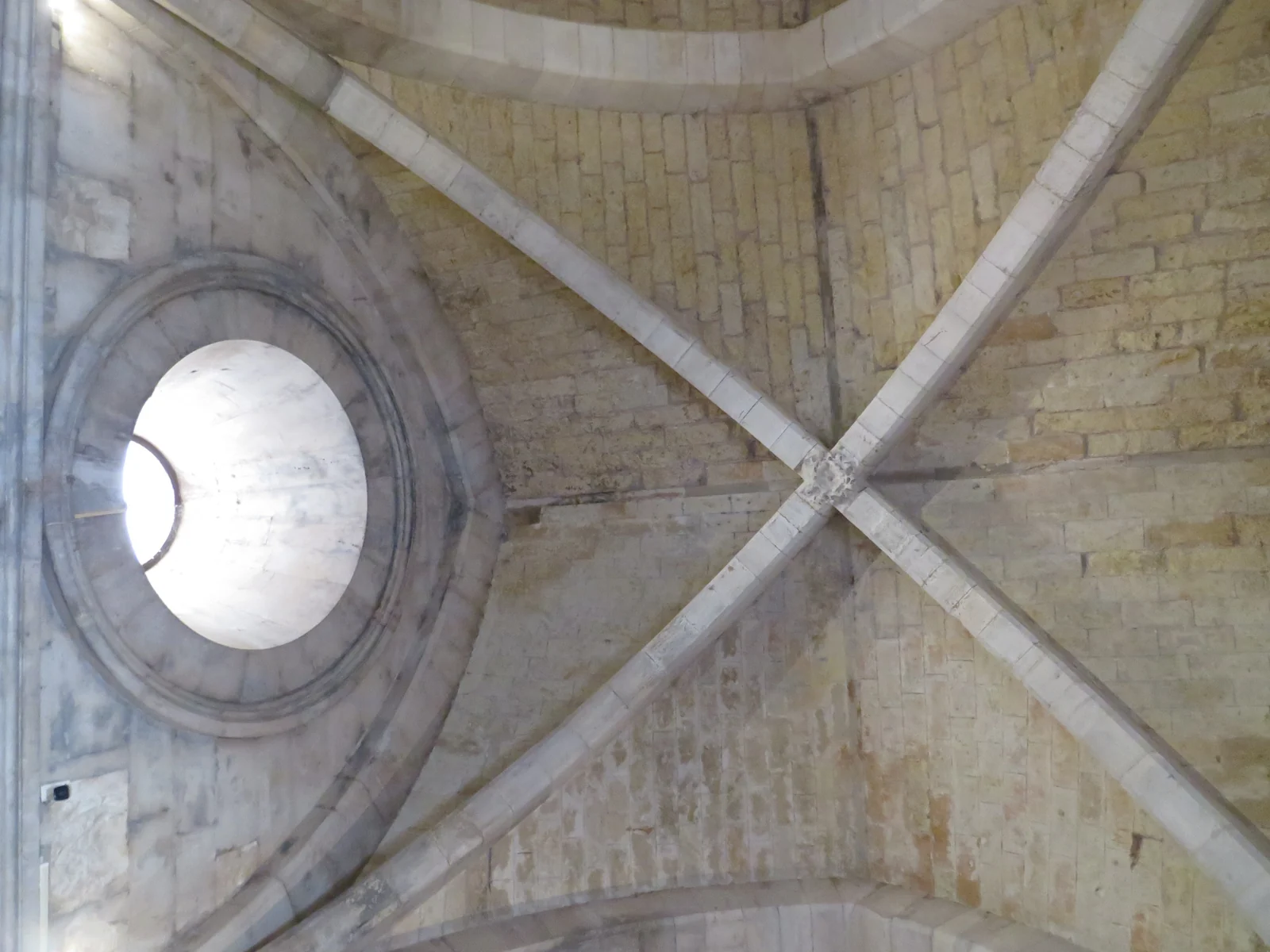
Photo: Enric / Wikimedia Commons — CC BY-SA 4.0 · Resized and converted to WebP.
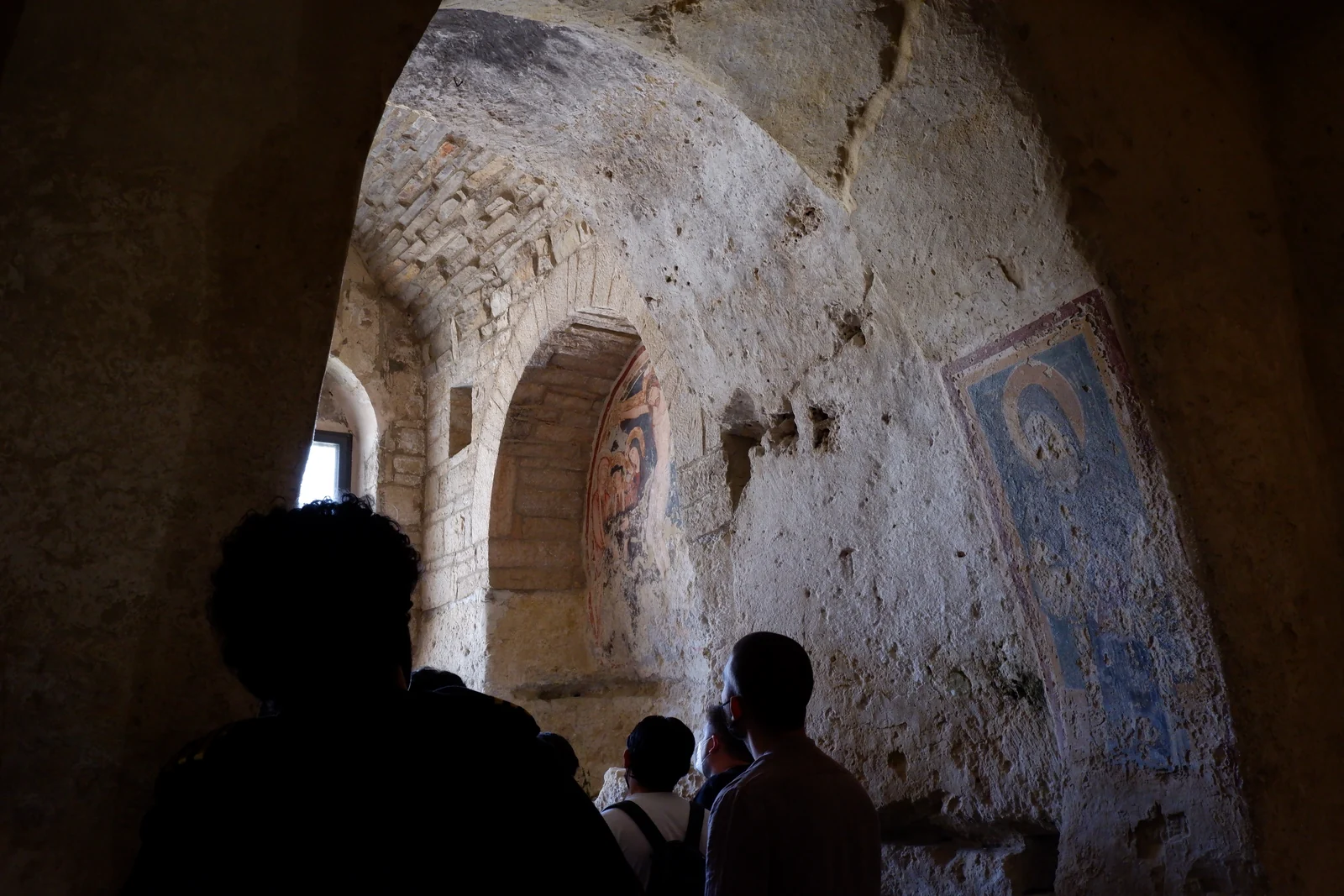
Photo: Vincenza Sgaramella / Wikimedia Commons — CC BY-SA 4.0 · Resized and converted to WebP.
When to go
Andria can be visited all year round: the old town, the cathedral and the museums do not depend on the season, and burrata is made and available in every period. Spring and autumn are the most pleasant times for combining the town with a day at Castel del Monte and in the Alta Murgia countryside, with temperatures suited to walking.
Summer brings the Castel dei Mondi Festival, which in August offers contemporary theatre and new playwriting. At the castle, on long days, sunset offers one of the most striking views of the visit, as the regional portal notes.
During the year Castel del Monte takes part in national museum initiatives such as the European Night of Museums and European Heritage Days, which may offer special openings and activities; dates and programmes should be checked each year on the official websites.
The patronal feasts have their own calendar. On 9 June the diocese celebrates the liturgical feast of Saint Richard in the cathedral. At the end of August, on the night of the 29th at 3 a.m., the night procession of Our Lady of Miracles opens the run-up to the patronal feast, which in September brings the two patrons together with processions through the streets; each year's dates appear in the diocese's announcements.
At the castle, the first Sunday of the month, with free admission, draws large crowds: on 4 January 2026 the regional Museums Directorate counted 1,461 visitors, against 1,172 the year before. In 2026 the arrival of spring was marked by two days of tastings and activities in the castle's rooms.
Sources: Viaggiare in Puglia (Regione Puglia) — Andria · Direzione regionale Musei nazionali Puglia — Castel del Monte · eAmbrosia (Commissione europea) — Burrata di Andria IGP · Diocesi di Andria: festa liturgica di San Riccardo (12 giugno 2026) · Diocesi di Andria: lettera del Vescovo per la processione notturna (22 agosto 2026) · Diocesi di Andria: celebrazione in onore dei Santi Patroni (17 settembre 2026) · Diocesi di Andria: celebrazioni in onore dei Santi Patroni, programma 2024 (14-16 settembre) · Diocesi di Andria: Santi Patroni · Direzione regionale Musei nazionali Puglia: visitatori dei primi giorni del 2026 · Direzione regionale Musei nazionali Puglia: «Primavera a Castel del Monte» (marzo 2026)
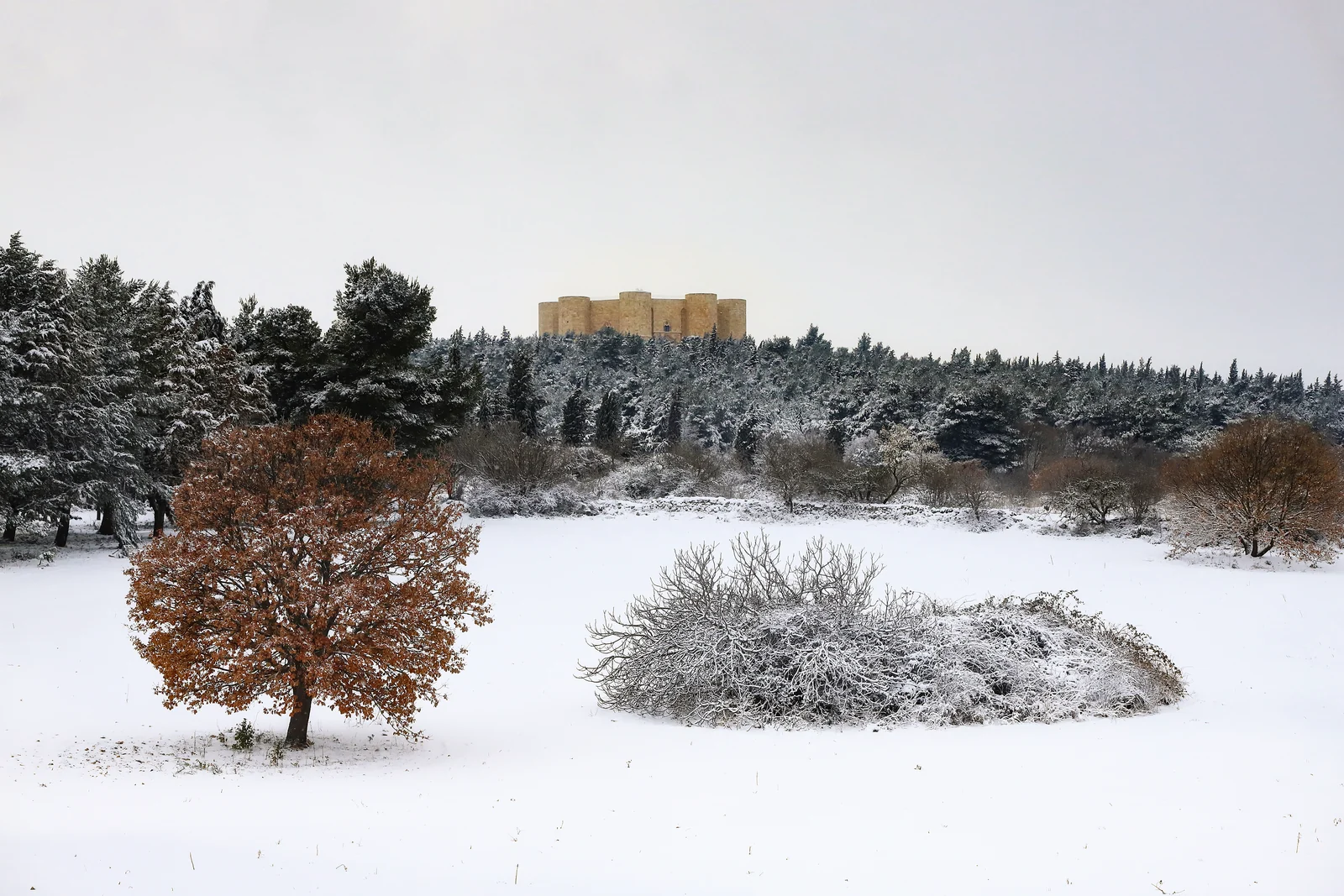
Photo: D.belfiore / Wikimedia Commons — CC BY-SA 4.0 · Resized and converted to WebP.
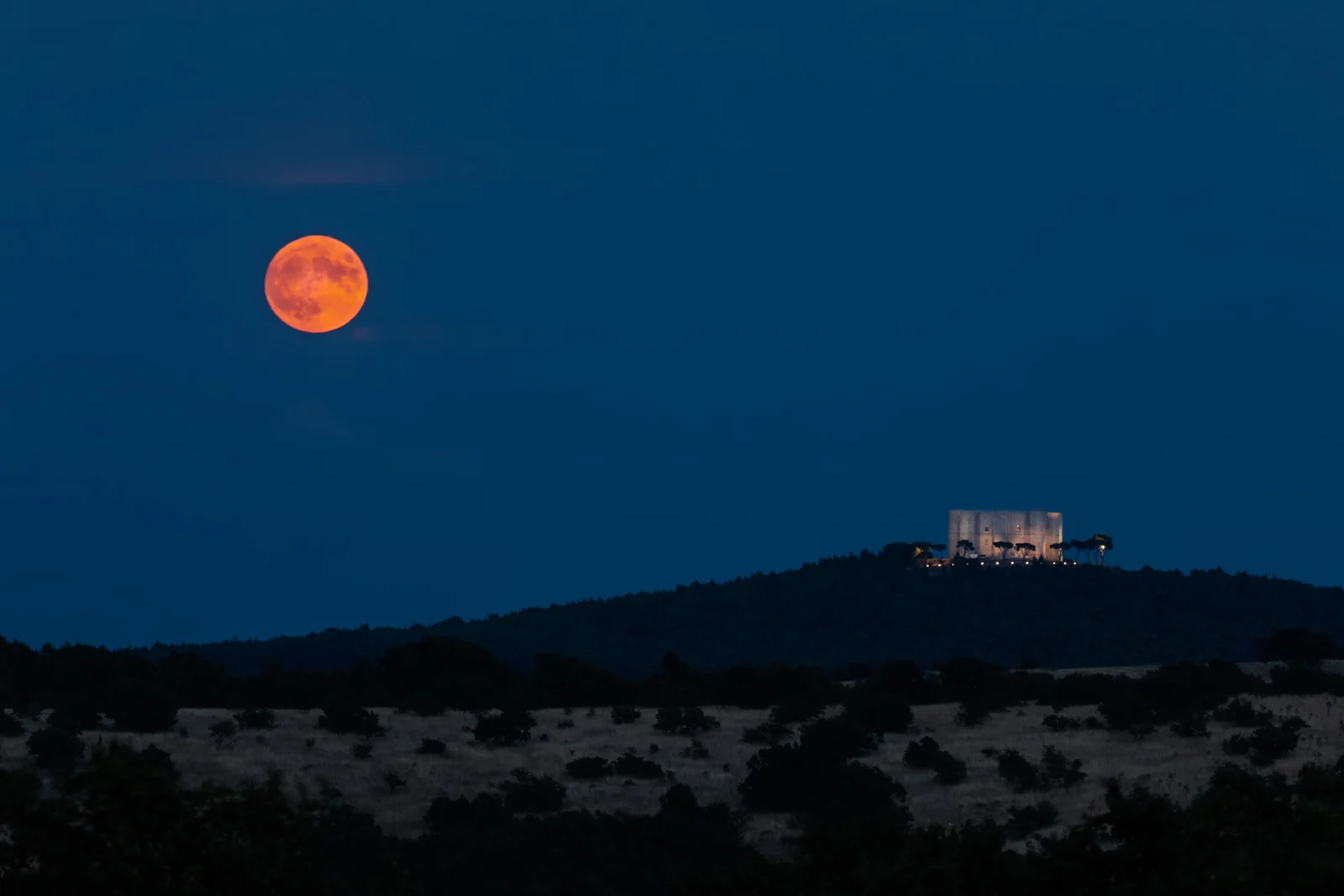
Photo: Matteo Pappadopoli / Wikimedia Commons — CC BY-SA 4.0 · Resized and converted to WebP.
Getting there and around
The Region's tourism portal explains that Andria's central station mainly serves nearby towns, while for longer journeys, outside the province or the region, it is better to go to Barletta railway station. The Alta Murgia Park notes that from Bari Palese airport you reach the city on the Bari-Nord railway, the network that also serves the towns of the province. A transfer must be arranged for the airport.
In town, public transport has eleven urban and two suburban lines running every day from morning to evening, plus COTRAP intercity lines. Alternatively you can hire bicycles, scooters and cars; Andria also has several urban cycle routes. By car, the Murgia towns are reached from the A14 motorway via the exits the Park lists for the area, including Trani.
For on-the-spot information, the Andria Info-point is in Piazza Vittorio Emanuele II. Castel del Monte, about 20 kilometres away, is most easily reached by car along State Road 170.
Ferrotramviaria's Bari-Barletta railway, opened in 1965, is 70 kilometres long, fully electrified, and links Andria with Corato, Ruvo, Terlizzi, Bitonto and Bari. Since 2013 a link has taken it right into Bari airport, with the stop connected to arrivals by a 300-metre tunnel; since 15 March 2026, on weekdays at the busiest times, some trains between Bari and Andria stop only at Corato and the Airport. The line is closed for upgrading works between Andria Sud, the town's outer station, and Barletta: on that stretch the service runs with replacement buses, which in town stop in Piazza Marinai d'Italia.
To reach Castel del Monte without a car there is ASA's line 6, which leaves from Piazza Marinai d'Italia and reaches the castle car park in about 45 minutes; from there a shuttle climbs to the entrance about every ten minutes. Bus and shuttle have separate tickets, which cannot be bought on board but online or from authorised sellers. By car, the municipality indicates the «Andria-Barletta» exit of the A14 motorway.
The town has a limited traffic zone: transit and parking permits are issued by the municipality. For emergencies, the “L. Bonomo” hospital, with an emergency department, is at Viale Istria 1.
Sources: Viaggiare in Puglia (Regione Puglia) — Andria · Viaggiare in Puglia (Regione Puglia) — Info-point Andria · Parco Nazionale dell'Alta Murgia — Come raggiungere il Parco · Ferrotramviaria: il servizio ferroviario · Comune di Andria: Ferrotramviaria (ferrovia Bari-Nord) · Ferrotramviaria: collegamento ferroviario con l'aeroporto · Ferrotramviaria: nuovo orario dal 15 marzo 2026 · ASA Autolinee Servizi Andriesi: Andria - Castel del Monte (linea 6) · Comune di Andria: Navetta per Castel del Monte (scheda aggiornata il 4/8/2026) · Comune di Andria: Santuario della Madonna dell'Altomare (come arrivare) · Comune di Andria: servizi Mobilità e trasporti (permessi ZTL) · Comune di Andria: Ospedale «L. Bonomo»
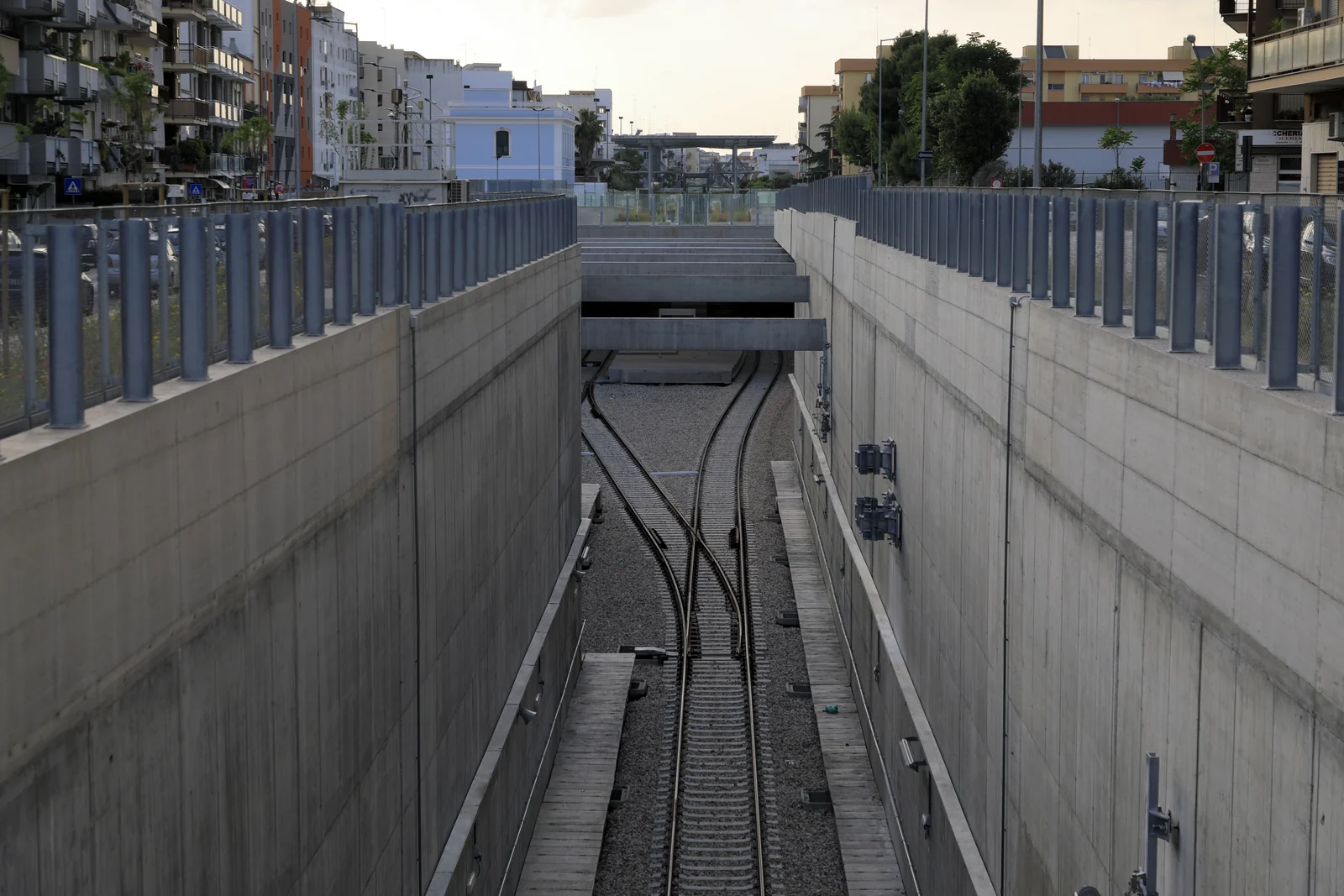
Photo: Falk2 / Wikimedia Commons — CC BY-SA 4.0 · Resized and converted to WebP.
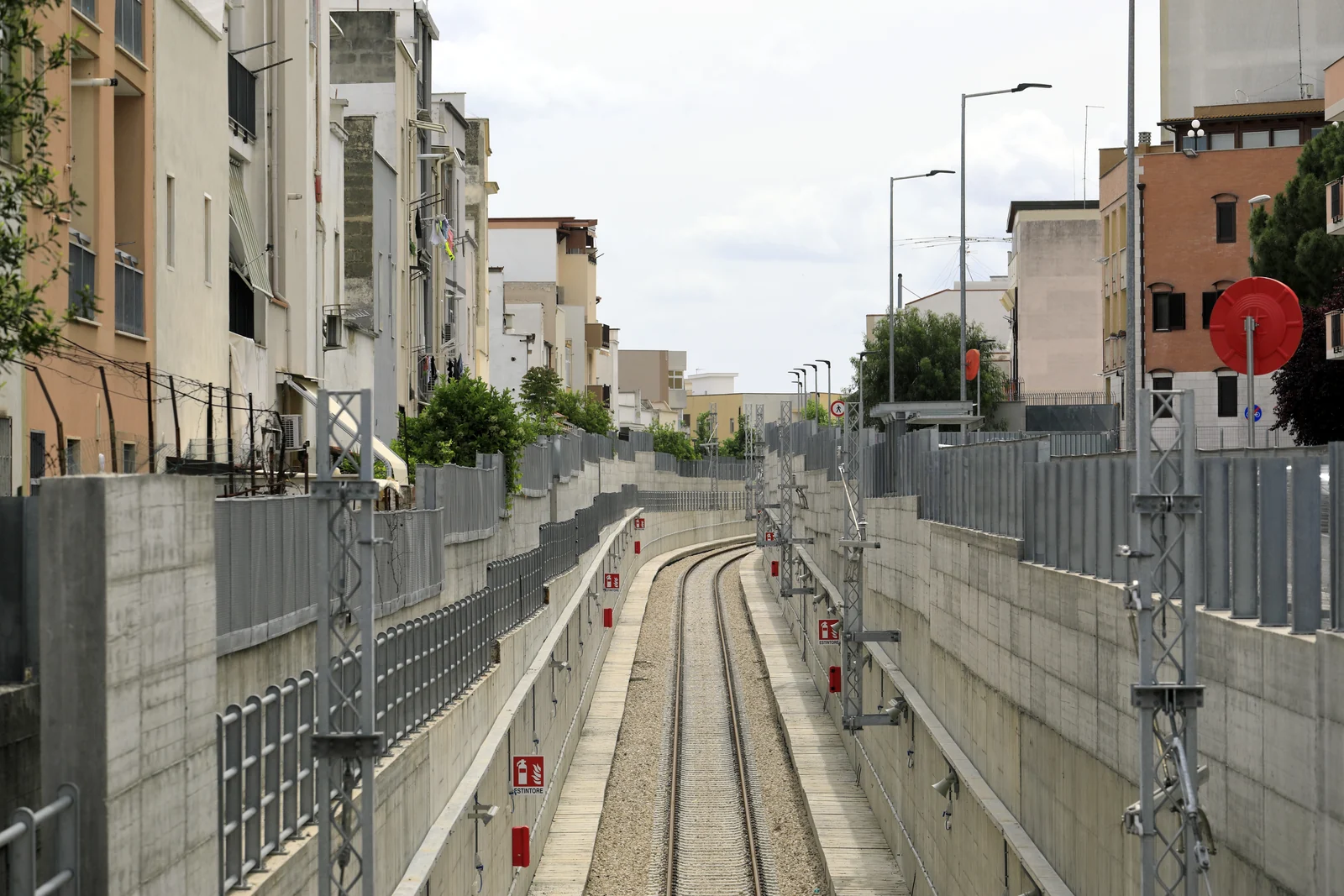
Photo: Falk2 / Wikimedia Commons — CC BY-SA 4.0 · Resized and converted to WebP.
Where to stay
Andria is the closest base to Castel del Monte and offers the advantage of a town that is lively in the evening too. Hotels and B&Bs in or near the centre let you walk to the cathedral, the bell towers and the trattorias, and drive up to the castle in a short time.
Those who prefer the countryside will find masserie and farm stays among the olive groves and vineyards of the Castel del Monte DOC area, on the road towards the Murgia: they suit those who want to see the castle at sunset or early in the morning and walk in the park's landscape. In this case you need a car.
For a trip combining inland and coast, you can split your stay between Andria and a coastal town such as nearby Trani, alternating days devoted to Frederick II, food and the Adriatic.
Sources: Viaggiare in Puglia (Regione Puglia) — Andria · Direzione regionale Musei nazionali Puglia — Castel del Monte · Qualigeo (Fondazione Qualivita) — Castel del Monte Rosso Riserva DOP
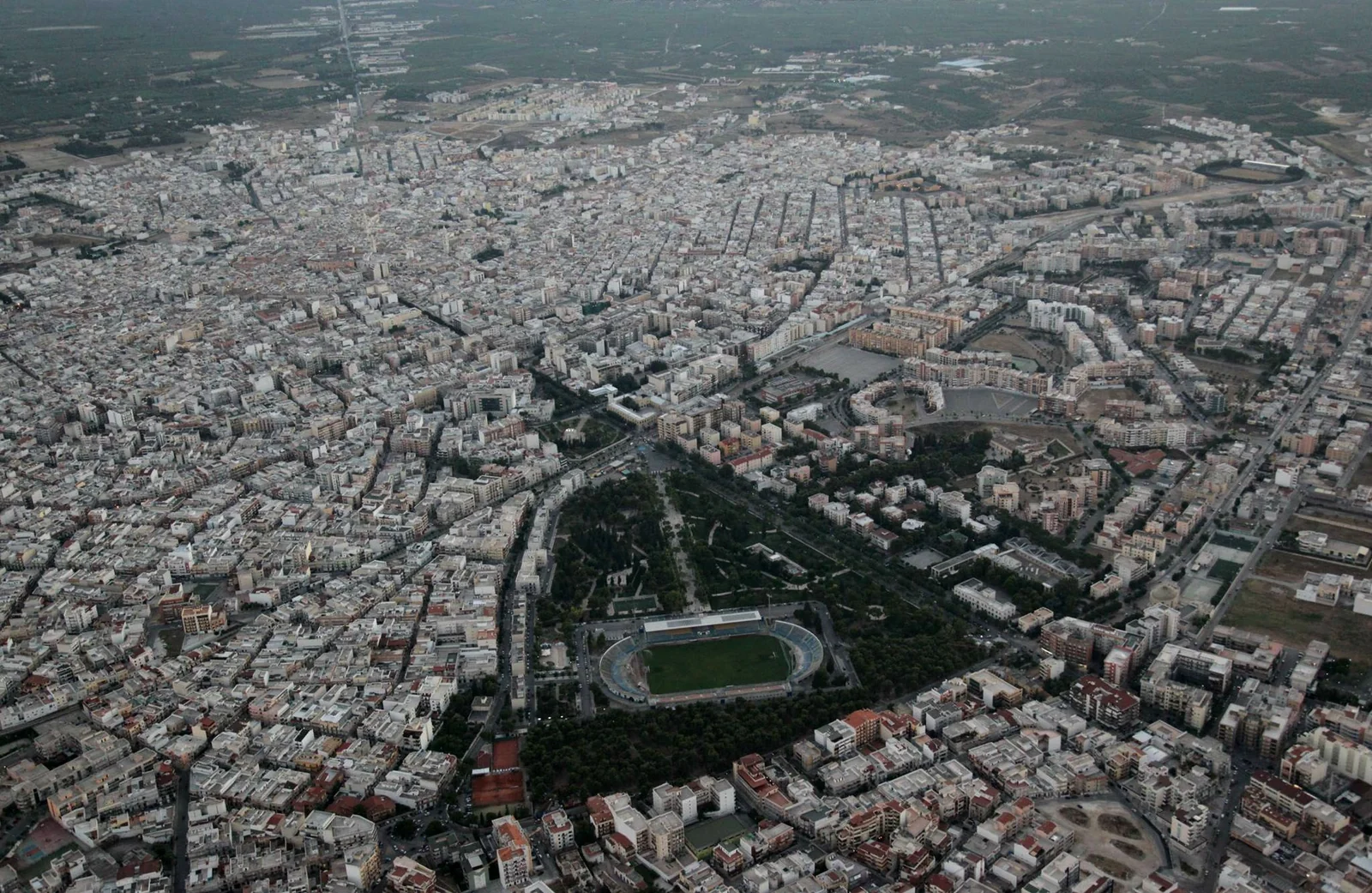
Photo: Leonemarco97 / Wikimedia Commons — CC BY-SA 4.0 · Resized and converted to WebP.
Nearby
The first nearby sight is Castel del Monte, a UNESCO site since 1996, in the Alta Murgia National Park: the octagonal fortress, the open landscape of the plateau and the vineyards of the appellation can be explored in half a day or a full day.
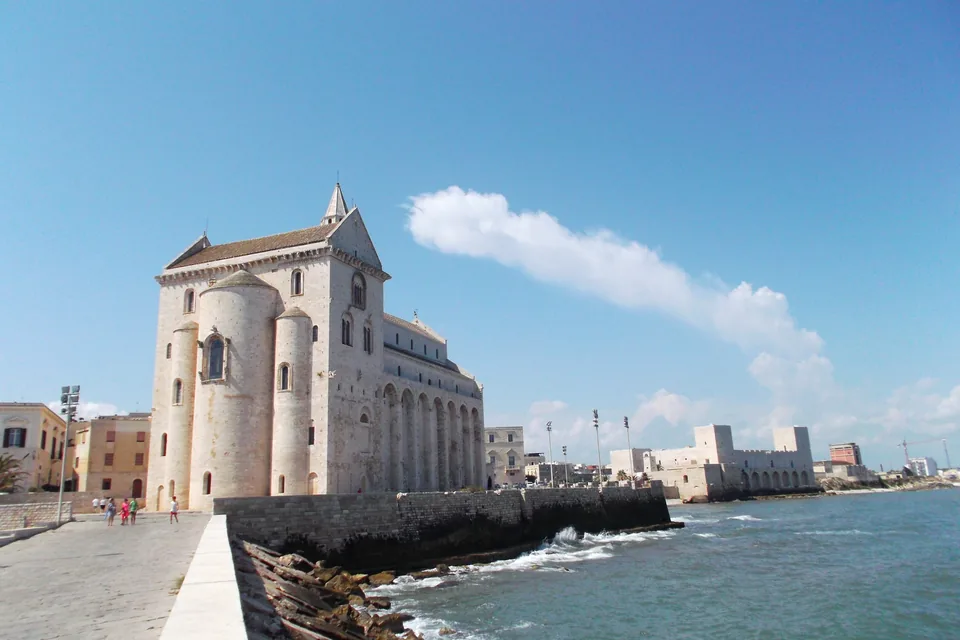
Towards the coast, Andria shares the role of provincial capital with Barletta and Trani. Trani, with its Romanesque cathedral facing the sea, its Swabian castle and its harbour, is a short distance away, and Barletta is the rail hub for long journeys. Together they form a Frederician itinerary running from the interior to the Adriatic.
Inland, on the side away from the sea, opens the Alta Murgia, with towns such as Minervino Murge, Spinazzola, Altamura and Gravina in Puglia, reached along the roads the Park lists for the area. Castel del Monte's position on the old route between Andria and Garagnone shows how closely these territories were linked even in the Middle Ages.
The Alta Murgia National Park, established by the decree of 10 March 2004, covers about 68,077 hectares and includes thirteen municipalities, whose towns all lie around the protected area. Its most typical landscape is the feather-grass steppe, at around 500 metres, which the Park authority describes as the last example of Mediterranean pseudo-steppe in peninsular Italy. From its hilltop, the municipality notes, Castel del Monte overlooks the plain from Manfredonia to Bari, the Gargano and the Murgia hinterland as far as Garagnone castle.
Some 10-15 kilometres from town, along provincial road 231 towards Canosa di Puglia, the village of Montegrosso is a rural hamlet founded in the early 1930s by the Opera Nazionale Combattenti and completed in the 1950s. It has just under two hundred residents and belongs to the Borghi Autentici d'Italia network.
Sources: Viaggiare in Puglia (Regione Puglia) — Andria · Direzione regionale Musei nazionali Puglia — Castel del Monte · Parco Nazionale dell'Alta Murgia — Come raggiungere il Parco · UNESCO World Heritage Centre — Castel del Monte · Parco Nazionale dell'Alta Murgia: il territorio · Parco Nazionale dell'Alta Murgia: l'Ente · Comune di Andria: la campagna andriese e la Murgia · Comune di Andria: Borgo di Montegrosso
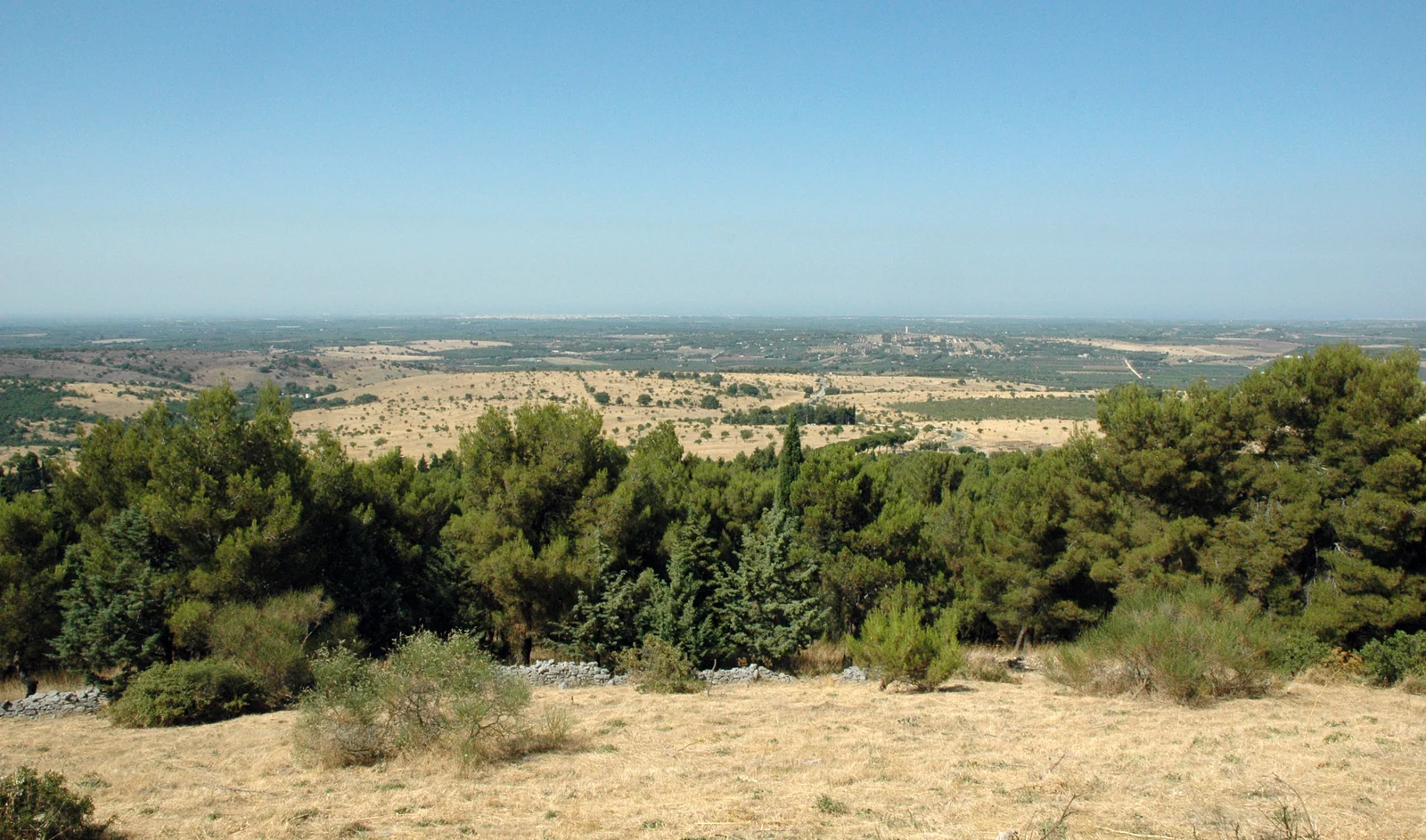
Photo: DimiTalen / Wikimedia Commons — CC0 · Resized and converted to WebP.
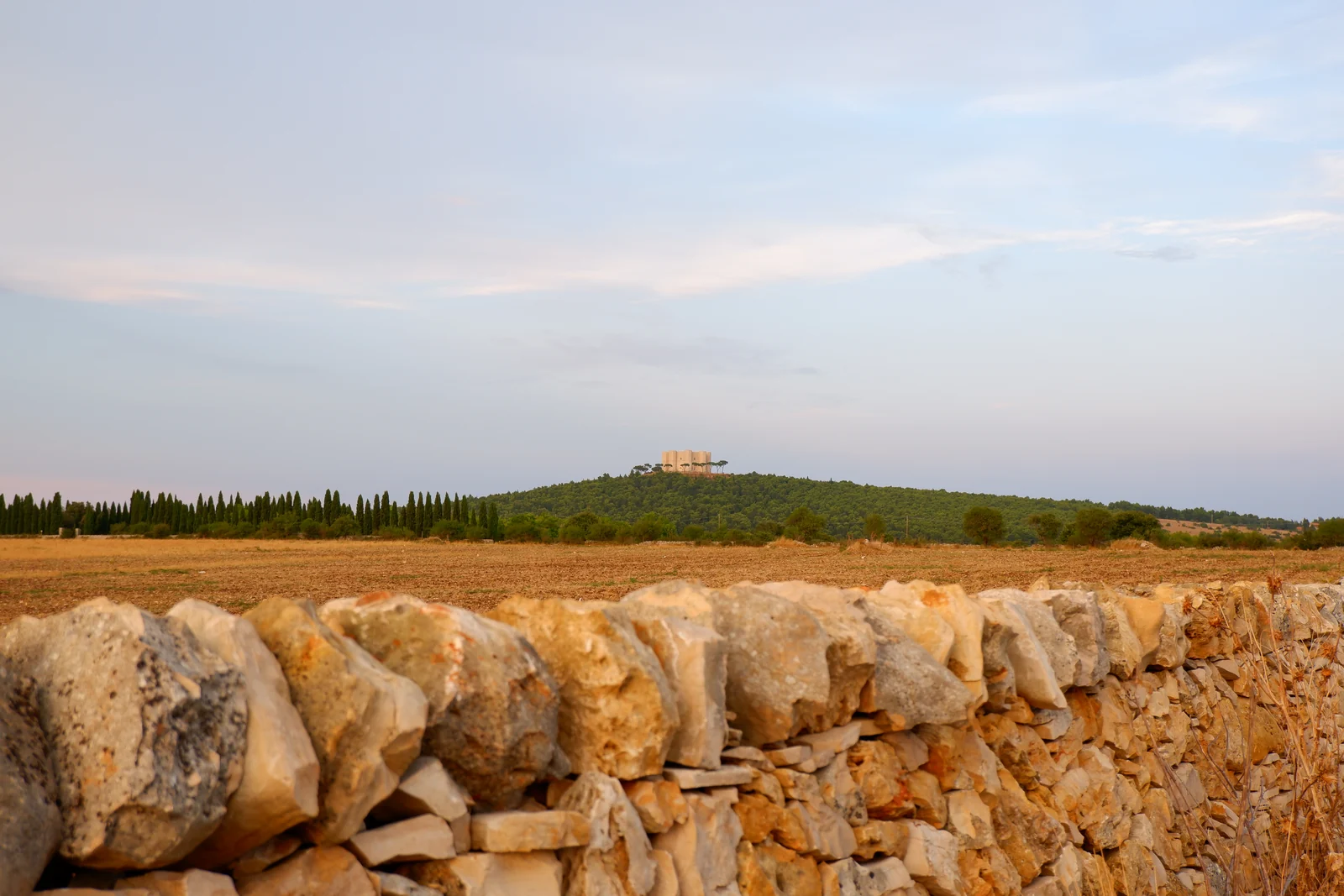
Photo: Vincenza Sgaramella / Wikimedia Commons — CC BY-SA 4.0 · Resized and converted to WebP.
Local tourist information
Local tourist offices help with opening times, events and transport on the day.
- Info-point Andria · Piazza Vittorio Emanuele II 16, 76123 Andria (BT) · +39 0883 290231
Source: Viaggiare in Puglia (Regione Puglia) — Info-point Andria · checked on
Where to stay
In the municipality of Andria the national database of the Ministry of Tourism lists 121 accommodation businesses with a verified CIN code: 8 hotels, 50 other licensed accommodation and 63 other types such as B&Bs and private rentals.
Licensed businesses from the official list of accommodation named as the source in this section. Where the list gives it, the property's official identification code appears next to its name: the national CIN code, or the code assigned by the Region or by the body that keeps the list. Private individuals are not listed. This list is the official census of licensed businesses, not a list of Apulica partners: to stay in Andria you do not have to check one property after another yourself; write to Apulica and we look for the stay that suits your journey, checking availability and conditions before any confirmation.
ALBERGO RESORT MONTE CARAFA
Hotel · ★★★★
CIN IT110001A100025076
Agriturismo MASSERIA POSTA DI MEZZO
Farm stay
CIN IT110001B500123986
"AI TERRAZZINI DI CIBELE" di PIERINI MARIA
B&B
CIN IT110001B400076702
AFFITTA CAMERE
Guest rooms
CIN IT110001B400063685
CHEZ ANTOINETTE
Holiday home
CIN IT110001B400023159
CRISTAL PALACE HOTEL
Hotel · ★★★★
CIN IT110001A100023742
AZIENDA AGRICOLA ADDARIO CHIECO BALSAMO DEI GERMANI
Farm stay
CIN IT110001B500021286
B&B ARCHE'O
B&B
CIN IT110001B400075436
AFFITTACAMERE SAN NICOLA
Guest rooms
CIN IT110001B400023325
MASSERIA CARIATI
Hotel · ★★★★
CIN IT110001A100091687
First the places that presented themselves to Apulica, the latest first; then one place of each type in turn, by official category and stars, then by name. No position is paid for.
All 49 entries in alphabetical order
Page 1 of 5
| Name | Type | CIN |
|---|---|---|
| AFFITTA CAMERE | Guest rooms | IT110001B400063685 |
| AFFITTACAMERE SAN NICOLA | Guest rooms | IT110001B400023325 |
| AFFITTACAMERE UMBERTO I PALACE DI MATARRESE DOMENICO | Guest rooms | IT110001B400062135 |
| Agriturismo MASSERIA POSTA DI MEZZO | Farm stay | IT110001B500123986 |
| "AI TERRAZZINI DI CIBELE" di PIERINI MARIA | B&B | IT110001B400076702 |
| ALBERGO DEI PINI | Hotel | IT110001A100020948 |
| ALBERGO RESORT MONTE CARAFA | Hotel | IT110001A100025076 |
| ALL'OMBRA | Guest rooms | IT110001B400052689 |
| AZIENDA AGRICOLA ADDARIO CHIECO BALSAMO DEI GERMANI | Farm stay | IT110001B500021286 |
| AZIENDA AGRICOLA ZUCARO | Farm stay | IT110001B500050617 |
Ask Apulica for a stay in Andria We reply shortly, within a few hours at most, with a proposal for you to consider.
Sources: Regione Puglia – ARET Pugliapromozione (DMS), CC BY 4.0, 2026-10-12 · Ministero del Turismo – Banca Dati Strutture Ricettive (dashboard pubblica), 2026-10-12
YOUR JOURNEY
How to shape a journey here
We can organise Andria around a town visit and a cheesemaking or confectionery encounter, adding Castel del Monte or a transition to Trani according to your preferred pace.
Plan your tripKeep exploring
Castel del Monte
Frederick’s architecture within the Murgia landscape. The octagonal castle, on the UNESCO list since 1996, inside the Alta Murgia National Park.
Read the guide →Photo: Bernard Gagnon / Wikimedia Commons — CC0 · Resized and converted to WebP.
Trani
Cathedral, castle and Jewish heritage for a coastal ending with cultural depth. The Romanesque cathedral on the sea with Barisano’s bronze door, Frederick II’s castle of 1233, the two medieval synagogues of the Giudecca, the harbour and the monastery of Colonna on its peninsula.
Read the guide →Photo: Termauri / Wikimedia Commons — CC BY-SA 4.0 · Resized and converted to WebP.
Alta Murgia
Stone, pasture and farming to explore the landscape beyond the towns. A national park of Mediterranean steppe, durum-wheat bread and cardoncello mushrooms.
Read the guide →Photo: Acquario51 / Wikimedia Commons — CC BY-SA 4.0 · Resized and converted to WebP.
Altamura
Bread culture, the old town and the Murgia landscape as the starting point for a journey.
Read the guide →Photo: Tango7174 / Wikimedia Commons — CC BY-SA 4.0 · Resized and converted to WebP.
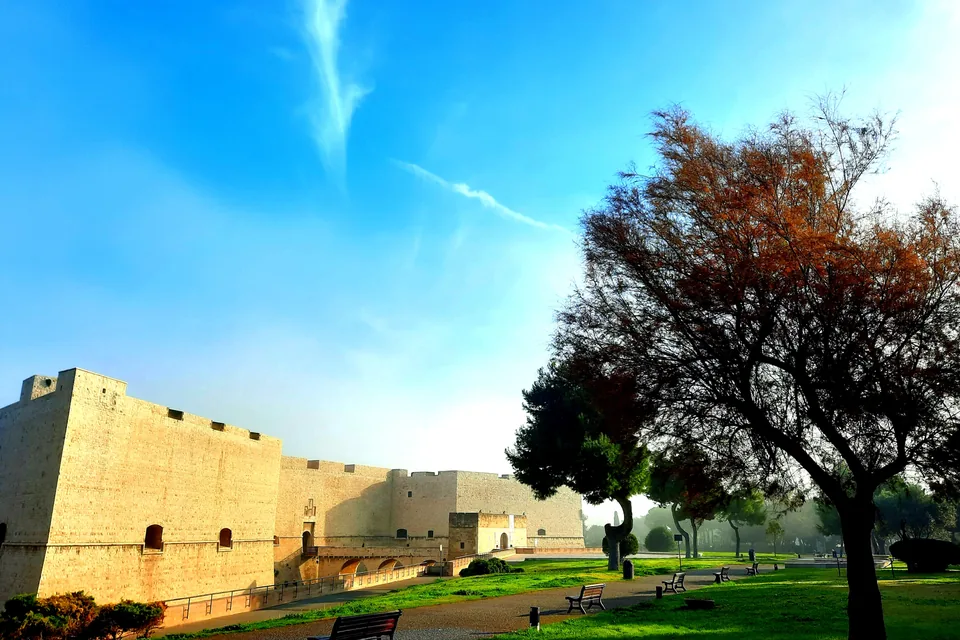
Barletta
On the Adriatic: the castle with Charles V’s bastions and the Museo civico, the Romanesque cathedral, the bronze Colossus, the De Nittis picture gallery in Palazzo della Marra, the story of the 1503 Disfida and, within the municipality, Canne della Battaglia.
Read the guide →Photo: Nick Borisenko / Wikimedia Commons — CC BY-SA 4.0 · Resized and converted to WebP.
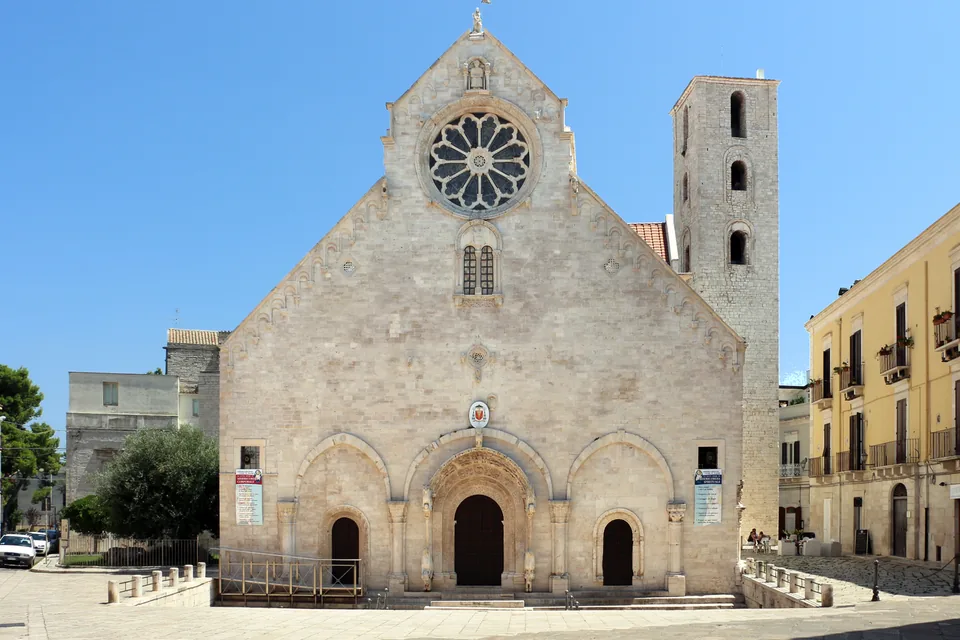
Ruvo di Puglia
Ruvo di Puglia (BA), Puglia: 24,254 residents, 223.83 km². The official facts of the municipality, its town council website and its registered accommodation. The Romanesque co-cathedral, the Museo nazionale Jatta with the Talos vase, the old town, the Alta Murgia, the Holy Week rites and the cardoncello mushroom festival.
Read the guide →Photo: Sailko / Wikimedia Commons — CC BY 3.0 · Resized and converted to WebP.
“Come to Andria as a guest, not as a tourist: that is how these places truly let you know them.”