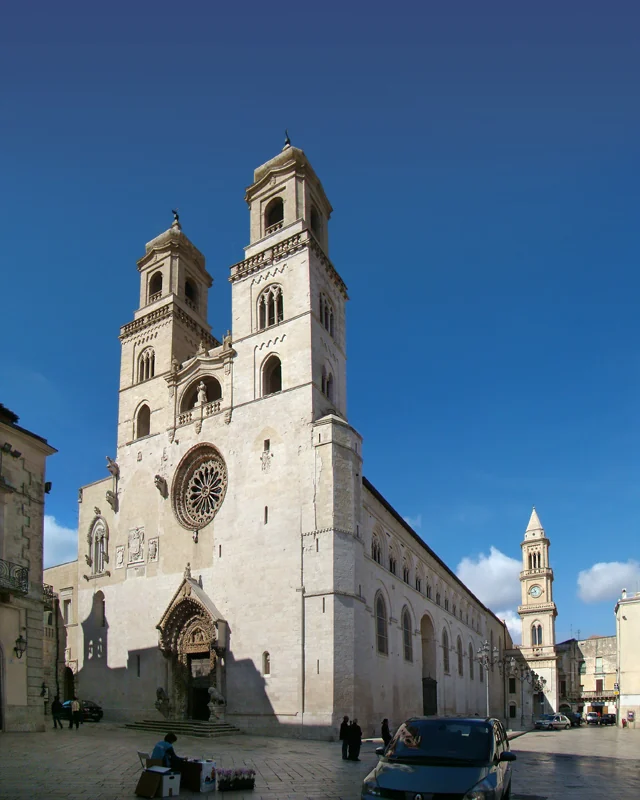
Why go
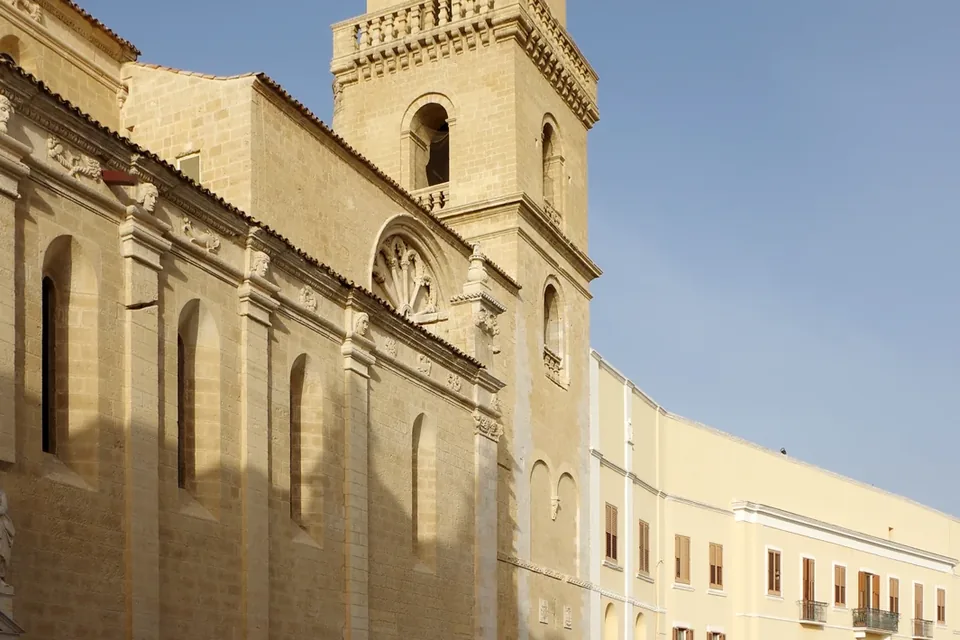
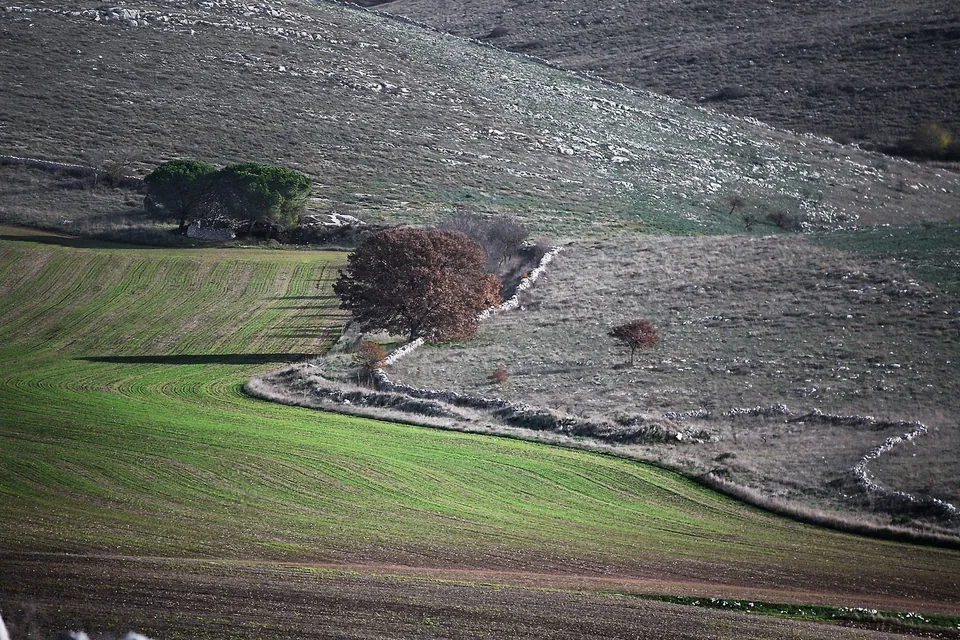
Altamura lies in the heart of the Bari hinterland, less than fifty kilometres from Bari and almost on the border with Basilicata, within the Alta Murgia National Park. The regional tourism portal presents it through three images: the cathedral commissioned by Frederick II, the famous bread baked in wood-fired ovens and the exceptional finds of its countryside, from the Altamura Man to the dinosaur footprints of Cava Pontrelli.
It is a town where very different eras can be read a few kilometres apart. In the historic centre, beyond Porta Bari, palaces, churches and the 'claustri', small enclosed courtyards opening off the streets, tell the story of the medieval and modern town; just outside, the National Archaeological Museum reconstructs the history of the Peucetians; on the plateau, the Pulo is a great karst sinkhole frequented by people for millennia.
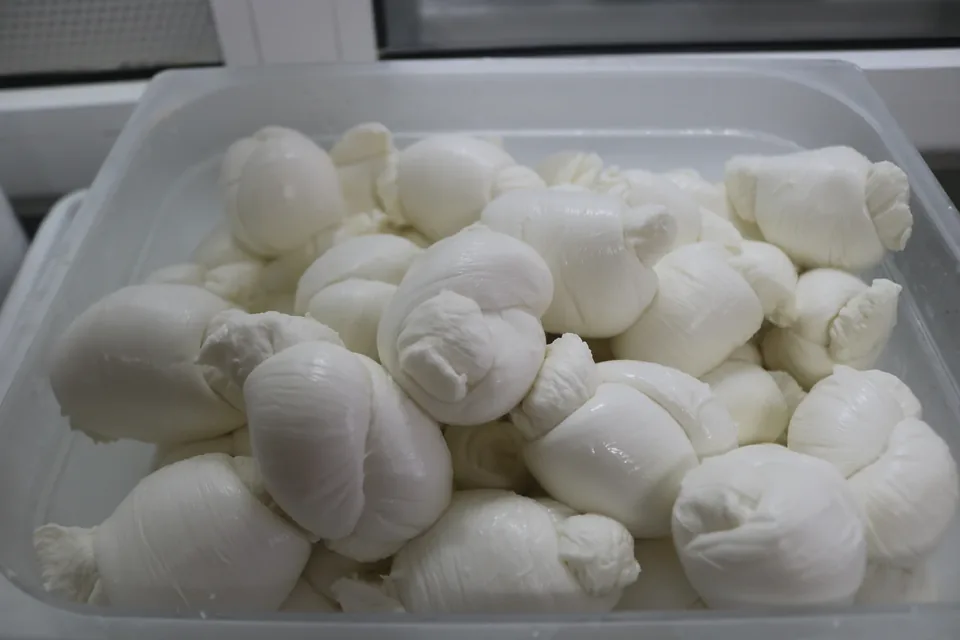
And then there is the bread, which the Ministry of Tourism recalls as the first bakery product in Europe to obtain DOP status. A visit to Altamura can combine monuments, archaeology, landscape and food without any one part overshadowing the others.
Sources: Viaggiare in Puglia, Regione Puglia — Altamura · Italia.it, Ministero del Turismo — Altamura
History
The old centre stands on the remains of a Peucetian acropolis of the fifth to third centuries BC, whose name is unknown but whose megalithic walls are still visible, as the Pane di Altamura protection consortium recalls. The National Archaeological Museum was built in the very area of La Croce, where part of the ancient Peucetian settlement re-emerged, with houses, workshops and a kiln for pottery.
The medieval town was refounded in the first half of the thirteenth century by Frederick II, who around 1230 had the cathedral of Santa Maria Assunta built, one of the four palatine basilicas of Puglia. Damaged by the earthquake of 1316 and rebuilt, in 1534 the church was reworked by reversing its orientation, moving the rose window and portal. According to the consortium, Altamura was able to welcome newcomers and by the late eighteenth century was one of the richest towns of the Kingdom of Naples; in 1799, for having joined the Parthenopean Republic, it was besieged and sacked by Cardinal Ruffo's army.
The most remote past emerged in 1993, when the skeleton of the Altamura Man was found in the Lamalunga cave, which the National Museum attributes to Homo neanderthalensis.
Sources: Consorzio Pane di Altamura DOP — Altamura · Musei nazionali di Puglia — Museo archeologico di Altamura · Viaggiare in Puglia, Regione Puglia — Cattedrale di Santa Maria Assunta di Altamura
What to see
The cathedral of Santa Maria Assunta dominates piazza Duomo with one of the richest portals in the region, flanked by sixteenth-century column-bearing lions, and two bell towers with eighteenth-century baroque spires. Inside are the women's galleries, polychrome marble, a pulpit and a polychrome stone nativity, and nineteenth-century paintings by Domenico Morelli and Francesco Netti. The galleries house the Diocesan Museum, with silverware, vestments and sculptures from the fifteenth to the nineteenth century.
The historic centre begins at Porta Bari and runs along corso Federico II di Svevia, past palaces and churches and into the claustri. Near the gate, Palazzo De Angelis is an early sixteenth-century courtyard house with an inner loggia on columns. Palazzo Baldassarre, built between the sixteenth and seventeenth centuries by a family of master masons, hosts a route on human evolution with a life-size reproduction of the part of the Lamalunga cave that holds the skeleton.
Just outside the centre, the National Archaeological Museum is arranged in sections from the Palaeolithic to the Middle Ages, with the exhibition Prehistory of Food devoted to the origins of bread. The Ethnographic Museum of the Alta Murgia gathers more than twelve hundred objects of rural life.
Sources: Viaggiare in Puglia, Regione Puglia — Cattedrale di Santa Maria Assunta di Altamura · Viaggiare in Puglia, Regione Puglia — Museo Diocesano Matronei Altamura · Viaggiare in Puglia, Regione Puglia — Altamura · Viaggiare in Puglia, Regione Puglia — Palazzo De Angelis · Comune di Altamura — Palazzo Baldassarre · Musei nazionali di Puglia — Museo archeologico di Altamura · Viaggiare in Puglia, Regione Puglia — Museo etnografico dell'Alta Murgia
Food and wine
Bread is the product that made Altamura known everywhere. According to the Puglia Region, the Pane di Altamura DOP is reserved for bread made with sourdough starter, sea salt, water and remilled durum wheat semolina of the appulo, arcangelo, duilio and simeto varieties, grown in the north-western Murgia. Each loaf weighs at least half a kilo, has a crust at least three millimetres thick and straw-yellow crumb; there are two traditional shapes, the tall overlapped loaf called 'u sckuanète' and the lower 'priest's hat'.
The Region also recalls its domestic origin: dough was prepared at home and baked in public ovens, where the baker marked it with the head of the family's initials, and it had to last for one or two weeks of work in the masserie of the plateau. The regional portal adds that the bread stays soft for a long time and is served as a dish in its own right.
The same land produces Lenticchia di Altamura PGI, grown across the Apulian Murgia and Basilicata and back in the fields after a long absence. The Altamura sheep, a hardy Murgia breed, is a Slow Food Presidium that tells of the plateau's pastoral tradition.
Sources: Regione Puglia — Pane di Altamura DOP · Viaggiare in Puglia, Regione Puglia — Altamura · Commissione europea, eAmbrosia — Lenticchia di Altamura IGP · Fondazione Slow Food — Pecora altamurana
Things to do
About six kilometres from town, the Pulo of Altamura is, according to the regional portal, the most impressive karst feature of the Alta Murgia: a sinkhole ninety-two metres deep, with sheer walls full of caves used by people for at least five thousand years and a cliff ecosystem of flora and fauna of great interest. It is a place to view from the rim, in silence, like a natural amphitheatre.
The Lamalunga cave, where the Altamura Man was found, is a system of cavities and tunnels entered through a shaft about ten metres deep: it is not open to ordinary visits, which is why the reproduction at Palazzo Baldassarre and the national museum help you understand its context. The museum also recalls the palaeontological site of Cava Pontrelli, with thousands of dinosaur footprints.
The municipality lies within the Alta Murgia National Park, with its steppe landscapes, masserie and sheepfolds. For walkers, Altamura is the final stage of the Via Peuceta arriving from Santeramo along a medieval cart road. The regional portal also mentions urban bike sharing and several cycling routes nearby.
Sources: Viaggiare in Puglia, Regione Puglia — Pulo di Altamura · Viaggiare in Puglia, Regione Puglia — La Grotta di Lamalunga e l'Uomo di Altamura · Comune di Altamura — Palazzo Baldassarre · Musei nazionali di Puglia — Museo archeologico di Altamura · Viaggiare in Puglia, Regione Puglia — Altamura · Cammino Materano — Guida ufficiale della Via Peuceta
When to go
Altamura can be visited all year, because its main heritage, from the cathedral to the museums and the historic centre, does not depend on the season. Bread is baked every day in the town's ovens, and tasting it fresh from the oven is possible in any month.
Spring and autumn are the best periods for the Alta Murgia: temperatures are mild, the wheat fields change colour and walks to the Pulo or along the Via Peuceta are more pleasant. In summer the plateau is hot and it is best to plan outdoor outings for the early morning or sunset, keeping the middle of the day for the museums.
Winter brings cool and sometimes windy days, suited to a trip devoted to the town and its food. The National Archaeological Museum takes part in national initiatives such as the European Heritage Days, held on 26 and 27 September in 2026: for future editions and opening times check the website of the National Museums of Puglia.
Sources: Viaggiare in Puglia, Regione Puglia — Altamura · Musei nazionali di Puglia — Museo archeologico di Altamura · Cammino Materano — Guida ufficiale della Via Peuceta
Getting there and around
The regional tourism portal states that Altamura station offers connections to every kind of regional and national destination. In town you get around on urban and intercity bus lines; the portal also mentions a bike-sharing service and scooter and car hire.
The reference airport is Bari, managed by Aeroporti di Puglia; according to the regional portal it can be reached on COTRAP consortium buses or by shuttle.
The historic centre, from Porta Bari to piazza Duomo, is visited on foot; the National Archaeological Museum is just outside, in via Santeramo. For the Pulo, on provincial road 157 towards Quasano, and for the areas of the Alta Murgia Park you need your own or a hired vehicle. The Park publishes directions for reaching its territory, useful for planning excursions. Altamura is also close to Gravina in Puglia and Matera, both a short trip away.
Sources: Viaggiare in Puglia, Regione Puglia — Altamura · Aeroporti di Puglia — Aeroporto di Bari · Viaggiare in Puglia, Regione Puglia — Museo Nazionale Archeologico di Altamura · Viaggiare in Puglia, Regione Puglia — Pulo di Altamura · Parco nazionale dell'Alta Murgia — Come raggiungere il parco
Where to stay
For a stay in Altamura you can choose the historic centre, handy for evening walks between the cathedral and the claustri and for reaching bakeries and museums on foot, or the Alta Murgia countryside, dotted with masserie, which offers space and quiet and a base for excursions in the Park.
Those arriving on foot along the Via Peuceta will find, according to the route's official guide, lodging dedicated to pilgrims in the historic centre, behind the cathedral, as well as other places listed for the stage. These are simple options designed for walkers.
Altamura also works well as a base for a wider area: Gravina in Puglia, Santeramo in Colle, Gioia del Colle and Matera are all within a day trip. We do not list specific properties: accommodation is chosen according to dates and type of trip, bearing in mind that in summer the countryside offers cooler evenings than the town.
Sources: Viaggiare in Puglia, Regione Puglia — Altamura · Cammino Materano — Guida ufficiale della Via Peuceta · Viaggiare in Puglia, Regione Puglia — Magna Grecia, Murgia e Gravine
Nearby
Gravina in Puglia, a few kilometres away, continues the story of the rock-cut civilisation: the regional portal mentions it alongside Laterza among the places of the gravine, the canyons where cave settlement began. Beyond the border, Matera is the natural continuation of a journey about living in the rock and deserves time of its own.
Towards Bari, Santeramo in Colle is the home of the fornelli and grilled meat, and Gioia del Colle offers its Norman-Swabian castle and mozzarella; the regional portal groups these towns in the Magna Grecia, Murgia and Gravine area, where it also recommends trekking in the Alta Murgia National Park and the horse trail.
The Park itself is a destination to explore: a vast plateau of pasture, steppe and masserie surrounding the town. From a base in Altamura you can alternate days in town, in the Park and in nearby towns, choosing a precise theme for each.
Sources: Viaggiare in Puglia, Regione Puglia — Magna Grecia, Murgia e Gravine · Viaggiare in Puglia, Regione Puglia — Santeramo in Colle · Viaggiare in Puglia, Regione Puglia — Altamura
Local tourist information
Local tourist offices help with opening times, events and transport on the day.
- Punto informazioni della Rete museale — Palazzo Baldassarre · Via Fratelli Baldassarre 1, 70022 Altamura (BA) · +39 340 2645147 · rete@uomodialtamura.it
Source: Comune di Altamura — Palazzo Baldassarre · checked on
Where to stay
In the municipality of Altamura the national database of the Ministry of Tourism lists 197 accommodation businesses with a verified CIN code: 3 hotels, 56 other licensed accommodation and 138 other types such as B&Bs and private rentals.
Licensed businesses from the official list of Regione Puglia, each with a checked national CIN code: matching municipality and category. Private individuals are not listed. Check directly with the property before booking.
HAPPY HOLIDAYS
Guest rooms
CIN IT072004B400049495
IRIS LUXURY SUITE AFFITTACAMERE
Guest rooms
CIN IT072004B400070183
L'IMPERATORE DI TEDESCO MARIANNA
Guest rooms
CIN IT072004B400069863
L'Incanto delle Mura
Guest rooms
CIN IT072004B400102351
MASSERIA LA MERIDIANA
Guest rooms
CIN IT072004B400050451
SUITE61
Guest rooms
CIN IT072004B400034054
Sistò Petite Maison
Guest rooms · Website
CIN IT072004B400088193
clementia guest house
Guest rooms
CIN IT072004B400101692
AGRITURISMO IL CASALE
Farm stay
CIN IT072004B500020586
MASSERIA CHINUNNO
Farm stay
CIN IT072004B500027617
MASSERIA COLLE CARRO
Farm stay
CIN IT072004B500027375
MASSERIA LA CALCARA
Farm stay
CIN IT072004B500020947
MASSERIA MARROCCOLI
Farm stay · Website
CIN IT072004B500121762
MURÀ
Farm stay
CIN IT072004B500027227
VALLE VERDE
Farm stay
CIN IT072004B500030234
VILLA RIBES
Farm stay
CIN IT072004B500097915
azienda agricola agrituristica rinaldi di dambrosio maria giuseppe
Farm stay
CIN IT072004B500059007
ALMURA DI RECCHIA LEONARDA
B&B
CIN IT072004B400022752
ANTICA DIMORA LE 7 LUNE
B&B
CIN IT072004B400033976
ANTICA OSTERIA PEIN ASSUTT
B&B · Website
CIN IT072004B400100439
B&B 1951
B&B · Website
CIN IT072004B400095955
B&B IL NIDO DEI FALCHI DI FORLIANO MARIA CRISTINA
B&B · Website
CIN IT072004B400089786
B&B LA ROSA DEI VENTI
B&B
CIN IT072004B400125930
B&B MAISON DE MAMMA' DI PAPANGELO GRAZIA
B&B
CIN IT072004B400104001
B&B Yutori 75
B&B
CIN IT072004B400113487
C'ERA UNA VOLTA
B&B · Website
CIN IT072004B400089532
CIVICO 16
B&B
CIN IT072004B400114267
Casa Tre Archi
B&B
CIN IT072004B400129630
DIMORA SANTA CHIARA
B&B · Website
CIN IT072004B400049258
IL CLAUSTRO
B&B · Website
CIN IT072004B400032454
IMPERIALE B&B
B&B
CIN IT072004B400049438
LA DIMORA DI FEDERICO DI PARTERNOSTER NICOLA
B&B
CIN IT072004B400050164
LUPARIELLO RELAIS
B&B
CIN IT072004B400125809
La locanda di Alice srls
B&B
CIN IT072004B400103346
MALANDRÌ
B&B
CIN IT072004B400025393
MATTEI LUXURY B&B
B&B
CIN IT072004B400122140
PALAZZO LA ROSA
B&B
CIN IT072004B400100818
QUARTO LATINO SRL
B&B
CIN IT072004B400049005
San Francesco Bed & Breakfast
B&B · Website
CIN IT072004B400059563
CALDERONI MARTINI RESORT
Hotel · ★★★★
CIN IT072004A100022339
HOTEL FUORI LE MURA
Hotel · ★★★★
CIN IT072004A100025128
HOTEL SAN NICOLA
Hotel · ★★★★
CIN IT072004A100088625
Sources: Regione Puglia – ARET Pugliapromozione (DMS), CC BY 4.0, 2026-10-12 · Ministero del Turismo – Banca Dati Strutture Ricettive (dashboard pubblica), 2026-10-12
YOUR JOURNEY
How to shape a journey here
From courtyard to bread: medieval town, prehistory and agricultural work, followed by Gravina or the Murgia landscape.
Talk to us about it