
Why go
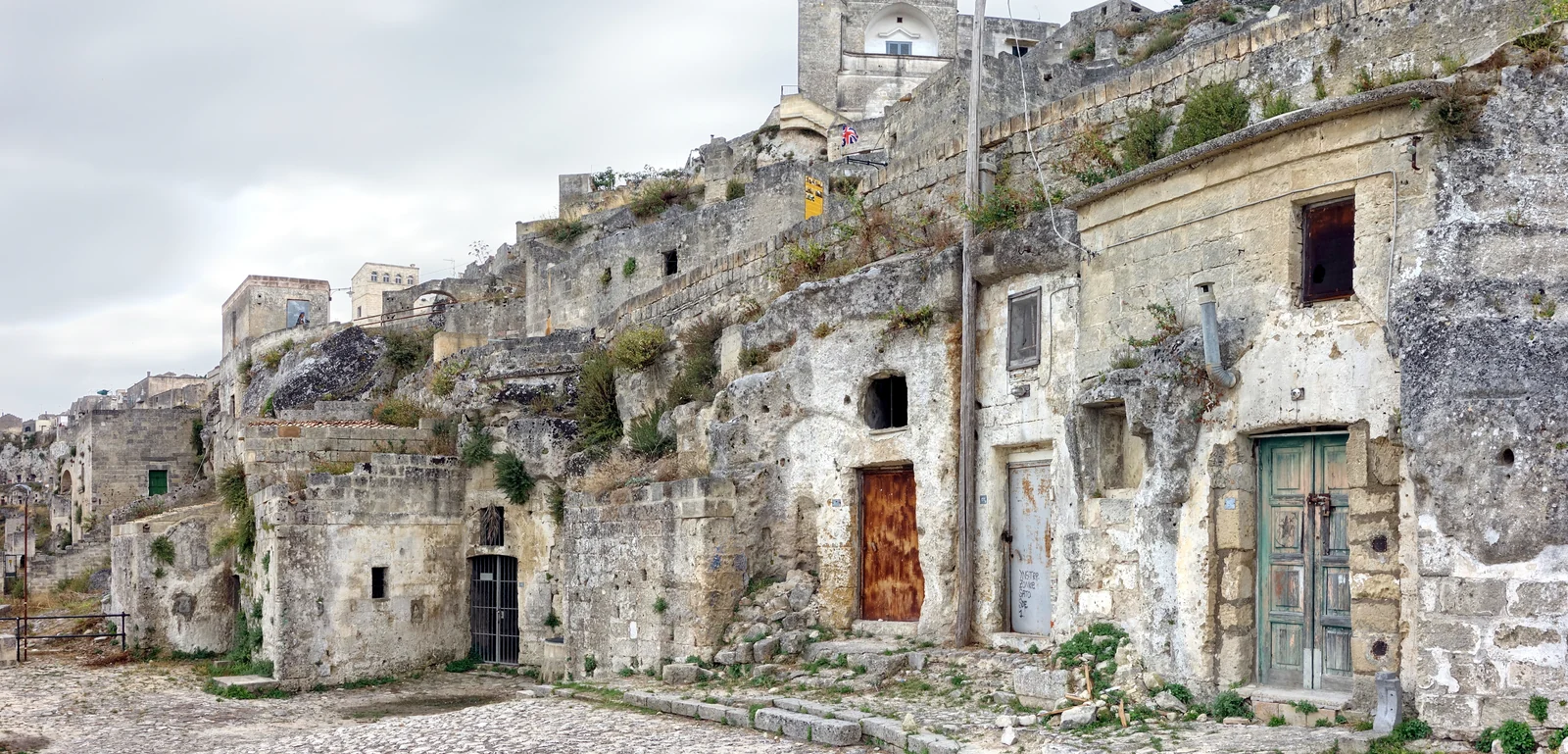
Matera is one of Italy's most extraordinary cities: a centre carved and built into calcarenite rock above the Gravina gorge, whose Sassi and Park of the Rupestrian Churches entered UNESCO's World Heritage List in 1993. Italia.it notes that its natural caves hold traces of human settlement since the Palaeolithic and that over the centuries houses, churches, monasteries and hermitages grew up in the two great natural amphitheatres of the Sasso Caveoso and the Sasso Barisano.
It is a city to see both close up and from afar. Close up, in its lanes, cave houses, frescoed churches and underground cisterns; from afar, from the viewpoints in the centre and from the Murgia across the gorge, where you grasp the nativity-scene effect that made it the setting for films such as Pasolini's The Gospel According to St Matthew and Mel Gibson's The Passion of the Christ.
Matera was European Capital of Culture in 2019 and today joins an ancient heritage with a lively cultural life. Alongside the beauty of its stone come the Murgia Park, with its ravines and rock churches, and a cuisine born of durum wheat and bread.
Sources: UNESCO — The Sassi and the Park of the Rupestrian Churches of Matera · Italia.it — Matera, Sassi e chiese rupestri · Italia.it — Matera · Italia.it — Basilicata coast to coast
History
Matera's history begins in prehistory. Italia.it mentions Palaeolithic finds and Early Neolithic pottery made in villages as early as around 7500 BC; the Murgia Park points to the Grotta dei Pipistrelli and the ditched villages of Murgecchia, Murgia Timone and Tirlecchia within its territory. The first herding communities settled on the Civita hill, where the town's first core grew.
In Greek times Matera had links with the Ionian coastal colonies and in Roman times it was a place of transit. After the fall of the Western Empire the town saw Byzantines, Lombards and Saracens, until the Normans arrived in 1042. In these centuries monks and local communities carved rock churches into the walls of the Gravina; the park counts about a hundred and fifty of them, from the early Middle Ages to the nineteenth century. From the thirteenth century, beside the old core, the upper town of the Piano grew, with elegant quarters and mansions.
In the twentieth century the overcrowded Sassi, lacking basic services, were called a national problem: a 1952 law ordered their evacuation and the population moved to new districts. Restoration in the following decades brought the quarters back to life, leading to UNESCO recognition.
Sources: Italia.it — Matera · Italia.it — Matera, Sassi e chiese rupestri · Parco della Murgia Materana — Storia del Parco · Parco della Murgia Materana — Le chiese rupestri · UNESCO — The Sassi and the Park of the Rupestrian Churches of Matera
What to see
The starting point is the Sassi. In the Sasso Caveoso you descend among caves and tunnels and visit furnished cave houses, such as the one on Vico Solitario or the Casalnuovo cave house, which show how people lived there until the 1950s; the Sasso Barisano has more workshops and viewpoints. Between the two, on the Civita, stands the Cathedral of the Madonna della Bruna and Sant'Eustachio, whose square is a balcony over the whole Barisano.
Beneath Piazza Vittorio Veneto you can visit the Palombaro Lungo, a vast water cistern built in stages from the sixteenth century, walked on suspended footbridges. Near the cathedral, Casa Noha tells the city's story through a FAI project. From Piazzetta Pascoli, one of the finest viewpoints, you enter the National Museum in Palazzo Lanfranchi, with medieval and modern art; the Domenico Ridola Archaeological Museum also keeps old bread stamps.
Viewpoints punctuate the visit: the Guerricchio or Three Arches belvedere on Piazza Vittorio Veneto, Piazzetta Pascoli over the Caveoso with the church of Madonna de Idris carved into the cliff, Sant'Agostino over the Barisano. The most spectacular is Murgia Timone, across the Gravina, from which you see the whole city.
Sources: Italia.it — Matera, Sassi e chiese rupestri · Italia.it — Punti panoramici di Matera · Italia.it — Matera, acqua e città · Italia.it — Il pane di Matera
Food and wine
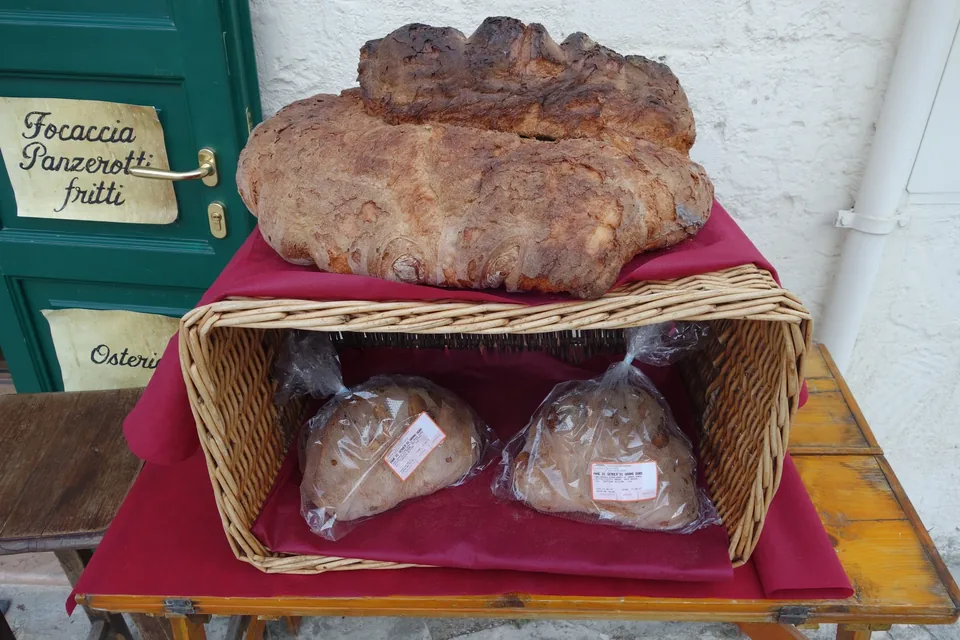
In Matera, the table starts with bread. Pane di Matera PGI, which may be made throughout the province, is made from re-milled durum wheat semolina and a sourdough started from fruit steeped in water; it has a crisp crust and two shapes, the cornetto and the tall loaf, which Italia.it likens to a small hill of the Murgia. Until 1950 families pressed their own wooden stamp, carved by shepherds, into the dough to recognise their loaf after baking in the shared oven.
Bread is the base of simple dishes such as cialledda, served hot with egg, bay, garlic and olives, or cold with moistened bread, tomato and garlic. Italia.it also mentions pignata, mutton slow-cooked in an earthenware pot with potatoes, tomatoes and soppressata, and crisp peperoni cruschi from Senise, fried or used to dress pasta and bruschetta. Matera also falls within the Lenticchia di Altamura PGI area, grown across the Murgia of Puglia and Basilicata.
In the glass is Matera DOC wine, made in several towns around Matera from Aglianico, Sangiovese, Primitivo, Greco and Malvasia di Basilicata grapes. During the month of the Festa della Bruna the city also holds an exhibition on bread promoted by the bakers.
Sources: Qualigeo — Pane di Matera IGP · Italia.it — Il pane di Matera · Italia.it — Matera, Sassi e chiese rupestri · Qualigeo — Lenticchia di Altamura IGP · Regione Basilicata — Matera dà il via alla Festa della Bruna
Things to do
The Murgia Materana Park, established as the Regional Archaeological, Historical and Natural Park of the Rupestrian Churches of Matera, protects about eight thousand hectares on the side of the gorge opposite the city. The park describes a limestone plateau cut by cliffs, ravines and caves, with rock churches, Neolithic villages, sheepfolds, tufa quarries and farmsteads, and the Gravina of Matera, a canyon some twenty kilometres long. Rare raptors such as the short-toed eagle, the lanner falcon and the Egyptian vulture nest on the cliffs, while lesser kestrels live on the roofs of the Sassi.
From the centre you can walk to the Murgia Timone viewpoint across the suspension bridge over the Gravina stream and up stairways and paths; you can also drive. Italia.it also suggests an e-bike route along Murgia trails used since the Neolithic, up to a viewpoint over the Sassi. Among the rock churches, the Crypt of Original Sin, with its early medieval fresco cycle, is called the Sistine Chapel of rock-cut art.
The park asks visitors to keep to marked trails and notes that over 80% of its land is privately owned: a guided visit is advisable for the rock churches.
Sources: Parco della Murgia Materana — Scoprire il Parco · Parco della Murgia Materana — Geologia · Italia.it — Punti panoramici di Matera · Italia.it — La Murgia materana in e-bike · Italia.it — Matera, Sassi e chiese rupestri · Parco della Murgia Materana — Norme per le visite
When to go
Matera can be visited all year, and some dates change its character. The most heartfelt moment is 2 July, the feast of the Madonna della Bruna, the city's patron: the Region describes a month of religious and cultural events, opening in mid-June, which ends with the procession and the strazzo, the storming of the triumphal Carro in Piazza Vittorio Veneto. The carro, a twelve-metre Baroque papier-mâché float drawn by eight mules, is rebuilt every year by craftsmen in the Piccianello quarter on a theme set by the bishop: its destruction is lived as a rite of renewal.
On Easter Day the Via Crucis sets out from Piazza Sedile and crosses the old town, with statues carried by members of the confraternity. At Christmas the Sassi host a living nativity, with tableaux set along a route among the caves.
Spring and autumn are ideal for walking in the Murgia Park and visiting the viewpoints, with mild temperatures and sunset light that warms the stone. Summer brings long days and the evenings of the Festa della Bruna. Winter is quieter, suited to museums and to the Sassi with fewer visitors.
Sources: Regione Basilicata — Matera dà il via alla Festa della Bruna · Associazione Maria SS. della Bruna — Il Carro trionfale · Italia.it — Matera, Sassi e chiese rupestri · Italia.it — Il Presepe vivente nei Sassi di Matera · Italia.it — Punti panoramici di Matera · Italia.it — La Murgia materana in e-bike
Getting there and around
The Murgia Park lists the main ways to reach Matera. From Bari, with its Palese airport, you arrive by train or bus on the Ferrovie Appulo Lucane regional lines from Bari Centrale; the park also mentions a shuttle linking Bari airport with Matera's Piazza Matteotti. From Rome or Naples you can take the train to Ferrandina Scalo station and continue by bus for about 35 kilometres.
By car, from Bari take the SS99 via Altamura to Matera; from the north leave the A14 motorway at Bari Nord; from the Tyrrhenian side exit at Sicignano and follow the SS407 Basentana to the Matera exit; from the Ionian coast leave the SS106 and take the SP175 from Metaponto. Rail travellers from the south can also get off at Metaponto station, about 45 kilometres away, and continue by bus.
Within the city you move mostly on foot. The Sassi are a web of stairways, lanes and sloping passages: wear comfortable shoes and expect some climbing, and visitors with reduced mobility should ask in advance about the most accessible routes. For the Murgia Park you can set off on foot from the bridge over the Gravina or drive to the Murgia Timone viewpoint.
Sources: Parco della Murgia Materana — Come arrivare · Italia.it — Punti panoramici di Matera · Italia.it — Matera, Sassi e chiese rupestri
Where to stay
Staying in Matera often means staying in stone. Italia.it suggests sleeping in one of the places carved into the hollows of the Sassi, where cave houses and old mansions have been restored as hotels, bed and breakfasts and holiday homes. In the Murgia Park area, the park authority's list is mostly farm stays and masserie, with some guest rooms and bed and breakfasts, for those who prefer the countryside.
One identified example is Sextantio Le Grotte della Civita, Via Civita 28. Its own website presents restored caves, a shared space in an old rock church and rooms in Palazzo della Civita. Consider it when accommodation should continue the theme of living within rock. This editorial reference was checked on 2026-10-06; it is not a confirmed Apulica partner. Room category, access and quotation should be assessed for the specific journey.
If you choose the Sassi, allow for stairways and sloping lanes walked with your luggage; travellers with reduced mobility should check access before booking. Around the Festa della Bruna and holiday weekends, book well ahead.
Sources: Italia.it — Basilicata coast to coast · Sextantio — Le Grotte della Civita, sito ufficiale · Parco della Murgia Materana — Dove dormire · Italia.it — Matera, Sassi e chiese rupestri · Regione Basilicata — Matera dà il via alla Festa della Bruna
Nearby
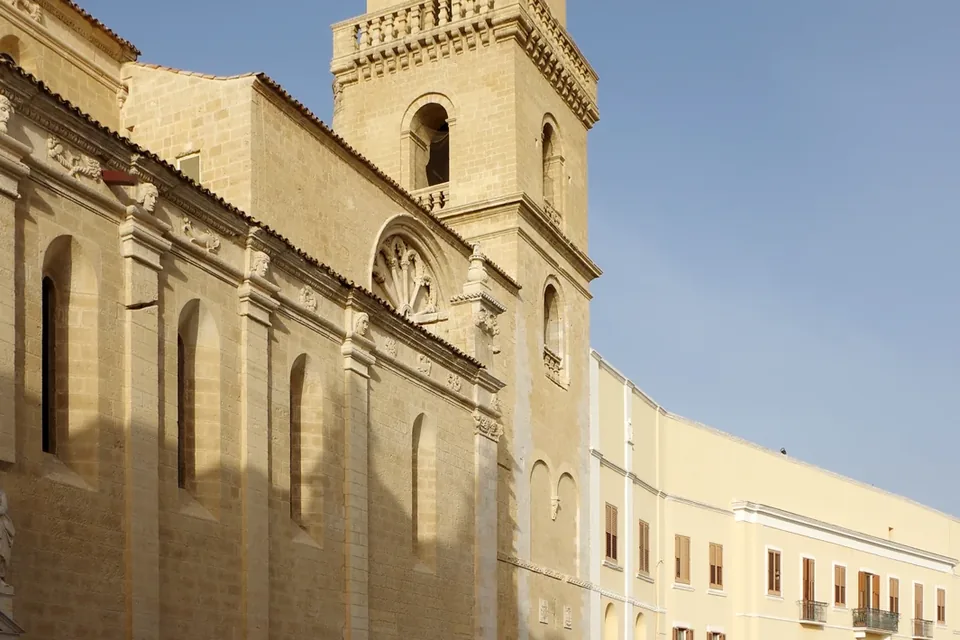
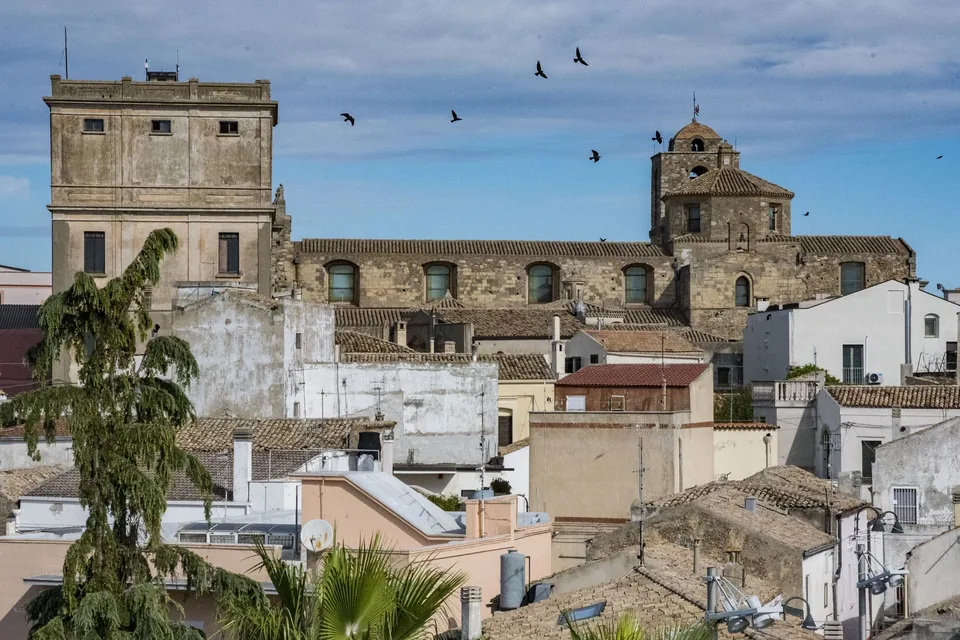
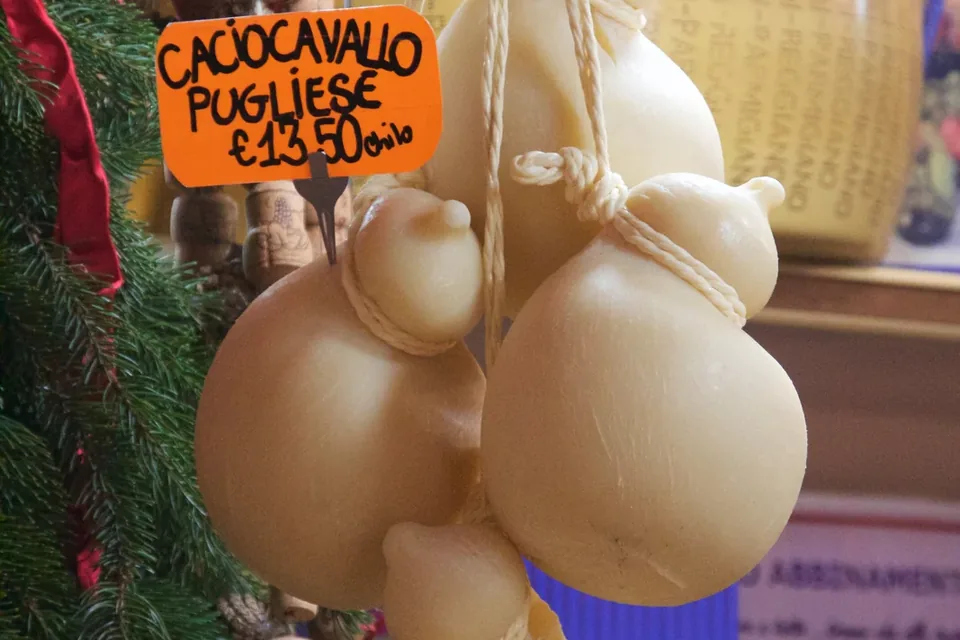
Matera is the hub of an area full of stops. Following the Gravina south you reach Montescaglioso, with the Benedictine Abbey of San Michele, where the Murgia Park has a visitor centre; lesser kestrels nest under its roof tiles too. Across the border with Puglia, a few kilometres away, Altamura and Gravina in Puglia share with Matera the Murgia plateau and the Lenticchia di Altamura PGI area.
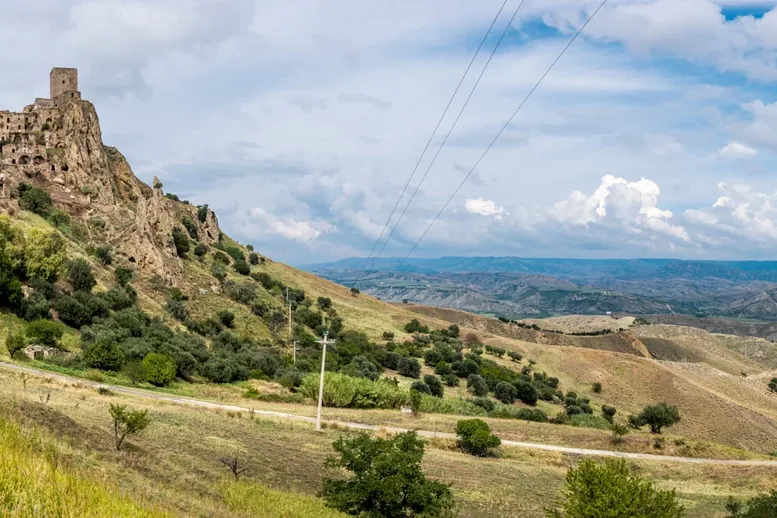
To the south-west, Miglionico keeps Malconsiglio Castle, scene of the 1485 Barons' Conspiracy, and Cima da Conegliano's great polyptych in the church of Santa Maria Maggiore. Further on you enter badlands country: Old Craco, the village abandoned after the 1963 landslide, and Aliano, Carlo Levi's village. Italia.it places Matera on a coast-to-coast route that runs from the Agri valley through the badlands and down to the Ionian coast.
Towards the sea, the Metaponto plain takes its name from the Magna Graecia city, rich in finds and monuments, and faces a long sandy shore. In a few days you pass from the rock city to Magna Graecia.
Sources: Parco della Murgia Materana — Scoprire il Parco · Parco della Murgia Materana — Centri visite · Qualigeo — Lenticchia di Altamura IGP · Italia.it — Miglionico · Italia.it — Craco · Italia.it — Basilicata coast to coast
Local tourist information
Local tourist offices help with opening times, events and transport on the day.
- Basilicata Open Space — Infopoint APT Basilicata · Piazza Vittorio Veneto, c/o Palazzo dell'Annunziata, 75100 Matera (MT) · +39 0835 406464 · infopoint@aptbasilicata.it · Official website
Source: APT Basilicata — Contatti e infopoint · checked on - Ente Parco della Murgia Materana — sede e informazioni sul Parco · Via Sette Dolori 10, rioni Sassi, 75100 Matera (MT) · +39 0835 336166 · info@parcomurgia.it · Official website
Source: Parco della Murgia Materana — Centri visite · checked on
Where to stay
In the municipality of Matera the national database of the Ministry of Tourism lists 1135 accommodation businesses with a verified CIN code: 45 hotels, 429 other licensed accommodation and 661 other types such as B&Bs and private rentals.
Sources: Ministero del Turismo – Banca Dati Strutture Ricettive (dashboard pubblica), 2026-10-12
YOUR JOURNEY
How to shape a journey here
Journey idea: connect Matera with Altamura and Gravina in Puglia through stone and bread culture. Another chapter can lead towards Miglionico and Craco, comparing different ways of inhabiting a landscape.
Talk to us about it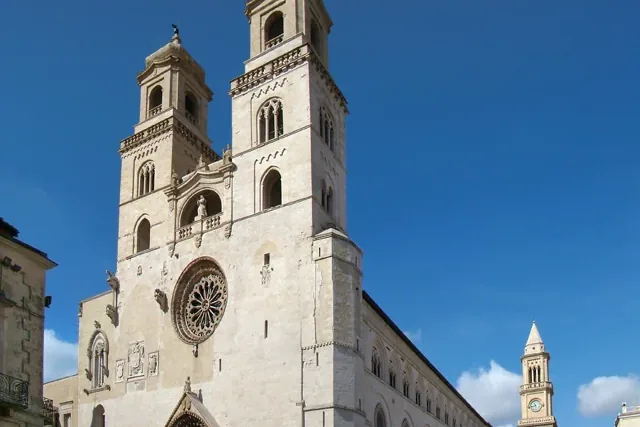



.jpeg)

