The Podolica cow
It all begins with an animal. Slow Food's Ark of Taste describes the Podolica as a cow of medium height and modest weight, with a grey coat in females and a darker one in males; calves, from birth to 4-6 months, are a wheat-like colour. The horns are long, 70 centimetres and sometimes up to a metre, crescent-shaped in bulls and lyre-shaped in cows.
For centuries its adaptability, disease resistance and hardiness helped it spread. Today the breed is found only in Campania, Calabria, Basilicata and Puglia, often crossed with others. The same qualities that make it valuable on pasture penalise it in modern farming: it adapts poorly to the barn, gives very little milk and has tasty but rather fibrous meat.
That is why numbers have fallen sharply, and Slow Food has included it in the Ark of Taste, the catalogue of products and breeds at risk of disappearing. Understanding the cow helps to understand the cheese: little milk, plenty of pasture, slow rhythms.
Sources: Fondazione Slow Food — Arca del Gusto, Vacca podolica
Grazing on the Gargano
The Gargano National Park explains that the promontory's pastures host about 21,000 cattle, some of which also use the woods at certain times of year. Among the breeds present the Podolica stands out: straight profile, wide horns, grey coat. These cows can live in harsh conditions, grazing on poor soils and among shrubs.
Raised free-range, the Podolica gives particularly aromatic milk and tasty meat, rich in minerals, with yellow fat and a strong flavour, which experienced butchers handle with suitable hanging and cuts. Its low milk yield, however, has led to its decline: in Italy there are about 25,000 head, mostly in the southern regions.
On the Gargano it can be seen free-range on the heights of Rignano Garganico, Monte Sant'Angelo, San Marco in Lamis, San Nicandro Garganico, Mattinata and Carpino, and on the Santa Tecla estate at Vieste. In the Park 350 animals are entered in the herd book and another 300 are being registered. Seeing them graze, the Park says, is one of the privileges of a visit.
The cheese, according to the Park
Pastures, and woods used for grazing, cover a large area of the Gargano, and the range of dairy products is rich: mozzarella, provola, scamorza, braids, burrata, stracciatella, ricotta, provolone, caciocavallo and pecorino. Above them all, the Park writes, stands caciocavallo podolico, a semi-hard stretched-curd cheese made from the milk of hardy cattle that are not kept in barns.
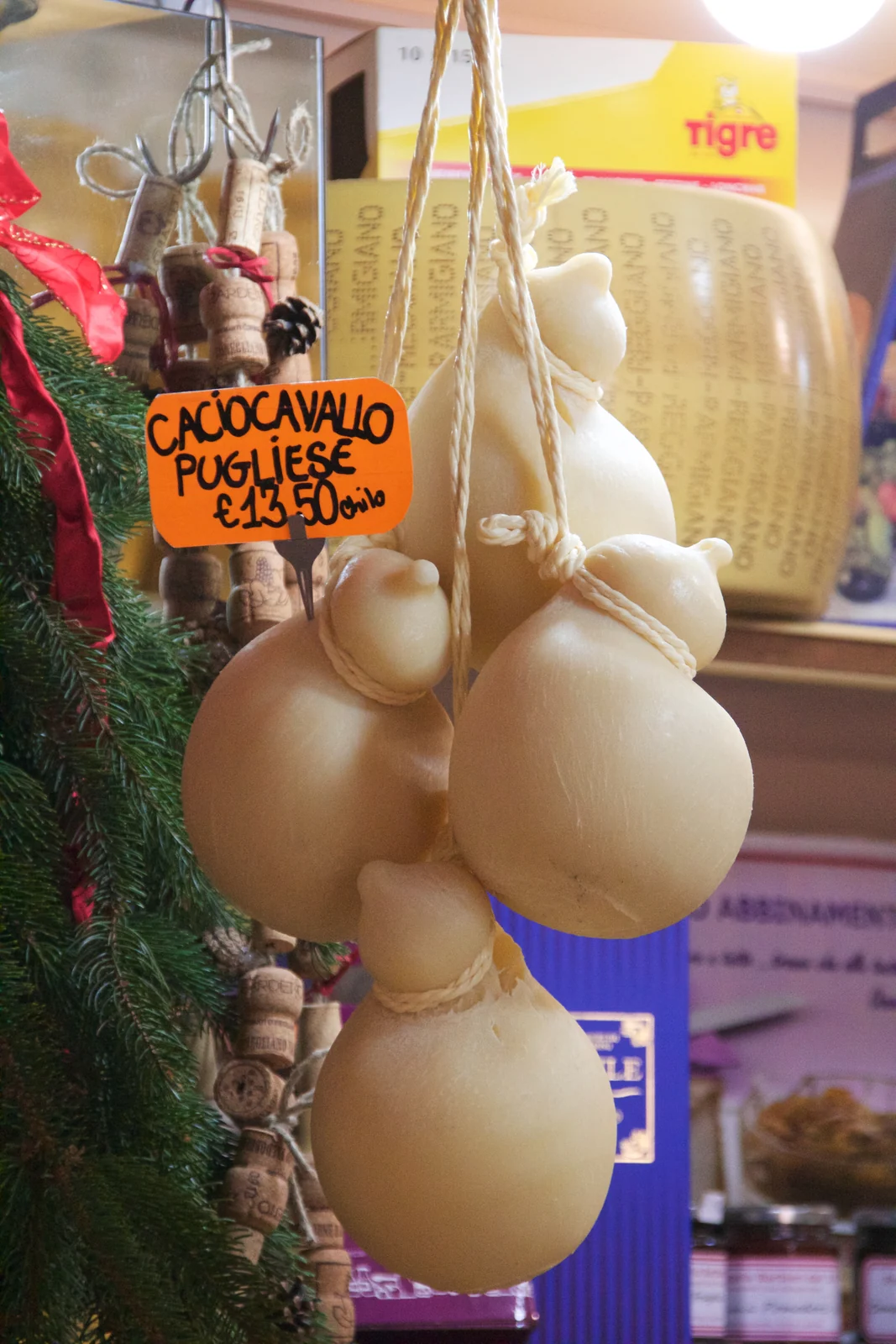
Podolica cows have one big limitation: they give little milk, and only in spring and summer, at the end of suckling their calves. But that milk carries the scents of wild vegetation, which return in the cheeses. On the Gargano the usual size is about two kilos, with an oval shape and a little head that holds the cord during ageing.
The name comes from that very cord: two cheeses tied together and hung astride a horizontal pole. Ageing lasts from 15 days to 18 months; the paste, straw-yellow at first, darkens over time, and the flavour moves from sweet to sharp as the cheese matures.
Sources: Parco nazionale del Gargano — Caciocavallo podolico
How it is made: the traditional products profile
The Puglia traditional food products sheet for caciocavallo podolico dauno covers the Gargano and the Daunian Subapennines, with milk from Podolica and derived cows raised on open and semi-open pasture. Raw milk, filtered through cotton cloth or a fine sieve, is heated to 36-38 degrees in a copper cauldron, over wood or gas, and curdled with lamb, kid or bovine rennet.
The curd is broken by hand with wooden tools into grains the size of rice; the previous day's whey starter, called cizza, is added, and the curd ripens for 4-5 hours in a wooden vat. Cut on a table, it is stretched with boiling water, shaped into a pear with a little head and tied. It then firms in cold water for a few hours and stays in brine for about 8-9 hours per kilo.
The result has a thin, smooth alabaster rind, a crumbly, flaky paste when well aged, an average weight of 2-3 kilos and a very savoury, sometimes slightly sharp taste. The producer's fire brand shows the minimum ageing time. The earliest records cited go back to Galanti, in 1771.
The Gargano Presidium and the caves
For Slow Food, a herd of Podolica cows grazing on the Gargano, with solemn horns and grey coats against woods and Mediterranean scrub, is an unforgettable sight. Raising them is another matter: the breed, once widespread, now survives where pasture is sparse and water scarce, and Gargano caciocavallo ends up mostly on family tables or in strictly local sales.
The Presidium covers the whole promontory, in the province of Foggia, and is supported by the Gargano National Park. The curd ripens in whey in a tub, drains on a sloping wooden table, is sliced and stretched into the shape of a pot-bellied flask with a little head, a delicate step that takes practice. The cheese is made all year, with a peak from March to May.
Minimum ageing is three months and can reach three years, in some cases eight or ten: only after many months does the cheese develop its most complex aromas. The Presidium aims to encourage production and revive traditional ageing rooms, especially natural caves. The listed producers are based in San Giovanni Rotondo, Rignano Garganico and Sannicandro Garganico.
Sources: Fondazione Slow Food — Presidio Caciocavallo podolico del Gargano
In Basilicata: large cheeses and long ageing
The second Slow Food Presidium concerns Basilicata, in the towns of the Lucanian Apennines and the Matera hills, across the provinces of Potenza and Matera. Slow Food recalls that stretched curd is a technique developed over centuries to make cow's-milk cheeses keep well and safely: the curd is cooked a second time until it becomes elastic and can be worked without breaking.
Here caciocavallo podolico lends itself to very long ageing. Large cheeses, from 4 to 8 kilos, can mature for four or five years and offer a complexity of aromas that, according to the Presidium, only the milk of grazing Podolica cattle can give. Many soften its strength with chestnut or strawberry-tree honey, even though this risks masking part of its richness.
The cheese is made all year with a peak from March to May. The Presidium was started by Anfosc, the association of producers who keep their animals on pasture, and aims to promote the Podolica as a dual-purpose breed, for meat and milk. The listed producers work around Brindisi Montagna, Pignola, Tito, Abriola, Acerenza, Rivello and Lagonegro.
Sources: Fondazione Slow Food — Presidio Caciocavallo podolico della Basilicata
August in Rignano Garganico and the Daunian Mountains
Rignano Garganico, the smallest town on the Gargano, is called the balcony of Puglia for its position overlooking the Tavoliere plain. The Park's page on festivals describes a busy calendar: a living nativity over Christmas, the fanoje bonfires of San Giuseppe on 19 March, the pilgrimage to the Madonna di Cristo on the Tuesday after Easter.
August, when people who live elsewhere come home and tourists arrive, is the month of patron saint festivals, on the 15th for the Assumption and the 16th for San Rocco, and of food festivals. Alongside the festival of goat and musciska, dried and seasoned meat linked to transhumance, the Park names caciocavallo podolico among the products celebrated, and in recent years a wild boar festival too. The Park gives no exact days for the food festivals.
The traditional products sheet also mentions the festival of the Podolica cow and caciocavallo podolico in Rignano and, in Monteleone di Puglia in the Daunian Mountains, the festival of caciocavallo, cicatijell and acc', traditionally in the second week of August. Before travelling, check the year's programme with the municipalities or Pro Loco associations.
Sources: Parco nazionale del Gargano — Feste e sagre · Atlante PAT Puglia — Caciocavallo podolico dauno
Monte Sant'Angelo and the Foresta Umbra
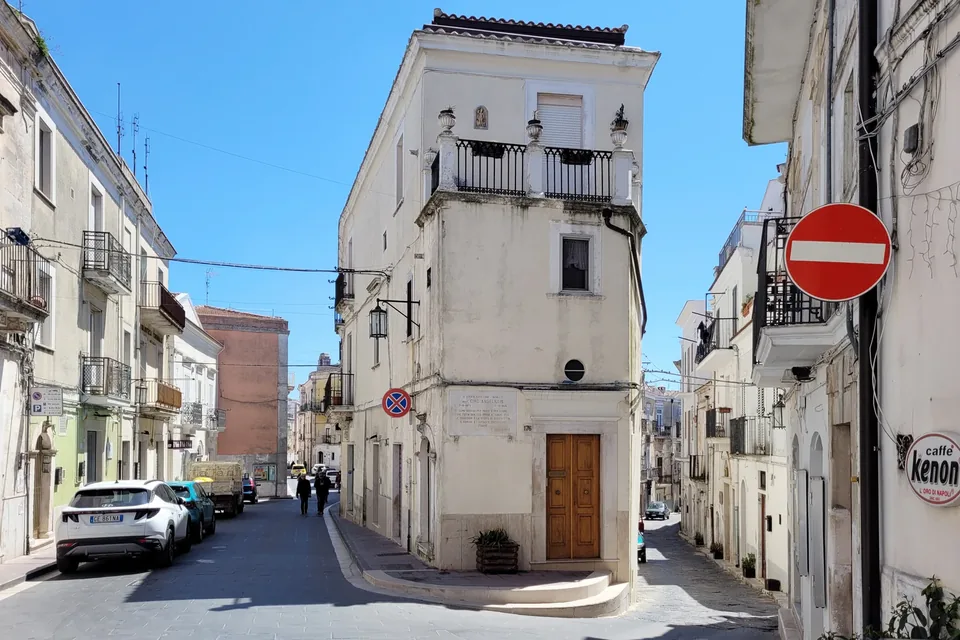
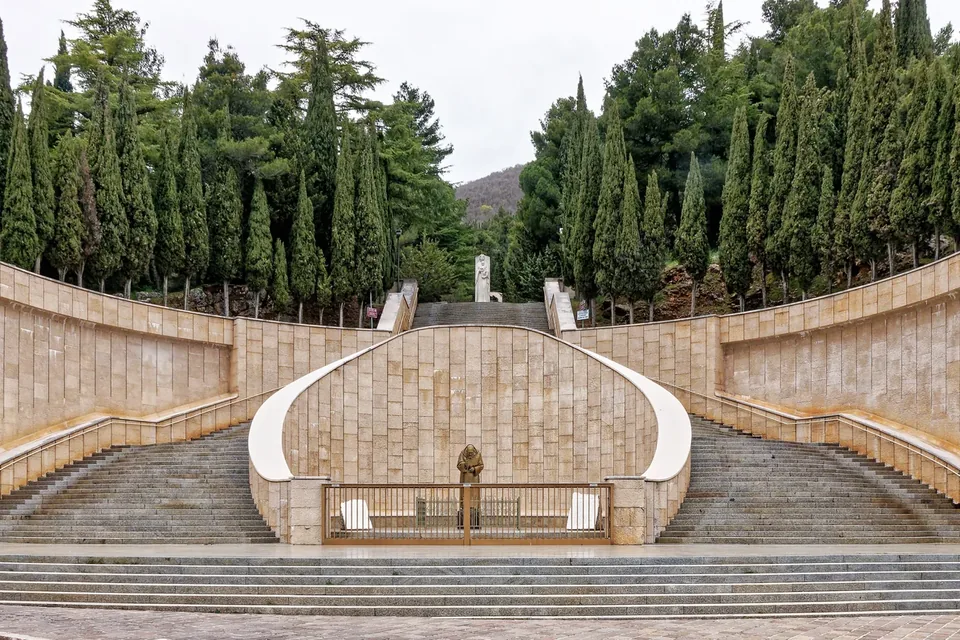
Many of the uplands where the Podolica grazes lie around Monte Sant'Angelo. Italia.it describes the winding road up to the town, with a viewpoint over the Gulf of Manfredonia, and its emblem: the sanctuary of San Michele, a UNESCO World Heritage site, where a staircase cut into the rock leads down to the Sacred Cave, the place of the Archangel's apparition.
From the basilica you enter the Junno quarter, a tangle of narrow alleys and white-fronted houses. History is still visible in the Norman castle, the Tomb of Rotari and the San Francesco complex, and bakeries sell ostie ripiene, little sweets filled with almonds and honey.
Outside the town begins the Foresta Umbra, whose beech forests are also part of UNESCO World Heritage. It is here, among woods, clearings and upland, that the Podolica's landscape is easiest to grasp: a day can combine the sanctuary, a walk in the forest and, in the afternoon, a taste of aged caciocavallo in one of the nearby towns.
Sources: Italia.it — Monte Sant'Angelo
How to taste it
The best way to understand podolico is to taste two ages side by side: a young one, soft and sweet, and one aged many months, drier, flaky and sharp. I would cut it into shavings, at room temperature, with country bread, and leave the oldest cheese until last, as it needs a few minutes to open up.
Chestnut or strawberry-tree honey suits long-aged cheeses, but it is worth trying them on their own first, so as not to lose the scents of pasture. With a local red, from the Gargano or Basilicata, the cheese holds up well; with young cheeses a full-bodied white also works.
In the towns of the Gargano or the Lucanian Apennines, ask how many months the cheese has aged and where: a cave, a cellar or a cool room make a big difference. The fire brand on the rind shows the minimum ageing and helps you find your way. Visits to farms and ageing rooms should always be arranged with the producers.
Taking it home
Aged caciocavallo travels well: a whole cheese or a vacuum-packed piece will survive days in a suitcase, and the small Gargano size, around two kilos, is easy to carry. The large Lucanian cheeses are more often bought in pieces.
I would choose a medium age for a versatile cheese, for the table and for cooking; a long one to enjoy in shavings in small amounts, perhaps at the end of a meal. Since production is limited and partly meant for local consumption, it is worth buying it where you taste it, without counting on finding the same cheese elsewhere.
At home I would keep it wrapped in food paper, in a cool place, not sealed in plastic, and take it out some time before serving. The producer knows best how to handle it: it is worth asking how much longer it can mature and how to store it once cut.
A thread for your journey
Journey idea: a day on the Gargano heights between Monte Sant'Angelo and San Giovanni Rotondo, looking out for Podolica pastures, with a tasting of caciocavallo at two ages. Visits to farms and ageing rooms arranged with local operators.
Talk to us