Why go
Monte Sant'Angelo stands on the southern spur of Gargano, looking over the Tavoliere plain on one side and the Gulf of Manfredonia on the other. You reach it by a winding road with a wide viewpoint over the gulf, and the approach alone shows why the town has been a destination for centuries: according to tradition, this is the mountain the Archangel Michael chose as his home.
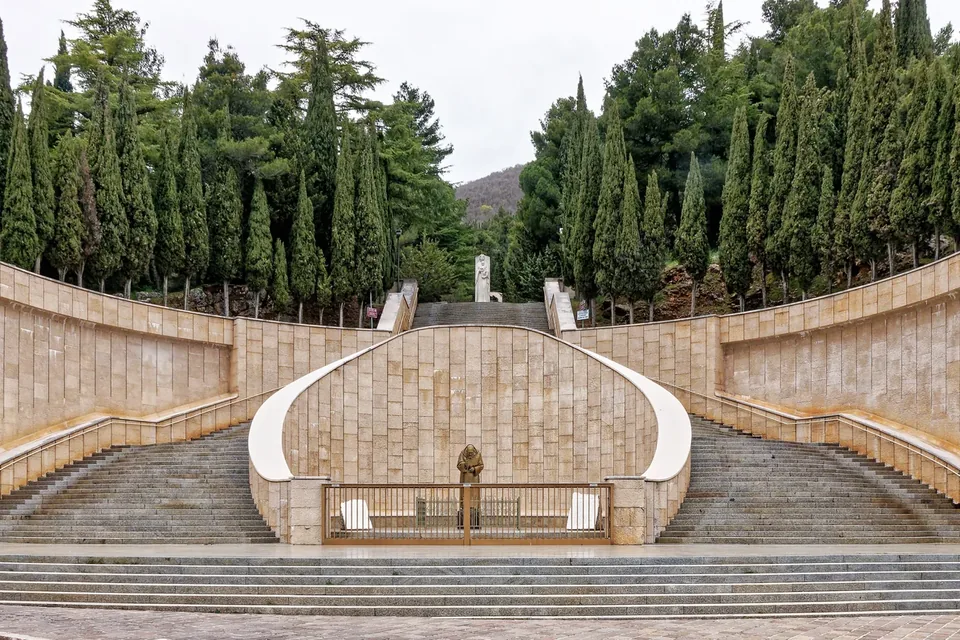
The heart of the town is the Sanctuary of Saint Michael, since 2011 part of the UNESCO site “The Longobards in Italy. Places of Power”. UNESCO credits Monte Sant'Angelo with being a forerunner of the great European pilgrimages, thanks to the spread of the cult of Saint Michael promoted by the Lombards. A stairway cut into the rock leads down to the Holy Cave, the place of the apparition, still visited by a steady stream of the faithful.
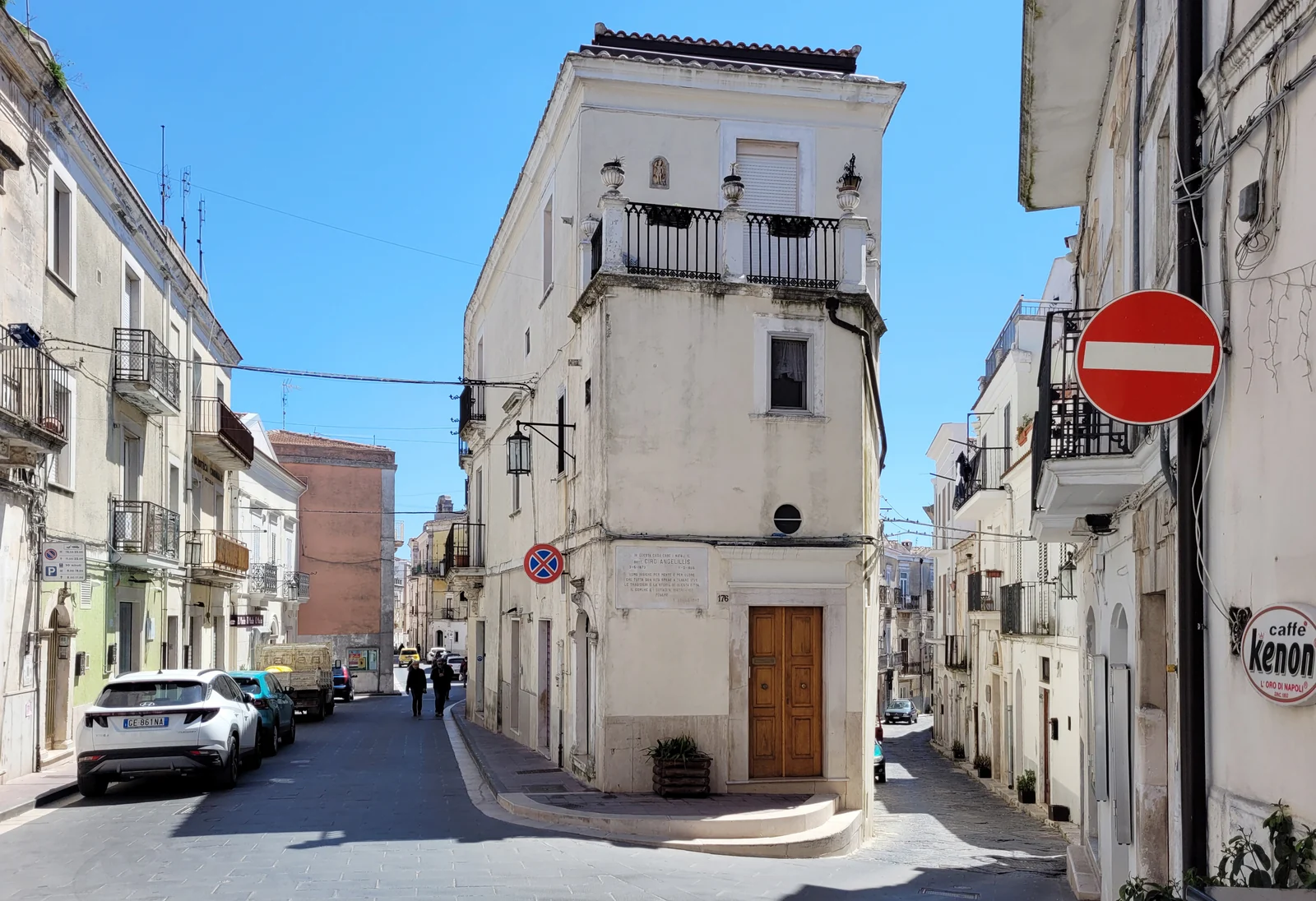
Alongside its religious side, it is a town to explore on foot: the Junno quarter with its low white houses, the castle, the medieval monuments and the bakeries turning out the large local loaf and ostie ripiene. A few kilometres away lie the Foresta Umbra and the abbey of Pulsano, making Monte Sant'Angelo an excellent base for inland Gargano.
Sources: Monte Sant’Angelo — fonte istituzionale · UNESCO — Longobards in Italy, Places of the Power · Viaggiare in Puglia (Regione Puglia) — Monte Sant'Angelo
History
Monte Sant'Angelo's history is the history of its sanctuary. The regional portal recalls that the Archangel Michael appeared here in 490; from then on the cave became a goal for pilgrims from all over Europe and an important stage on the southern Via Francigena. The Lombards, who ruled southern Italy between the sixth and eighth centuries, made the cult of Saint Michael part of their identity and, according to UNESCO, helped make Monte Sant'Angelo a model for the great medieval pilgrimages.
In the following centuries the sanctuary was enriched with works linked to the Mediterranean. The bronze doors were made in Constantinople in 1076 at the wish of Pantaleone, an Amalfi merchant of the Mauroni family: their twenty-four panels tell biblical episodes and the story of the shrine. The octagonal bell tower was commissioned by Charles I of Anjou from 1274, as thanks to the Archangel for the conquest of southern Italy.
The medieval town keeps other traces of this period. San Giovanni in Tumba, known as the Tomb of Rotari because of a misreading of the founders' inscription, probably began as the baptistery of the nearby church of San Pietro; the Norman castle was a residence of Frederick II.
Sources: Viaggiare in Puglia (Regione Puglia) — Monte Sant'Angelo · UNESCO — Longobards in Italy, Places of the Power · Basilica Santuario San Michele — porte di bronzo · Comune — San Giovanni in Tumba · Basilica Santuario — grotta e percorso
What to see
The visit begins at the sanctuary. From the octagonal Angevin bell tower, now 27 metres tall, you enter the upper courtyard; from here a long stairway descends to the bronze doors and the Holy Cave, which holds the statue of Saint Michael, the bishop's throne and, according to the regional portal, the silver cross of Frederick II. Along the Angevin stairway you can spot old graffiti left by pilgrims. The complex also includes crypts and a devotional museum.
Leaving the basilica you enter the Junno quarter, a tangle of narrow lanes and low houses with white façades, perfect for an aimless stroll. Nearby stands San Giovanni in Tumba, whose volume rises from a square plan through octagonal and cylindrical bands up to the dome, while the Norman castle overlooks the town.
The former convent of San Francesco houses the Museum of Popular Arts and Traditions of Gargano “Giovanni Tancredi”, one of Puglia's leading ethnographic collections: farm tools, craft items and everyday objects gathered by the researcher between the nineteenth and twentieth centuries, together with a photo archive of some seven hundred plates and films taken between 1893 and 1932.
Sources: Basilica Santuario — grotta e percorso · Basilica Santuario San Michele — porte di bronzo · Viaggiare in Puglia (Regione Puglia) — Monte Sant'Angelo · Comune — San Giovanni in Tumba · Biblioteca comunale — Museo Tancredi · Monte Sant’Angelo — fonte istituzionale
Food and wine
The town's food symbol is its bread. The municipality describes it as the emblem of local farming culture: a round, generous shape, a thin golden crust, a soft white crumb and an intense aroma. It is made with soft wheat, grown on land that would naturally favour durum wheat, and with a sourdough starter renewed every day; the process is long and slow, and families once carried their dough to the ovens in the middle of the night. Pane di Monte Sant'Angelo is now a Slow Food presidium.
Bread is also the basis of the most typical dishes. The municipality mentions pancotto and acquasale, dishes of the farming tradition that reuse bread and show how a single product could support several meals a week.
For something sweet, the Ministry of Tourism and the Region both mention ostie ripiene, wafer sweets filled with almonds and honey sold in the town's bakeries, especially in the Junno quarter. Stopping at a bakery after the sanctuary is one of the simplest ways to get to know the town.
Sources: Comune — Presidio del pane di Monte Sant’Angelo · Monte Sant’Angelo — fonte istituzionale · Viaggiare in Puglia (Regione Puglia) — Monte Sant'Angelo
Things to do
Monte Sant'Angelo invites you to combine faith, culture and nature. The regional portal notes that the basilica is a stage on the southern Via Francigena and that during the September feast many of the faithful climb on foot along the narrow, steep road to the sanctuary: walking a stretch of the old sacred route is a way to enter the spirit of the place.
About 8 kilometres from town, the abbey of Santa Maria di Pulsano stands on a spur overlooking the gulf, among dozens of hermitages carved into the rock; it is run by a monastic community that holds icon-painting courses and has a printing workshop. Getting there combines a scenic walk with the discovery of Gargano's hermit tradition, which the Park's map links to the cult of Saint Michael and the sacred route.
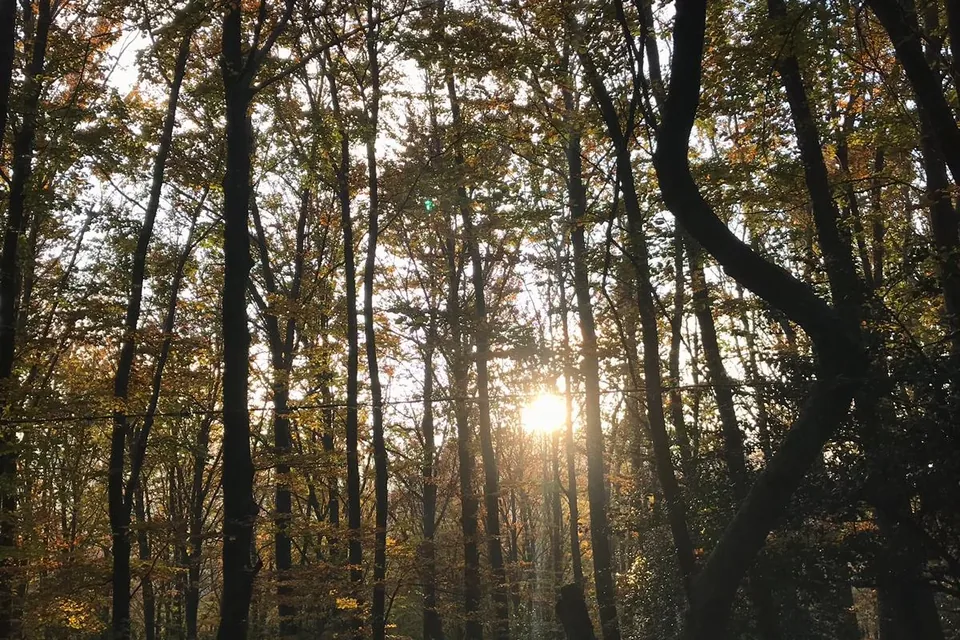
Just outside town begins the Foresta Umbra, whose beech woods are a UNESCO site like the sanctuary: trails, picnic areas and the Laghetto d'Umbra make for a day in the green. Keen walkers can follow the Grande Traversata Garganica, a waymarked loop of about 200 kilometres. For a cultural break, the Tancredi Museum tells the story of daily life in Gargano communities.
Sources: Viaggiare in Puglia (Regione Puglia) — Monte Sant'Angelo · Italia.it (Ministero del Turismo) — Foresta Umbra · Parco Nazionale del Gargano — La Grande Traversata Garganica · Parco Nazionale del Gargano — Carta del Parco · Biblioteca comunale — Museo Tancredi
When to go
Monte Sant'Angelo can be visited all year round: the sanctuary and the old town do not depend on the season. Spring and autumn are the most pleasant periods for combining the town, the museum and walks nearby; in summer the nearby Foresta Umbra offers shade and trails a short distance from town. In winter the town is quieter and the sanctuary remains a pilgrimage goal as in every season.
The most intense time of year is the patronal feast of Saint Michael the Archangel, centred on 29 September, when many pilgrims climb to the sanctuary on foot. The official 2026 programme documented celebrations from 27 September to 1 October, preceded on 25 and 26 September by an art performance in the basilica and the historical procession of the Apparitions, with the Procession of the Holy Sword on 29 September and concerts in the square.
That edition has already taken place: the dates serve as a reference and the programme for later years should be checked on the municipality's website. Those seeking a quieter atmosphere may prefer the weeks away from the feast.
Sources: Comune — festa patronale 2026, programma ufficiale · Viaggiare in Puglia (Regione Puglia) — Monte Sant'Angelo · Italia.it (Ministero del Turismo) — Foresta Umbra
Getting there and around
The Puglia Region's tourism portal points to Foggia station as the reference for travellers arriving by train; from there and across the plain you continue towards Gargano. Intercity buses are run by the regional COTRAP consortium, while in town the municipality operates an urban public transport service. Alternatively you can hire cars, scooters or bicycles, or use the taxi service.
The reference airport for scheduled flights is Bari, connected by private transfers; Foggia airport, run like Bari's by Aeroporti di Puglia, offers some links with Italian cities. By car you climb along the winding road leading to the viewpoint over the gulf and then into town.
Once there, the old town and the Junno quarter are best explored on foot: distances are short, but the streets are steep and full of steps. For on-the-spot information there is the Monte Sant'Angelo Info-point, housed in the castle in Largo Roberto il Guiscardo, which the regional portal also lists as the reference point for San Giovanni Rotondo.
Sources: Viaggiare in Puglia (Regione Puglia) — Monte Sant'Angelo · Viaggiare in Puglia (Regione Puglia) — Info-point Monte Sant'Angelo · Aeroporti di Puglia — Aeroporto di Foggia · Monte Sant’Angelo — fonte istituzionale
Where to stay
Those staying in Monte Sant'Angelo can choose between two atmospheres. A room in the old town or the Junno quarter lets you go out on foot in the evening and enjoy the town after day visitors have left; B&Bs and houses in the old quarter are the best choice for those who want to manage without a car.
Outside the historic core, the Hotel Santangelo lies on the road to Pulsano, about a kilometre from town, with rooms, panoramic terraces and a restaurant. It is an editorial reference for those who prefer a stay more connected with the landscape, not an Apulica partnership.
The town's position, between sanctuary, forest and gulf, makes it a good base for exploring inland Gargano: the Foresta Umbra, the abbey of Pulsano and San Giovanni Rotondo are a short distance away. During the patronal feast at the end of September the number of pilgrims rises sharply, so it is useful to plan your stay in good time.
Sources: Hotel Santangelo — presentazione e contatti · Monte Sant’Angelo — fonte istituzionale · Viaggiare in Puglia (Regione Puglia) — Monte Sant'Angelo
Nearby
Monte Sant'Angelo sits at the centre of a small network of places to discover. About 8 kilometres away, the abbey of Santa Maria di Pulsano, perched above the gulf and surrounded by rock hermitages, is the nearest stop and the one most closely tied to the mountain's spiritual history.
Inland, the Foresta Umbra, a UNESCO natural heritage site, is a short drive away: its beech woods, trails and the Laghetto d'Umbra offer a complete change of scenery from the stone town. About 20 kilometres away, according to the regional portal, lies San Giovanni Rotondo, the other great centre of faith on Gargano, linked to the figure of Padre Pio.
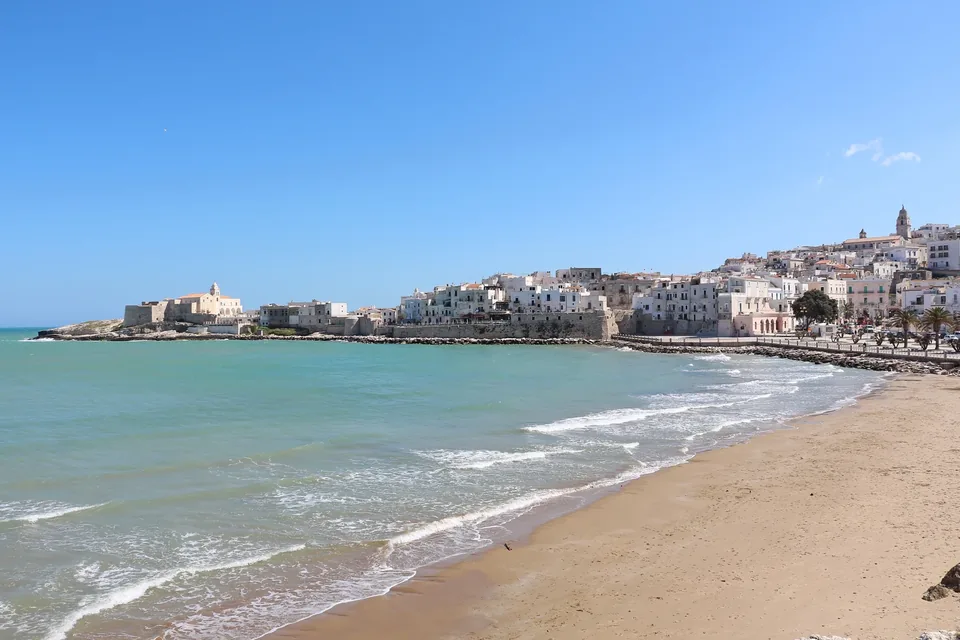
Heading down to the sea you reach Manfredonia and its gulf, with the wetlands and the olive-covered Mattinata plain that the Park counts among the most representative landscapes of the promontory. From here the coast continues to Vieste, with its old town and Pizzomunno beach.
Sources: Viaggiare in Puglia (Regione Puglia) — Monte Sant'Angelo · Monte Sant’Angelo — fonte istituzionale · Italia.it (Ministero del Turismo) — Foresta Umbra · Parco Nazionale del Gargano — Carta del Parco
Local tourist information
Local tourist offices help with opening times, events and transport on the day.
- Info-point Monte Sant'Angelo · Largo Roberto il Guiscardo 2, c/o Castello, 71037 Monte Sant'Angelo (FG) · +39 0884 562062 · infopoint@turismomontesantangelo.it
Source: Viaggiare in Puglia (Regione Puglia) — Info-point Monte Sant'Angelo · checked on
Where to stay
In the municipality of Monte Sant'Angelo the national database of the Ministry of Tourism lists 97 accommodation businesses with a verified CIN code: 5 hotels, 18 other licensed accommodation and 74 other types such as B&Bs and private rentals.
Licensed businesses from the official list of Regione Puglia, each with a checked national CIN code: matching municipality and category. Private individuals are not listed. Check directly with the property before booking.
Affittacamere Gli Angeli
Guest rooms
CIN IT071033B400069422
CASA NATURA COPPA DEL GIGLIO
Guest rooms
CIN IT071033B400021042
VALLE DEL DOLMEN
Guest rooms
CIN IT071033B400032253
VILLA BISCEGLIA
Guest rooms
CIN IT071033B400024532
VILLA SIMONE
Guest rooms
CIN IT071033B400024015
Villa Grazia
Guest rooms
CIN IT071033B400100630
AGRICAMPING SANTAMARIA
Farm stay
CIN IT071033B500080535
AGRITURISMO CANTONIERA D'UMBRA
Farm stay · Website
CIN IT071033B500032336
BARONE GAMBADORO
B&B
CIN IT071033B400023342
CANTINE CIPPONE ROOM
B&B
CIN IT071033B400119981
MICHAEL
B&B
CIN IT071033B400023306
CASE MALU'
Holiday home
CIN IT071033B400088332
CASA DEL PELLEGRINO
Hotel · ★★★
CIN IT071033A100021121
ELDA HOTEL
Hotel · ★★★★ · Website
CIN IT071033A100032418
HOTEL RELAIS DEI NORMANNI
Hotel · ★★★★
CIN IT071033A100023630
HOTEL SANTANGELO
Hotel · ★★★
CIN IT071033A100108757
PALACE HOTEL SAN MICHELE
Hotel · ★★★★
CIN IT071033A100021130
BAIA DEL MONACO
Holiday village · ★★★★
CIN IT071033B200022184
Sources: Regione Puglia – ARET Pugliapromozione (DMS), CC BY 4.0, 2026-10-12 · Ministero del Turismo – Banca Dati Strutture Ricettive (dashboard pubblica), 2026-10-12
YOUR JOURNEY
How to shape a journey here
We can arrange Monte Sant’Angelo through cave, architecture and bread making, with a mountain stay and a continuation towards pilgrimage, forest or coast.
Talk to us about it