Why go
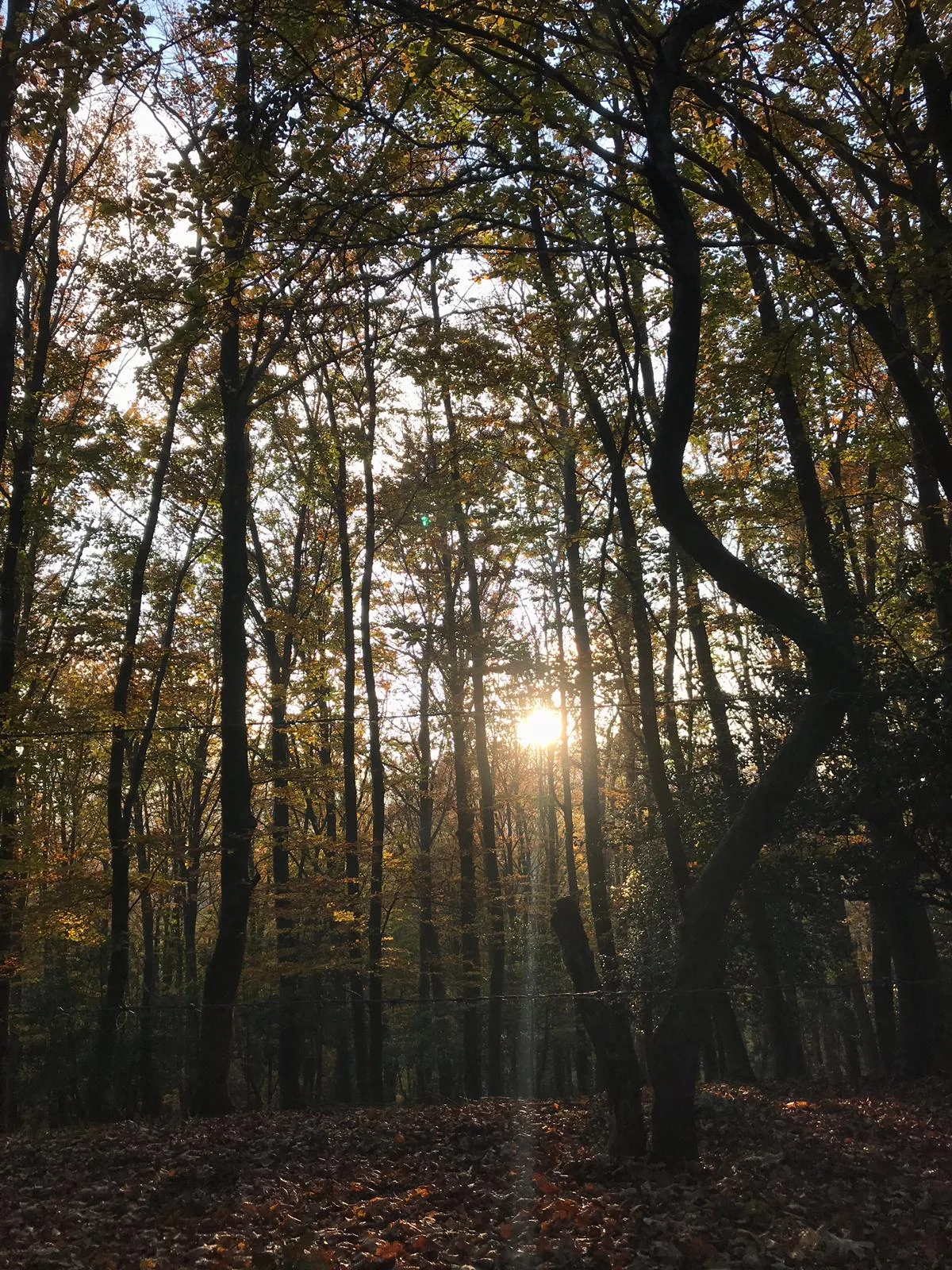
The Foresta Umbra is the green heart of Gargano. The Ministry of Tourism's portal describes it as an area of about 10,500 hectares inside the Gargano National Park, with vegetation so dense that it truly creates “shade”, and notes that since 2017 its ancient beech woods have been a UNESCO natural heritage site. More than 200 animal species live here, among a very varied plant heritage.
The Park calls it the forest par excellence: an almost continuous woodland gathering several nature reserves, where beeches, hornbeams, maples and yews form true tree cathedrals. What makes it unique is the phenomenon of the “low-altitude beech woods”: thanks to a cool, humid microclimate, beech grows here at lower altitudes than elsewhere, alongside holm oaks, downy oaks and other Mediterranean species.
It is a place best enjoyed on foot. Waymarked trails, rest areas, a small karst lake and a nature museum make it worth a full day or a longer stay, and even in summer it offers cool shelter compared with the coast. For anyone visiting Gargano it is the most direct way to get to know the interior of the promontory.
Sources: Foresta Umbra — fonte istituzionale · Parco del Gargano — Foresta Umbra · Carabinieri Biodiversità — Riserva demaniale di Foresta Umbra
History
According to the study published by the Carabinieri, who now manage the state reserve, the Foresta Umbra is what remains of the ancient forest that, probably until the end of the eighteenth century, covered the whole promontory. The Gargano woods already appear in Latin writers: Lucan, Silius Italicus and Horace evoke them for their thick undergrowth, their holm oaks and ash trees and the sound of leaves in the wind.
The name has a simple explanation too: it does not come from Umbria but from the dense shade cast by the beech crowns, which led the first travellers to speak of a “shady” forest. Over the centuries the woodland went through fiefs, disputes, felling and neglect; in 1910 it was entrusted to the State forestry administration, which enlarged it during the twentieth century with new acquisitions, reaching about 10,440 hectares by the end of the 1970s.
Alongside protection, the forest also tells the story of forestry work: in 1887 a nursery for reforestation was set up, enclosed a few years later by a dry-stone wall that still stands, and in 1978 a teaching wood with the oak species of the region was planted at Caritate. In 2017 the Umbra and Falascone reserve was recognised by UNESCO for its ancient beech woods.
Sources: Carabinieri Biodiversità — Riserva demaniale di Foresta Umbra · Foresta Umbra — fonte istituzionale
What to see
The natural starting point is the Villaggio Umbra area, where the Park points to the nature museum, a visitor information desk and the woodcutter's hut. Nearby there are also enclosures with fallow deer, wild boar and mouflon and, at Caritate, an experimental nursery where you can see the dozen or so oak species growing in Puglia.
The Laghetto d'Umbra is the largest of the “cutini”, the pools that form where karst ground holds rainwater. It lies at about 790 metres, on the edge of the nature reserve, fills the centre of a wide sinkhole and measures roughly 125 by 70 metres. It is home to the southern bleak, a protected fish, and in summer its banks are among the busiest spots. In early spring, hundreds of toads migrate to the Cutino d'Umbra to breed.
Along the road crossing the forest, dedicated signs mark some monumental trees, such as the great beech in the Valle del Tesoro and the yew on the road to Monte Sant'Angelo. Short detours from the trails also lead to the “grave”, karst sinkholes that are fenced off and explained by information panels.
Sources: Parco del Gargano — Foresta Umbra · Parco nazionale del Gargano — Laghetto d’Umbra · Parco del Gargano — sentieri di Foresta Umbra · Foresta Umbra — fonte istituzionale
Food and wine
The forest is a place of nature rather than farming, but the towns around it have a cuisine closely tied to its woods and pastures. The Park notes that olive trees cover about 20,000 hectares of the Gargano hills, including the slopes of Vico del Gargano, Vieste and Monte Sant'Angelo that border the forest: the most common variety is Ogliarola garganica and the extra virgin oil falls under the Dauno PDO with the mention Gargano.
From the inland pastures comes the Caciocavallo podolico del Gargano, a Slow Food presidium: Podolica cows give little milk and only in certain periods, so the cheese is rare and is found mainly locally. In Monte Sant'Angelo, the municipality in which much of the forest lies, the town promotes its large round loaf made with soft wheat and sourdough, also the basis of dishes made with stale bread such as pancotto.
In the heart of the forest, the Il Rifugio restaurant of the Elda Hotel offers cooking that reinterprets Gargano tradition. For picnics, the many equipped areas make it easy to bring bread, cheese and oil bought in the nearby towns.
Sources: Parco Nazionale del Gargano — Olio extravergine di oliva · Fondazione Slow Food — Presidio Caciocavallo podolico del Gargano · Comune di Monte Sant'Angelo — Presidio del pane di Monte Sant'Angelo · Elda Hotel — Ristorante Il Rifugio
Things to do
The Foresta Umbra is the emblem of hiking on Gargano. The Park describes a network of about 54 kilometres with fifteen waymarked trails: each starting point has a car park, signs showing the destination and walking time, and yellow waymarks on trees and rocks along the way. Routes include links such as Laghetto d'Umbra–Falascone or Sfilzi–Caritate, of different length and effort. Mountain bikes can be hired at the museum.
The Ministry of Tourism points to twenty-five picnic areas, the Giocabosco woodland playground and the fallow deer reserve, all suited to families with children. For a longer experience, the Grande Traversata Garganica, a loop of about 200 kilometres that can be covered on foot, by bike or on horseback, crosses the forest and links it to San Giovanni Rotondo, Vico del Gargano and Carpino.
The forest is also a place for wildlife watching. The Park mentions six woodpecker species, including the rare white-backed woodpecker, many birds of prey and the Gargano roe deer, a native population of great scientific interest. These are elusive animals: a nature guide helps to recognise tracks and calls without promising sightings.
Sources: Parco del Gargano — sentieri di Foresta Umbra · Foresta Umbra — fonte istituzionale · Parco Nazionale del Gargano — La Grande Traversata Garganica · Parco del Gargano — Foresta Umbra
When to go
The forest changes with the seasons and is best visited from spring to autumn. In spring the undergrowth fills with flowers: the Park mentions anemones, squills, violets and a remarkable group of wild orchids, and right at the start of the season hundreds of toads reach the Cutino d'Umbra to breed.
In summer the Foresta Umbra is a refuge from the heat of the coast. The Ministry of Tourism suggests seeking shelter in the shade of the beeches or on the banks of the Laghetto d'Umbra, which becomes one of the busiest spots in the hot months and one of the most pleasant places for an outdoor break.
Autumn is perhaps the most spectacular season: the beech woods change colour and the foliage draws photographers and walkers. In winter the forest remains accessible, but days are short and the upland climate is harsher, so the recommended seasons remain those between spring and autumn.
Sources: Foresta Umbra — fonte istituzionale · Parco del Gargano — Foresta Umbra · Parco nazionale del Gargano — Laghetto d’Umbra
Getting there and around
The Foresta Umbra lies at the centre of the promontory and extends across the territory of several municipalities, including Vico del Gargano, Monte Sant'Angelo, Vieste, Peschici, Ischitella and Carpino, from about 300 to about 800 metres above sea level. It is reached by the provincial roads climbing from the coastal and hillside towns: according to the Park, whichever direction you come from, the entrance to the forest is marked by large wooden panels, and there are car parks at the start of the trails.
For those coming from further away, the Puglia Region's tourism portal points to Foggia as the reference railway station for southern Gargano and mentions COTRAP consortium bus links to Monte Sant'Angelo. The nearest airports are Bari and Foggia, run by Aeroporti di Puglia.
Inside the forest you get around on foot, by bike or by car along the main road. As the woodland has no internal public transport network, a car or an organised transfer remains the most practical way to reach the trailheads.
Sources: Foresta Umbra — fonte istituzionale · Carabinieri Biodiversità — Riserva demaniale di Foresta Umbra · Parco del Gargano — sentieri di Foresta Umbra · Viaggiare in Puglia (Regione Puglia) — Monte Sant'Angelo · Aeroporti di Puglia — Aeroporto di Foggia
Where to stay
Staying inside the forest lets you experience the woods in their quietest hours, early in the morning and in the evening. The Elda Hotel restores the historic Albergo Rifugio on Provincial Road 52b, in the municipality of Monte Sant'Angelo, and offers rooms and chalets surrounded by greenery, with the Il Rifugio restaurant. It is an editorial reference, not an Apulica partnership.
Alternatively, the forest works well as a day trip from a base in town. The surrounding towns, such as Monte Sant'Angelo, Vico del Gargano, Vieste and Peschici, offer hotels, B&Bs in the old towns and farm stays in the countryside; the choice depends on what you want to pair with the forest, the sea of the coast or the sanctuaries and villages of the interior.
Those planning to walk several trails or follow the Grande Traversata Garganica can split their stay in two, one base near the forest and one on the coast, so as not to drive the mountain road every day. The rest areas and car parks at the trailheads make access easy even for day visitors.
Sources: Elda Hotel — rifugio, camere e chalet · Elda Hotel — Ristorante Il Rifugio · Elda Hotel — posizione e contatti · Foresta Umbra — fonte istituzionale · Parco del Gargano — sentieri di Foresta Umbra
Nearby
From the forest it is a short drive down to some of Gargano's best-known places. To the south, Monte Sant'Angelo overlooks the Gulf of Manfredonia: the regional portal mentions the sanctuary of Saint Michael, a UNESCO site, the Junno quarter with its low houses, the castle and, a few kilometres away, the abbey of Santa Maria di Pulsano, facing the gulf among dozens of hermitages carved into the rock.
To the north and east the road leads to the coast: Vieste, with its old town and Pizzomunno beach, and Peschici, with its white village on the headland, can be reached in a day and let you move from forest to sea. Vico del Gargano, on the northern slope, is one of the stages of the Grande Traversata Garganica.
Walkers can continue along the Grande Traversata Garganica, which links the forest to San Giovanni Rotondo, Carpino and Cagnano Varano, on the shore of the Varano lagoon. Each direction opens a different theme: faith, the sea or the cultivated countryside of the promontory.
Sources: Viaggiare in Puglia (Regione Puglia) — Monte Sant'Angelo · Foresta Umbra — fonte istituzionale · Parco Nazionale del Gargano — La Grande Traversata Garganica
Local tourist information
Local tourist offices help with opening times, events and transport on the day.
- Sportello informativo e Museo naturalistico di Foresta Umbra · Villaggio Umbra, Foresta Umbra (FG)
Source: Parco del Gargano — sentieri di Foresta Umbra · checked on
Where to stay
In the municipality of Vico del Gargano the national database of the Ministry of Tourism lists 157 accommodation businesses with a verified CIN code: 9 hotels, 40 other licensed accommodation and 108 other types such as B&Bs and private rentals.
Licensed businesses from the official list of Regione Puglia, each with a checked national CIN code: matching municipality and category. Private individuals are not listed. Check directly with the property before booking.
DONNA ELENA
Guest rooms · Website
CIN IT071059B400024414
MURGENERE
Guest rooms
CIN IT071059B400079961
VERDE MATEMATICO
Guest rooms
CIN IT071059B400059357
AGRITURISMO IL VAGABONDO
Farm stay
CIN IT071059B500024061
ARCO DI CALENELLA
Farm stay
CIN IT071059B500021665
AZIENDA AGRICOLA THEMA
Farm stay
CIN IT071059B500021919
Agricalenella
Farm stay · Website
CIN IT071059B500121188
RIFUGIO SFILZI
Farm stay
CIN IT071059B500023949
B&B CASA DEL MAR
B&B
CIN IT071059B400083351
B&B VILLA NETTUNO
B&B
CIN IT071059B400044728
GARGARA BED AND BREAKFAST
B&B
CIN IT071059B400079557
HOLIDAY BED & BREAKFAST
B&B · Website
CIN IT071059B400024681
VILLA LE CHIANCHE
B&B
CIN IT071059B400102401
BAIA DI CALENELLA
Campsite · ★★
CIN IT071059B100020501
CAMPING INTERNAZIONALE
Campsite · ★★★★
CIN IT071059B100026452
CAMPING VALLE D'ORO
Campsite · ★★ · Website
CIN IT071059B100027569
CENTRO VACANZE CAMPING CALENELLA
Campsite · ★★★
CIN IT071059B100022094
AL BORGO ANTICO CASE VACANZE
Holiday home · Website
CIN IT071059B400127711
ARIA DI VICO
Holiday home · Website
CIN IT071059B400031957
CASA VACANZE DI ROMONDIA GIUSEPPE
Holiday home
CIN IT071059B400023458
Calypso & Circe Case Vacanza
Holiday home
CIN IT071059B400126810
Casa delle Favole
Holiday home
CIN IT071059B400058596
GarganoMareBorghi Ospitalità Diffusa
Holiday home
CIN IT071059B400096422
RESIDENZA PICCOLO ULIVETO
Holiday home · Website
CIN IT071059B400023012
DEPENDANCE HOTEL PINETA
Hotel · ★★★
CIN IT071059A100026708
HOTEL GARDEN
Hotel · ★★★
CIN IT071059A100025383
HOTEL PINETA
Hotel · ★★★
CIN IT071059A100026707
HOTEL RESIDENCE MARECHIARO
Hotel · ★★★ · Website
CIN IT071059A100056578
HOTEL SOLE SRL
Hotel · ★★★ · Website
CIN IT071059A100078310
MAREMONTI
Hotel · ★★★
CIN IT071059A100020458
PARK HOTEL VILLA MARIA
Hotel · ★★★ · Website
CIN IT071059A100020460
Resort Orchidea Blu
Hotel · ★★★★
CIN IT071059A100096207
STURNO
Hotel · ★ · Website
CIN IT071059A100020459
Sources: Regione Puglia – ARET Pugliapromozione (DMS), CC BY 4.0, 2026-10-12 · Ministero del Turismo – Banca Dati Strutture Ricettive (dashboard pubblica), 2026-10-12
YOUR JOURNEY
How to shape a journey here
We can design a naturalist-led day with one considered trail and a forest meal, choosing a woodland or coastal base.
Talk to us about it