

Why go
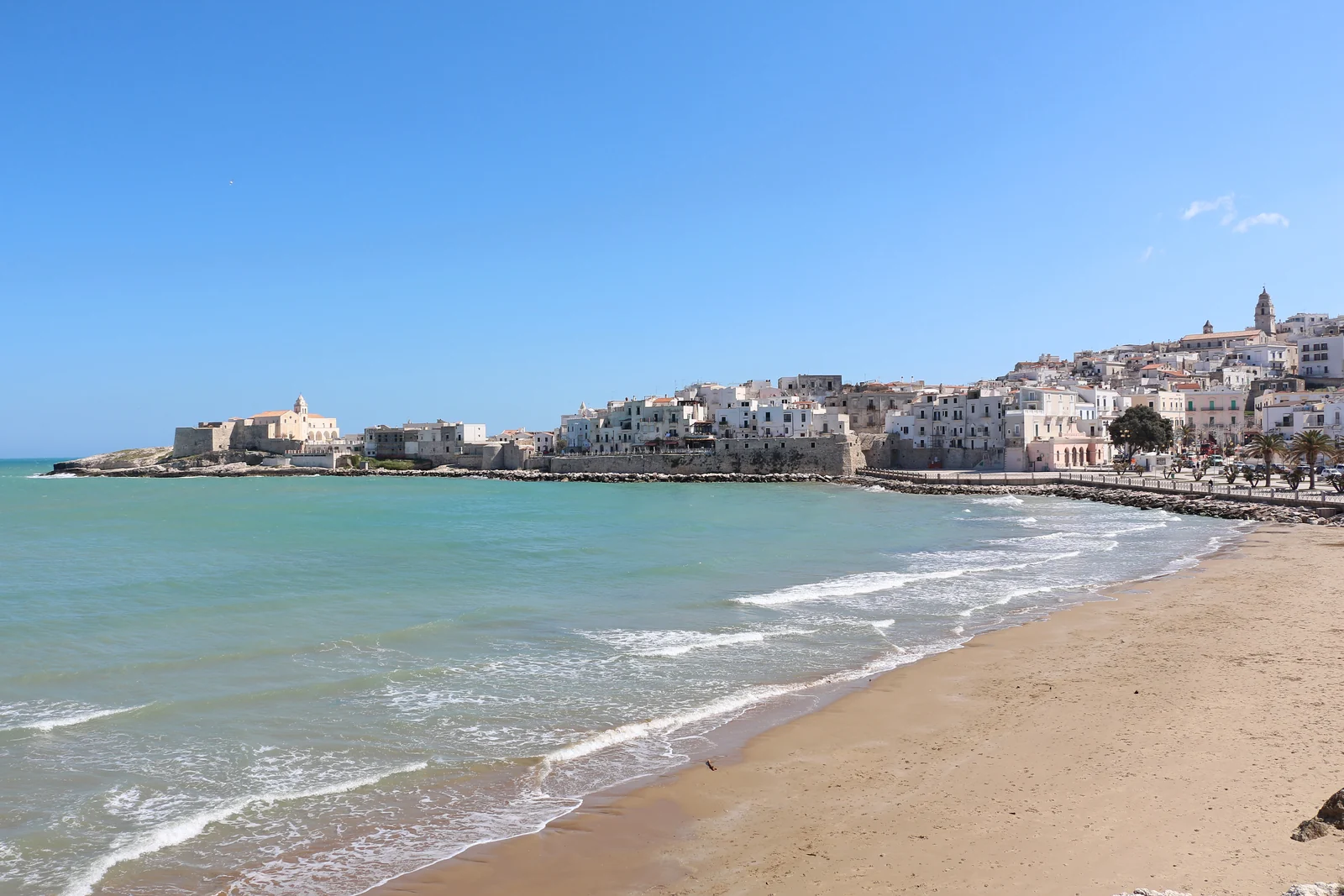
Vieste is the easternmost town on the Gargano promontory and lies inside the national park, halfway between Peschici and the coast of Mattinata. Its old centre sits on a rocky spur above the sea: narrow lanes, tightly packed houses, the castle and the cathedral, and finally piazzetta Petrone, which opens like a balcony over the coast. A single walk is enough to see how the town grew in close contact with the water that surrounds it on several sides.
Beyond the walls, the variety of the landscape is the strongest reason to come. The coast alternates long beaches with high cliffs and sea caves, while on the beach below the castle rises Pizzomunno, a limestone monolith about twenty-six metres tall that has become the emblem of the town. Along the rocks the trabucchi still stand, large wooden fishing machines that the municipality presents as part of its own history.
Vieste works well as a base for the eastern Gargano: from here you can reach the Foresta Umbra, the bays towards Mattinata and, in the warmer months, the Tremiti Islands. Give it at least two days, one for the town and one for the sea.
The municipality recalls that Vieste was a Greek colony and then a Roman municipium, and that its name is traced back to the cult of fire and of Vesta, goddess of the hearth. Today it has about 14,000 inhabitants, and tourism has become, together with seafaring work, crafts and farming, the backbone of its economy. Vieste is also the municipality with the largest area inside the Gargano National Park: 13,084 hectares are protected, and its territory has the greatest number of caves, most of them sea caves.
Sources: Regione Puglia — Vieste, AI Smart · Vieste — fonte istituzionale · Italia.it — Gargano · Città di Vieste — I trabucchi
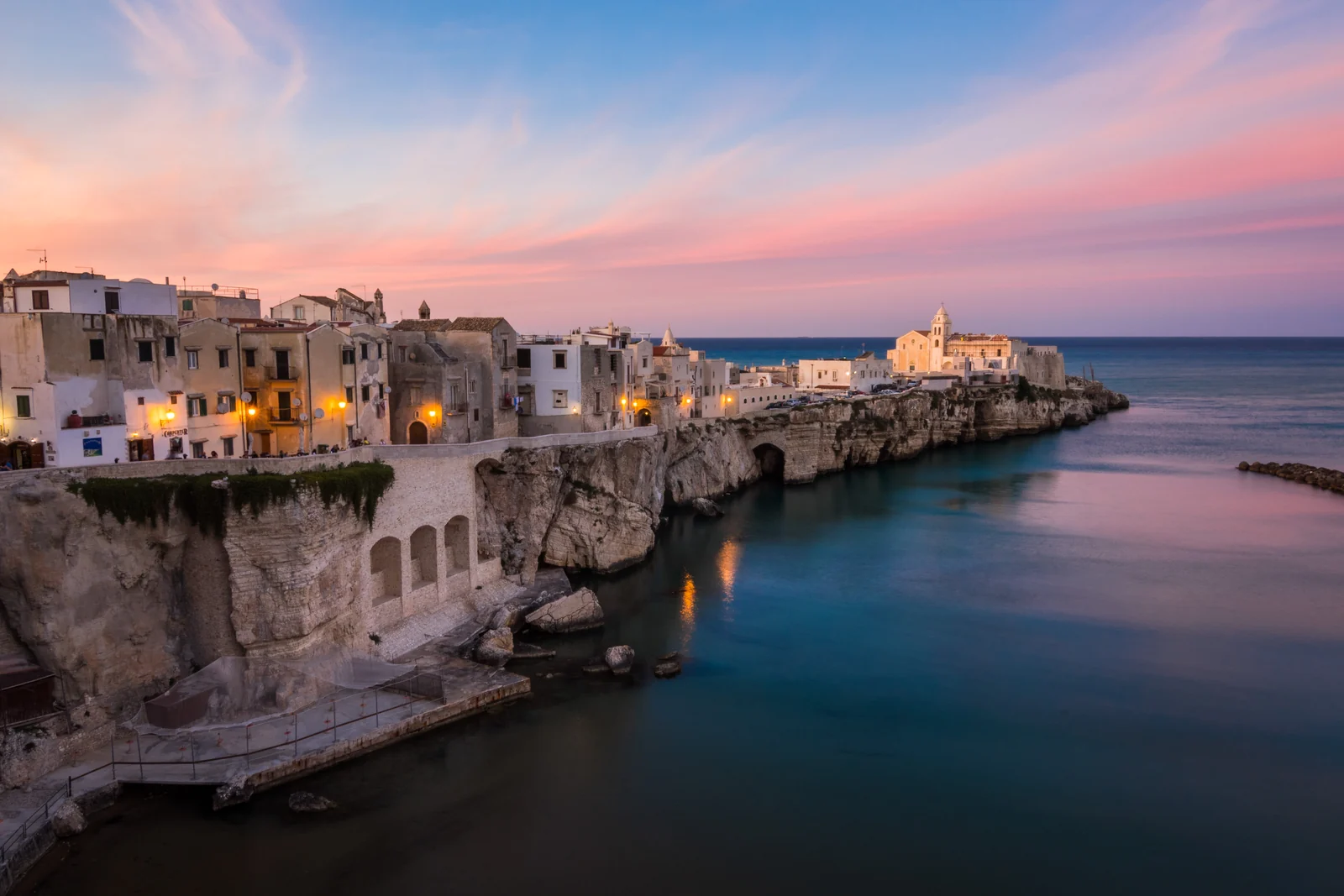
Photo: Teodcorbo / Wikimedia Commons — CC BY-SA 4.0 · Resized and converted to WebP.
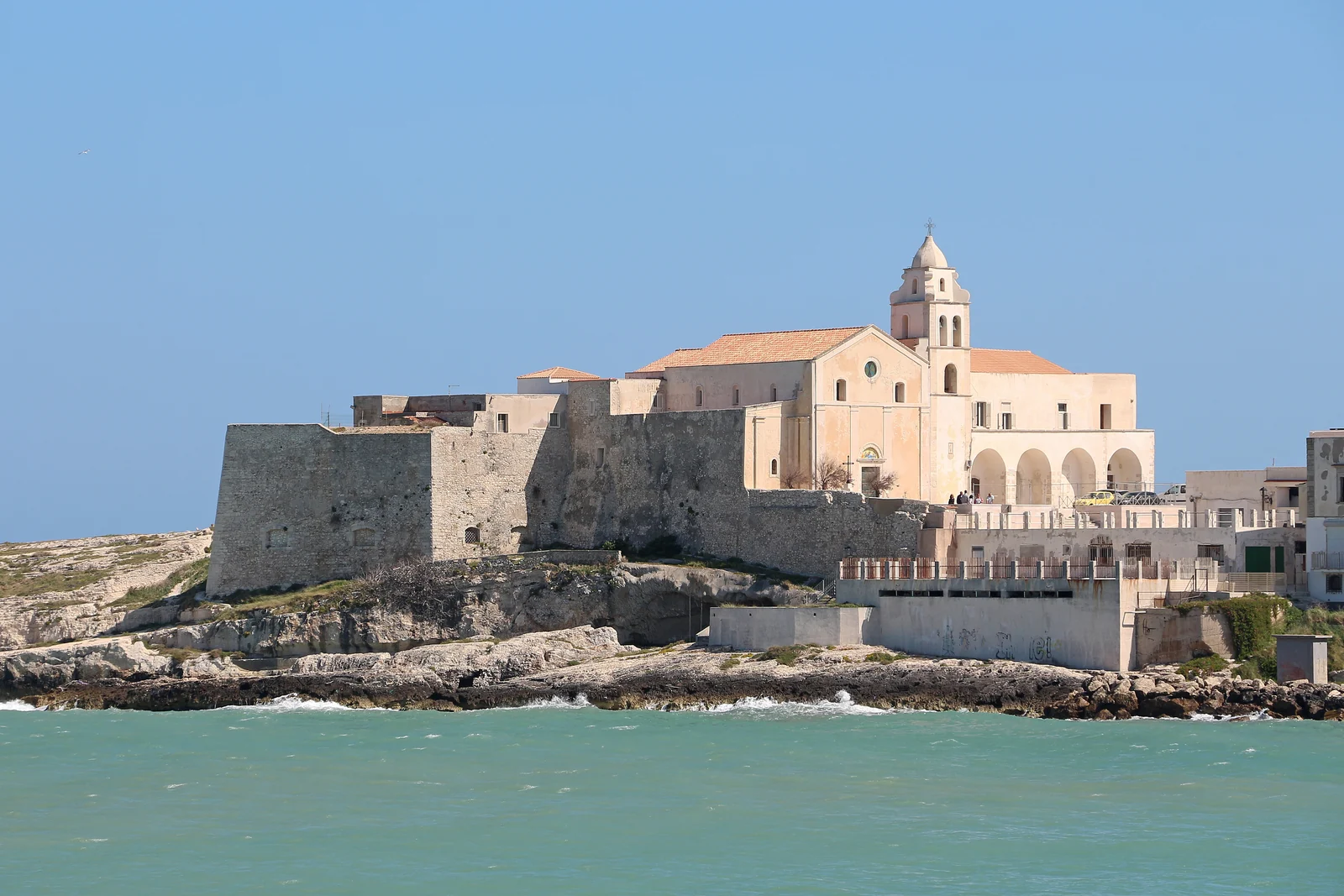
Photo: Bernard Gagnon / Wikimedia Commons — CC0 · Resized and converted to WebP.
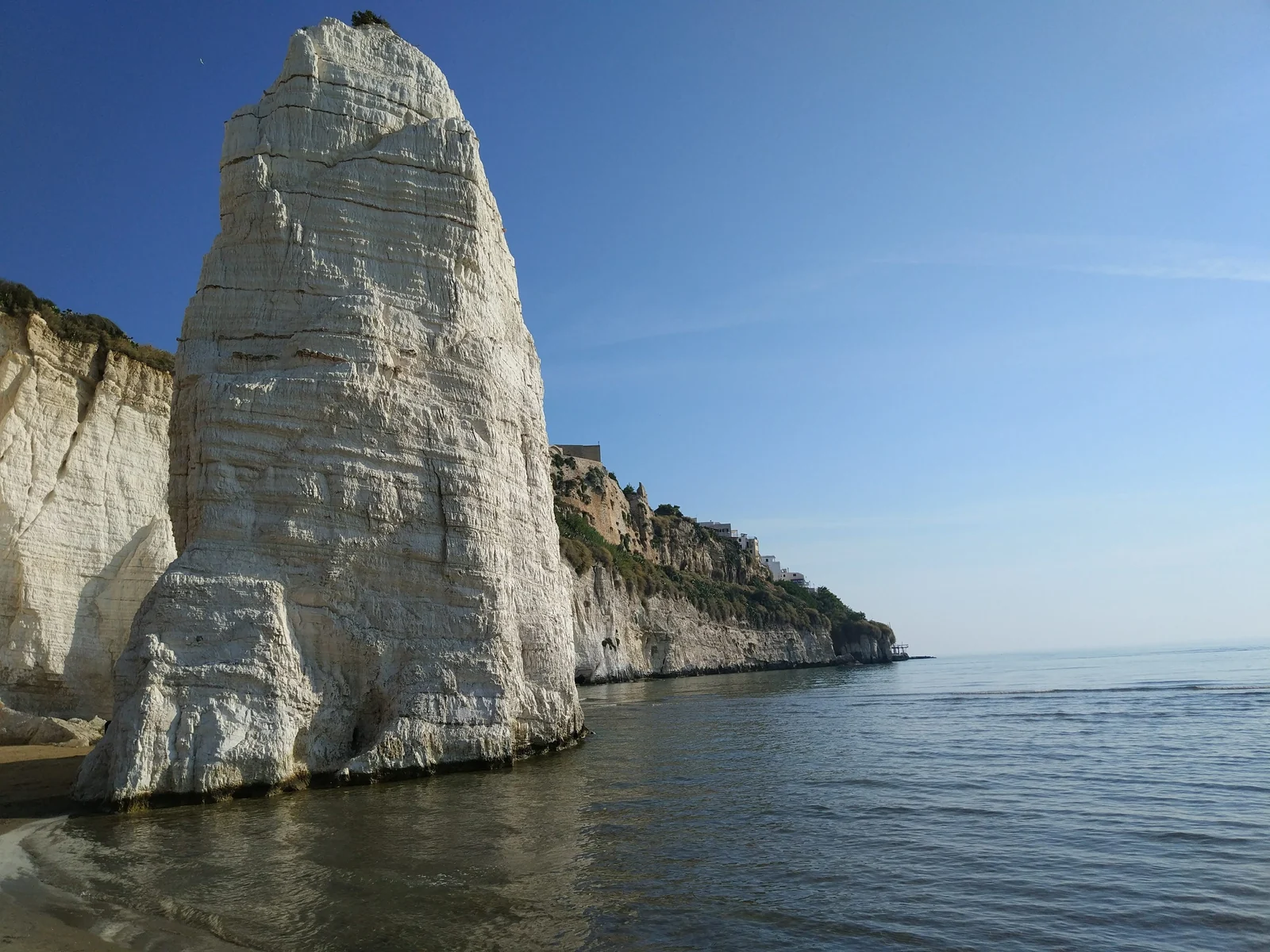
Photo: Irdaport / Wikimedia Commons — CC BY-SA 4.0 · Resized and converted to WebP.
History
The municipality places Vieste among the oldest towns of Daunia and recalls a long sequence of rulers: Byzantines, Lombards, Normans. In 1176 Pope Alexander III set sail from here to meet Frederick Barbarossa in Venice. In 1239 the town was sacked by the Venetians, who also damaged the cathedral; the following year Frederick II began rebuilding it and strengthened the walls. Vieste was a bishop's seat from 993 to 1817.
The castle, which towers over the medieval quarter, dates from the second half of the eleventh century, when the Norman Robert Drengot was count of Vieste. It has a triangular plan with spear-shaped bastions that enclose older towers; the earthquake of 1646 brought part of it down. The Ministry of Culture's entry notes that it now belongs to the Italian Navy and cannot always be visited.
The harshest chapter came in July 1554, when the corsair Dragut Rais besieged the town with a fleet of seventy galleys. After a week of resistance Vieste was sacked and a great many inhabitants were killed or enslaved. Tradition links the massacre to a stone in the old town, the Chianca Amara, which can still be seen. Watchtowers were built along the coast afterwards. Modern tourism arrived in the 1960s with the Pugnochiuso holiday village.
According to the municipality, the town flourished between the tenth and sixth centuries BC, and under Diocletian it had its own defensor civitatis, a privilege few colonies in Puglia could claim. In 1253 Conrad IV, son of Frederick II, landed here to take possession of his kingdom, and in 1442 King Alfonso of Aragon stayed here to direct operations against enemy ships in person. Thanks to its position Vieste was one of the main defensive strongholds of the Gargano and kept the title of Piazza d’armi, a garrison town, until 1846.
In the siege of 1554, the municipality writes, more than 7,000 people were taken prisoner; in Vieste dialect “chianca amara” means “the bitter rock”, and the boulder stands in Via Gregorio XIII. The towers built after the massacre stood on the points jutting into the sea, so that each could see the next, and gave visual signals when suspicious vessels approached. At dawn on 24 May 1915, at the start of the war with Austria, the castle was shelled by the destroyer Lika, which then, with the cruiser Helgoland and the destroyers Csepel and Tatra, sank the destroyer Turbine a few miles from the town as it came to Vieste’s aid.
Sources: Città di Vieste — I trabucchi · Città di Vieste — Castello Svevo Aragonese · Ministero della Cultura — Castello di Vieste · Città di Vieste — La Chianca Amara
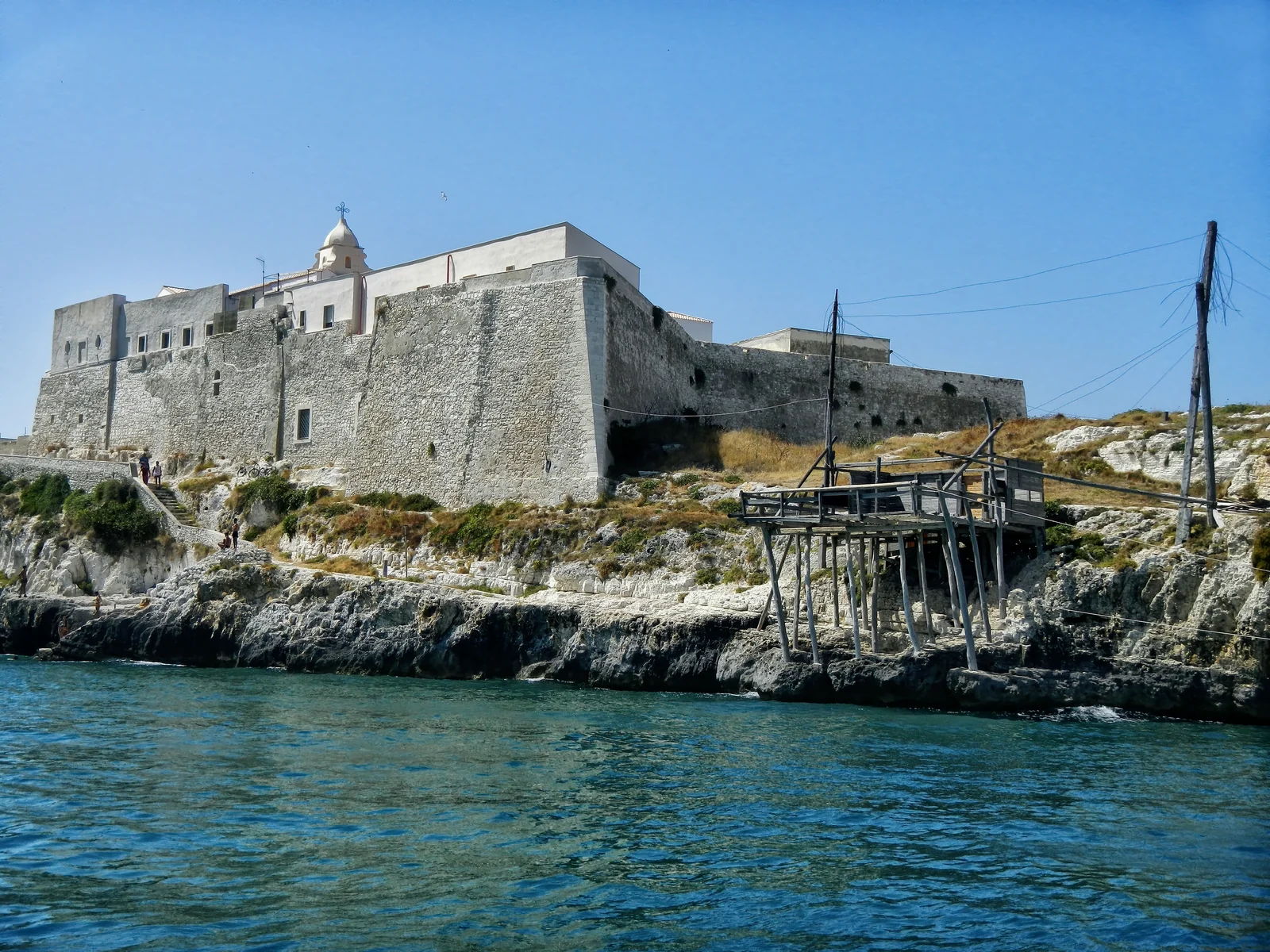
Photo: Roberto Baroni / Wikimedia Commons — CC BY-SA 4.0 · Resized and converted to WebP.
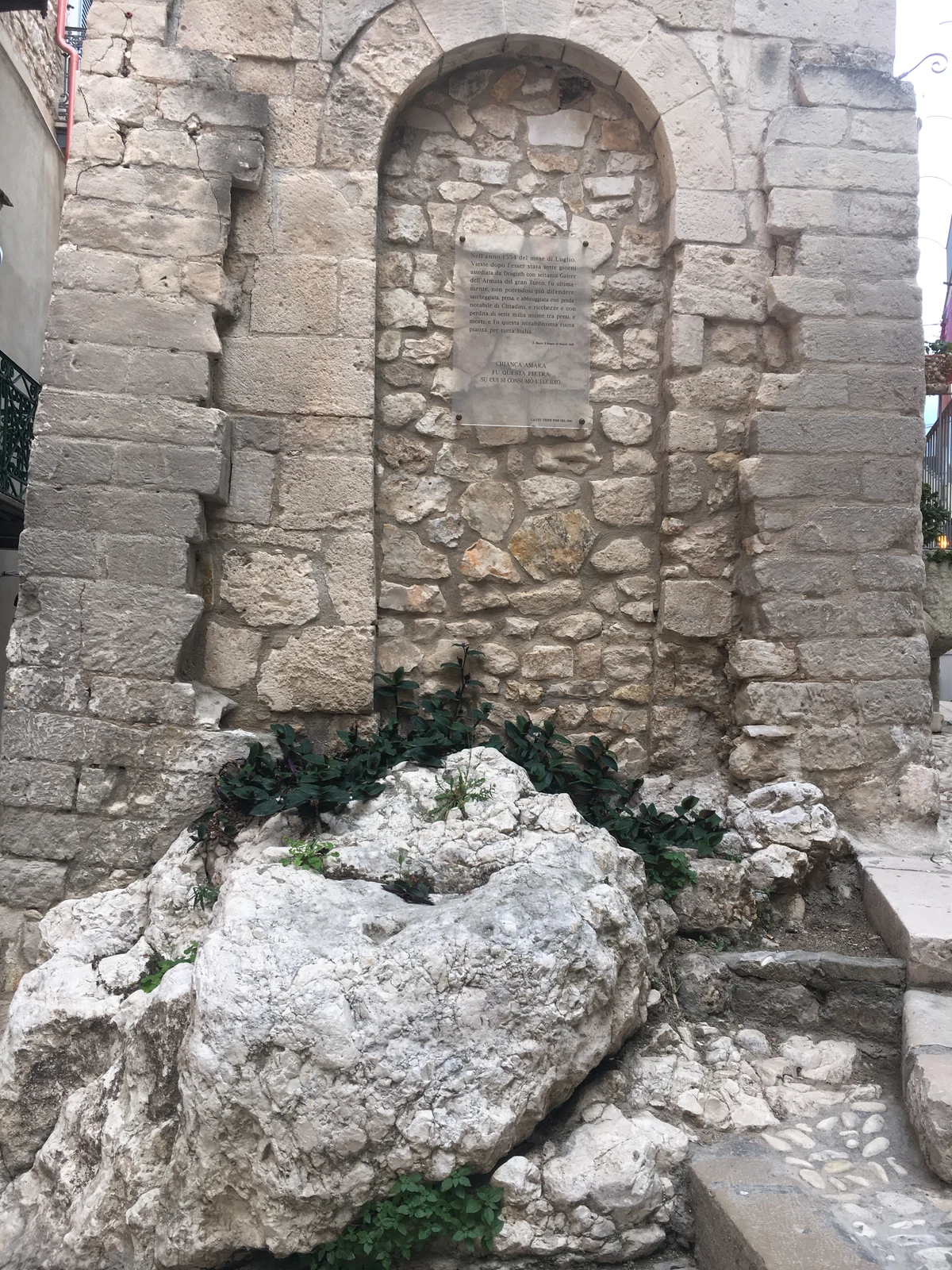
Photo: Infouma / Wikimedia Commons — CC BY-SA 4.0 · Resized and converted to WebP.
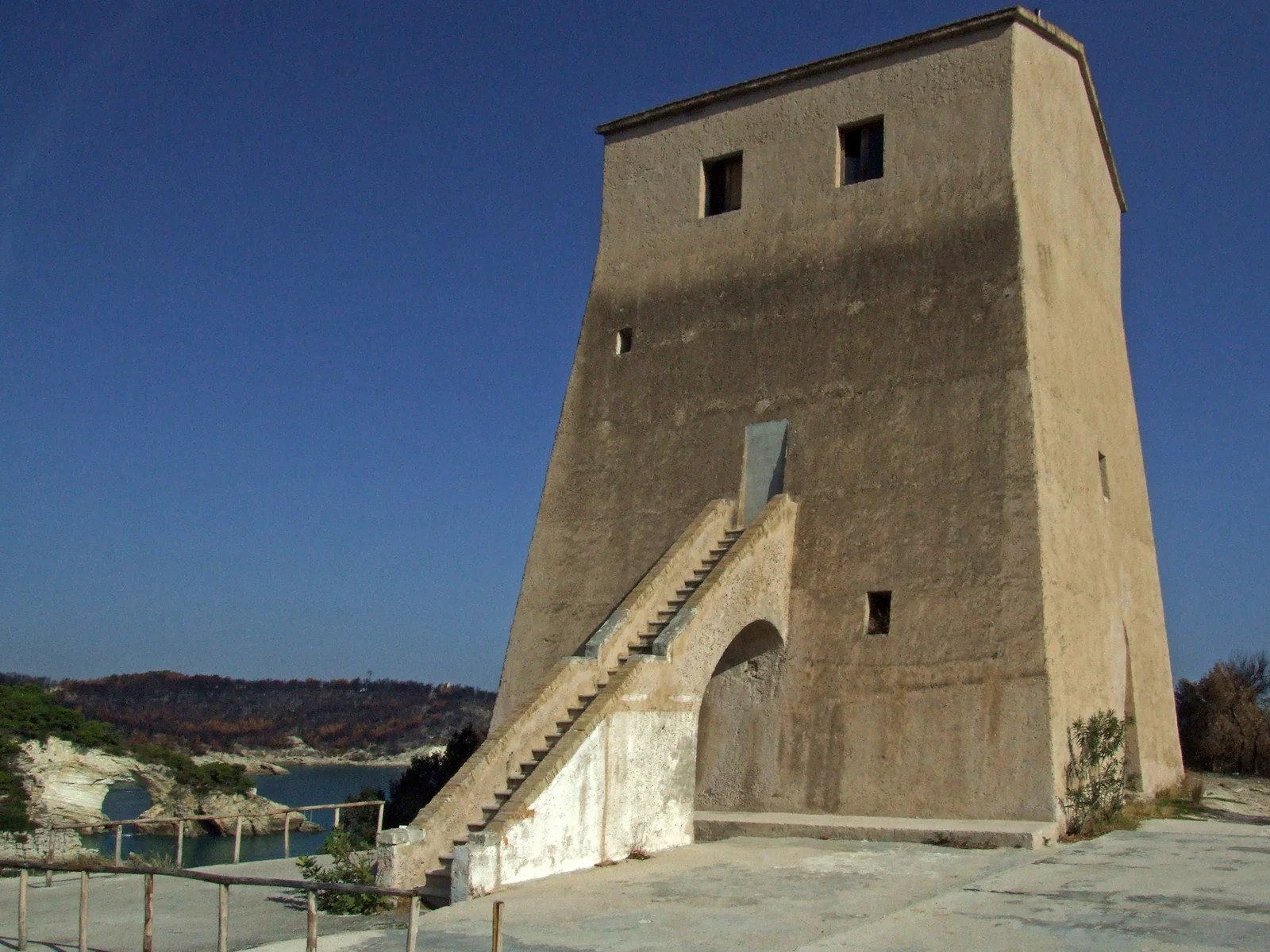
Photo: Icosaedrotroncato / Wikimedia Commons — CC BY-SA 3.0 · Resized and converted to WebP.
What to see
The co-cathedral of Santa Maria Assunta, built in the second half of the eleventh century a short walk from the castle, keeps its Apulian Romanesque layout with three naves, while the bell tower is late Baroque. Take time over the capitals, carved with leaves, vines and animals such as horses, birds and a dragon, and look up at the painted wooden ceiling added in the eighteenth century, which frames three large canvases.
The Michele Petrone Museum, in the former Capuchin friary, brings together two stories: amphorae and anchors for life at sea, and finds from the Neolithic flint mines of the Defensola, with the pots, tools and oil lamps of the miners. The Malacological Museum displays some 13,500 shells gathered around the world; the municipality suggests allowing a couple of hours for it.
By the sea you can admire the lighthouse on the islet of Sant'Eufemia, which can only be seen from outside, and Pizzomunno, tied to the legend of the fisherman turned to stone and his beloved Cristalda. Outside town, the La Salata necropolis, cut into a large rock hollow facing the sea, is described by the municipality as the oldest evidence of Christianity on the Gargano.
In the co-cathedral the naves are divided by two rows of six columns; of the capitals, five are Corinthian and five cubic, and two more have been lost. The three canvases in the ceiling show the Assumption, to whom the church is dedicated, Saint George, protector of the town, and Saint Michael, protector of the Gargano. The municipality also points out the Rosary altarpiece by the Genoese painter Michele Manchelli, of 1581, a marble Dead Christ of the school of Michelangelo and the limewood statue of Santa Maria di Merino, patroness of Vieste. The chapel of the Madonna del Rosario holds the tomb of Don Antonio Spalatro, a priest who died aged 28 in 1954 and whose cause for canonisation is under way in Rome; his belongings are kept in a small museum in the oratory of the parish of the Santissimo Sacramento.
The Petrone Museum is named after the doctor who was honorary royal inspector of monuments and excavations in Vieste and left his collection to the municipality. It shows the ancient Greek inscriptions found in Vieste in the nineteenth century, the so-called “Messapian inscriptions” dedicated to Demeter, and finds from mine no. 1 of Defensola A, which the municipality describes as the oldest mine in Europe; on the first floor is the grave goods of a semi-chamber tomb found in 2006 three metres below the courtyard of the town hall. The museum is in Piazzetta Cappuccini, on Lungomare Amerigo Vespucci, with step-free access. The Shell Museum in Via Pola was founded in 1984 from the collection of Anna Ragni and Biagio Simone, begun in 1975.
The islet of Sant’Eufemia, between the San Francesco and Santa Croce points, is tied to the legend of Vesta, said to be buried here; in 1003 the Doge of Venice Pietro II Orseolo, stopping at Vieste, carved an inscription in the cave above the islet, still visible but not open to visitors. The lighthouse, the municipality writes, is unique in the Adriatic for its three long rotating beams, which reach about 50 kilometres. The La Salata necropolis opens in a great cave below a cliff about 30 metres high, with niches, arched tombs and graves once sealed with terracotta slabs as in the Roman catacombs, and two karst streams run through it; admission is charged and the site is not accessible to people with disabilities.
On the Defensola hill, about 2 kilometres north of the centre, the small church of San Lorenzo is documented from 1053, when Pope Leo IX confirmed it as a possession of the abbey of Santa Maria di Tremiti; a document of 1158 places it “in ipsa pinna super portum Aviane”. Restored, it reopened in 2020.
Sources: Città di Vieste — Concattedrale di Santa Maria Assunta · Città di Vieste — Museo Michele Petrone · Città di Vieste — Faro di Vieste · Città di Vieste — Necropoli La Salata · Città di Vieste — Museo Malacologico · Città di Vieste — I trabucchi · Città di Vieste — Museo don Antonio Spalatro · Città di Vieste — Chiesetta San Lorenzo
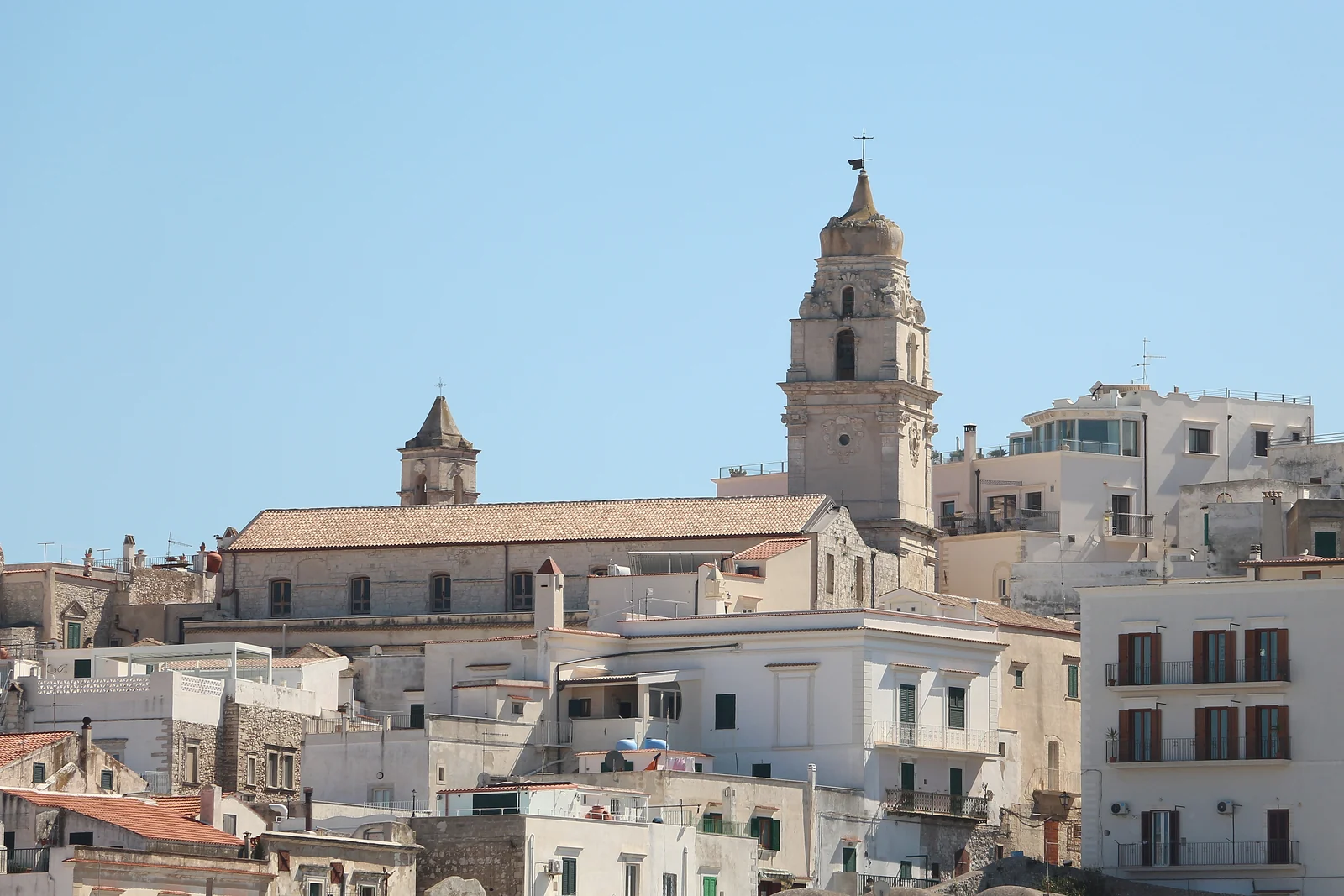
Photo: Bernard Gagnon / Wikimedia Commons — CC0 · Resized and converted to WebP.
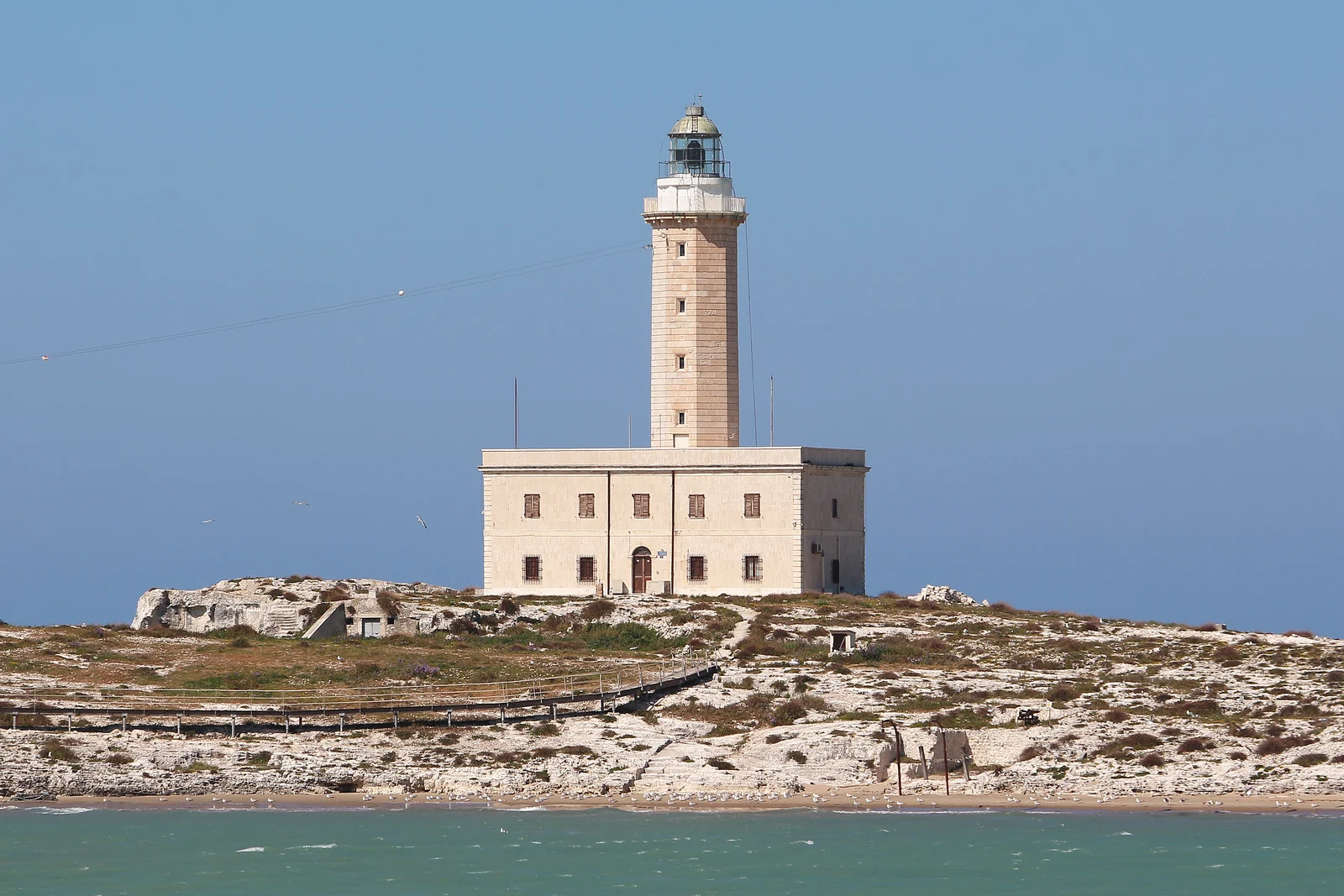
Photo: Bernard Gagnon / Wikimedia Commons — CC0 · Resized and converted to WebP.
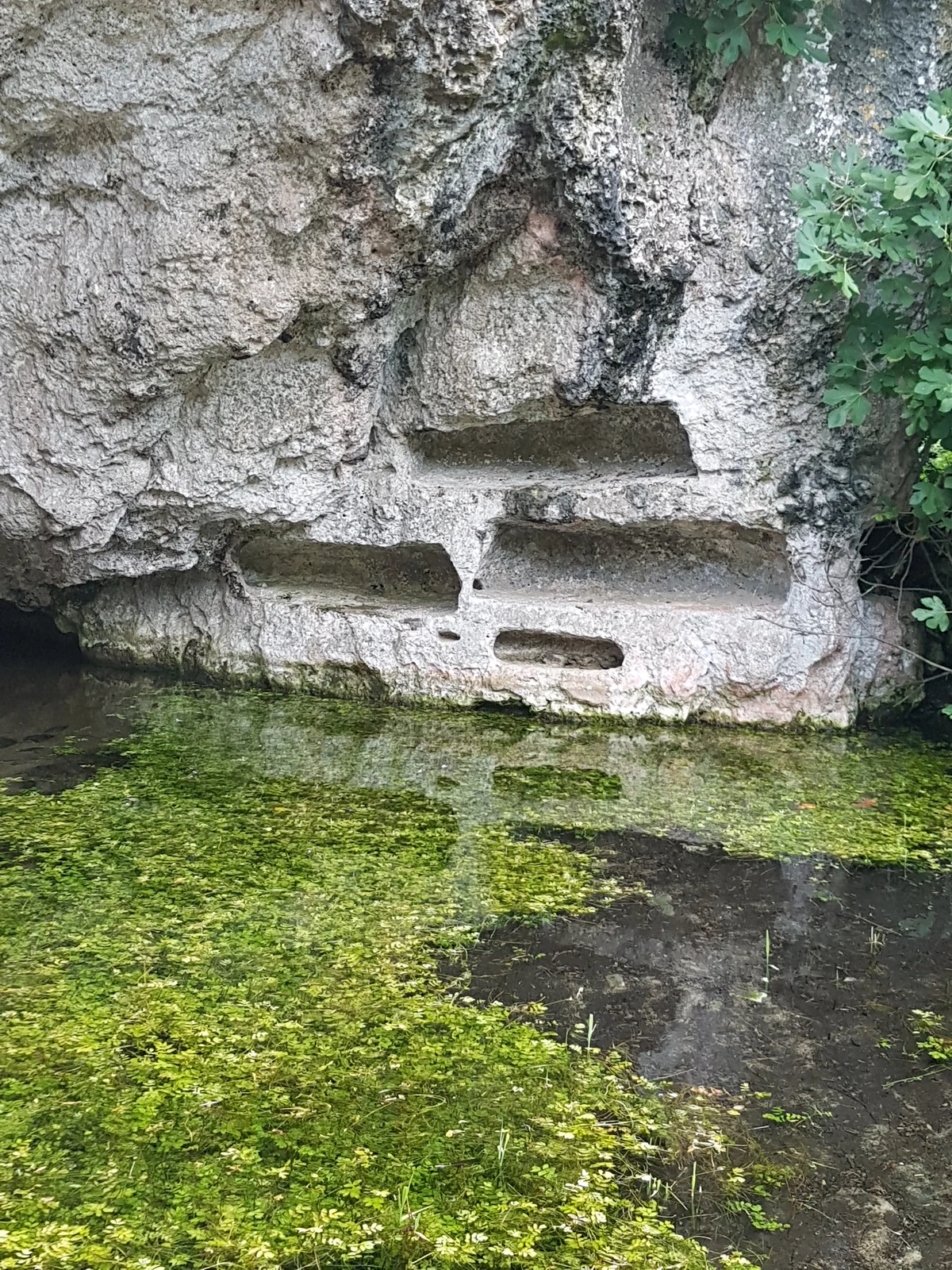
Photo: Caulfield / Wikimedia Commons — CC BY-SA 4.0 · Resized and converted to WebP.
Food and wine
The municipality describes the cooking of Vieste as simple and rooted in local produce, with plenty of room for flour in bread and home-made pasta. From the sea come the «caparrun» salad of boiled murex and small shellfish dressed with oil, garlic, parsley and lemon, marinated raw anchovies, stuffed cuttlefish simmered in the sauce later used for troccoli pasta, and «ciambotto», a soup of mixed fish. From the countryside come acquasale with eggs, pancotto with wild greens, broad beans with chicory and orecchiette with tomato and cacioricotta.
Around the town you will find products that tell the story of the promontory. Caciocavallo podolico del Gargano is made from the milk of grazing Podolica cows, scarce and available only in certain months, which gives it a strongly aromatic character. The citrus grown between Rodi, Vico and Ischitella, including the Arancia del Gargano and the Limone Femminello del Gargano, has earned protected geographical indication status. The promontory's extra virgin olive oil, from the Ogliarola garganica variety, falls under the Dauno PDO with the Gargano mention, and the Vieste area is among the olive-growing zones listed by the park.
Among the recipes listed by the municipality there are also caponata of hard home-made bread, soaked and dressed with tomato, oregano and raw onion, turnip greens baked with small sea bream, snail ciambotto, wild-onion (lampascioni) omelette and the calzone filled with onion, anchovies, capers and raisins. Among the sweets are cartellate with honey or vincotto, calzoncelli filled with chickpea purée, vincotto mostaccioli and castagnette made with almonds and chocolate.
The Park describes the varieties of Gargano citrus: the blond orange, which flowers several times a year and was once taken on long sea voyages, the almost seedless Duretta, which ripens at Christmas, the sweet-fruited bitter orange and the Femminiello, which the Park calls the oldest lemon in Italy. In the European register of geographical indications, eAmbrosia, the Arancia del Gargano and the Limone Femminello del Gargano are registered as PGI and Dauno olive oil as PDO. Podolica caciocavallo, a Slow Food presidium according to the Park, comes in rounds of about 2 kilograms on the Gargano and is aged from 15 days to 18 months.
Sources: Città di Vieste — I trabucchi · Parco nazionale del Gargano — Caciocavallo podolico · Parco nazionale del Gargano — Agrumi dell’oasi agrumaria · Parco nazionale del Gargano — Olio extravergine di oliva · Commissione europea, eAmbrosia — Arancia del Gargano IGP (PGI-IT-0296) · Commissione europea, eAmbrosia — Limone Femminello del Gargano IGP (PGI-IT-0297) · Commissione europea, eAmbrosia — Dauno DOP (PDO-IT-1517)
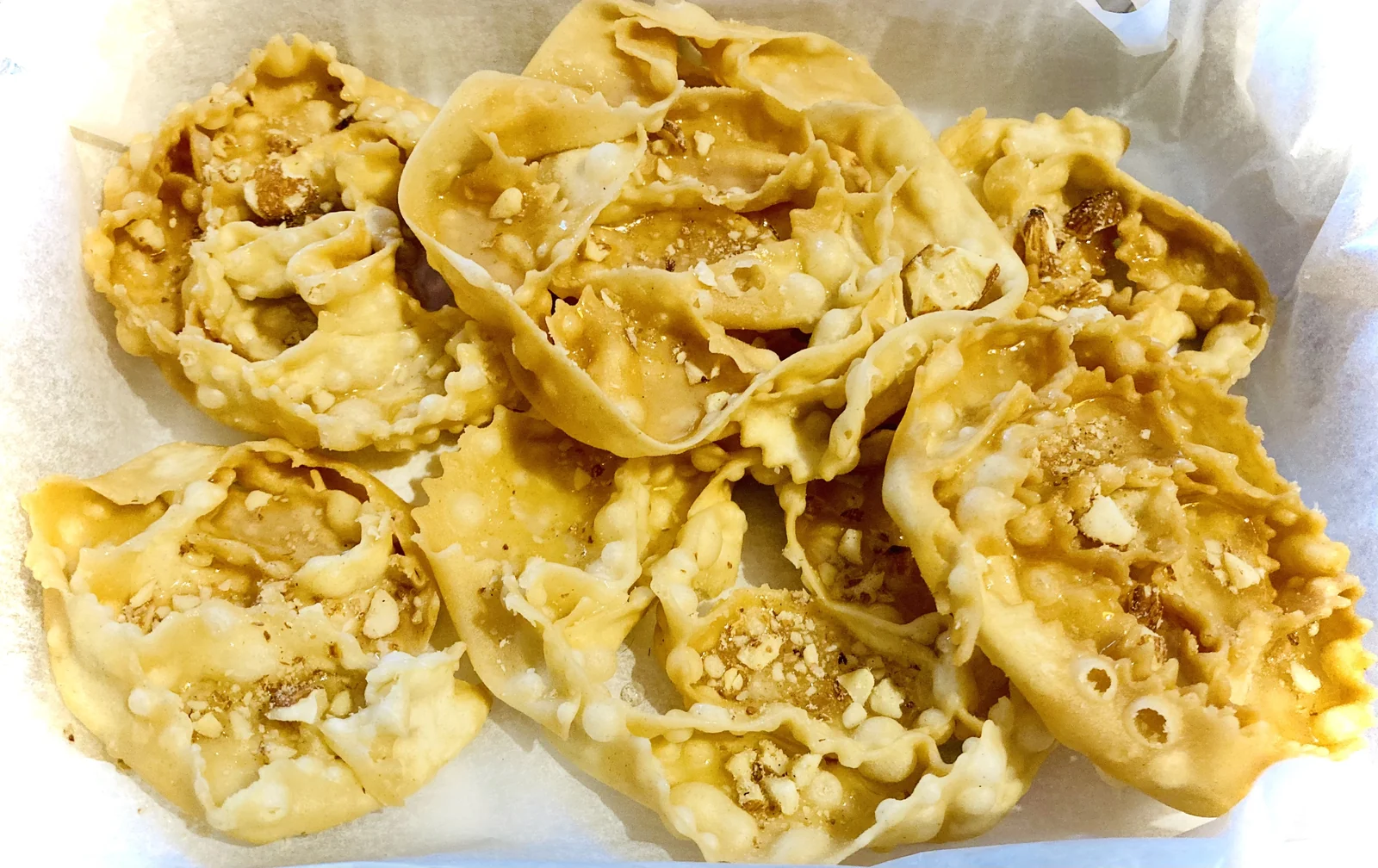
Photo: Flavio.naretti / Wikimedia Commons — CC BY-SA 4.0 · Resized and converted to WebP.
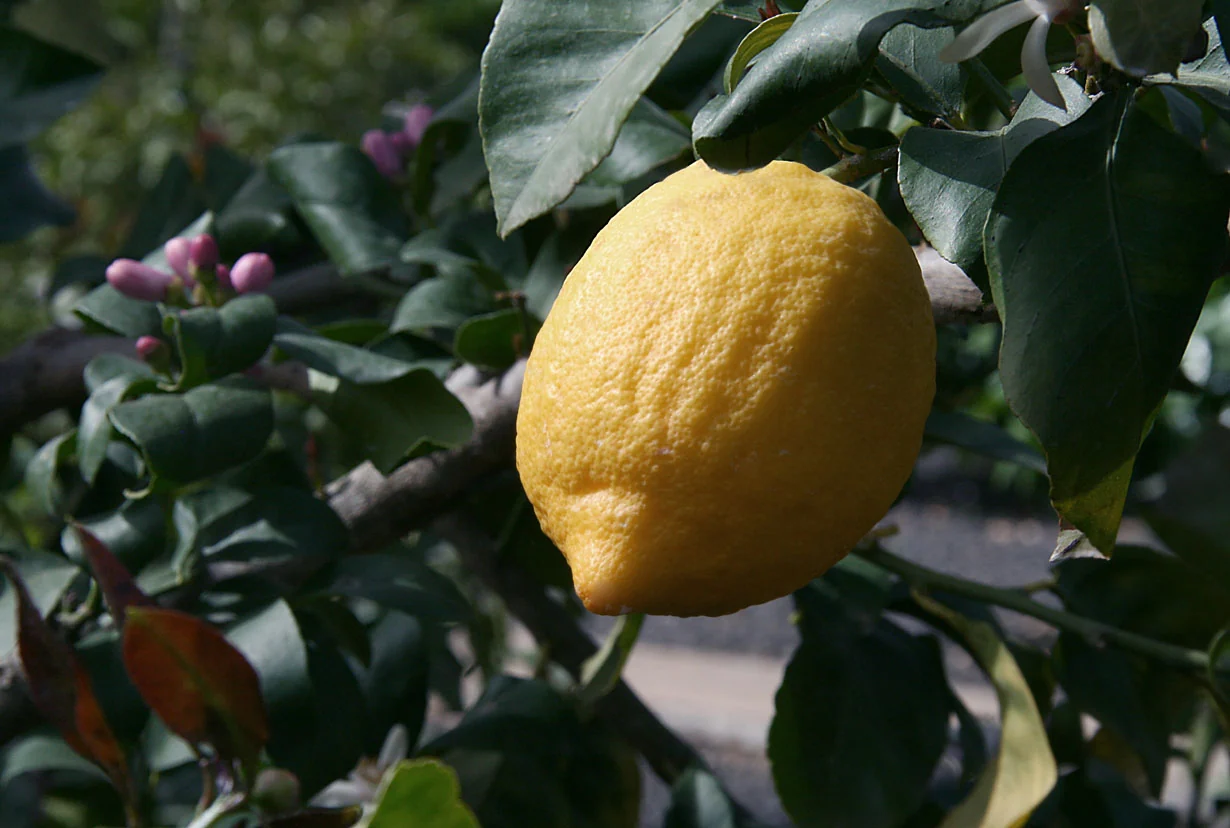
Photo: Jpbrigand / Wikimedia Commons — CC BY-SA 4.0 · Resized and converted to WebP.
Things to do
The most striking way to discover the coast is from the water. The municipality notes that some forty kilometres of caves line the shore between Mattinata and Vieste, with more than twenty caverns that can only be reached by boat and names such as Campana Grande or Due Occhi. If you prefer to walk, the park's coastal paths lead towards Pugnochiuso and Mattinata, such as the route of about two kilometres that runs from Mergoli down to the bay of Vignanotica through pine woods.
Meeting the people who keep the trabucchi alive explains traditional fishing: platforms, long arms, winches and nets needed a team and a lookout who watched the bait. The association La Rinascita dei Trabucchi Storici, founded in Vieste in 2012, works to restore them and also runs activities outside the summer season.
For long-distance walkers there is the Pilgrims' Way, about forty kilometres from Vieste to Monte Sant'Angelo marked by the park and revived since 1995 as a pilgrimage on foot to the sanctuary of St Michael. Inland, the Foresta Umbra offers rest areas, forest trails and a visitor centre with a relief model of the promontory.
The municipality explains how a trabucco works: a square platform, four antennas spread in a fan almost parallel to the water and two large winches called “ciucci”, donkeys in Vieste dialect. The “spia”, perched halfway along an antenna, watches the lure, usually a grey mullet tied to a line; when the shoal arrives he shouts “issah” and the others turn the winches, stamping on the boards, because the noise, the fishermen say, stuns the fish. The catch is scooped up with the “negossa”, or coppo, on a long pole. Today, the municipality writes, the trabucco is used more as a passion than as a living.
The Pilgrims’ Way was equipped by the Park with the Sovereign Order of the Pilgrims of Saint Michael the Archangel and WWF Vieste and can be walked all year round. As the first stretch runs along the SS 89 road, the shorter 24-kilometre route from the locality of Sagro is often used; the stages pass Valle Tacca del Lupo, Parco Simone, Piscina della Signora, Masseria Rignanese, Puntone della Giumenta and the floor of Valle Carbonara. The pilgrimage on foot from Vieste had been abandoned in 1964.
Sources: Città di Vieste — I trabucchi · La Rinascita dei Trabucchi Storici — associazione e attività · Parco nazionale del Gargano — Via dei pellegrini · Parco nazionale del Gargano — I sentieri della costa · Città di Vieste — La Foresta Umbra
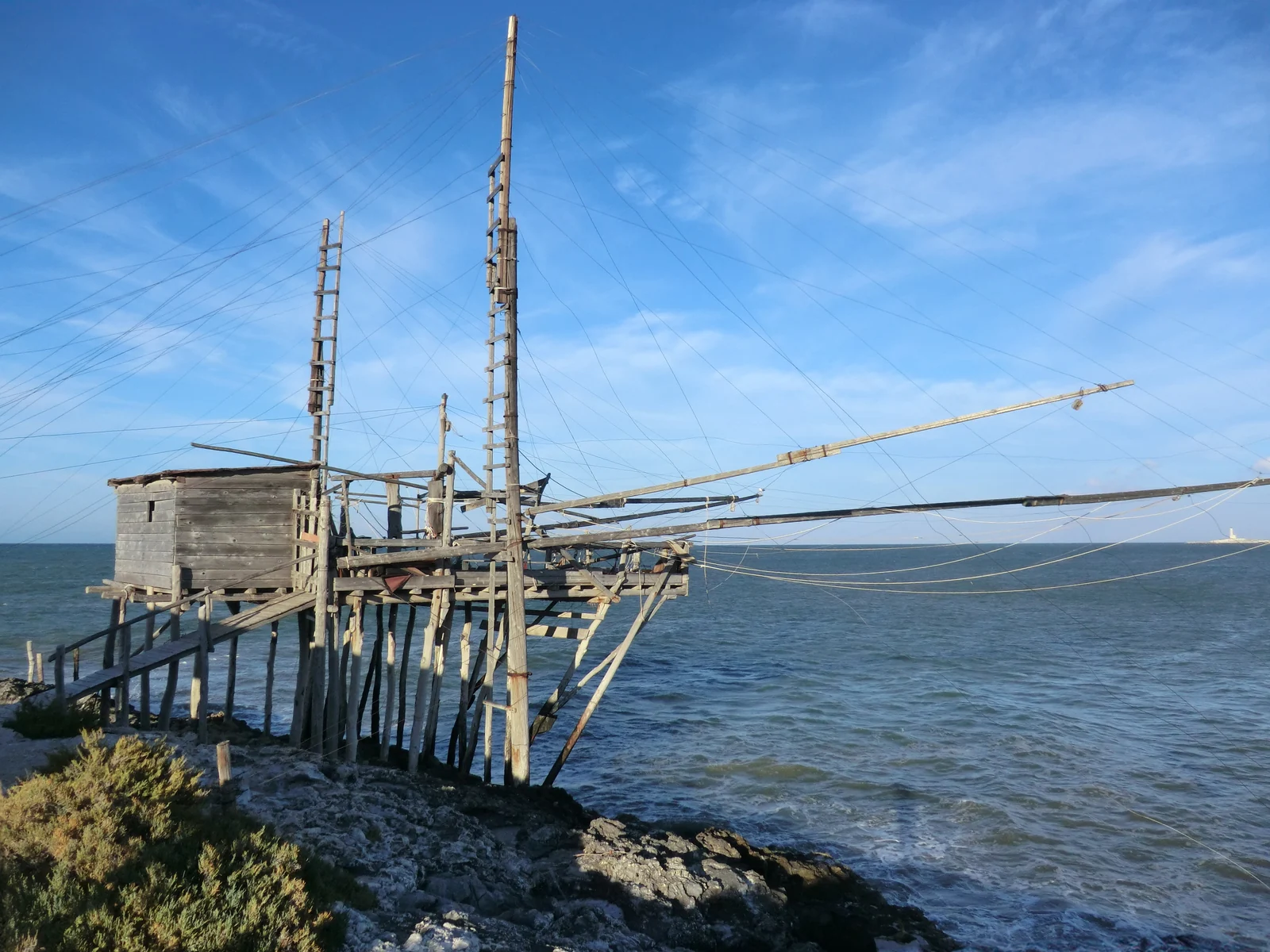
Photo: Einaz80 / Wikimedia Commons — CC BY-SA 4.0 · Resized and converted to WebP.
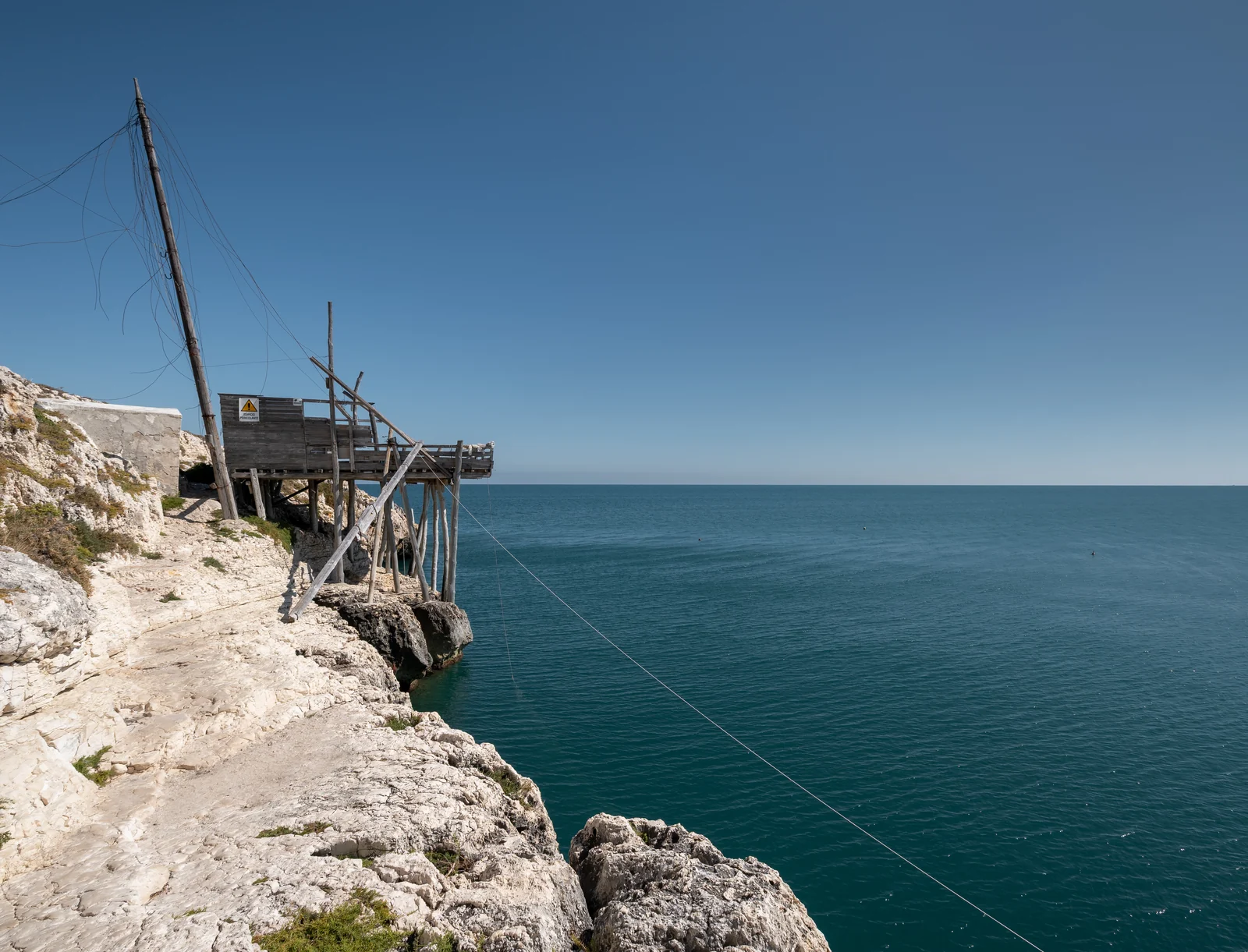
Photo: Jules Verne Times Two / Wikimedia Commons — CC BY-SA 4.0 · Resized and converted to WebP.
When to go
Spring and autumn are the best seasons if you want to focus on the town, its museums and walks, with soft light and quieter streets. Summer is the time for the sea, the caves and the crossings to the Tremiti Islands, which the park lists as seasonal links from the port of Vieste between June and September.
A few dates in the religious calendar offer another reason to choose your period. On 9 May, the patronal feast, crowds of residents walk out to the sanctuary of Santa Maria di Merino, built on the remains of a Roman villa outside town. At the end of September, ahead of the feast of St Michael on the 29th, the pilgrimage on foot to Monte Sant'Angelo sets off in the evening from Vieste cathedral and crosses woods and farmland through the night.
If you travel out of season, look out for the activities the historic trabucchi association runs between September and May. Always check the current year's dates with the organisers before you leave.
The small church of San Lorenzo, on the Defensola, is in the care of the parish of the Santissimo Sacramento, which holds services there mainly in the summer months and for the feasts of Santa Maria di Merino and San Lorenzo. The feast of the night of San Lorenzo, which once gathered the community with prayers, dancing and shared food under the stars, has recently been revived.
Sources: Città di Vieste — Santuario Santa Maria di Merino · Parco nazionale del Gargano — Via dei pellegrini · La Rinascita dei Trabucchi Storici — associazione e attività · Area marina protetta Isole Tremiti — Come arrivare · Città di Vieste — Chiesetta San Lorenzo
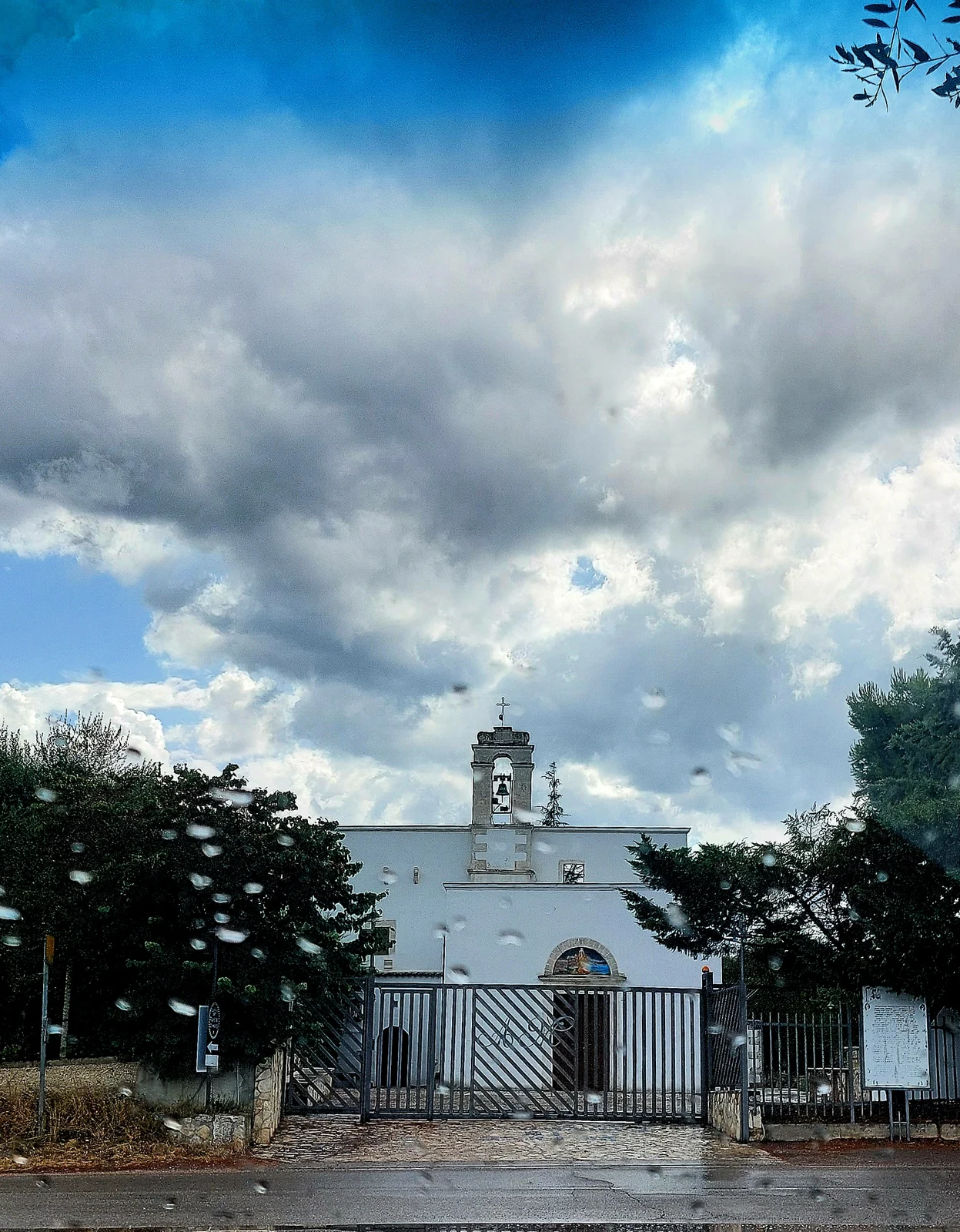
Photo: Elenalittera / Wikimedia Commons — CC BY-SA 4.0 · Resized and converted to WebP.
Getting there and around
The main rail hub is Foggia station, run by RFI, where national and regional trains stop. From San Severo the Ferrovie del Gargano line crosses the promontory to Peschici Calenella, an electrified single-track railway about seventy-four kilometres long; the same company runs an intercity bus network between the towns of the Gargano as part of the regional Cotrap consortium.
If you fly, the nearest airports are Gino Lisa in Foggia and Bari airport, which Trenitalia lists as reachable by regional trains and by Ferrotramviaria. In summer, ferries for the Tremiti Islands also leave from the port of Vieste.
The old town is best explored on foot, with climbs, stairways and narrow lanes. Beaches, bays and trailheads are spread along many kilometres of coast, and public transport thins out out of season: plan your transfers ahead and check current routes and timetables on the transport companies' websites.
Outside the summer the Tremiti Islands are reached from the port of Termoli, served all year round, or by helicopter from Gino Lisa airport in Foggia; cars are not allowed on the islands. The town hall is at Corso Lorenzo Fazzini 29 (telephone +39 0884 712211), with entrance and parking accessible to people with disabilities, and the Info Point in Piazza Kennedy 13 also has step-free access. Vieste’s emergency department is open 24 hours a day (telephone +39 0884 706530).
Sources: RFI — Stazione di Foggia · Ferrovie del Gargano — La rete ferroviaria · Ferrovie del Gargano — La rete autobus · Aeroporti di Puglia — Aeroporto di Foggia Gino Lisa · Trenitalia — Regionale Puglia, servizi e collegamenti · Area marina protetta Isole Tremiti — Come arrivare · Città di Vieste — Sede comunale · Città di Vieste — Info Point Vieste · Città di Vieste — Pronto soccorso
Tourism
Anyone staying overnight in Vieste who is not a resident, in a hotel, holiday village, campsite, farm stay, B&B or a tourist or short-term rental, pays the tourist tax, per person and per night, for up to ten consecutive nights: the limit also applies when changing accommodation, if you show the receipt from the previous one. The council’s regulation, approved in 2021 and last amended in September 2025, exempts among others minors within their fourteenth year of age, people with disabilities with a companion and parents of minors with disabilities; the exemption is requested from the host, showing the certification. The amount varies with the type of accommodation and the period, January to May, June to September and October to December, and it is set by the council’s executive within a maximum of 5 euros per night. It is paid together with the stay, against a receipt or on the invoice, and the regulation asks guests to keep it for five years.
Vieste lies within the Gargano National Park, and the safeguard measures of the 1995 decree that created it also apply to visitors: throughout the park, capturing or disturbing wild animals, picking or damaging wild plants, removing material of geological or palaeontological interest, camping outside equipped areas and driving motor vehicles off the roads open to public traffic are forbidden. Mushrooms, truffles and other woodland products may be gathered, in line with the rules and local customs.
Sources: Comune di Vieste — Regolamento per la disciplina dell’imposta di soggiorno (Delibera di CC n. 55 del 30 novembre 2021, modificata da ultimo con Delibera di CC n. 37 del 26 settembre 2025), pubblicato dal Dipartimento delle Finanze · Comune di Vieste — Delibera di Consiglio comunale n. 37 del 26 settembre 2025, modifica all’art. 5, comma 3, del regolamento dell’imposta di soggiorno · Ente Parco Nazionale del Gargano — D.P.R. 5 giugno 1995, istituzione dell’Ente Parco nazionale del Gargano, allegato A «Misure di salvaguardia»
“Come to Vieste as a guest, not as a tourist: that is how these places truly let you know them.”
Where to stay
Vieste has the largest choice of accommodation on the Gargano: the municipality counts around a hundred hotels and holiday villages, plus holiday homes and campsites spread along the coast. The right choice depends on the kind of trip. Staying in or near the old town lets you take the evening stroll on foot and reach museums and viewpoints without a car; a holiday village or campsite on the coast puts you closer to beaches and bays, at the cost of a few more transfers.
The Info Point on piazza Kennedy hands out material on services, itineraries and events as well as on accommodation in Vieste and across the Gargano, and is a good place to get your bearings.
For a meal in the centre, Al Vicoletto, at via F. A. Nobile 1, offers family cooking with fish, pasta, caciocavallo and paposcia. It is an editorial reference, not an Apulica partnership: choose one dish and ask what it says about the area, without assuming an origin for every ingredient that has not been shown.
According to the municipality, with its hotels, holiday villages, holiday homes, campsites and second homes Vieste recorded 2.3 million overnight stays in one year, 40 per cent of those in the whole of Puglia, and ranks first for accommodation capacity. Travellers with a dog will find a scheme run by the municipality: almost all free beaches admit animals at set times, some stretches are kept for people without pets, and participating accommodation, beach clubs and restaurants are rated from one to five “paws” according to the size of dog accepted and the services offered; the lists are published on the municipal website.
Sources: Città di Vieste — I trabucchi · Città di Vieste — Info Point Vieste · Al Vicoletto — cucina e contatti ufficiali · Città di Vieste — Turismo e cultura (Vieste Animal Friendly)
Nearby
A few kilometres from town, the sanctuary of Santa Maria di Merino stands on the remains of a Roman villa inhabited until the tenth century; the central part of the church dates from the eleventh and twelfth centuries and the site keeps the memory of St Marinus, a hermit monk killed here in 988. Beyond Pugnochiuso the coast continues towards Mattinata, with bays that can be reached along the park's paths.
Inland, the Foresta Umbra, part of which lies within the municipality of Vieste, covers more than ten thousand hectares between roughly 270 and 830 metres above sea level, with Turkey oak woods lower down and beech forests higher up. It is the ideal counterpoint to a few days by the sea.
Peschici, on its cliff to the north-west, lets you compare two towns on the same coast. Monte Sant'Angelo, which you can also reach on foot along the Pilgrims' Way, leads to the sanctuary of St Michael and the landscape of pilgrimage. Finally, the Tremiti Islands deserve a full day or a dedicated stay rather than a dash between two swims.
Merino is also linked to Pope Celestine V: according to the sanctuary’s chronicle, on his second attempt to reach the Dalmatian coast he was shipwrecked on the beach of Scialmarino, in front of the church, where he was recognised on 10 May 1295 and taken to Anagni as a prisoner of Boniface VIII. Saint Marinus, the Venetian hermit monk killed at Merino, was the teacher of Saint Romuald, founder of the Camaldolese order. The Pugnochiuso holiday centre, the municipality writes, was wanted by Enrico Mattei, president of Eni, who hesitated between the Gargano and Sardinia and chose Vieste.
Sources: Città di Vieste — Santuario Santa Maria di Merino · Città di Vieste — La Foresta Umbra · Parco nazionale del Gargano — I sentieri della costa · Parco nazionale del Gargano — Via dei pellegrini · Area marina protetta Isole Tremiti — Come arrivare · Città di Vieste — I trabucchi
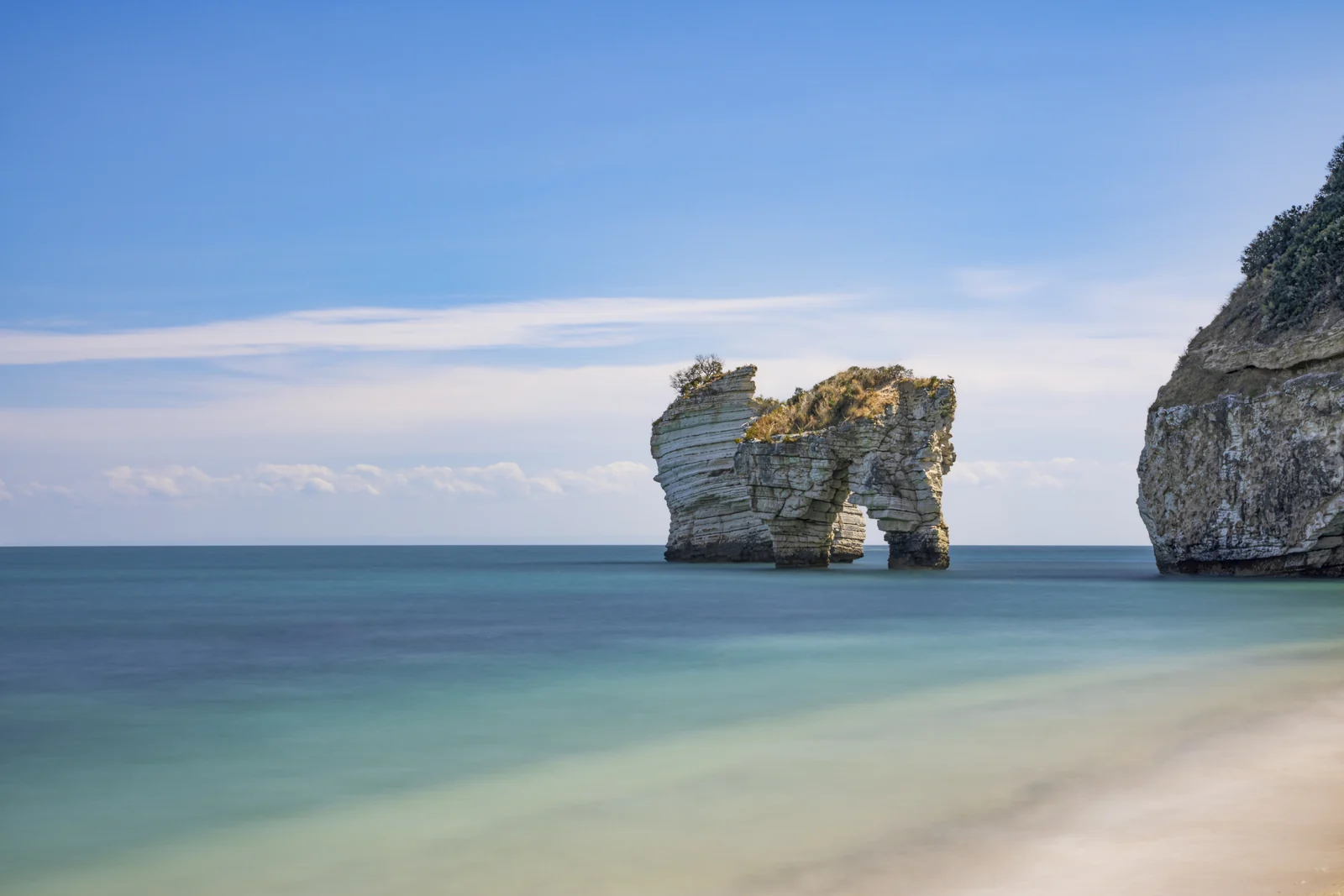
Photo: Gianluca972 / Wikimedia Commons — CC0 · Resized and converted to WebP.
Local tourist information
Local tourist offices help with opening times, events and transport on the day.
- Info Point Vieste · Piazza Kennedy 13, 71019 Vieste (FG) · +39 0884 708806 · [email protected] · Official website
Source: Città di Vieste — Info Point Vieste · Regione Puglia — Vieste, AI Smart · checked on
Where to stay
In the municipality of Vieste the national database of the Ministry of Tourism lists 1156 accommodation businesses with a verified CIN code: 60 hotels, 431 other licensed accommodation and 665 other types such as B&Bs and private rentals.
Licensed businesses from the official list of accommodation named as the source in this section. Where the list gives it, the property's official identification code appears next to its name: the national CIN code, or the code assigned by the Region or by the body that keeps the list. Private individuals are not listed. This list is the official census of licensed businesses, not a list of Apulica partners: to stay in Vieste you do not have to check one property after another yourself; write to Apulica and we look for the stay that suits your journey, checking availability and conditions before any confirmation.
PIZZOMUNNO VIESTE PALACE
Hotel · ★★★★★
CIN IT071060A100020622
APPARTAMENTI IN CENTRO
Residence
CIN IT071060B400091833
CAMPING VILLAGE BAIA DEGLI ARANCI
Holiday village · ★★★★
CIN IT071060B200054310
ARIZONA
Campsite · ★★★
CIN IT071060B100023587
Agriturismo Passione Natura
Farm stay
CIN IT071060B500057827
B&B AlMate
B&B
CIN IT071060B400067379
ACCANTO A TE
Guest rooms
CIN IT071060B400027861
A CASA DI ANNA
Holiday home
CIN IT071060B400110738
DEL FARO - PUGNOCHIUSO
Hotel · ★★★★
CIN IT071060A100020626
La Maison
Residence
CIN IT071060B400068576
First the places that presented themselves to Apulica, the latest first; then one place of each type in turn, by official category and stars, then by name. No position is paid for.
All 384 entries in alphabetical order
Page 1 of 39
| Name | Type | CIN |
|---|---|---|
| A CASA DI ANNA | Holiday home | IT071060B400110738 |
| A CASA MIA | Holiday home | IT071060B400126397 |
| ACCANTO A TE | Guest rooms | IT071060B400027861 |
| ADRIATICO | Campsite | IT071060B100020749 |
| AFFITTACAMERE I CORDARI 2 | Guest rooms | IT071060B400026106 |
| Agorà Apartments | Holiday home | IT071060B400124567 |
| Agorà Rooms | Guest rooms | IT071060B400124566 |
| AGRICOSTELLA | Holiday home | IT071060B400026828 |
| Agriturismo Passione Natura | Farm stay | IT071060B500057827 |
| AGRITURMO LA MASSERIA | Farm stay | IT071060B500083257 |
Ask Apulica for a stay in Vieste We reply shortly, within a few hours at most, with a proposal for you to consider.
Sources: Regione Puglia – ARET Pugliapromozione (DMS), CC BY 4.0, 2026-10-12 · Ministero del Turismo – Banca Dati Strutture Ricettive (dashboard pubblica), 2026-10-12
YOUR JOURNEY
How to shape a journey here
We can arrange Vieste around town, museum and trabucco work, with a table in the centre and sea days separate from sightseeing.
Plan your tripKeep exploring
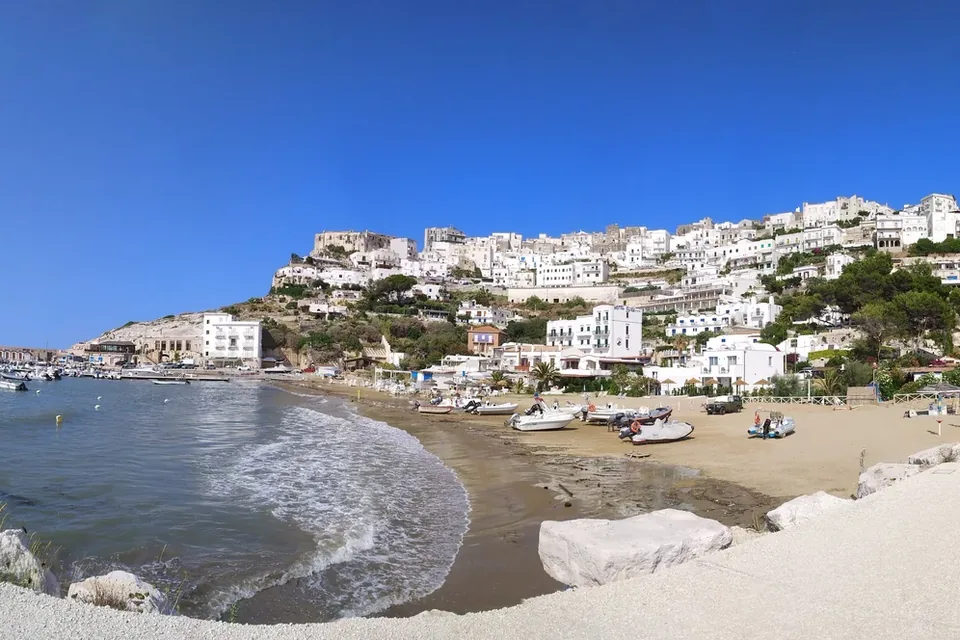
Peschici
Peschici: the town above the cliff. White houses, arches and steps at Puglia’s northernmost point, a castle on the rock and food from both sea and hills.
Read the guide →Photo: Giacomo Alessandroni / Wikimedia Commons — CC BY-SA 4.0 · Resized and converted to WebP.

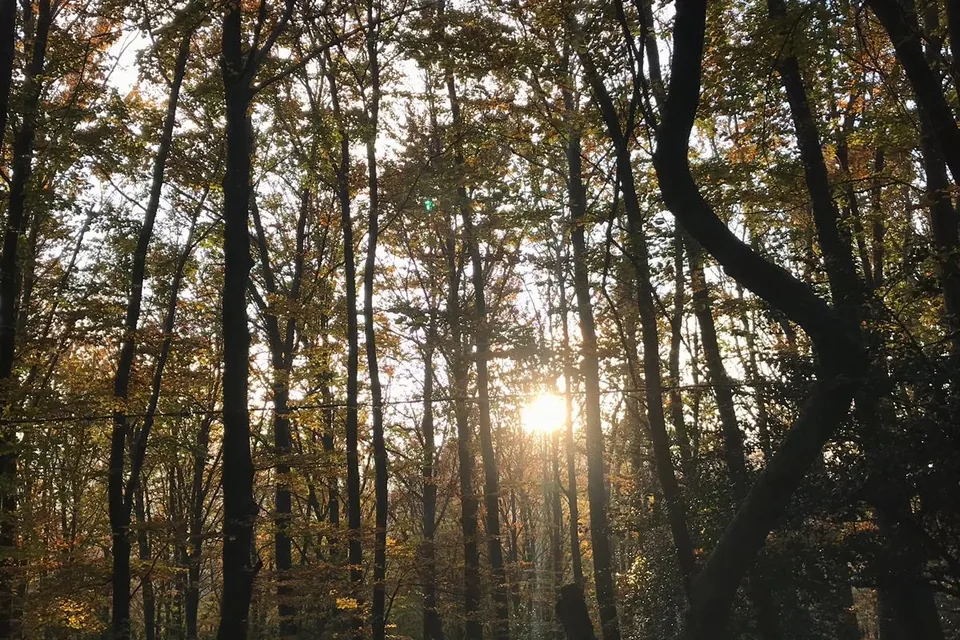
Foresta Umbra
Foresta Umbra: Gargano beneath the beech trees. About 10,500 hectares of forest in the national park, with ancient beech woods on the UNESCO list since 2017.
Read the guide →Photo: Francesca Lenoci / Wikimedia Commons — CC BY-SA 4.0 · Resized and converted to WebP.

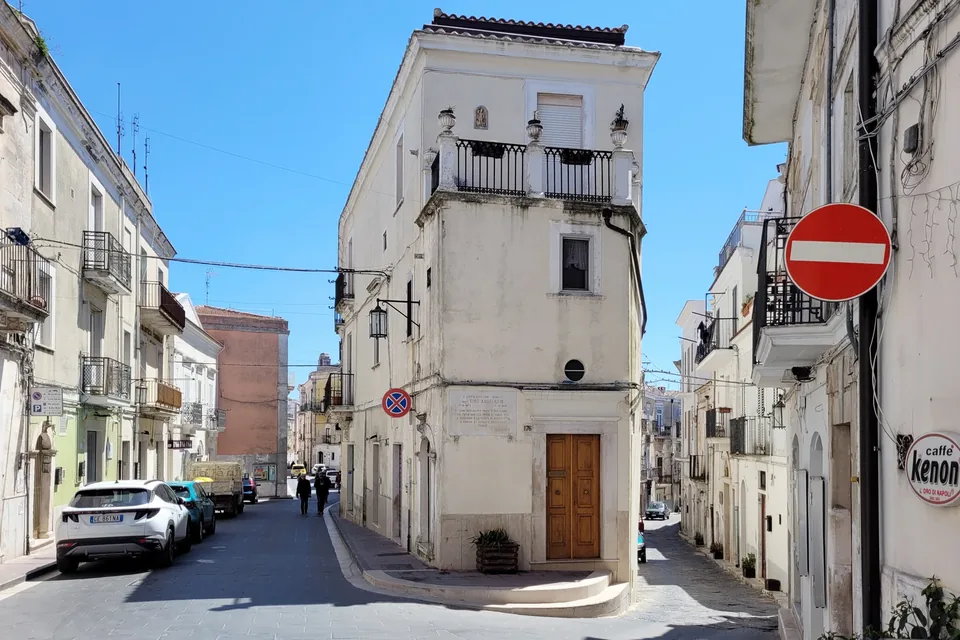
Monte Sant’Angelo
Monte Sant’Angelo: the cave and Junno quarter. The Archangel Michael’s cave sanctuary on the Via Francigena, a cult spread by the Lombards and a round loaf.
Read the guide →Photo: Bernard Gagnon / Wikimedia Commons — CC0 · Resized and converted to WebP.

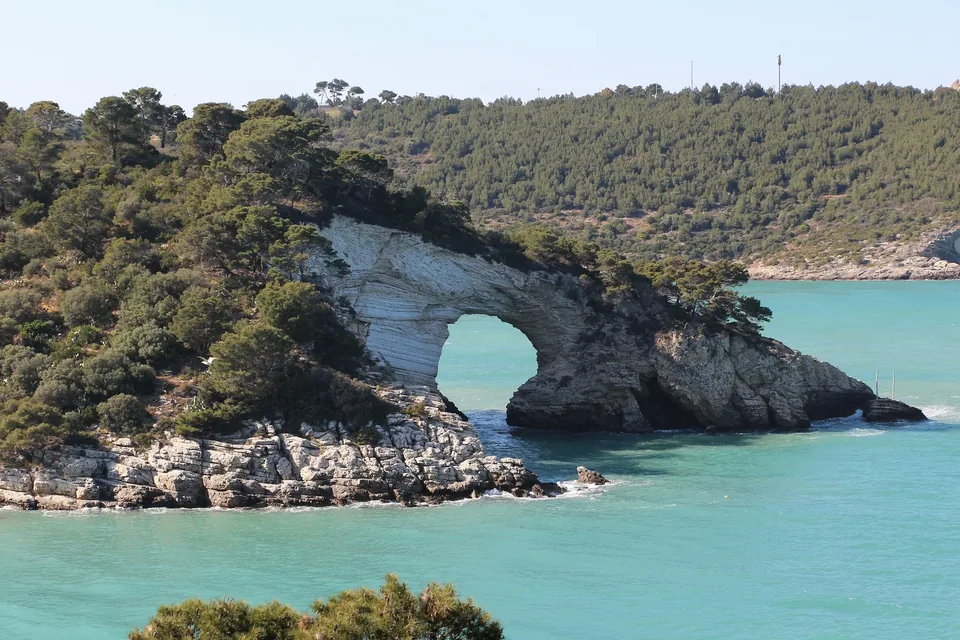
Gargano
Gargano: villages, woodland and coast. Beech woods, lagoons and white villages in the national park, the Archangel’s mountain and Ogliarola olives.
Read the guide →Photo: Bernard Gagnon / Wikimedia Commons — CC0 · Resized and converted to WebP.

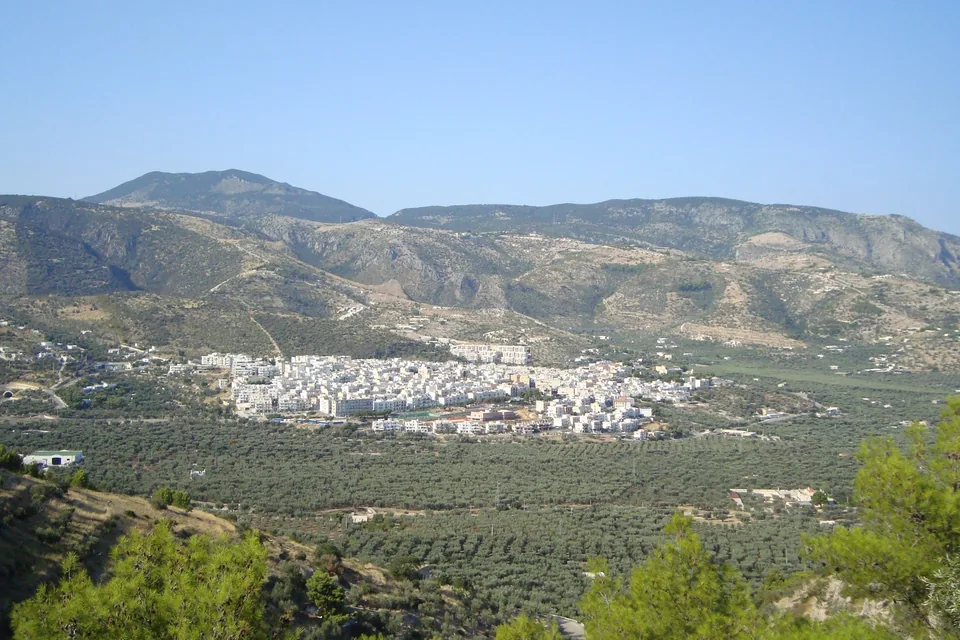
Mattinata
Mattinata (FG), Puglia: 5,876 residents, 73.49 km². The official facts of the municipality, its town council website and its registered accommodation.
Read the guide →Photo: LPLT / Wikimedia Commons — CC BY-SA 3.0 · Resized and converted to WebP.

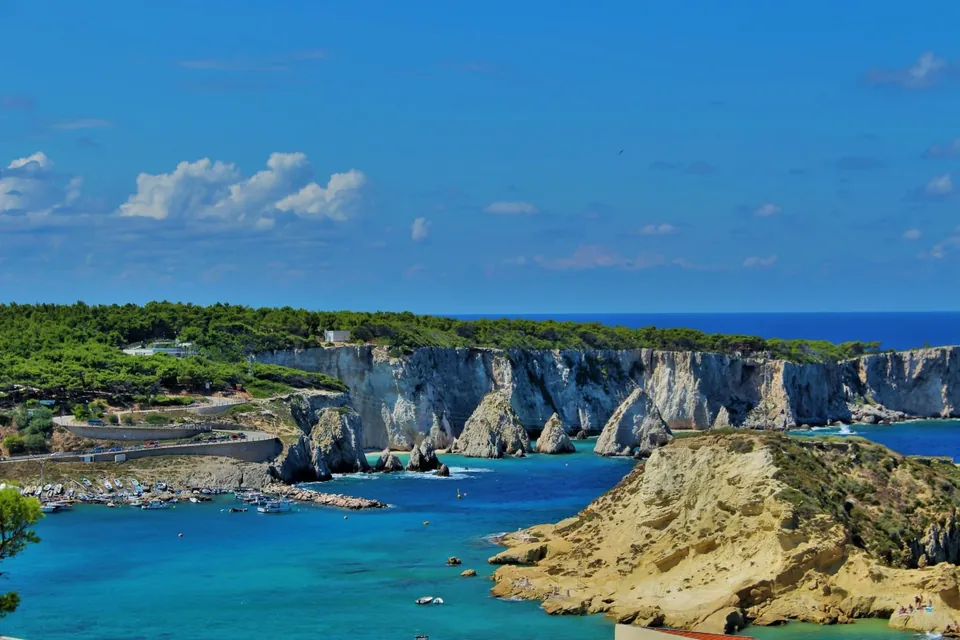
Isole Tremiti
Tremiti: San Nicola and the island landscape. Puglia’s only archipelago, 12 nautical miles off the Gargano, with pine woods, white cliffs and an abbey fortress. In the marine protected area, 34 dive sites and wrecks from Roman times to the Lombardo, the steamer of Garibaldi’s Thousand; on San Nicola the church of Santa Maria a Mare with its eleventh-century mosaics, the cloisters and the memory of the political exiles.
Read the guide →Photo: Sara Caputo / Wikimedia Commons — CC BY-SA 4.0 · Resized and converted to WebP.

Vico del Gargano
Vico del Gargano (FG), Puglia: 7,207 residents, 111.04 km². The official facts of the municipality, its town council website and its registered accommodation.
Read the guide →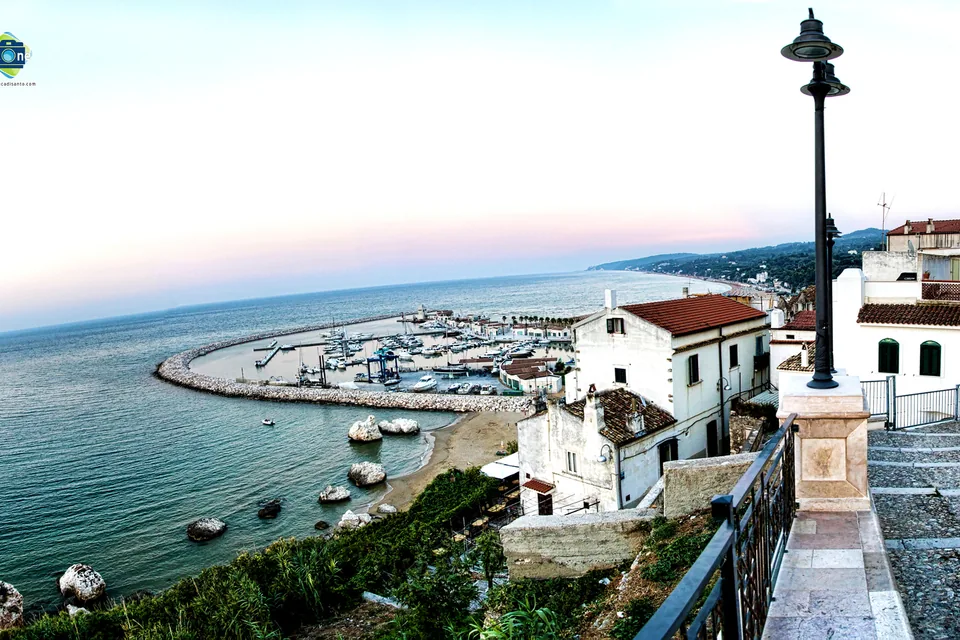
Rodi Garganico
Rodi Garganico (FG), Puglia: 3,323 residents, 13.52 km². The official facts of the municipality, its town council website and its registered accommodation.
Read the guide →Photo: Luca Di Santo / Wikimedia Commons — CC BY 3.0 · Resized and converted to WebP.

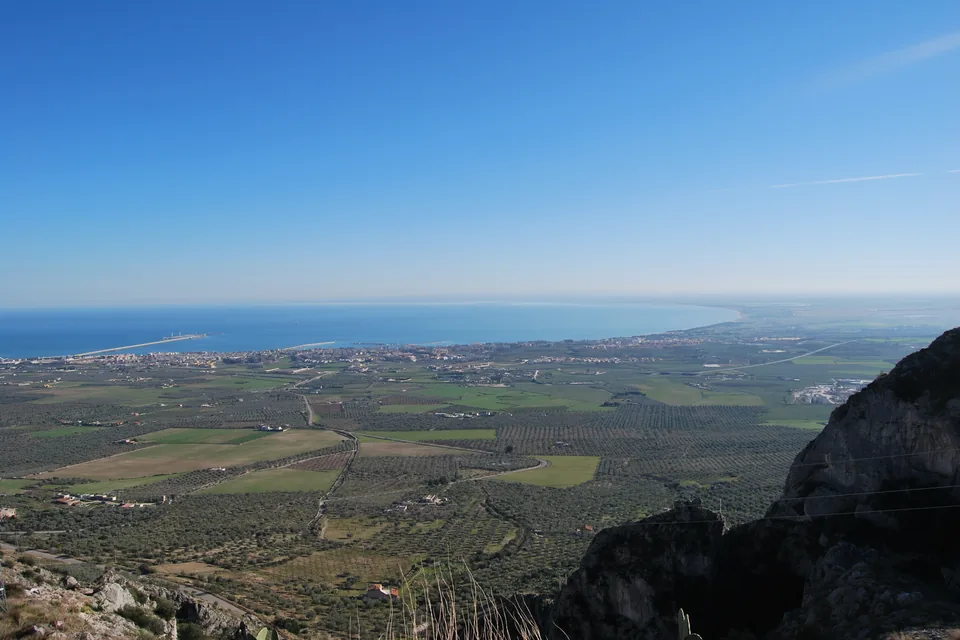
Manfredonia
Manfredonia (FG), Puglia: 53,391 residents, 354.80 km². The official facts of the municipality, its town council website and its registered accommodation.
Read the guide →Photo: giovanni zagaria / Wikimedia Commons — CC BY-SA 3.0 · Resized and converted to WebP.

San Giovanni Rotondo
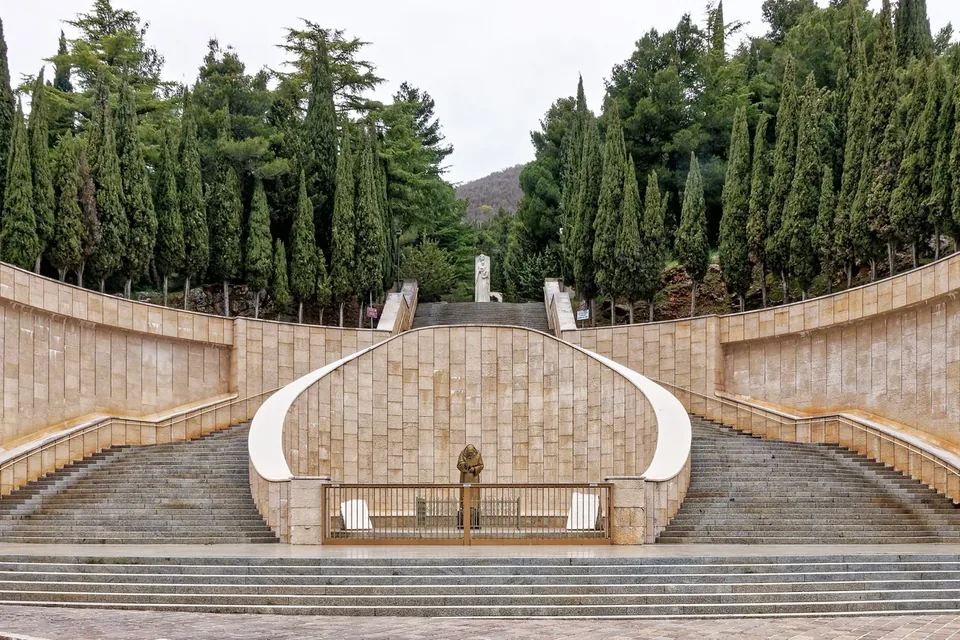
San Giovanni Rotondo: pilgrimage and town. Padre Pio’s pilgrimage centre in the heart of the Gargano, below Monte Calvo, and a town walled in the 1300s.
Read the guide →Photo: Holger Uwe Schmitt / Wikimedia Commons — CC BY-SA 4.0 · Resized and converted to WebP.
