APULICA / Food guides
Gargano citrus: late oranges and year-round lemons between Rodi, Vico and Ischitella
On the northern side of the Gargano, between sea and woods, three towns keep a farming landscape rare in Puglia: the citrus groves of Rodi Garganico, Vico del Gargano and Ischitella. Here oranges ripen months after those of other Italian areas and the femminello lemon is picked in every season. Two European PGIs, a Slow Food Presidium and the National Park's work have brought back to market fruit that in the 19th century travelled as far as New York. This guide lines up the official sources and suggests how to visit the citrus oasis.
Groves between sea and woodland
The Gargano National Park describes the citrus oasis as an area of woods and fields between sea and hinterland, in the towns of Vico del Gargano, Ischitella and Rodi Garganico. Here orchards are called giardini, gardens: the Slow Food Presidium explains that they form a unique farming landscape, almost always near the owners' houses, sheltered from wind and salt by dry-stone walls or windbreaks of cane, holm oak and laurel. Rodi is known as the town of lemons, Vico and Ischitella as the towns of oranges. The Arancia del Gargano rules, as summarised by Qualigeo, refer to red limestone soils exposed to cold winds, with dry-stone or grassy terraces on slopes. Italia.it calls Rodi Garganico Puglia's citrus capital, known for its beaches, clean sea and the scent of orange blossom.
Sources: Parco nazionale del Gargano — Agrumi dell'Oasi agrumaria · Fondazione Slow Food — Presidio Agrumi del Gargano · Qualigeo — Arancia del Gargano IGP · Italia.it — Gargano
From the year 1000 to ships for America
Qualigeo's records date citrus growing on the Gargano to at least the year 1000; documents mention Gargano citrons sent to Normandy as proof of the area's fertility, and in the late 17th century a friar described the promontory as rich in citrus. In the 19th century, Slow Food and the Park recall, groves covered more than eight hundred hectares, producing about one hundred and fifty thousand quintals a year: oranges, lemons and melangoli left wrapped in coloured tissue by the citrus companies, and ships carried them mainly to the United States and England. Qualigeo adds that oranges reached New York and Chicago after voyages of more than forty days, made possible by their keeping quality. In the 20th century market forces gradually sidelined this production, which nonetheless, the Park notes, continued to shape landscape and taste.
Sources: Qualigeo — Arancia del Gargano IGP · Qualigeo — Limone Femminello del Gargano IGP · Fondazione Slow Food — Presidio Agrumi del Gargano · Parco nazionale del Gargano — Agrumi dell'Oasi agrumaria
Arancia del Gargano PGI: bionda and duretta
Qualigeo gives 30 August 2007 as the registration date of Arancia del Gargano PGI. According to Qualigeo it covers two types: the Biondo comune del Gargano ecotype and the local Duretta cultivar, also called arancia tosta, the firm orange. The fruit is round and modest in size, with thin golden-yellow peel, yellow-orange flesh and juice, sweet flavour and a typical scent; it stands out for its keeping quality and for ripening late compared with other Italian citrus areas. The reference rootstock is the bitter melangolo and harvesting is by hand only, with clippers. The Park adds that the bionda flowers several times, almost like a lemon, is pear-shaped and was used on long sea voyages; the duretta, unique to Gargano orchards, ripens at Christmas, has firm, crunchy flesh and is almost seedless.
Sources: Qualigeo — Arancia del Gargano IGP · Parco nazionale del Gargano — Agrumi dell'Oasi agrumaria
Limone Femminello del Gargano PGI
Limone Femminello del Gargano has been a PGI since 15 February 2007, the registration date given by Qualigeo. The variety is Femminello comune, known locally as limone nostrale. According to Qualigeo the peel is rich in essential oils and intense aromas; shape, size and weight vary with the spring and summer-autumn flowerings, from oblong to ovoid to almost round. The fruit must be at least fifty millimetres in diameter and eighty grams in weight, with bright citrine-yellow peel and very juicy greenish-yellow flesh. Local conditions let the fruit stay long on the tree, so harvesting spans the whole year; the record caps yield at thirty-five tonnes per hectare. Slow Food and the Park describe it as Italy's oldest lemon variety.
Sources: Qualigeo — Limone Femminello del Gargano IGP · Fondazione Slow Food — Presidio Agrumi del Gargano · Parco nazionale del Gargano — Agrumi dell'Oasi agrumaria
The melangolo and the Slow Food Presidium
Alongside the two PGIs, the Slow Food Presidium for Gargano citrus also protects the melangolo. The Park presents it as an ancient citrus, the only one known before sweet oranges arrived from Portugal: a small to medium fruit, deep glossy red, with very thin peel and a bittersweet taste; the Park has a tree more than three hundred years old with a girth of almost two metres. Slow Food describes it as having crunchy flesh and modest juice, tending to sweet-sour. The Presidium, supported by the National Park, brings together seven producers from the three towns, who besides fresh fruit make marmalades, candied peel and limoncello. According to the Park, the creation of the citrus oasis and a producers' consortium brought the fruit back to market; Qualigeo names the protection consortium for both PGIs, based in Rodi Garganico.
Sources: Parco nazionale del Gargano — Agrumi dell'Oasi agrumaria · Fondazione Slow Food — Presidio Agrumi del Gargano · Qualigeo — Arancia del Gargano IGP
A calendar that lasts twelve months
Gargano citrus ripens in every season, but the sources give slightly different windows. The orange rules, according to Qualigeo, set the bionda harvest from 15 April to the end of August and the duretta from 1 December to 30 April, with no artificial advancing. Slow Food gives the bionda from September to April and the duretta from December to the end of April, and writes that the bionda ripens in April and May and stays sweet on the tree until September. The Park offers a simple calendar: in April and May the bionda begins, continuing until September; June is the time of the limoncella; at Christmas the duretta is picked. The femminello lemon, in all sources, is harvested year-round. For travellers the message is clear: there is no month without citrus on the branches.
Sources: Qualigeo — Arancia del Gargano IGP · Fondazione Slow Food — Presidio Agrumi del Gargano · Parco nazionale del Gargano — Agrumi dell'Oasi agrumaria
Saint Valentine, patron of the citrus groves
In Vico del Gargano the patron saint's feast is also the citrus festival. The Qualigeo records for both PGIs note that since the 18th century, in February, on the day of Saint Valentine, patron of the citrus groves, a procession is held that ends with the blessing of the trees. The National Park describes the Saint Valentine feast in Vico as an event not to be missed by citrus lovers, without giving programme or times. Italia.it's Gargano guide names Vico among the towns known for citrus alongside Rodi Garganico. Produce, the Park points out, can be bought directly from growers in Rodi, Vico or Ischitella. The feast's programme changes from year to year and should be checked with the town or parish before setting out.
Sources: Qualigeo — Arancia del Gargano IGP · Qualigeo — Limone Femminello del Gargano IGP · Parco nazionale del Gargano — Agrumi dell'Oasi agrumaria · Italia.it — Gargano
Tasting and taking home
The best way to understand these fruits is to eat them plain, cutting a bionda and a duretta side by side when their seasons overlap, between December and April: the difference in texture is obvious. Smell the femminello lemon before tasting it, grating a little peel. Candied peel and marmalades from Presidium growers make a simple snack, perhaps with fresh cheese; limoncello is the classic finish, to be drunk in moderation. To take home, whole fruit travels well precisely because it was bred to keep: a crate bought from a grower will survive a journey of a few days. Candied peel and marmalade are the most practical souvenirs. Always ask whether the fruit is PGI or from the Presidium, and which grove it comes from.
A thread for your journey
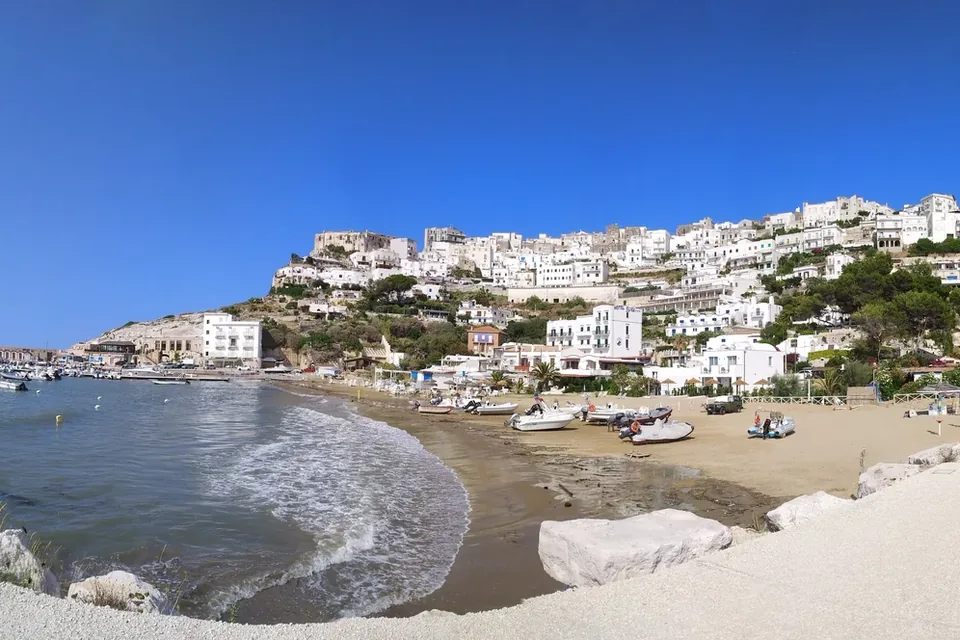
Journey idea: a day in the citrus oasis, with a morning among the groves of Rodi Garganico and Vico del Gargano, a stop with a grower to taste bionda, duretta and femminello, and an afternoon in the Foresta Umbra or towards Peschici. In February the day can coincide with Saint Valentine in Vico; grove visits to be arranged with operators.
Talk to us