Durum semolina and heritage wheat
Pane di Matera PGI, Qualigeo explains, is a bakery product made with re-milled durum wheat semolina, at least 20% of it from local ecotypes and heritage varieties, with natural leaven, salt and water. The production area is the whole province of Matera. The choice of old varieties such as Senatore Cappelli, Qualigeo writes, is linked to the soils and climate of the Matera hills. Italia.it speaks of re-milled durum semolina that is entirely Lucanian, 20-30% of it Senatore Cappelli, and adds that the specification covers the whole chain: the grain is stored in temperature-controlled ventilated silos so its properties are not altered. The same source notes that the loaf's shape recalls a small hill like those of the Murgia materana, and that its ingredients sum up two basic elements of the area: water and grain.
Sources: Qualigeo (Fondazione Qualivita) — Pane di Matera IGP · Italia.it — Il pane di Matera
A starter born from fruit
What sets Pane di Matera apart is its sourdough starter. According to the specification summarised by Qualigeo, it is made from the pulp of fresh, ripe fruit left to macerate in water for 48 hours; this is mixed with water and semolina and rested in a graduated container for 10-12 hours at 26-30 degrees, until it doubles in volume. Flour equal to the resulting weight is then added and everything is worked in the mixer; the dough rises in the tub for 25-35 minutes. Italia.it specifies that the fruit used for the natural starter is grapes and figs, and stresses the long rising times both in the tub and on the boards. It is a process that ties the bread to the countryside around the city: grain, water and fruit from the same land.
Sources: Qualigeo (Fondazione Qualivita) — Pane di Matera IGP · Italia.it — Il pane di Matera
Cornetto, forma alta and the MT mark
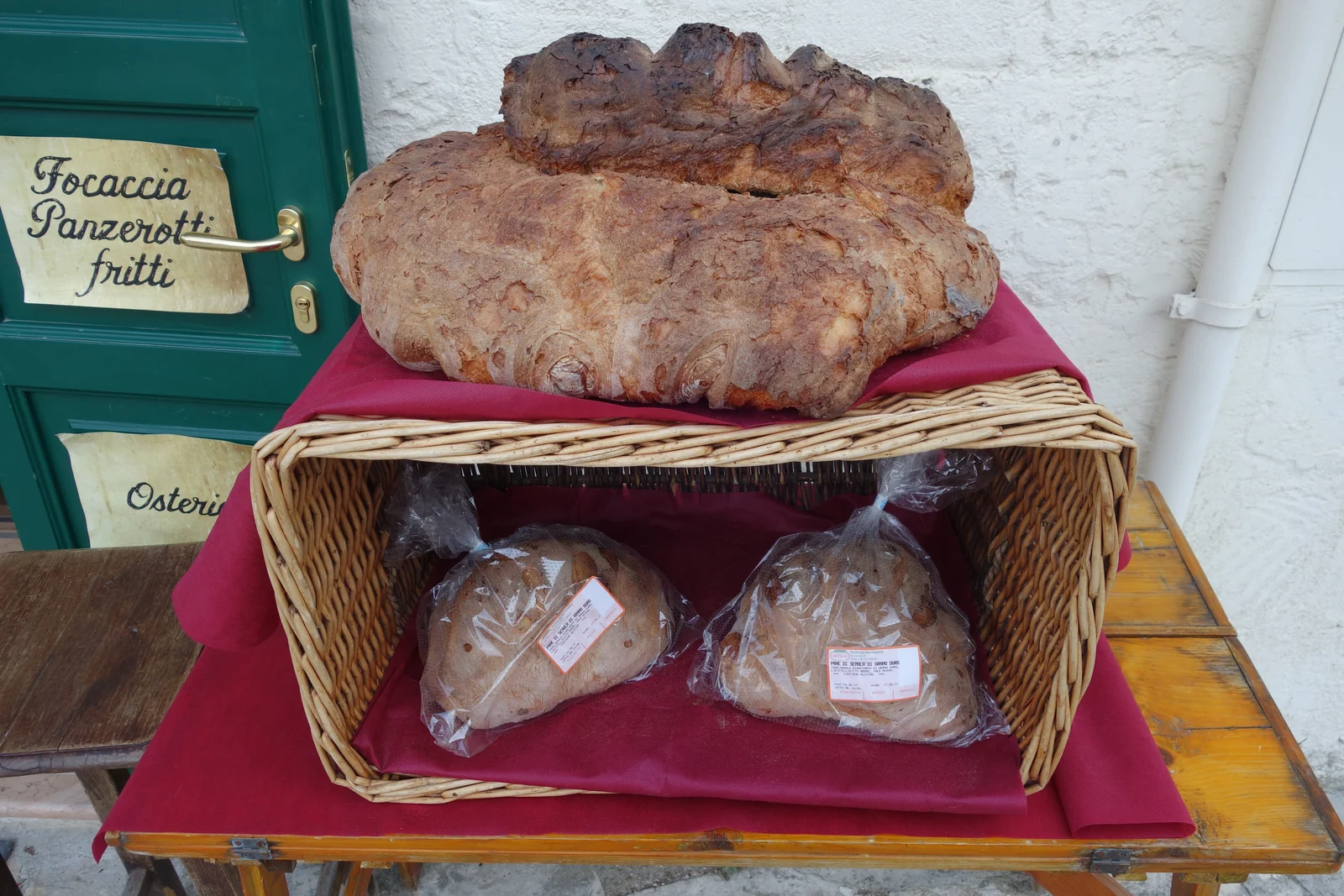
After rising, Qualigeo explains, preforms of 600 grams to 12 kilos are made to obtain finished loaves of 500 grams to 10 kilos. The preforms are shaped by hand, rest 25-30 minutes in wooden or steel containers covered with cloths, then are given their typical shape by hand and stamped on top with a press stamp bearing the letters 'MT'. Baking is in wood-fired or indirectly heated ovens and ranges from one hour for half-kilo loaves to four and a half hours for 10-kilo ones. Two shapes are allowed: the Cornetto, elongated and slightly convex, and the Forma Alta, tall and compact, with 'baciature' on the sides. The crust is crisp, golden brown, at least 3 millimetres thick, with a typical scorched smell; the crumb is yellow, with very irregular holes.
Sources: Qualigeo (Fondazione Qualivita) — Pane di Matera IGP
Family stamps
The 'MT' mark has an ancestor. Italia.it recounts that until 1950 Matera families pressed their own sign into the dough with a wooden stamp, to recognise their bread after baking; the stamps were carved by shepherds during the months spent with their flocks. Many of these stamps are kept and displayed at the Domenico Ridola National Archaeological Museum in Matera. Qualigeo notes that the art of bread-making has belonged to local tradition since very ancient times, with records from the Kingdom of Naples describing the particular techniques used in the area, and that artworks, literature, legends and folk tales show how much bread mattered in the life and economy of the territory. Seeing the stamps in the museum before tasting the bread helps you understand what a loaf meant to a family in the Sassi.
Sources: Italia.it — Il pane di Matera · Qualigeo (Fondazione Qualivita) — Pane di Matera IGP
A PGI since 2008
Pane di Matera is a protected geographical indication registered on 21 February 2008: the Qualigeo record places it in the category of bread, pastry, cakes, confectionery and biscuits. Qualigeo lists the Pane di Matera Protection Consortium as the producers' body. The bread is sold in its two types, Cornetto or Forma Alta, fresh, from 500 grams to 10 kilos, always stamped 'MT'; it must be packed in micro-perforated film or a food-grade paper bag, and if baked in a wood oven it may carry the wording 'Pane cotto in forno a legna'. Italia.it adds that it can be bought packed in the Consortium's bag.
Sources: Qualigeo (Fondazione Qualivita) — Pane di Matera IGP · Italia.it — Il pane di Matera
Cialledda, feddarauss and bread that lasts
Qualigeo advises keeping Pane di Matera in a dry place, wrapped in a linen cloth until it is eaten: a one-kilo loaf lasts about seven days, a ten-kilo loaf about fourteen. It is excellent fresh from the oven and goes with local cured meats and cheeses. Its long life explains the recipes that use it stale. 'Feddarauss' is bruschetta with tomato, oil and oregano. 'Cialledda' is a soup: Qualigeo describes the hot version as a soup of bread, water and onions or tomatoes with local greens; Italia.it distinguishes hot cialledda, with egg, bay, garlic and olives over cooked bread, and cold cialledda, with moistened bread, tomatoes and garlic. In the national list of traditional products, Basilicata also includes other products tied to the city, such as crapiata di Matera and the Immacolata tarallo, known as 'u ficcilatidd'.
Sources: Qualigeo (Fondazione Qualivita) — Pane di Matera IGP · Italia.it — Il pane di Matera · Elenco nazionale dei prodotti agroalimentari tradizionali, XXVI revisione (DM 6 febbraio 2026), suddiviso per regione — copia pubblicata dalla Regione Campania
The city of the Sassi around the bread
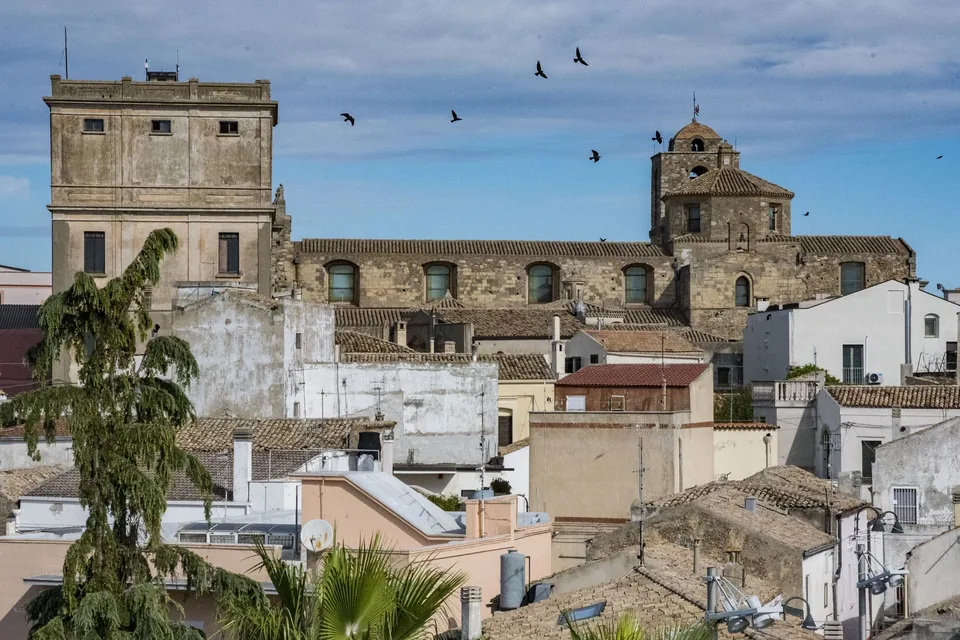
The Sassi and the Park of the Rupestrian Churches of Matera have been on the UNESCO World Heritage List since 1993. UNESCO describes them as the most outstanding, intact example of a troglodyte settlement in the Mediterranean, perfectly adapted to its terrain and ecosystem, with a first inhabited area dating from the Palaeolithic and continuous occupation until the mid-20th century; in the 1950s the entire population of the Sassi was relocated for sanitary reasons, and since the 1980s the return of residents has brought the districts back to life. The same entry mentions the regional park created by Basilicata law no. 11 of 1990, protecting about 6,500 hectares of the Murgia. The city's calendar peaks on 2 July, the patronal feast of Maria Santissima della Bruna, for which the Municipality publishes visitor service information every year.
Sources: UNESCO World Heritage Centre — The Sassi and the Park of the Rupestrian Churches of Matera · Comune di Matera — 2 luglio, Festa della Bruna: servizi per i visitatori
How to taste it
I would taste it first on its own: a slice with crust, to feel its thickness and toasted note, and the yellow crumb that smells of grain. Then a feddarauss with tomato, oil and oregano and, if the menu has it, a cialledda. A useful exercise is to compare the day's bread with bread two or three days old: Pane di Matera is meant to last, and its texture changes without losing flavour. At the table I would pair it with an aged Lucanian cheese and a red from the Matera DOC. Before or after the tasting, visit the Ridola Museum to see the stamps. To take home, a one-kilo loaf travels well wrapped in a cloth; large loaves must be ordered. To watch the dough being shaped and the wood oven at work, arrange a visit with a bakery.
A thread for your journey
Journey idea: a morning in Matera that begins at the Ridola Museum in front of the bread stamps, continues through the Sassi and ends with a lunch of feddarauss, cialledda and Lucanian cheeses; in the afternoon, a visit arranged with a bakery to watch the shaping and 'MT' stamping. If you travel in early July, you can time your stay with the Bruna festival, booking well in advance.
Talk to us