
Why go
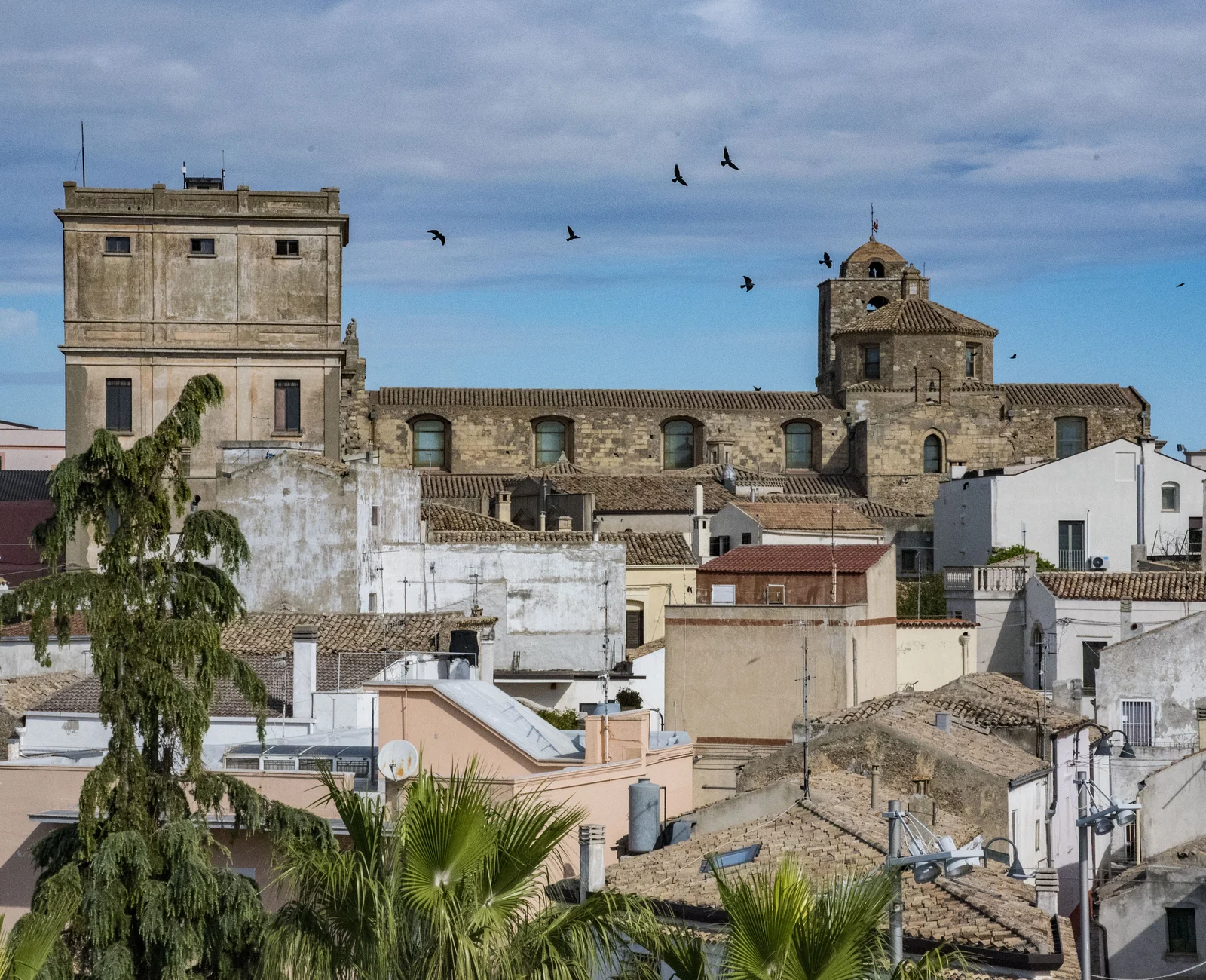
Miglionico is a hill town in the province of Matera, at about 465 metres between the Bradano and Basento rivers, a short distance from the city of the Sassi. The Malconsiglio Castle website, run by the municipality, describes its climate as mild, with sunny summers and gentle winters.
Two reasons are enough to stop. The first is the castle crowning the hill, called Malconsiglio, ill counsel, because in 1485 the barons of the Kingdom of Naples plotted there against King Ferdinand I of Aragon: today it houses a multimedia route telling that story. The second is the church of Santa Maria Maggiore, which keeps a great eighteen-panel polyptych painted by Cima da Conegliano in 1499, a Venetian Renaissance masterpiece that reached Basilicata through a curious story.
Around the town the landscape of the Bradano and the Matera Murge opens towards Lake San Giuliano and Matera. Miglionico can be seen in half a day or used as a quiet base for exploring the province, away from the crowds of better-known places.
Sources: Castello del Malconsiglio — Come arrivare a Miglionico · Italia.it — Miglionico · Italia.it — Grottole e l'Oasi di San Giuliano
History
Miglionico's oldest core, recorded in Norman times, occupied the quarters of San Nicola dei Greci and Sant'Angelo; in the eleventh and twelfth centuries the town spread along the ridges towards Torchiano and Santa Sofia. The castle website traces its feudal history: from the Normans of the county of Montescaglioso the land passed to the Sanseverino, who made it an outpost on the edge of their domains, near the route of the Via Appia. The walls date from the Angevin period, from the mid-fourteenth century, and were reinforced throughout the fifteenth.
The best-known episode is the Barons' Conspiracy. In 1485, at the wish of Girolamo Sanseverino, lord of Miglionico, the barons of the Kingdom met in the castle: the hall where they gathered took the name Malconsiglio. The affair ended with the arrest and killing of the conspirators, told by Camillo Porzio in a famous book.
Among the town's lords was Ettore Fieramosca, the knight of the Challenge of Barletta, who received the county of Miglionico and had to give it back in 1507. The town was struck by the earthquakes of 1857 and 1980, the latter leading to the temporary closure of the convent church.
Sources: Castello del Malconsiglio — Il castello e il perimetro fortificato · Castello del Malconsiglio (Comune di Miglionico) — sito ufficiale · Castello del Malconsiglio — Notizie storiche (T. Ricciardi, 1867) · Italia.it — Miglionico · Castello del Malconsiglio — Ettore Fieramosca conte di Miglionico · Consiglio regionale — storia del polittico
What to see
Malconsiglio Castle stands outside the medieval core, on rocky ground. The nineteenth-century historian Teodoro Ricciardi, whose text is published on the castle website, describes it as a parallelogram ringed by thick walls and flanked by seven towers, with a ground floor older than the upper one: you can still see the old battlements filled in when the second level was added. On the ground floor the rooms have cross vaults and pointed arches, upstairs great round arches. The multimedia route in the Malconsiglio hall brings the conspirators to life; the municipality notes that the entrance is wheelchair accessible.
The church of Santa Maria Maggiore, built between the thirteenth and fourteenth centuries on the remains of a chapel of the Saviour, keeps Cima da Conegliano's polyptych: eighteen panels in an eighteenth-century frame, with the enthroned Madonna and Child at the centre, surrounded by Saints Jerome, Francis, Peter, Anthony, Clare and others, the risen Christ and the Annunciation. According to the regional council, it was identified as the Venetian painter's work in 1907 and has been restored several times.
Walking around, you can still pick out the towers of the Angevin walls, partly absorbed into houses from the seventeenth century.
Sources: Castello del Malconsiglio — Notizie storiche (T. Ricciardi, 1867) · Italia.it — Miglionico · Comune di Miglionico — Il Castello del Malconsiglio · Castello del Malconsiglio — Il castello e il perimetro fortificato · Consiglio regionale — storia del polittico
Food and wine
Miglionico has a food event that tells of its countryside: the Festival of Dried Figs and Autumn Flavours, held by the municipality in September at Malconsiglio Castle and now in its nineteenth edition.
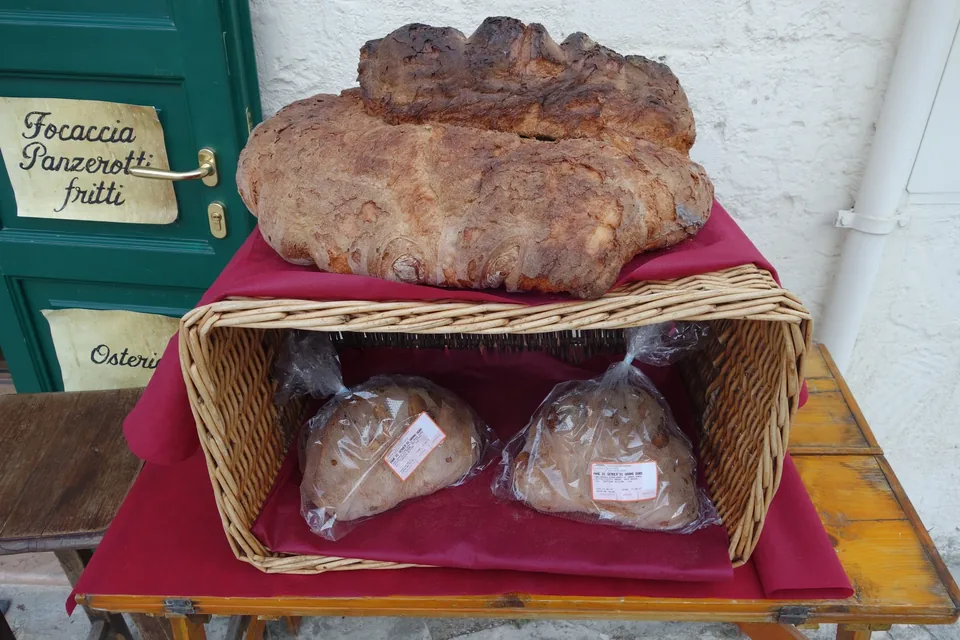
The town lies within the Pane di Matera PGI area, which covers the whole province: a bread of re-milled durum wheat semolina and sourdough, with a crisp crust, in the two shapes of the cornetto and the tall loaf, whose baking techniques are documented as far back as the Kingdom of Naples. Italia.it mentions, in Lucanian cooking, durum wheat bread often baked in wood ovens and handmade pastas such as cavatelli, ferretti, lagane, strascinati and orecchiette; in nearby Ferrandina, black Majatica olives are oven-baked and flavoured with oregano and wild fennel.
The Bradano table thus brings together grain, oil, pulses and dried fruit. To taste it, besides the festival, the municipality lists restaurants, pizzerias and pastry shops in town and farm stays in the surrounding countryside, which often serve their own produce.
Sources: Comune di Miglionico — Sagra dei fichi secchi e dei sapori d'autunno · Qualigeo — Pane di Matera IGP · Italia.it — Prodotti e piatti tipici lucani · Comune di Miglionico — Cultura e turismo, strutture
Things to do
Visiting the castle is the main experience. The multimedia route Discovering the Barons' Conspiracy leads into the hall where the conspirators met in 1485 and brings its characters to life; the castle website also publishes historical studies, from documents in the Mantua State Archive on the trials of the barons to essays by modern historians. For years the municipality staged the Barons' Conspiracy as a historical re-enactment in the castle courtyard.
The courtyard, with its fine acoustics, hosts concerts and shows, and the auditorium welcomes meetings and events. In summer the municipality runs the Serestate a Miglionico season, with evening events at the castle.
Outside the town, the landscape of ravines and Lake San Giuliano invites walking. Italia.it describes the San Giuliano Oasis as a silent place, inhabited since prehistory, among farmsteads, pastures and the lake carved into the ravines. Art lovers can spend time on the Santa Maria Maggiore polyptych, studying the faces and the landscapes in the background, typical of fifteenth-century Venetian painting.
Sources: Italia.it — Miglionico · Castello del Malconsiglio (Comune di Miglionico) — sito ufficiale · Comune di Miglionico — Serestate a Miglionico · Italia.it — Grottole e l'Oasi di San Giuliano · Consiglio regionale — storia del polittico
When to go
Miglionico can be visited all year. The castle website mentions the town's mild climate, with sunny summers and gentle winters, and the municipality lists the castle as open every day with free entry: still, check before visiting.
September is especially lively: early in the month the castle hosts the Serestate a Miglionico events and, later, the Festival of Dried Figs and Autumn Flavours, held on Sunday 20 September in 2026 according to the municipal calendar. Summer brings concerts and shows in the castle courtyard.
Spring and autumn are comfortable seasons for combining the town with walks towards the San Giuliano Oasis and with Matera, when temperatures are milder. In winter the town is quiet and a visit focuses on the castle and church, a good choice for travellers interested in art and history. To see Cima da Conegliano's polyptych, check the church's opening times, which follow the liturgical calendar.
Sources: Castello del Malconsiglio — Come arrivare a Miglionico · Comune di Miglionico — Il Castello del Malconsiglio · Comune di Miglionico — Serestate a Miglionico · Comune di Miglionico — Sagra dei fichi secchi e dei sapori d'autunno · Castello del Malconsiglio (Comune di Miglionico) — sito ufficiale · Italia.it — Grottole e l'Oasi di San Giuliano
Getting there and around
The castle website explains that travellers coming from Potenza or Taranto along the SS407 Basentana towards Matera reach the Miglionico exit shortly before the city of the Sassi: looking up, you already see the castle crowning the hill. The town is therefore a short detour on the way to Matera and a handy base for moving between the provincial capital, the Bradano valley and inland villages.
The municipality mentions accessible parking near the castle. The centre is explored on foot: the castle, the church of Santa Maria Maggiore and the wall towers are close together, along the ridge streets linking the old quarters.
Without a car, ask the municipality or the Pro Loco about connections to Matera, as the official sources consulted do not give routes or frequencies. To include the San Giuliano Oasis, Grottole and the hill towns around Matera, a car or an organised excursion makes the day easier.
Sources: Castello del Malconsiglio — Come arrivare a Miglionico · Comune di Miglionico — Il Castello del Malconsiglio · Castello del Malconsiglio — Il castello e il perimetro fortificato · Castello del Malconsiglio (Comune di Miglionico) — sito ufficiale · Italia.it — Grottole e l'Oasi di San Giuliano
Where to stay
In its culture and tourism section the municipality publishes a list of local properties: farm stays in the countryside, holiday homes and apartments, bed and breakfasts and a hotel with restaurant. It is a modest offer, suited to travellers looking for a quiet stay near Matera.
A farm stay is the natural choice for those travelling by car who want to experience the Bradano countryside, with its olive groves, wheat fields and farmsteads, often with the chance to eat the farm's own produce. A bed and breakfast or holiday home in town lets you walk between castle and church and enjoy summer evenings at the events in the castle courtyard.
Miglionico can also work as a base for visiting Matera, a short drive away, when rooms there are scarce or you prefer quieter surroundings. During the September festival and on summer weekends, book ahead. Apulica does not list specific properties here: choices are made case by case, weighing access, season and the kind of trip.
Sources: Comune di Miglionico — Cultura e turismo, strutture · Castello del Malconsiglio (Comune di Miglionico) — sito ufficiale · Castello del Malconsiglio — Come arrivare a Miglionico · Comune di Miglionico — Sagra dei fichi secchi e dei sapori d'autunno
Nearby
Matera is a short distance away, with the Sassi and the park of rock churches, a UNESCO site that Italia.it describes as one of the world's most significant human settlements. Miglionico fits a route combining the city of stone with the hill towns, where the pace is slower.
To the west, Grottole keeps the roofless Chiesa Diruta overlooking its ravine, the tower of the feudal castle and the Inventio Crucis festival, when a papier-mâché crucifix is carried in procession between the town's churches. Between Grottole and Miglionico lies Lake San Giuliano and its oasis: Italia.it describes it as a silent world of farmsteads, pastures and ravines, frequented since prehistory.
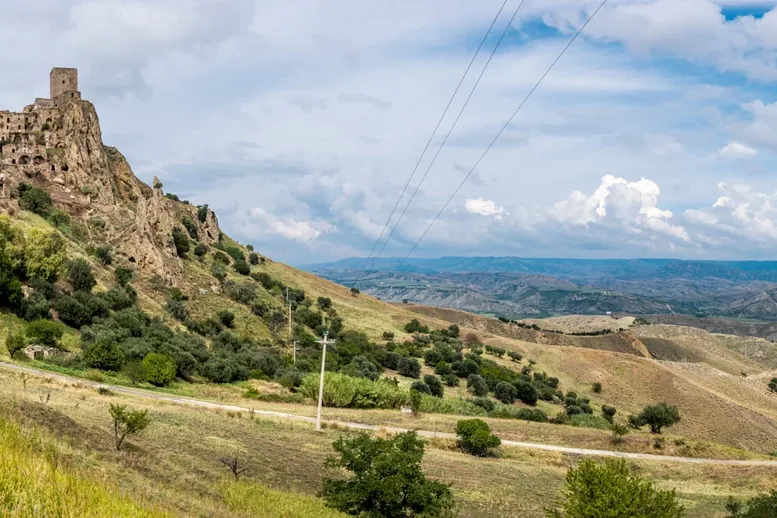
Further south you enter badlands country, with Old Craco perched on a rocky spur above the clay, and beyond it Aliano, Carlo Levi's village. Following the Basento and Bradano towards the sea you finally reach the Ionian coast, completing a journey that runs from the Matera hills to the Metaponto plain.
Sources: Italia.it — Matera · Italia.it — Grottole e l'Oasi di San Giuliano · Italia.it — Craco
Local tourist information
Local tourist offices help with opening times, events and transport on the day.
- Pro Loco Miglionico — informazioni turistiche e percorso multimediale del Castello del Malconsiglio · Castello del Malconsiglio, Piazza Castello 29, 75010 Miglionico (MT) · +39 388 367 3922 · prolocomiglionico1@gmail.com · Official website
Source: Castello del Malconsiglio (Comune di Miglionico) — sito ufficiale · Comune di Miglionico — Il Castello del Malconsiglio · Comune di Miglionico — Sagra dei fichi secchi e dei sapori d'autunno · checked on
Where to stay
In the municipality of Miglionico the national database of the Ministry of Tourism lists 15 accommodation businesses with a verified CIN code: 1 hotels, 11 other licensed accommodation and 3 other types such as B&Bs and private rentals.
Sources: Ministero del Turismo – Banca Dati Strutture Ricettive (dashboard pubblica), 2026-10-12
YOUR JOURNEY
How to shape a journey here
Journey idea: give Miglionico its own time alongside Matera. The castle introduces history; the polyptych asks for slower observation. A pause in town completes the contrast before continuing towards Craco.
Talk to us about it


.jpeg)
