
Why go
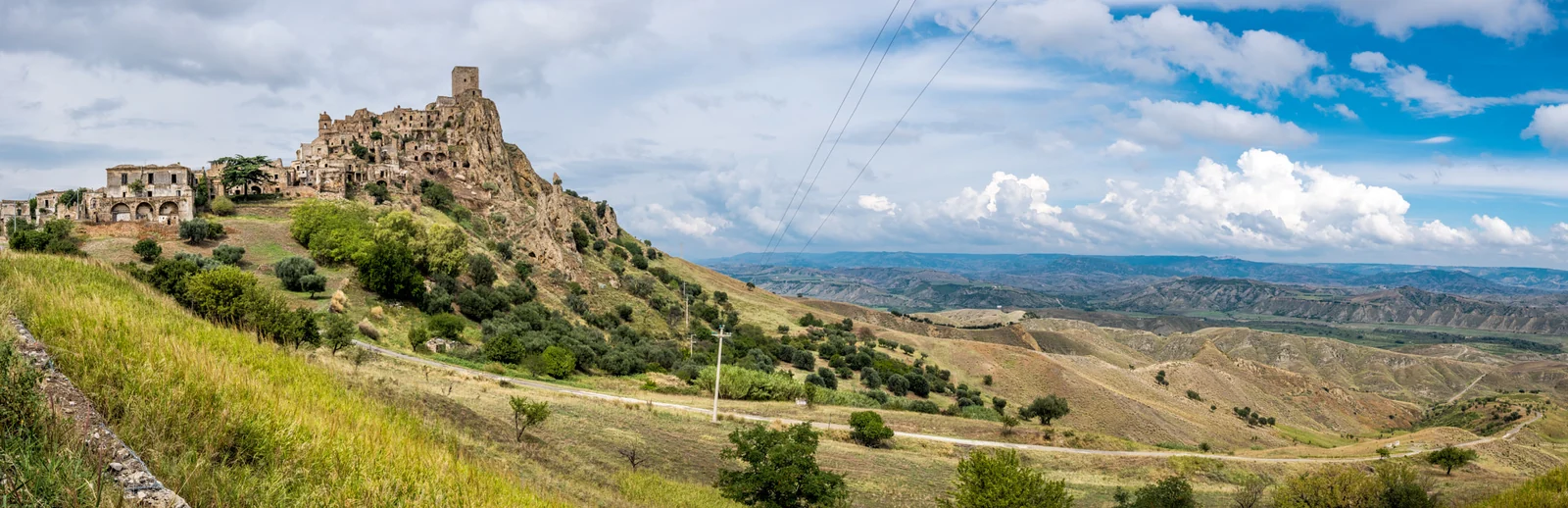
Old Craco is one of Basilicata's most recognisable sights: a medieval village clinging to the steep walls of a rocky spur, looking down over the bare landscape of the Lucanian badlands. Italia.it calls it one of the region's tourist symbols worldwide, a cluster of ruined buildings with the remains of churches, abandoned houses and a sweeping view over the surroundings.
The village was left by its inhabitants after the 1963 landslide, which drove them to a new settlement in the valley. Since then the old village has become a place to visit with respect and with a guide: the municipality entrusts access to the Parco Museale Scenografico, with guided routes through the village and an immersive museum housed in the former convent of San Pietro.
Craco also draws people through cinema: many directors have chosen it as a natural set. But the strongest reason to come is the silence wrapping the empty streets and the light on the badlands, a landscape that speaks of both the beauty and the fragility of clay ground.
Sources: Italia.it — Craco, il borgo fantasma · Comune di Craco — sito istituzionale (sezione Come visitare Craco) · Parco Museale Scenografico di Craco — sito della gestione delle visite · Parco Museale Scenografico di Craco — Museo Emozionale
History
According to the site that runs visits, Craco's origins go back to the eighth century BC, and the name may come from Graculum, a small ploughed field. From the Middle Ages the village enjoyed great prosperity, peaking in the sixteenth century, before the fief passed from lord to lord. It was a seigneurial town and a defensive stronghold: the mother church, the Norman tower and the Maronna, Grossi, Carbone and Simonetti mansions remain. Italia.it notes that the medieval core was once a stopping point on the crusaders' road to the Holy Land.
The Franciscan convent of San Pietro, recorded by the Basilicata Region, was founded in 1620 and completed in 1632 thanks to Giovanni Donato Penna; the Annunziata chapel was added in 1777. After the 1866 laws the building passed to the municipality and housed offices, a police station and a nursery school.
In 1963 a landslide struck the village. Reinforced concrete retaining walls were built to hold it but soon began to give way, and between 1963 and 1974 almost the whole population was moved down to a new settlement at Peschiera. The 1980 earthquake led to the closure of the convent church. After years of neglect and looting, the village was made safe for visits.
Sources: Parco Museale Scenografico di Craco — sito della gestione delle visite · Italia.it — Craco, il borgo fantasma · Regione Basilicata, Patrimonio culturale — Ex convento di San Pietro a Craco
What to see
The old village is visited along the routes of the Parco Museale Scenografico, wearing a safety helmet that is compulsory and can be hired at the ticket office. You climb among empty houses and lanes to the upper part, where the Norman tower and the mother church rise, passing the mansions of the leading families, Maronna, Grossi, Carbone and Simonetti. From every opening the view spreads over the badlands, with their knife-edge crests and sharp spires carved by rainwater.
The former convent of San Pietro stands a few dozen metres from the village, along the provincial road climbing from Craco Peschiera towards Stigliano, among olive groves and prickly pear hedges. The Region's record notes the church's main portal, the cloister columns resting on corbels carved as masks, the barrel vault with eighteenth-century stucco and the wooden choir in the presbytery. Part of the restored complex houses Craco's Museo Emozionale.
The museum tells the village's story through images and sound and is the natural complement to the walk: see it before or after the village, to give a face to the empty streets.
Sources: Parco Museale Scenografico di Craco — Visita guidata · Parco Museale Scenografico di Craco — sito della gestione delle visite · Regione Basilicata, Patrimonio culturale — Ex convento di San Pietro a Craco · Parco Museale Scenografico di Craco — Museo Emozionale
Things to do
The guided walk through the Parco Museale Scenografico is the main experience. The operator offers a tour of the village, entry to the Museo Emozionale or a combined ticket covering both; comfortable shoes are required, as the routes climb and descend over stone and packed earth. In summer there are also evening walks, with the ruins lit by the setting sun, held in Italian.
Craco is also a stop for film lovers. The visitor site lists some of the films shot here, including Alberto Lattuada's La Lupa, Francesco Rosi's Christ Stopped at Eboli, the Taviani brothers' Night Sun, Catherine Hardwicke's The Nativity Story, Mel Gibson's The Passion of the Christ, Marc Forster's Quantum of Solace and Rocco Papaleo's Basilicata coast to coast. Recognising the settings of scenes adds a layer to the walk.
The surrounding landscape deserves as much attention as the ruins: the regional record describes, next to the convent, olive groves broken by prickly pear hedges, beyond which the wide expanse of badlands begins. Pausing to look at it from the road climbing from the new village helps explain why directors and photographers have returned here so often.
Sources: Parco Museale Scenografico di Craco — sito della gestione delle visite · Parco Museale Scenografico di Craco — Visita guidata · Parco Museale Scenografico di Craco — Museo Emozionale · Parco Museale Scenografico di Craco — Passeggiate serali · Regione Basilicata, Patrimonio culturale — Ex convento di San Pietro a Craco
When to go
Craco can be visited all year, though with different calendars. The Parco Museale Scenografico operator says that from April to October visits run every day, while from November to March they are concentrated at weekends and on public holidays: check the current calendar and book before setting out.
Spring and autumn suit the walk through the village best, with mild temperatures and soft light on the badlands. Summer brings long days and the evening walks at sunset, which the operator offers as a different way of seeing the ruins; in those months choose a time that leaves room to walk without hurry.
In winter the village takes on a sterner mood, with low skies and fewer visitors. The operator notes that tickets are not refunded for bad weather, but a new date can be arranged: useful to know when travelling in the less settled months. In every season bring comfortable shoes and allow time to stop and look at the landscape.
Sources: Parco Museale Scenografico di Craco — sito della gestione delle visite · Parco Museale Scenografico di Craco — Passeggiate serali
Getting there and around
The visit operator warns that the Old Craco site can only be reached by private vehicle: there is no direct public transport up to the old village. Non-drivers can rely on an organised excursion or a transfer, combining the visit with other stops in the province of Matera.
On arrival the reference point is the former convent of San Pietro, which the regional record places a few dozen metres from the village, on the provincial road that runs from Craco Peschiera, the new village in the valley, towards Stigliano. The convent houses the ticket office, where you collect tickets and hire the helmet required to enter the village.
The old village is entered on Parco Museale Scenografico visits, along the routes set by the operator. Internal paths are steep and unpaved in places, so wear comfortable shoes and be reasonably sure-footed; visitors with limited mobility should ask the operator before visiting. By car, Craco fits well into a route between Matera, the Aliano badlands and the Ionian coast.
Sources: Parco Museale Scenografico di Craco — sito della gestione delle visite · Regione Basilicata, Patrimonio culturale — Ex convento di San Pietro a Craco · Parco Museale Scenografico di Craco — Passeggiate serali · Parco Museale Scenografico di Craco — Visita guidata
Nearby
Craco lies at the heart of badlands country, the clay landscape that Italia.it describes as a lunar scene of deep gullies and pinnacles. Close by is Aliano, the village Carlo Levi portrayed in Christ Stopped at Eboli: pairing it with Craco on the same day lets you compare an inhabited village with its literary museums and one emptied by a landslide.
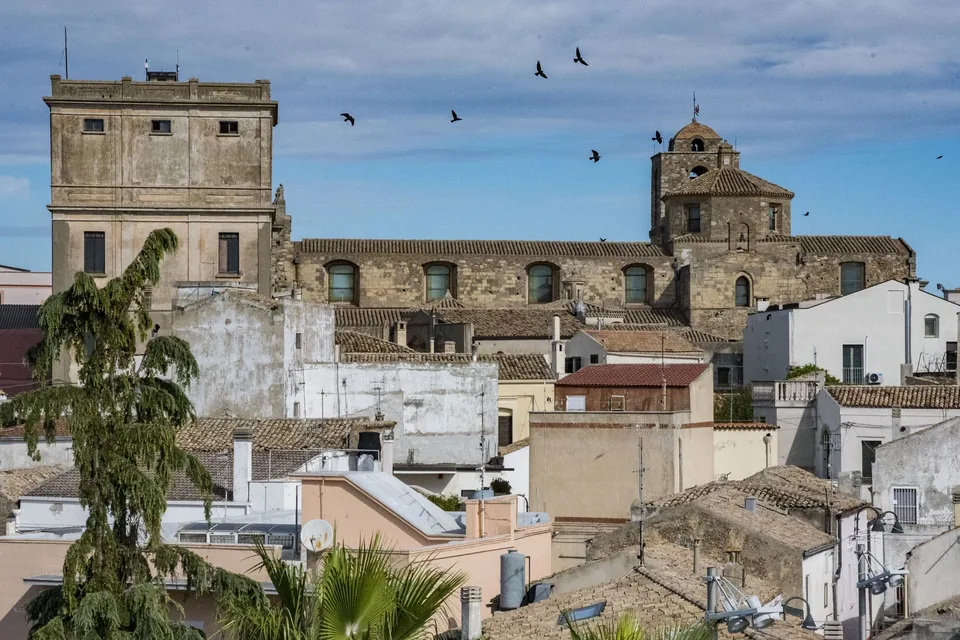
To the north lies Miglionico, with the Malconsiglio castle, where in 1485 the barons of the Kingdom of Naples plotted against Ferdinand I of Aragon, and the church of Santa Maria Maggiore with Cima da Conegliano's great polyptych. Further on is Matera, with the Sassi and rock churches, which Italia.it suggests as the next stop on a route through inland Basilicata.
Heading south-east you reach the Ionian coast and the plain of Metaponto, founded by the Greeks around the eighth century BC, with its archaeological park, museum and beaches. In a few days you can cross Basilicata from clay to sea, passing through some of its most powerful places.
Sources: Italia.it — Basilicata coast to coast · Italia.it — Aliano · Italia.it — Miglionico · Italia.it — Metaponto
Local tourist information
Local tourist offices help with opening times, events and transport on the day.
- Biglietteria e accoglienza del Parco Museale Scenografico di Craco — ex Convento di San Pietro · Ex Convento di San Pietro, Craco Vecchia, 75010 Craco (MT) · +39 346 514 0926 · craco@oltrelartematera.it · Official website
Source: Parco Museale Scenografico di Craco — sito della gestione delle visite · Parco Museale Scenografico di Craco — Passeggiate serali · checked on
Where to stay
In the municipality of Craco the national database of the Ministry of Tourism lists 1 accommodation businesses with a verified CIN code: 0 hotels, 0 other licensed accommodation and 1 other types such as B&Bs and private rentals.
Sources: Ministero del Turismo – Banca Dati Strutture Ricettive (dashboard pubblica), 2026-10-12
YOUR JOURNEY
How to shape a journey here
Journey idea: pair Craco with Matera to compare different destinies of living in stone. Miglionico adds another perspective: an inhabited town with an artistic heritage worth exploring.
Talk to us about it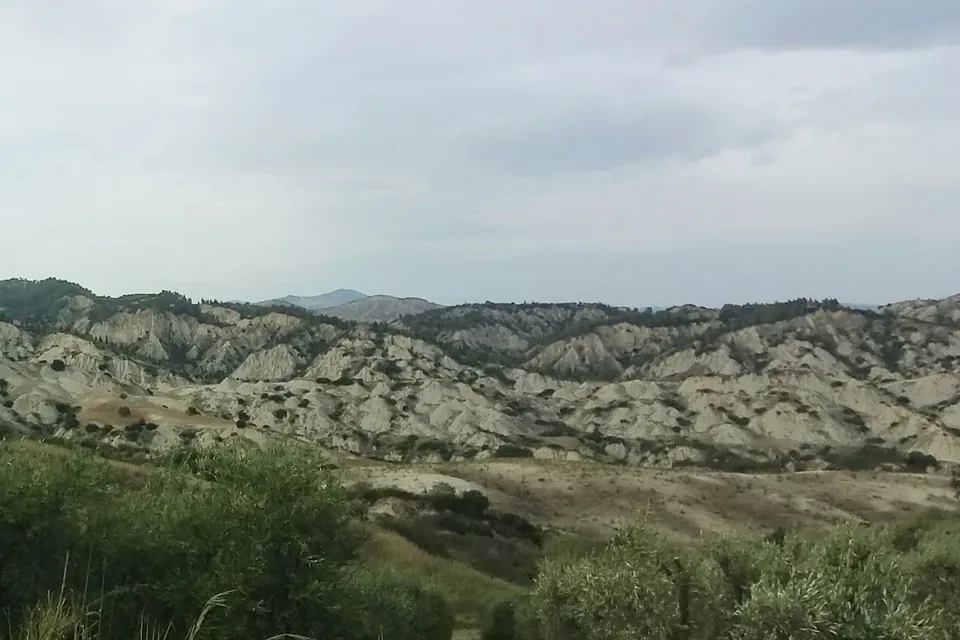

.jpeg)


