
Why go
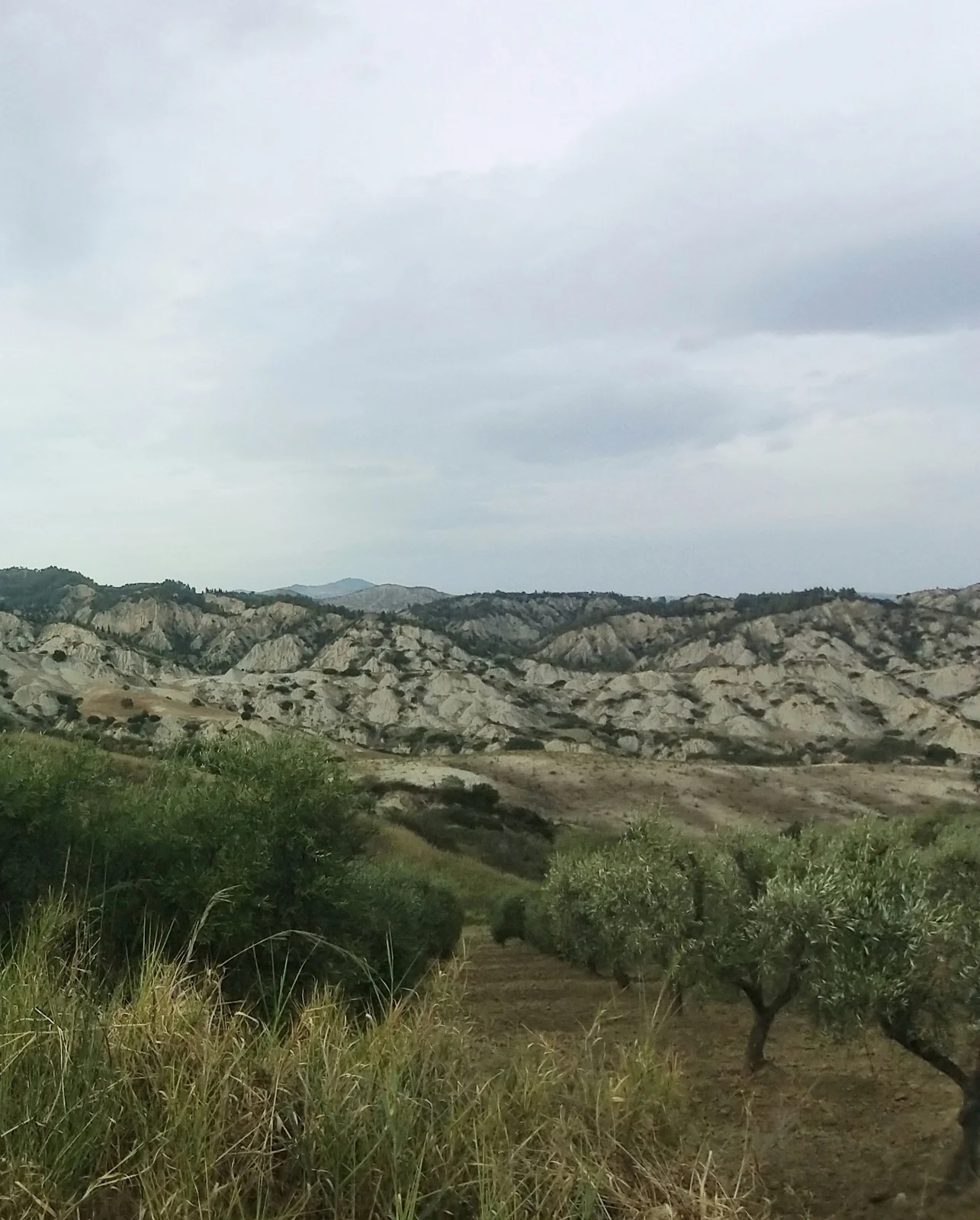
Aliano stands on a ridge of clay in the heart of the Lucanian badlands, the calanchi, a landscape of gullies, pinnacles and bare crests that Italia.it compares to a lunar scene. It is a hilltop village of fewer than a thousand people, with stone houses looking over wide horizons, and holds the Touring Club Italiano's Orange Flag.
Its name is tied to Carlo Levi, the Turin doctor, painter and writer who lived here in political confinement in 1935 and 1936 and who, in his best-known book, Christ Stopped at Eboli, described the village under the name Gagliano. Levi asked to be buried in Aliano's small cemetery. Today the village keeps his house, a gallery of his work, a museum of rural life and a literary park that runs meetings, performances and a prize in his name.
Come to Aliano to read a book and a landscape together: to walk the lanes Levi described, look at the badlands from the viewpoint, visit the museums and sit down to the farmhouse dishes of local tradition.
Sources: Italia.it — Aliano · Italia.it — Basilicata coast to coast · Musei di Aliano (Comune di Aliano) — Aliano · Musei di Aliano (Comune di Aliano) — Carlo Levi
History
The story that made Aliano known worldwide begins in 1935. The Aliano Museums website, run by the municipality, retraces it: Carlo Levi, born in Turin in 1902, a medical graduate at twenty-two and already a painter shown at the Venice Biennale, was among the founders of Giustizia e Libertà. Arrested in May that year, he was sentenced to three years of police confinement and first sent to Grassano; since that town was thought too exposed because of its nearby station, he was moved to Aliano, then almost unreachable for lack of roads.
Levi stayed in Aliano for about eight and a half months in 1935 and 1936, living in close contact with the villagers. The book born of that experience was written in Florence between Christmas 1943 and July 1944 and published in 1945: translated into many languages, it drew public attention to the conditions of rural Basilicata.
Levi returned to painting and writing, was elected senator in 1963 and died in Rome in 1975. He is buried in Aliano. The sixteenth-century church of San Luigi Gonzaga recalls a village history older than his.
Sources: Musei di Aliano (Comune di Aliano) — Carlo Levi · Musei Aliano — Museo della Civiltà Contadina · Italia.it — Aliano
What to see
The visit starts at Carlo Levi's house of confinement, restored with restraint: projections on the white walls show period images of the house, the garden, the dog Barone, the fireplaces and the badlands, and from the terrace you see the landscape Levi painted. In the old olive press below, the Museum of Rural Life, opened in 1987, displays farm tools, crockery, lamps, braziers and harnesses, with a reconstructed bedroom where people and animals slept together, and the horned masks of Carnival.
The Carlo Levi Gallery, in the seventeenth-century Palazzo Morteo, holds letters, documents, drawings and paintings from the years of confinement, together with the original lithographs for Christ Stopped at Eboli that Levi himself gave to the municipality. Palazzo Caporale houses the museum devoted to Paul Russotto, a New York abstract expressionist whose mother came from Aliano.
In the old centre Italia.it points to the church of San Luigi Gonzaga, the house of the evil eye, whose facade looks like a human face, the permanent exhibition in the former town hall and the rebuilt set of the film based on the book. On the walls you come across works by the artists Cyop and Kaf, made during the village's summer festival.
Sources: Musei di Aliano (Comune di Aliano) — Casa di confino Carlo Levi · Musei Aliano — Museo della Civiltà Contadina · Comune di Aliano — Pinacoteca Carlo Levi · Musei di Aliano (Comune di Aliano) — Pinacoteca Carlo Levi · Musei di Aliano (Comune di Aliano) — Museo Paul Russotto · Italia.it — Aliano · Musei di Aliano (Comune di Aliano) — Cyop e Kaf, Confino
Food and wine
Aliano belongs to the Montagna Materana and its village cooking. Italia.it suggests stopping at a trattoria for traditional farmhouse dishes: rascatielli, fresh pasta with hearty sauces, broad beans with chicory, and soup with pecorino cheese dumplings. The Orange Flag listing notes that the old centre has shops selling local produce and restaurants serving traditional food.
Aliano lies within the areas of three Slow Food Presidia. Casiello della Montagna materana is a small round goat's cheese, shaped by hand like a cacioricotta and dry-salted, eaten fresh in summer or aged. Pezzente is a sausage made from the humblest pork cuts, seasoned with Senise pepper, wild fennel and garlic and made in the cold months. Oliva infornata di Ferrandina, from Majatica olives that are scalded, salted and dried, is also produced in Aliano.
The Museum of Rural Life helps explain where these flavours come from: tools for grain and vegetable plots, pans and braziers tell of a cuisine born of necessity and the seasons.
Sources: Italia.it — Basilicata coast to coast · Musei di Aliano (Comune di Aliano) — Aliano · Fondazione Slow Food — Casiello della Montagna materana · Fondazione Slow Food — Pezzente della Montagna materana · Fondazione Slow Food — Oliva infornata di Ferrandina · Musei Aliano — Museo della Civiltà Contadina
Things to do
The badlands are the first experience. The Calanchi Museum, part of the village's museum network, explains them as the result of water eroding clay rock with little plant cover: a phenomenon hard to picture until you stand before the crests and furrows surrounding Aliano. From the village, perched on its ridge, the views open onto very wide horizons, which Italia.it describes as one of the place's strongest features, and walks nearby bring you close to the hollows and pinnacles.
Italia.it describes the Carlo Levi Literary Park as a network of places, objects and events that retrace the writer's exile in the 1930s: besides the house and museums, you can attend open-air theatre. A rewarding way to explore is to bring the book and look for the places it describes, from the square to the lanes dropping towards the badlands.
Lovers of contemporary art can look for the works of Cyop and Kaf in the old centre, small paintings on walls made during the festival, and visit the Paul Russotto museum. Give the village at least a full, unhurried day.
Sources: Musei di Aliano (Comune di Aliano) — Museo dei Calanchi · Italia.it — Aliano · Italia.it — Paesaggi della Basilicata · Musei di Aliano (Comune di Aliano) — Cyop e Kaf, Confino · Musei di Aliano (Comune di Aliano) — Museo Paul Russotto
When to go
Aliano can be visited all year, and each season shows a different side of the village. In winter, Carnival is one of the best-known events: the Orange Flag listing mentions it for its horned masks, which you can also see in the Museum of Rural Life.
In August the village hosts the La luna e i calanchi festival, directed by the writer Franco Arminio: meetings, readings and art projects that over the years have left traces on the walls of the old centre. The national Carlo Levi literary prize draws writers and readers; check the dates of each edition with the municipality and the Literary Park.
Spring and autumn suit those who want to walk around the badlands and enjoy the low light on the clay pinnacles. The museums keep different opening calendars through the seasons, published on the Aliano Museums website, and the municipality says they can also be visited on Mondays by booking: check before you go.
Sources: Musei di Aliano (Comune di Aliano) — Aliano · Musei Aliano — Museo della Civiltà Contadina · Musei di Aliano (Comune di Aliano) — Cyop e Kaf, Confino · Musei di Aliano (Comune di Aliano) — Casa di confino Carlo Levi · Comune di Aliano — Pinacoteca Carlo Levi
Nearby
Aliano sits at the centre of the Lucanian badlands, in the clay heartland of the region. Italia.it suggests including it in a coast-to-coast route: from the Agri valley and Lake Pertusillo you descend into the clay heartland, stop in Aliano and continue to Matera, then reach the Ionian coast and the Metaponto plain.
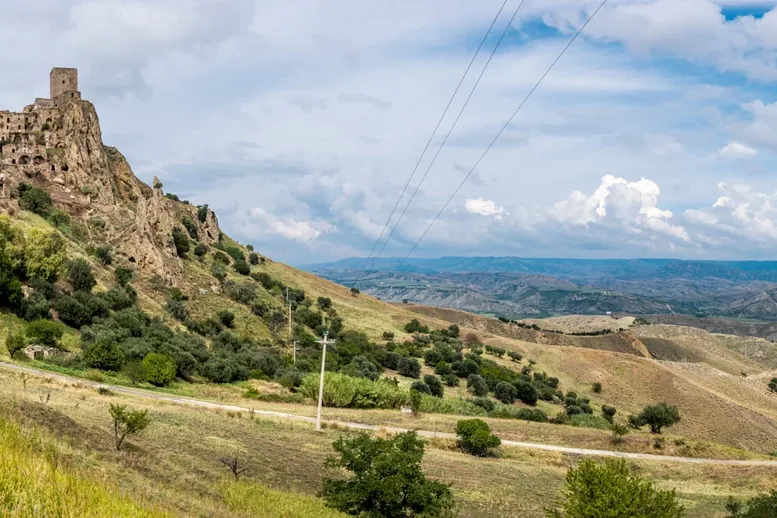
Nearby Craco is one of Basilicata's emblematic places: a village abandoned after the 1963 landslide, perched on a spur above the badlands, with the remains of churches and mansions and a wide view over the valley. Pairing Aliano and Craco on the same day lets you compare two ways of living with clay: an inhabited village that keeps a literary memory and an emptied one that tells of fragile ground.
Matera, with the Sassi and the rock-church park, completes the journey with the city of stone. In the Montagna Materana, Stigliano and the other villages of the Slow Food Presidia are stops for those following goat's cheeses and country cured meats.
Sources: Italia.it — Basilicata coast to coast · Italia.it — Craco · Italia.it — Matera · Fondazione Slow Food — Casiello della Montagna materana
Local tourist information
Local tourist offices help with opening times, events and transport on the day.
- Musei di Aliano — Parco Letterario Carlo Levi (accoglienza visitatori) · Via Collina, 75010 Aliano (MT) · +39 0835 568529 · info@parcolevi.it · Official website
Source: Musei di Aliano (Comune di Aliano) — Museo dei Calanchi · Musei di Aliano (Comune di Aliano) — Aliano · checked on
Where to stay
In the municipality of Aliano the national database of the Ministry of Tourism lists 8 accommodation businesses with a verified CIN code: 0 hotels, 3 other licensed accommodation and 5 other types such as B&Bs and private rentals.
Sources: Ministero del Turismo – Banca Dati Strutture Ricettive (dashboard pubblica), 2026-10-12
YOUR JOURNEY
How to shape a journey here
A cultural stop to pair with Matera and inland towns.
Talk to us about it


.jpeg)