
APULICA / FRUIT, VEGETABLES AND PULSES
Baked olives of Ferrandina
PAT · Slow Food Presidium · Fruit, vegetables and pulses · Basilicata
In brief
- Table olives made only from the majatica cultivar, grown on the clay hills of the Basento valley in the province of Matera. (Fondazione Slow Food — Presidio Oliva infornata di Ferrandina)
- They are briefly scalded in water at 90 °C, dry-salted and then dried on racks in kilns at about 50 °C. (Fondazione Slow Food — Presidio Oliva infornata di Ferrandina)
- The first written records date from the eighteenth century; wood ovens gave way to hot-air dryers from 1910. (Fondazione Slow Food — Presidio Oliva infornata di Ferrandina)
- Harvest runs from November to February and the processed olives last until the next crop. (Fondazione Slow Food — Presidio Oliva infornata di Ferrandina)
History and origin
In Basilicata three areas are historically tied to the olive: the Vulture, the lower Val d'Agri and the Collina Materana. In the latter olives cover over 80% of the farmland, and the most common variety is majatica, which found a welcoming environment on the clay soils of the Basento valley.
The first written records of Ferrandina's baked olives date from the eighteenth century. From 1910 wood-fired ovens were abandoned and gradually replaced by hot-air dryers, first imported from Germany and later built in Naples on the German model. This modernisation allowed producers to trade with neighbouring regions and even with the Americas, where they shipped large quantities of olives.
In recent years output has fallen, because nearly all majatica goes into oil. A Slow Food Presidium was set up to defend this speciality, and the olive is listed among Basilicata's traditional products.
Sources: Fondazione Slow Food — Presidio Oliva infornata di Ferrandina · Masaf — Elenco nazionale dei prodotti agroalimentari tradizionali, XXVI revisione (2026)
Area and method of production
Only one cultivar is allowed for Ferrandina baked olives, majatica, with fairly large fruit and a small stone compared with the flesh: features that suit this process. Harvest runs from November to February, and processing is concentrated from December over the following two months.
The method remains the traditional one, only partly adapted to modern techniques. The olives are blanched for a few minutes in water at 90 degrees, then dry-salted for a short time. Partly dehydrated, they are laid on racks and sent «all'infornata» into the dryers, where the temperature reaches about 50 degrees.
Presidium producers commit to a strict production protocol. The area covers Accettura, Aliano, Cirigliano, Ferrandina, Gorgoglione, Salandra, San Mauro Forte and Stigliano, in the province of Matera.
Sources: Fondazione Slow Food — Presidio Oliva infornata di Ferrandina
How to recognise it
The baked olive is a table olive made only from majatica, with a fairly large fruit and generous flesh around a small stone. The process brings out the fruit's natural savouriness while keeping its sweetness, the hallmark of this variety.
The name itself tells the method: the olives once really went into wood-fired ovens, today into hot-air dryers, but the result is still a dry olive that is savoury and sweet at the same time.
Once processed, the olives keep for a long time and can be eaten until the next harvest. The product is listed among Lucanian traditional products as «Oliva da forno di Ferrandina».
Sources: Fondazione Slow Food — Presidio Oliva infornata di Ferrandina · Masaf — Elenco nazionale dei prodotti agroalimentari tradizionali, XXVI revisione (2026)
In the kitchen
Baked olives are excellent on their own, dressed with extra virgin olive oil, ideally also from majatica, chopped fresh garlic and grated orange and lemon zest: a simple starter that highlights their balance of savouriness and sweetness.
They go very well with Lucanian cured meats and aged pecorino cheeses, and also find a place in more elaborate dishes. The Presidium profile mentions orange salad, yellow pumpkin soup and stewed salt cod, dishes in which the olive adds its note, savoury and sweet at once.
Since they keep until the next harvest, they are a pantry ingredient that accompanies home cooking all year round.
Sources: Fondazione Slow Food — Presidio Oliva infornata di Ferrandina
Where to taste it
The emblematic place is Ferrandina, in the Collina Materana, on the clay hills of the Basento valley. The Presidium area, however, also includes seven other municipalities in the province of Matera: Accettura, Aliano, Cirigliano, Gorgoglione, Salandra, San Mauro Forte and Stigliano.
Processing runs from December over the following two months, when the tradition is most alive; the finished olives can then be eaten until the next harvest.
A trip through these villages, from Ferrandina to Aliano and Accettura, crosses one of Basilicata's most distinctive olive landscapes and offers the chance to taste a product that reflects the patient work of its few remaining producers.
Sources: Fondazione Slow Food — Presidio Oliva infornata di Ferrandina
Protection
- Traditional agri-food product (PAT) — Basilicata, n. 105, 26th revision (Masaf — Elenco nazionale dei prodotti agroalimentari tradizionali, XXVI revisione (2026))
- Slow Food Presidium — oliva-infornata-di-ferrandina (Fondazione Slow Food — Presidio Oliva infornata di Ferrandina)
When
- Harvest: January–February, November–December (Fondazione Slow Food — Presidio Oliva infornata di Ferrandina)
- Winter
- Autumn
Where
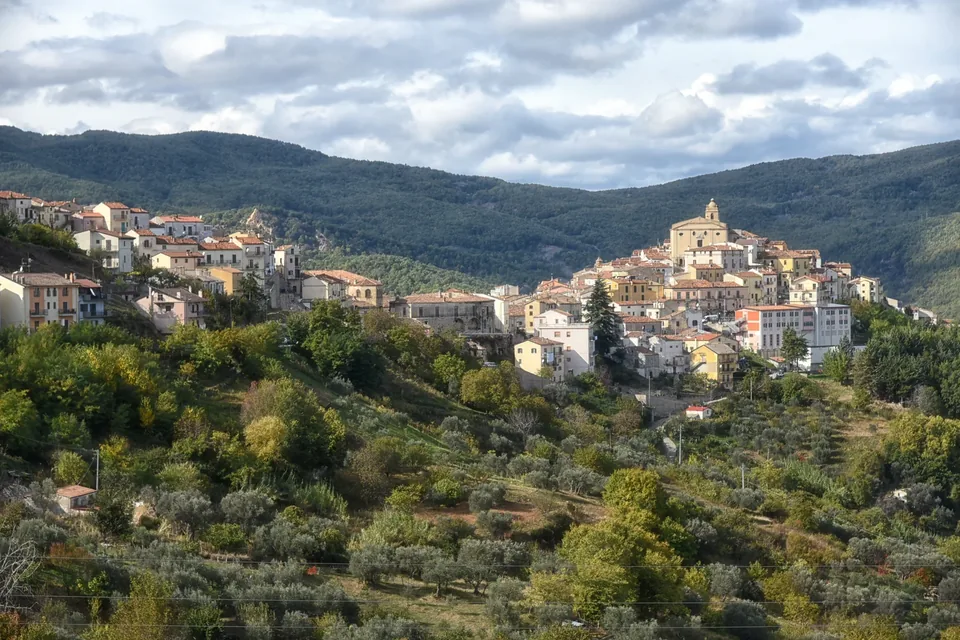
Accettura
Accettura: town and tree rituals.
Read the guide →Photo: Anna Nicoletta Menzella / Wikimedia Commons — CC BY-SA 4.0 · Resized and converted to WebP.

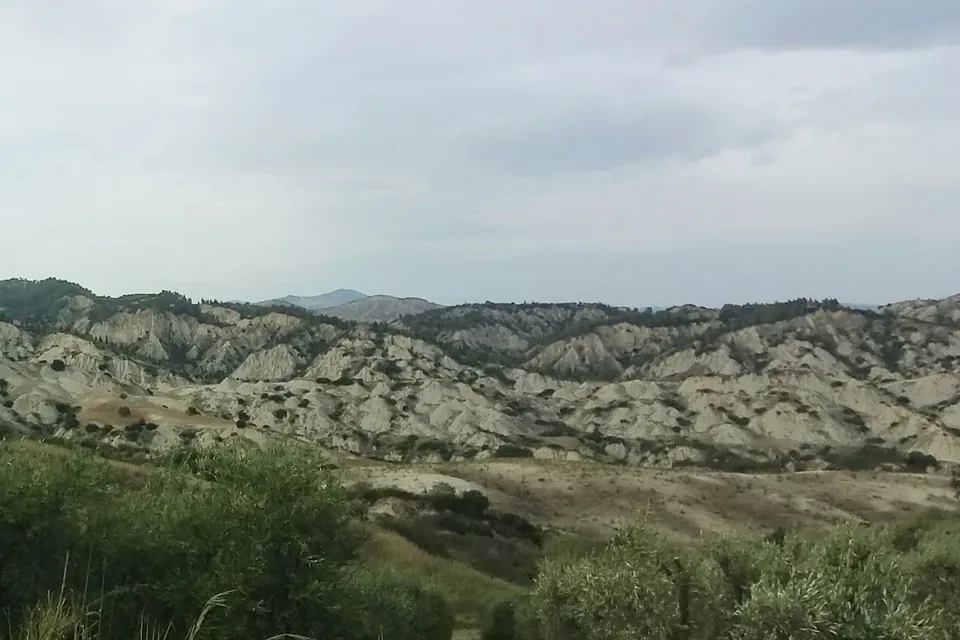
Aliano
A town to read through literature and landscape.
Read the guide →Photo: DinaBenedettoFerrandina / Wikimedia Commons — CC BY-SA 4.0 · Resized and converted to WebP.
