
APULICA / CHEESES
Casiello of the Montagna Materana
Slow Food Presidium · Cheeses · Basilicata
In brief
- A small round goat's cheese of 300-600 grams, typical of the Montagna Materana and above all of Stigliano. (Fondazione Slow Food — Presidio Casiello della montagna materana)
- It is a cacioricotta: milk from local goat breeds is heated to 90 °C before renneting, so the curd also keeps the whey proteins. (Fondazione Slow Food — Presidio Casiello della montagna materana)
- The curd is shaped by hand into fist-sized balls, dry-salted. (Fondazione Slow Food — Presidio Casiello della montagna materana)
- Fresh it is found from June to September, eaten with tomato salad; aged it is grated over cavatelli. (Fondazione Slow Food — Presidio Casiello della montagna materana)
History and origin
Casiello is the goat's cheese of the Montagna materana, and above all of Stigliano. In this hill and mountain country, poorly suited to intensive farming, raising goats, often alongside sheep, has always been a way to keep the land alive.
Its technique has a practical reason. The milk is brought to a very high temperature before curdling: in a time without refrigerators this made the cheese safer and easier to keep, and helped prevent diseases that could once be passed on through milk, such as brucellosis and Malta fever.
Today casiello is vulnerable. Goat farming is declining, milk is scarce and concentrated in summer, and above all the skills lie with a few elderly cheesemakers. The Slow Food Presidium, supported by Slow Food Basilicata, aims to pass this knowledge on to younger generations before it is lost.
Sources: Fondazione Slow Food — Presidio Casiello della montagna materana
Area and method of production
The Presidium area covers Accettura, Aliano, Cirigliano, Gorgoglione and Stigliano, in the province of Matera. The goats, of local breeds such as Garganica, Jonica, Maltese and Derivata di Siria, live semi-wild in the hills and mountains and feed mainly on wild herbs, which pass their aromas to the milk.
Whole goat's milk is used and the work is still done by hand. The evening milk is filtered, heated to 90 degrees and kept cool; in the morning it is added to the fresh milk and left to settle at 37-38 degrees. Rennet goes in and the milk sets in 35 to 40 minutes.
The curd is broken into fine grains, worked by hand and shaped into balls the size of a fist, the paddon. Within twenty-four hours the cheeses are dry-salted and rest for one or two days before ageing.
Sources: Fondazione Slow Food — Presidio Casiello della montagna materana
How to recognise it
It is a small, round cheese, 8 to 10 centimetres in diameter and height, weighing between 300 and 600 grams. Fresh, the paste is soft, semi-firm and ivory white; the thin rind hardens with age and turns between straw yellow and ochre.
Technically, casiello belongs to the cacioricotta family. It is an unusual method: because the milk is heated before rennet is added, the curd holds both the casein and the whey proteins that usually end up in ricotta.
Fresh casiello is available from June to September, since production follows the natural cycle of the goats, which give birth in spring and yield plenty of milk all summer.
Sources: Fondazione Slow Food — Presidio Casiello della montagna materana
In the kitchen
Fresh casiello is traditionally eaten with tomatoes, in a salad: a simple summer dish that follows the season of goat's milk.
Aged, it becomes a grating cheese that enriches many dishes. The classic pairing is homemade cavatelli with fresh tomato sauce and basil, to which casiello adds flavour and fragrance.
Casiello's flavour owes much to grazing: the semi-wild goats feed on wild herbs, which pass their aromas to the milk and so to the cheese, fresh or aged.
Sources: Fondazione Slow Food — Presidio Casiello della montagna materana
Where to taste it
Casiello is found in the villages of the Montagna materana: Stigliano, its main centre, and then Accettura, Aliano, Cirigliano and Gorgoglione. These are hill and mountain villages inland in the province of Matera, where goat and sheep farming is still part of the landscape.
The best time is summer, from June to September, when fresh casiello is available; aged cheeses last longer. The Presidium brings together a small group of cheesemakers, some of them with newer, better-organised farms.
Visitors to Accettura or Aliano can pair these landscapes with a taste of casiello and tomato, or cavatelli dressed with the grated cheese.
Sources: Fondazione Slow Food — Presidio Casiello della montagna materana
Protection
- Slow Food Presidium — casiello-della-montagna-materana (Fondazione Slow Food — Presidio Casiello della montagna materana)
When
- Production: June–September (Fondazione Slow Food — Presidio Casiello della montagna materana)
- Summer
- Autumn
Where
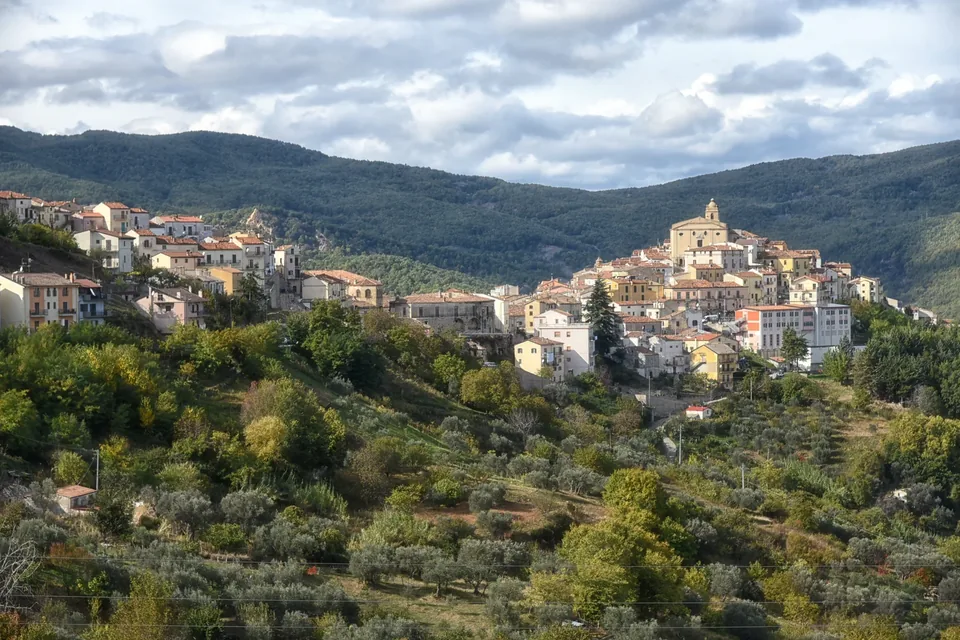
Accettura
Accettura: town and tree rituals.
Read the guide →Photo: Anna Nicoletta Menzella / Wikimedia Commons — CC BY-SA 4.0 · Resized and converted to WebP.

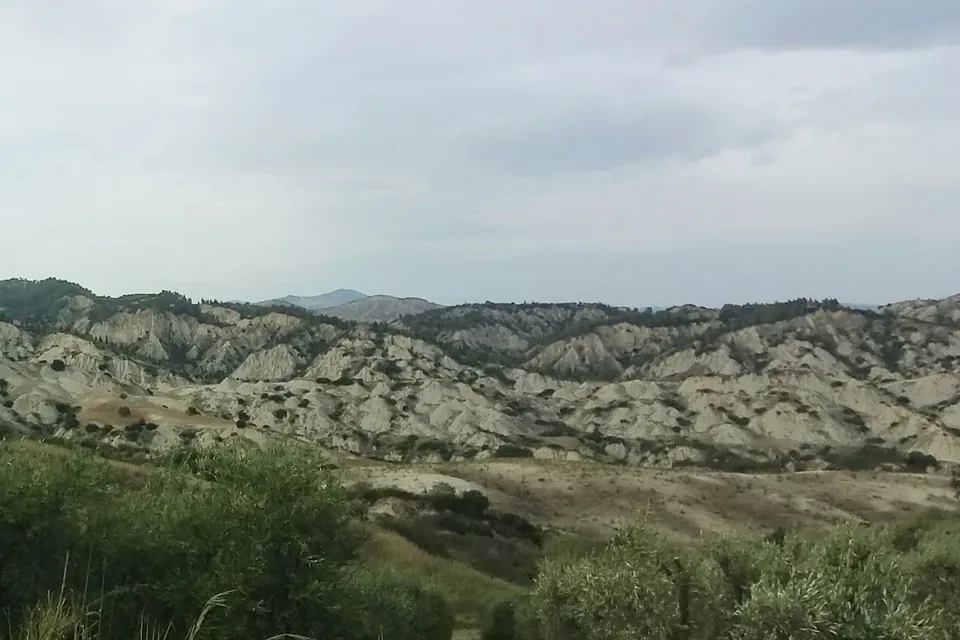
Aliano
A town to read through literature and landscape.
Read the guide →Photo: DinaBenedettoFerrandina / Wikimedia Commons — CC BY-SA 4.0 · Resized and converted to WebP.
