
APULICA / FRUIT, VEGETABLES AND PULSES
Altamura lentil
PGI · Fruit, vegetables and pulses · Puglia, Basilicata
In brief
- A dried lentil of the Laird and Eston varieties, with round, flat seeds ranging from green to brown. (Qualigeo (Fondazione Qualivita) — Lenticchia di Altamura IGP)
- The area joins Murgia towns in Puglia, such as Altamura, Gravina and Andria, with towns in Basilicata, including Matera, Irsina and Palazzo San Gervasio. (Qualigeo (Fondazione Qualivita) — Lenticchia di Altamura IGP)
- It is sown between November and March and may not follow another legume in the rotation. (Qualigeo (Fondazione Qualivita) — Lenticchia di Altamura IGP)
- Nearly gone by the 1970s, the crop was revived in the early 2000s. (Qualigeo (Fondazione Qualivita) — Lenticchia di Altamura IGP)
History and origin
For generations the lentil was a product of the family farm economy of the Murgia and the pre-Murgia trough, between Puglia and Basilicata. The turning point came in the 1930s, when some Altamura merchants began to export it: within a few years the Altamura lentil reached national markets and then England, Germany, the United States, Canada and Australia. The ecotypes of the time gave a mixed product, and it was up to the merchants to select and grade it by diameter.
Around the 1970s the crop almost vanished, because of rural depopulation, lack of mechanisation, cheap imports and the spread of wheat monoculture. The revival began in the early 2000s, when farmers returned to using the lentil in their rotations: the plant fixes nitrogen in the soil to the benefit of the following year's crop, and harvesting can be mechanised.
It was listed among the traditional food products in 2007; in 2014 a group of fifty farmers joined forces to seek PGI status, which was granted in December 2017. Since 2019 a protection consortium based in Altamura has promoted and safeguarded it.
Sources: Consorzio di tutela Lenticchia di Altamura IGP — La lenticchia di Altamura I.G.P. · Qualigeo (Fondazione Qualivita) — Lenticchia di Altamura IGP · eAmbrosia — Lenticchia di Altamura (PGI-IT-02204)
Area and method of production
The production area joins the Apulian Murgia and the neighbouring Lucanian lands. In Puglia it includes Altamura, Ruvo di Puglia, Corato, Poggiorsini, Gravina in Puglia, Cassano delle Murge and Santeramo in Colle in the province of Bari, and Andria, Minervino Murge and Spinazzola in the province of Barletta-Andria-Trani; in Basilicata Montemilone, Palazzo San Gervasio, Genzano di Lucania, Banzi, Forenza and Tolve in the province of Potenza, and Irsina, Tricarico and Matera. Many fields lie within the Alta Murgia National Park, a plateau of pastures, farmland and dry-stone walls.
The designation covers the dried lentil of the Laird and Eston varieties. A basic rule of the specification is that the lentil may not follow another legume in the rotation. Sowing takes place between November and March, depending on the setting and the growing method.
After harvest the crop is treated against pests within twenty-four hours and cleaned of foreign matter; it then undergoes optical sorting to make the seeds uniform, and removal of any metal. Every stage, from seed to packing, must take place within the area of origin.
Sources: Qualigeo (Fondazione Qualivita) — Lenticchia di Altamura IGP · Consorzio di tutela Lenticchia di Altamura IGP — La lenticchia di Altamura I.G.P. · Parco Nazionale dell'Alta Murgia — L'Alta Murgia
How to recognise it
The Altamura lentil has round, flat seeds and stands out first of all for its size: 5 to 7 millimetres for Laird, the large lentil, and 3 to 4.9 millimetres for Eston, the small one. Its colour ranges through shades of green to shades of brown, depending also on how ripe it was at harvest.
The flavour is sweeter than that of other lentils, with herbaceous and aromatic notes. The consortium stresses its excellent texture and high iron and protein content, which it attributes to the soil of the production area; it is also rich in fibre and minerals and low in fat.
It is sold in packs of up to ten kilos, while larger sacks are used for wholesale. Kept in a cool, dry place, it lasts a long time. Being larger than many other lentils has a practical consequence: it needs somewhat longer soaking and cooking.
Sources: Qualigeo (Fondazione Qualivita) — Lenticchia di Altamura IGP · Consorzio di tutela Lenticchia di Altamura IGP — La lenticchia di Altamura I.G.P.
In the kitchen
Precisely because it is larger than other lentils and needs somewhat longer soaking and cooking, the Altamura lentil is particularly suited to soups, minestrone and broths. The traditional dish that best represents it is lentil soup with sausage and croutons of Pane di Altamura PDO, a meeting of two designated products from the same town.
It is also excellent as a side dish, in salads or alongside meat and fish: a drizzle of oil and a little oregano are enough, or a tomato sauce scented with bay leaf.
The consortium collects recipes ranging from tradition to newer interpretations: mixed pulse minestrone, pulse soup with turnip tops, tagliolina with lentils, bread croutons and crisp guanciale, bruschetta with tomatoes and rocket, lentil patties, a salad with tuna, and lentils for New Year's Eve. They are a good starting point for anyone taking a pack home after a trip to the Murgia.
Sources: Qualigeo (Fondazione Qualivita) — Lenticchia di Altamura IGP · Consorzio di tutela Lenticchia di Altamura IGP — Ricette
Where to taste it
The lentil is to be found in the towns of the Murgia and the pre-Murgia trough, around Altamura, Gravina in Puglia, Santeramo in Colle, Andria and, across the regional border, Matera and Palazzo San Gervasio. Altamura, which gives it its name, is the natural starting point: a town of old palaces, churches and cloisters, with the cathedral of Santa Maria Assunta, Romanesque with Gothic touches, and famous for its bread baked in wood-fired ovens, the first baked product in Europe to receive PDO status. In the nearby countryside the Altamura Man was found, a Palaeolithic skeleton preserved in a karst cave.
Since 2018 the protection consortium has organised the Sagra della Lenticchia di Altamura IGP, designed to showcase the agricultural, culinary and cultural heritage of the production area.
The landscape is part of the journey: a limestone plateau of dry-stone walls, fortified farmsteads and rock churches, largely protected by the Alta Murgia National Park, where among the fields of cereals and pulses one also finds dinosaur footprints and Castel del Monte.
Sources: Qualigeo (Fondazione Qualivita) — Lenticchia di Altamura IGP · Italia.it (Ministero del Turismo) — Altamura · Consorzio di tutela Lenticchia di Altamura IGP — Il territorio · Parco Nazionale dell'Alta Murgia — L'Alta Murgia
Protection
- Protected geographical indication (PGI) — PGI-IT-02204 (eAmbrosia — Lenticchia di Altamura (PGI-IT-02204))
When
- The sources consulted give no months.
Where
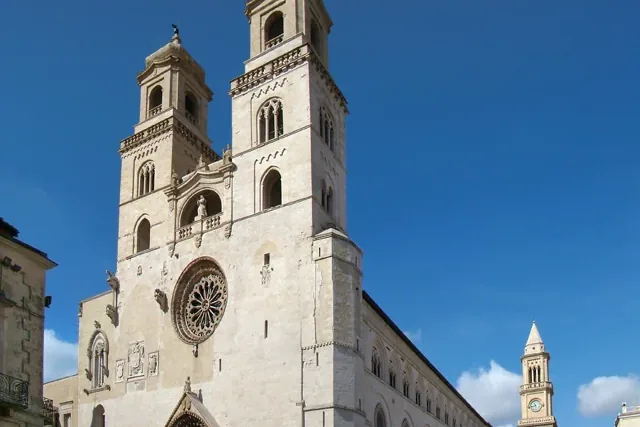
Altamura
Bread culture, the old town and the Murgia landscape as the starting point for a journey.
Read the guide →Photo: Tango7174 / Wikimedia Commons — CC BY-SA 4.0 · Resized and converted to WebP.

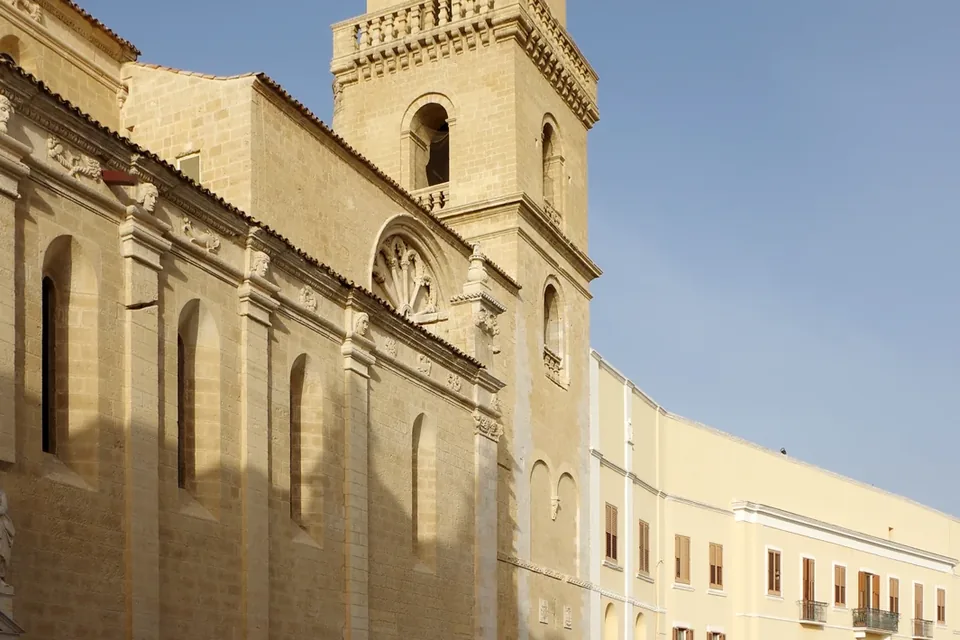
Gravina in Puglia
Rock-cut neighbourhoods, pastoral history and the relationship between town and landscape.
Read the guide →Photo: Berthold Werner / Wikimedia Commons — CC BY-SA 3.0 · Resized and converted to WebP.

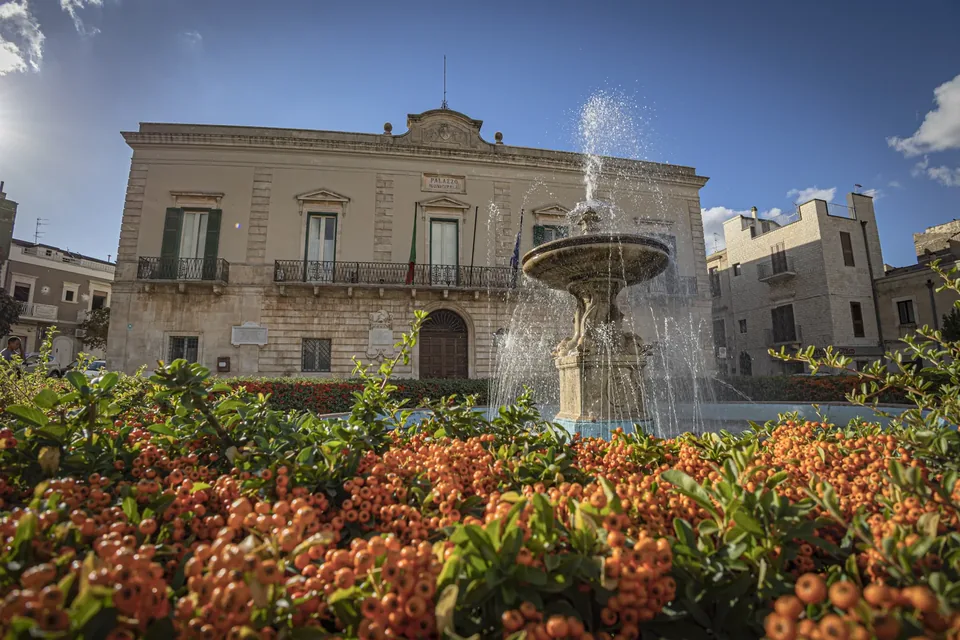
Santeramo in Colle
Santeramo in Colle: details of the inhabited Murgia.
Read the guide →Photo: G.ppe Davide Procacci / Wikimedia Commons — CC BY-SA 4.0 · Resized and converted to WebP.

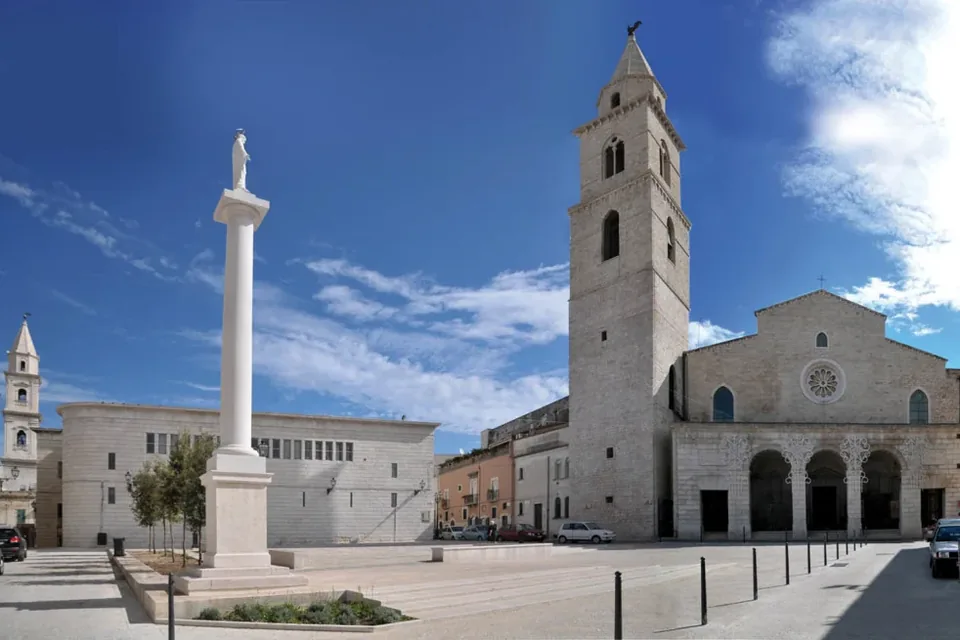
Andria
A town worth exploring beyond its famous castle.
Read the guide →Photo: Marcoleo11 / Wikimedia Commons — CC BY-SA 4.0 · Resized and converted to WebP.

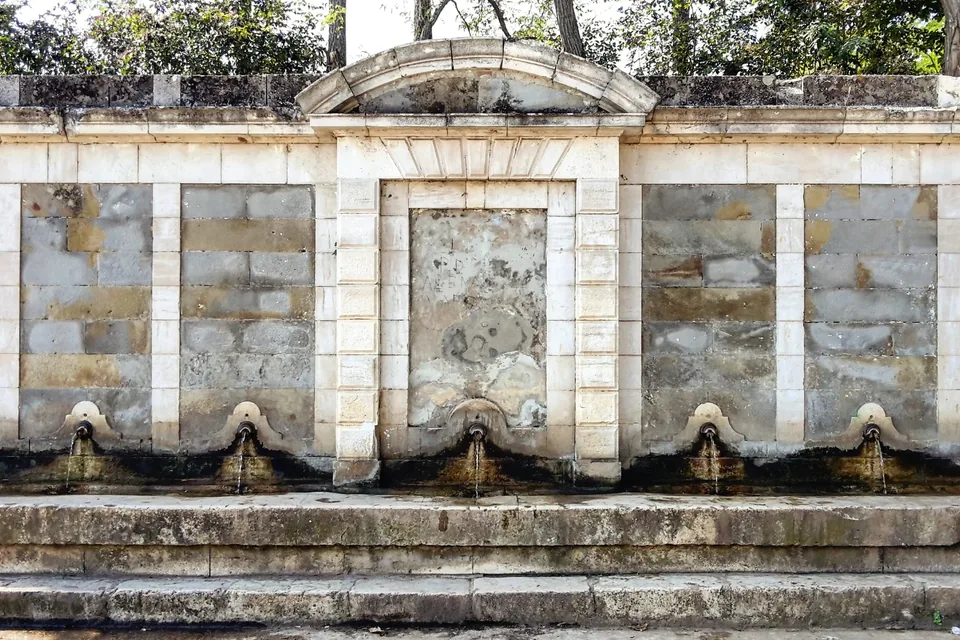
Palazzo San Gervasio
Palazzo San Gervasio: a collection in a small town.
Read the guide →Photo: Fuoco Fatuo / Wikimedia Commons — CC0 · Resized and converted to WebP.


Matera
The Sassi, Murgia and local bread: explore a city through architecture, nature and everyday life.
Read the guide →Photo: Velvet / Wikimedia Commons — CC BY-SA 4.0 · Resized and converted to WebP.

Read more
Lenticchia di Altamura PGI
A PGI since 2017 in nineteen towns of the Bari and Matera Murgia: large green varieties, winter sowing, iron-rich limestone soils, Altamura bread and lentil soup.
Read the guide →