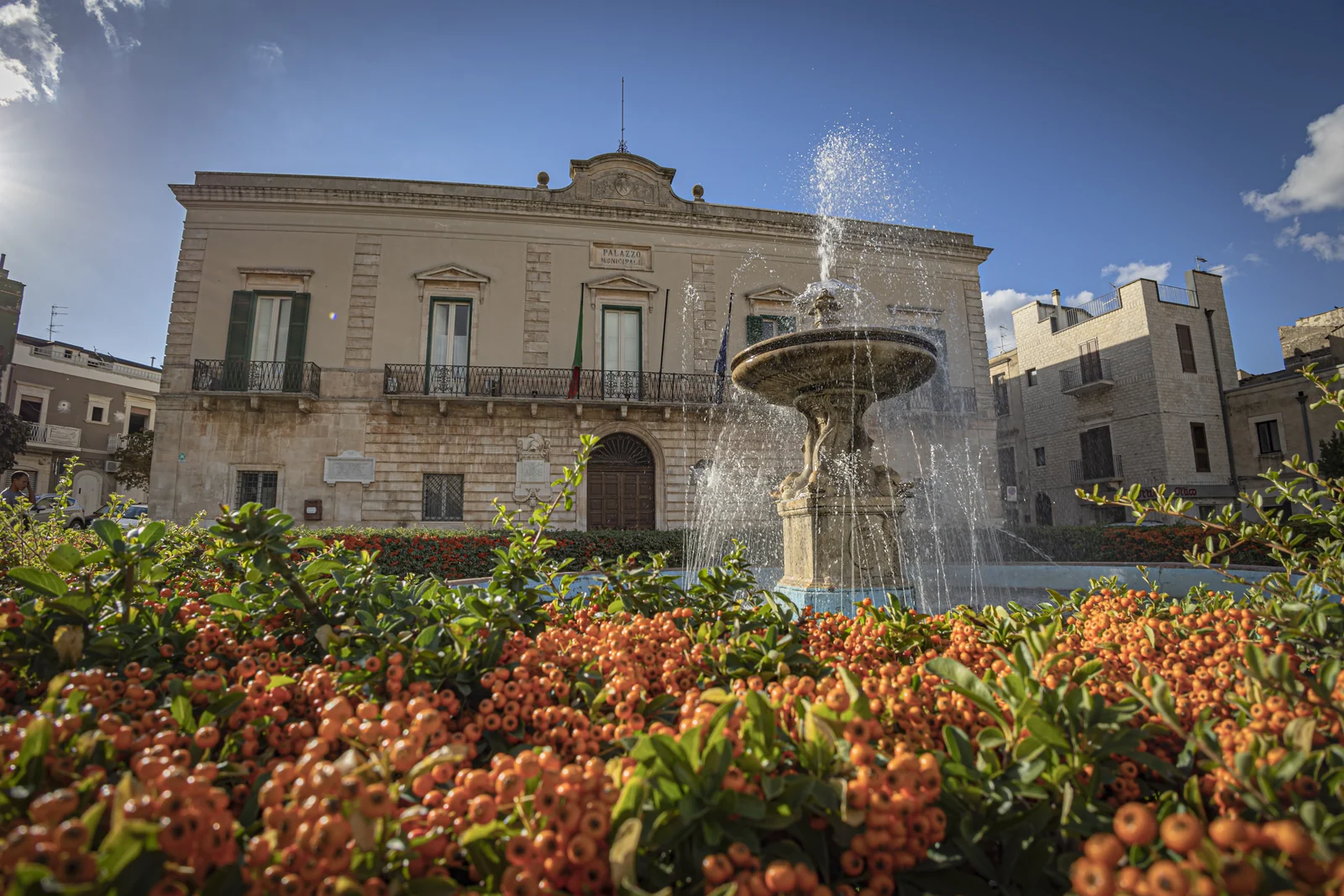
Why go
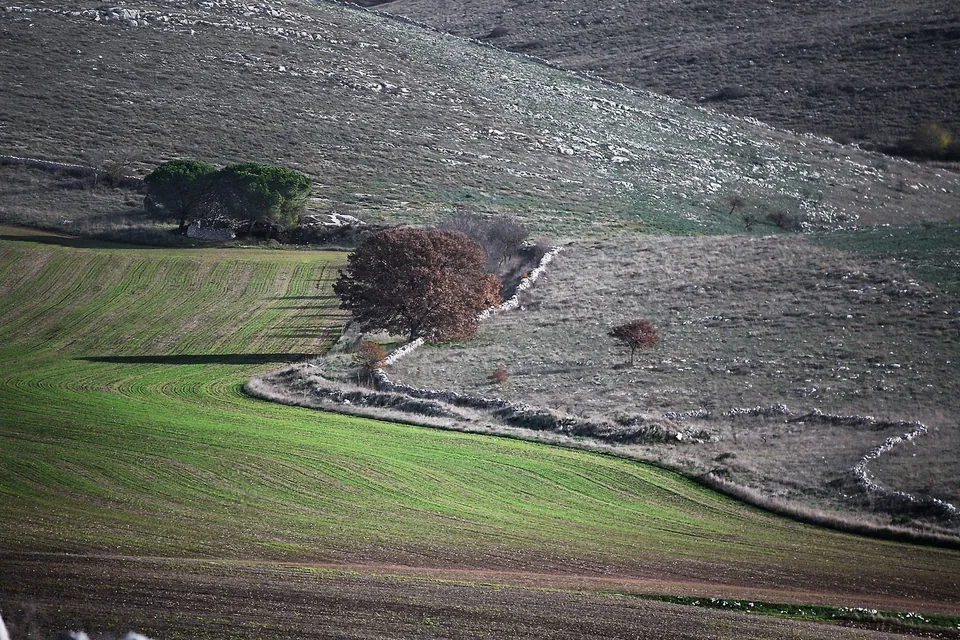
Santeramo in Colle stands on the highest step of the Murgia plateau, where the provinces of Bari, Taranto and Matera meet. The regional tourism portal describes it as a town with a medieval soul, surrounded by woods and by a landscape of pasture and cropland bearing traces of very ancient settlements.
There are three reasons to stop. The first is the table: Santeramo is known as the home of horse and donkey meat, eaten at the 'fornelli', grill rooms attached to butcher's shops where you choose the meat at the counter and it is cooked on the spot. The second is the landscape: the Gravinella and Parata woods are, according to the Region, a green lung ideal for birdwatching, frequented by the lesser kestrel. The third is walking: Santeramo is a stage of the Via Peuceta, the footpath that crosses the Murgia to Altamura and Matera.
To these can be added a link with nineteenth-century painting: Francesco Netti was born here and drew the subjects of his harvesters cycle from the Santeramo countryside. It is a stop for slow travellers who enjoy lesser-known places.
Sources: Viaggiare in Puglia, Regione Puglia — Santeramo in Colle · Cammino Materano — tappa Santeramo–Altamura · Comune di Santeramo — Francesco Netti
History
The regional portal notes that the territory keeps traces of prehistoric and protohistoric settlements, with vessels, coins, weapons and everyday objects, and remains of the ancient Appian Way fading into the fields. The Ministry's general catalogue of cultural heritage records for the historic centre the historical names Sancti Erasmi, in 1269, and Castrum Sancti Herasmi, in 1374: the town's name is tied to Saint Erasmus, still its patron.
In the historic centre the regional portal points to the remains of a Benedictine monastery and the Romanesque church of the Carmine. The Palazzo Marchesale was built in 1576 by Marquis Ottavio Caracciolo, as the inscription on its façade overlooking piazza Garibaldi records; the regional cultural heritage map describes a square plan around a courtyard, with oven, storerooms and stables on the lower levels and reception rooms above.
In the nineteenth century Santeramo was the birthplace of Francesco Netti, born on 24 December 1832 and died on 28 August 1894. The municipality recalls his training in Naples, Rome and France, his work as an art critic and the harvesters cycle of 1890-1894, inspired by the countryside of his home town.
Sources: Viaggiare in Puglia, Regione Puglia — Santeramo in Colle · Santeramo in Colle — fonte istituzionale · Viaggiare in Puglia, Regione Puglia — Palazzo Marchesale di Santeramo in Colle · Carta dei beni culturali della Regione Puglia — Palazzo Marchesale · Comune di Santeramo — Francesco Netti
What to see
The Palazzo Marchesale, on piazza Garibaldi, is the town's most important civic building. It keeps its original structure with sixteenth-century rustication; the façade on largo Piazzola has a large doorway with alternating flat and diamond-point ashlar, and at the back opens the Cavallerizza courtyard, so called because horses passed through and rested there. The regional portal notes that the building, on four levels and about a thousand square metres, opens to the public during cultural events promoted by the municipality.
In the historic centre look for the Romanesque church of the Carmine and the remains of the Benedictine monastery. In via Sant'Eligio, the municipality points to Palazzo Netti, once owned by the painter's family and now private, which keeps its façade, staircase and small tower; on the steps of the town hall stands the bronze bust of Netti by the sculptor Filippo Cifariello.
The cultural heritage catalogue lists among the town's works a baptismal font with Christ among the apostles, from the second half of the thirteenth century, and an altarpiece of the Adoration of the Child from the last quarter of the sixteenth century.
Sources: Viaggiare in Puglia, Regione Puglia — Palazzo Marchesale di Santeramo in Colle · Viaggiare in Puglia, Regione Puglia — Santeramo in Colle · Comune di Santeramo — Francesco Netti · Santeramo in Colle — fonte istituzionale
Food and wine
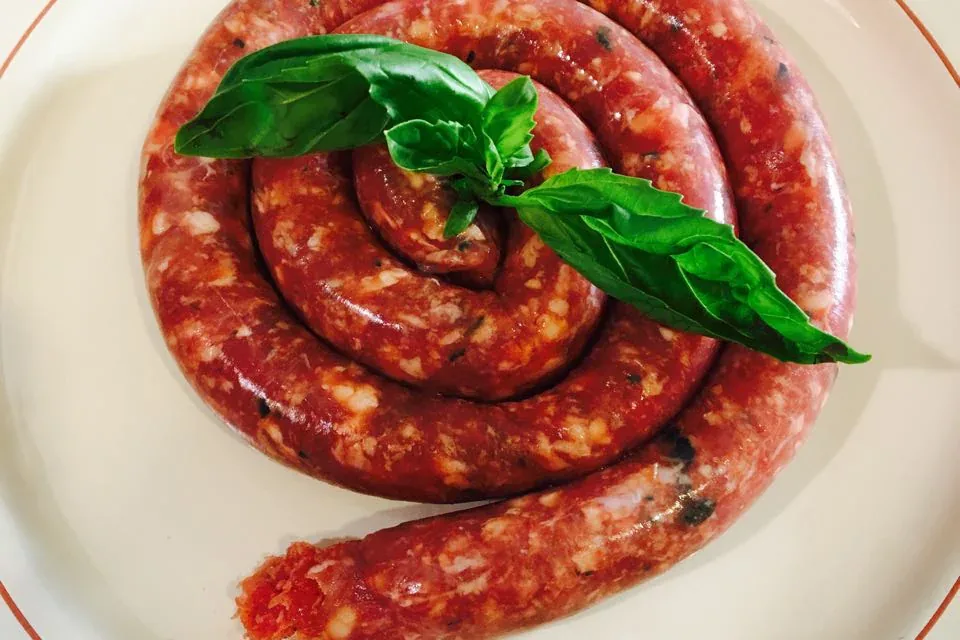
The regional portal calls Santeramo the right place for meat lovers: it is the home of horse and donkey meat, eaten at the many town 'fornelli', grill rooms attached to butcher's shops. The meat is prepared traditionally as meat loaves, carpaccio, braciole and rolls, served with seasonal vegetables or roast potatoes and onions; patron saint feasts are the occasion to try it.
As identified references we mention Antica Macelleria Lassandro, at via Roma 28, which presents its fornello as a way to eat the butcher's meat on site, and I Giardini della Carne, which describes wood-fired cooking and horse, beef, pork and lamb. These are editorial mentions, not suppliers contracted by Apulica; it is best to choose a few meats and ask about the cut.
Pulses also come from the Murgia fields: the black chickpea of the karst Murgia, a Slow Food Presidium, is a small wrinkled ecotype grown around Acquaviva delle Fonti, Cassano delle Murge and Santeramo; Lenticchia di Altamura PGI includes Santeramo in its production area.
Sources: Viaggiare in Puglia, Regione Puglia — Santeramo in Colle · Fondazione Slow Food — Cece nero della Murgia carsica · Commissione europea, eAmbrosia — Lenticchia di Altamura IGP · Antica Macelleria Lassandro — fornello e contatti · I Giardini della Carne — macelleria e fornello pronto
Things to do
Santeramo is a good starting point for walking. The official Via Peuceta guide describes the stage from Cassano delle Murge to Santeramo, which crosses the Mesola wood, with downy oak, Macedonian oak, holm oak and Aleppo pine, and reaches the town through the Galietti pine wood; the next stage, from Santeramo to Altamura, crosses rural districts and enters the heart of the Alta Murgia, a steppe habitat rich in endemic species and birds. About six kilometres from Santeramo the route passes the Sant'Angelo cave, one of the most important places of worship of Saint Michael in ancient Apulia, and from Fornello it follows a medieval cart road to Altamura.
The regional portal points to the Gravinella and Parata woods as ideal for birdwatching, with the lesser kestrel, a raptor of steppe habitats. These are outings for those who love nature and quiet.
In town, a walk between the Palazzo Marchesale, the Carmine church and the places linked to Netti connects architecture and painting; at the table, an evening at a fornello ends the day. The regional portal also mentions cycling routes nearby.
Sources: Cammino Materano — tappa Santeramo–Altamura · Viaggiare in Puglia, Regione Puglia — Santeramo in Colle · Viaggiare in Puglia, Regione Puglia — Palazzo Marchesale di Santeramo in Colle · Comune di Santeramo — Francesco Netti
When to go
The most heartfelt feast is that of Saint Erasmus, on 2 June. The regional portal describes it as a step back in time, with the village fair, travelling bands, the procession with the saint's gilded effigy and the descent of the Triumphal Cart, preceded by a cavalcade in period costume; patron saint feasts are when people eat horse and donkey meat.
For walking the Via Peuceta the best seasons are spring and autumn: the official guide notes that the pilgrims' lodging at the masseria in the Galietti pine wood is open in autumn, spring and summer. Spring also brings the blooms of the Murgia steppe, with wild orchids, lichens and the 'fairy linen' mentioned in the guide.
Summer is hot on the plateau and it is best to walk early in the morning; winter is the quietest season, suited to a visit of the town and a dinner at a fornello. The Palazzo Marchesale can be visited during the municipality's cultural events, to be checked each time.
Sources: Viaggiare in Puglia, Regione Puglia — Santeramo in Colle · Cammino Materano — tappa Santeramo–Altamura · Viaggiare in Puglia, Regione Puglia — Palazzo Marchesale di Santeramo in Colle
Getting there and around
The regional tourism portal states that Santeramo in Colle station mainly serves nearby towns; for long journeys beyond the province or the region it is best to go to Bari station. Urban bus lines run in town, while intercity links are operated by the COTRAP consortium.
The reference airport is Bari, managed by Aeroporti di Puglia; for the transfer the regional portal suggests private services, as well as the bus links to and from the airport listed by the airport company.
The historic centre is visited on foot. For the woods, the masserie and stretches of the Via Peuceta you need your own or a hired vehicle or, for walkers, stages planned with the route's official guide. Santeramo is also well placed for reaching Altamura, Gioia del Colle and Matera, each a short distance away in a different direction.
Sources: Viaggiare in Puglia, Regione Puglia — Santeramo in Colle · Aeroporti di Puglia — Aeroporto di Bari · Cammino Materano — tappa Santeramo–Altamura
Where to stay
Walkers on the Via Peuceta will find, according to the official guide, lodging dedicated to pilgrims: about three kilometres from town, a masseria in the Galietti pine wood offers dormitory places or tent pitches, with toilets and showers and payment by voluntary contribution, and in town some bed and breakfasts are listed as stage stops. These are simple options designed for those travelling on foot.
For a conventional stay we mention as an identified reference Hotel Murgia, at via Iazzitiello 69, with rooms and a restaurant. Its website, checked on 6 October 2026, advertised double rooms from €88 per night: this is a published starting rate, not an Apulica quote, and dates, availability and conditions must be defined for the actual request.
Alternatively you can stay in a nearby town such as Altamura or Gioia del Colle and give Santeramo a full day of town, woods and table, without multiplying transfers.
Sources: Cammino Materano — tappa Santeramo–Altamura · Hotel Murgia — camere, tariffa iniziale e contatti
Nearby
Santeramo sits at the centre of a triangle of different destinations. Altamura, the last stage of the Via Peuceta from here, offers the cathedral commissioned by Frederick II, its DOP bread and the National Archaeological Museum with the Altamura Man. Gioia del Colle brings its Norman-Swabian castle and mozzarella; the regional portal places Santeramo and Gioia in the same tourist area, from the Murgia to the ravines.
Beyond the regional border, Matera is a short trip away: the Via Peuceta links the Apulian Murgia precisely to the city of the Sassi. To the south, the landscape of ravines opens up around Laterza and Gravina in Puglia, cited by the regional portal for their rock-cut civilisation.
From a base in Santeramo or nearby, you can alternate days of walking, visits to historic centres and stops at the table, choosing a single main destination for each.
Sources: Cammino Materano — tappa Santeramo–Altamura · Viaggiare in Puglia, Regione Puglia — Altamura · Viaggiare in Puglia, Regione Puglia — Magna Grecia, Murgia e Gravine · Viaggiare in Puglia, Regione Puglia — Gioia del Colle
Where to stay
In the municipality of Santeramo in Colle the national database of the Ministry of Tourism lists 62 accommodation businesses with a verified CIN code: 2 hotels, 11 other licensed accommodation and 49 other types such as B&Bs and private rentals.
Licensed businesses from the official list of Regione Puglia, each with a checked national CIN code: matching municipality and category. Private individuals are not listed. Check directly with the property before booking.
BLUE HOLE
Guest rooms
CIN IT072041B400089978
VILLA BRIGIDA RESORT
Farm stay
CIN IT072041B500087557
AROME B&B DI DIGREGORIO GIOVANNI
B&B
CIN IT072041B400027698
B&B CASA DEI LILLA'
B&B · Website
CIN IT072041B400085528
B&B Pan del Cucco
B&B
CIN IT072041B400119252
I BANNISTI
B&B
CIN IT072041B400070671
Il Melograno Suite & Room di Marino Sette
B&B · Website
CIN IT072041B400126092
L'INCONTRO DI LABARILE DOMENICA
B&B
CIN IT072041B400026741
LA FINESTRA SUI GIARDINI
B&B
CIN IT072041B400032252
MIMMO E VALERIA BED & BREAKFAST
B&B
CIN IT072041B400049907
HOTEL MURGIA
Hotel · ★★★ · Website
CIN IT072041A100020576
Volante Urban Design Hotel
Hotel · ★★★
CIN IT072041A100060735
ETIKA OSTELLO
Hostel
CIN IT072041B600111590
Sources: Regione Puglia – ARET Pugliapromozione (DMS), CC BY 4.0, 2026-10-12 · Ministero del Turismo – Banca Dati Strutture Ricettive (dashboard pubblica), 2026-10-12
YOUR JOURNEY
How to shape a journey here
We can design Santeramo through heritage, Netti’s viewpoint, walking and fornello cooking, choosing a base for continuing to Altamura or Matera.
Talk to us about it