Why go
Alta Murgia is a vast limestone plateau in the heart of Puglia, protected since 2004 by one of Italy's largest national parks: more than 68,000 hectares spread across thirteen municipalities in the provinces of Bari and Barletta-Andria-Trani, from Altamura and Gravina to Andria, Corato, Ruvo di Puglia, Minervino Murge and Spinazzola. The park protects Italy's last example of Mediterranean steppe and two priority habitats: grasslands on limestone with superb orchid blooms, and expanses of grasses and annual plants.
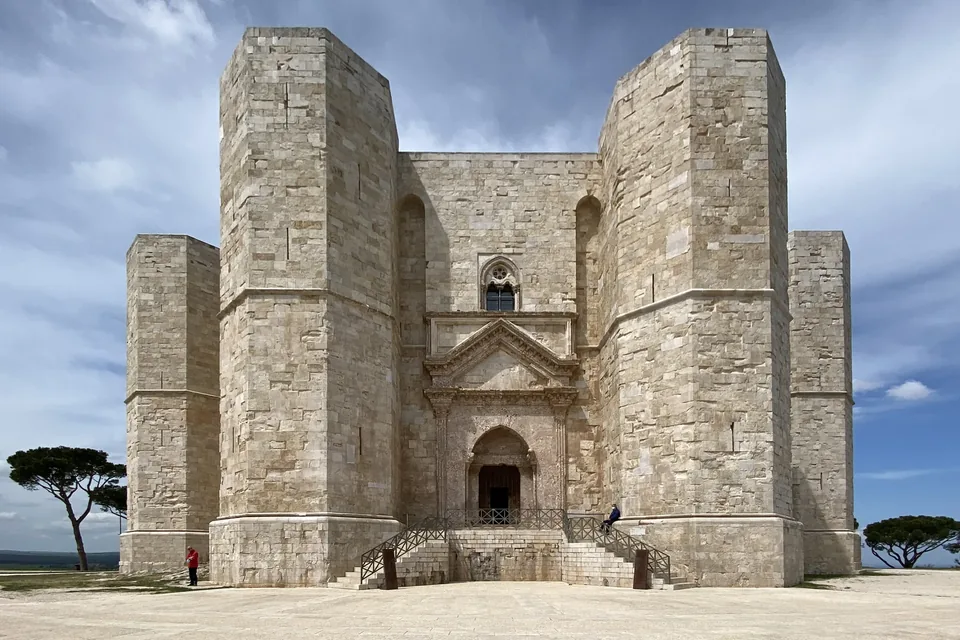
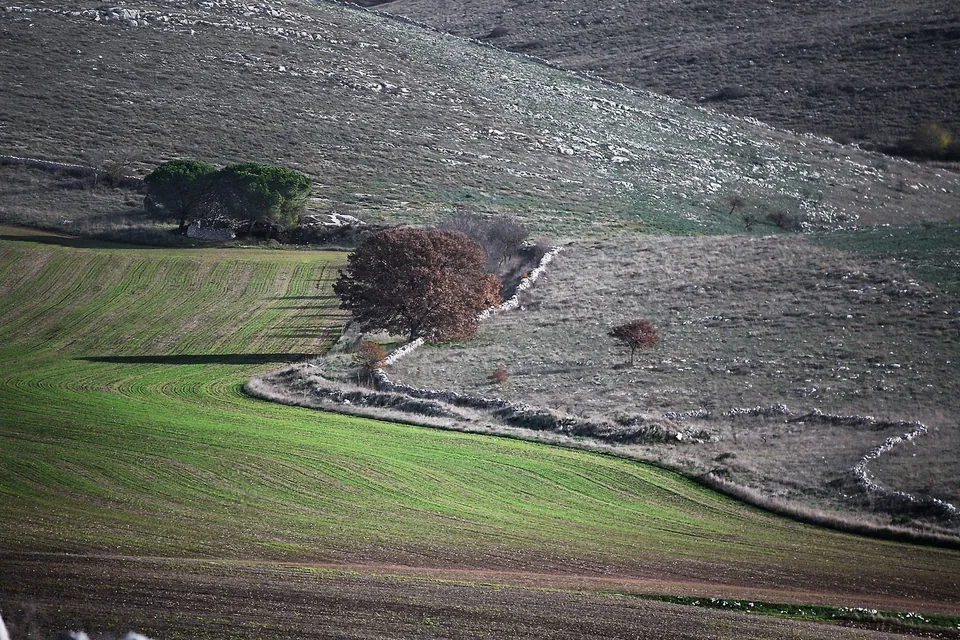
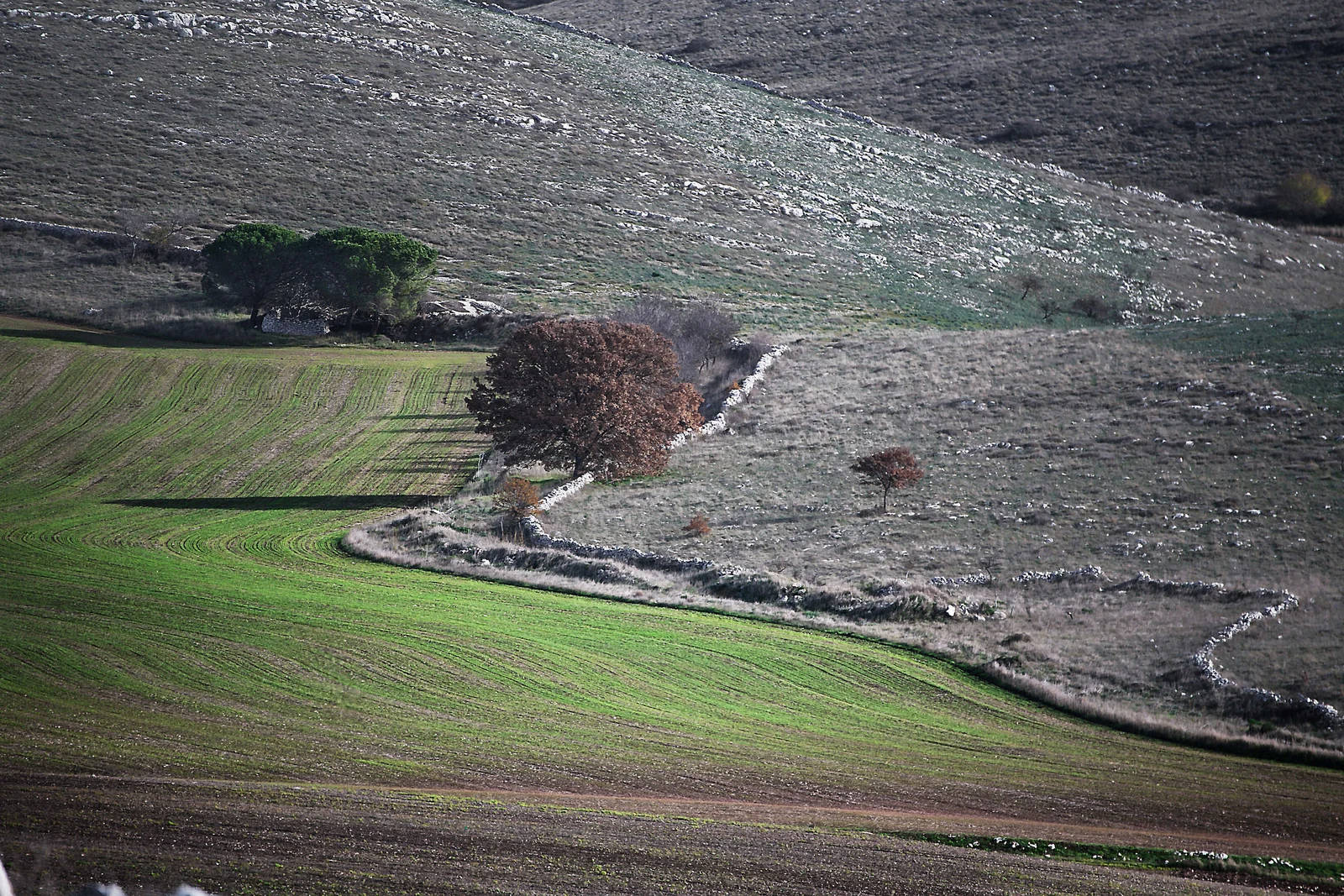
The landscape is a sequence of rocky ridges, sinkholes, gentle hills, swallow holes, escarpments and lame, the shallow ravines of the plateau, alternating with natural pastures, cereal fields and woods of oak and conifers. Within this open space people have built for centuries: stone masserie, sometimes fortified, pens and stables for flocks, cisterns, snow pits, small chapels and miles of dry-stone walls. Above it all stands Castel del Monte, Frederick II's octagonal fortress, a UNESCO World Heritage Site since 1996.
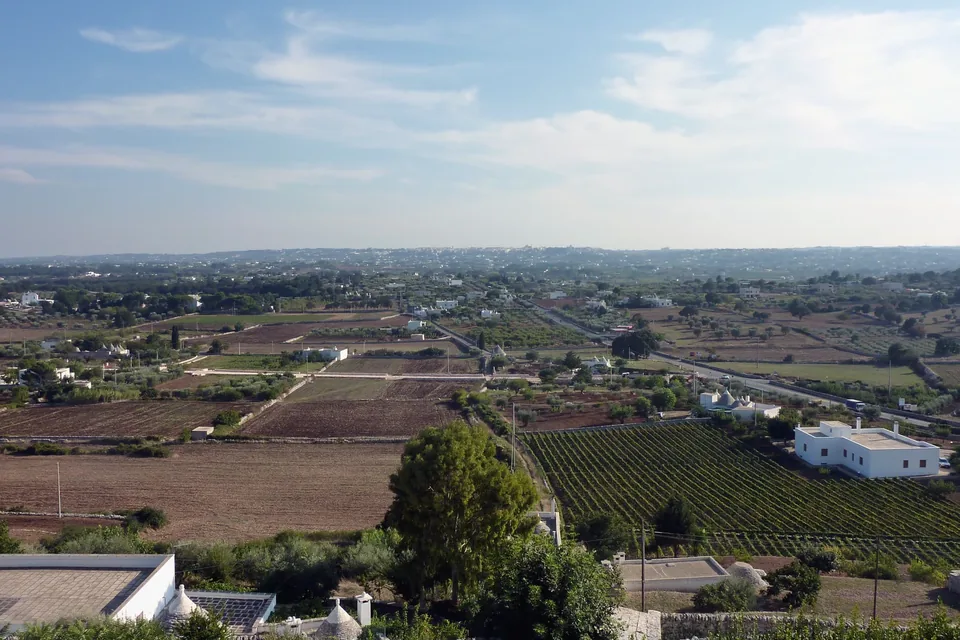
Coming here gives meaning to the roads linking the Murgia towns. It is a place for walking and cycling, watching birds of prey and wild flowers, discovering a geology that the MurGEopark, a UNESCO Geopark, presents through its geosites, and then finding at the table the durum wheat bread, pulses and sheep's cheeses this land produces.
Sources: Parco Nazionale dell'Alta Murgia — il territorio · Regione Puglia, Viaggiare in Puglia — Parco Nazionale dell’Alta Murgia · Regione Puglia, Viaggiare in Puglia — Castel del Monte · Parco Nazionale dell’Alta Murgia — MurGEopark, Geoparco UNESCO · Parco Nazionale dell’Alta Murgia — Il paesaggio
History
The story of Alta Murgia begins in its rocks. The plateau is made of Cretaceous platform limestones, up to three thousand metres thick in all, overlain by younger calcarenites known locally as tufo. The MurGEopark notes that this land, together with the Istrian karst, is the last rooted fragment of an ancient continent called Adria. In 1999, in a quarry at Pontrelli near Altamura, fossil dinosaur footprints belonging to at least five different species were discovered.
Caves have preserved human history too. In the Lamalunga cave near Altamura, the complete skeleton of Altamura Man was found, a hominid who lived about 150,000 years ago, an archaic form between Homo erectus and Neanderthals; the cave is closed to visitors, but a virtual visit is offered in the nearby eighteenth-century masseria. About 13 kilometres from Corato, at San Magno, a necropolis of mound tombs dates from between the seventh and fourth centuries BC.
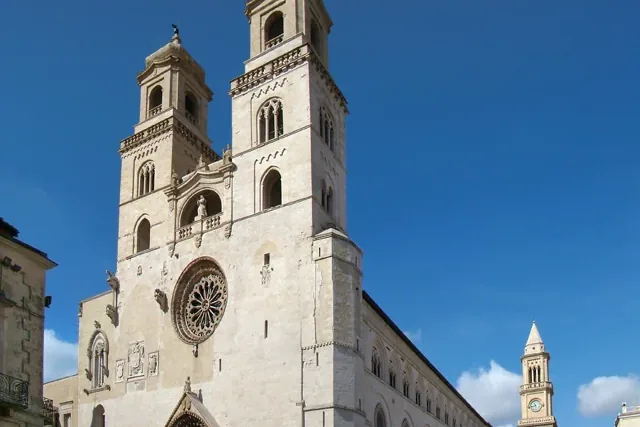
For centuries the plateau lived from sheep farming, both settled and transhumant, already practised in Roman times. From the fifteenth century the royal customs office for sheep, the Regia Dogana della Mena delle Pecore, tightly organised the land for grazing, and the masserie, controlled in number and size, became the centres of the great estates in the seventeenth century. Normans and Swabians left their mark in the historic centres of the park's towns, culminating in Castel del Monte.
Sources: Parco Nazionale dell'Alta Murgia — geologia · MurGEopark — portale del Parco Nazionale dell’Alta Murgia sui geositi · Parco Nazionale dell’Alta Murgia — L’archeologia · Parco dell’Alta Murgia — Jazzo Tarantini · Parco Nazionale dell’Alta Murgia — L’ambiente rurale · Parco Nazionale dell'Alta Murgia — il territorio
What to see
Karst landforms are the park's first spectacle. The heavily fractured rock holds no rivers at the surface, and rainwater sinks underground, carving sinkholes, swallow holes, shafts and caves. The Pulo di Altamura, at around 480 metres, is a large sinkhole with regular edges, probably formed by the collapse of an underground cavity; similar in size is the Pulicchio di Gravina, an elliptical hollow about half a kilometre long and around a hundred metres deep. The park also holds the deepest shafts in central and southern Italy, such as Farauall, and the Grotta di Cristo at Cassano delle Murge, one of the largest caves. The highest points, around 680 metres, are Monte Caccia and Torre Disperata.
The second story is rural architecture. Poste sheltered flocks from bad weather, while jazzi, built on south-facing slopes, were pens for sheep. Jazzo Tarantini is a clear example: a large rectangular enclosure divided by inner walls, with the stables known as lamioni and, on the opposite side, rooms for workers and for processing milk. Among masserie and drove roads stand small rock chapels and medieval castles such as Garagnone and the castle of Gravina.
Castel del Monte, on a hill about twenty kilometres from Andria, is the most famous monument, with its octagonal plan and doorframes in coral breccia. The bauxite mines of Spinazzola, a strict nature reserve, are viewed from above from the lookout points along the trail.
Sources: Parco Nazionale dell'Alta Murgia — geologia · Parco Nazionale dell’Alta Murgia — L’ambiente rurale · Parco dell’Alta Murgia — Jazzo Tarantini · Regione Puglia, Viaggiare in Puglia — Castel del Monte · Parco Nazionale dell’Alta Murgia — Visite alle Miniere di Bauxite
Food and wine
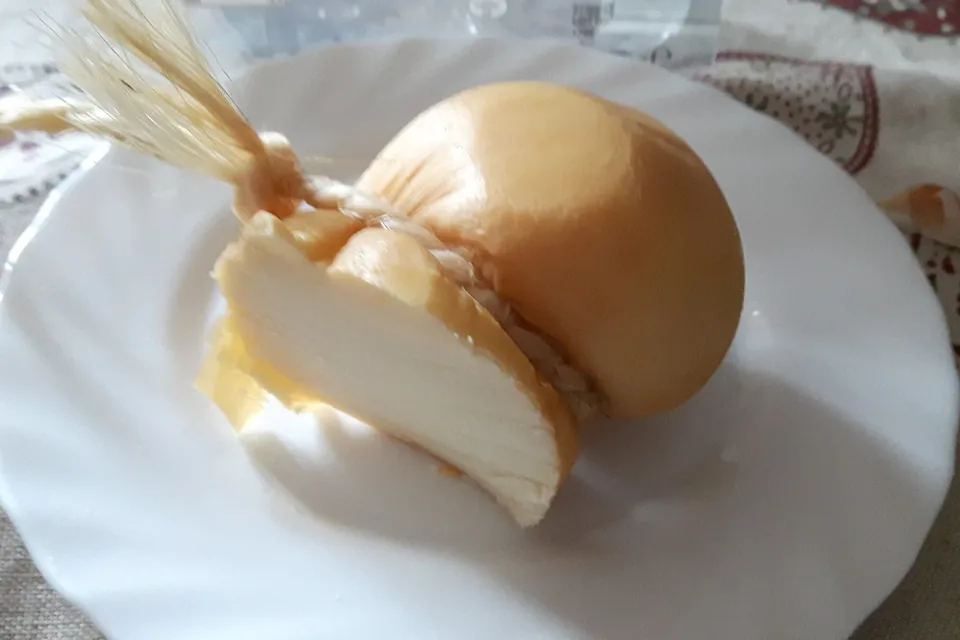
The park invites you to understand the Murgia by tasting its produce too: durum wheat bread, almond sweets, dried figs, mushrooms, robust wines and sheep's cheeses. Cardoncello mushrooms, tassel hyacinth bulbs and wild asparagus grow on the plateau, while wild thyme and mint scent the pastures.
Bread is the product that best tells the story of this landscape. The Slow Food Presidium for traditional Alta Murgia bread starts from durum wheat grown in the towns of the north-western Murgia: the re-milled semolina is mixed with natural sourdough, warm water and sea salt and baked slowly in a wood-fired oven. The result is Pane di Altamura, with its hat-like shape and golden crust, which keeps for days. Nineteenth-century stone ovens with tall hoods still survive in the old town centres.
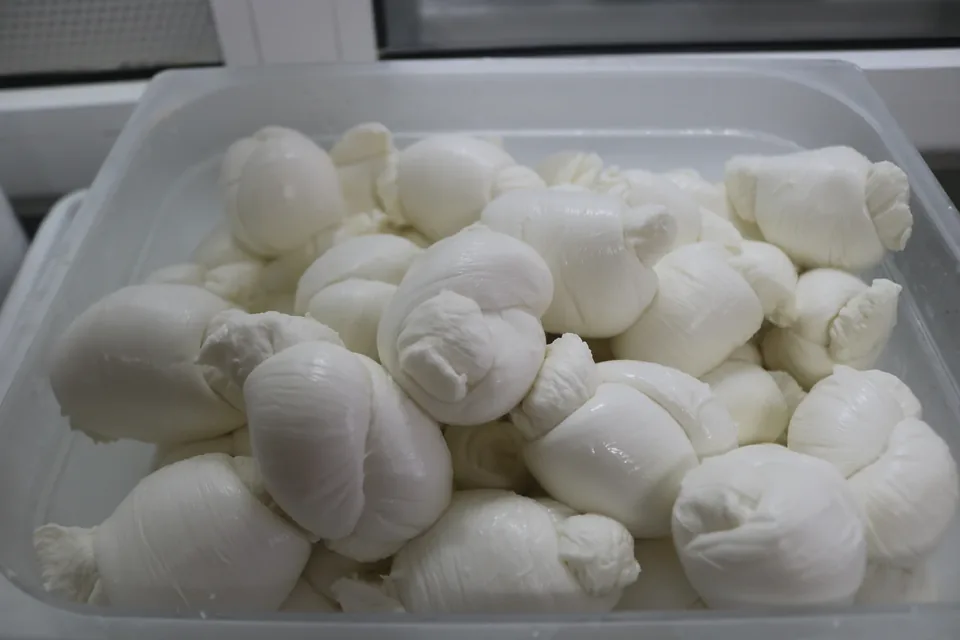
Sheep farming has left a breed of its own, the Altamurana sheep, also called moscia, hardy and white-fleeced, once raised for milk, wool and meat and now supported by a Presidium that aims to save it from disappearing. Among pulses, the smooth chickpeas of Cassano delle Murge stand out, thin-skinned and ranging from brick red to almost black, sown by hand between December and February without irrigation. On the edge of the plateau, at Toritto, the Toritto almond preserves local cultivars such as Filippo Cea and Antonio De Vito; Filippo Cea has an intense, balanced flavour with buttery notes and is ideal for pastry.
Sources: Parco Nazionale dell’Alta Murgia — Il paesaggio · Regione Puglia, Viaggiare in Puglia — Parco Nazionale dell’Alta Murgia · Fondazione Slow Food — Pane tradizionale dell’Alta Murgia · Fondazione Slow Food — Pecora altamurana · Fondazione Slow Food — Ceci lisci di Cassano delle Murge · Fondazione Slow Food — Mandorla di Toritto
Things to do
Its long pastoral history has left Alta Murgia a dense network of unpaved roads, drove roads, tracks and paths connecting almost the whole protected area. The park has organised it into different itineraries: five guided themed routes to be driven along the paved roads, and twelve agro-ecological walks on foot that start from as many farms, designed to involve the people who work the land in sustainable nature tourism.
Cyclists will find twelve mountain bike routes, collected in a printed guide available at the park offices, and the Jazzo Rosso, San Magno, Castel del Monte cycle and walking route, about 67 kilometres long and divided into seven linked sections, some of which start from the stations of Ruvo di Puglia and Corato. Along the route is the Torre dei Guardiani visitor centre, in the Ruvo area.
For wildlife watching the plateau is precious: it hosts one of the world's most important populations of lesser kestrel, which hunts over the steppe and nests in the old town centres, as well as red kite, short-toed eagle, lanner falcon, calandra lark and greater short-toed lark. The park has streamed live a pair of lesser kestrels that took over an artificial nest placed on a public building. The park's official guides offer hikes, birdwatching, geotourism, cave visits and orchid walks; the hiker's handbook sums up the rules for walking safely.
Sources: Parco Nazionale dell’Alta Murgia — Itinerari a piedi e centri visita · Parco Nazionale dell’Alta Murgia — Ciclovie e itinerari in bici · Parco Nazionale dell’Alta Murgia — Gli animali del parco · Parco dell’Alta Murgia — Falco grillaio e progetto LIFE · Parco Nazionale dell’Alta Murgia — Le guide ufficiali nel Parco · Parco Nazionale dell’Alta Murgia — Vivere il parco in sicurezza
When to go
The park stresses that the Murgia landscape changes radically with each season. Spring is the most spectacular time: amid green wheat fields and rocky pastures, wild tulips, gladioli and orchids bloom, including recently described species such as Ophrys murgiana; translucent feather grass sits beside pink asphodel and yellow giant fennel, while house martins and falcons dart overhead.
Summer brings long days and the dusks when lesser kestrels return to the towns to roost, a spectacle visible from the squares of the park's towns. Between late August and early October, depending on the cultivar, almonds are harvested, a good reason for a farming-themed trip.
In autumn cyclamen and autumn crocus colour the bare stone of the ridges and the dry-stone walls, and the soft light suits hiking and cycling. Winter is the quietest season, with often grey and foggy days brightened by the red berries of hawthorn and the blue of sloe; it is also when the Cassano chickpeas are sown. For these reasons we recommend spring, summer and autumn above all, planning summer hikes for the cooler hours and checking the rules in the hiker's handbook.
Sources: Parco Nazionale dell’Alta Murgia — Il paesaggio · Parco Nazionale dell’Alta Murgia — Le piante del parco · Fondazione Slow Food — Mandorla di Toritto · Fondazione Slow Food — Ceci lisci di Cassano delle Murge · Parco Nazionale dell’Alta Murgia — Vivere il parco in sicurezza
Getting there and around
According to the park's directions, air travellers land at Bari Palese airport, linked to central Bari by the Ferrotramviaria Bari-Nord railway. From Bari, the Ferrovie Appulo Lucane line crosses several Murgia towns and reaches Gravina in Puglia, seat of the park authority. Trenitalia trains reach Gioia del Colle, from where you continue to Santeramo, Altamura, Gravina in Puglia, Poggiorsini, Spinazzola or Minervino Murge; the Bari-Nord railway instead serves Bitonto, Ruvo di Puglia, Corato and Andria on the plateau's northern side.
By car, leave the A14 motorway at the Trani, Molfetta, Bitonto, Bari Nord, Bari Sud or Gioia del Colle exits and follow the roads towards the park towns. From Basilicata and Calabria, access is via the SS96 and SS99. Check timetables and connections on the operators' websites before departure.
Inside the park distances are large and public transport does not reach the most remote places: to move between masserie, sheepfolds and sinkholes you need a car, a bicycle or an organised excursion with an official guide. The cycle routes starting from the Ruvo and Corato stations, however, let you enter the plateau without a car, combining train and bike.
Sources: Parco Nazionale dell’Alta Murgia — Come raggiungere il parco · Parco Nazionale dell’Alta Murgia — Contatti · Parco Nazionale dell’Alta Murgia — Ciclovie e itinerari in bici · Parco Nazionale dell’Alta Murgia — Le guide ufficiali nel Parco
Where to stay
There are two main ways to stay in Alta Murgia. The first is the masserie: the park points out that some are still working farms, raising animals and producing in a traditional way, while others have opened to tourism and are equipped to host visitors to the Murgia. Staying in a masseria lets you experience the stone landscape at close range, among dry-stone walls, pens and fields, and often taste what the farm produces. The park's twelve agro-ecological walks start precisely from farms, and can become the thread of a countryside stay.
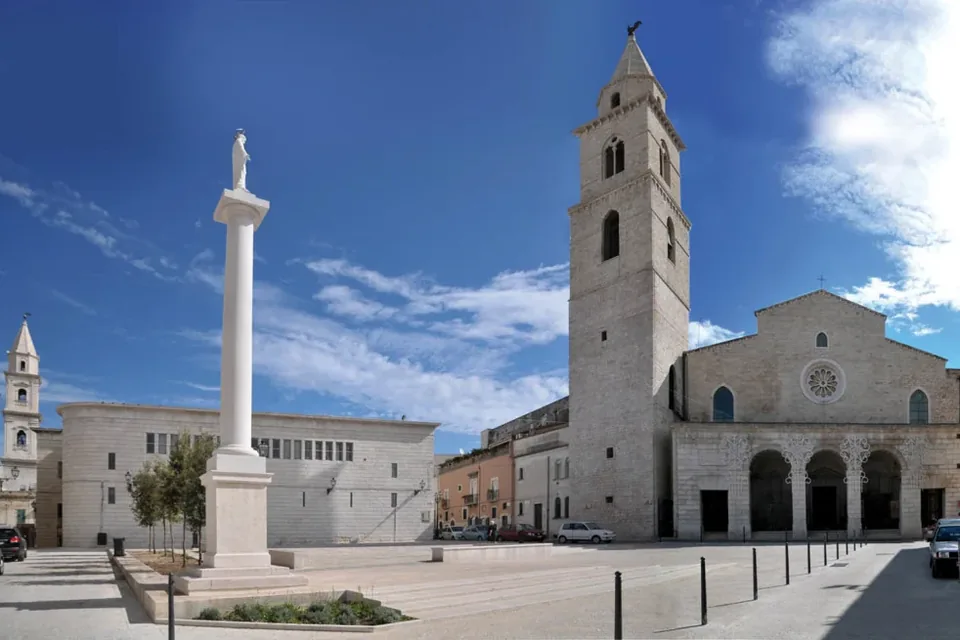
The second is the historic centres of the park's thirteen towns, from Altamura and Gravina to Ruvo di Puglia, Corato, Andria, Santeramo in Colle and Minervino Murge, where Norman and Swabian traces, cathedrals and bread ovens frame the evening. Staying in town makes trains and services easier to use and leaves the day free for trips onto the plateau.
Many people combine the two: a few nights in a masseria for hiking and a town base for cultural visits. Either way, choose your base according to the side you want to explore, the northern one towards Castel del Monte or the southern one towards Altamura and Gravina, because the plateau is wide and getting around takes time.
Sources: Parco Nazionale dell’Alta Murgia — L’ambiente rurale · Parco Nazionale dell’Alta Murgia — Itinerari a piedi e centri visita · Parco Nazionale dell'Alta Murgia — il territorio · Fondazione Slow Food — Pane tradizionale dell’Alta Murgia
Nearby
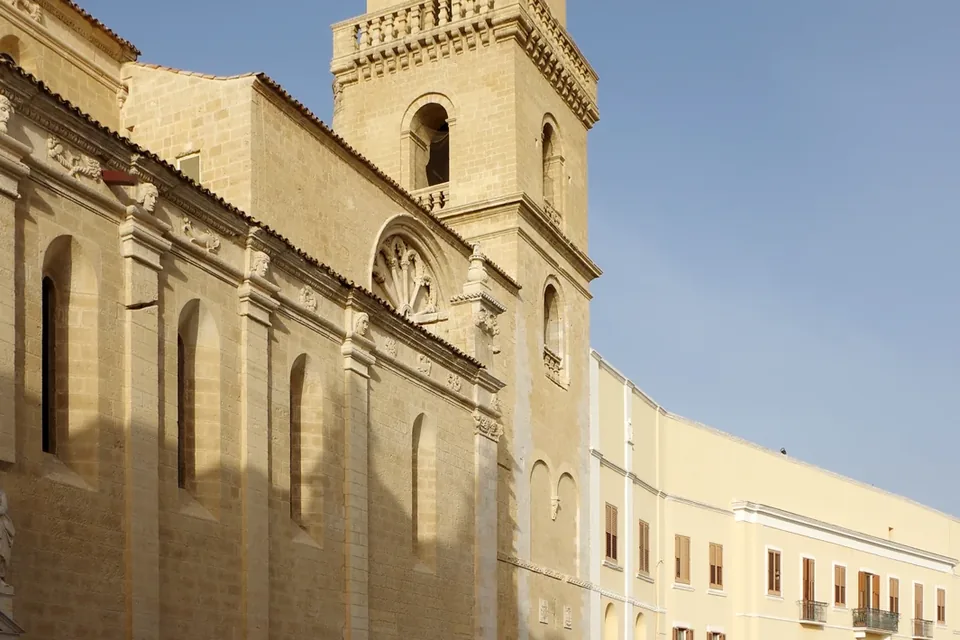
Every park town is a gateway to the plateau. Altamura holds the Pulo and, just outside town, the Lamalunga cave of Altamura Man and the Pontrelli quarry with dinosaur footprints; Gravina, seat of the park authority, overlooks its ravine and keeps a castle from Frederick II's time. To the north, in the Andria area, Castel del Monte crowns the Murgia's most famous hill, while Ruvo di Puglia and Corato are the starting points of the cycle route towards San Magno.
On the western side, at Spinazzola, the bauxite mines show the deep red of the deposits against the green of the Murgia and the blue of the sky; the park also offers longer excursions taking in the Acquatetta wood, the Bradanic trough, the Cavone swallow hole and its rock engravings. Near Minervino stands the Garagnone castle. To the east, Cassano delle Murge has the Grotta di Cristo and its smooth chickpea tradition, and Toritto its almonds.
Besides the park's thirteen municipalities, the MurGEopark also includes Laterza and Acquaviva delle Fonti, and its portal presents the area's geosites, from the Pulo di Altamura to the Rocca del Garagnone. A visit to Alta Murgia works well when you choose one or two of these towns as a base and give the rest of your time to the open landscape.
Sources: Parco Nazionale dell’Alta Murgia — L’archeologia · Parco Nazionale dell'Alta Murgia — geologia · Parco Nazionale dell’Alta Murgia — L’ambiente rurale · Parco Nazionale dell’Alta Murgia — Contatti · Parco Nazionale dell’Alta Murgia — Ciclovie e itinerari in bici · Parco Nazionale dell’Alta Murgia — Visite alle Miniere di Bauxite · Fondazione Slow Food — Ceci lisci di Cassano delle Murge · Fondazione Slow Food — Mandorla di Toritto · MurGEopark — portale del Parco Nazionale dell’Alta Murgia sui geositi
Local tourist information
Local tourist offices help with opening times, events and transport on the day.
- Ente Parco Nazionale dell’Alta Murgia — sede e informazioni · Via Firenze 10, 70024 Gravina in Puglia (BA) · +39 080 3262268 · info@parcoaltamurgia.it · Official website
Source: Parco Nazionale dell’Alta Murgia — Contatti · checked on
Where to stay
In the municipality of Altamura the national database of the Ministry of Tourism lists 197 accommodation businesses with a verified CIN code: 3 hotels, 56 other licensed accommodation and 138 other types such as B&Bs and private rentals.
Licensed businesses from the official list of Regione Puglia, each with a checked national CIN code: matching municipality and category. Private individuals are not listed. Check directly with the property before booking.
HAPPY HOLIDAYS
Guest rooms
CIN IT072004B400049495
IRIS LUXURY SUITE AFFITTACAMERE
Guest rooms
CIN IT072004B400070183
L'IMPERATORE DI TEDESCO MARIANNA
Guest rooms
CIN IT072004B400069863
L'Incanto delle Mura
Guest rooms
CIN IT072004B400102351
MASSERIA LA MERIDIANA
Guest rooms
CIN IT072004B400050451
SUITE61
Guest rooms
CIN IT072004B400034054
Sistò Petite Maison
Guest rooms · Website
CIN IT072004B400088193
clementia guest house
Guest rooms
CIN IT072004B400101692
AGRITURISMO IL CASALE
Farm stay
CIN IT072004B500020586
MASSERIA CHINUNNO
Farm stay
CIN IT072004B500027617
MASSERIA COLLE CARRO
Farm stay
CIN IT072004B500027375
MASSERIA LA CALCARA
Farm stay
CIN IT072004B500020947
MASSERIA MARROCCOLI
Farm stay · Website
CIN IT072004B500121762
MURÀ
Farm stay
CIN IT072004B500027227
VALLE VERDE
Farm stay
CIN IT072004B500030234
VILLA RIBES
Farm stay
CIN IT072004B500097915
azienda agricola agrituristica rinaldi di dambrosio maria giuseppe
Farm stay
CIN IT072004B500059007
ALMURA DI RECCHIA LEONARDA
B&B
CIN IT072004B400022752
ANTICA DIMORA LE 7 LUNE
B&B
CIN IT072004B400033976
ANTICA OSTERIA PEIN ASSUTT
B&B · Website
CIN IT072004B400100439
B&B 1951
B&B · Website
CIN IT072004B400095955
B&B IL NIDO DEI FALCHI DI FORLIANO MARIA CRISTINA
B&B · Website
CIN IT072004B400089786
B&B LA ROSA DEI VENTI
B&B
CIN IT072004B400125930
B&B MAISON DE MAMMA' DI PAPANGELO GRAZIA
B&B
CIN IT072004B400104001
B&B Yutori 75
B&B
CIN IT072004B400113487
C'ERA UNA VOLTA
B&B · Website
CIN IT072004B400089532
CIVICO 16
B&B
CIN IT072004B400114267
Casa Tre Archi
B&B
CIN IT072004B400129630
DIMORA SANTA CHIARA
B&B · Website
CIN IT072004B400049258
IL CLAUSTRO
B&B · Website
CIN IT072004B400032454
IMPERIALE B&B
B&B
CIN IT072004B400049438
LA DIMORA DI FEDERICO DI PARTERNOSTER NICOLA
B&B
CIN IT072004B400050164
LUPARIELLO RELAIS
B&B
CIN IT072004B400125809
La locanda di Alice srls
B&B
CIN IT072004B400103346
MALANDRÌ
B&B
CIN IT072004B400025393
MATTEI LUXURY B&B
B&B
CIN IT072004B400122140
PALAZZO LA ROSA
B&B
CIN IT072004B400100818
QUARTO LATINO SRL
B&B
CIN IT072004B400049005
San Francesco Bed & Breakfast
B&B · Website
CIN IT072004B400059563
CALDERONI MARTINI RESORT
Hotel · ★★★★
CIN IT072004A100022339
HOTEL FUORI LE MURA
Hotel · ★★★★
CIN IT072004A100025128
HOTEL SAN NICOLA
Hotel · ★★★★
CIN IT072004A100088625
Sources: Regione Puglia – ARET Pugliapromozione (DMS), CC BY 4.0, 2026-10-12 · Ministero del Turismo – Banca Dati Strutture Ricettive (dashboard pubblica), 2026-10-12
YOUR JOURNEY
How to shape a journey here
We can design a landscape and food day with local interpretation, a walk suited to the group and an encounter centred on almonds, bread or pastoral work, connecting Altamura, Gravina and Castel del Monte.
Talk to us about it