
APULICA / FRESH PASTA, BREAD AND PASTRY
Altamura bread
PDO · Slow Food Presidium · Fresh pasta, bread and pastry · Puglia
In brief
- Bread made from re-milled durum wheat semolina, sourdough starter, sea salt and water. (Qualigeo (Fondazione Qualivita) — Pane di Altamura DOP)
- It is made within the Alta Murgia National Park area, in Altamura, Gravina in Puglia, Poggiorsini, Spinazzola and Minervino Murge. (Qualigeo (Fondazione Qualivita) — Pane di Altamura DOP)
- It comes in two traditional shapes, the folded 'accavallata' and the 'priest's hat', of at least half a kilo with a crust about three millimetres thick. (Qualigeo (Fondazione Qualivita) — Pane di Altamura DOP)
- It was once kneaded at home and baked in public ovens, where each family marked its loaves with its initials. (Qualigeo (Fondazione Qualivita) — Pane di Altamura DOP)
History and origin
Altamura bread was born in the farming and shepherding society of the Alta Murgia. Made in large loaves and in the shape called "u sckuanète", it was kneaded mainly by women at home and taken to be baked in public ovens. So that loaves would not be mixed up, the baker marked them with the initials of the head of the family, stamped with an iron seal: bread-making was a shared act, where family life met the life of the town.
Its main quality was how long it lasted. It had to feed farmers and shepherds during the weeks they spent away from home in the fields and pastures of the Murgia hills, where lunch was often a bread soup with olive oil and salt. Until the middle of the twentieth century, at dawn, the streets of Altamura rang with the baker's call announcing that the bread was ready.
Written evidence is old. The Consortium cites the poet Horace, who in the first century BC praised the bread of this area as the best in the world; Altamura's municipal statutes of 1527 regulate the oven duty, and in the early seventeenth century as many as 26 mills were working in the area. In 2003 Altamura bread was registered as a PDO, the first bakery product in Europe to receive that recognition.
Sources: Consorzio di tutela del Pane di Altamura DOP — Storia · Qualigeo (Fondazione Qualivita) — Pane di Altamura DOP · Italia.it (Ministero del Turismo) — Altamura · eAmbrosia — Pane di Altamura (PDO-IT-0136)
Area and method of production
The production area is the north-western Alta Murgia, within the Alta Murgia National Park: the towns of Altamura, Gravina in Puglia and Poggiorsini in the province of Bari, and Spinazzola and Minervino Murge in the province of Barletta-Andria-Trani. This is where the durum wheat is grown and the re-milled semolina produced; at least 80 per cent must come from the varieties Appulo, Arcangelo, Duilio and Simeto, the rest from other varieties grown in the same area.
The dough combines re-milled semolina, a mother dough refreshed at least three times, sea salt and water: 100 kilos of semolina take 20 kilos of natural leaven, 2 of salt and about 60 litres of water at 18 degrees. After 20 minutes in the mixer the dough rests for at least 90 minutes under a cotton cloth; then come weighing and two rounds of shaping by hand, with rests of 30 and 15 minutes.
The loaves are turned over and go into a wood or gas oven at 250 degrees: direct-fired ovens must burn oak. For the first 15 minutes the oven mouth stays open, then it is closed for another 45; at the end the steam is let out for at least five minutes, so that the crust turns crisp.
Sources: Qualigeo (Fondazione Qualivita) — Pane di Altamura DOP · Consorzio di tutela del Pane di Altamura DOP — Fasi della lavorazione
How to recognise it
The specification allows two traditional shapes. The accavallata, "skuanète" in dialect, is a loaf folded over itself with the typical "kisses" on its sides, the points where the dough touches as it bakes; the "priest's hat", "a cappidd d'prèvte", is lower and has no kisses. Each loaf weighs at least half a kilo.
The crust is about three millimetres thick; the crumb is soft and straw-yellow, with an even honeycomb, and the aroma is distinctive. The Slow Food Presidium's description adds tasting notes: more or less toasted aromas, sometimes reaching coffee, a crumb that melts in the mouth when fresh, compact yet always easy to chew even after several days, and a finish with hints of vanilla.
PDO bread is recognised by its mark: a crowned shield quartered in red and white, with the words "pane DOP di Altamura", printed on the label or on a seal placed directly on the loaf. It is sold fresh all year round.
Sources: Qualigeo (Fondazione Qualivita) — Pane di Altamura DOP · Consorzio di tutela del Pane di Altamura DOP — Il bollino DOP · Fondazione Slow Food — Presidio pane tradizionale dellalta murgia
In the kitchen
Altamura bread keeps for several days in a cool, dry place, and Murgia cooking has learned to use it at every stage. The simplest way is also the oldest: slices dressed with extra virgin olive oil and salt, sometimes with tomato. The local bruschetta, "fèdda rosse", is bread toasted over embers and dressed with salt and oil, good hot or cold.
Day-old bread is the base of many traditional recipes offered by the Consortium. Cold "cialledde" combines broken, lightly moistened bread with tomatoes, red onion, celery, carosello cucumber, lemon, oregano and oil; pancotto, "pen cuett", simmers the bread crust in water with garlic and bay until the water is gone and is finished with oil and pecorino.
Qualigeo also mentions cialde with tomatoes, onions, potatoes and olives, and the fetta francesca: slices of day-old bread soaked in milk and enriched with mortadella, cheese, mozzarella and eggs, then baked.
Sources: Qualigeo (Fondazione Qualivita) — Pane di Altamura DOP · Consorzio di tutela del Pane di Altamura DOP — Ricette
Where to taste it
The bread is tasted in the five towns of the north-western Alta Murgia where it is made, and Altamura is the natural starting point. The national tourism portal presents it as a town of old palaces, churches and courtyards, known far beyond Italy for its wood-fired bread; in the nearby countryside the remains of Altamura Man, a Palaeolithic skeleton, were found, and in the centre stands the cathedral of Santa Maria Assunta, between Apulian Romanesque and the Gothic of Frederick II.
The protection Consortium, which brings together farmers, millers and bakers, offers walking itineraries through the old town on its website, among the courtyards and craft workshops, to discover the town that gave the bread its name. It also tells the origins of the town, founded in the thirteenth century by Frederick II on the remains of a Peucetian acropolis whose megalithic walls survive.
The Slow Food Presidium points to a detail to look for on a walk: in the Alta Murgia the great nineteenth-century stone ovens, with very tall hoods and long-handled peels, are still part of the townscape.
Sources: Italia.it (Ministero del Turismo) — Altamura · Consorzio di tutela del Pane di Altamura DOP — Storia · Consorzio di tutela del Pane di Altamura DOP — Itinerari · Consorzio di tutela del Pane di Altamura DOP — Luoghi di produzione: Altamura · Fondazione Slow Food — Presidio pane tradizionale dellalta murgia
Protection
- Protected designation of origin (PDO) — PDO-IT-0136 (eAmbrosia — Pane di Altamura (PDO-IT-0136))
- Slow Food Presidium — pane-tradizionale-dellalta-murgia (Fondazione Slow Food — Presidio pane tradizionale dellalta murgia)
When
- The sources consulted give no months.
Where
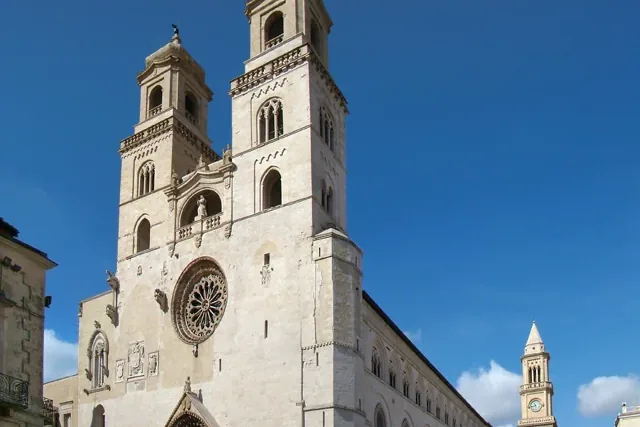
Altamura
Bread culture, the old town and the Murgia landscape as the starting point for a journey.
Read the guide →Photo: Tango7174 / Wikimedia Commons — CC BY-SA 4.0 · Resized and converted to WebP.

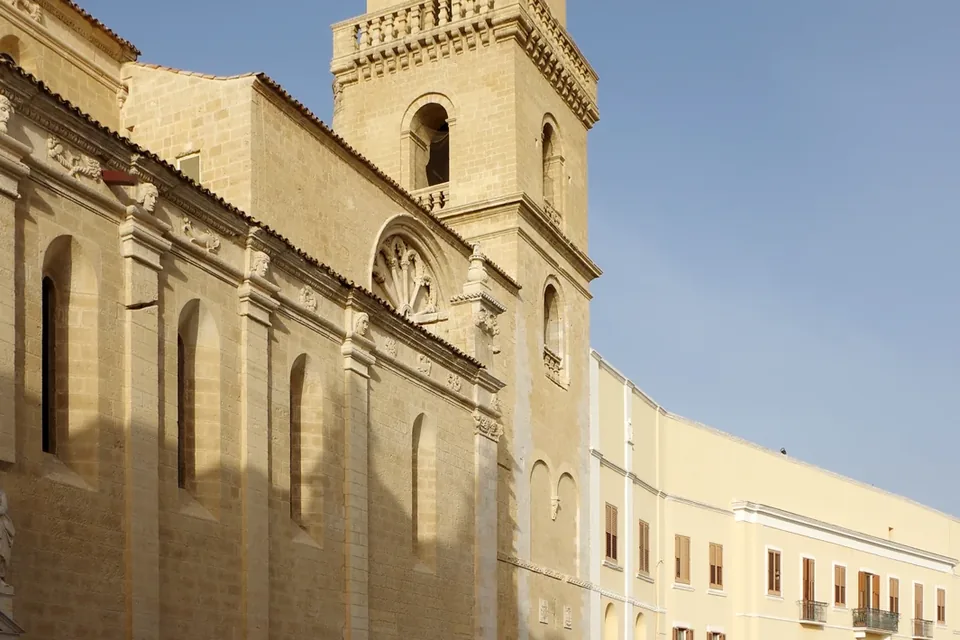
Gravina in Puglia
Rock-cut neighbourhoods, pastoral history and the relationship between town and landscape.
Read the guide →Photo: Berthold Werner / Wikimedia Commons — CC BY-SA 3.0 · Resized and converted to WebP.

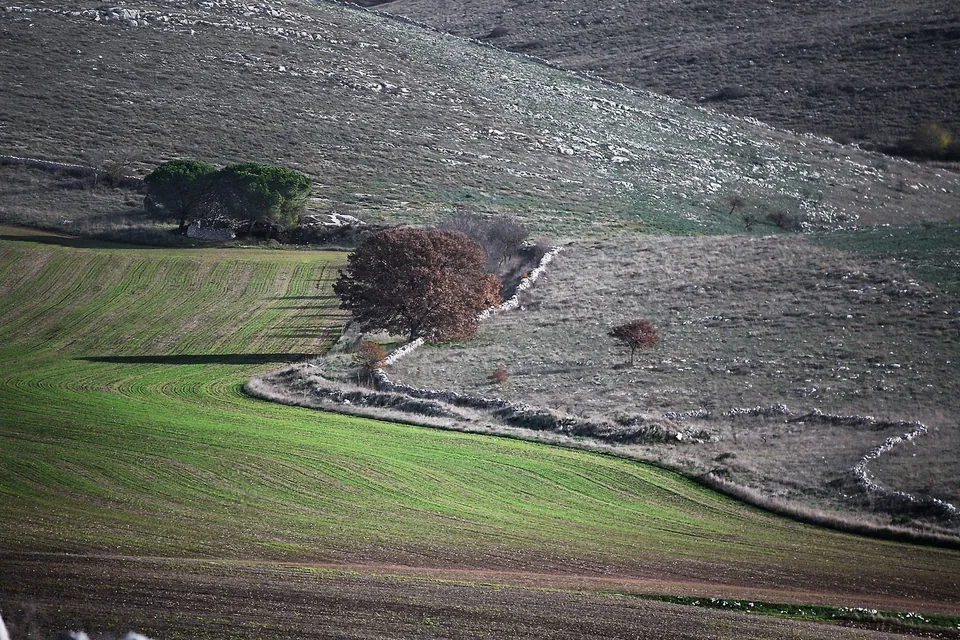
Alta Murgia
Stone, pasture and farming to explore the landscape beyond the towns.
Read the guide →Photo: Acquario51 / Wikimedia Commons — CC BY-SA 4.0 · Resized and converted to WebP.

Read more
Pane di Altamura PDO
The PDO bread of Alta Murgia: durum wheat semolina, mother yeast, wood-fired ovens, the history of public ovens and statutes, the masseria landscape and a day in Altamura.
Read the guide →