A precise dairy identity
The Region describes Mozzarella di Gioia del Colle PDO as a fresh stretched-curd cheese made only from whole raw cow’s milk, using a technique based on native whey starter, that is, the acidified whey from the previous batch. This is the feature that sets it apart from any ordinary mozzarella.
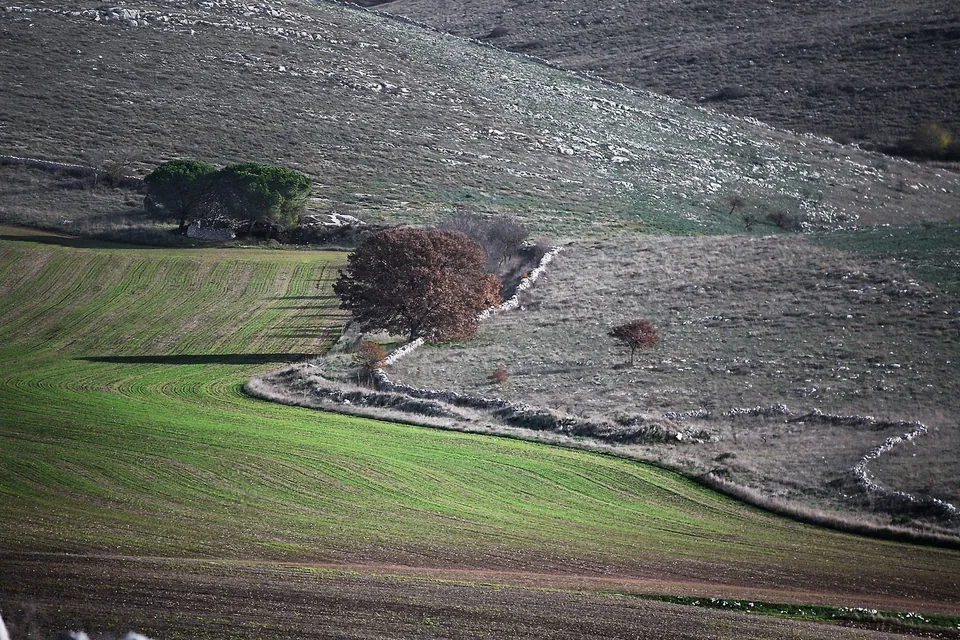
The production area covers the Murgia around Bari and Taranto. The regional profile describes it as a land of dairy farms, the “cow farmsteads” dating back to Frederick II, with particular soil and climate conditions and a dairy tradition handed down through the generations.
The name therefore covers a precise method and territory, not any mozzarella served in the area. For travellers this is useful: the designation on the label, with the European logo and the words “di latte vaccino”, is the simplest way to know what you are tasting. Shape, cut and flavour tell the rest.
The milk and shapes of the designation
The regional profile and Qualigeo’s specify where the milk comes from. The cows are Brown Swiss, Friesian, Red Pied, Jersey and their crosses, raised in the production area, and must graze outdoors at least 150 days a year; at least 60 per cent of their feed must come from the area. The cheese is made from the milk of two milkings, processed within two days of the last.
Qualigeo adds that the area covers much of the Murgia plateau, with municipalities in the provinces of Bari and Taranto and part of the territory of Matera, and links the milk’s character to the typical flora of the Murge.
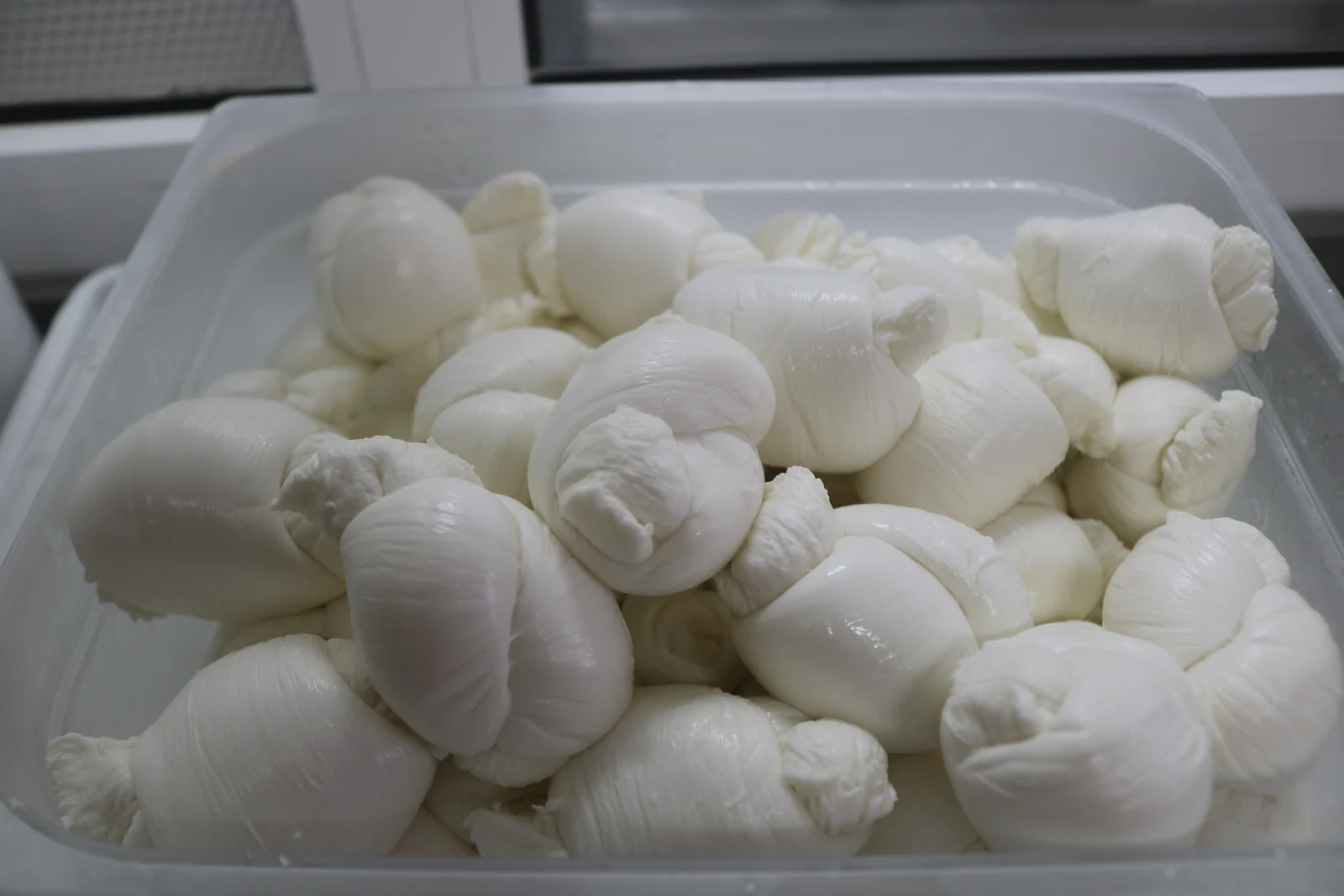
Three shapes are allowed: round, knot and braid, weighing from a small portion up to about a kilo. The surface is smooth or slightly fibrous, glossy, white with possible seasonal straw tints; when cut, the elastic paste releases a little white whey. The mozzarella is sold immersed in its liquid, water that may be salted or slightly acidified.
Sources: Regione Puglia — Mozzarella di Gioia del Colle DOP · Qualigeo (Fondazione Qualivita) — Mozzarella di Gioia del Colle DOP
From curd to stretching
The production rules, summarised by Qualigeo, describe a precise method. The milk, with its traditional whey starter, is curdled with calf rennet; the curd is broken into pieces the size of a small hazelnut and matures for at least two hours. It is then chopped and stretched in very hot water, at no less than 87 degrees; after shaping, the mozzarella goes into cold water to firm up.
The result has a recognisable sensory profile. Qualigeo describes a delicately tangy flavour, with a slight fermented or whey finish, more intense in freshly made cheese; and a milky, slightly sour aroma, with hints of milk, yoghurt and butter.
These indications help when tasting. The slight acidity is not a flaw but a trait linked to the whey starter, and is most noticeable when the mozzarella is very fresh. Qualigeo suggests eating it on its own as a table cheese, with raw vegetables or with oil, salt and tomato, but also on pizza or in baked pasta, thanks to its melting quality.
Sources: Qualigeo (Fondazione Qualivita) — Mozzarella di Gioia del Colle DOP
A century of evidence
The presence of mozzarella in Gioia del Colle is documented from the early decades of the twentieth century. Qualigeo cites a 1922 article by Giovanni Carano Donvito, according to which “Gioia mozzarellas” reached the markets of Rome and Naples, as well as Bari, Taranto, Lecce, Foggia and other towns, where they were appreciated and sought after.
In the 1950s and 1960s evidence multiplies of local festivals devoted to promoting the cheese. In 1970 a book on Gioia del Colle recounted that a local breeder, Clemente Milano, was the first to use milk from his Brown Swiss cows to make fresh dairy products that took the name of mozzarella.
The atlas of traditional foods records the most recent step: in 2020 a European regulation officially entered Mozzarella di Gioia del Colle in the register of protected designations of origin, and a protection consortium of dairies and milk producers has since been formed. A relatively young history, but a well-documented one, linking an everyday cheese to a precise territory.
Sources: Qualigeo (Fondazione Qualivita) — Mozzarella di Gioia del Colle DOP · Atlante dei PAT di Puglia (Regione Puglia, Università di Bari) — Mozzarella o fior di latte
Mozzarella in the Puglian family
Puglia’s atlas of traditional foods also records mozzarella, or fior di latte, made throughout the region. It explains that the name comes from “mozzatura”, cutting the stretched curd into the desired pieces, and recalls its different shapes: round, bocconcino and braid. It also reports the theory that hot stretching arose as a way of transforming milk that kept poorly, reducing its acidity.
On its origins the profile cites conflicting sources: some scholars date it to the Middle Ages, while Pliny the Elder praised a cheese produced in an area that may lie on the border between Puglia and Basilicata. It is a story still open, told with caution.
Among dedicated feasts, the atlas mentions a mozzarella festival in Gioia del Colle, traditionally at the end of August, and others in Sammichele di Bari, Castellana Grotte and the countryside around Monopoli. Knowing this family helps you understand what the PDO adds: local raw milk, whey starter, grazing and defined shapes.
Sources: Atlante dei PAT di Puglia (Regione Puglia, Università di Bari) — Mozzarella o fior di latte
First the cheese, then the seasoning
Start with a tasting without sauces, looking at the cut and at the relationship between outer layer and core. Notice the resistance of the paste and the milky, slightly tangy flavour, without turning elasticity or softness into a contest. A second bite with plain bread changes the context while keeping the cheese readable.
Only at the end add another ingredient, such as oil or tomato: it is the clearest way to understand what changes. If the mozzarella has just been made, the tangy note will be more evident; if it is a few hours old, softer.
For a second reading, try a small taste of burrata at another moment of the journey. The question is not which is richer, but what changes between a solid cheese and a product made of casing and filling. Keep tastings and notes separate, so that the memory does not become a generic plate of dairy, and think about the role each would play in your own kitchen.
Gioia del Colle between castle and wine
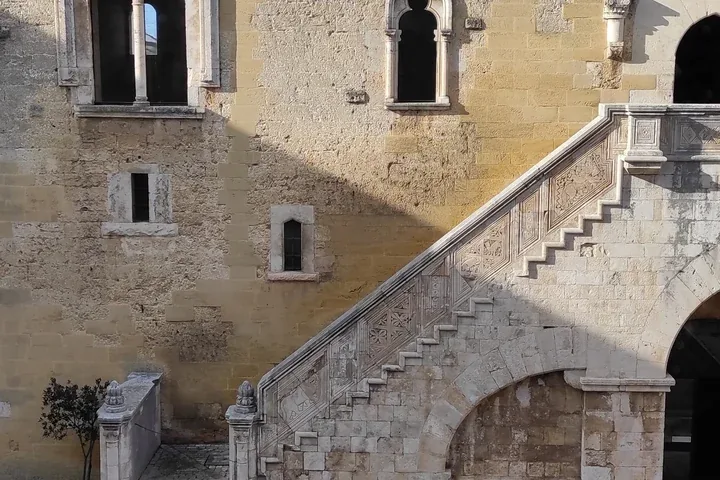
Plan a walk in Gioia del Colle and a food stop as the centre of the day. The regional museums directorate describes the Norman-Swabian castle as one of Frederick II’s fortresses that best preserves its layout, with a large square courtyard, imposing towers and walls of rusticated blocks, dominating the old roads between Bari and Taranto. Since 1977 it has housed the archaeological museum with Peucetian finds from the settlement of Monte Sannace, a few kilometres from town.
Gioia del Colle is also wine country. The regional profile of the PDO sets out an area including many municipalities in the province of Bari, with red and rosé wines based on Primitivo, a single-variety Gioia del Colle Primitivo and a sweet or fortified Aleatico.
If you add wine, give it a separate tasting before looking for a pairing: Qualigeo suggests soft white wines or young reds for the mozzarella. The Murgia thread holds castle, milk and vineyard together in a single day.
Sources: Direzione regionale Musei Puglia (Ministero della Cultura) — Museo archeologico nazionale e Castello di Gioia del Colle · Regione Puglia — Produzioni di qualità: Gioia del Colle DOP (vino) · Qualigeo (Fondazione Qualivita) — Mozzarella di Gioia del Colle DOP
Altamura and the bread of the Murgia
Altamura can offer a separate chapter devoted to bread. Qualigeo describes Pane di Altamura PDO as a bread of re-milled durum wheat semolina, sourdough starter, sea salt and water, made in Altamura, Gravina in Puglia, Poggiorsini, Spinazzola and Minervino Murge, within the Alta Murgia National Park.
There are two traditional shapes: the “accavallata”, folded over on itself, and the “priest’s hat”. The crust is thick and crisp, the crumb soft and straw yellow. The profile recalls that Horace called it the best bread, that it was once kneaded at home and baked in public ovens marked with the initials of the head of the family, and that Altamura’s municipal statutes of 1527 already mention the oven tax.
A slice of this bread with a little Gioia del Colle mozzarella is perhaps the simplest pairing on the Murgia. Choose the period together with the rest of the itinerary: milk and bread are produced all year, and the plateau’s landscape changes colour with the seasons.
Sources: Qualigeo (Fondazione Qualivita) — Pane di Altamura DOP
A thread for your journey
Journey idea: Gioia del Colle with mozzarella and a wine comparison, each clear before pairing. A later Altamura chapter connects bread: three ingredients structure an inland journey without multiplying meals.
Talk to us