
APULICA / CHEESES
Mozzarella di Gioia del Colle
PDO · Cheeses · Puglia, Basilicata
In brief
- A fresh pasta filata cheese of whole cow's milk with a whey starter, shaped as a ball, a knot or a plait. (Qualigeo (Fondazione Qualivita) — Mozzarella di Gioia del Colle DOP)
- The area covers much of the Murgia plateau: towns in the provinces of Bari and Taranto and part of the municipality of Matera. (Qualigeo (Fondazione Qualivita) — Mozzarella di Gioia del Colle DOP)
- The cows must graze outdoors at least 150 days a year, and the milk must be processed within 48 hours of the last milking. (Qualigeo (Fondazione Qualivita) — Mozzarella di Gioia del Colle DOP)
- As early as 1922 an article mentioned Gioia mozzarella sold in the markets of Rome, Naples and Puglia's cities. (Qualigeo (Fondazione Qualivita) — Mozzarella di Gioia del Colle DOP)
History and origin
Mozzarella di Gioia del Colle comes from the Murgia uplands near Bari and Taranto, a land of dairy farms with an old cheesemaking tradition handed down through the generations. The area's "cow farmsteads" are traced back to the time of Frederick II.
Mozzarella in Gioia is documented from the early decades of the twentieth century. In 1922 Giovanni Carano Donvito wrote in La riforma sociale that the "mozzarelle di Gioia" reached the markets of Rome and Naples, as well as Bari, Taranto, Lecce, Foggia and smaller towns, where they were sought after and well paid. In the 1950s and 1960s the town hosted many events to promote its fresh cheese.
In 1970 Giovanni Bozzo's book Gioia del Colle oggi credited a local breeder of Brown Alpine cows, Clemente Milano, with first using his own milk to make the fresh cheeses that came to be called mozzarelle. Today Mozzarella di Gioia del Colle is a Protected Designation of Origin, overseen by a protection consortium.
Sources: Qualigeo (Fondazione Qualivita) — Mozzarella di Gioia del Colle DOP · Regione Puglia — Produzioni di qualità: Mozzarella di Gioia del Colle DOP
Area and method of production
The production area covers much of the Murgia plateau: several municipalities in the provinces of Bari and Taranto, in Puglia, and part of the municipality of Matera, in Basilicata. Milk comes from local farms with Brown, Friesian, Red Pied and Jersey cows and their crosses, which must graze outdoors for at least 150 days a year; at least 60% of their feed must come from the production area.
Only whole raw milk is used, collected over two milkings and processed within 48 hours of the last. The key is the native whey starter, which drives fermentation in the traditional way. The milk is curdled with calf rennet and the curd broken into pieces the size of a small hazelnut.
After ripening for at least two hours the curd is chopped and stretched with hot water at no less than 87 °C. Shaped into its forms, the mozzarella is placed in cold water to firm up.
Sources: Qualigeo (Fondazione Qualivita) — Mozzarella di Gioia del Colle DOP · Regione Puglia — Produzioni di qualità: Mozzarella di Gioia del Colle DOP
How to recognise it
Mozzarella di Gioia del Colle comes in three shapes: round, knot and plait, weighing from 50 grams to one kilo. The surface is smooth or slightly fibrous, glossy, never slimy or flaky; the colour is white, sometimes with seasonal straw-coloured hints.
Cut open, the paste is elastic and releases a little white whey. The flavour is gently sour, with a light aftertaste of fermentation or sour whey, stronger in freshly made mozzarella. The aroma is milky and tangy, with hints of milk, plain yogurt and butter.
The qualities of the milk, and so of the cheese, are tied to the wild flora of the Murge. It is sold in a covering liquid of water, possibly acidified and salted, and the label carries the PDO logo and the words "di latte vaccino" (cow's milk).
Sources: Qualigeo (Fondazione Qualivita) — Mozzarella di Gioia del Colle DOP · Regione Puglia — Produzioni di qualità: Mozzarella di Gioia del Colle DOP
In the kitchen
Mozzarella di Gioia del Colle is excellent freshly made, as a table cheese, or with raw vegetables or simply with oil, salt and tomato, the simplest way to enjoy it.
Its melting quality makes it ideal for pizza and a tasty topping for more elaborate dishes such as baked pasta. Thanks to its versatility it goes into both traditional dishes and more creative recipes.
In the glass it pairs well with soft white wines and young reds. It comes in three shapes, round, knot and plait, and in sizes from 50 grams to a kilo, including single portions.
Sources: Qualigeo (Fondazione Qualivita) — Mozzarella di Gioia del Colle DOP
Where to taste it
Gioia del Colle is the heart of the designation. Besides the area's dairies, the town offers its Norman-Swabian castle, home since 1977 to the National Archaeological Museum, which displays finds from the ancient settlement of Monte Sannace, excavated several times since 1929. A visit to the castle and a taste of freshly made mozzarella make for a day well spent on the Murgia.
The PDO area extends to the plateau municipalities in the provinces of Bari and Taranto and to part of the territory of Matera, in Basilicata. This whole area is dotted with farmsteads keeping dairy herds.
In the nearby Murgia dei Trulli, Noci is another stop for dairy lovers: the regional guide describes it as famous for high-quality handmade mozzarella, burrata and stracciatella.
Sources: Direzione regionale Musei Puglia — Museo Archeologico Nazionale e Castello di Gioia del Colle · Qualigeo (Fondazione Qualivita) — Mozzarella di Gioia del Colle DOP · Regione Puglia — Produzioni di qualità: Mozzarella di Gioia del Colle DOP · Regione Puglia, ARET Pugliapromozione — Miniguida Valle d'Itria e Murgia dei Trulli
Protection
- Protected designation of origin (PDO) — PDO-IT-02384 (eAmbrosia — Mozzarella di Gioia del Colle (PDO-IT-02384))
When
- The sources consulted give no months.
Where
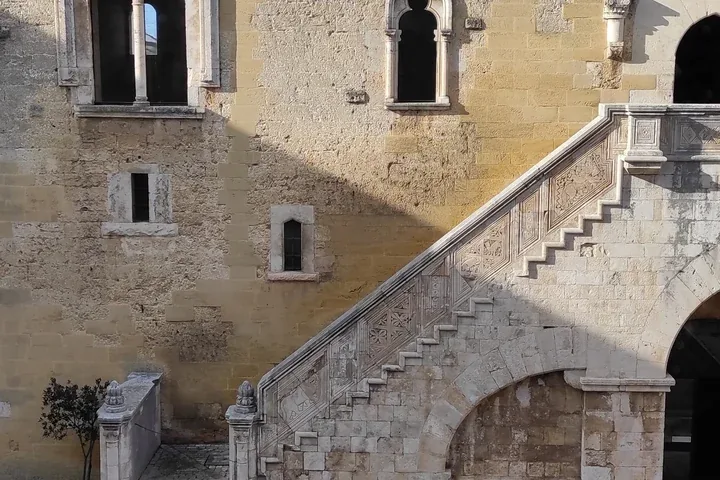
Gioia del Colle
Gioia del Colle: castle and rural memory.
Read the guide →Photo: Frababz85 / Wikimedia Commons — CC BY-SA 4.0 · Resized and converted to WebP.

Read more
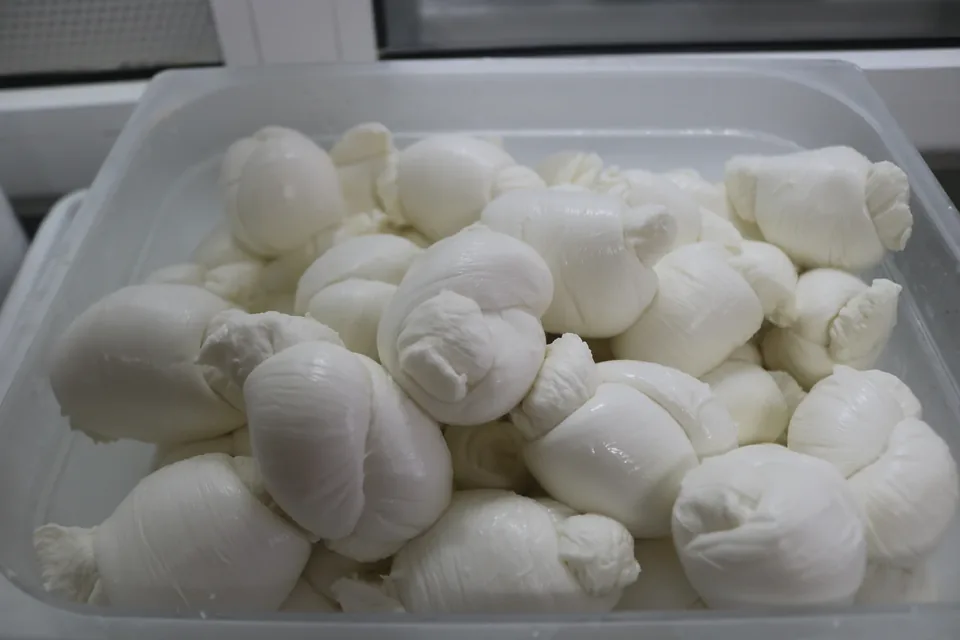
Gioia del Colle mozzarella
Cow’s milk, whey starter and shapes: exploring an inland cheesemaking tradition.
Read the guide →Photo: Rizzelli Stefania / Wikimedia Commons — CC BY-SA 4.0 · Resized and converted to WebP.
