Why go
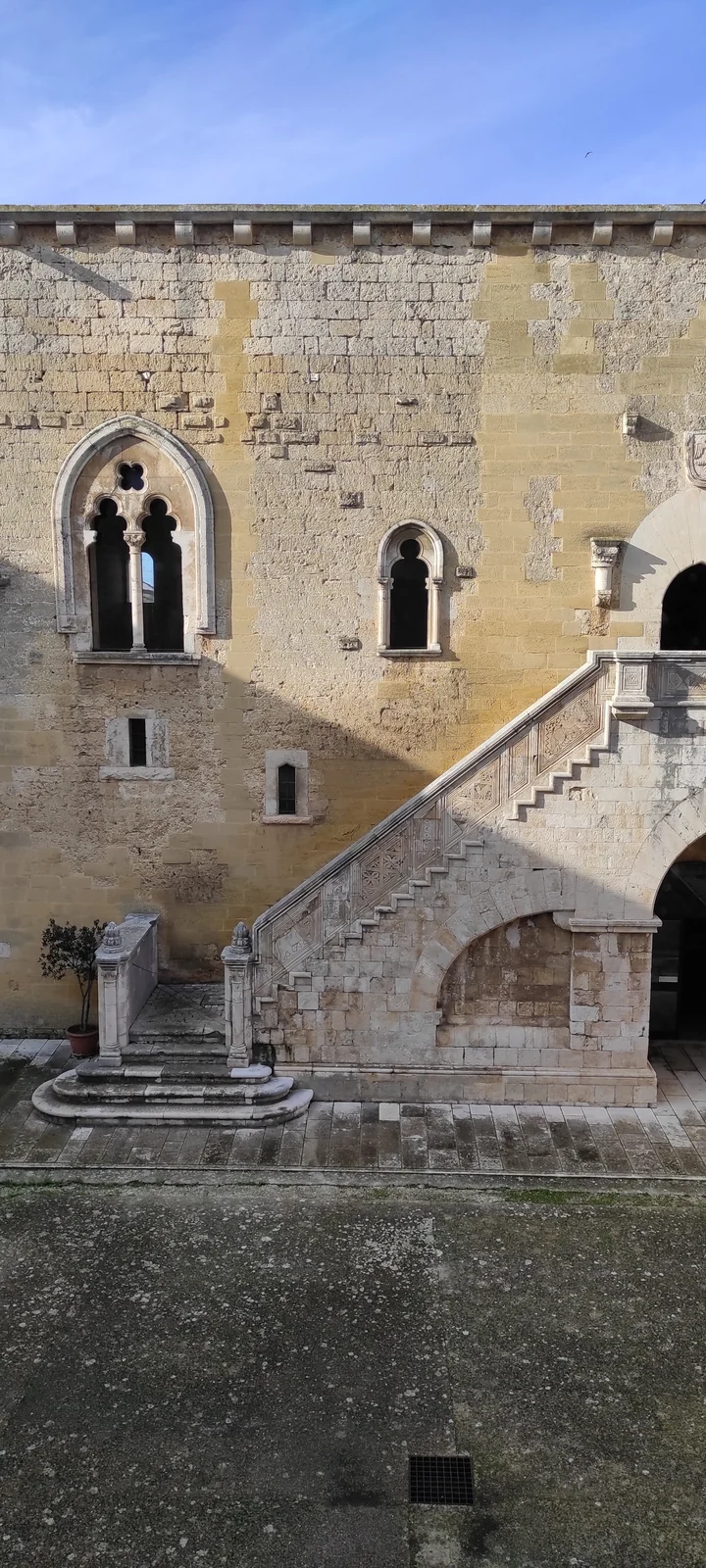
Gioia del Colle sits on the Murge plateau, about forty kilometres from Bari and a little over twenty from the trulli of Alberobello, at 360 metres above sea level. The regional tourism portal sums it up with a simple image: a heart as white as milk, a nod to the fame of its mozzarella and dairy products. Beside the table, though, there is a heritage worth a full day, starting with the Norman-Swabian castle that dominates the old centre.
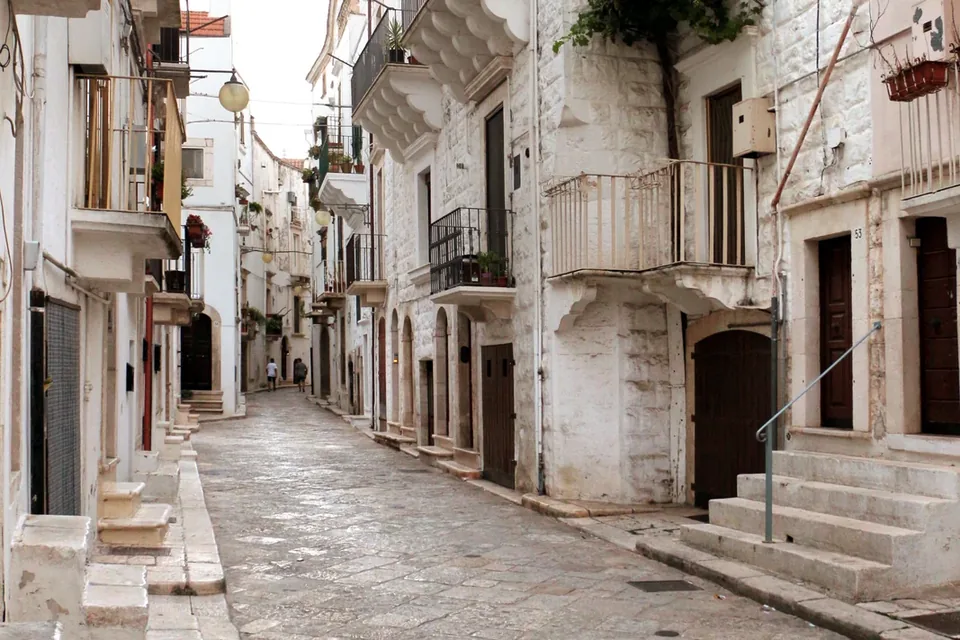
The strongest reason to stop is the chance to read the same territory at different scales. Inside the castle, the National Archaeological Museum displays vessels, weapons and objects of the Peucetians; a few kilometres away, the Monte Sannace park shows the settlement those finds came from, with its acropolis, lower town and the Murgia landscape all around. Back in town, the lanes of the old quarter with their arches of Byzantine origin, the churches and the municipal theatre complete the picture.
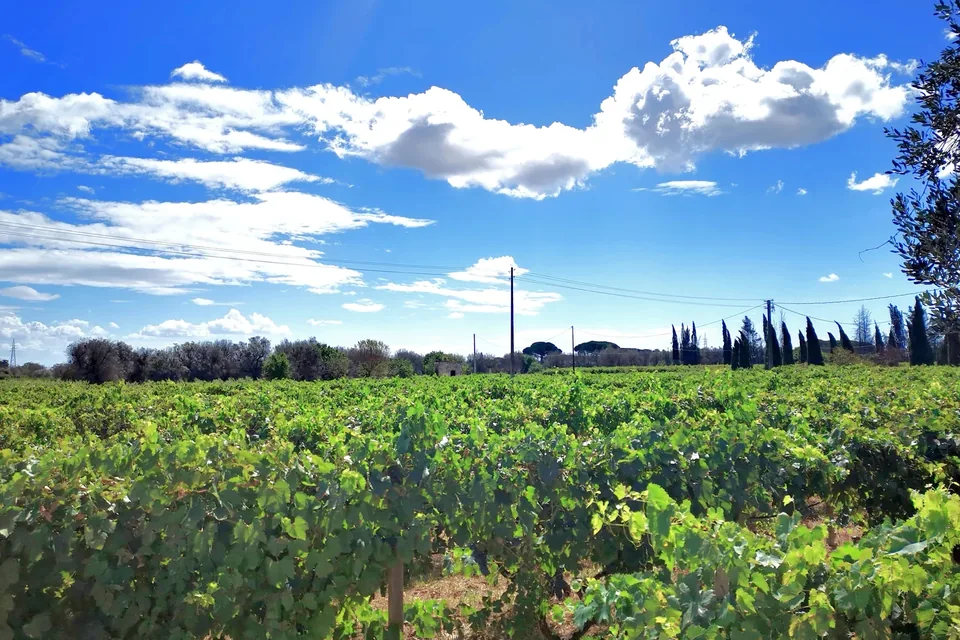
Then there are the countryside and its work: dairy farms, Primitivo vineyards, and the historic distilleries and mills that the national tourism portal lists as industrial heritage. Gioia is a stop that brings together history, landscape and produce, and it works well as a hinge between the Bari coast, the Itria Valley and the Alta Murgia.
Sources: Viaggiare in Puglia, Regione Puglia — Gioia del Colle · Italia.it, Ministero del Turismo — Gioia del Colle · Musei nazionali di Puglia — Museo archeologico nazionale e Castello di Gioia del Colle
History
The national tourism portal gives the town Byzantine origins. The castle was built by Riccardo Siniscalco, brother of Robert Guiscard, enlarged by Roger II and rebuilt by Frederick II around 1230; Angevins and Aragonese later altered parts of it. The regional museums directorate describes it as one of the Frederician fortifications that best preserve their original layout, built mainly to defend the territory and to control the roads linking Bari with Taranto.
Episodes and tales cling to the castle. According to a legend reported by the municipality, Frederick II imprisoned Bianca Lancia here, and she gave birth to Manfred within its walls. In December 1250 the emperor's body rested in the Throne Room on its journey from Foggia to Palermo, and in 1497 the courtyard hosted a festive welcome for Isabella del Balzo Orsini, Queen of Naples, from the Slavic communities that had settled in Gioia in the second half of the fifteenth century.
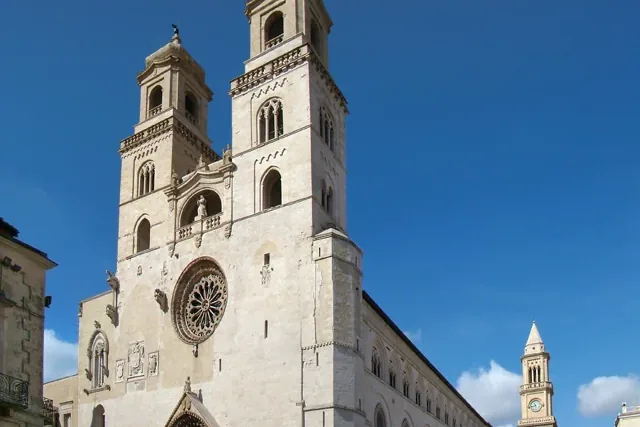
The Mother Church, founded at the end of the eleventh century by the same Riccardo Siniscalco, was pulled down in 1764 during a revolt against the symbols of baronial power and promptly rebuilt; the 1857 earthquake required further works. In 1837, having passed twelve thousand inhabitants, the town gained its theatre, set in an old shelter for post horses. In more recent times Pasolini filmed scenes of The Gospel According to St Matthew in the castle, and in 1917 D'Annunzio's flight over Cattaro took off from the military airfield.
Sources: Italia.it, Ministero del Turismo — Gioia del Colle · Viaggiare in Puglia — Castello di Gioia del Colle · Musei nazionali di Puglia — Museo archeologico nazionale e Castello di Gioia del Colle · Comune di Gioia del Colle — Castello normanno-svevo · Comune di Gioia del Colle — Chiesa Madre S. Maria Maggiore · Viaggiare in Puglia — Teatro comunale Rossini
What to see
The castle comes first. Outside, the rusticated masonry stands out, along with the two surviving towers of the original four, the de' Rossi keep and the Empress tower with its oculi and single-light windows, and the entrances with radiating arches. Inside you cross the courtyard and the oven hall with access to the so-called Empress's prison, then upstairs the Throne Room with decorative motifs of Arab taste, the Fireplace Room with its triple window and the Gynaeceum with a rare small bathroom.
In the eastern rooms the National Archaeological Museum, open since 1977 and since renewed, displays the finds from Monte Sannace: large jars with geometric decoration, Attic, Ionian and Corinthian vases, bronze weapons, figurines and rattles. Highlights noted by the Ministry include the Corinthian krater known as the Memnon krater, an antefix with a Gorgon's head and a boar-shaped rattle carrying a small warrior. Museum and park have separate admissions and a combined ticket, listed below with the date they were observed.
The Monte Sannace Archaeological Park, about five kilometres out on the provincial road to Turi, preserves the largest known Peucetian settlement, perhaps the ancient Turum mentioned by Pliny. In town, stop at the Mother Church of Santa Maria Maggiore, with a Madonna and Child by Stefano da Putignano and a fifteenth-century Ecce Homo, at the church of San Rocco, the tower house in Vico Fontana, the Javarone art gallery in the town hall and the Rossini Theatre with its Italian-style horseshoe plan. Inside the nineteenth-century cemetery lies the first Islamic burial ground in southern Italy, opened in 2008.
Sources: Comune di Gioia del Colle — Castello normanno-svevo · Musei nazionali di Puglia — Museo archeologico nazionale e Castello di Gioia del Colle · Musei nazionali di Puglia — Biglietti · Musei nazionali di Puglia — Monte Sannace · Viaggiare in Puglia — Parco archeologico di Monte Sannace · Viaggiare in Puglia, Regione Puglia — Gioia del Colle · Comune di Gioia del Colle — Chiesa Madre S. Maria Maggiore · Viaggiare in Puglia — Teatro comunale Rossini · Viaggiare in Puglia — Cimitero islamico · Italia.it, Ministero del Turismo — Gioia del Colle
Food and wine
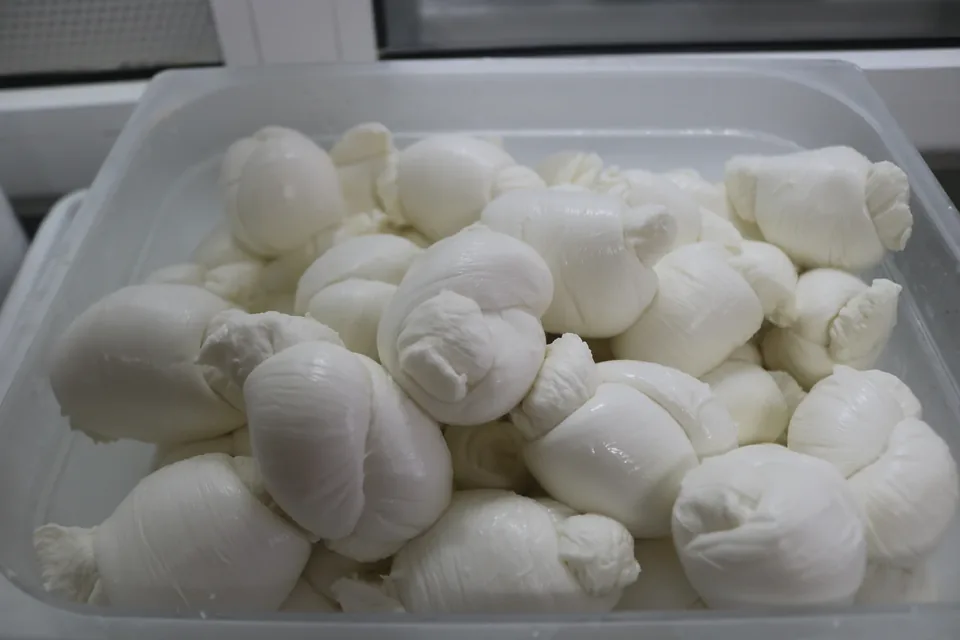
The signature product is Mozzarella di Gioia del Colle, a fresh stretched-curd cheese made only from whole raw cow's milk with a native whey starter. According to the Region's profile, the production area covers the Murgia around Bari and Taranto, land of the cow farms of Frederician origin; the cows must graze outdoors for at least 150 days a year. It comes round, knotted or plaited, with a smooth glossy surface and a little white whey seeping out when cut. The regional portal notes that the same dairy tradition also yields burrata and stracciatella.
The second pillar is wine. The Gioia del Colle designation includes red and rosé, in which Primitivo is joined by Montepulciano, Sangiovese, Negroamaro or Malvasia nera, a white, and above all Gioia del Colle Primitivo, made only from Primitivo grapes, which turns velvety with age and becomes Riserva after two years. Sweet and fortified Aleatico complete the rules. The regional portal records that the grape was brought to Puglia by the Benedictines in the twelfth century.
At the table, taste the mozzarella on its own, freshly made, to notice its elastic texture, and then alongside a glass of Primitivo. Those wishing to learn more can start from the protection consortia, which the Region locates in Gioia del Colle for the wine.
Sources: Regione Puglia — Mozzarella di Gioia del Colle DOP · Commissione europea, eAmbrosia — Mozzarella di Gioia del Colle · Viaggiare in Puglia, Regione Puglia — Gioia del Colle · Regione Puglia — Gioia del Colle DOP (vino)
Things to do
Monte Sannace can be explored on two routes laid out by the Ministry, both starting from Masseria Montanaro at the park entrance. The archaeological route shows the shape of the ancient city, with the walls that from the second half of the fourth century BC separated the acropolis from the settlement on the plain; the nature route climbs to viewpoints over the Murgia landscape. The two paths cross between plain and hill, and on the acropolis lies a large Hellenistic semi-chamber tomb with painted walls.
A good way to give the day meaning is to start at the castle museum, pick one object, such as a household or grave vessel, and then find its setting among the houses and tombs of the park. Museum and park also run family activities and seasonal events, announced on their official pages.
For walkers, Bosco Romanazzi, along the road to Putignano, is an oak wood of Macedonian and downy oaks with an intact understorey, meadows full of wild orchids and wildlife that includes the Etruscan shrew and the lesser kestrel. In the evening the Rossini Theatre hosts drama, dance and concerts, and in summer the castle becomes a venue for performances. On the food side, a visit to a dairy or a winery of the designation helps you understand how milk and grapes become products.
Sources: Musei nazionali di Puglia — Monte Sannace · Musei nazionali di Puglia — Museo archeologico nazionale e Castello di Gioia del Colle · Viaggiare in Puglia — Bosco Romanazzi · Italia.it, Ministero del Turismo — Gioia del Colle · Viaggiare in Puglia — Teatro comunale Rossini
When to go
Gioia del Colle can be visited all year, as the castle, museum and theatre offer shelter in both cold and hot months. For the open-air Monte Sannace park, spread between plain and hill, spring and autumn are the most comfortable seasons: the days are mild and the Murgia landscape is greener. In spring Bosco Romanazzi also offers flowering wild orchids.
Summer brings performances to the castle courtyard, while the Rossini Theatre season fills the cooler months. Museum and park take part in the Ministry's national initiatives, such as the European Heritage Days at the end of September and the family day at museums in October: check the dates of each edition on the official pages.
The religious calendar has its moments: the Mother Church keeps the town's devotion to Saint Philip Neri, credited by tradition with help during earthquakes and famines, and the parish community celebrates Maria Bambina on 8 December. Mozzarella, tied to grazing on the farms, accompanies every season instead.
Sources: Musei nazionali di Puglia — Museo archeologico nazionale e Castello di Gioia del Colle · Musei nazionali di Puglia — Monte Sannace · Viaggiare in Puglia — Bosco Romanazzi · Viaggiare in Puglia — Teatro comunale Rossini · Comune di Gioia del Colle — Chiesa Madre S. Maria Maggiore · Regione Puglia — Mozzarella di Gioia del Colle DOP
Getting there and around
Gioia del Colle has a station on the national rail network, with four passenger platforms, audio and visual information and a bus stop alongside; RFI notes that it has no assistance service for people with disabilities or reduced mobility, which must be requested at nearby equipped stations. The Alta Murgia National Park names Gioia as the rail gateway to Santeramo, Altamura, Gravina and the other Murgia towns, reached from here by road.
By car you arrive on the A14 motorway, which has an exit at Gioia del Colle; Bari is about forty kilometres away and Alberobello a little over twenty. The nearest airport is Bari, linked to the city centre by the Bari-Nord railway; from Bari you continue by train to Gioia.
The old centre is easy on foot: the castle faces Piazza dei Martiri del 1799, the town hall with its gallery stands on Piazza Margherita di Savoia and the Mother Church on Via Giovanni Rocca. For Monte Sannace, on provincial road 61 towards Turi, and for Bosco Romanazzi, on the road to Putignano, you need your own transport or an organised service. Check timetables and connections on official channels before travelling.
Sources: RFI — Stazione di Gioia del Colle · Parco nazionale dell'Alta Murgia — Come raggiungere il parco · Viaggiare in Puglia, Regione Puglia — Gioia del Colle · Aeroporti di Puglia — Aeroporto di Bari · Musei nazionali di Puglia — Museo archeologico nazionale e Castello di Gioia del Colle · Comune di Gioia del Colle — Chiesa Madre S. Maria Maggiore · Musei nazionali di Puglia — Monte Sannace · Viaggiare in Puglia — Bosco Romanazzi
Nearby
Gioia del Colle is a good base for the Murgia. Eastwards, past Bosco Romanazzi, you reach Putignano and a little further Alberobello and the Itria Valley. Westwards the road climbs towards Santeramo in Colle and Altamura: the Alta Murgia National Park names Gioia as the gateway to these towns and to Gravina in Puglia, where the landscape turns into steppe, pasture and wheat fields.
The link with these places also runs through the table. The Gioia del Colle designation covers vineyards in fifteen municipalities around Bari, including Santeramo, Castellana Grotte and Putignano, while Mozzarella di Gioia del Colle comes from the farms of the Murgia around Bari and Taranto. A trip of several days can follow the thread of milk and Primitivo from one town to the next.
For archaeology, the richest comparison is with Altamura, where the National Archaeological Museum tells the story of the Alta Murgia from prehistory to the Middle Ages. Travellers heading towards the Ionian Sea and Castellaneta follow the old route between Bari and Taranto that Gioia's castle was built to control, passing the farms of the Murgia around Taranto.
Sources: Viaggiare in Puglia — Bosco Romanazzi · Viaggiare in Puglia, Regione Puglia — Gioia del Colle · Parco nazionale dell'Alta Murgia — Come raggiungere il parco · Regione Puglia — Gioia del Colle DOP (vino) · Regione Puglia — Mozzarella di Gioia del Colle DOP · Musei nazionali di Puglia — Museo nazionale archeologico di Altamura · Musei nazionali di Puglia — Museo archeologico nazionale e Castello di Gioia del Colle
Local tourist information
Local tourist offices help with opening times, events and transport on the day.
- Info-point Gioia del Colle · Piazza Margherita di Savoia 10, 70023 Gioia del Colle (BA) · +39 080 3441478 · iatgioiadelcolle@virgilio.it
Source: Viaggiare in Puglia — Info-point Gioia del Colle · checked on
Where to stay
In the municipality of Gioia del Colle the national database of the Ministry of Tourism lists 92 accommodation businesses with a verified CIN code: 5 hotels, 25 other licensed accommodation and 62 other types such as B&Bs and private rentals.
Licensed businesses from the official list of Regione Puglia, each with a checked national CIN code: matching municipality and category. Private individuals are not listed. Check directly with the property before booking.
APPARTAMENTI MAGNANI
Guest rooms
CIN IT072021B400121850
CENTRO AGRITURISTICO "I TRE MONELLI"
Guest rooms
CIN IT072021B400030644
GIORDANI ENRICO - AL SECONDOPIANO
Guest rooms
CIN IT072021B400022807
terrazza del pittore
Guest rooms · Website
CIN IT072021B400123753
AGRITURISMO LA CIVETTA
Farm stay
CIN IT072021B500061359
MASSERIA CIAVEA
Farm stay
CIN IT072021B500023125
MASSERIA STELLA
Farm stay · Website
CIN IT072021B500054917
REGNO DI MARZAGAGLIA
Farm stay · Website
CIN IT072021B500021294
TENUTA PATRUNO
Farm stay · Website
CIN IT072021B500050243
TENUTE D'ONGHIA
Farm stay
CIN IT072021B500023706
AL BORGO S.A.S.
B&B · Website
CIN IT072021B400022359
B&B CAVOUR
B&B
CIN IT072021B400025998
B&B CIACCO
B&B
CIN IT072021B400022718
B&B LEOPARDI
B&B
CIN IT072021B400071217
DIMORA DEL CASTELLANO
Holiday home
CIN IT072021B400085038
DIMORA DEL CASTELLANO VIA SATURNO
Holiday home
CIN IT072021B400084866
CIACCO HOTEL
Hotel · ★★★
CIN IT072021A100021878
FERRHOTEL
Hotel · ★★
CIN IT072021A100020571
HOTEL SVEVO
Hotel · ★★★★
CIN IT072021A100020570
HOTEL VILLA DUSE
Hotel · ★★★
CIN IT072021A100024951
Residenza Borgo Francescano
Hotel · ★★★ · Website
CIN IT072021A100124696
Sources: Regione Puglia – ARET Pugliapromozione (DMS), CC BY 4.0, 2026-10-12 · Ministero del Turismo – Banca Dati Strutture Ricettive (dashboard pubblica), 2026-10-12
YOUR JOURNEY
How to shape a journey here
A useful stop between archaeology and countryside: looking at a working building alongside the castle avoids an exclusively monumental reading.
Talk to us about it