
Photo: Sailko / Wikimedia Commons — CC BY 3.0 · Resized and converted to WebP.
Why go
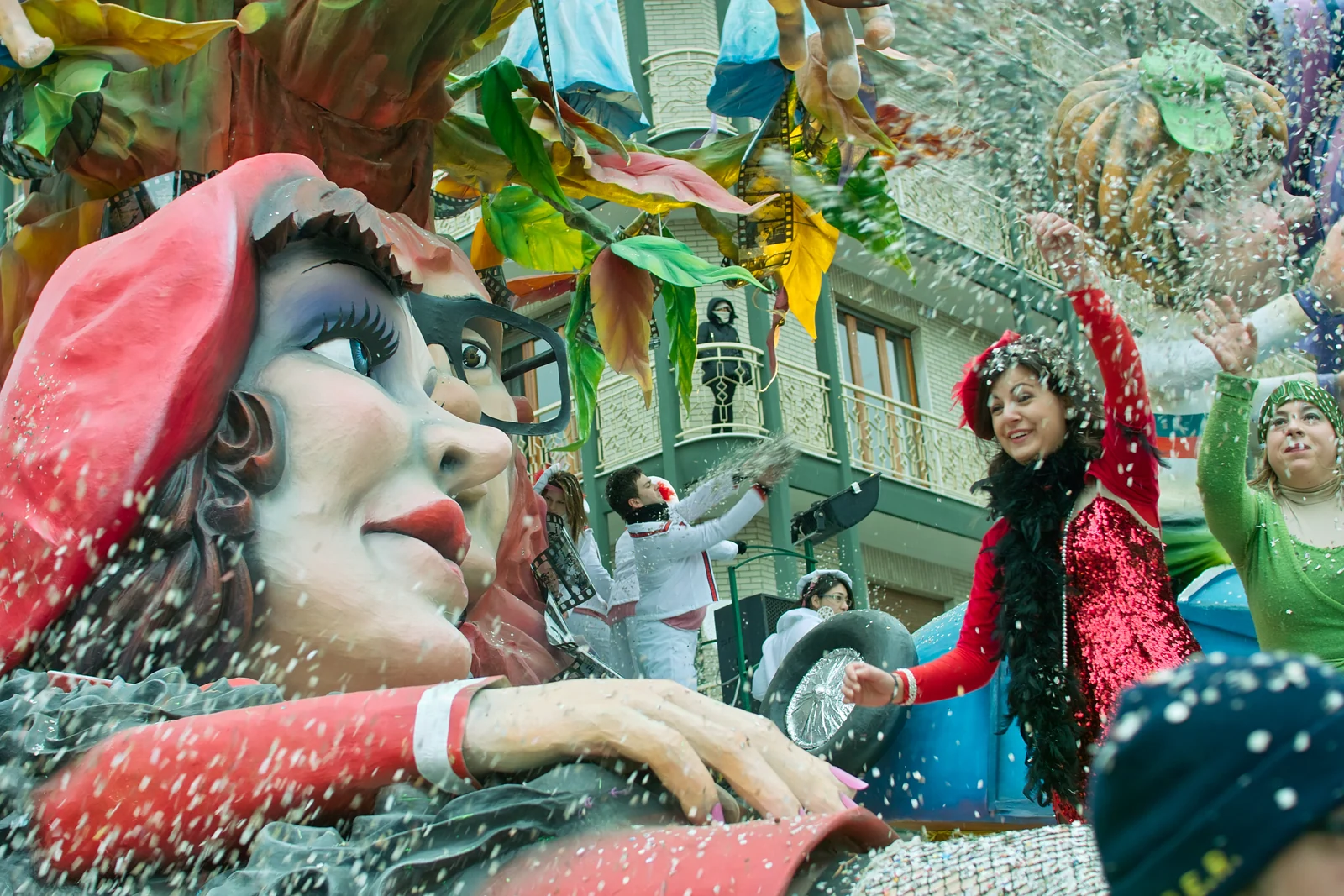
Putignano stands on three hills of the Lower Murgia, at 375 metres, less than forty kilometres from Bari and eighteen from the sea. The municipality presents it as the home of the oldest Carnival in Europe and the longest in Italy, and the festival really is the first reason to visit: it begins on 26 December and runs through winter until Lent, with traditional rites, masks and huge papier-mâché floats.
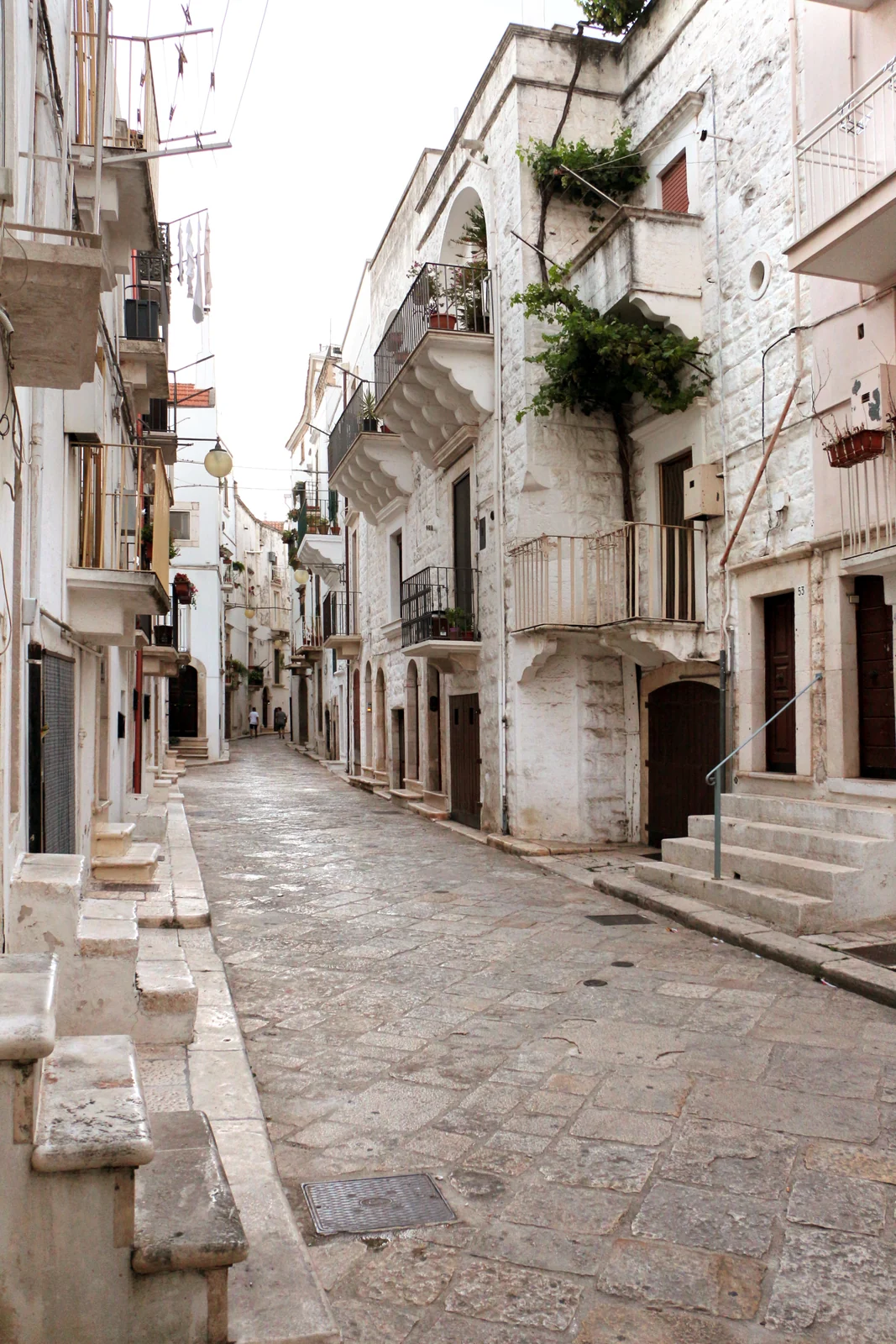
But Putignano is not only Carnival. The elliptical old town is a succession of lanes paved with 'chianche' stones and courtyards; the Ministry of Tourism describes it as a historic centre where it is easy to lose your bearings, with a main square, piazza Plebiscito, overlooked by the mother church, the Palazzo del Balì and the Sedile. Outside the centre, a countryside of almond, olive and cherry trees and dry-stone walls hides karst caves, including the Grotta del Trullo, the first show cave opened in Puglia.
It is a stop that combines the story of a popular festival, the art of a noble residence and the underground world of the Murgia, in the heart of the land of trulli and caves.
Sources: Putignano — fonte istituzionale · Italia.it, Ministero del Turismo — Putignano · Viaggiare in Puglia, Regione Puglia — Grotta del Trullo
History
The municipality notes that Putignano is of ancient Peucetian origin, as finds from the area show, and that it was a Roman settlement in the second and third centuries; the name appears as Pautiniano in a document of 966. For more than seven centuries the town was 'nullius', directly subject to the Pope in spiritual and temporal matters, governed for two hundred years by the Benedictines and then by the Knights of Malta until 1808. The papal coat of arms over the mother church's doorway still recalls that status.
According to the municipality, Frederick II had a castle built and later demolished it together with the walls, because of the townspeople's loyalty to the Pope. The moat that surrounded the town became a broad avenue outside the walls in 1876.
The story of Carnival begins in 1394, when the relics of Saint Stephen were brought from Monopoli to Putignano to save them from Saracen raids: farmers busy layering vines joined the procession, and from this came the Festa delle Propaggini that still opens the festival. Papier-mâché floats appeared at the beginning of the twentieth century and came into their own in the 1950s.
Sources: Putignano — fonte istituzionale · Viaggiare in Puglia, Regione Puglia — San Pietro Apostolo, Chiesa Madre di Putignano
What to see
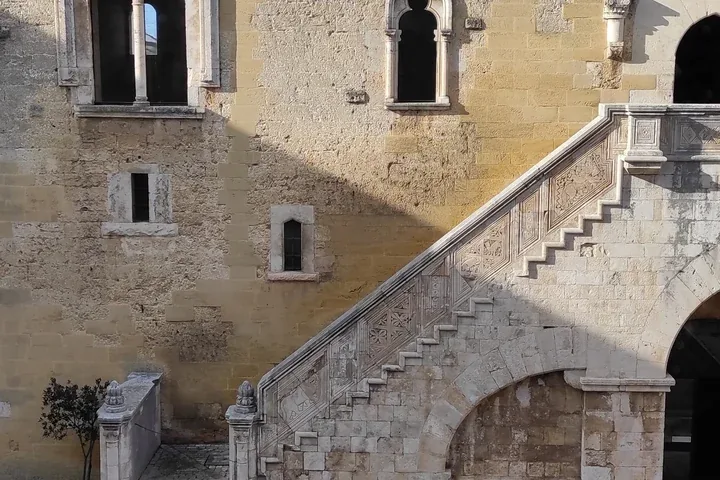
The heart of the old town is piazza Plebiscito, reached along the Chiancata, the old street that linked Porta Maggiore and Porta Barsento. The mother church of San Pietro, built of limestone on a Romanesque plan, has a seventeenth-century bell tower and keeps, among paintings and frescoes, the statue of Saint Sebastian considered Stefano da Putignano's first work, and an ancient crucifix. Opposite, the Palazzo del Balì, residence of the feudal lords, houses the Romanazzi Carducci Museum: bought by the family in the mid-nineteenth century and left in 1967 by Prince Guglielmo to become a museum, it keeps original furnishings, paintings from the sixteenth to the twentieth century and a collection of table clocks, with a hanging garden.
Outside the historic centre, the convent of San Domenico, completed in 1694, has a baroque façade and a stucco-decorated interior; the fourteenth-century church of Santa Maria la Greca keeps the relics of Saint Stephen.
On the road to Turi lies the Grotta del Trullo, discovered on 29 May 1931, with a trullo-shaped entrance and a spiral staircase descending among reddish stalactites and stalagmites and white calcite blooms. Its official site, checked on 6 October 2026, listed guided visits at €7 per adult and €4 per child, free under six.
Sources: Putignano — fonte istituzionale · Viaggiare in Puglia, Regione Puglia — San Pietro Apostolo, Chiesa Madre di Putignano · Comune di Putignano — Museo Romanazzi Carducci · Viaggiare in Puglia, Regione Puglia — Museo Principe Guglielmo Romanazzi Carducci · Viaggiare in Puglia, Regione Puglia — Convento di San Domenico · Italia.it, Ministero del Turismo — Putignano · Viaggiare in Puglia, Regione Puglia — Grotta del Trullo · Grotta del Trullo — sito ufficiale
Food and wine
Putignano's cooking comes from the farming tradition. The municipality names farinella as its signature dish, a very fine flour of chickpeas and barley toasted and then ground in small stone mortars: it was the farmers' lunch in the fields, carried in a cloth bag with dried figs and wild herbs, and today it is eaten with wild chicory or turnip tops. It also gives its name to the official Carnival mask.
Among typical dishes the municipality lists taralli, bread meatballs, handmade pasta and 'pane acqua e sale', stale bread dressed with water, oil, salt, tomato and oregano. The Frisella, a twice-baked barley or wheat bread softened in water and topped with tomato and oil, has, according to the regional atlas of traditional products, a festival of its own in Putignano in July.
The countryside, the municipality writes, is dotted with almond, olive, cherry, vine and fig trees: garden produce and fruit follow the seasons, and trattorias and restaurants in the old town offer a good variety.
Sources: Putignano — fonte istituzionale · Atlante dei prodotti tradizionali di Puglia — Friselle di orzo e grano
Things to do
The best way to get to know Putignano is to walk the old town along the Chiancata, letting the courtyards and lanes lead you; the Ministry of Tourism warns that it is easy to lose your way, and that is precisely the charm of the place.
Underground, visits to the Grotta del Trullo are guided, according to the regional portal, by speleologists of the Putignano Karst Research Group. About three kilometres from town, the Grotto of San Michele in Monte Laureto is a rock church carved entirely into the stone, a place of worship since remote times: a broad stairway leads into the great chamber with a frescoed shrine of Byzantine date, a statue of Saint Michael attributed to Stefano da Putignano and a ceiling of stalactites.
The municipality also recalls local crafts: stone working, rural basketry and the papier-mâché of the floats, which takes shape in the workshops during the year. For cyclists, the regional portal mentions a 2.8-kilometre cycle path along viale Cristoforo Colombo and several routes in the surrounding area.
Sources: Italia.it, Ministero del Turismo — Putignano · Viaggiare in Puglia, Regione Puglia — Grotta del Trullo · Viaggiare in Puglia, Regione Puglia — Grotta di San Michele in Monte Laureto · Putignano — fonte istituzionale · Viaggiare in Puglia, Regione Puglia — Putignano
When to go
Putignano's calendar revolves around Carnival. According to the municipality the festival begins every year on 26 December with the Propaggini rite and continues with the Carnival Thursdays, the Feast of the Bear, the last rites, the funeral of Carnival and the 'macaroni bell', while Sundays are given over to parades of allegorical floats, character masks and masked groups. The Ministry of Tourism notes that the season runs from Christmas to the beginning of Lent, usually in February and sometimes into March. Parade dates change every year and should be checked on the official Carnival website.
In summer, the regional atlas mentions a festival devoted to the frisella in July. Spring and autumn suit walks in the countryside and cave visits, where conditions underground stay stable.
The Ministry of Tourism observes that outside the Carnival season the historic centre is rather quiet: those seeking the festival choose winter, while those who prefer calm and museums can come at any other time.
Sources: Putignano — fonte istituzionale · Italia.it, Ministero del Turismo — Putignano · Carnevale di Putignano — sito ufficiale · Atlante dei prodotti tradizionali di Puglia — Friselle di orzo e grano
Getting there and around
The regional tourism portal states that Putignano station offers many connections, but for long journeys beyond the province or the region it is best to go to Bari station. In town you get around on urban and intercity buses; the portal mentions COTRAP consortium and SITA Sud lines.
The reference airport is Bari, managed by Aeroporti di Puglia; for the link the regional portal suggests private transfers, as well as the bus services to and from the airport listed by the airport company.
The old town is explored on foot: its streets are narrow and paved, with piazza Plebiscito at the centre. For the Grotta del Trullo, on state road 172 towards Turi, and for the San Michele grotto in Monte Laureto you need your own or a hired vehicle; the regional portal mentions bike, scooter and car rental. During Carnival the parades change traffic arrangements in the centre: check the festival's website beforehand.
Sources: Viaggiare in Puglia, Regione Puglia — Putignano · Aeroporti di Puglia — Aeroporto di Bari · Putignano — fonte istituzionale · Viaggiare in Puglia, Regione Puglia — Grotta del Trullo · Carnevale di Putignano — sito ufficiale
Where to stay
For a stay in Putignano the choice depends on the season. On Carnival Sundays the town welcomes many visitors, and sleeping in or near the centre lets you walk to the parades; it is wise to plan ahead. In other months the historic centre is quiet and suits an unhurried visit.
The Putignano countryside, which the municipality describes as dotted with masserie, trulli and dry-stone walls, offers accommodation set in the landscape of the Murgia dei Trulli: a good choice for those travelling by car who want to use Putignano as a base for the Itria Valley and Castellana Grotte.
The regional portal places Putignano within the Itria Valley and Murgia dei Trulli area, where many old rural houses have been turned into places to stay. We do not list specific properties: accommodation is chosen according to dates, especially during Carnival.
Sources: Putignano — fonte istituzionale · Viaggiare in Puglia, Regione Puglia — Valle d'Itria e Murgia dei trulli
Nearby
Putignano lies where the Murgia dei Trulli meets the Bari coast. Castellana Grotte, about ten minutes by car according to the Ministry of Tourism, offers the route through the karst caves from the Grave to the White Cave. The national portal lists Putignano among the towns of the Itria Valley, together with Alberobello, Locorotondo, Martina Franca and Cisternino, all a short drive away.
Towards the sea, Monopoli and Polignano a Mare are a few kilometres away: it was from Monopoli, the municipality recalls, that the relics of Saint Stephen arrived in 1394, giving rise to Carnival. Inland, Gioia del Colle offers its Norman-Swabian castle and its dairy tradition.
In the countryside between Putignano and Turi, cherry country, a landscape of almond and olive trees accompanies the roads from one town to the next. A base in Putignano lets you alternate sea, caves and valley towns.
Sources: Italia.it, Ministero del Turismo — La Valle d'Itria: i luoghi da non perdere · Italia.it, Ministero del Turismo — Valle d'Itria · Putignano — fonte istituzionale · Viaggiare in Puglia, Regione Puglia — Gioia del Colle · Viaggiare in Puglia, Regione Puglia — Bari e la costa
Local tourist information
Local tourist offices help with opening times, events and transport on the day.
- Info-point Putignano · Piazza Plebiscito 18, 70017 Putignano (BA) · +39 080 2367269 · infopoint@comune.putignano.ba.it
Source: Viaggiare in Puglia, Regione Puglia — Info-point Putignano · Viaggiare in Puglia, Regione Puglia — Putignano · checked on
Where to stay
In the municipality of Putignano the national database of the Ministry of Tourism lists 218 accommodation businesses with a verified CIN code: 1 hotels, 61 other licensed accommodation and 156 other types such as B&Bs and private rentals.
Licensed businesses from the official list of Regione Puglia, each with a checked national CIN code: matching municipality and category. Private individuals are not listed. Check directly with the property before booking.
A CASETTA
Guest rooms
CIN IT072036B400025099
ACCOGLIENTE DIMORA
Guest rooms
CIN IT072036B400023974
CASA RICCARDI
Guest rooms
CIN IT072036B400087540
CLEMENTINA - DIMORA DI CHARME
Guest rooms
CIN IT072036B400049630
MASSERIA NONNA ANGELA
Guest rooms · Website
CIN IT072036B400022967
MONTANARO MAURIZIO
Guest rooms
CIN IT072036B400064700
SAN LORENZO SUITES
Guest rooms · Website
CIN IT072036B400106857
TORRE NUOVA
Guest rooms
CIN IT072036B400047856
TRULLI TERRA MAGICA
Guest rooms
CIN IT072036B400022108
Tenuta Colavecchio
Guest rooms
CIN IT072036B400124174
ULIVI BIANCHI
Guest rooms
CIN IT072036B400027416
AGRITURISMO BARSENTELLO
Farm stay
CIN IT072036B500039263
ARCO MICHELE
B&B
CIN IT072036B400024131
B&B ARCO GAUDì
B&B · Website
CIN IT072036B400061361
CRISALIDE B&B
B&B
CIN IT072036B400097308
DIMORA DEL SOLE
B&B
CIN IT072036B400027101
ENJOYTRULLI - COUNTRYSIDE
B&B · Website
CIN IT072036B400053576
Il Vicolo di Maggipinto Angela
B&B
CIN IT072036B400062885
L'ANGOLO DI GAUDI'
B&B · Website
CIN IT072036B400023760
MASSERIA MONTELLI
B&B
CIN IT072036B400021684
UNA PERLA NEL VERDE
B&B
CIN IT072036B400024584
DIMORE BIANCHE
Holiday home
CIN IT072036B400127531
DIMORE BIANCHE, SANTA LUCIA 17
Holiday home · Website
CIN IT072036B400085937
IL RIFUGIO DEL PRICIPE
Holiday home
CIN IT072036B400026459
UNA PERLA NEL VERDE - SUITE ULIVO
Holiday home
CIN IT072036B400121361
PIETRANTICHE
Hotel · ★★★
CIN IT072036A100036617
Sources: Regione Puglia – ARET Pugliapromozione (DMS), CC BY 4.0, 2026-10-12 · Ministero del Turismo – Banca Dati Strutture Ricettive (dashboard pubblica), 2026-10-12
YOUR JOURNEY
How to shape a journey here
Even without a parade, papier-mâché is a key to understanding Putignano. A journey can connect the town with the caves while giving each stop its own identity.
Talk to us about it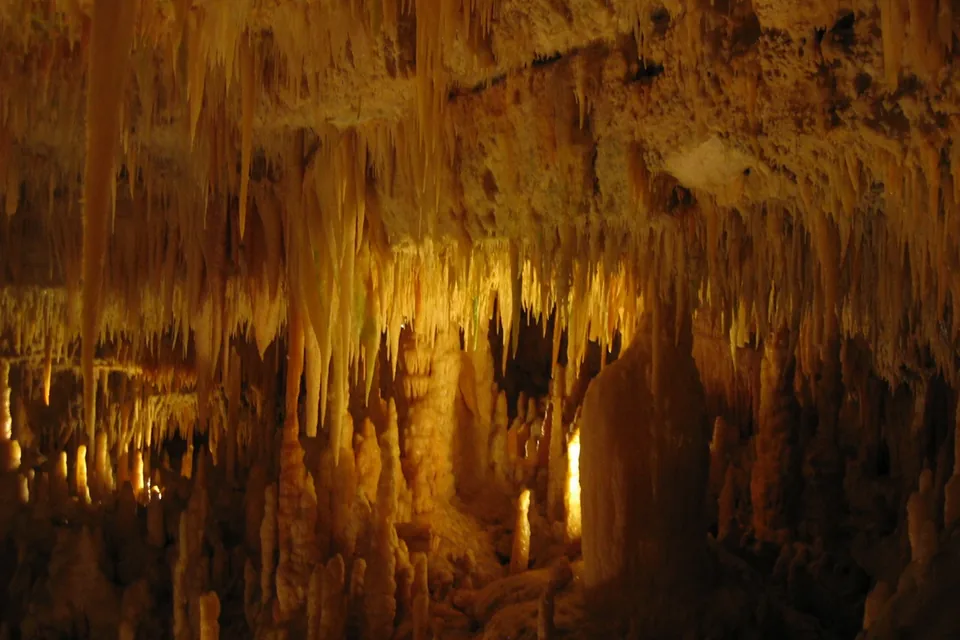
.jpg)

