Why go
Castellana Grotte stands on the limestone plateau of the Murgia dei trulli, about forty kilometres from Bari, and the municipality presents it as the gateway to the Itria Valley. Its name already gives the main reason to come: a short walk from the centre lies a cave system some three kilometres long, at an average depth of seventy metres, which the regional tourism portal ranks among the most important speleological complexes in Europe.
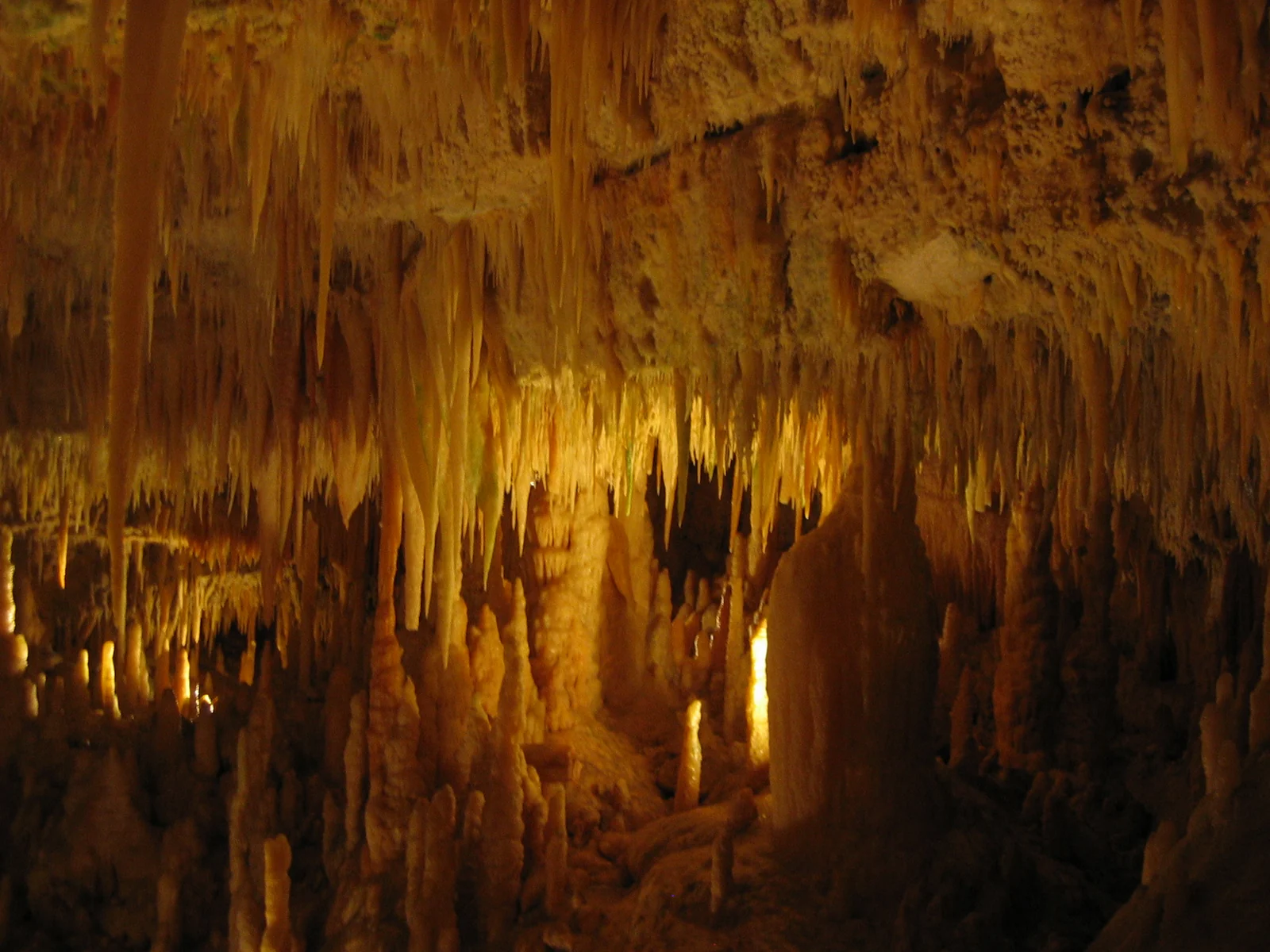
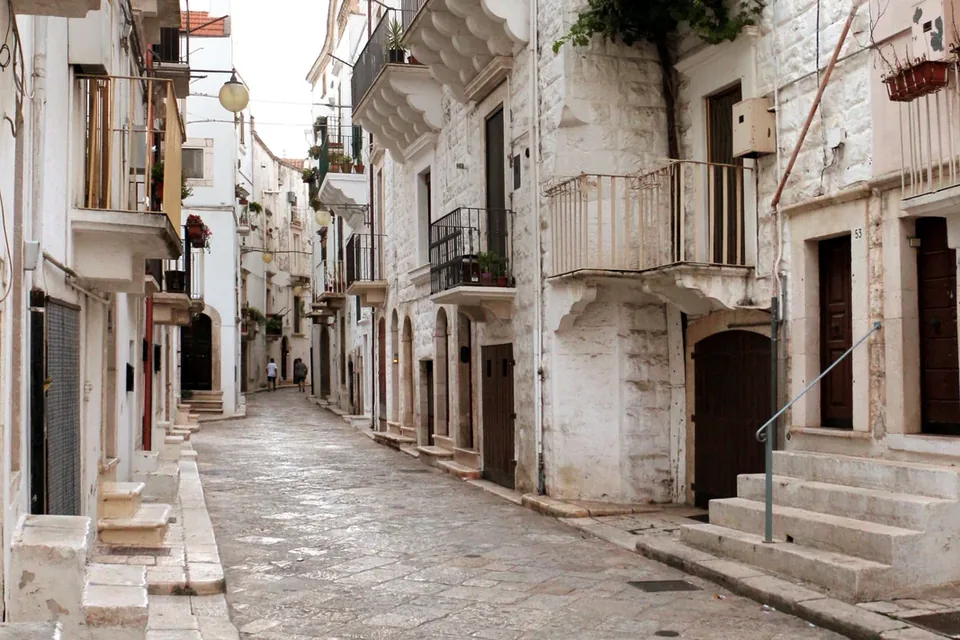
The landscape changes without leaving the same territory: from the olive grove you descend into the Grave, the great cavern open to the sky, cross passages and chambers lined with formations, and climb back up to a town with a white historic centre, lanes paved in local limestone, old churches and traditions that are still deeply felt. The underground world is more than a spectacle of shapes: water builds and changes the rock, explorers name the chambers and the community turns discovery into part of its own story.
Castellana is also a convenient base, on the hills with a cool summer climate, a short distance from the trulli of Alberobello, Putignano, Conversano and the sea at Polignano and Monopoli. Those who choose it find a compact town with a calendar of festivals that runs through the whole year.
Sources: Comune di Castellana Grotte, VisitCastellanaGrotte — La città · Grotte di Castellana — origine e concrezioni · Regione Puglia, Viaggiare in Puglia — Grotte di Castellana · Regione Puglia, Viaggiare in Puglia — Castellana Grotte
History
The story of the caves begins in the Upper Cretaceous, ninety to a hundred million years ago, when Puglia lay under a sea full of molluscs: their remains, piled up and compressed, formed limestone layers kilometres thick. Once the land had risen, rainwater widened fractures in the rock until they joined into conduits and caverns; in the Grave repeated collapses thinned the vault until it gave way and let in the light.
The town has medieval roots: the locus Castellano is documented in 901, and in 1171 Abbot Eustasio granted the land to two settlers from Otranto, Nicola and Costa, whose names live on in the main square. For centuries the Grave was a feared place, wrapped in legends of vapours and lost souls; records in the municipal archive mention descents to recover bodies in 1800 and 1847.
The turning point came on 23 January 1938, when speleologist Franco Anelli, sent at the request of the Bari provincial tourism board, went down into the Grave and found a passage to a second great cavern. Two days later he returned with Vito Matarrese, a worker from Castellana; Anelli completed the first survey in September that year, while Matarrese, continuing alone, reached the White Cave in 1939.
Sources: Grotte di Castellana — origine e concrezioni · Comune di Castellana Grotte, VisitCastellanaGrotte — La città · Comune di Castellana Grotte, VisitCastellanaGrotte — Arte e cultura · Grotte di Castellana — storia dell’esplorazione
What to see
Cave visits are always guided, in several languages, and follow two routes. The partial route, about one kilometre long, starts from the Grave, the only cavern naturally open to the outside, about a hundred metres long and sixty deep, and continues past the She-wolf, the Owl and the first columns. The full route, about three kilometres, crosses the Cave of Monuments, the Desert Corridor, the upside-down column known as the Tower of Pisa and the Dome, ending at the White Cave, famous for the brightness of its alabaster. The names come from the imagination of the first explorers; it is more rewarding to notice how stalactites, stalagmites, curtains and small eccentric formations change from one chamber to the next.
At the exit, the Franco Anelli Speleological Museum, opened in 2000 in a building designed in 1952, explains karst and caving and houses the documentation centre of the Puglia Speleological Federation.
In town, head up to Largo San Leone Magno, the medieval heart, where the mother church keeps a thirteenth-century defensive tower turned bell tower. Nearby are the church of San Francesco d'Assisi, with three hundred sculptures and seven Baroque altars, Santa Maria del Suffragio with paintings by local artist Vincenzo Fato, the 1848 Clock Tower and the sanctuary of the Madonna della Vetrana, built after the plague of 1691.
Sources: Grotte di Castellana — itinerari ufficiali · Grotte di Castellana — Museo speleologico Franco Anelli · Comune di Castellana Grotte, VisitCastellanaGrotte — Arte e cultura
Food and wine
The municipality describes a cuisine born of farming tradition and still alive on tables of every generation. The signature dish is impanata: boiled chicory with a purée of dried broad beans, dressed with salt and extra virgin olive oil and served with crusty bread. Alongside it come grass pea soup, home-made meatballs, grilled pork chops and side dishes such as brined olives and sun-dried tomatoes.
The countryside supplies extra virgin olive oil, cherries, almonds, grapes and prickly pears, together with cherry tomatoes and green beans; fresh pasta is still shaped by hand, and dairy includes mozzarella, burrata and stracciatella. Castellana Grotte is among the municipalities near Bari within the production area of Gioia del Colle, the designation of origin covering red, rosé and white wines and Gioia del Colle Primitivo, as well as Aleatico, including a sweet fortified version.
To taste local food in its setting, festivals are the best moments: at the end of September the impanata festival closes the summer evenings, while in early September, with the centuries-old Caroseno Fair, the Pro Loco organises a festival of spit-roasted chicken and rabbit. Desserts, the municipality says, taste of cherries, figs, grapes and almonds.
Sources: Comune di Castellana Grotte, VisitCastellanaGrotte — Sapori del territorio · Regione Puglia — Gioia del Colle DOP · Comune di Castellana Grotte, VisitCastellanaGrotte — Eventi e tradizioni
Things to do
Beyond the standard tour, the Castellana Caves offer themed experiences through the year: the show Hell in the Cave, night-time caving visits, family activities and an astronomical observatory. The programme varies from season to season and should be checked on the official site.
The Caves 100% Accessible project offers bookable visits for people with disabilities: lifts lead down into the Grave and an accessible stretch of about four hundred metres runs to the Cave of the Spring, or, under certain conditions, the whole route to the White Cave, with specialised staff. The museum also runs astronomy, geology and cave biology workshops for schools and groups.
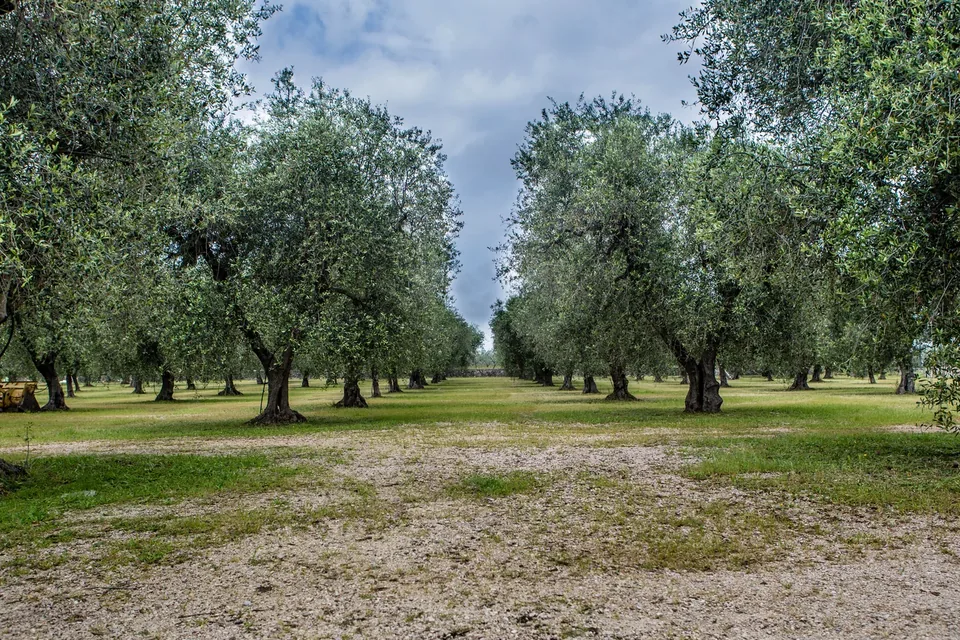
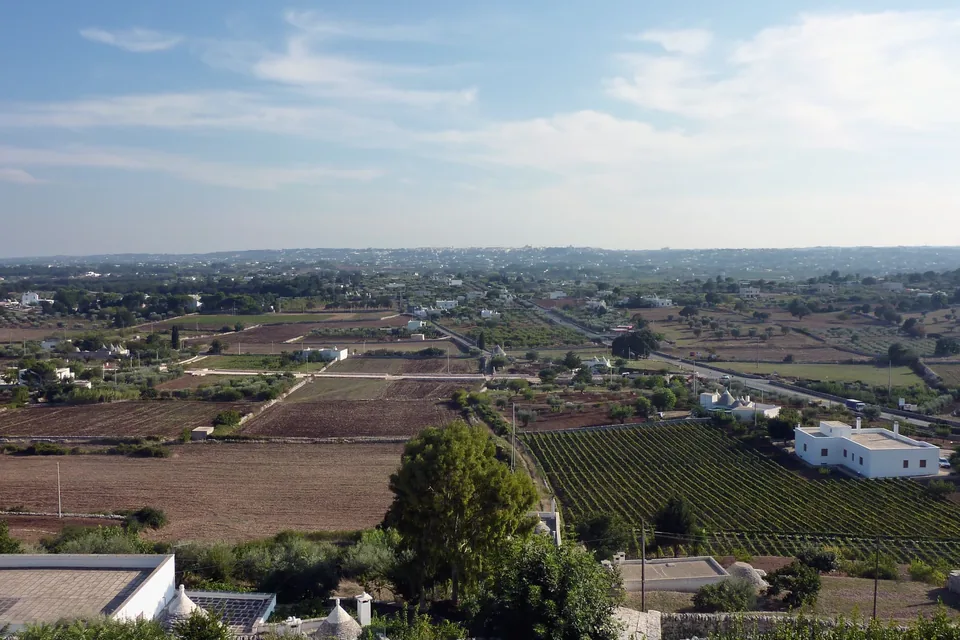
Above ground, the Castellana countryside invites walking or cycling among dry-stone walls, trulli, fortified farmhouses, monumental olive trees, almond and cherry orchards, along old drove roads skirting woods of Macedonian and other oaks. Out in the fields stands the rock church of San Nicola di Genna, with a nearby snow store dated 1788, while by the public gardens a long stairway descends to the underground church of the Madonna della Grotta.
Sources: Grotte di Castellana — Hell in the Cave · Grotte di Castellana — Grotte 100% accessibili · Grotte di Castellana — Museo speleologico Franco Anelli · Comune di Castellana Grotte, VisitCastellanaGrotte — Paesaggio · Comune di Castellana Grotte, VisitCastellanaGrotte — Arte e cultura
When to go
The caves are open all year and underground the temperature stays between 14 and 18 degrees: visits are pleasant in any season, but bring an extra layer and rubber-soled shoes. Above ground, spring and autumn are ideal for the countryside, while in summer the hilltop position keeps the climate cool and from June to September the town fills its squares with concerts, festivals and events.
The religious calendar revolves around the Madonna della Vetrana, who according to tradition freed the town from plague in 1691. On the night of 11 January the Fanòve are lit, nearly a hundred great woodpiles burning across town, preceded by the rite of the Diana, a night-time round of the olive mills collecting oil for the Madonna's lamp. For the Festa d'Aprile, on the last Sunday of the month, the patron's statue enters town in a Saturday evening procession; on Sunday, in the grand procession, more than twenty-five sacred statues file past her.
Holy Week is deeply felt, with the altars of repose on Maundy Thursday and the procession of the Mysteries on Good Friday. September brings the Caroseno Fair and, at the end of the month, the impanata festival.
Sources: Grotte di Castellana — itinerari ufficiali · Comune di Castellana Grotte, VisitCastellanaGrotte — Paesaggio · Comune di Castellana Grotte, VisitCastellanaGrotte — Eventi e tradizioni · Grotte di Castellana — Matarrese e la memoria della Vetrana
Getting there and around
According to the official caves website, the nearest airport is Bari, followed by Brindisi; by road you arrive via the A14 motorway and then the SS16 or SS100, and Bari port is under an hour away. There are car parks near the caves, one of them served by a shuttle.
By train, Castellana Grotte is a stop on the Bari–Putignano line of Ferrovie del Sud Est, part of the FS group: after a period of closure, trains run again between Putignano and Rutigliano, stopping at Castellana Grotte and Conversano, supplemented by bus connections to and from Bari. Check timetables and arrangements on official Ferrovie del Sud Est channels before travelling.
In town, the municipality runs an urban bus service linking the centre with outlying areas, including the railway station and the caves complex. The historic centre, gathered around Largo San Leone Magno and Piazza Nicola e Costa, is best seen on foot; for the countryside, rock churches and neighbouring towns you need your own transport or an organised service.
Sources: Grotte di Castellana — Come raggiungerci · RFI — Ferrovie del Sud Est, linea Putignano-Bari: tornano i treni tra Putignano e Rutigliano · Comune di Castellana Grotte, VisitCastellanaGrotte — Come muoversi · Comune di Castellana Grotte, VisitCastellanaGrotte — Arte e cultura
Where to stay
The municipality describes a varied range of accommodation spread between the caves area, the historic centre and the countryside. Those coming mainly for the karst site will find hotels near the caves, convenient for a morning visit or evening shows; those who prefer to live the town can choose bed and breakfasts and holiday homes in the centre, within walking distance of churches and squares.
The Castellana countryside offers the most characteristic experience: agriturismi, masserie and holiday homes set among olive trees and dry-stone walls, often with a pool, and many trulli where you can spend the night. The municipality stresses hospitality designed for families and an unhurried pace, suited to those using Castellana as a base to explore the Itria Valley and the coast.
For a stay of several days the hillside is an advantage, as summer temperatures stay mild. Either way, your own transport makes it easier to move between town, caves and countryside, and the Info-point and the municipal culture and tourism office remain the reference for up-to-date information.
Sources: Comune di Castellana Grotte, VisitCastellanaGrotte — Strutture ricettive · Comune di Castellana Grotte, VisitCastellanaGrotte — Paesaggio · Comune di Castellana Grotte, VisitCastellanaGrotte — La città · Regione Puglia, Viaggiare in Puglia — Info-point Castellana Grotte · Comune di Castellana Grotte, VisitCastellanaGrotte — Informazioni utili
Nearby
The municipality notes that many of central Puglia's best-known places lie within about twenty kilometres. Alberobello, with its UNESCO-listed trulli, is about a quarter of an hour away; the towns of the Itria Valley, such as Locorotondo, Martina Franca and Cisternino, continue the landscape of walls and stone cones. Conversano, a few minutes away, keeps the Acquaviva castle, remains of megalithic walls and the gallery with the Gerusalemme Liberata painting cycle.
Putignano, very close, carries on the underground theme with the Grotta del Trullo and offers its Carnival in winter. Towards the sea, Polignano a Mare sits on its cliff with sea caves reached by boat, and Monopoli combines a compact old town around its harbour with long sandy beaches.
On the provincial road to Putignano, within Conversano's territory, stands the Castello di Marchione, once the hunting lodge of the Acquaviva d'Aragona counts. Rather than chaining all these stops together, it is better to pick one thread after the caves: Putignano's crafts and festivals, the rural landscape of the Itria Valley, or the sea.
Sources: Comune di Castellana Grotte, VisitCastellanaGrotte — Luoghi d’interesse nei dintorni · Comune di Castellana Grotte, VisitCastellanaGrotte — La città · Regione Puglia, Viaggiare in Puglia — Grotta del Trullo · Regione Puglia, Viaggiare in Puglia — Castello di Marchione
Local tourist information
Local tourist offices help with opening times, events and transport on the day.
- Info-point Castellana Grotte · Via Matarrese, 70013 Castellana Grotte (BA) · +39 334 9111001 · [email protected] · Official website
Source: Regione Puglia, Viaggiare in Puglia — Info-point Castellana Grotte · checked on - Comune di Castellana Grotte — Ufficio Cultura e Turismo · Via Marconi 9, 70013 Castellana Grotte (BA) · +39 080 4900259 · Official website
Source: Comune di Castellana Grotte, VisitCastellanaGrotte — Informazioni utili · Comune di Castellana Grotte — sito istituzionale · checked on
Where to stay
In the municipality of Castellana Grotte the national database of the Ministry of Tourism lists 313 accommodation businesses with a verified CIN code: 6 hotels, 76 other licensed accommodation and 231 other types such as B&Bs and private rentals.
Licensed businesses from the official list of accommodation named as the source in this section. Where the list gives it, the property's official identification code appears next to its name: the national CIN code, or the code assigned by the Region or by the body that keeps the list. Private individuals are not listed. This list is the official census of licensed businesses, not a list of Apulica partners: to stay in Castellana Grotte you do not have to check one property after another yourself; write to Apulica and we look for the stay that suits your journey, checking availability and conditions before any confirmation.
APULIA SEMIRAMIDE PALACE HOTEL
Hotel · ★★★★
CIN IT072017A100069746
AGRITURISMO BIOLOGICO SERRAGAMBETTA
Farm stay
CIN IT072017B500020640
B&B DIMORA DELLE GROTTE
B&B
CIN IT072017B400024874
APULIA SUITE
Guest rooms
CIN IT072017B400060732
ÁNTIKA SUITE & SPA
Holiday home
CIN IT072017B400107580
MASSERIA SERRITELLA
Hotel · ★★★★
CIN IT072017A100025184
agriturismo dimora delle grotte
Farm stay
CIN IT072017B500060733
B&B "IL RIFUGIO DELLE GROTTE"
B&B
CIN IT072017B400022376
B&B Donna Silvia Srls
Guest rooms
CIN IT072017B400069574
Borgo Cucumo
Holiday home
CIN IT072017B400121573
First the places that presented themselves to Apulica, the latest first; then one place of each type in turn, by official category and stars, then by name. No position is paid for.
All 64 entries in alphabetical order
Page 1 of 7
| Name | Type | CIN |
|---|---|---|
| AGRITURISMO BIOLOGICO SERRAGAMBETTA | Farm stay | IT072017B500020640 |
| agriturismo dimora delle grotte | Farm stay | IT072017B500060733 |
| ÁNTIKA SUITE & SPA | Holiday home | IT072017B400107580 |
| APULIA SEMIRAMIDE PALACE HOTEL | Hotel | IT072017A100069746 |
| APULIA SUITE | Guest rooms | IT072017B400060732 |
| B&B DIMORA DELLE GROTTE | B&B | IT072017B400024874 |
| B&B Donna Silvia Srls | Guest rooms | IT072017B400069574 |
| B&B "IL RIFUGIO DELLE GROTTE" | B&B | IT072017B400022376 |
| B&B MASSERIA DEL MARCHESE | B&B | IT072017B400025384 |
| BIANCO CHIARA | Farm stay | IT072017B500020918 |
Ask Apulica for a stay in Castellana Grotte We reply shortly, within a few hours at most, with a proposal for you to consider.
Sources: Regione Puglia – ARET Pugliapromozione (DMS), CC BY 4.0, 2026-10-12 · Ministero del Turismo – Banca Dati Strutture Ricettive (dashboard pubblica), 2026-10-12
YOUR JOURNEY
How to shape a journey here
We can arrange a stop connecting caves and town, a meal and a continuation towards Putignano’s crafts or the Valle d’Itria landscape.
Plan your tripKeep exploring
Putignano
Putignano: papier-mâché and town memory. Europe’s oldest carnival runs from 26 December to Lent with papier-mâché floats, while farinella recalls rural cooking.
Read the guide →Photo: Sailko / Wikimedia Commons — CC BY 3.0 · Resized and converted to WebP.
Itria Valley
Rural architecture, towns and food as parts of the same journey. Trulli across the countryside, Locorotondo, Cisternino, Martina Franca and Slow Food capocollo.
Read the guide →Photo: Adbar / Wikimedia Commons — CC BY-SA 3.0 · Resized and converted to WebP.
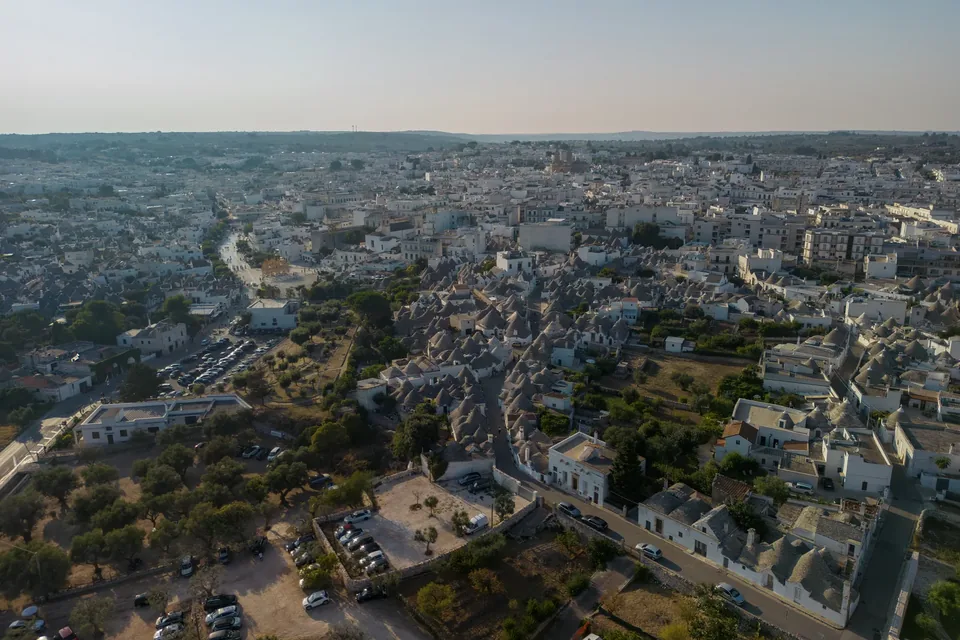
Alberobello
Trulli through their shape, space and everyday use. The Monti and Aia Piccola districts hold more than a thousand trulli, a World Heritage Site since 1996.
Read the guide →Photo: ParisTaras / Wikimedia Commons — CC BY-SA 4.0 · Resized and converted to WebP.
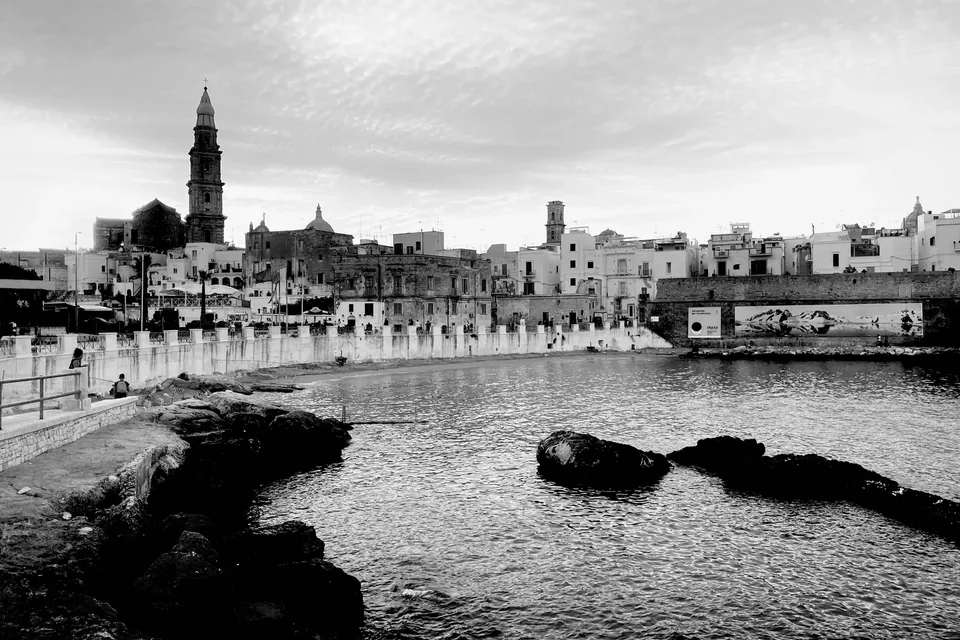
Monopoli
An Adriatic conclusion connected to the rural landscape. A harbour reaching into the old town, the cathedral, rural contrade and ‘mareterra’ cooking.
Read the guide →Photo: RaTio65 / Wikimedia Commons — CC BY-SA 4.0 · Resized and converted to WebP.
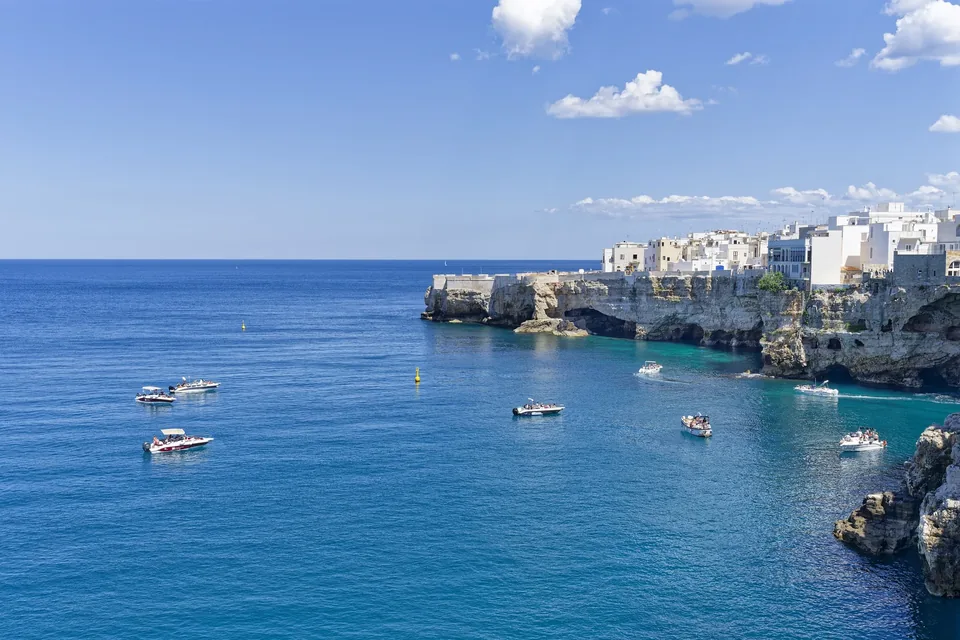
Polignano a Mare
Old town, viewpoints and a coffee as a travel pause. A white town on a cliff, the Arco Marchesale, contemporary art and the multicoloured Polignano carrot. And then the history of the mother church, the Pino Pascali museum, the dives from the houses of the old town, the feast of Saint Vitus and the Costa Ripagnola nature park.
Read the guide →Photo: Maksimsokolov / Wikimedia Commons — CC BY-SA 4.0 · Resized and converted to WebP.
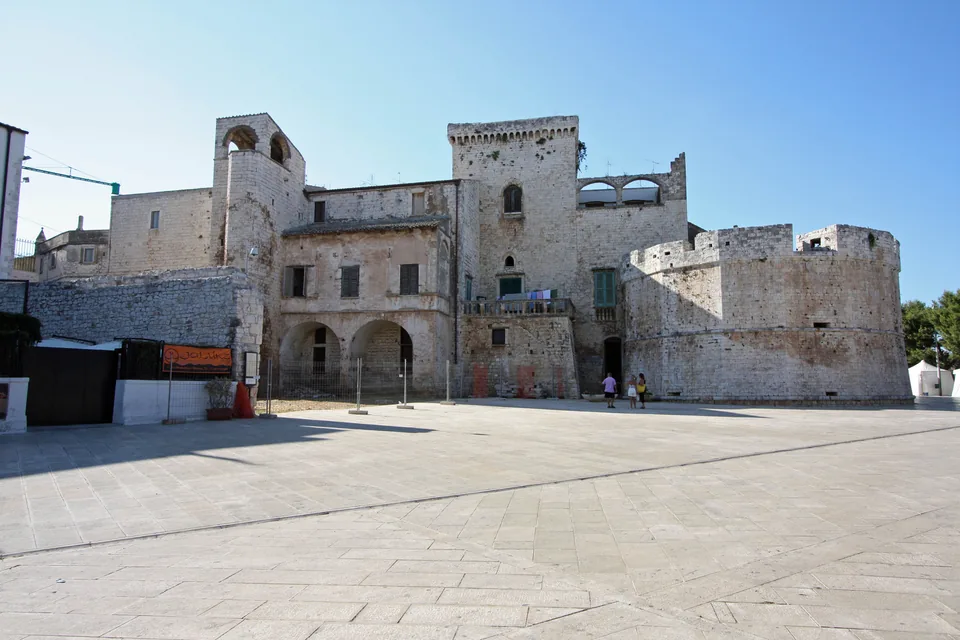
Conversano
Conversano (BA), Puglia: 25,938 residents, 128.42 km². The official facts of the municipality, its town council website and its registered accommodation. The castle of the Acquaviva d’Aragona with Paolo Finoglio’s canvases, the Romanesque cathedral, the monastery of the mitred abbesses, the karst lakes, the cherries and the “Terra di Bari” PDO olive oil.
Read the guide →Photo: Carlo Pelagalli / Wikimedia Commons — CC BY-SA 3.0 · Resized and converted to WebP.
“Come to Castellana Grotte as a guest, not as a tourist: that is how these places truly let you know them.”