

Why go
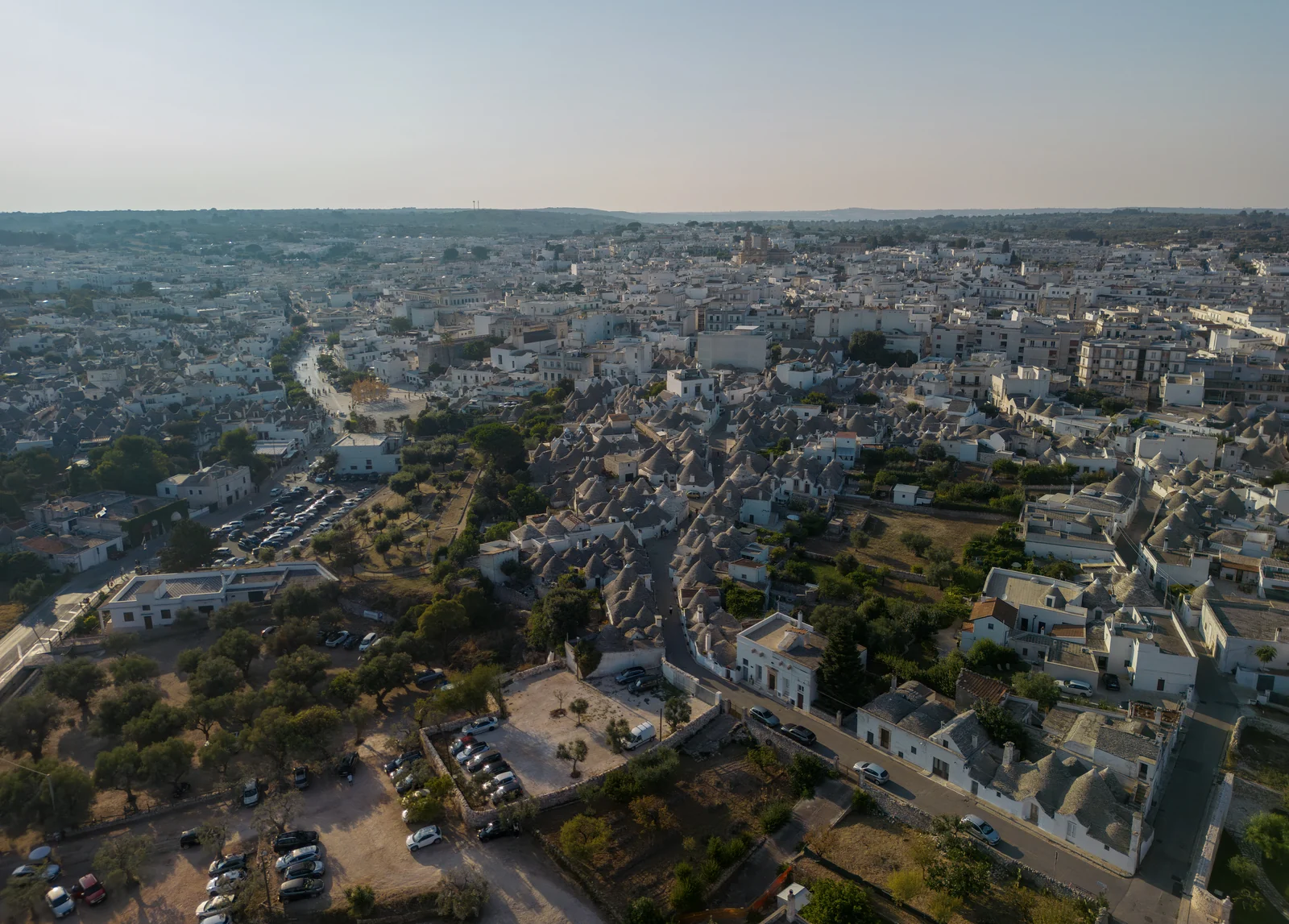
Alberobello is where the trullo stops being a single picture and becomes an entire town. The Puglia Region's tourism portal places it at the heart of the Murgia dei Trulli, about fifty kilometres from Bari, and notes that its historic centre has been a World Heritage Site since 1996. Together the Monti and Aia Piccola districts hold more than a thousand trulli: dry-stone houses whitewashed with lime, topped by conical roofs of grey slabs that often carry painted crosses, hearts or astral signs.
The reason to come is not only the view from the belvedere. Here you can see how a building technique shaped the life of a community: courtyards that worked like small urban farmsteads, houses that grew by successive additions, the shift from stone laid without binder to mortar. Casa Pezzolla, the Trullo Sovrano and Casa D'Amore tell exactly this story of change.
The town also holds the Touring Club Italiano's Orange Flag, which the regional portal links to the quality of hospitality and the harmony of the whole. It easily fills a full day and works well as a base for exploring the Itria Valley.
Sources: Viaggiare in Puglia, Regione Puglia — Alberobello · UNESCO — The Trulli of Alberobello · Comune di Alberobello — Rione Aia Piccola · Comune di Alberobello — Casa D'Amore · Comune di Alberobello — Museo del Territorio Casa Pezzolla · Ministero della Cultura — Casa museo Trullo Sovrano
History
The municipality's pages trace a history bound to the counts of Conversano, the Acquaviva d'Aragona family. For a long time the inhabitants built dry, without mortar; the turning point came in 1797, when a royal dispatch allowed them to build their houses as they saw fit, free from the count's restrictions. According to local tradition, on 22 June that year, while the first mayor was being elected, Francesco D'Amore began the house that bears his name, the first officially built with mortar, in full view of the counts' residence nearby.
During the nineteenth century the traditional technique was gradually abandoned. The municipality notes that in 1843 the urban police regulations banned dry-stone building, with the exception of the Monti district, then home to the poorest families: that very exemption is what allowed the quarter to survive almost intact. In 1910 Monti was declared a national monument, and Aia Piccola followed in 1930.
International recognition came in December 1996, when the Trulli of Alberobello were inscribed on UNESCO's World Heritage List, an inscription that also covers the Trullo Sovrano.
Sources: Comune di Alberobello — Casa D'Amore · Comune di Alberobello — Rione Monti · Comune di Alberobello — Rione Aia Piccola · UNESCO — The Trulli of Alberobello · Ministero della Cultura — Casa museo Trullo Sovrano
What to see
The Monti district climbs from Largo Martellotta up the hill facing the centre, as far as the church of Sant'Antonio, along eight parallel streets, including via Monte Nero, via Monte San Michele and via Monte Pasubio, where the oldest houses stand. At the top is the church of Sant'Antonio, built in 1926-1927 using the trullo technique and crowned by a dome of about twenty metres; on the way up you pass the 'Siamese trullo' with its twin-cone roof. The Santa Lucia belvedere gives the overall view across the rooftops.
On the other side of largo Martellotta, Aia Piccola keeps about four hundred trulli and is described by the municipality as the only area untouched by shops. Here Casa Pezzolla joins fifteen interconnected trulli and houses the Museo del Territorio, with sections on wheat, vines and domestic life; in the same district a small Olive Oil Museum explains olive varieties and the tools of milling.
To the north, behind the neoclassical basilica of Saints Cosmas and Damian, the Trullo Sovrano is the only two-storey trullo, with a dome of about fourteen metres surrounded by twelve cones; it was home to the family of the priest Cataldo Perta. Casa D'Amore, on piazza Ferdinando IV, now hosts a centre devoted to the UNESCO site and to dry-stone techniques.
Sources: Comune di Alberobello — Rione Monti · Viaggiare in Puglia, Regione Puglia — Chiesa di Sant'Antonio · Italia.it — Alberobello · Comune di Alberobello — Belvedere Santa Lucia · Comune di Alberobello — Rione Aia Piccola · Comune di Alberobello — Museo del Territorio Casa Pezzolla · Viaggiare in Puglia, Regione Puglia — Museo dell'Olio · Viaggiare in Puglia, Regione Puglia — Basilica dei Santi Medici Cosma e Damiano · Ministero della Cultura — Casa museo Trullo Sovrano · Viaggiare in Puglia, Regione Puglia — Trullo Sovrano · Comune di Alberobello — Casa D'Amore
Food and wine
The countryside around Alberobello belongs to the farming landscape of the Itria Valley, and the table reflects it. The whole municipality lies within the zone of Martina or Martina Franca DOP, a white wine that the regional specification bases on Verdeca and Bianco d'Alessano, ranging from pale straw to greenish yellow, delicate and dry; the denomination also covers a sparkling version.
Olive oil is the other thread to follow. The Olive Oil Museum, set in a trullo in Aia Piccola, compares past and present production and keeps tools from the late nineteenth and early twentieth centuries used above all for milling. Visiting it before a tasting helps you understand what ends up on the plate.
Among the valley's specialities, the Bombetta di Martina Franca is a small roll of pork capocollo filled with cheese and cooked on a spit or over embers: the regional atlas of traditional products places its origin in the towns of the Itria Valley. Finally, the Museo del Territorio at Casa Pezzolla, with its sections on wheat and vine growing, provides the rural context these dishes come from.
Sources: Regione Puglia — Martina o Martina Franca DOP · Viaggiare in Puglia, Regione Puglia — Museo dell'Olio · Atlante dei prodotti tradizionali di Puglia — Bombetta · Comune di Alberobello — Museo del Territorio Casa Pezzolla
Things to do
The best way to get to know Alberobello is on foot, switching between the scale of the district and that of the single house. A walk can start from the Santa Lucia belvedere, drop down to largo Martellotta, climb through Monti to Sant'Antonio and then cross Aia Piccola, which still looks like a lived-in quarter. Going inside Casa Pezzolla and the Trullo Sovrano shows how interior space changes, from the alcoves of the simplest trulli to the sequence of rooms in the two-storey building.
Anyone interested in the building technique can stop at the UNESCO heritage centre in Casa D'Amore, which the municipality describes as a place to learn about dry-stone work and the cultural landscape. The Pro Loco, which runs the info-point, also lists educational activities linked to the craft of the trullo builder.
Outside the centre, about eight hundred metres away, the Bosco Selva is the town's green lung, covering forty-five hectares. The regional portal also points to bike hire and several cycling routes nearby: a gentle way to see the trulli scattered across the countryside among dry-stone walls and olive groves.
Sources: Comune di Alberobello — Belvedere Santa Lucia · Comune di Alberobello — Rione Aia Piccola · Comune di Alberobello — Museo del Territorio Casa Pezzolla · Ministero della Cultura — Casa museo Trullo Sovrano · Comune di Alberobello — Casa D'Amore · Pro Loco Alberobello — laboratorio con mastro trullaro · Comune di Alberobello — Bosco Selva · Viaggiare in Puglia, Regione Puglia — Alberobello
When to go
Alberobello can be visited all year, and each season offers a different reading. The national tourism portal notes that a living nativity scene is staged among the trulli in December, winding through the lanes of Aia Piccola too, and that a living Passion is performed on Good Friday: two occasions when the town becomes the stage for a community tradition.
In summer the Trullo Sovrano, according to the Ministry of Culture's page, hosts plays, small concerts and poetry evenings, and the municipality promotes festivals and cultural initiatives during the year. Long days let you see Monti in the evening light, when the trulli are lit up, but these are also the busiest months.
Spring and autumn are the best moments to walk calmly through the districts and the countryside, to climb to the belvedere without hurry and to combine the visit with other towns in the valley. In winter the town is quieter and the museums take centre stage. We give no exact dates: the events calendar should be checked on the municipality's website or at the info-point.
Sources: Italia.it, Ministero del Turismo — Valle d'Itria · Viaggiare in Puglia, Regione Puglia — Rione Aia Piccola · Ministero della Cultura — Casa museo Trullo Sovrano · Italia.it — Alberobello · Viaggiare in Puglia, Regione Puglia — Alberobello
Getting there and around
The regional tourism portal states that Alberobello station connects mainly with nearby towns; for longer journeys, beyond the province or the region, it is best to travel via Bari station on the national network. Intercity buses to nearby places also leave from the town, run by the COTRAP consortium.
The airport to consider when planning your arrival is Bari, managed by Aeroporti di Puglia; for the link to Alberobello the regional portal suggests private transfers, alongside the bus services to and from the airport listed by the airport company.
Once there, the centre is easy to explore on foot: Monti and Aia Piccola are close together, separated only by largo Martellotta, and many lanes in Aia Piccola are closed to cars. To move through the countryside and on to other towns of the Itria Valley you can hire a car, a scooter or a bike; the regional portal mentions bike rental and several cycling routes nearby. The Santa Lucia belvedere is reached by a short walk uphill.
Sources: Viaggiare in Puglia, Regione Puglia — Alberobello · Aeroporti di Puglia — Aeroporto di Bari · Comune di Alberobello — Rione Aia Piccola · Comune di Alberobello — Belvedere Santa Lucia
Where to stay
Staying in Alberobello lets you see the town in its quieter hours, early in the morning and in the evening. The municipality notes that many houses in Monti are now used commercially, and the regional portal reports that the district's trulli largely host accommodation and craft workshops: staying in a trullo is therefore a real option, to be weighed against the comfort you want.
As an identified reference we point to Trulli Holiday, which presents itself as a dispersed hotel with its contact point at piazza XXVII Maggio 38. The property's name alone says nothing about rooms, services or rates, and the mention is editorial: it implies no commercial agreement with Apulica. The specific accommodation is chosen according to dates and the role the town plays in the itinerary.
Alternatively you can choose a base in the Itria Valley countryside, among masserie and scattered trulli, and give Alberobello a full day. This reduces transfers if you also want to visit Locorotondo, Martina Franca and Cisternino.
Sources: Comune di Alberobello — Rione Monti · Viaggiare in Puglia, Regione Puglia — Rione Monti · Trulli Holiday Albergo Diffuso — contatti ufficiali
Nearby
Alberobello sits at the centre of a network of towns just a few kilometres apart. Locorotondo, less than ten kilometres away according to the regional portal, is a circular town with pitched-roof houses called cummerse and a DOP white wine; Martina Franca brings to the valley the baroque of its Ducal Palace and the basilica of San Martino; Cisternino, with its Porta Grande tower and ready-to-cook butcher's grills, looks over the valley from another hill.
The national tourism portal also lists Castellana Grotte among the Itria Valley towns, where guided visits to the karst caves lead from the great Grave cavern to the White Cave. For those travelling with children, the same portal mentions the area's educational farms, with workshops and tastings.
Further east, Ostuni and the Adriatic coast let you end the stay close to the sea. It is worth choosing just a few stops and giving each its time: the valley is best enjoyed slowly, among olive groves, vineyards and trulli scattered across the countryside.
Sources: Viaggiare in Puglia, Regione Puglia — Locorotondo · Viaggiare in Puglia, Regione Puglia — Martina Franca · Viaggiare in Puglia, Regione Puglia — Cisternino · Italia.it, Ministero del Turismo — Valle d'Itria
Local tourist information
Local tourist offices help with opening times, events and transport on the day.
- Info-Point Alberobello (Pro Loco) · Via Monte Nero, 70011 Alberobello (BA) · +39 379 2987173 · [email protected] · Official website
Source: Viaggiare in Puglia, Regione Puglia — Info-Point Alberobello · Viaggiare in Puglia, Regione Puglia — Alberobello · Pro Loco Alberobello — laboratorio con mastro trullaro · checked on
Where to stay
In the municipality of Alberobello the national database of the Ministry of Tourism lists 546 accommodation businesses with a verified CIN code: 18 hotels, 268 other licensed accommodation and 260 other types such as B&Bs and private rentals.
Licensed businesses from the official list of accommodation named as the source in this section. Where the list gives it, the property's official identification code appears next to its name: the national CIN code, or the code assigned by the Region or by the body that keeps the list. Private individuals are not listed. This list is the official census of licensed businesses, not a list of Apulica partners: to stay in Alberobello you do not have to check one property after another yourself; write to Apulica and we look for the stay that suits your journey, checking availability and conditions before any confirmation.
ARBORIS BELLI HOTEL
Hotel · ★★★★
CIN IT072003A100124441
DOMUS ANTIQUA RESIDENCE
Residence
CIN IT072003B400025013
CAMPING DEI TRULLI
Campsite · ★★★
CIN IT072003B100028516
ABBONDANZA® AGRITURISMO
Farm stay
CIN IT072003B500020885
ARIA DI CASA COUNTRY CHIC
B&B
CIN IT072003B400025337
Aglea trulli e suite
Guest rooms
CIN IT072003B400119388
A DUE PASSI DAL CENTRO
Holiday home
CIN IT072003B400041719
GRAND HOTEL OLIMPO
Hotel · ★★★★
CIN IT072003A100096948
TRULLILIVE DI GIROLAMO COSMA
Residence
CIN IT072003B400043908
CAMPING BOSCO SELVA
Campsite · ★★
CIN IT072003B100021677
First the places that presented themselves to Apulica, the latest first; then one place of each type in turn, by official category and stars, then by name. No position is paid for.
All 258 entries in alphabetical order
Page 1 of 26
| Name | Type | CIN |
|---|---|---|
| A DUE PASSI DAL CENTRO | Holiday home | IT072003B400041719 |
| A Due Passi dal Centro - Monte Grappa | Holiday home | IT072003B400075238 |
| A Due Passi dal Centro - Trullo | Holiday home | IT072003B400082544 |
| ABBONDANZA® AGRITURISMO | Farm stay | IT072003B500020885 |
| Aglea trulli e suite | Guest rooms | IT072003B400119388 |
| AGRITURISMO L'AIRE | Farm stay | IT072003B500020582 |
| Agriturismo Raggio di Sole | Farm stay | IT072003B500080095 |
| AGRUSTI MARTA | Guest rooms | IT072003B400088465 |
| AL 13 | Holiday home | IT072003B400091030 |
| Antica Dimora Edomyr | Holiday home | IT072003B400107182 |
Ask Apulica for a stay in Alberobello We reply shortly, within a few hours at most, with a proposal for you to consider.
Sources: Regione Puglia – ARET Pugliapromozione (DMS), CC BY 4.0, 2026-10-12 · Ministero del Turismo – Banca Dati Strutture Ricettive (dashboard pubblica), 2026-10-12
YOUR JOURNEY
How to shape a journey here
We can shape Alberobello around reading a home and an encounter with trullo-building craft, with a possible stay in town and a food-focused continuation through Valle d’Itria.
Plan your tripKeep exploring
Locorotondo
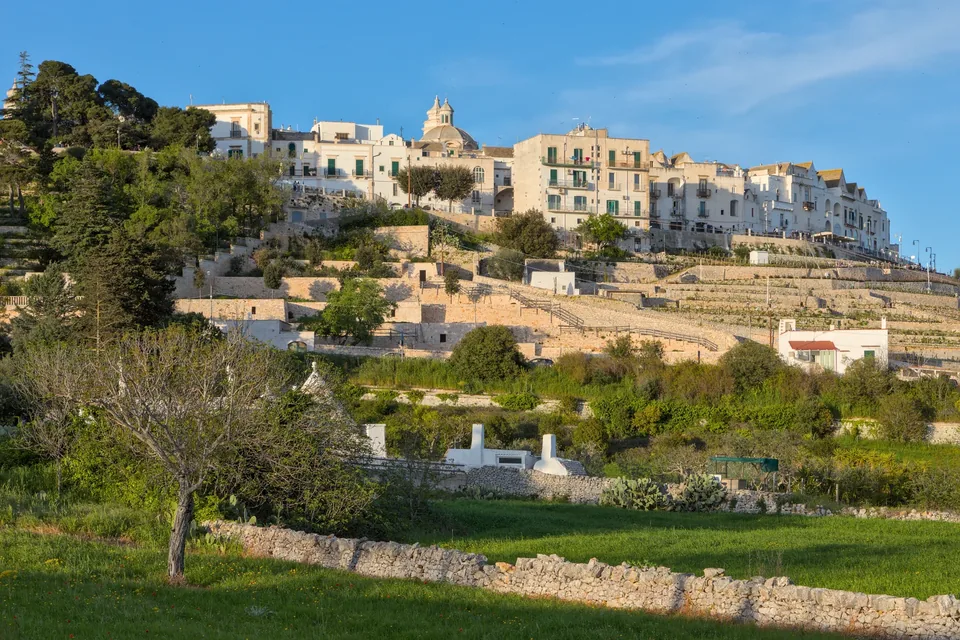
Cummerse roofs as a way to distinguish the Itria Valley’s towns. A circular old centre on a hilltop and Locorotondo DOP wine.
Read the guide →Photo: Benjamin Smith / Wikimedia Commons — CC BY-SA 4.0 · Resized and converted to WebP.

Martina Franca
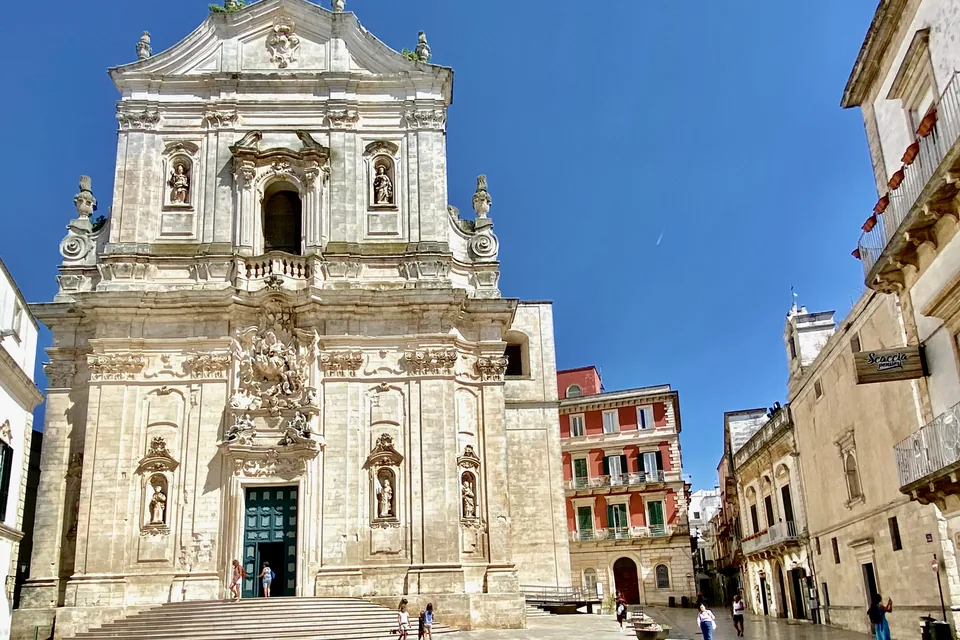
The town and a food craft connected to its landscape. Itria Valley Baroque, stone lanes and wrought-iron balconies, capocollo and Martina DOP white wine.
Read the guide →Photo: Alisa58 / Wikimedia Commons — CC BY-SA 4.0 · Resized and converted to WebP.

Itria Valley
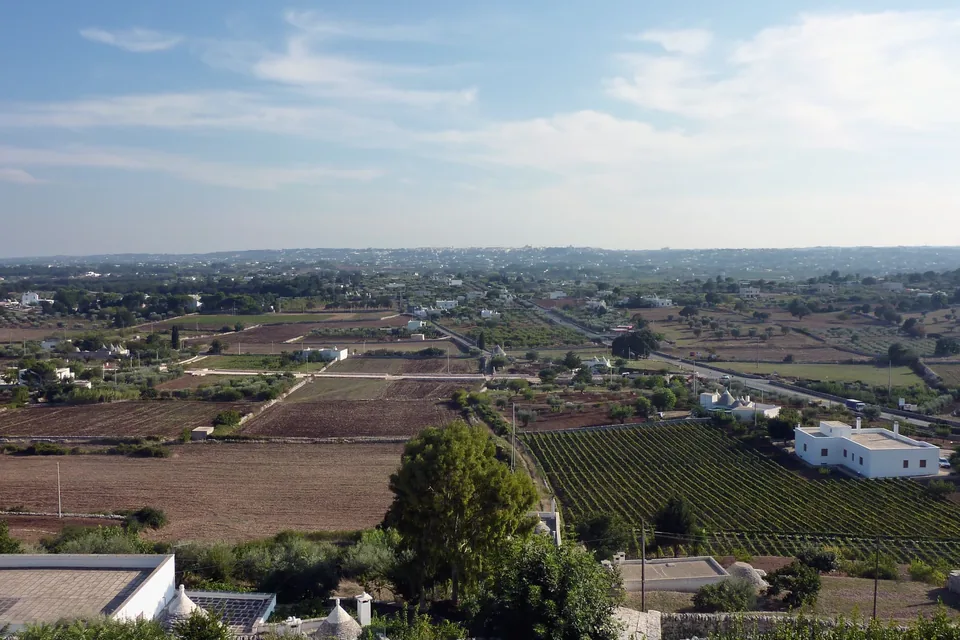
Rural architecture, towns and food as parts of the same journey. Trulli across the countryside, Locorotondo, Cisternino, Martina Franca and Slow Food capocollo.
Read the guide →Photo: Adbar / Wikimedia Commons — CC BY-SA 3.0 · Resized and converted to WebP.

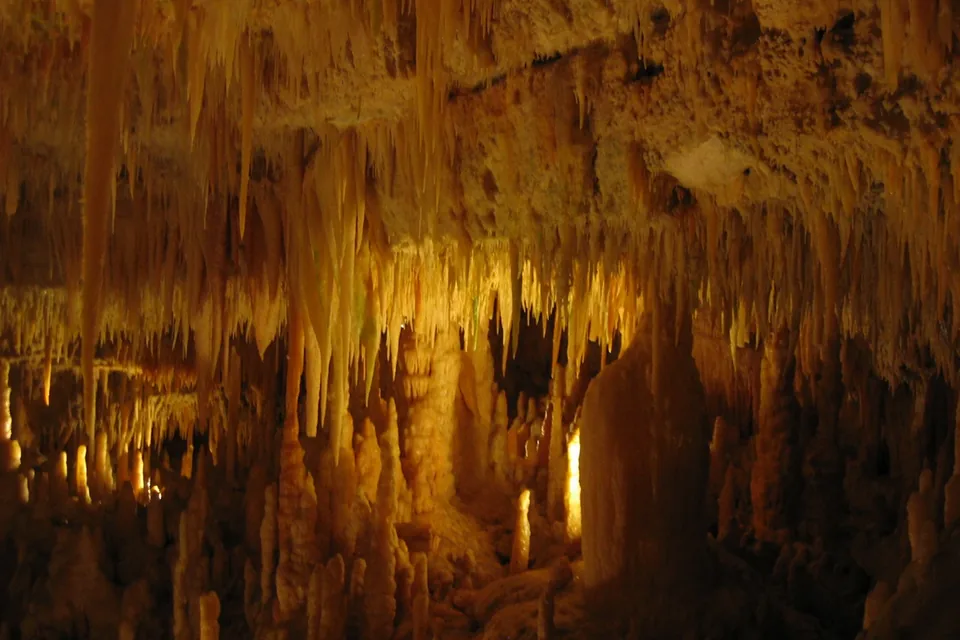
Castellana Grotte
Karst, caves and the town within a journey connected to the Itria Valley.
Read the guide →Photo: ReMagio at Italian Wikipedia / Wikimedia Commons — Public domain · Resized and converted to WebP.

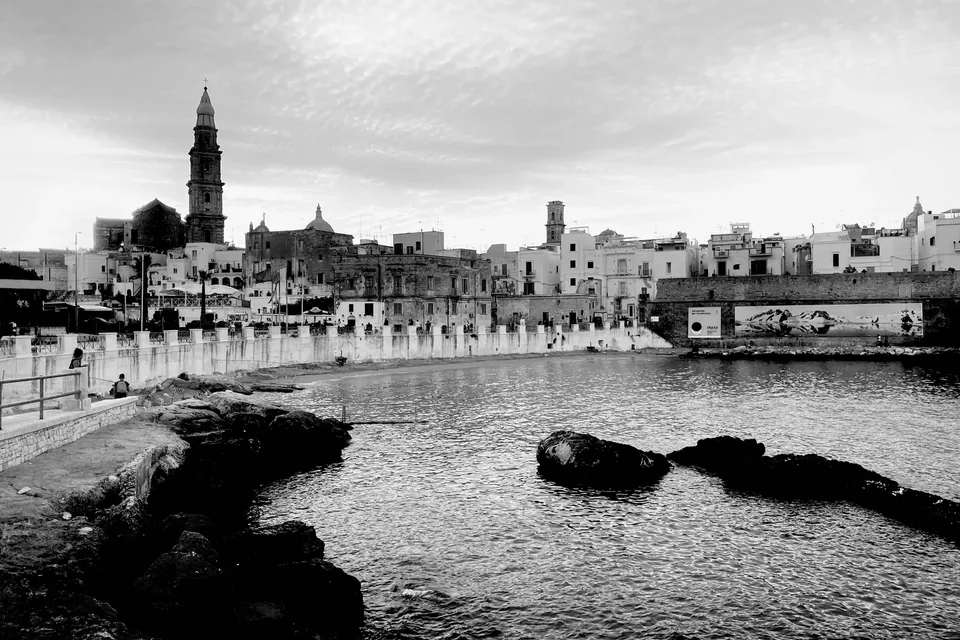
Monopoli
An Adriatic conclusion connected to the rural landscape. A harbour reaching into the old town, the cathedral, rural contrade and ‘mareterra’ cooking.
Read the guide →Photo: RaTio65 / Wikimedia Commons — CC BY-SA 4.0 · Resized and converted to WebP.

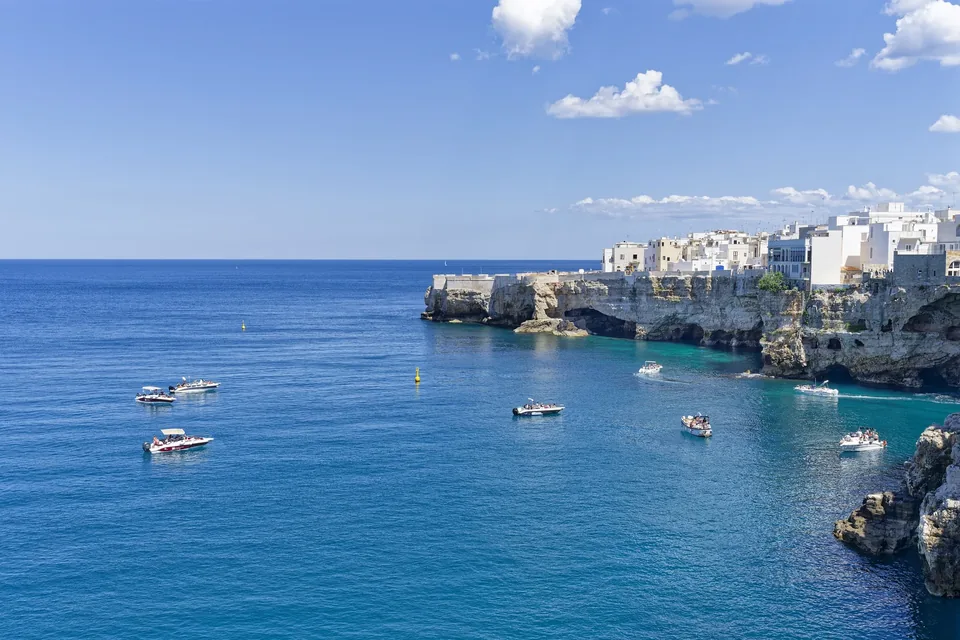
Polignano a Mare
Old town, viewpoints and a coffee as a travel pause. A white town on a cliff, the Arco Marchesale, contemporary art and the multicoloured Polignano carrot. And then the history of the mother church, the Pino Pascali museum, the dives from the houses of the old town, the feast of Saint Vitus and the Costa Ripagnola nature park.
Read the guide →Photo: Maksimsokolov / Wikimedia Commons — CC BY-SA 4.0 · Resized and converted to WebP.

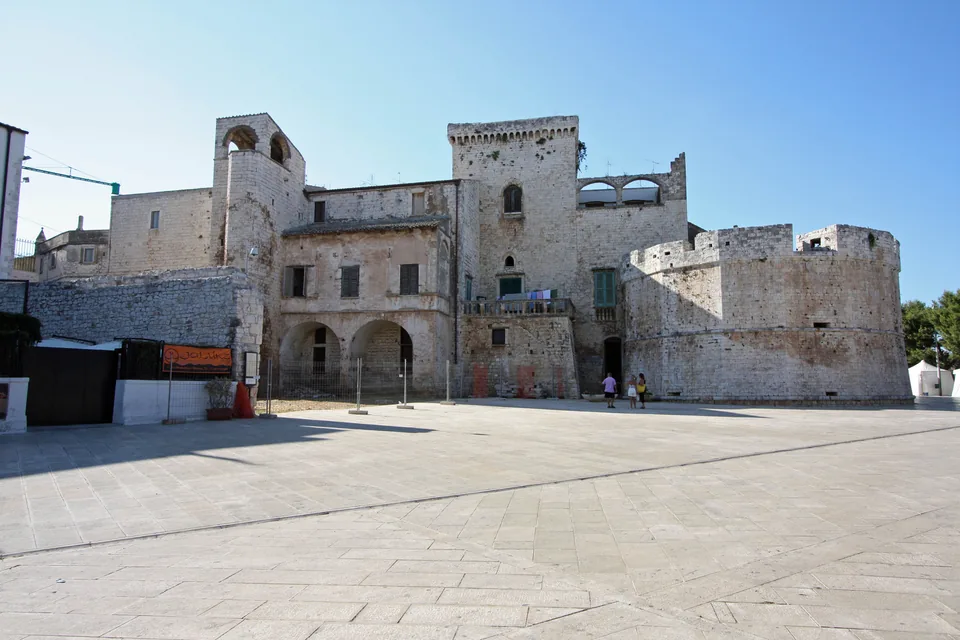
Conversano
Conversano (BA), Puglia: 25,938 residents, 128.42 km². The official facts of the municipality, its town council website and its registered accommodation. The castle of the Acquaviva d’Aragona with Paolo Finoglio’s canvases, the Romanesque cathedral, the monastery of the mitred abbesses, the karst lakes, the cherries and the “Terra di Bari” PDO olive oil.
Read the guide →Photo: Carlo Pelagalli / Wikimedia Commons — CC BY-SA 3.0 · Resized and converted to WebP.

“Come to Alberobello as a guest, not as a tourist: that is how these places truly let you know them.”