Why go
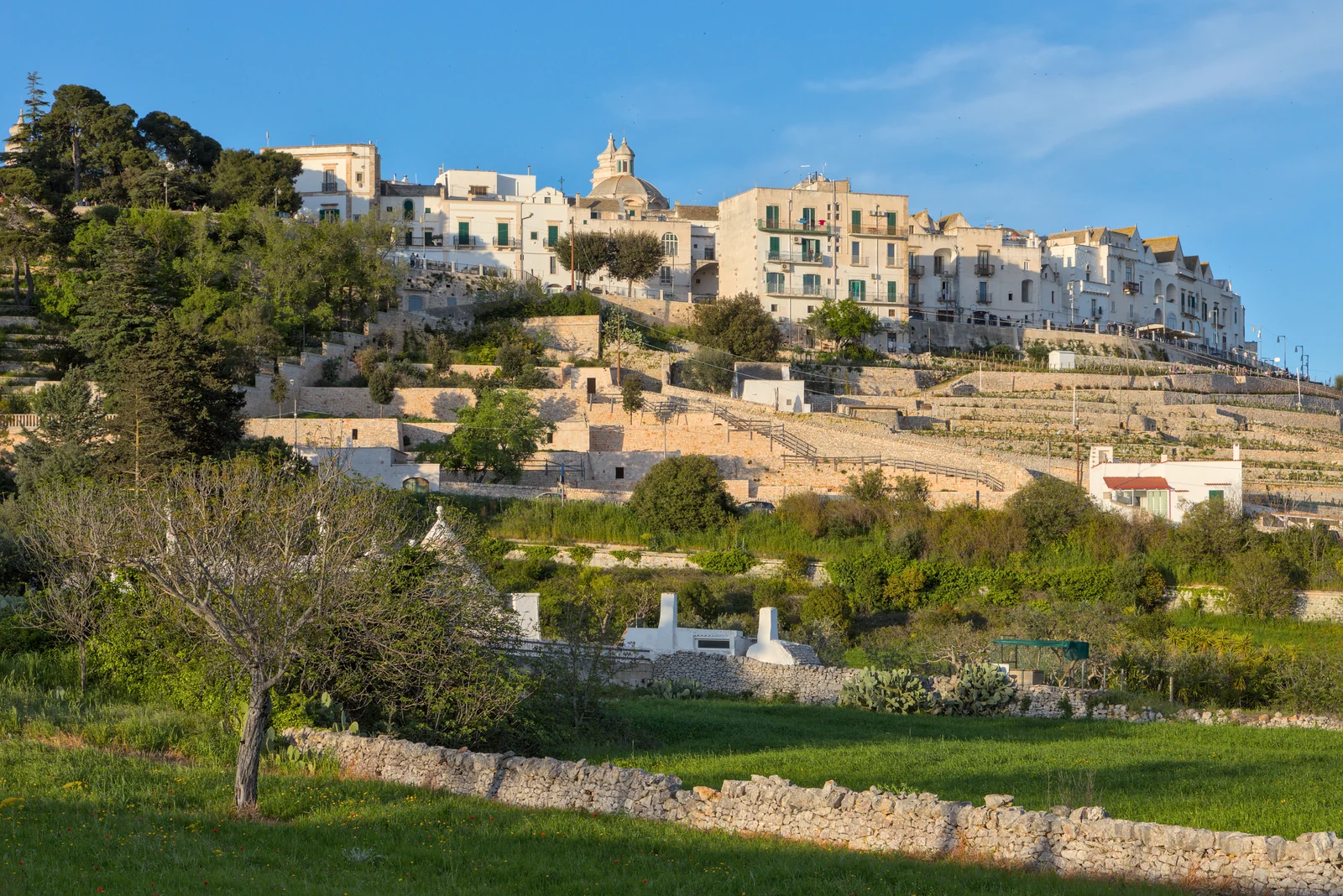
Locorotondo owes its name to its shape: the old centre curls into a circle on top of a hill overlooking the Itria Valley, in the part of the Murgia dei Trulli between Martina Franca and Cisternino, less than ten kilometres from Alberobello. The Region's tourism portal notes that it is one of the Most Beautiful Villages in Italy and holds the Touring Club Italiano's Orange Flag, an award linked to the harmony of its forms and how easily the centre can be explored on foot.
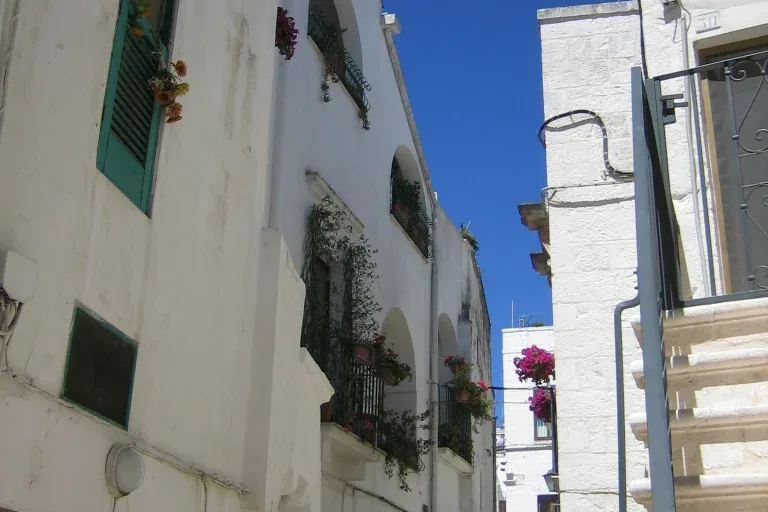
The character of the place lies in an architectural detail: the cummerse, small lime-washed houses with pitched roofs, which here stand alongside the trulli and draw a profile unlike that of the valley's other towns. A panoramic walk runs around the centre, called the 'lungomare' locally even though there is no sea, from which the view opens over the Itria Valley.
The second reason is wine. Locorotondo lies on the regional Wine Roads itinerary and gives its name to a white wine denomination: visitors can combine a stroll among white houses and bell towers with a conversation about vines and the farming landscape around the town.
Sources: Viaggiare in Puglia, Regione Puglia — Locorotondo · Italia.it — Locorotondo
History
According to the regional portal the old centre grew up around the year 1000, as a cluster of small houses that farmers built on the hilltop; among them the cummerse spread, and their regular shape and pitched roof are still the town's most recognisable feature. The national tourism portal notes that until the mid-nineteenth century the town was called Luogorotondo, precisely because of its circular plan.
The churches tell the later chapters. Santa Maria della Greca, according to the regional portal, was built in the fifteenth century at the behest of Pirro del Balzo, Prince of Taranto, and keeps on its high altar the polyptych of the Madonna of the Roses. The mother church of San Giorgio was built between 1790 and 1825, the municipality writes, on the remains of a sixteenth-century church and of the original hamlet of San Giorgio.
Palazzo Morelli, built in 1819 and renovated in 1870, shows how the local bourgeoisie brought a more elaborate civil architecture into the town, with a portal bearing the family crest and wrought-iron balconies. In the countryside, the national portal points to some of the oldest trulli in the region, dated 1509, which can only be seen from a distance.
Sources: Viaggiare in Puglia, Regione Puglia — Locorotondo · Italia.it, Ministero del Turismo — Valle d'Itria · Viaggiare in Puglia, Regione Puglia — Chiesa Madonna della Greca · Comune di Locorotondo — Chiesa madre · Viaggiare in Puglia, Regione Puglia — Palazzo Morelli · Italia.it — Locorotondo
What to see
The visit begins at the public gardens, laid out around the mid-nineteenth century on a spur of the hill at the entrance to the old centre: from the railing the view drops over the valley, and a series of paths leads further down to a level area once used as a summer dance floor. From here you enter the ring of white houses, with paved lanes, carved doorways and balconies full of flowers.
The mother church of San Giorgio has a neoclassical façade with Saints Peter and Paul at the corners and a dome about thirty-five metres high; inside, on a Greek-cross plan, the municipality points to works by Neapolitan artists including Gennaro Maldarelli, and the large chapel of the Holy Sacrament. Nearby, Santa Maria della Greca has a three-aisled interior with carved capitals and a contemporary rose window on its façade.
Via Nardelli offers one of the finest views over the countryside, and according to the national portal it is the starting point of the Templars' Staircase, which descends through the vineyards along the town's slopes. Palazzo Morelli, with its courtyard and outside staircase, rounds off the walk.
Sources: Viaggiare in Puglia, Regione Puglia — Villa comunale di Locorotondo · Comune di Locorotondo — Chiesa madre · Viaggiare in Puglia, Regione Puglia — Chiesa Madonna della Greca · Italia.it — Locorotondo · Viaggiare in Puglia, Regione Puglia — Palazzo Morelli
Food and wine
Wine is the product that ties the town's name to the table. According to the Puglia Region's page, the Locorotondo DOP area covers the territories of Locorotondo and Cisternino and part of Fasano. The white without a named grape comes from at least 50% Verdeca and 35% Bianco d'Alessano; the specification also provides for Superiore, Riserva, Spumante and Passito versions and single-variety wines, including Fiano. The regional portal describes it as a food wine with an intense aroma, suited to fish dishes and the valley's cooking.
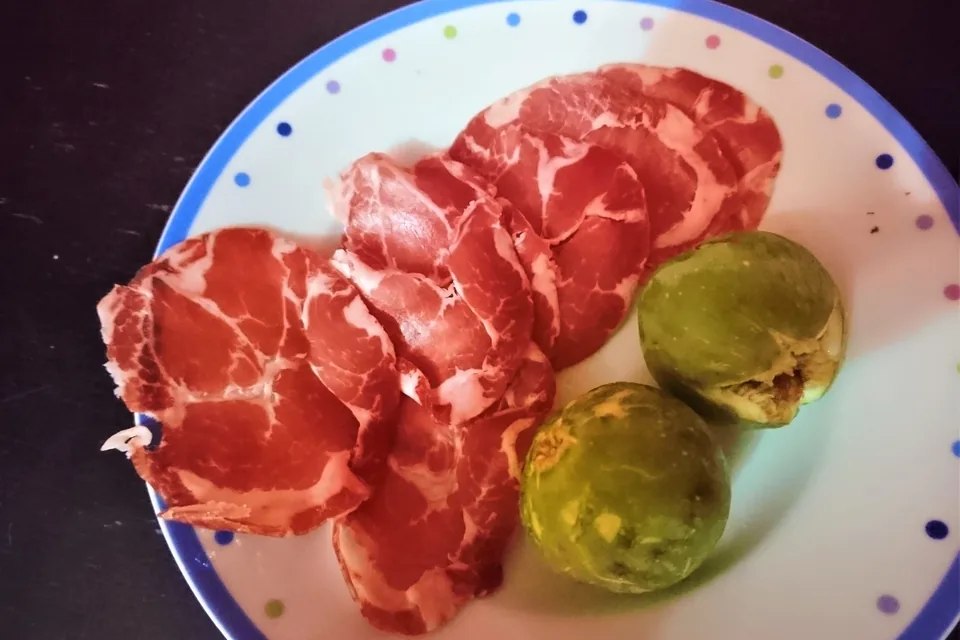
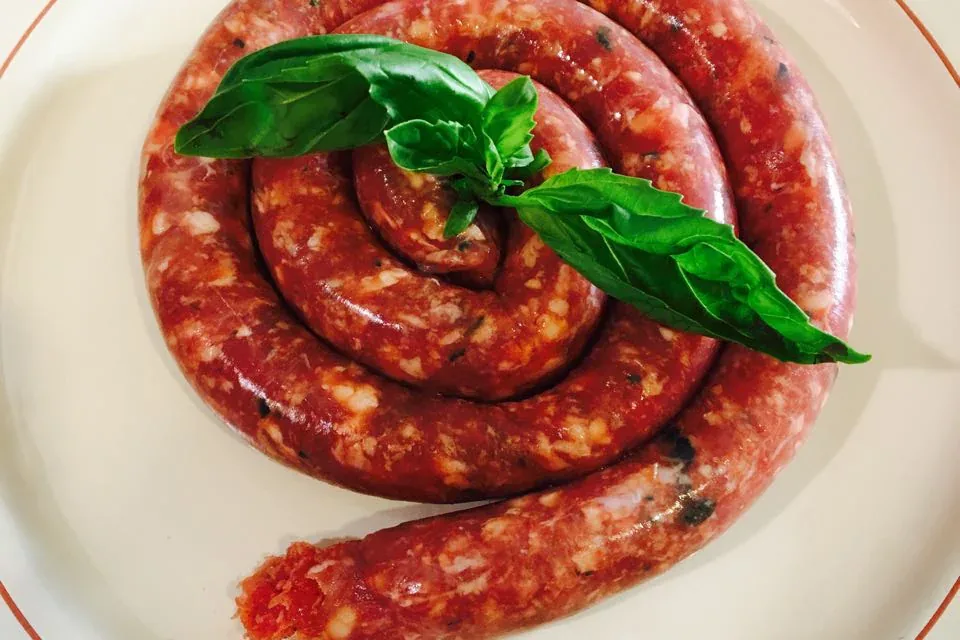
Among cured meats, Capocollo di Martina Franca is a Slow Food Presidium also produced in Locorotondo and Cisternino: meat from the pork neck is washed in cooked wine must, stuffed, wrapped and smoked over fragno oak and almond husks. The Bombetta di Martina Franca, a roll of capocollo filled with cheese and cooked on a spit, belongs to the same area.
The Itria Valley Ecomuseum, based in via Morelli, documents the area's crafts and food specialities: a good starting point for understanding what you are tasting.
Sources: Regione Puglia — Locorotondo DOP · Viaggiare in Puglia, Regione Puglia — Locorotondo · Fondazione Slow Food — Capocollo di Martina Franca · Atlante dei prodotti tradizionali di Puglia — Bombetta · Viaggiare in Puglia, Regione Puglia — Ecomuseo di Valle d'Itria
Things to do
Locorotondo lends itself to a slow visit. A walk around the edge of the centre, stopping at the viewpoints, lets you see the valley from different angles; going down the Templars' Staircase, among vineyards and slopes, brings you into contact with the countryside around the town.
The Itria Valley Ecomuseum, a widespread museum involving Alberobello, Cisternino, Fasano, Locorotondo, Martina Franca and Monopoli, organises nature walks to discover the lame (karst ravines) and stone gardens, according to the regional portal, as well as initiatives on the old crafts of stone, iron, wood and ceramics. It is a way to meet the area through the people who study and tell its story.
For cyclists, the regional portal notes that the Apulian Aqueduct cycle route touches Locorotondo, Cisternino, Ostuni and Ceglie Messapica, and mentions rentals and several cycling routes nearby. Finally, the Wine Roads itinerary is a good excuse to visit a winery and follow a wine from vine to glass, booking directly with the producers.
Sources: Italia.it — Locorotondo · Viaggiare in Puglia, Regione Puglia — Ecomuseo di Valle d'Itria · Viaggiare in Puglia, Regione Puglia — Cisternino · Viaggiare in Puglia, Regione Puglia — Locorotondo
When to go
Locorotondo can be visited in every season. The town's most heartfelt moment is the feast of its patron Saint George, which the municipality places on 23 April, preceded by the ceremony of the gift: a chance to see the mother church at the centre of community life.
Spring and early summer are ideal for flower-filled balconies and walks among the vineyards; in summer the public gardens and the panoramic walk become open-air meeting places, and evenings bring sunsets over the valley that the national portal describes as unforgettable from via Nardelli.
Autumn is the season of the grape harvest and work in the cellars, when the wine itinerary makes full sense; winter makes the town quieter and more intimate, suiting those who seek calm and those who want to use Locorotondo as a base for visiting museums and nearby towns. For other cultural events it is best to check the municipality's calendar or ask at the info-point in via Morelli.
Sources: Comune di Locorotondo — Chiesa madre · Italia.it — Locorotondo · Viaggiare in Puglia, Regione Puglia — Villa comunale di Locorotondo · Regione Puglia — Locorotondo DOP · Viaggiare in Puglia, Regione Puglia — Info-point Locorotondo
Getting there and around
For rail travel the regional tourism portal points to Bari station for long journeys and, for short trips, to the station in nearby Alberobello. Intercity buses also leave Locorotondo for nearby towns, run by the COTRAP consortium.
The most convenient airport is Bari, managed by Aeroporti di Puglia; for the transfer to the town the regional portal suggests private services, alongside the bus links to and from the airport listed by the airport company.
The historic centre is compact and best seen on foot. For the countryside and the other towns of the valley, your own or a hired vehicle is advisable: the regional portal mentions bike, scooter and car rental. The Apulian Aqueduct cycle route, which passes through Locorotondo, links the town to Cisternino and Ostuni along a dedicated path.
Sources: Viaggiare in Puglia, Regione Puglia — Locorotondo · Aeroporti di Puglia — Aeroporto di Bari · Viaggiare in Puglia, Regione Puglia — Cisternino
Where to stay
Locorotondo can make a good base for the Itria Valley, especially for those who want to limit transfers. The regional portal notes that many cummerse in the historic centre have been restored and offered to visitors as accommodation, in what it describes as one of the area's first dispersed hotels: sleeping in one of these houses lets you enjoy the town in the evening too.
As an identified reference we mention Sotto le Cummerse, which presents itself as a dispersed hotel with its contact address at via Vittorio Veneto 138. This is an editorial mention and implies no commercial agreement with Apulica; rooms and conditions should be assessed for your dates.
The alternative is the countryside, among trulli and masserie: you gain space and quiet, but you need transport to reach the centre and the other towns. The choice changes the rhythm of the trip more than the number of towns visited.
Sources: Viaggiare in Puglia, Regione Puglia — Locorotondo · Sotto le Cummerse — contatti ufficiali
Nearby
Locorotondo is a few kilometres from the main towns of the Itria Valley. Alberobello, less than ten kilometres away, is the place to understand trulli from the inside, with the Monti and Aia Piccola districts and the Trullo Sovrano. Martina Franca brings the baroque of its Ducal Palace and the basilica of San Martino, and a musical tradition linked to its summer festival.
Cisternino, linked to Locorotondo by the Apulian Aqueduct cycle route, is known for the ready-to-cook grills of its butcher's shops and for its belvedere over the valley; together with Locorotondo its territory falls within the same white wine denomination.
The national tourism portal also includes Castellana Grotte in the Itria Valley, with karst caves open for guided visits, and Ostuni, the only town in the valley that looks onto the sea. From a base in Locorotondo, each of these places is an easy day trip.
Sources: Viaggiare in Puglia, Regione Puglia — Alberobello · Viaggiare in Puglia, Regione Puglia — Martina Franca · Viaggiare in Puglia, Regione Puglia — Cisternino · Regione Puglia — Locorotondo DOP · Italia.it, Ministero del Turismo — Valle d'Itria
Local tourist information
Local tourist offices help with opening times, events and transport on the day.
- Info-point Locorotondo · Via Morelli 24, 70010 Locorotondo (BA) · +39 080 4312788 · [email protected]
Source: Viaggiare in Puglia, Regione Puglia — Info-point Locorotondo · Viaggiare in Puglia, Regione Puglia — Locorotondo · checked on
Where to stay
In the municipality of Locorotondo the national database of the Ministry of Tourism lists 474 accommodation businesses with a verified CIN code: 6 hotels, 143 other licensed accommodation and 325 other types such as B&Bs and private rentals.
Licensed businesses from the official list of accommodation named as the source in this section. Where the list gives it, the property's official identification code appears next to its name: the national CIN code, or the code assigned by the Region or by the body that keeps the list. Private individuals are not listed. This list is the official census of licensed businesses, not a list of Apulica partners: to stay in Locorotondo you do not have to check one property after another yourself; write to Apulica and we look for the stay that suits your journey, checking availability and conditions before any confirmation.
HOTEL RELAIS IL PALMENTO
Hotel · ★★★★★
CIN IT072025A100037882
ELITE
Residence
CIN IT072025B400120870
CAMPING -Valle d'itria-
Campsite · ★
CIN IT072025B100097247
AGRITURISMO MASSERIA APRILE
Farm stay
CIN IT072025B500021045
1783 DIMORA D'EPOCA B&B
B&B
CIN IT072025B400051259
AFFITTACAMERE MASSERIA APRILE
Guest rooms
CIN IT072025B400024393
ACRES ITRIA
Holiday home
CIN IT072025B400073989
LEONARDO TRULLI RESORT
Hotel · ★★★★★
CIN IT072025A100122914
TRULLI DAMOR
Residence
CIN IT072025B400111936
Coppola di Seta
Farm stay
CIN IT072025B500080219
First the places that presented themselves to Apulica, the latest first; then one place of each type in turn, by official category and stars, then by name. No position is paid for.
All 114 entries in alphabetical order
Page 1 of 12
| Name | Type | CIN |
|---|---|---|
| 1783 DIMORA D'EPOCA B&B | B&B | IT072025B400051259 |
| ACRES ITRIA | Holiday home | IT072025B400073989 |
| AFFITTACAMERE MASSERIA APRILE | Guest rooms | IT072025B400024393 |
| AGRITURISMO MASSERIA APRILE | Farm stay | IT072025B500021045 |
| AGROSILENTE | B&B | IT072025B400109320 |
| ALBERGO DIFFUSO SOTTO LE CUMMERSE | Hotel | IT072025A100059693 |
| ALMAPETRA TRULLI RESORT | Holiday home | IT072025B400041828 |
| Angolo di Puglia | Guest rooms | IT072025B400064122 |
| ANNALOCOS | Holiday home | IT072025B400025119 |
| B&B LA COLLINETTA | B&B | IT072025B400089466 |
Ask Apulica for a stay in Locorotondo We reply shortly, within a few hours at most, with a proposal for you to consider.
Sources: Regione Puglia – ARET Pugliapromozione (DMS), CC BY 4.0, 2026-10-12 · Ministero del Turismo – Banca Dati Strutture Ricettive (dashboard pubblica), 2026-10-12
YOUR JOURNEY
How to shape a journey here
We can design a day linking cummerse, wine production and food, or use Locorotondo as a base for a Valle d’Itria stay.
Plan your tripKeep exploring
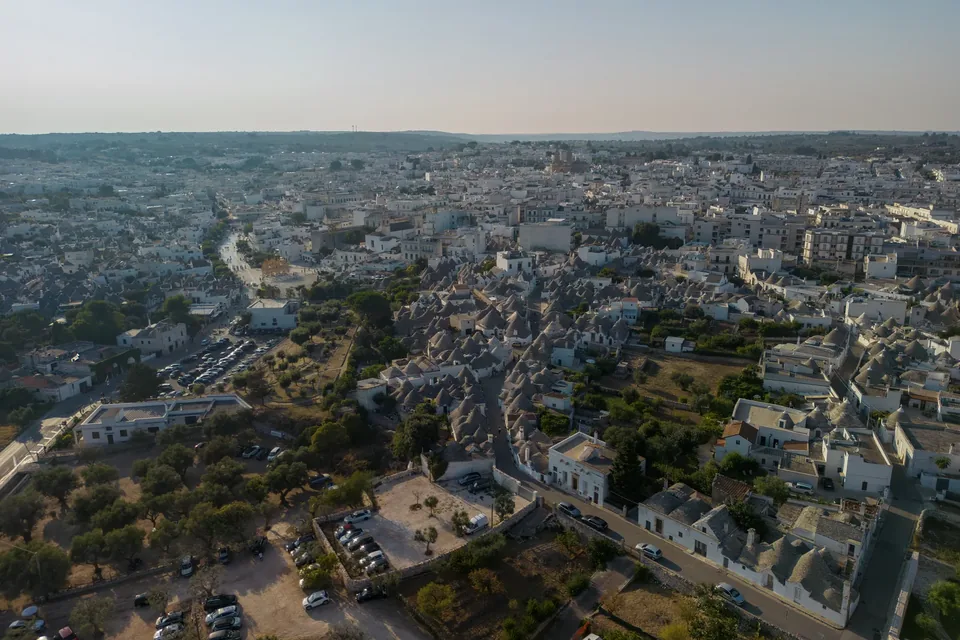
Alberobello
Trulli through their shape, space and everyday use. The Monti and Aia Piccola districts hold more than a thousand trulli, a World Heritage Site since 1996.
Read the guide →Photo: ParisTaras / Wikimedia Commons — CC BY-SA 4.0 · Resized and converted to WebP.
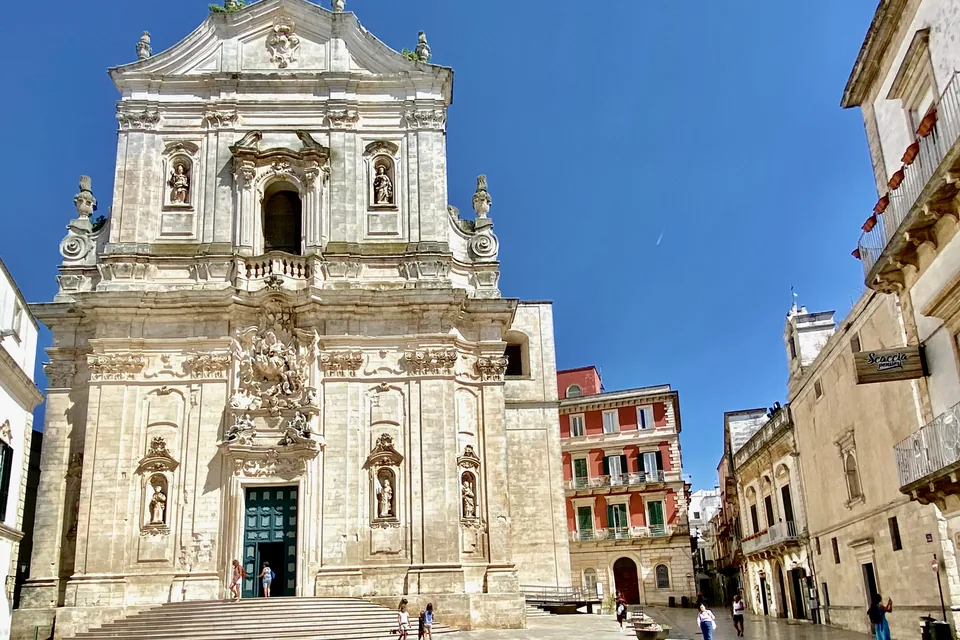
Martina Franca
The town and a food craft connected to its landscape. Itria Valley Baroque, stone lanes and wrought-iron balconies, capocollo and Martina DOP white wine.
Read the guide →Photo: Alisa58 / Wikimedia Commons — CC BY-SA 4.0 · Resized and converted to WebP.
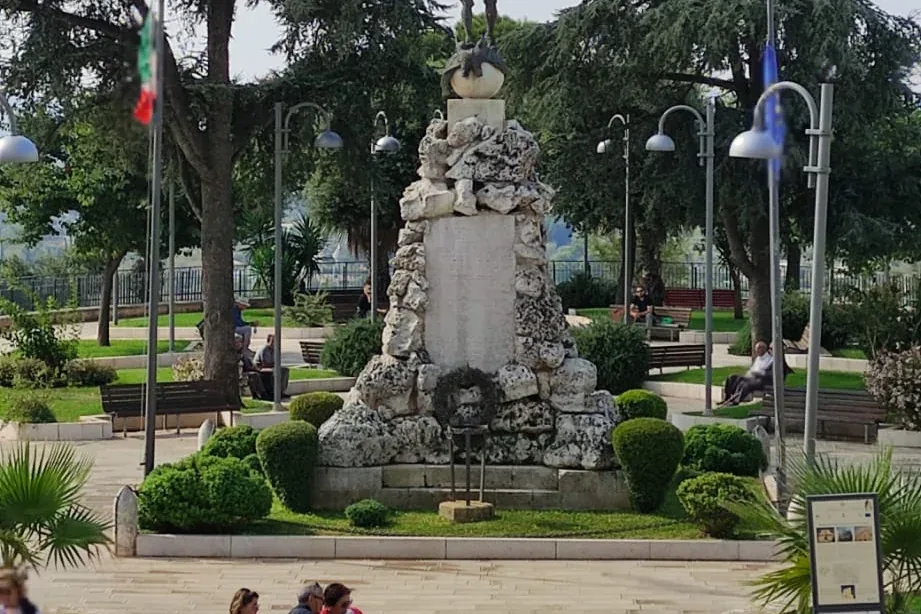
Cisternino
Fornello pronto, bombette and a walk through the town. A white, paved village with the Orange Flag and the mother church of San Nicola di Pàtara.
Read the guide →Photo: Kiuz / Wikimedia Commons — CC BY-SA 4.0 · Resized and converted to WebP.
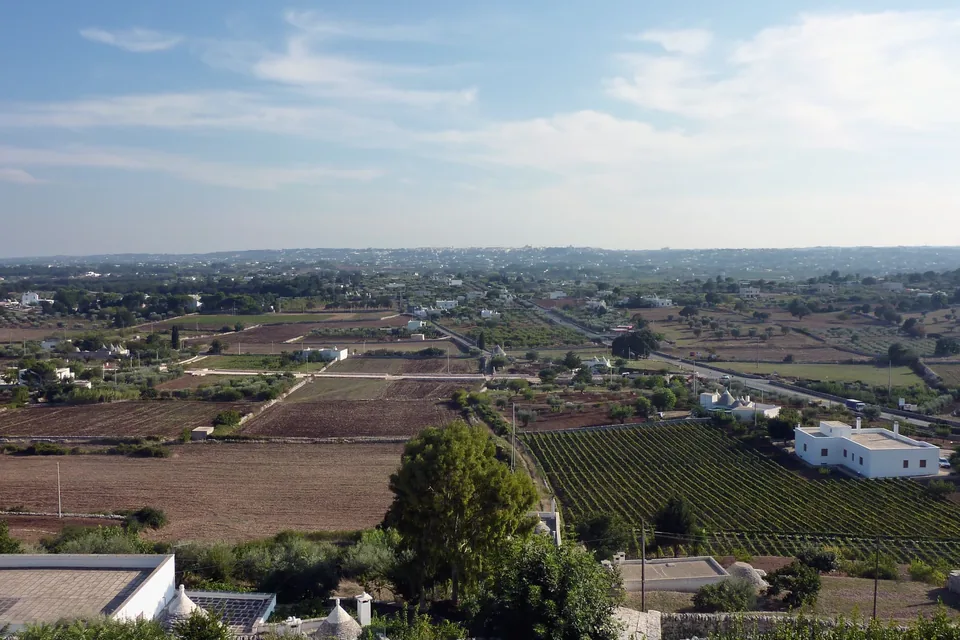
Itria Valley
Rural architecture, towns and food as parts of the same journey. Trulli across the countryside, Locorotondo, Cisternino, Martina Franca and Slow Food capocollo.
Read the guide →Photo: Adbar / Wikimedia Commons — CC BY-SA 3.0 · Resized and converted to WebP.
Ostuni
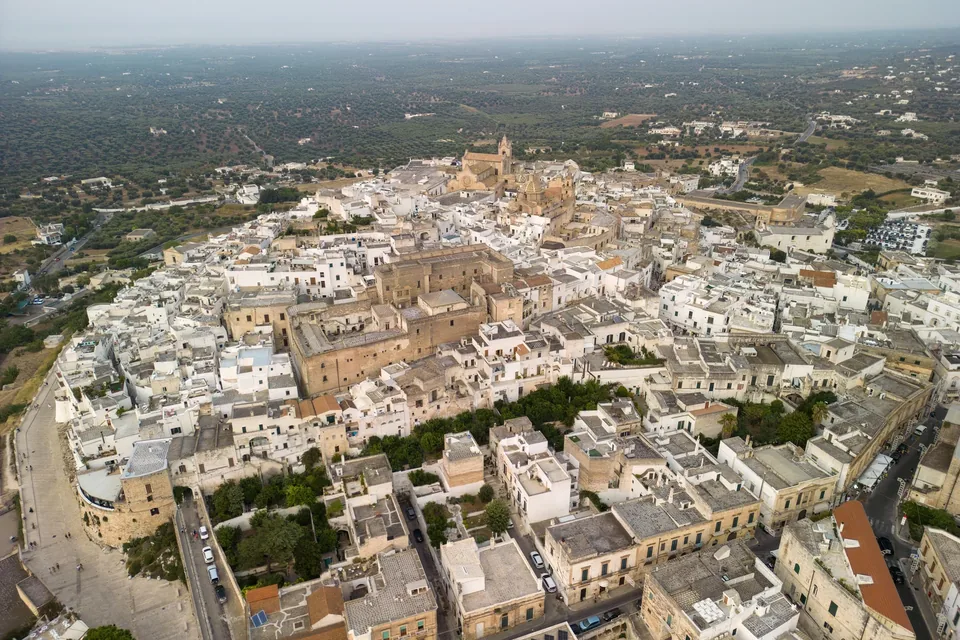
Houses, steps and agricultural landscape within one visit. The White City on three hills, its cathedral, the olive plain and Collina di Brindisi DOP oil.
Read the guide →Photo: ParisTaras / Wikimedia Commons — CC BY 4.0 · Resized and converted to WebP.
Monopoli
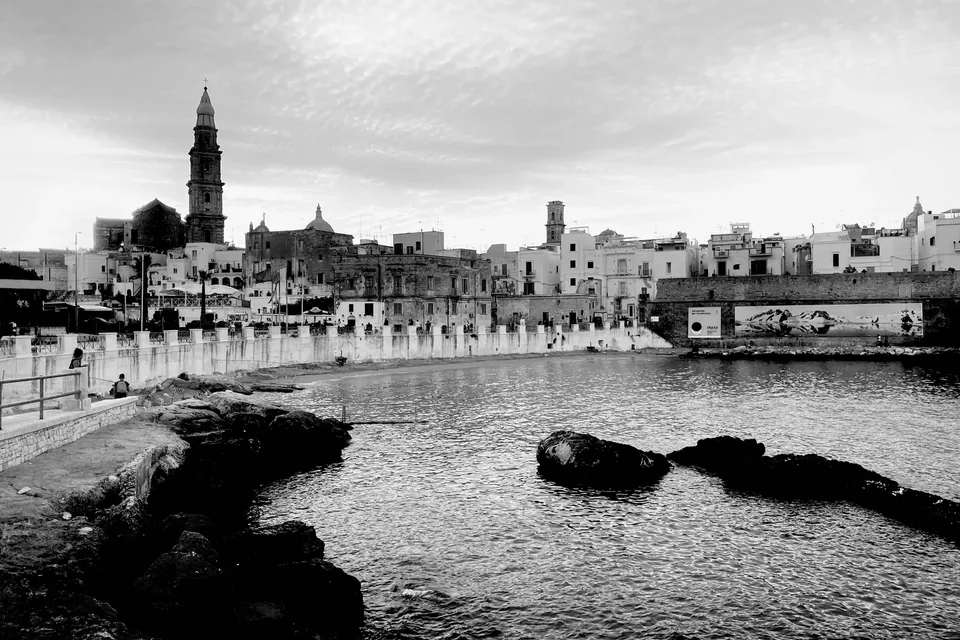
An Adriatic conclusion connected to the rural landscape. A harbour reaching into the old town, the cathedral, rural contrade and ‘mareterra’ cooking.
Read the guide →Photo: RaTio65 / Wikimedia Commons — CC BY-SA 4.0 · Resized and converted to WebP.
Polignano a Mare
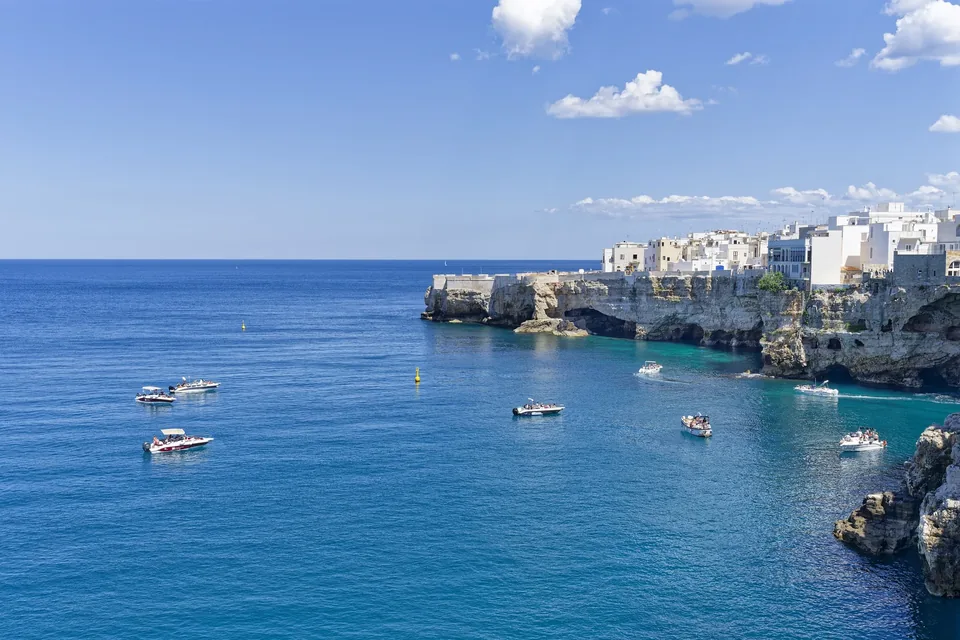
Old town, viewpoints and a coffee as a travel pause. A white town on a cliff, the Arco Marchesale, contemporary art and the multicoloured Polignano carrot. And then the history of the mother church, the Pino Pascali museum, the dives from the houses of the old town, the feast of Saint Vitus and the Costa Ripagnola nature park.
Read the guide →Photo: Maksimsokolov / Wikimedia Commons — CC BY-SA 4.0 · Resized and converted to WebP.
“Come to Locorotondo as a guest, not as a tourist: that is how these places truly let you know them.”