A roll born at the butcher's counter
The Atlas of Apulian traditional food products lists the preparation as Bombetta di Martina Franca, bumbett in dialect. The area given is the province of Taranto together with the Itria Valley towns: Martina Franca, Cisternino, Ceglie Messapica, Ostuni, Locorotondo and Alberobello. The record dates its birth to 1980: a Martina Franca butcher's wife was looking for a different use for the veal slices her husband brought home and, after a first attempt that did not quite work, switched to capocollo, which stood up better to the grill. By 1983 a historical and artistic guide to Martina Franca already named it as a typical local dish. The same record notes that Cisternino also claims to be its birthplace: a local rivalry that shows how strongly the whole valley identifies with it.
Sources: Atlante dei PAT di Puglia — Bombetta
Capocollo, canestrato, salt and pepper
According to the PAT record, a bombetta is a roundish roll three to five centimetres across and thirty to thirty-five grams in weight, made from slices of pork capocollo rolled around pieces of canestrato pugliese, with salt and pepper. Originally the filling was Itria Valley pecorino. There are versions wrapped in pancetta and richer ones with caciocavallo podolico or Altamura bread. The reference cheese now has its own designation: Canestrato Pugliese PDO, registered on 20 June 1996, is made only from whole sheep's milk; the curd is gathered in woven rush baskets that let the whey drain, hence the name. It ages from two to ten months: young it is milder, aged more aromatic, and it is this firm flavour that melts into the meat as it cooks.
Sources: Atlante dei PAT di Puglia — Bombetta · Qualigeo — Canestrato Pugliese DOP
The fornello: vertical spit and fat that never burns
The bombetta record gives the fornello or the grill as the ideal cooking method: in the fornello the rolls are threaded onto a vertical spit, so the dripping fat flavours the meat below. The fornello is a Murgia tradition that the Atlas describes in its record for Locorotondo's carne al fornello: a cubic oven about a metre a side, fired with oak or holm-oak charcoal, holding the chamber at 170 to 190 degrees. The seventy-centimetre steel spits first stand upright beside the fire and are only moved closer at the end to brown the surface; they never sit above the embers, so the fat does not burn. The record also explains the social origin: butchers cooked the cheaper cuts and offal mainly for patron saint feasts and sold the meat ready-cooked.
Sources: Atlante dei PAT di Puglia — Bombetta · Atlante dei PAT di Puglia — Carne al fornello di Locorotondo
Cisternino: choose at the counter, eat outdoors
In Cisternino this tradition took its most recognisable form. The association I Borghi più belli d'Italia writes that the town is best known for the butcher's shops of the old centre linked to taverns: meat is bought at the counter, cooked on the spot and eaten outdoors at wooden tables with a bottle of wine. Touring Club Italiano, in a 2018 page on the town's Orange Flag, describes grills in plain view outside the butchers, where you can watch the cooking while chatting with locals. Besides bombette, pork rolls filled with canestrato, salt and pepper, the fornello takes sausages, lamb heads, mixed roasts and gnummareddi, skewers of lamb offal, served with grilled vegetables and wine. It is a way of eating still tied to the shop rather than the conventional restaurant.
Sources: I Borghi più belli d'Italia — Cisternino · Touring Club Italiano — Che cosa mangiare a Cisternino
Recognition: a traditional product, not a PDO
The bombetta has been on the national list of traditional food products since 2022, as the Apulian Atlas record states. PATs are products recognised by the regions for long-established methods and collected by the Ministry of Agriculture in a list updated every year; they are not a European label like PDO and PGI. The record links the bombetta to two other PATs from the same valley, Martina Franca capocollo and pancetta. Capocollo in particular has been listed since 2001 and is described as a lightly smoked cured meat, steeped in cooked grape must and aged four to five months; it is not the same product, though: bombette use the fresh cut. The bombetta record gives production all year round, especially in the summer months.
Sources: Atlante dei PAT di Puglia — Bombetta · Atlante dei PAT di Puglia — Capocollo di Martina Franca · Masaf — Aggiornamento dell'elenco nazionale dei prodotti agroalimentari tradizionali (2025)
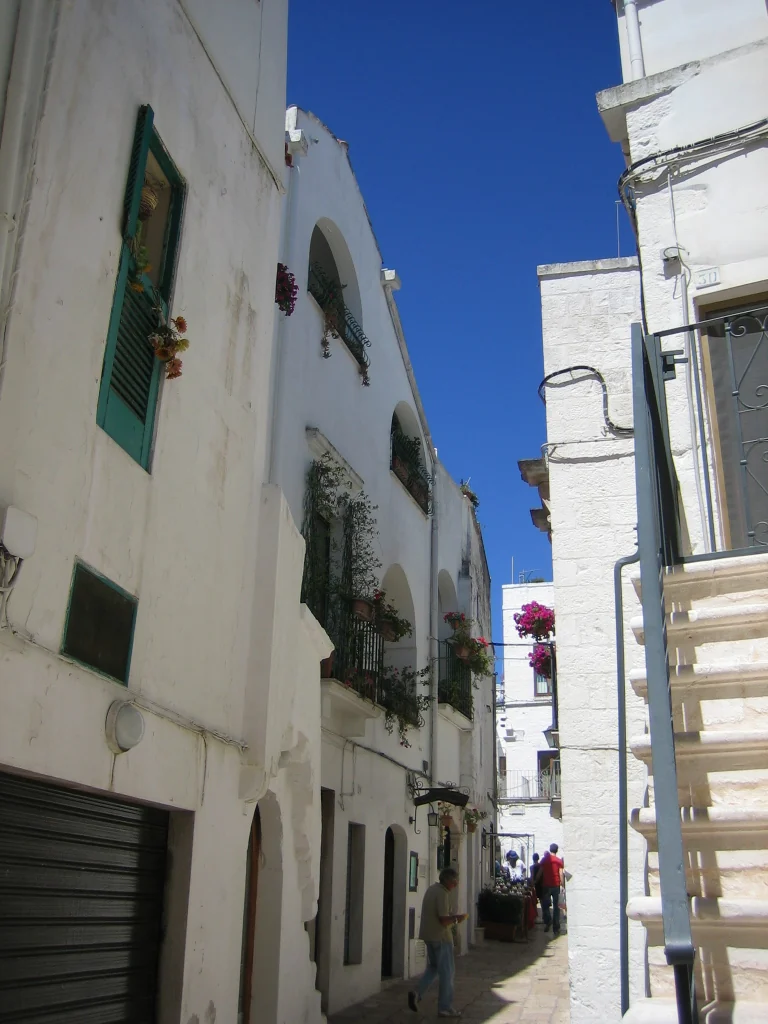
A white town in the Murgia of the trulli
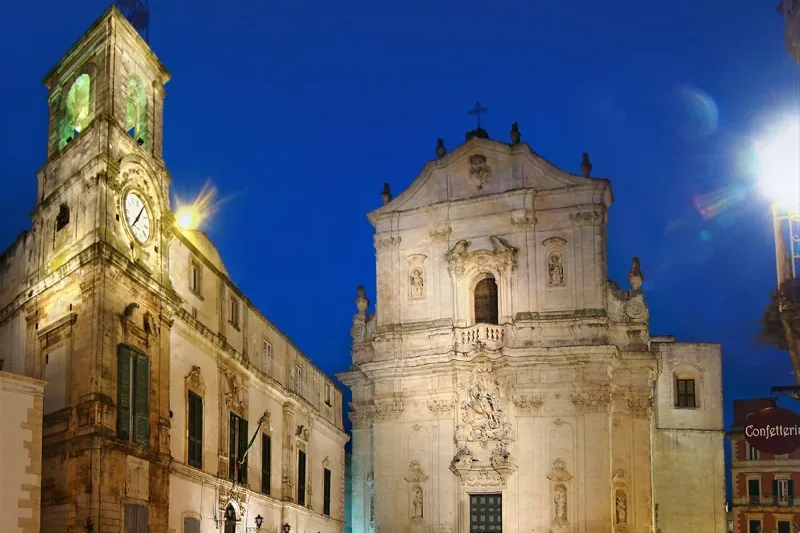
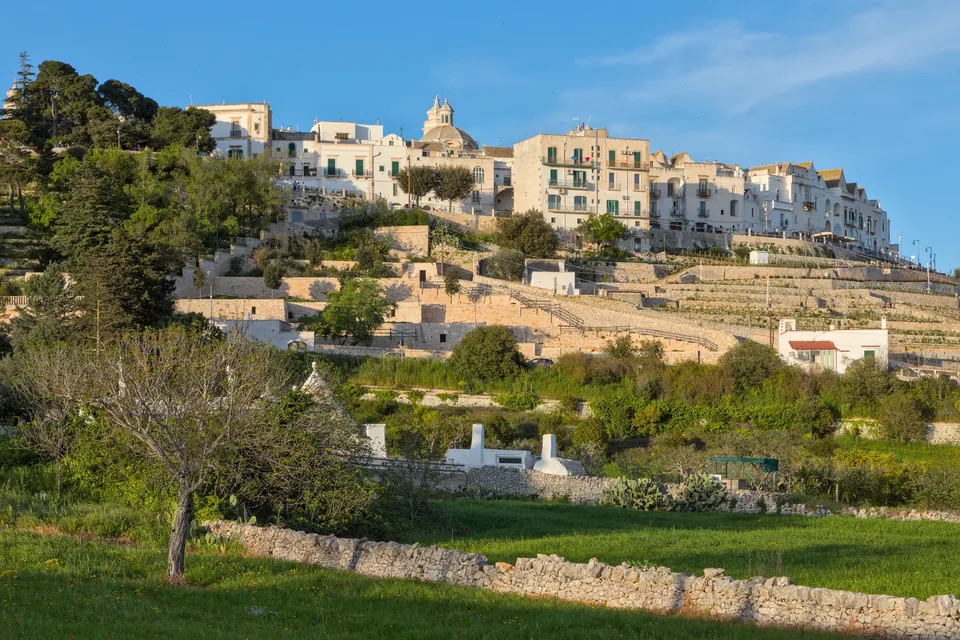
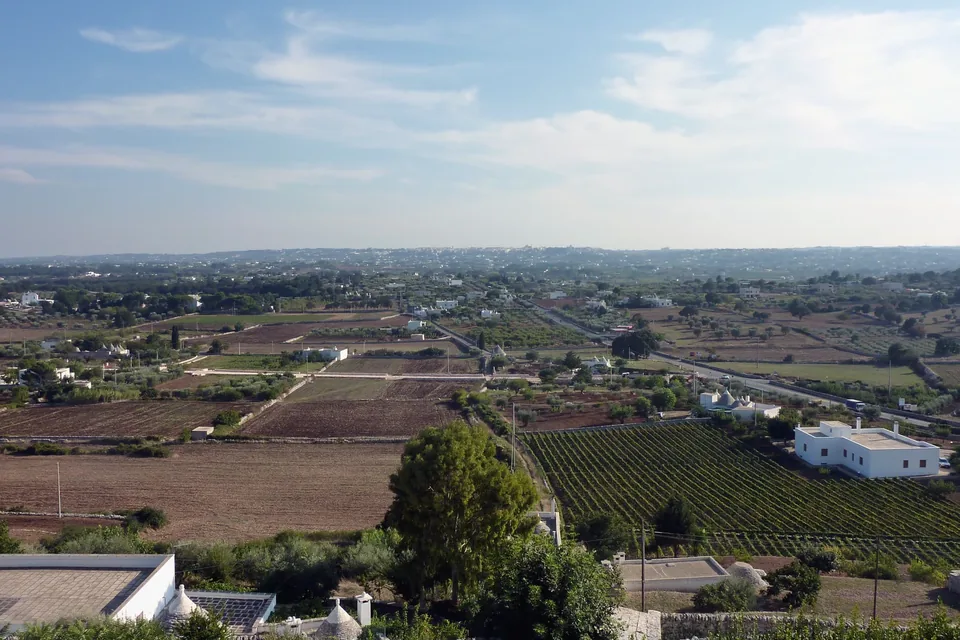
Italia.it's guide to the Itria Valley places Cisternino in the so-called Murgia of the trulli and notes that, with nearby Locorotondo, it ranks among Italy's most beautiful villages; Martina Franca is the valley's most populous town, with its Baroque architecture and the Itria Valley Festival in July. The I Borghi più belli d'Italia profile adds the monuments to seek out before sitting down to eat: the seventeen-metre Norman-Swabian tower topped by a statuette of Saint Nicholas, the 12th-century Mother Church of San Nicola built over a Basilian church, the church of Purgatory and, about three kilometres away, the Romanesque church of the Madonna d'Ibernia. Among the events it lists the feast of Saints Quiricus and Julitta in early August, with illuminations and bands in the square.
Sources: Italia.it — Valle d'Itria · I Borghi più belli d'Italia — Cisternino
How to order at the fornello
The key gesture is choosing: look at the counter before sitting down, ask which spits are about to go in, and order a few bombette together with other cuts so you can compare the filled meat with the plain. Bombette should be eaten straight from the oven, while the cheese is still molten; left to wait, they dry out. Alongside, add grilled vegetables and bread, and a local red served cool, or an Itria Valley white if the evening is hot. If you do not eat offal, say so at once: gnummareddi often arrive in the same round. Summer evenings are the busiest, so check opening times first and book where possible. The pleasure lies in the slow rhythm of the cooking, not in quantity.
Festivals: what we do not claim
The PAT record notes that at festivals bombette are served as street food, in paper cones with a slice of toasted bread, but on the official pages we consulted we found no dedicated festival with fixed dates to give. So we do not propose a date. The clearest occasions remain patron saint feasts and summer evenings in the valley towns, when the fornelli are working flat out; the calendar must be checked each year on the town or pro loco websites. If an authority publishes a dedicated event, we will add it with its source. Out of season Cisternino is still worthwhile: the grills work all year and the town is quieter.
Taking the Itria Valley home
Bombette are fresh meat: not a suitcase souvenir, unless you carry a cool bag on a short trip. If you want to recreate them at home, buy the ingredients that define them: fresh capocollo sliced thin by the butcher and a piece of canestrato pugliese, younger for a mild filling or more aged for a firmer note. The souvenir that travels best is aged Martina Franca capocollo, which keeps well and tells the same valley's story in another form. At home, the closest cooking to the original is a very hot grill, with the rolls skewered and kept away from direct flame so the fat does not burn.
A thread for your journey
Journey idea: morning in Martina Franca among Baroque streets and charcuterie shops, afternoon in Locorotondo, then evening in Cisternino with a walk from the Norman-Swabian tower to the Mother Church and dinner at a fornello, choosing the meat at the counter. Opening times and bookings to be checked locally or arranged with operators.
Talk to us