Why go
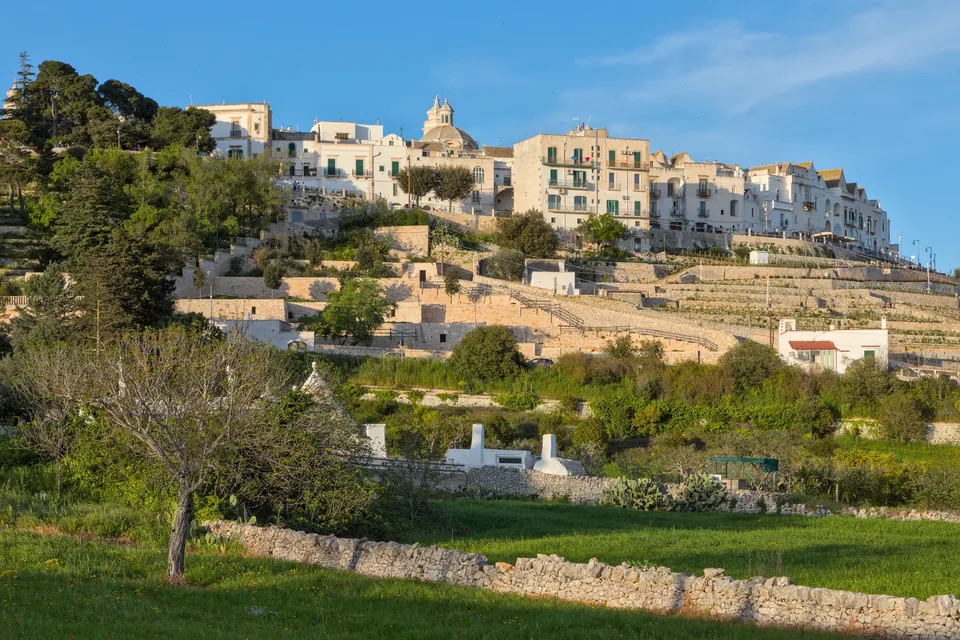
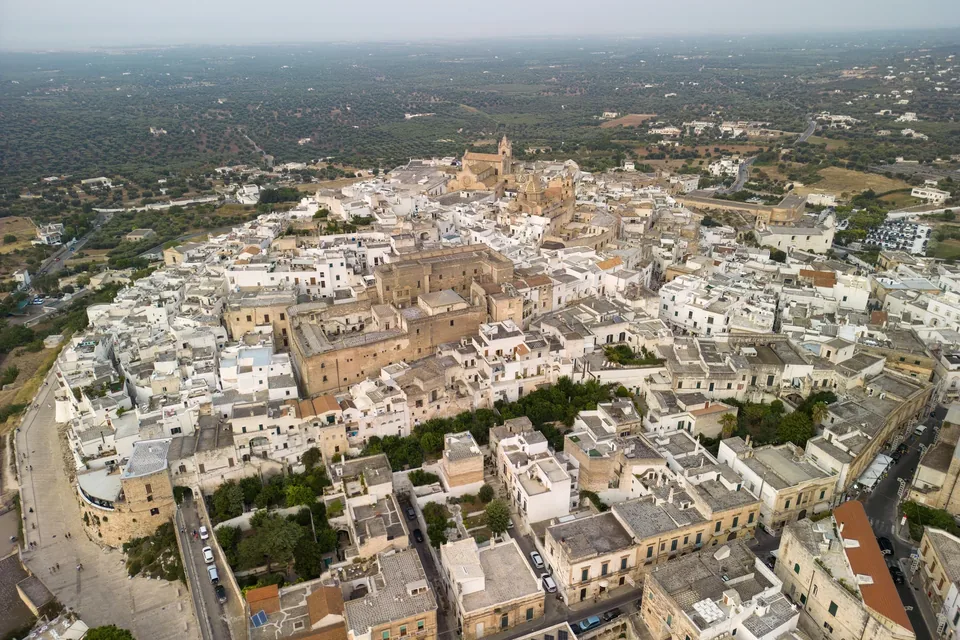
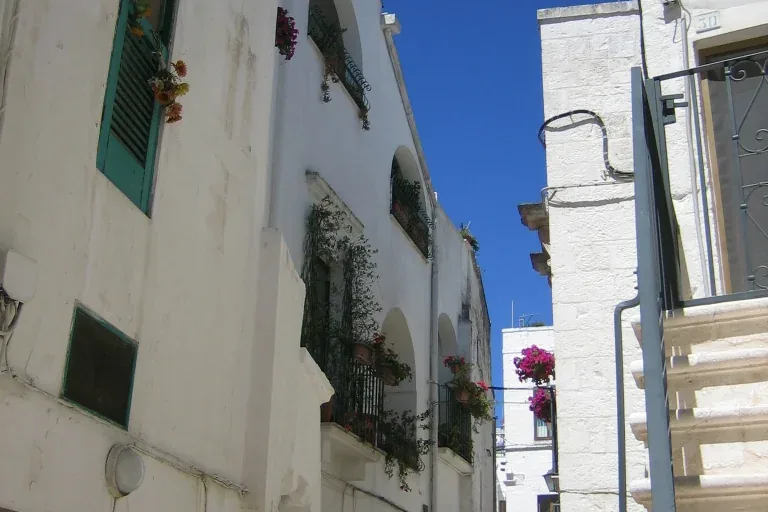
Cisternino looks over the Itria Valley from a hill in the Murgia dei Trulli, about forty-six kilometres from Brindisi and not far from the Adriatic coast. The national tourism portal describes it as a compact town, white and stone-paved, dotted with flowerpots, with low houses, hidden courtyards, little stairways and arches; the Touring Club Italiano has awarded it the Orange Flag, which the regional portal also links to how easily the centre can be explored on foot.
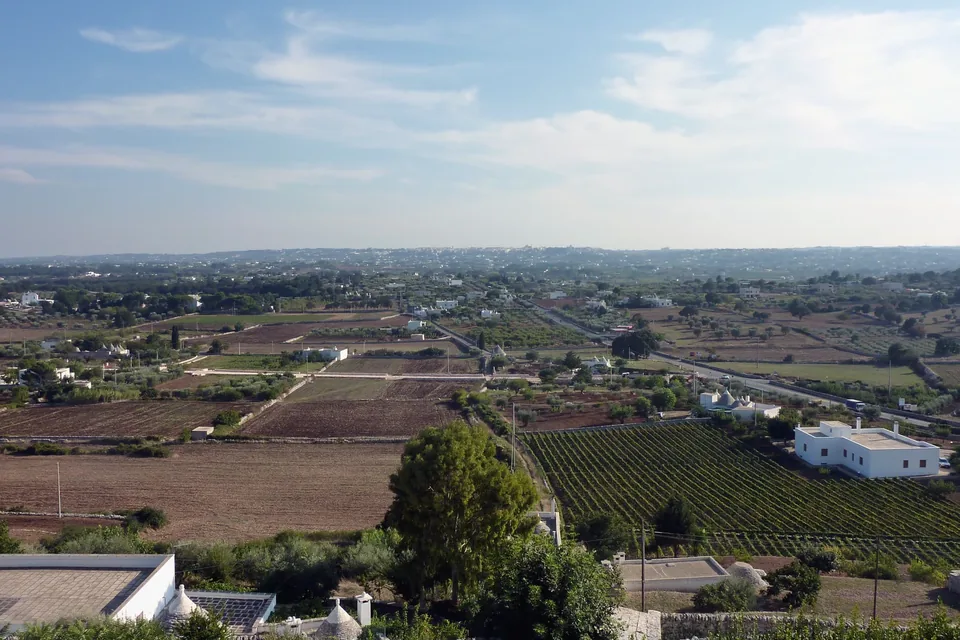
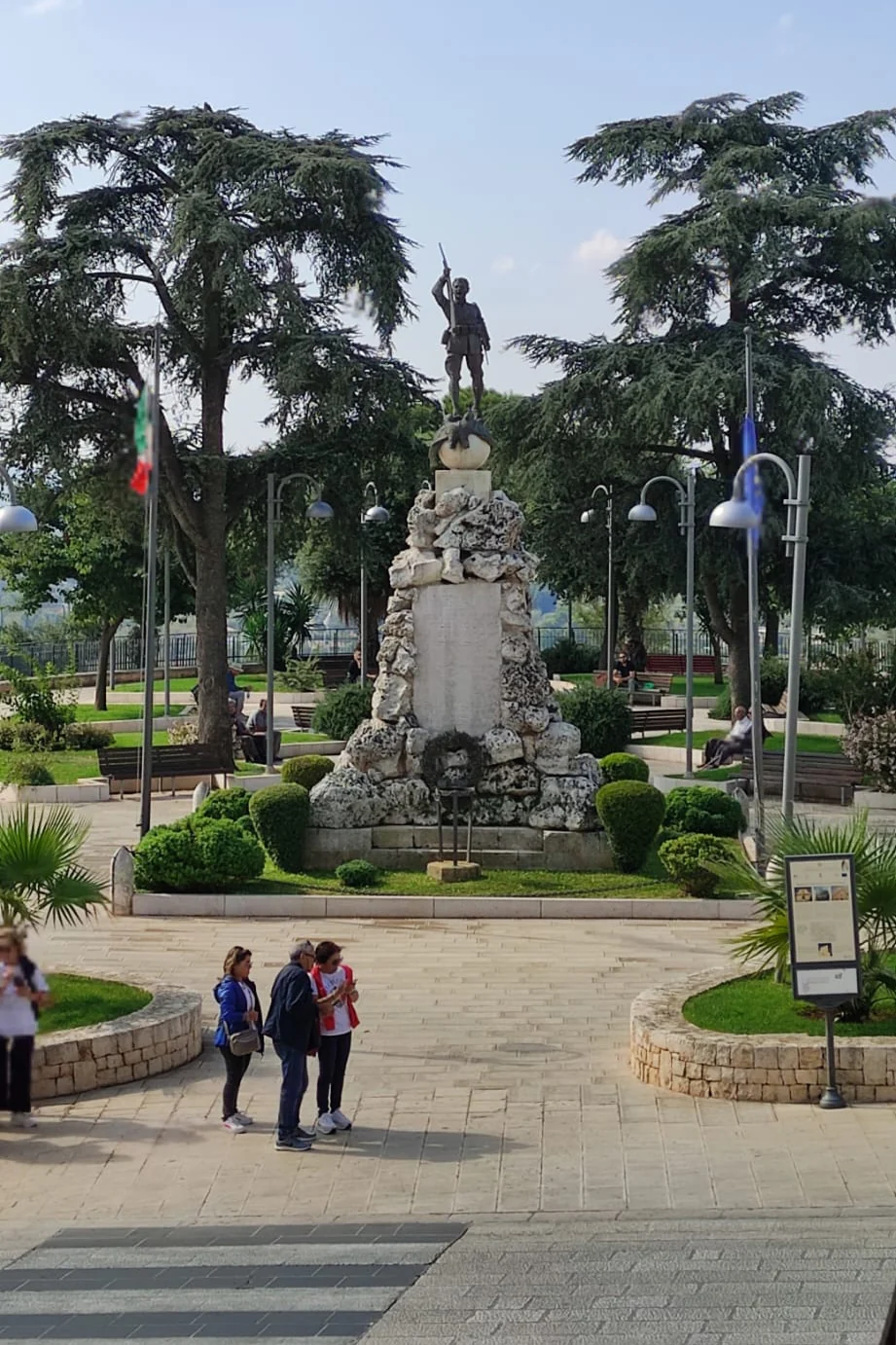
The first reason to come is the landscape: from piazza Garibaldi a belvedere offers, according to the Ministry of Tourism, one of the finest views of the valley and its towns, especially at sunset, when the countryside turns golden. The second is the table. Cisternino is known for its 'fornelli pronti', butcher's shops with an oven and small dining rooms where meat chosen at the counter is cooked on the spot.
A few steps from the lively summer streets, silence and calm take over: this is a town to enjoy slowly, between a walk through the four historic quarters and a pause in the square beneath the Clock Tower.
Sources: Viaggiare in Puglia, Regione Puglia — Cisternino · Italia.it, Ministero del Turismo — Cisternino · Italia.it, Ministero del Turismo — La Valle d'Itria: i luoghi da non perdere
History
The national tourism portal notes that Cisternino is an ancient town, destroyed in the barbarian age and reborn in the Middle Ages thanks to Basilian monks, who built an abbey around which the settlement grew; the mother church of San Nicola di Pàtara stands today on the site of that first place of worship. According to the regional portal the church was built in the fourteenth century over an earlier early-Christian site; the municipality specifies that the neoclassical façade was raised around 1848, replacing the Romanesque one.
The main entrance to the town was the Porta Grande tower, described as Norman-Swabian, about seventeen metres high and crowned by a small statue of Saint Nicholas. The municipality notes that it has been altered several times over the centuries, most recently in 1995; nearby stand the Tower of the Wind, attached to palazzo Ricci-Capece, and the late-medieval palazzo Amati with its own tower.
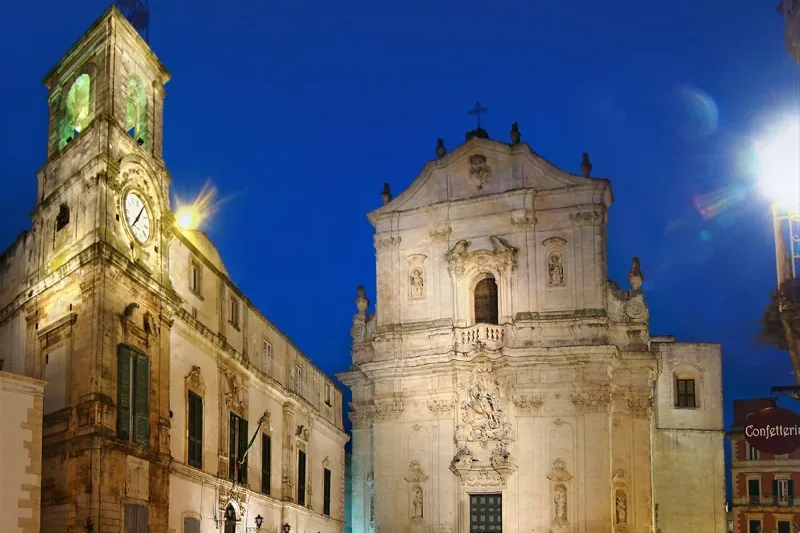
The historic centre keeps an almost intact medieval layout, with the quarters of Bère Vécchie, Scheledd, u Pantène and L'ìsule, plus the outer one, u Bùrie. In 1850 the main square gained its Clock Tower, designed by the Curri master builders from Alberobello.
Sources: Italia.it, Ministero del Turismo — Cisternino · Italia.it, Ministero del Turismo — La Valle d'Itria: i luoghi da non perdere · Viaggiare in Puglia, Regione Puglia — Chiesa Madre di San Nicola di Pàtara · Comune di Cisternino — Chiesa madre di San Nicola · Comune di Cisternino — Torre Grande · Viaggiare in Puglia, Regione Puglia — Torri di Cisternino e Porta Grande · Viaggiare in Puglia, Regione Puglia — Cisternino · Comune di Cisternino — Piazza Vittorio Emanuele III
What to see
The visit can start at the Porta Grande tower, now also used by the municipality for exhibitions and cultural events, and continue over the polished paving stones of the lanes to piazza Vittorio Emanuele, known to everyone as Clock Square: here the Clock Tower rises in several orders up to the dial and its metal pinnacle, and the building beside it was raised by a storey to match its height.
The mother church of San Nicola deserves a stop. Its three-aisled interior keeps columns and capitals of medieval character; in the right aisle the Rosary chapel holds an Imago pietatis, and between the two chapels stands the Madonna of the Goldfinch from 1517, which the municipality calls the most prestigious sculpture of the Apulian Renaissance, the work of Stefano da Putignano according to the regional portal. The sacristy keeps the carved wooden relief of the Madonna della Madia and the painting of Saints Quiricus and Julitta by Barnaba Zizzi.
Among the historic palaces the regional portal points to the Governor's Palace, an example of Apulian baroque, the sixteenth-century bishop's palace and palazzo Lagravinese; a little further on is the Capuchin convent with the church of Sant'Antonio. From piazza Garibaldi the belvedere opens onto the valley.
Sources: Viaggiare in Puglia, Regione Puglia — Torri di Cisternino e Porta Grande · Viaggiare in Puglia, Regione Puglia — Cisternino · Comune di Cisternino — Piazza Vittorio Emanuele III · Viaggiare in Puglia, Regione Puglia — Piazza Vittorio Emanuele · Comune di Cisternino — Chiesa madre di San Nicola · Viaggiare in Puglia, Regione Puglia — Chiesa Madre di San Nicola di Pàtara · Italia.it, Ministero del Turismo — Cisternino
Food and wine
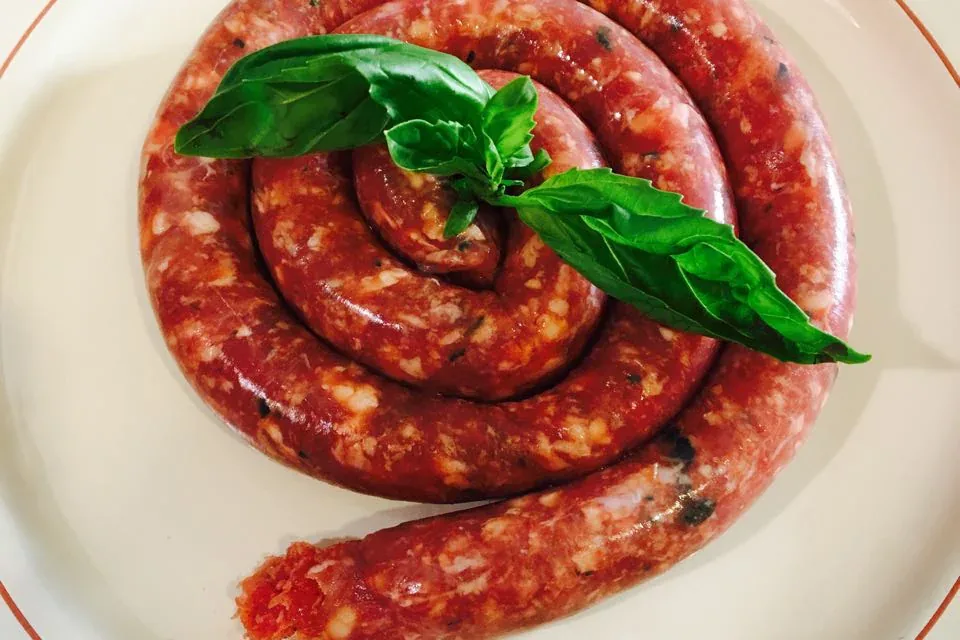
In Cisternino you meet the local cooking in the butcher's shops. The regional portal describes the 'fornelli pronti' as shops with an oven and small dining rooms, where people share gnummareddi, chicken livers and bombette, made with plain veal slices or filled with caciocavallo, rolled up and skewered on a spit; the Ministry of Tourism also calls them 'choose and eat', because you pick the meat at the counter and watch it cook. The Bombetta di Martina Franca, in the regional atlas of traditional products, is a roll of capocollo filled with cheese, cooked on a vertical spit or over embers.
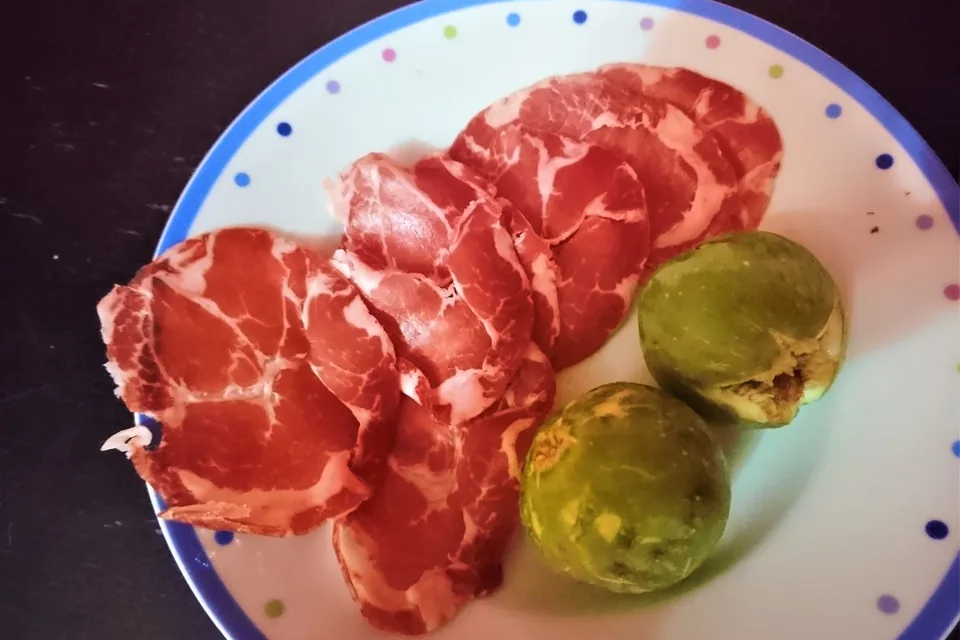
Capocollo di Martina Franca, a Slow Food Presidium, is also made in Cisternino: salted, washed in cooked wine must, stuffed and smoked over fragno oak and almond husks. In the glass, the entire municipality lies within the Locorotondo DOP zone, a white based on Verdeca and Bianco d'Alessano.
Collina di Brindisi DOP extra virgin olive oil also counts Cisternino among its towns, with olives mainly of the Ogliarola variety. On Easter Monday, the regional portal recalls, people carry 'u chrruchl' to the sanctuary of the Madonna d'Ibernia, a good-luck pastry baked with hard-boiled eggs.
Sources: Viaggiare in Puglia, Regione Puglia — Cisternino · Italia.it, Ministero del Turismo — La Valle d'Itria: i luoghi da non perdere · PAT Puglia — Bombetta · Fondazione Slow Food — Capocollo di Martina Franca · Regione Puglia — Locorotondo DOP · Commissione europea, eAmbrosia — Collina di Brindisi DOP · Italia.it, Ministero del Turismo — Cisternino
Things to do
The centre is best discovered on foot: from Porta Grande towards Porta Piccola, across Clock Square and then into the four quarters with their whitewashed houses, geraniums, loggias and arches. The regional portal stresses that the management of traffic in the old town makes it easy to visit entirely on foot.
Outside the town, in contrada Figazzano, the botanical conservatory I Giardini di Pomona holds, according to the regional portal, more than seven hundred varieties of fruit trees, including over two hundred fig varieties, along with aromatic plants, wild flora and a garden of rarities. The Apulian Aqueduct cycle route passes through the same area; the Ministry of Tourism describes it as a safe ride through the Mediterranean scrub of the Itria Valley, linking Locorotondo, Cisternino, Ostuni and Ceglie Messapica.
The sanctuary of the Madonna d'Ibernia, in the countryside, is also an archaeological site with Roman and medieval finds: on Easter Monday the townspeople go there on pilgrimage. For an evening, the grills of the centre round off the day.
Sources: Viaggiare in Puglia, Regione Puglia — Cisternino · Viaggiare in Puglia, Regione Puglia — Conservatorio botanico I Giardini di Pomona · Italia.it, Ministero del Turismo — La Valle d'Itria: i luoghi da non perdere
When to go
Cisternino can be visited all year. In summer Clock Square becomes, according to the regional portal, a busy open-air living room and the setting for the Pietre che cantano festival; the Ministry of Tourism notes, though, that a few steps are enough to find the calm of the lanes again.
Easter Monday is the day of the pilgrimage to the sanctuary of the Madonna d'Ibernia, with the traditional 'u chrruchl' pastry: a moment that shows the bond between the town and its countryside. In spring, flowering balconies and soft light make walks and rides along the cycle route a pleasure.
Autumn and winter are quieter seasons, suited to those seeking calm and a dinner at the grill without crowds; in winter, the regional portal writes, the square returns to being peaceful. We do not give dates for summer events, which change every year: check with the municipality or the info-point in via Castello.
Sources: Viaggiare in Puglia, Regione Puglia — Piazza Vittorio Emanuele · Italia.it, Ministero del Turismo — La Valle d'Itria: i luoghi da non perdere · Viaggiare in Puglia, Regione Puglia — Cisternino · Viaggiare in Puglia, Regione Puglia — Info-point Cisternino
Getting there and around
According to the regional tourism portal, Cisternino station mainly serves nearby towns; for long journeys it is best to go to Brindisi or Bari stations. The station is also listed among those of the national rail network managed by RFI.
For buses the regional portal points to the intercity lines of STP Brindisi and the COTRAP consortium, running every day. The nearest airport is Brindisi, managed by Aeroporti di Puglia, reachable on COTRAP intercity buses or with private shuttles and taxis booked in advance.
In town you get around on foot; for the countryside, the Pomona gardens and the other towns you can hire scooters, cars or bikes, including e-bikes. The Apulian Aqueduct cycle route, passing through contrada Figazzano, is the most pleasant way to reach Locorotondo or Ostuni on two wheels.
Sources: Viaggiare in Puglia, Regione Puglia — Cisternino · RFI — Stazione di Cisternino · Aeroporti di Puglia — Aeroporto di Brindisi · Italia.it, Ministero del Turismo — La Valle d'Itria: i luoghi da non perdere
Where to stay
For a stay in Cisternino you can choose between the historic centre, handy for enjoying the square and lanes in the evening, and the Itria Valley countryside, among trulli and masserie, which offers space and quiet but requires transport. The regional portal describes the area as one where many old rural houses have been converted into places to stay.
Stopping in Cisternino also means sitting down at a 'fornello'. As an identified reference we mention Arrosteria del Vicoletto, at via Giulio II 26: its website describes choosing the meat at the counter, cooking it in the fornello with spits arranged vertically in front of the fire, and the transformation of the family butcher's shop into an arrosteria in 1996. This is an editorial mention, not an Apulica partnership.
It is worth choosing just a few meats and asking how they are prepared: the difference between a plain and a filled bombetta, or between different cuts, is clearer with a focused tasting than with a large assortment.
Sources: Viaggiare in Puglia, Regione Puglia — Valle d'Itria e Murgia dei trulli · Arrosteria del Vicoletto — fornello, banco e contatti
Nearby
Cisternino lies at the heart of the Itria Valley, and the nearby towns are a short trip away. Locorotondo, linked by the cycle route, shares the white wine denomination with Cisternino and offers its circular centre with the cummerse; Martina Franca brings the baroque of the basilica of San Martino and the Ducal Palace; Alberobello lets you see the trulli of the Monti and Aia Piccola districts close up.
To the east, Ostuni is the only town in the valley overlooking the sea, with its white old town and the coast of the Dune Costiere nature park. Ceglie Messapica is also on the Apulian Aqueduct cycle route.
The Ministry of Tourism suggests an itinerary that starts in Martina Franca, takes in Locorotondo, Alberobello and the Castellana Caves and ends right in Cisternino, with dinner at the grills: a good thread for organising two or three days among the towns.
Sources: Viaggiare in Puglia, Regione Puglia — Locorotondo · Regione Puglia — Locorotondo DOP · Viaggiare in Puglia, Regione Puglia — Martina Franca · Viaggiare in Puglia, Regione Puglia — Alberobello · Viaggiare in Puglia, Regione Puglia — Ostuni · Viaggiare in Puglia, Regione Puglia — Cisternino · Italia.it, Ministero del Turismo — La Valle d'Itria: i luoghi da non perdere
Local tourist information
Local tourist offices help with opening times, events and transport on the day.
- Info-point Cisternino · Via Castello 22, 72014 Cisternino (BR) · +39 391 4387131 · turismo@comune.cisternino.br.it · Official website
Source: Viaggiare in Puglia, Regione Puglia — Info-point Cisternino · Viaggiare in Puglia, Regione Puglia — Cisternino · checked on
Where to stay
In the municipality of Cisternino the national database of the Ministry of Tourism lists 342 accommodation businesses with a verified CIN code: 5 hotels, 79 other licensed accommodation and 258 other types such as B&Bs and private rentals.
Licensed businesses from the official list of Regione Puglia, each with a checked national CIN code: matching municipality and category. Private individuals are not listed. Check directly with the property before booking.
ATTICO CINQUANTASEI
Guest rooms
CIN IT074005B400067123
DIMORA SAN QUIRICO
Guest rooms · Website
CIN IT074005B400031700
La Casédde
Guest rooms · Website
CIN IT074005B400125991
Masseria Pastinaca Relais & Spa
Guest rooms
CIN IT074005B400128714
TRULLI SUITE 2 P - MARTODDA
Guest rooms
CIN IT074005B400031873
TRULLO ROSMARINI
Guest rooms
CIN IT074005B400118820
Trulli Casalina
Guest rooms
CIN IT074005B400069136
Trullo DELLE DAME
Guest rooms
CIN IT074005B400063188
Villa Monti
Guest rooms
CIN IT074005B400122091
YOGAPULIA
Guest rooms
CIN IT074005B400121055
l'alcova nei Trulli
Guest rooms
CIN IT074005B400091386
I GIARDINI DI POMONA
Farm stay · Website
CIN IT074005B500026815
MASSERIA CALONGO
Farm stay · Website
CIN IT074005B500091276
MASSERIA CAPECE
Farm stay · Website
CIN IT074005B500027143
MASSERIA CARPERI
Farm stay
CIN IT074005B500081178
MASSERIA GIANCA
Farm stay
CIN IT074005B500101526
MASSERIA GIANNECCHIA
Farm stay
CIN IT074005B500023935
MASSERIA PEPPETURRO
Farm stay · Website
CIN IT074005B500027561
TRULLI CAPO DI LUPO
Farm stay
CIN IT074005B500104869
ALOE
B&B · Website
CIN IT074005B400024789
B&B ANTICA AIA DI FRANCESCO FUMAROLA
B&B · Website
CIN IT074005B400075544
Dimora Zaccano
B&B
CIN IT074005B400080970
ESSENZA RELAIS CONTEMPORANEO
B&B
CIN IT074005B400063575
Lisetta Gardens Boutique & Suites
B&B · Website
CIN IT074005B400089257
MASSERIA MONTANARO
B&B
CIN IT074005B400024831
MASSERIA PICCOLA
B&B
CIN IT074005B400020882
MASSERIA TRULLI SULL'AIA
B&B · Website
CIN IT074005B400025561
TRULLO SOVRANO
B&B
CIN IT074005B400021753
BORGO MARIETTA
Holiday home · Website
CIN IT074005B400054557
BORGO SANTA CLARA
Holiday home · Website
CIN IT074005B400040139
Borgo Altobello
Holiday home
CIN IT074005B400069138
CASA LUISA
Holiday home
CIN IT074005B400103309
CASA PICCENNA
Holiday home · Website
CIN IT074005B400127295
CASA VACANZA MADONNA D'IBERNIA
Holiday home · Website
CIN IT074005B400095669
CASALINI SUITE
Holiday home
CIN IT074005B400068049
CICCONE TRULLI
Holiday home
CIN IT074005B400114390
DIMORAE CAMà
Holiday home
CIN IT074005B400108062
L'ULIVETO
Holiday home
CIN IT074005B400025956
LA PICCOLA MASSERIA
Holiday home
CIN IT074005B400021509
LA SCALA DEL BORGO
Holiday home
CIN IT074005B400083177
Lamacesare
Holiday home
CIN IT074005B400098711
MINI SPA IN CHALET BOSCO E TRULLO
Holiday home
CIN IT074005B400125226
RIPOSO DEL VENTO
Holiday home · Website
CIN IT074005B400021422
Suite Dantè - Typical Apulian Rooms
Holiday home
CIN IT074005B400073476
TERRE D'ITRIA
Holiday home · Website
CIN IT074005B400119726
TRULLI 18CINQUANTANOVE
Holiday home · Website
CIN IT074005B400025031
TRULLI CASALINA
Holiday home · Website
CIN IT074005B400039942
TRULLI DEI PINI
Holiday home · Website
CIN IT074005B400027805
TRULLO AMICO
Holiday home · Website
CIN IT074005B400023376
Trulli Casalina exclusive villa
Holiday home · Website
CIN IT074005B400110918
Trulli Kairos
Holiday home
CIN IT074005B400119985
Trulli di Mezza
Holiday home
CIN IT074005B400077485
Trullo dei Pumi
Holiday home
CIN IT074005B400085834
VILLA DONATELLA
Holiday home
CIN IT074005B400101231
VILLA LA RONA
Holiday home
CIN IT074005B400089674
VILLA VITTORIA
Holiday home
CIN IT074005B400051298
iCONICO- Authentic Trulli Experience
Holiday home
CIN IT074005B400116155
AIA DEL VENTO
Hotel · ★★★
CIN IT074005A100126269
BORGO CANONICA
Hotel · ★★★★ · Website
CIN IT074005A100032316
FALCO D'ORO
Hotel · ★★★
CIN IT074005A100025838
LO SMERALDO
Hotel · ★★★★ · Website
CIN IT074005A100020757
RELAIS VILLA CENCI
Hotel · ★★★★ · Website
CIN IT074005A100033472
L'OSTELLO DEL VIANDANTE
Hostel
CIN IT074005B600126611
IL PORTICO HOLIDAY HOMES
Residence · Website
CIN IT074005B400086737
Sources: Regione Puglia – ARET Pugliapromozione (DMS), CC BY 4.0, 2026-10-12 · Ministero del Turismo – Banca Dati Strutture Ricettive (dashboard pubblica), 2026-10-12
YOUR JOURNEY
How to shape a journey here
We can connect reading Cisternino, choosing at the counter and a fornello dinner with wine or charcuterie work elsewhere in Valle d’Itria.
Talk to us about it