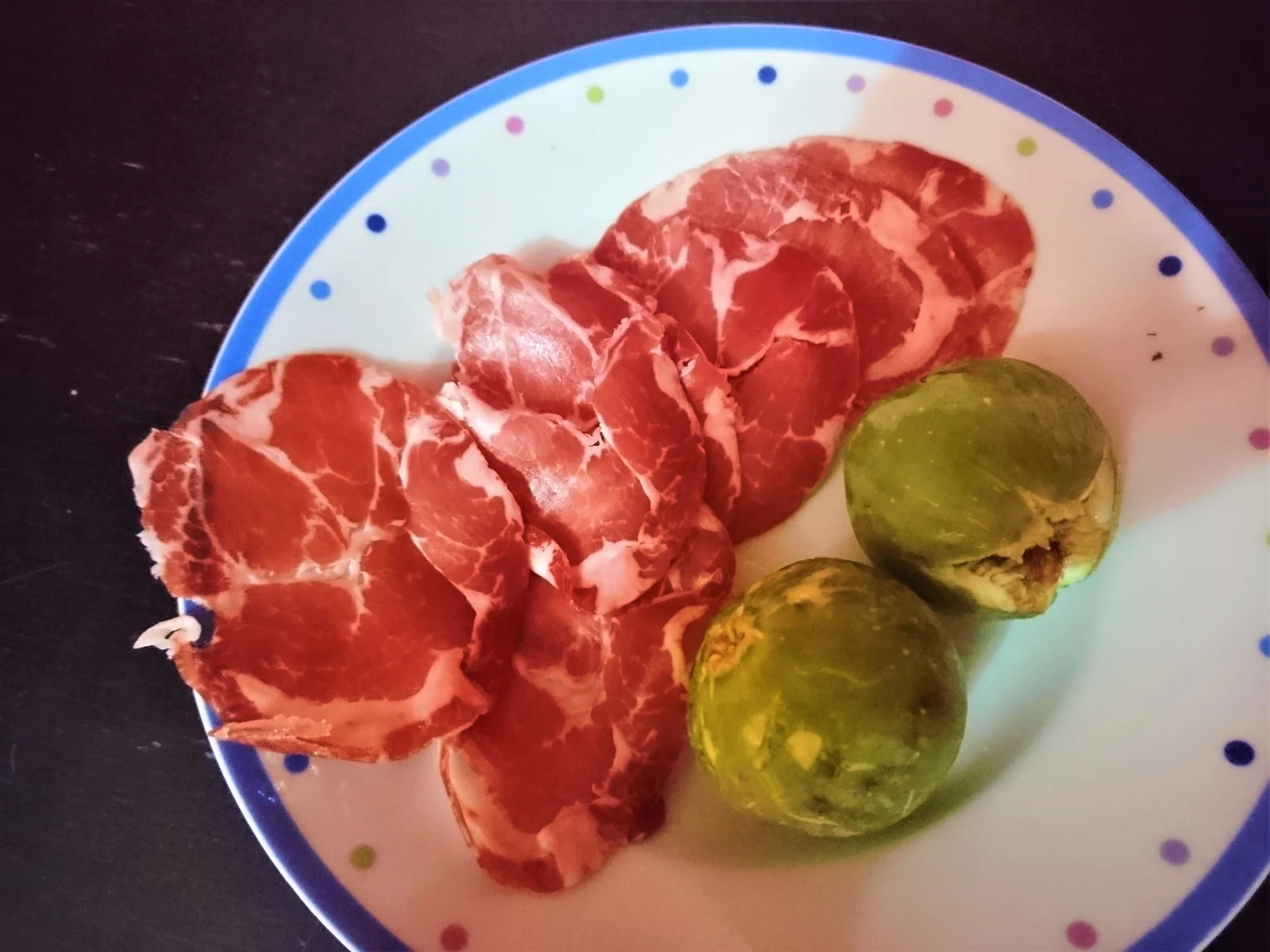
The cured meat of the trulli country
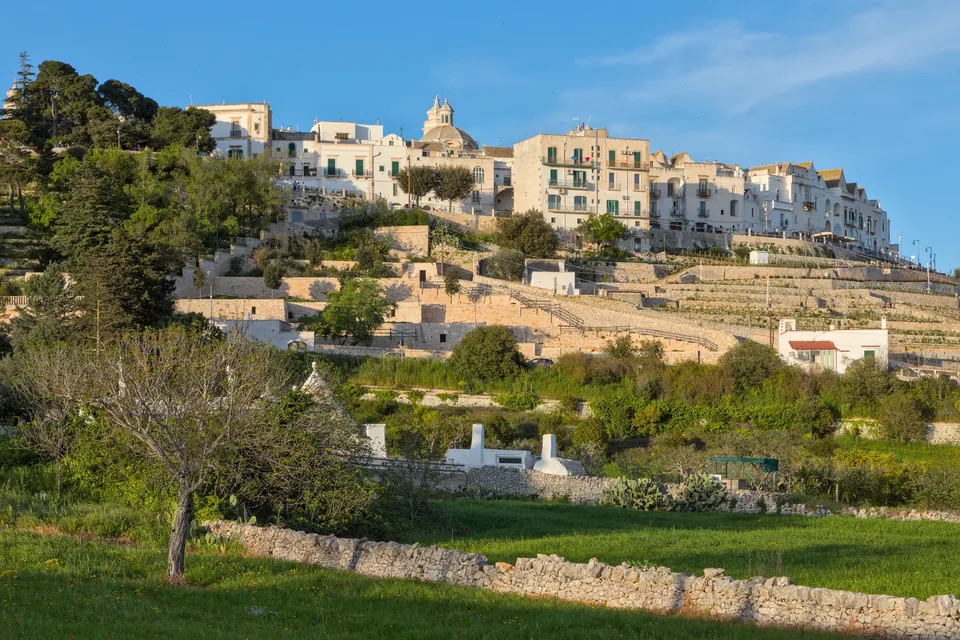
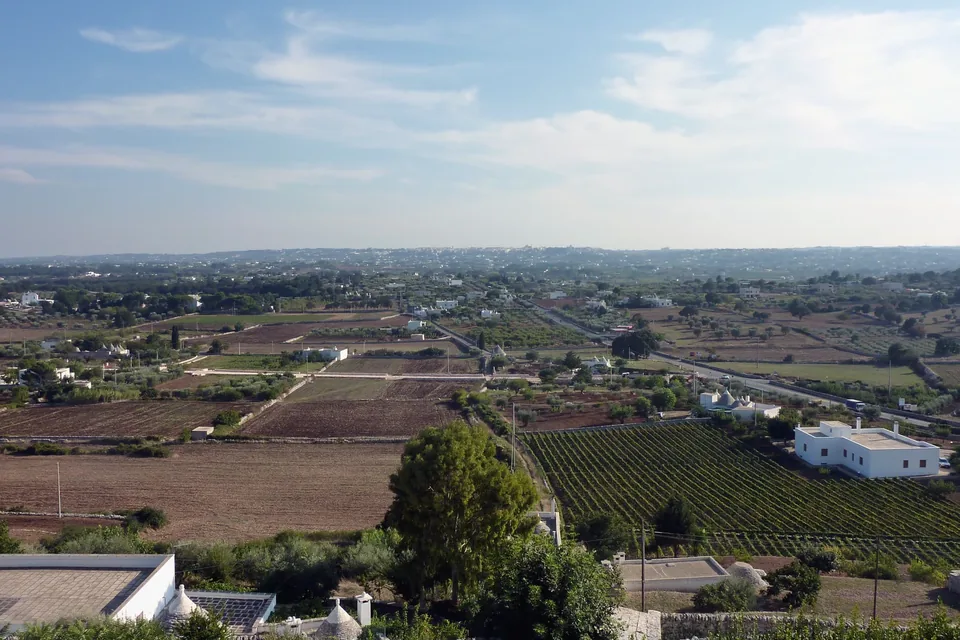
The Slow Food Presidium page calls capocollo the most typical cured meat of the Murgia dei Trulli, made in Martina Franca, Locorotondo and Cisternino and known in the Kingdom of Naples since the 18th century. The name comes from the cut: in southern Italy capocollo is the coppa, the muscle between the neck and the ribs. Martina Franca lies on the south-eastern slopes of the Murge at about four hundred metres, in a landscape of over fifteen thousand trulli and dry-stone walls, hilly and wooded, with a cool climate swept by winds from the Ionian and the Adriatic. The Apulian Atlas of traditional products quotes the historian Brandi, who in 1968 described it as sweet and lightly smoked and compared it to culatello and Ardennes ham, before concluding it was something else entirely.
Sources: Fondazione Slow Food — Presidio Capocollo di Martina Franca · Atlante dei PAT di Puglia — Capocollo di Martina Franca
Salt, cooked must, casing and cloth
According to the Presidium, the pieces of meat are trimmed and shaped and kept under salt for fifteen to twenty days; then they are washed with vino cotto, a mix of cooked must, wine from native grapes and spices. The capocollo is stuffed into natural pork casing and wrapped in linen or cotton cloths; the Presidium rules ban nitrites, nitrates and any other additive. The PAT record describes the same sequence with slightly different timings: salting with pepper and Mediterranean scrub herbs for ten to fifteen days, steeping in vino cotto for about twenty-four hours, casing and cotton cloth, then ten to fifteen days of drying. Italia.it gives pieces of two and a half to four kilos, worked by hand. The result, in the Atlas's words, is a wine-red cured meat, soft, with a sour note from the cooked must.
Sources: Fondazione Slow Food — Presidio Capocollo di Martina Franca · Atlante dei PAT di Puglia — Capocollo di Martina Franca · Italia.it — La storia del capocollo di Martina Franca
Macedonian-oak smoke and almond hulls
The trait that sets Martina Franca capocollo apart is smoking. The Presidium explains that Macedonian-oak wood and almond hulls are burnt together for two days, giving a faint smoky note and the characteristic aroma. Macedonian oak, Quercus trojana, is the most common oak in the area. In the past the floor of the ageing room was covered with Mediterranean scrub left to smoulder without flame; today purpose-built chimneys are used. The PAT record speaks of Macedonian-oak bark, almond husks and scrub herbs. After the smoke comes ageing in cool, airy natural rooms: about one hundred and twenty to one hundred and fifty days according to the Atlas, at least six months according to the Presidium and Italia.it.
Sources: Fondazione Slow Food — Presidio Capocollo di Martina Franca · Atlante dei PAT di Puglia — Capocollo di Martina Franca · Italia.it — La storia del capocollo di Martina Franca
Presidium, PAT and the road to PGI
Capocollo has been on the national list of traditional food products since 2001, as the Apulian Atlas notes, and is a Slow Food Presidium supported by the Municipality of Martina Franca. Producers formed an association active since 2007, Qualivita recalls in a 2021 report, when the PGI application was still awaiting the Ministry's reply. In January 2024 the same source reported the Ministry's positive opinion and the move to the European Commission. A company from outside the Itria Valley challenged the area of origin, but the Lazio Regional Administrative Court, in ruling no. 4375 of 2025, dismissed the appeal and confirmed the area of Martina Franca, Locorotondo and Cisternino. The Qualigeo database records publication of the registration application in the Official Journal of the European Union on 22 June 2026, after the Italian publication of 7 August 2023.
Sources: Atlante dei PAT di Puglia — Capocollo di Martina Franca · Fondazione Slow Food — Presidio Capocollo di Martina Franca · Fondazione Qualivita — Capocollo di Martina Franca verso il riconoscimento IGP (2021) · Fondazione Qualivita — Tra il Capocollo di Martina Franca e la Valle d'Itria legame storico (2024) · Fondazione Qualivita — TAR Lazio e domanda IGP del Capocollo di Martina Franca (2025) · Qualigeo — Capocollo di Martina Franca IGP (iter di registrazione)
One pig, two capocolli
The crux of production is the raw material. Qualivita, drawing on a 2021 article, explains that each pig yields only two capocolli: meeting all the demand would require a supply area far wider than the valley, which is why the process aimed at PGI rather than PDO. The Slow Food Presidium takes a narrower path: producers buy meat from local farms that follow its guidelines, with semi-free-range rearing, feed based on local cereals and legumes and attention to animal welfare. The PAT record mentions pigs reared extensively around Martina Franca and refers to the black Apulian breed. Italia.it recalls that pigs raised in the Salento and around Taranto were once brought to Martina Franca for slaughter.
Sources: Fondazione Qualivita — Capocollo di Martina Franca verso il riconoscimento IGP (2021) · Fondazione Slow Food — Presidio Capocollo di Martina Franca · Atlante dei PAT di Puglia — Capocollo di Martina Franca · Italia.it — La storia del capocollo di Martina Franca
Season: made in winter, eaten all year
The Presidium gives production from September to May: the cool months suit salting and first drying, while ageing carries the finished product well beyond. The PAT record speaks of year-round production and sales ranging from traditional shops and direct sale to village festivals. For travellers this means aged capocollo is available in every season, while anyone who wants to see it being made should look to the colder months. When mature, Slow Food writes, the flavour is aromatic and lingering, with the sour, aromatic feel that comes from the wine. Italia.it pairs it with bombette, capocollo rolls cooked at the fornello, as two faces of the same valley meat.
Sources: Fondazione Slow Food — Presidio Capocollo di Martina Franca · Atlante dei PAT di Puglia — Capocollo di Martina Franca · Italia.it — La storia del capocollo di Martina Franca
Three towns, one valley
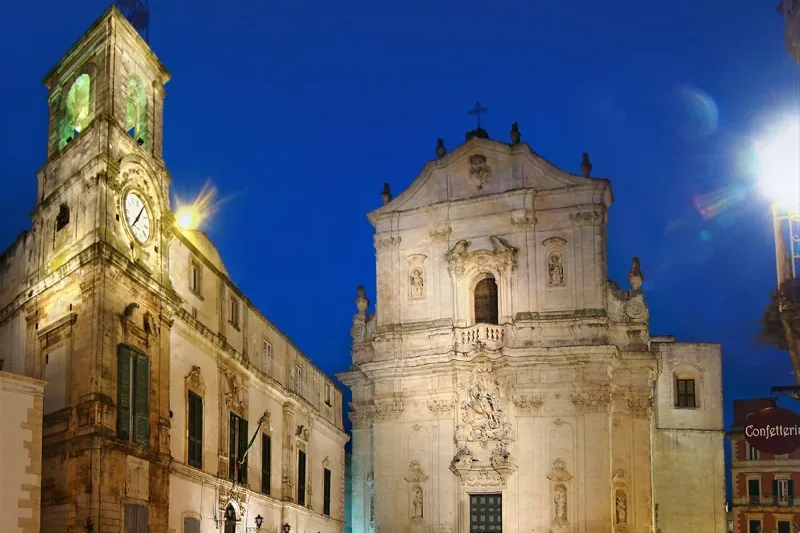
The capocollo area coincides with the heart of the Itria Valley. Italia.it's guide presents Martina Franca as the valley's most populous town, known for its Baroque and for the Itria Valley Festival, staged every July for almost forty years; Locorotondo, called Luogorotondo until the 19th century for its circular shape, belongs to the Land of the Trulli and, with Cisternino, ranks among Italy's most beautiful villages. The surrounding countryside is dotted with trulli and crossed by dry-stone walls, the same landscape the Slow Food page describes as the outcome of long agricultural work on harsh ground. In January 2024 the producers' association noted, via Qualivita, that the PGI application documents historical production inside trulli and masserie.
Sources: Italia.it — Valle d'Itria · Fondazione Slow Food — Presidio Capocollo di Martina Franca · Fondazione Qualivita — Tra il Capocollo di Martina Franca e la Valle d'Itria legame storico (2024)
At the table: thin slices, bread and little else
Capocollo is best understood on its own. Have it sliced thin to order, so the fat warms in the mouth and releases the smoky aroma, and eat it with durum-wheat bread and, if available, a soaked frisella. A young cheese such as stracciatella or a lightly aged canestrato balances the sour note of the cooked must; vegetables preserved in oil work better than sauces. In the glass, choose a dry Itria Valley white or a chilled Apulian rosé rather than a powerful red that would mask the smoke. A useful comparison, if you visit several shops, is to taste two capocolli of different ages in the same afternoon: you clearly sense how time changes colour, texture and acidity.
Taking it home, and festivals
It is one of the food souvenirs that travels best: a whole piece, well wrapped in deli paper, will stand a journey of a few days if kept cool; vacuum-packed slices are handier but lose some aroma. Always ask about ageing and, once the PGI is registered, look for the designation on the label; until then the references are the Presidium and origin in one of the three towns. We do not give festival dates: on the official pages we consulted we found no capocollo festival with a fixed calendar. The most interesting period remains winter, when the meat is processed, but any workshop visit must be arranged with operators and checked in advance.
A thread for your journey
Journey idea: a day in the capocollo triangle, with a morning in Martina Franca's Baroque centre, lunch with a board of valley charcuterie in Locorotondo and an evening at a Cisternino fornello, tasting the same meat fresh and aged. Any workshop visit, especially during the winter production months, to be arranged with operators.
Talk to us