Why go
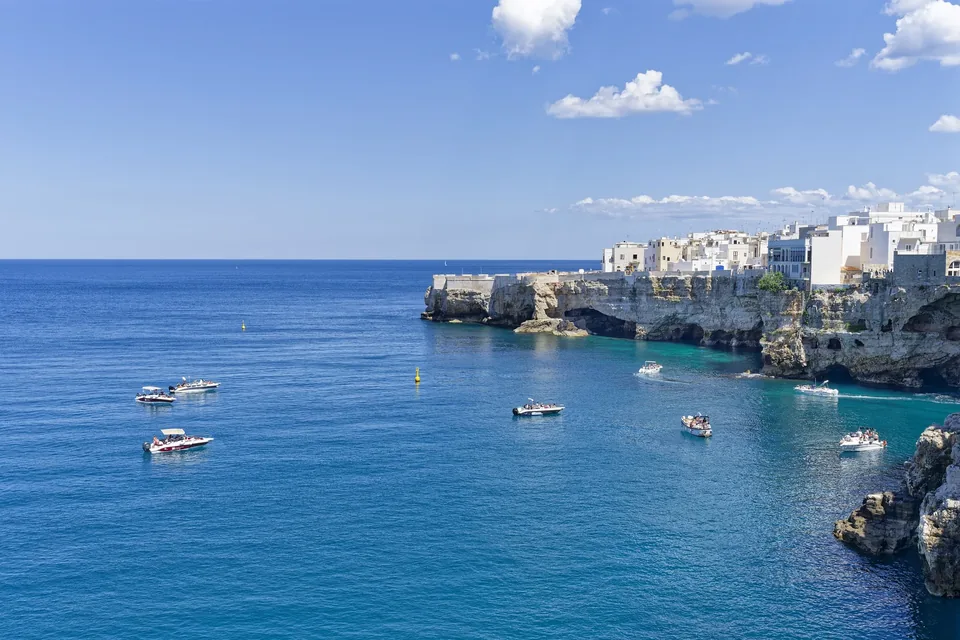
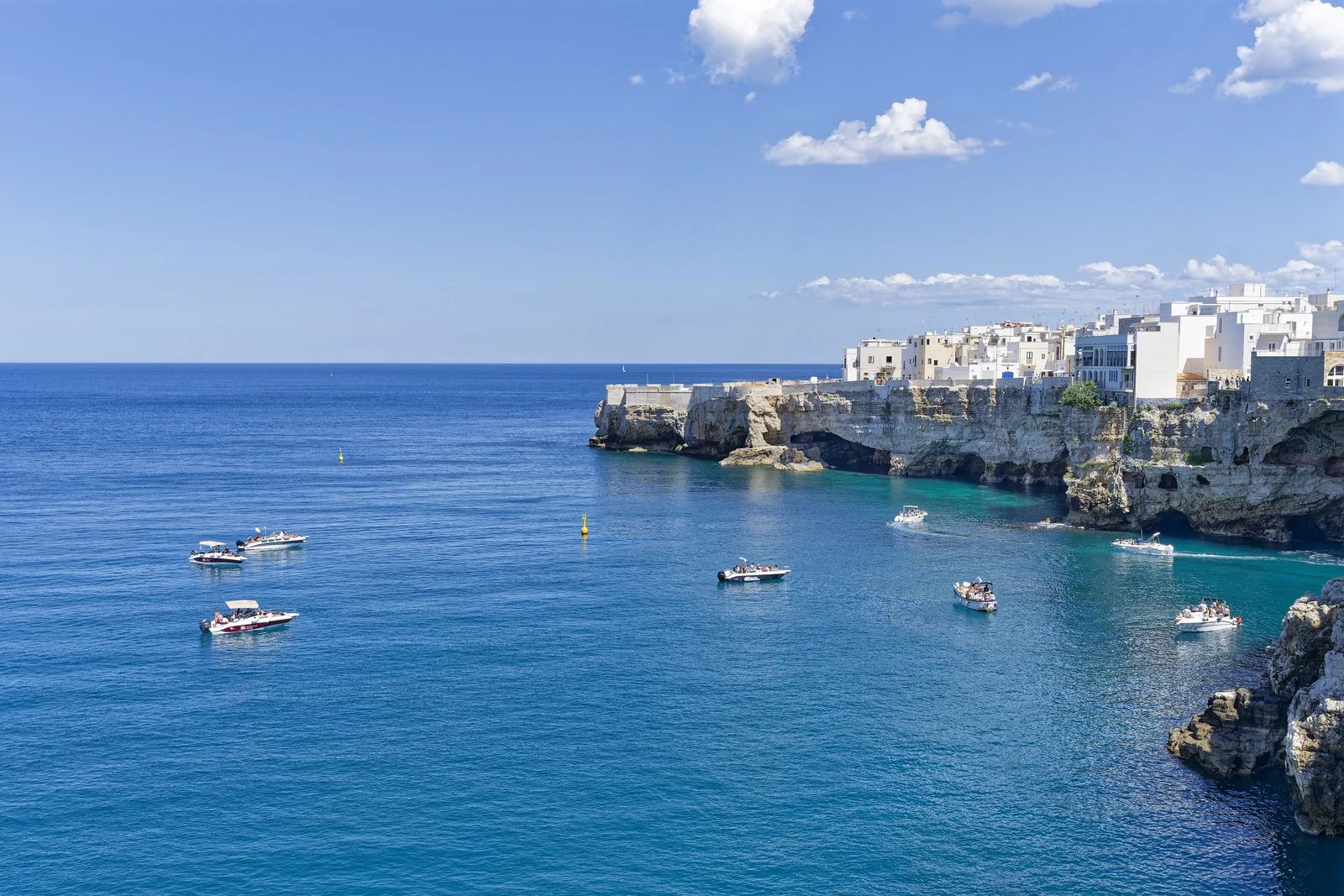
Polignano a Mare is a white town perched on a cliff, a little over thirty kilometres from Bari. The regional tourism portal calls it the Pearl of the Adriatic, for its clear sea and its coastline of rock pierced by wave-carved hollows; the historic centre, with white houses and loggias overhanging the water, keeps traces of the many rulers who followed one another here.
The first reason to come is the bond between the town and the sea. From the panoramic terraces of largo Grotta Ardito and from the bridge over Lama Monachile, the view drops onto the cove set between two rock walls and the jagged coast; from the sea, by boat or canoe, you discover the caves that the Ministry of Tourism points out beneath the cliff.
The second is cultural. Polignano is the birthplace of Domenico Modugno, remembered by a statue on the seafront, and is home to the Fondazione Museo Pino Pascali, in the former municipal slaughterhouse overlooking the water, the only permanent museum of contemporary art in the region according to the national portal. In the countryside, the Polignano carrot tells of farming bound to the coast.
The municipality recalls that it is the birthplace of Domenico Modugno, who worked across song, theatre, film and television, and it has registered the name “Polignano a Mare Città della Musica” for a cultural project that starts from his legacy. Pino Pascali is tied to the town too: according to the foundation that bears his name, he was born in Bari on 19 October 1935 to parents from Polignano, and he is buried in the small cemetery of his family’s home town.
The sea offers two more reasons. Since 2009 no place in the world has hosted more stages of the Red Bull Cliff Diving World Series, the municipality writes, counting thirteen by 2026; and in the same year Polignano received its nineteenth Blue Flag.
Sources: Viaggiare in Puglia, Regione Puglia — Polignano a Mare · Italia.it — Passeggiata a Polignano a Mare · Viaggiare in Puglia, Regione Puglia — Fondazione Museo Pino Pascali · PAT Puglia — Carota di Polignano · Comune di Polignano a Mare — Domenico Modugno e la canzone d’autore. Una visione per «Polignano a Mare Città della Musica» (2026-09-09) · Fondazione Pino Pascali — Pino Pascali · Comune di Polignano a Mare — Polignano a Mare incorona il campione del mondo: la finale della Red Bull Cliff Diving World Series (2026-09-23) · Comune di Polignano a Mare — 19ª Bandiera Blu: consegnati i riconoscimenti alle spiagge candidate (2026-06-26)
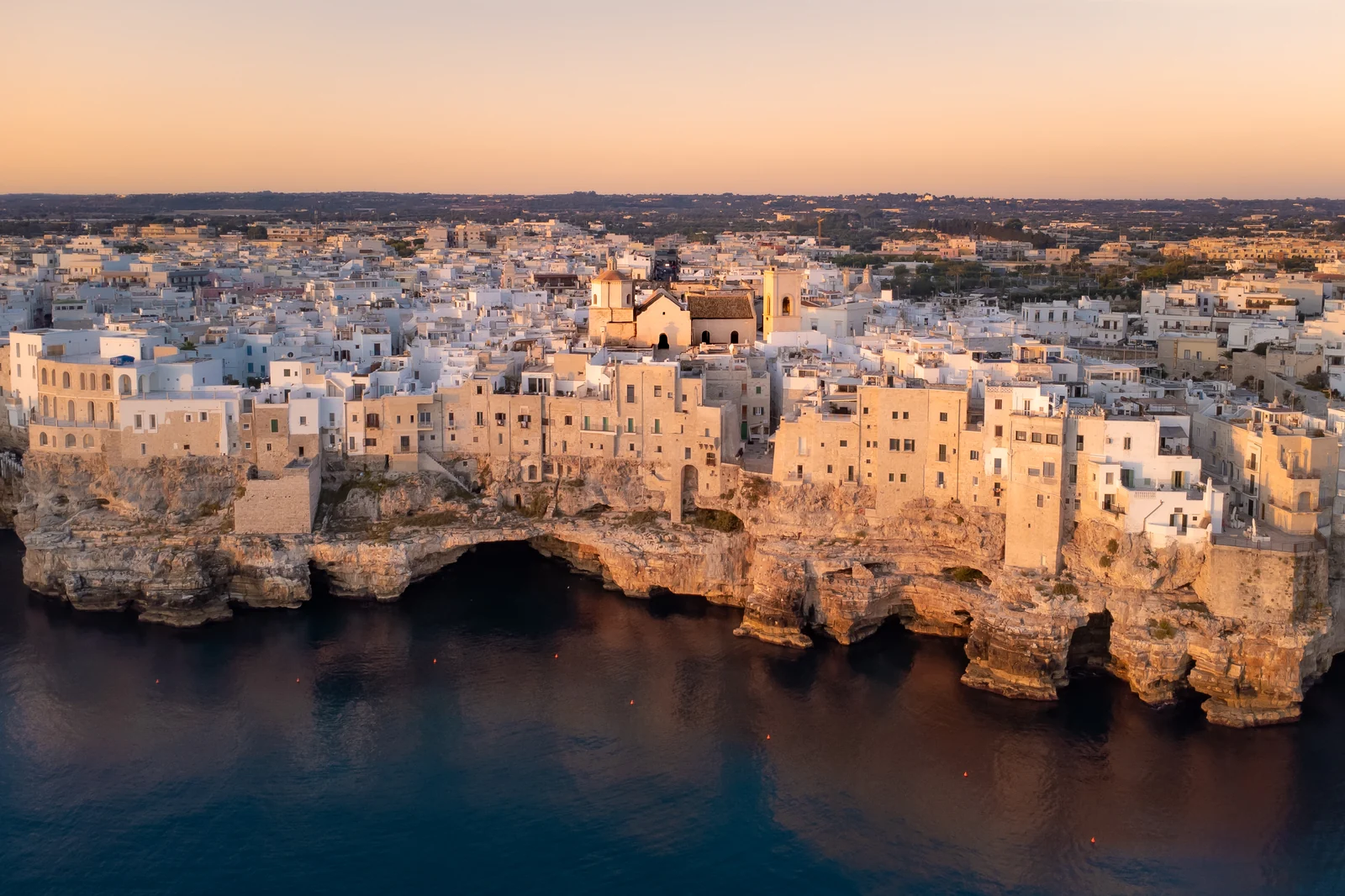
Photo: Pasquale Alberto Carone / Wikimedia Commons — CC BY-SA 4.0 · Resized and converted to WebP.
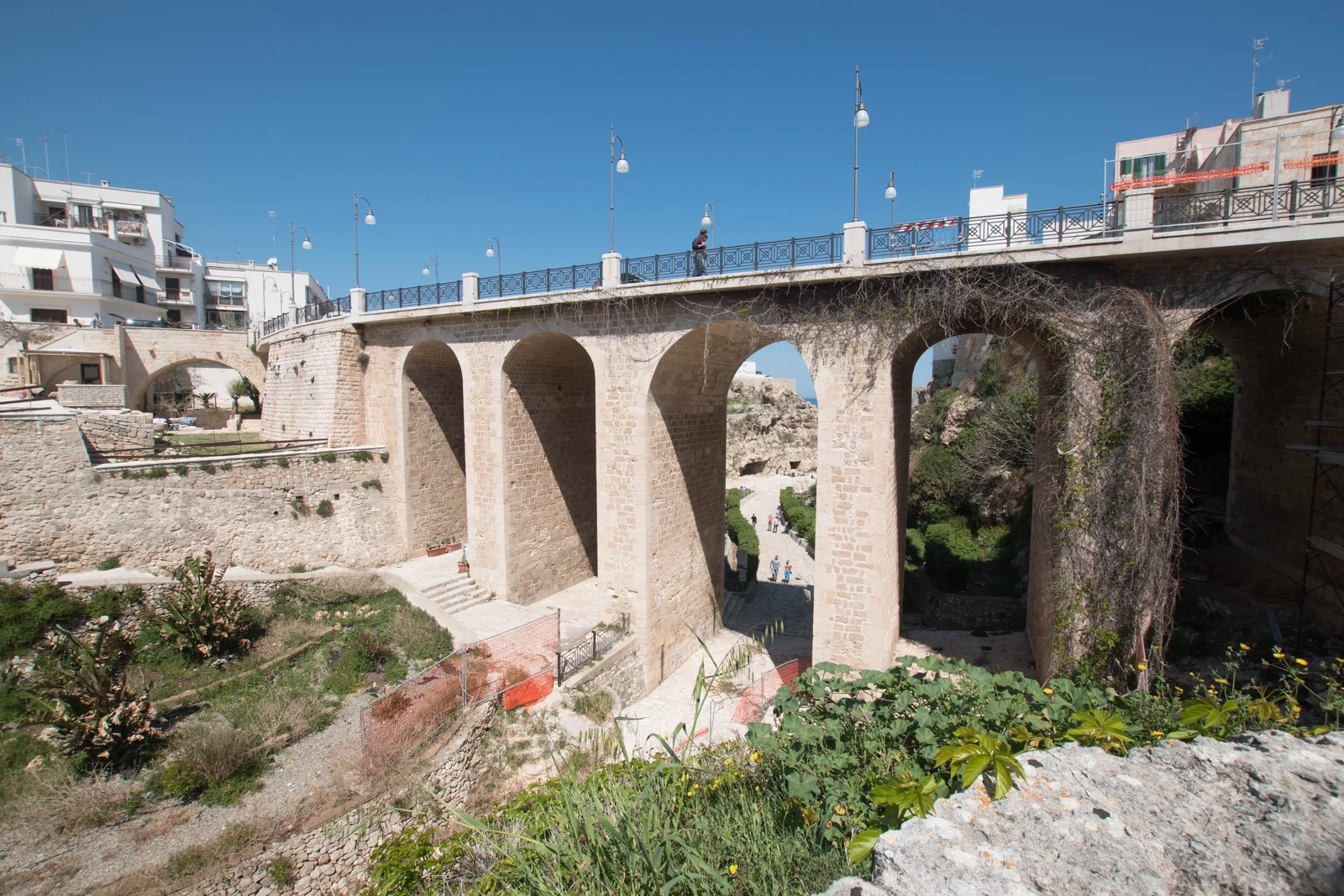
Photo: Andresumida / Wikimedia Commons — CC BY 2.0 · Resized and converted to WebP.
History
The regional portal notes that the historic centre keeps Arab, Byzantine, Spanish and Norman traces, including the remains of the four towers that defended the old town. The fortified town was entered through the sixteenth-century Arco Marchesale, also called Porta Grande: the Ministry of Tourism recalls that it was once the only entrance, with a drawbridge, and is still topped by the remains of the fifteenth-century chapel of San Giuseppe.
The mother church of Santa Maria Assunta, formerly a cathedral, was built in 1295 over the remains of a pagan temple; it holds the great chapel of Saint Vitus, the town's patron, and many works by Stefano da Putignano, including a stone nativity scene declared a national monument. In the centre you also cross the old Jewish quarter, along via Giudea.
Just outside town, at San Vito, the abbey of the same name is linked to a legend recorded by the regional portal: in the year 801 Princess Florenza is said to have landed there with the saint's relics. Home first to monks and later to friars, it passed to the royal domain in 1785. Near the coast runs the route of the ancient via Traiana, crossed by a Roman bridge.
The record in the Ministry of Culture’s general catalogue of cultural heritage gives the history of the mother church in detail. The church dedicated to the Assumption was consecrated in 1295 by Bishop Guglielmo; in 1503 Bishop Matteo Buonospirito had a chapel built there, the chapel of the nativity scene, and in 1580 the building was rebuilt, as an inscription records. Of the Romanesque cathedral built between 1100 and 1200 only the rusticated stonework on the via San Benedetto side remains; the three naves with the transept and dome are Renaissance. In 1613 Bishop Giovanni Maria de Guanzellis opened the chapel of Saint Vitus in the space of the dome above the choir, in 1628 the portal was enriched with decoration and in 1720 Luca Alvese painted the ceiling of the nave.
The bell tower has several ages too. The base with two windows above the nativity chapel dates from 1503; the middle section was built between 1649 and 1664 at the wish of Bishop Pinierini, with a relieving arch so that the weight of the tower would not rest on the chapel vault, and only afterwards came the belfry. For the abbey of San Vito the ministry record notes an inscription of 1739 on the portal leading to the grand staircase and a lower level with a passage towards the sea.
Sources: Viaggiare in Puglia, Regione Puglia — Polignano a Mare · Italia.it — Passeggiata a Polignano a Mare · Viaggiare in Puglia, Regione Puglia — Chiesa di Santa Maria Assunta di Polignano a Mare · Viaggiare in Puglia, Regione Puglia — Abbazia di San Vito · Viaggiare in Puglia, Regione Puglia — Lama Monachile / Cala Porto · Ministero della Cultura, Catalogo generale dei beni culturali (scheda ICCD) — Chiesa Matrice di Santa Maria Assunta, Polignano a Mare · Ministero della Cultura, Catalogo generale dei beni culturali (scheda ICCD) — Campanile della Chiesa Matrice di S. Maria Assunta, Polignano a Mare · Ministero della Cultura, Catalogo generale dei beni culturali (scheda ICCD) — Abbazia di S. Vito, Polignano a Mare
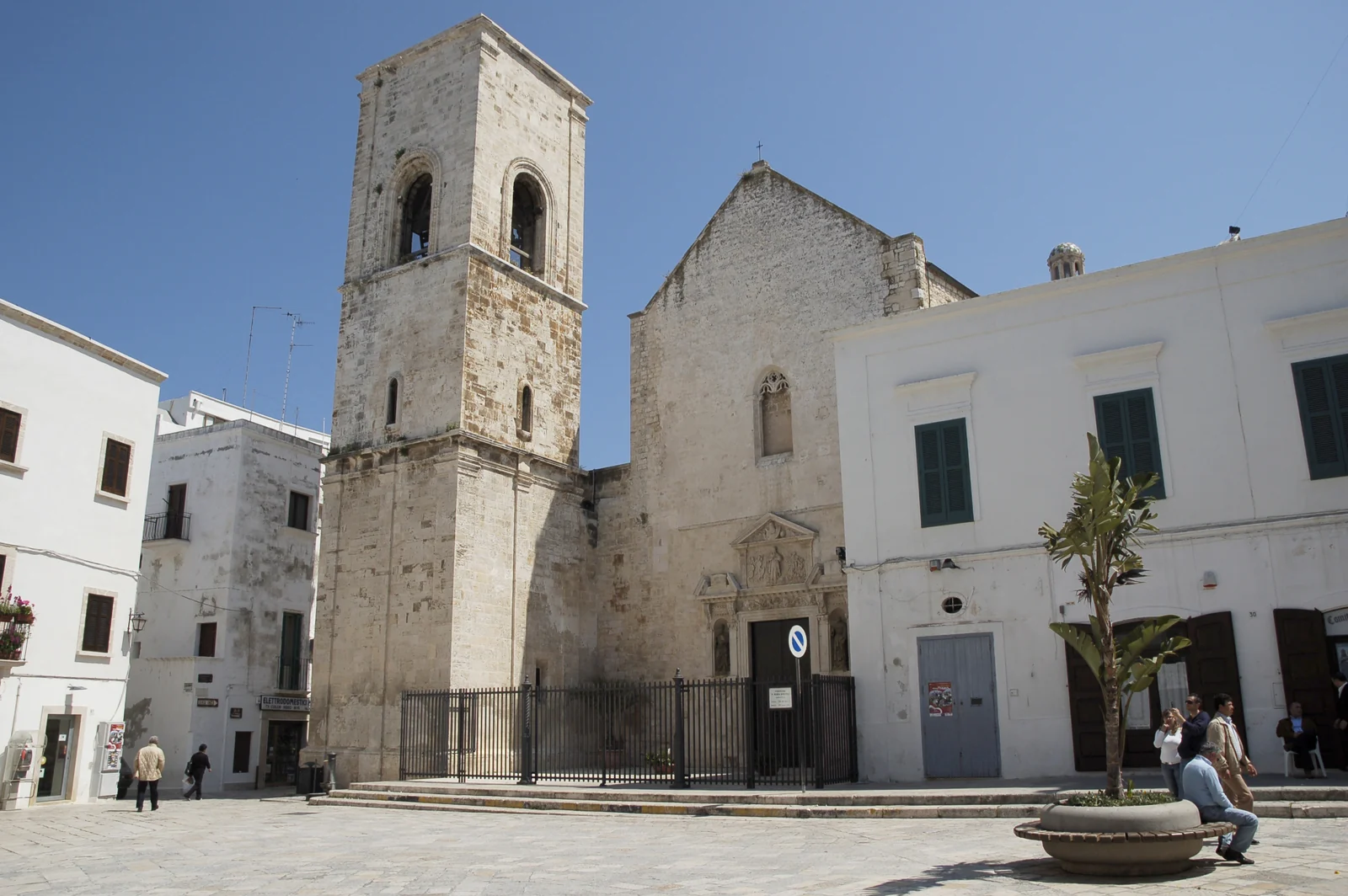
Photo: Nikowiky / Wikimedia Commons — CC BY-SA 4.0 · Resized and converted to WebP.
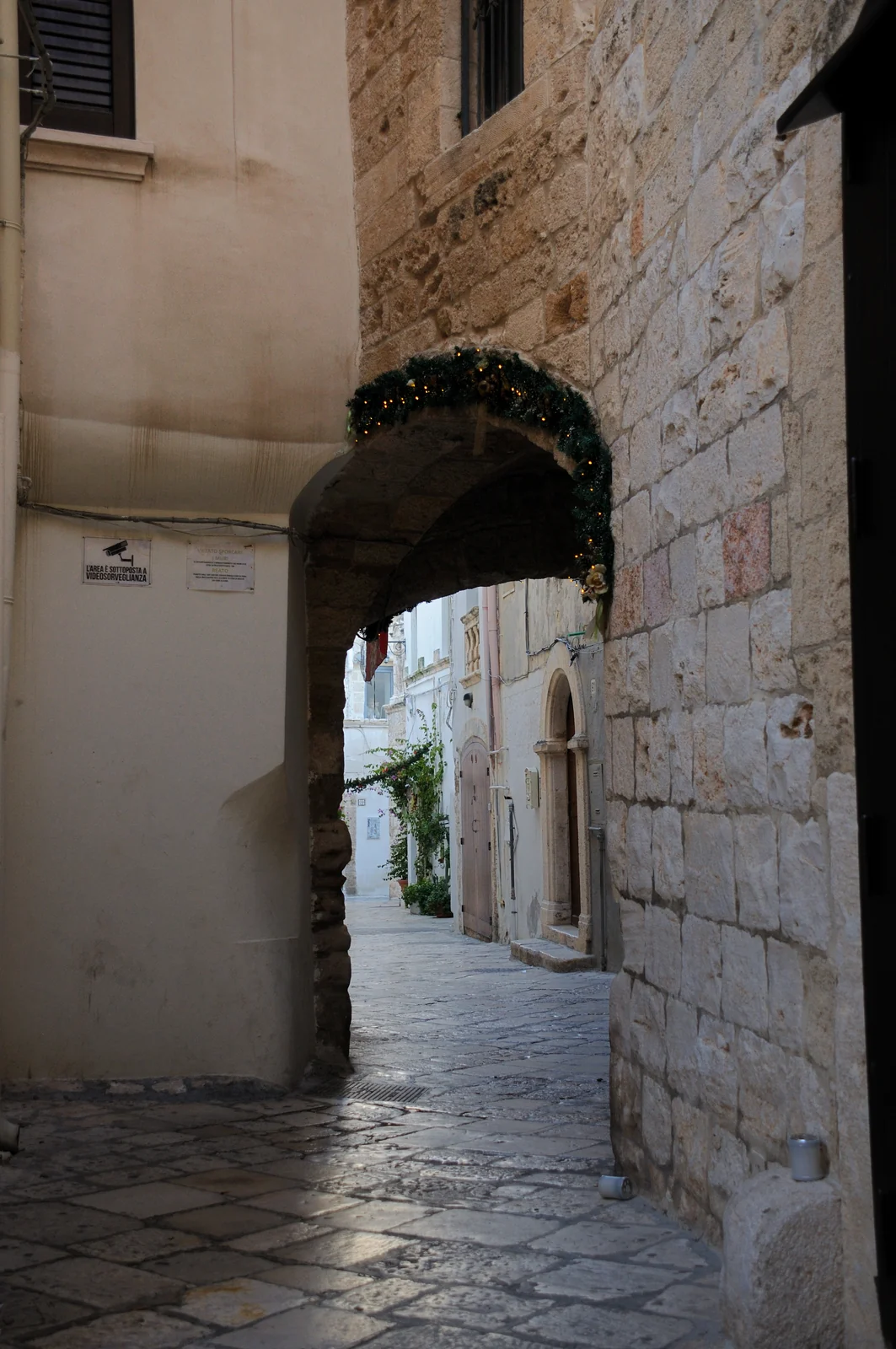
Photo: Josep M. Gracia / Wikimedia Commons — CC BY-SA 4.0 · Resized and converted to WebP.
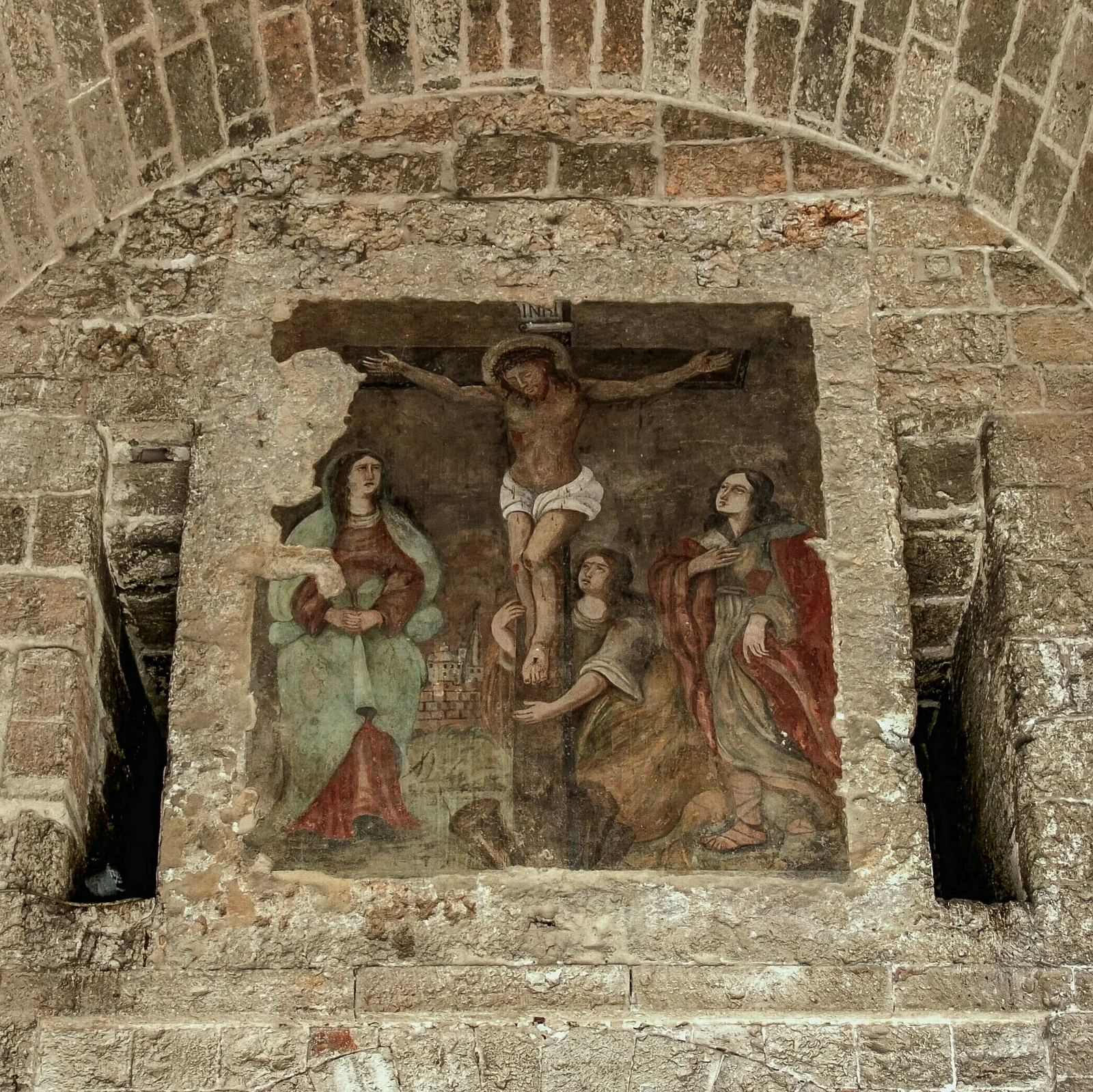
Photo: Giacomo Resta / Wikimedia Commons — CC BY-SA 4.0 · Resized and converted to WebP.
What to see
The walk through the town starts at the Arco Marchesale. Past the arch you meet the mother church, whose façade blends Gothic, Romanesque and baroque elements, with a bell tower more than twenty-three metres high; then you enter the maze of lanes, past the churches of the Purgatorio and Santo Stefano to piazza Vittorio Emanuele II with the tower of the Palazzo dell'Orologio. Hand-painted lines of poetry appear on walls and stairways, a small treasure hunt pointed out by the Ministry of Tourism.
The viewpoints are the most spectacular part. From largo Grotta Ardito you see the Hermit's Rock, an islet about thirty metres high where, according to the regional portal, Audouin's gull nests. Lama Monachile, or Cala Porto, is a small pebble beach wedged between two rock walls in the bed of an ancient watercourse, spanned by the bridge and crossed by the route of the via Traiana.
On the seafront named after Modugno stands the singer's three-metre bronze statue. A short way from the old town, in the former municipal slaughterhouse overlooking the water, the Fondazione Museo Pino Pascali shows many of the best-known works of the artist, who died in 1968 and was among the forerunners of arte povera, and hosts temporary exhibitions and the Pino Pascali Prize.
The Pino Pascali museum was born in 1998, the foundation writes, from a major bequest of the artist’s works and memorabilia by his family; the Ministry of Culture recalls that it opened with a large retrospective on the thirtieth anniversary of his death and that the museum revived the Pino Pascali Prize, suspended in 1978. Since 2010 the museum has been a foundation shared by the Puglia Region and the municipality, and in 2013 it received the first prize as the best contemporary art foundation in Italy. Beside many works by Pascali it shows the most significant artists from Puglia and the winners of the Prize, whose work, the municipality writes, enters the permanent collection.
The museum is at Via Parco del Lauro 119, in the former slaughterhouse near the Lungomare Cristoforo Colombo, and according to the municipality visitors who cannot walk reach it by lift. Opening hours and prices published by the foundation are shown below as data with the date they were checked.
Pascali’s career was short: according to the foundation he graduated from the Academy of Fine Arts in Rome in 1959, worked as a set designer, including for the television series Carosello, held his first solo show in 1965 at the La Tartaruga gallery in Rome and in the summer of 1968 had a room of his own at the 34th Venice Biennale. He died in Rome on 11 September 1968, aged 33, and while the exhibition was still open he was awarded the International Prize for Sculpture.
Sources: Italia.it — Passeggiata a Polignano a Mare · Viaggiare in Puglia, Regione Puglia — Chiesa di Santa Maria Assunta di Polignano a Mare · Viaggiare in Puglia, Regione Puglia — Scoglio dell'Eremita · Viaggiare in Puglia, Regione Puglia — Lama Monachile / Cala Porto · Viaggiare in Puglia, Regione Puglia — Fondazione Museo Pino Pascali · Italia.it — Historic centre of Polignano a Mare · Fondazione Pino Pascali — Chi siamo · Ministero della Cultura — Museo comunale d’arte contemporanea Pino Pascali · Comune di Polignano a Mare — I grandi eventi dell’anno dall’estate al Natale 2026 (2026-05-15) · Comune di Polignano a Mare — Museo Pino Pascali (luogo, indirizzo, accessibilità) · Fondazione Pino Pascali — Contatti, orari e biglietti · Fondazione Pino Pascali — Pino Pascali
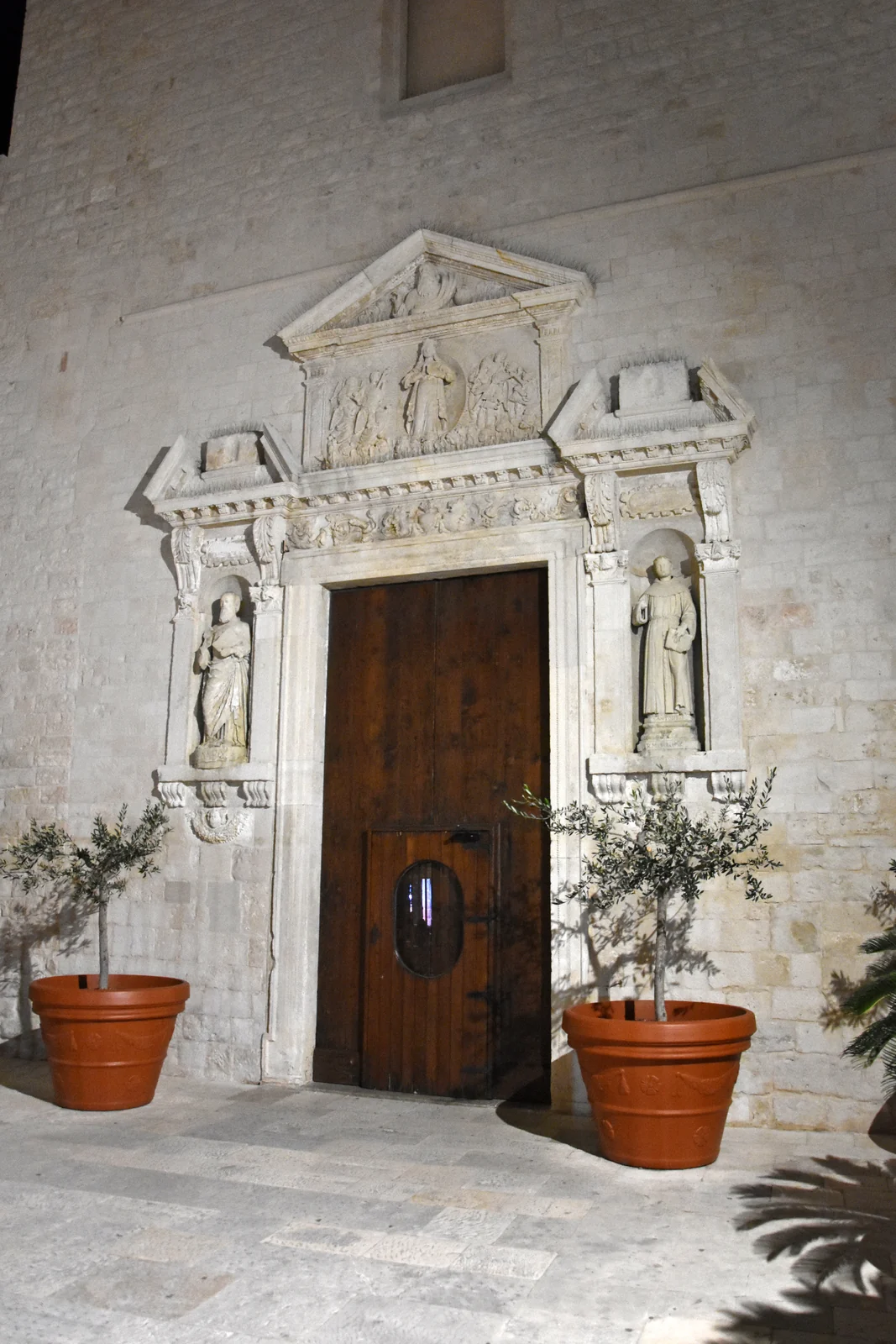
Photo: Phyrexian / Wikimedia Commons — CC BY-SA 4.0 · Resized and converted to WebP.
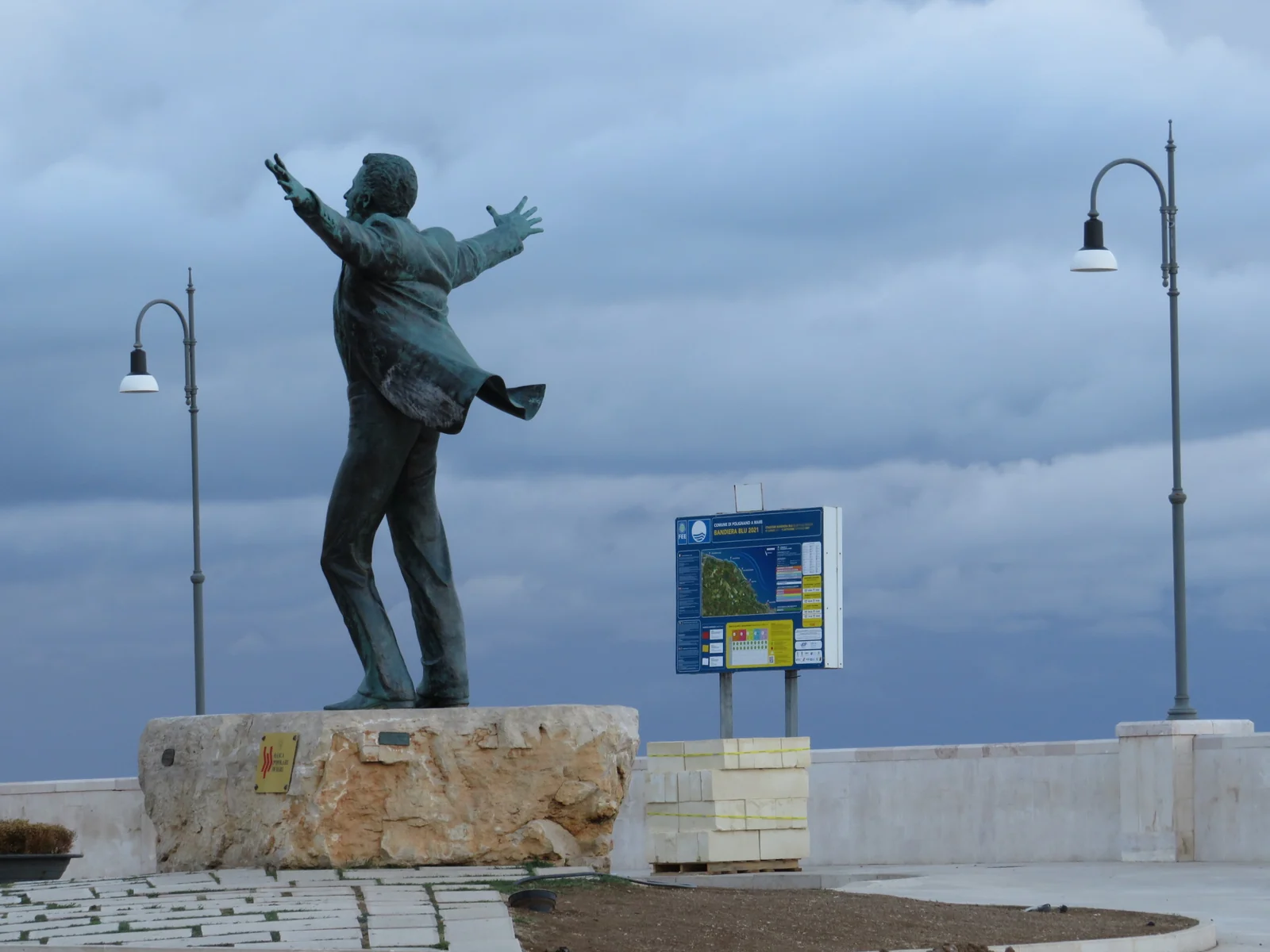
Photo: Enric / Wikimedia Commons — CC BY-SA 4.0 · Resized and converted to WebP.
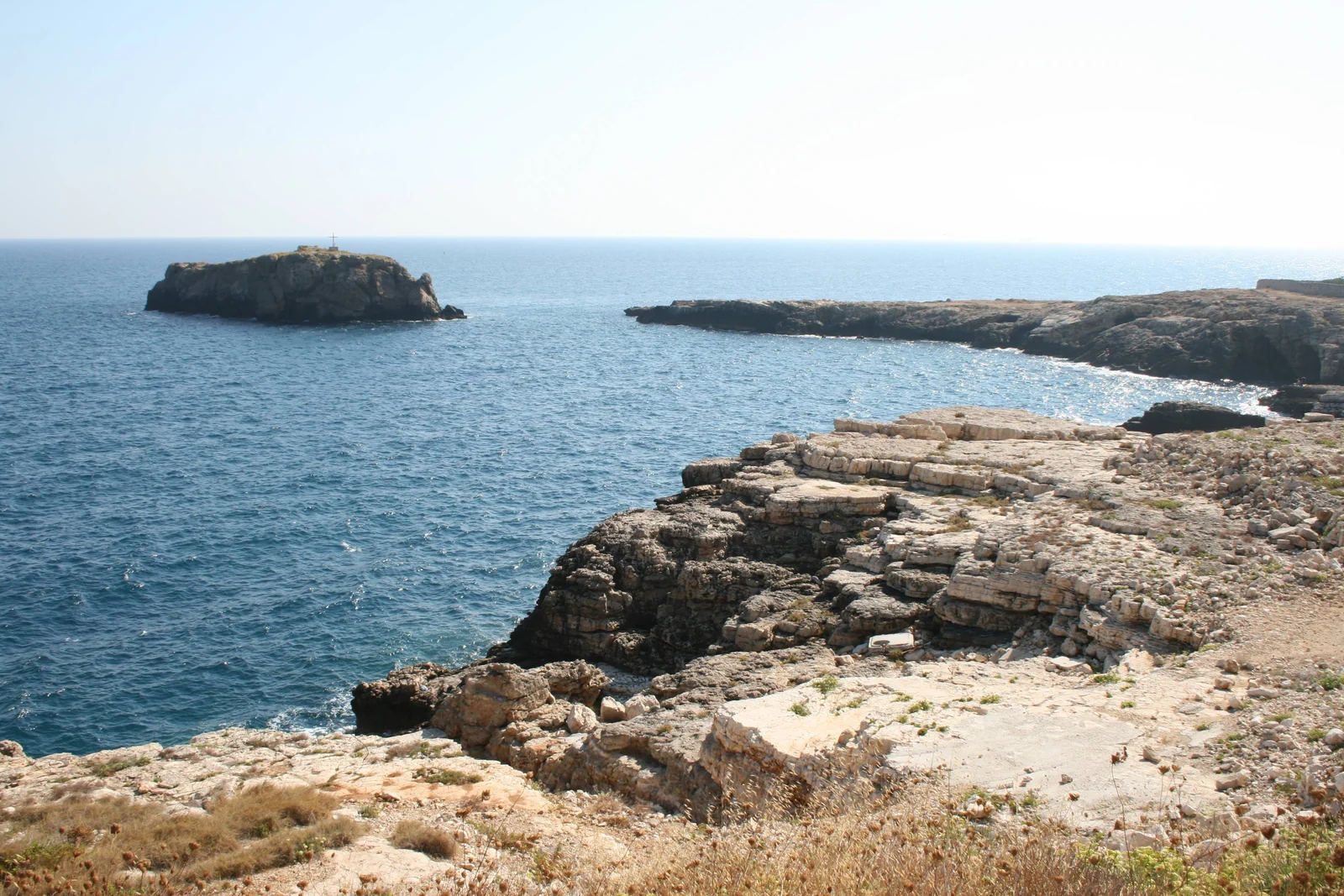
Photo: Carlo Pelagalli / Wikimedia Commons — CC BY-SA 3.0 · Resized and converted to WebP.
Food and wine
The product most closely tied to Polignano comes from the fields near the sea. The Polignano carrot, a Slow Food Presidium and a traditional product in the regional atlas, ranges in colour from pale yellow to deep purple, because farmers select the seed every year regardless of colour; it grows in sandy soils irrigated partly with brackish water drawn from stone wells. The regional page indicates staggered harvests from November to May.
At the town's tables, the Ministry of Tourism points to a café speciality: Polignano's 'caffè speciale', sweetened and enriched with lemon zest, amaretto and cream. The squares of the centre, such as piazza Vittorio Emanuele II and piazza San Benedetto, are where the national portal suggests trying local dishes.
Polignano belongs to the province of Bari, and its cooking shares the products of coast and hinterland: from Focaccia barese, a regional traditional product, to oil from the countryside and fish from the small harbours. The pastry shops and ice-cream parlours of the centre complete the walk.
Polignano also lies within the area of Terra di Bari PDO extra virgin olive oil with the geographical mention “Murgia dei Trulli e delle Grotte”. The production rules published by the Ministry of Agriculture include the whole municipal territory, together with Alberobello, Noci, Putignano, Castellana, Rutigliano, Turi, Conversano, Mola, Monopoli, Locorotondo and Casamassima; they require at least half of the olives to be of the Cima di Mola variety and the harvest to be completed by 30 January each year.
Sources: Fondazione Slow Food — Carota di Polignano · PAT Puglia — Carota di Polignano · Italia.it — Historic centre of Polignano a Mare · Atlante dei prodotti tradizionali di Puglia — Focaccia barese · Ministero dell’agricoltura (MASAF) — Disciplinare di produzione dell’olio extravergine di oliva a denominazione di origine «Terra di Bari»
Things to do
The sea can be enjoyed in many ways. The Ministry of Tourism suggests discovering the sea caves under the cliff by hiring a boat, a canoe or a paddleboard; some, close to town, can even be reached by swimming. Among the best known it lists the Grotta della Rondinella, the Grotta dell'Arcivescovado and the Grotta delle Monache; the Grotta Palazzese, a hollow plunging beneath the town, was an eighteenth-century ballroom according to the regional portal.
Small beaches and coves alternate along the coast. The 2026 Blue Flag, according to the municipality, went not to Lama Monachile but to the public beaches of Cala Paura and San Vito and to three beaches run under concession; Cala Paura, at the edge of town, is made of two coves of white pebbles with a small pier and the colourful boats of local fishermen; further along the coast towards Mola di Bari, San Vito combines a small cove with the medieval abbey. To the north, writes the national portal, there are quieter sandy beaches.
On land, a visit to the Pascali Foundation lets you look at the landscape through contemporary art. The regional portal also mentions e-bike and e-scooter rental and several cycling routes nearby.
The Red Bull Cliff Diving World Series, which in 2026 entrusted Polignano with the season final for the third time, is not held next to the town but inside it, the municipality explains: the athletes walk through the old town, dive from 21 and 27 metres from the balcony of a house and from the terrace of a building in the old centre, and spectators watch from the cliffs, the Lama Monachile beach, the balconies and the Bourbon bridge.
For swimming, in 2026 the municipality raised the Blue Flag on the public beaches of Cala Paura, also called Cala Paguro, and San Vito, where it brought the lifeguard service forward to 15 June and installed a defibrillator. The municipality warns that Cala Paura, because of the natural shape of the cove, is hard to access for people with reduced mobility.
In July the Il Libro Possibile festival, which reached its twenty-fifth edition in 2026, brings talks with writers, journalists and scientists to Piazza Aldo Moro, Piazza dell’Orologio, Largo Gelso and other places in town; the 2026 edition opened on the Bourbon bridge over Lama Monachile.
Sources: Italia.it — Passeggiata a Polignano a Mare · Viaggiare in Puglia, Regione Puglia — Grotta Palazzese · Viaggiare in Puglia, Regione Puglia — Lama Monachile / Cala Porto · Viaggiare in Puglia, Regione Puglia — Cala Paura · Viaggiare in Puglia, Regione Puglia — Polignano a Mare · Viaggiare in Puglia, Regione Puglia — Fondazione Museo Pino Pascali · Comune di Polignano a Mare — Polignano a Mare incorona il campione del mondo: la finale della Red Bull Cliff Diving World Series (2026-09-23) · Comune di Polignano a Mare — 19ª Bandiera Blu: consegnati i riconoscimenti alle spiagge candidate (2026-06-26) · Comune di Polignano a Mare — Cala Paura (luogo, accessibilità) · Comune di Polignano a Mare — Al via la XXV edizione de Il Libro Possibile (2026-07-08)
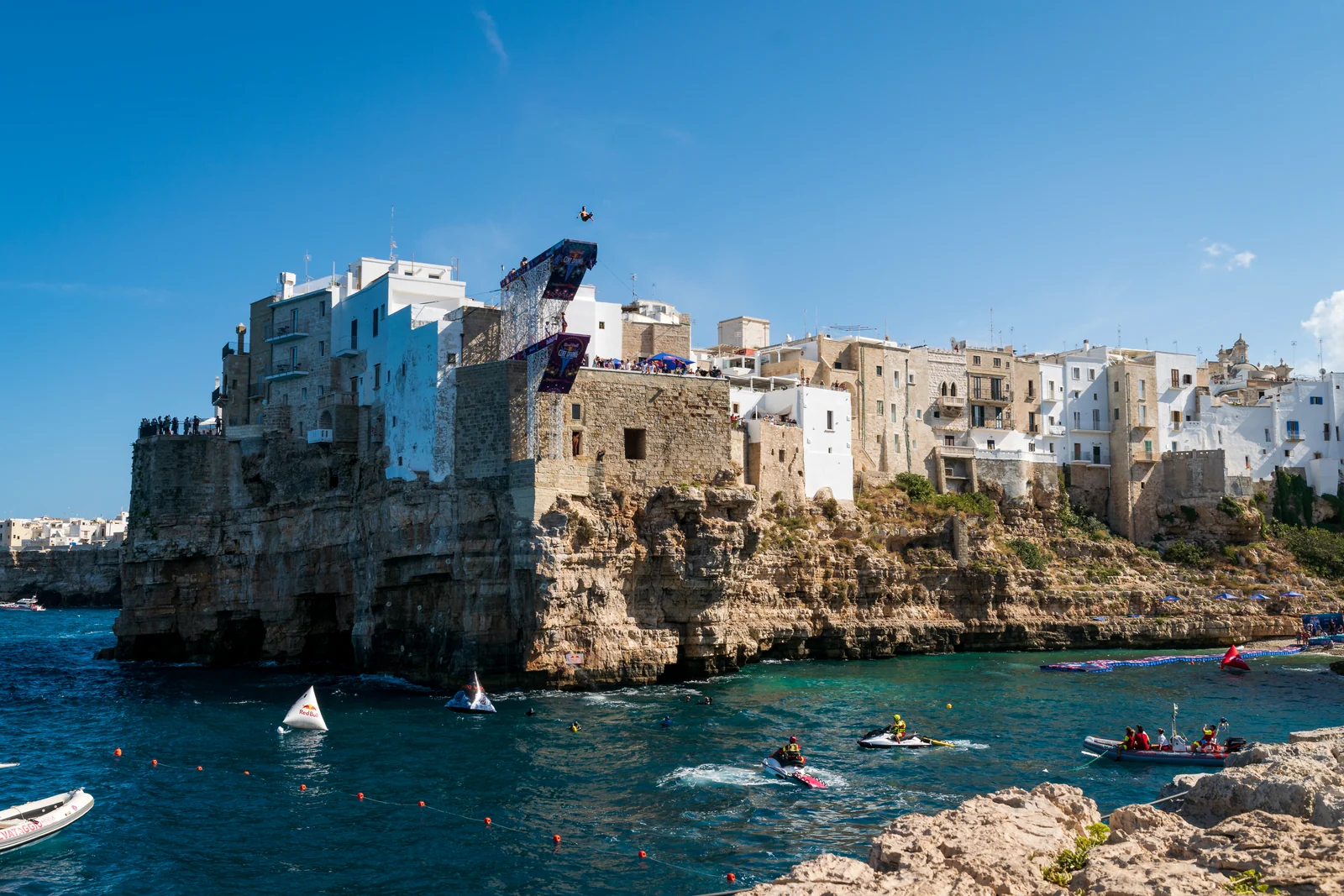
Photo: Frankthroughtheglass / Wikimedia Commons — CC BY-SA 4.0 · Resized and converted to WebP.
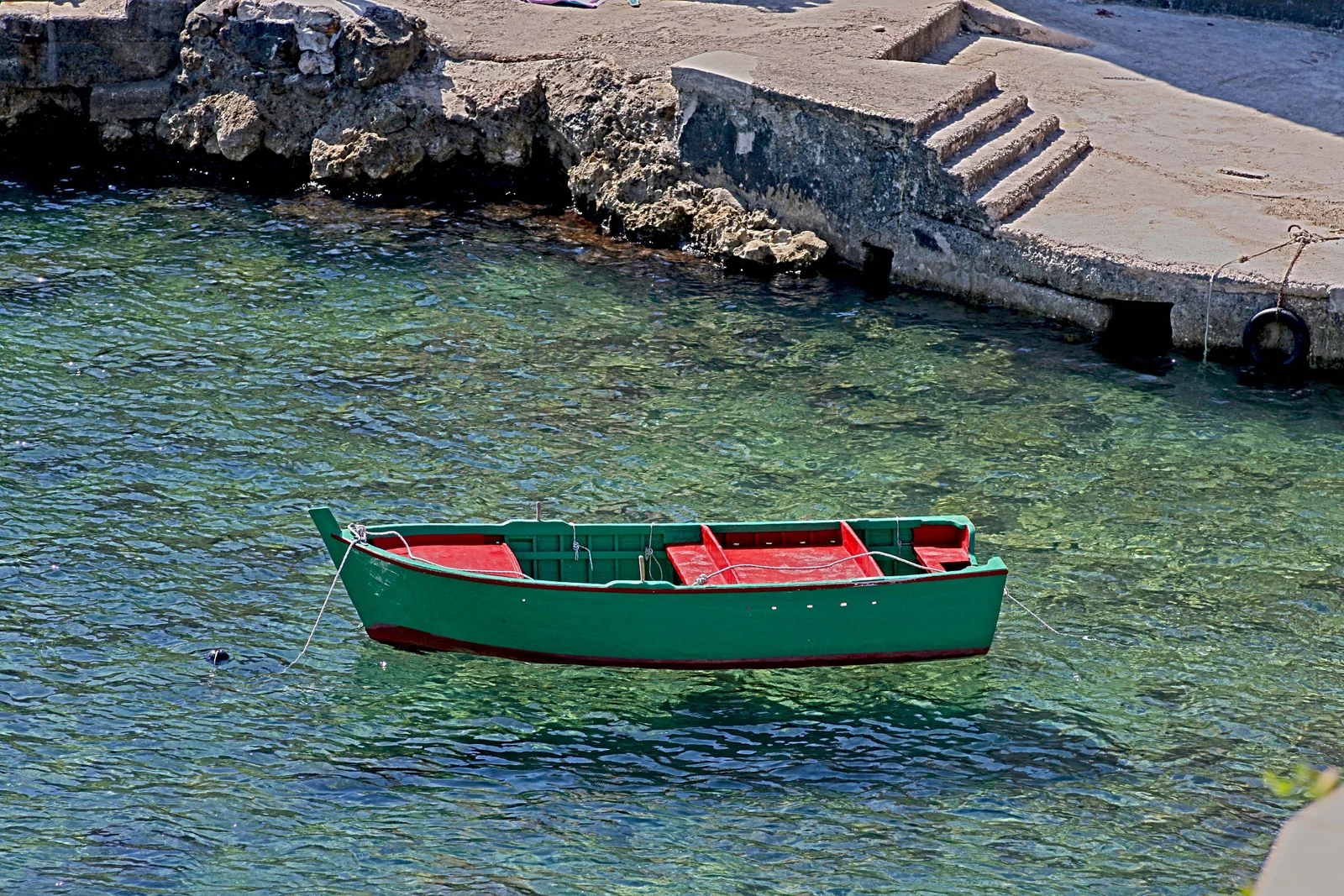
Photo: Acquario51 / Wikimedia Commons — CC BY-SA 4.0 · Resized and converted to WebP.
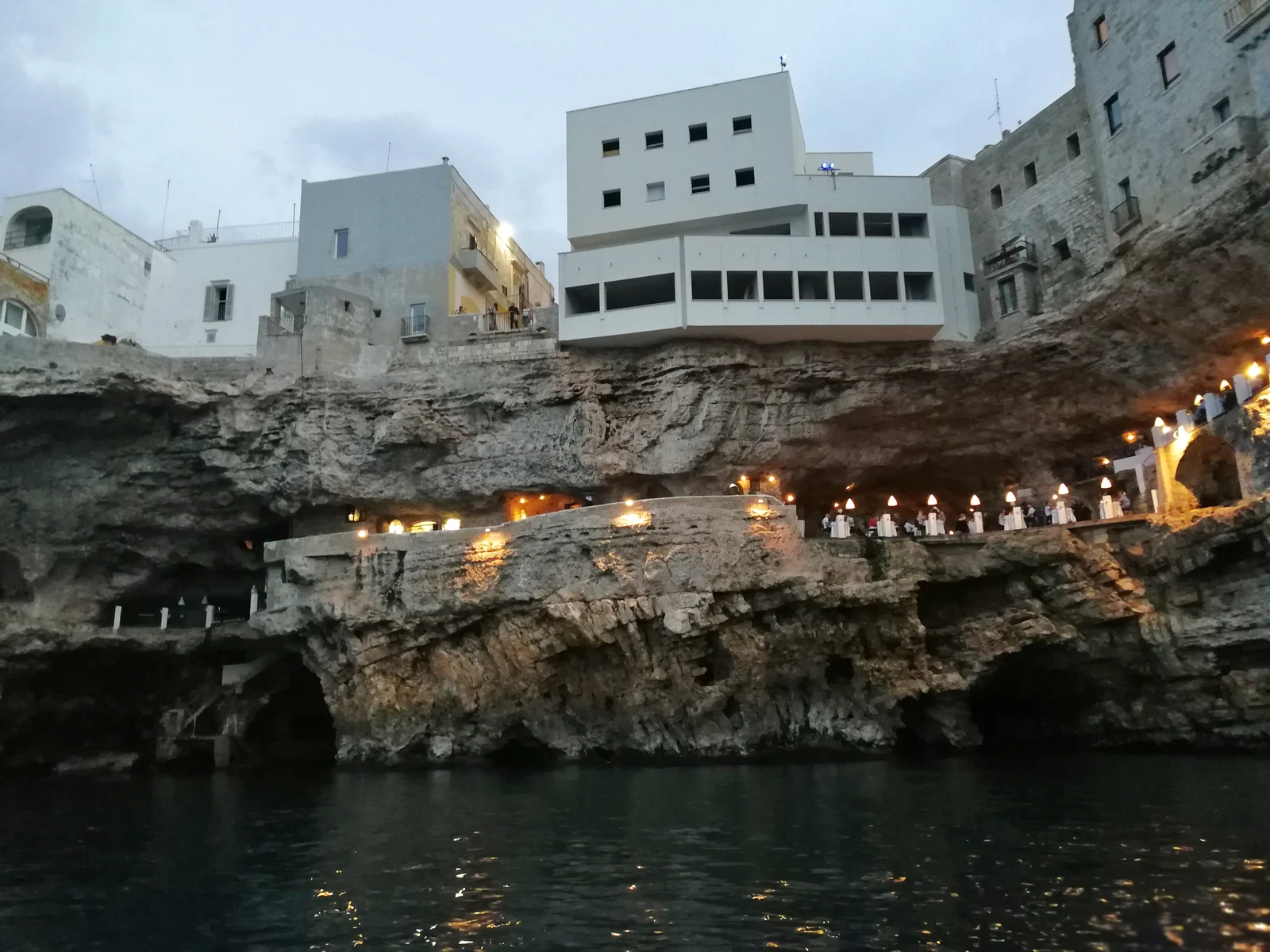
Photo: Lucamato / Wikimedia Commons — CC BY-SA 4.0 · Resized and converted to WebP.
When to go
Polignano changes with the seasons. Summer is the time for the sea and also the busiest: the Ministry of Tourism recommends arriving early in the morning at Lama Monachile. Spring and autumn let you walk the town and its viewpoints more calmly, and watch the sunset from largo Grotta Ardito or the bridge.
The farming calendar offers a reason for the colder months: the Polignano carrot is harvested by hand between November and May, according to the regional and Slow Food pages, and an off-season visit can have a precise food focus.
Cultural programming also guides the choice. The Pino Pascali Foundation announced Attilio Solzi's exhibition Off the Ground from 10 October to 15 November 2026, a photographic sequence on the passing of time. The official page, observed on 6 October 2026, listed €10 for full admission and €6 reduced for over-65s and residents: this is the admission charge only, without travel or other services. Outside these dates the exhibition is not available.
The patron saint’s feast of Saint Vitus falls in mid-June: in 2026 it ran from 14 to 16 June. The municipality describes the procession of the relic of the saint’s arm from the mother church to the abbey of San Vito and, in the evening, the sea procession of the patron’s image escorted by boats along the coast, landing at Cala Paguro, followed by the handing over of the keys of the town and fireworks; 15 June is the feast day itself, and the last day ends with the blessing of the animals.
In its 2026 calendar the municipality also listed a tribute to Domenico Modugno in early September and, from 6 December to 6 January, a Christmas season with lights, markets and children’s workshops in the streets of the old town, at Lama Monachile and in Piazza Aldo Moro.
Sources: Italia.it — Passeggiata a Polignano a Mare · PAT Puglia — Carota di Polignano · Fondazione Slow Food — Carota di Polignano · Fondazione Pino Pascali — Attilio Solzi, Off the Ground · Comune di Polignano a Mare — Polignano a Mare celebra San Vito Martire: la festa patronale 2026 (2026-06-09) · Comune di Polignano a Mare — I grandi eventi dell’anno dall’estate al Natale 2026 (2026-05-15)
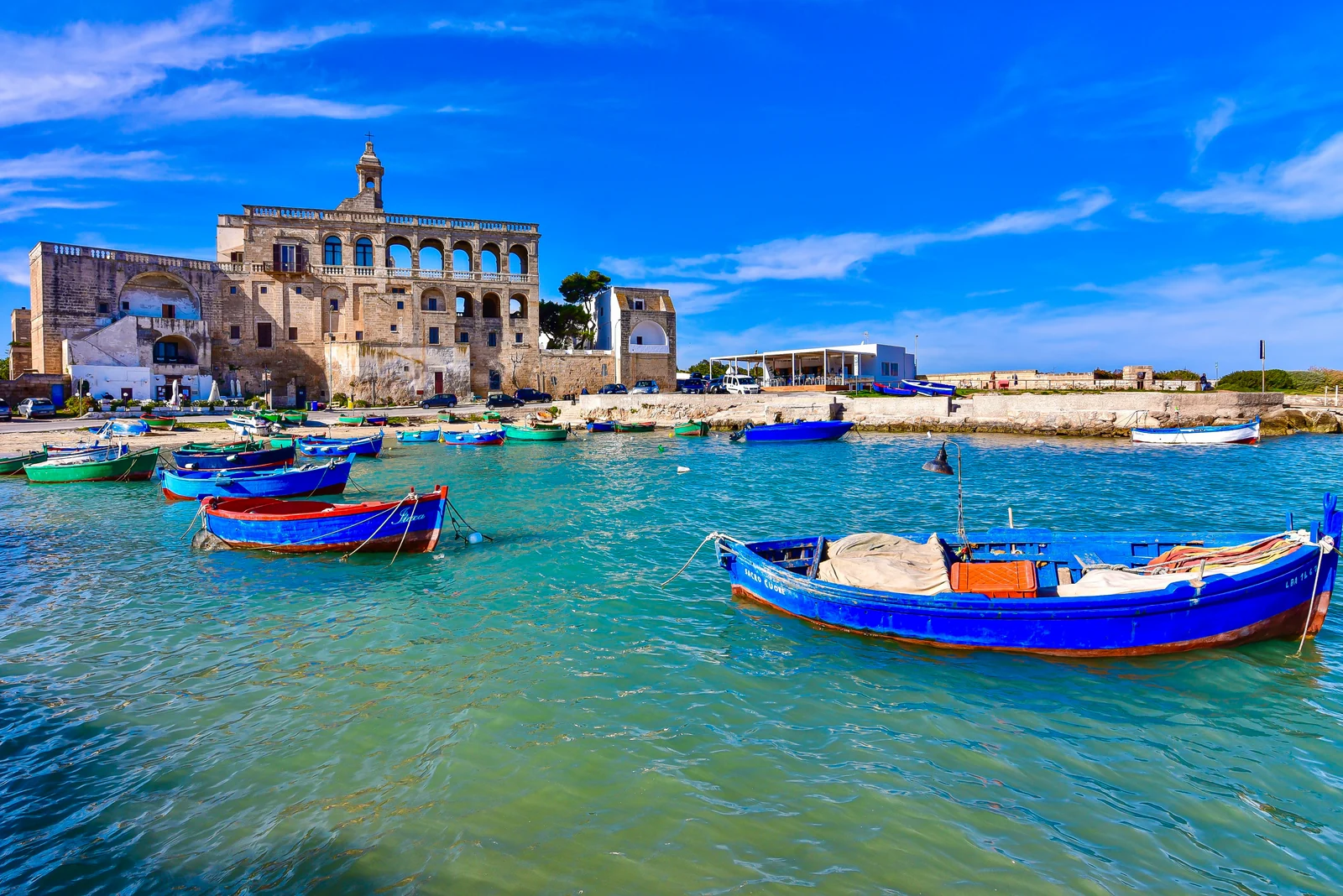
Photo: Costantino Cafaro / Wikimedia Commons — CC BY-SA 4.0 · Resized and converted to WebP.
Getting there and around
According to the regional tourism portal, Polignano a Mare station, part of the RFI network, mainly serves nearby towns; for long journeys beyond the province or the region it is best to go via Bari station.
For trips to nearby places the regional portal points to COTRAP consortium buses. The airport to consider when planning your arrival is Bari, managed by Aeroporti di Puglia; for the link to Polignano the regional portal suggests private transfers, alongside the bus services to and from the airport listed by the airport company.
The historic centre and seafront are easily covered on foot: the Arco Marchesale, Lama Monachile and Modugno's statue are a few minutes' walk from one another. For the more distant coves, the San Vito abbey and the beaches to the north you can hire a car or a scooter; shared e-scooters, e-bikes and electric mopeds are also available. The caves are reached from the sea, with hired boats or canoes.
According to RFI the station has three passenger tracks, all with a tactile path from the entrance and raised platforms; platform 1 is reached step-free or by ramp, platforms 2 and 3 by lift, in service from 3:50 to 0:30. Assistance for people with disabilities or reduced mobility is booked through the RFI Sala Blu in Bari.
For those arriving by car, the municipality published a parking guide in June 2026: the parking area by the municipal cemetery, a few minutes from the centre; paid on-street spaces along Via San Francesco d’Assisi, the closest to the centre and the first to fill up in high season; the unpaved area at the station; Via Marconi, behind the station, free of charge; Via Basile; and the paid car park by the sea at Parco del Lauro and Piazzale Cristoforo Colombo. The municipality advises arriving in the morning, not looking for a space between 11:00 and 16:00 and allowing 10-15 minutes on foot to the main sights.
Sources: Viaggiare in Puglia, Regione Puglia — Polignano a Mare · RFI — Stazione di Polignano a Mare · Aeroporti di Puglia — Aeroporto di Bari · Italia.it — Passeggiata a Polignano a Mare · Comune di Polignano a Mare — Guida parcheggi (2026-06-16)
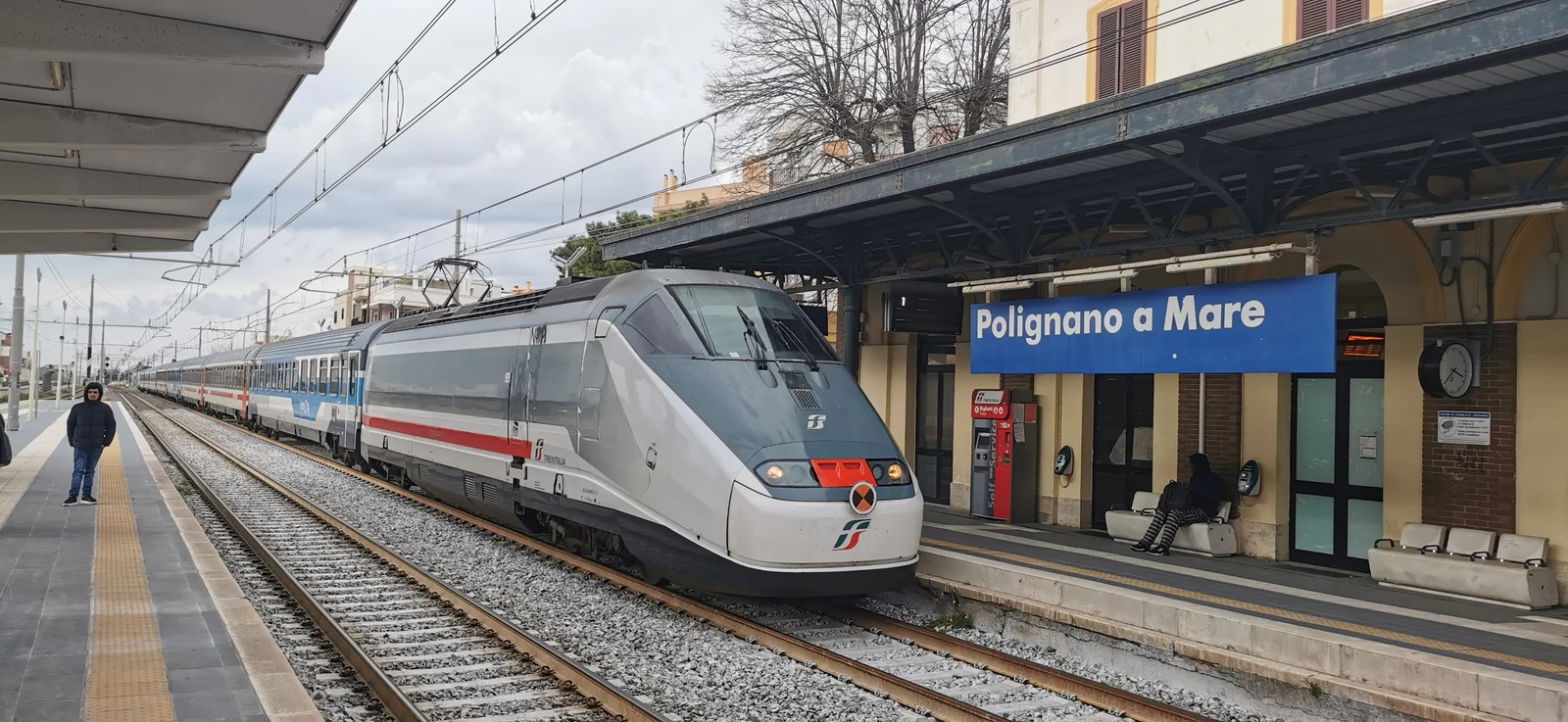
Photo: Eino81 / Wikimedia Commons — CC0 · Resized and converted to WebP.
Tourism
For information on the spot there is the town council’s Tourist Office: its page gives the telephone number, the email address and the hours when it answers, which change with the season. In summer 2026, from 21 June to 30 September, it answered the phone from Tuesday to Sunday, in the morning and in the evening; on Mondays it was closed.
Anyone staying overnight in Polignano a Mare in accommodation or in a short-term rental pays the tourist tax, per person and per night, for up to six consecutive nights. The council’s regulation, approved in 2017 and amended in 2018, exempts among others minors within their fourteenth year of age and people with disabilities who receive the attendance allowance; from 1 January to 31 March and from 1 November to 31 December the tax is halved, and it is halved all year for those over eighty. It is paid to the host before the end of the stay, against a receipt; the amount per night is set by the council’s executive, and the accommodation must tell its guests what it is.
The centre has a limited traffic zone: the council issues its permits to those who live there or own a house or garage there, to people with a disabled badge and to businesses for loading and unloading. From 12 October 2026 the council is also trialling mechanical street cleaning, with temporary no-parking and no-stopping bans on Mondays, Wednesdays, Thursdays and Fridays, zone by zone according to a calendar: if you leave your car in town, follow the signs placed in the streets concerned.
Costa Ripagnola, between Polignano and Monopoli, is a regional nature park, and the law that created it also applies to those who walk there: throughout the park, open fires, wild camping and parking campers outside equipped areas, picking or damaging plants, disturbing animals and driving motor vehicles off the roads open to public traffic are forbidden. In the park’s stretch of sea, motor craft keep below 6.5 knots, and no one anchors where there are habitats of Community interest.
On the beaches the council asks residents and visitors not to leave litter and to use the facilities provided; in 2026 the defibrillators at Cala Paura and San Vito stayed in place until 14 September. For people with disabilities the council has run, for eighteen editions and with the UNITALSI volunteers, «Insieme al Mare», days at the sea for people with disabilities and their families, held in 2026 at the Cala Fetente beach, one of the Blue Flag beaches. The council has also applied to the regional «Mare Democratico» call to make the coast more accessible, and in July 2026 it was awaiting the outcome.
Sources: Comune di Polignano a Mare — Ufficio Turistico (punto di contatto) · Comune di Polignano a Mare — Regolamento per l’applicazione dell’imposta di soggiorno (Delibera di CC n. 60 del 30 novembre 2017, modificata con Delibera di CC n. 23 del 9 agosto 2018) · Comune di Polignano a Mare — Richiedere permesso di accesso ad area ZTL · Comune di Polignano a Mare — Polignano più pulita, dal 12 ottobre parte la sperimentazione dello spazzamento meccanizzato · Regione Puglia — Legge regionale 21 settembre 2020, n. 30, «Istituzione dei parchi naturali regionali Costa Ripagnola e Mar Piccolo» (BURP n. 132 del 21-9-2020) · Comune di Polignano a Mare — Attivati i servizi di balneazione sicura nelle spiagge Bandiera Blu · Comune di Polignano a Mare — 19ª Bandiera Blu: consegnati i riconoscimenti alle spiagge candidate (2026-06-26) · Comune di Polignano a Mare — Si conclude la 18ª edizione di «Insieme al Mare»
“Come to Polignano a Mare as a guest, not as a tourist: that is how these places truly let you know them.”
Where to stay
Polignano offers two ways to stay. In the old town and along the coast you can sleep a few steps from the viewpoints and enjoy the town in the evening, when the squares come alive; the Ministry of Tourism describes a centre full of workshops, pastry shops and restaurants overlooking the sea. It is the most practical choice for those travelling without a car who want to get around on foot.
Those who prefer quiet can choose the inland countryside, where carrots and olives are grown, or less central stretches of the coast. This requires transport, but you gain space and calm, and stay close to Monopoli, Castellana Grotte and the Itria Valley.
In the summer months demand is high and it is wise to plan ahead. We do not list specific properties: the choice depends on dates, the type of trip and how much weight you want to give the sea compared with excursions inland.
Sources: Italia.it — Passeggiata a Polignano a Mare · Fondazione Slow Food — Carota di Polignano · Viaggiare in Puglia, Regione Puglia — Polignano a Mare
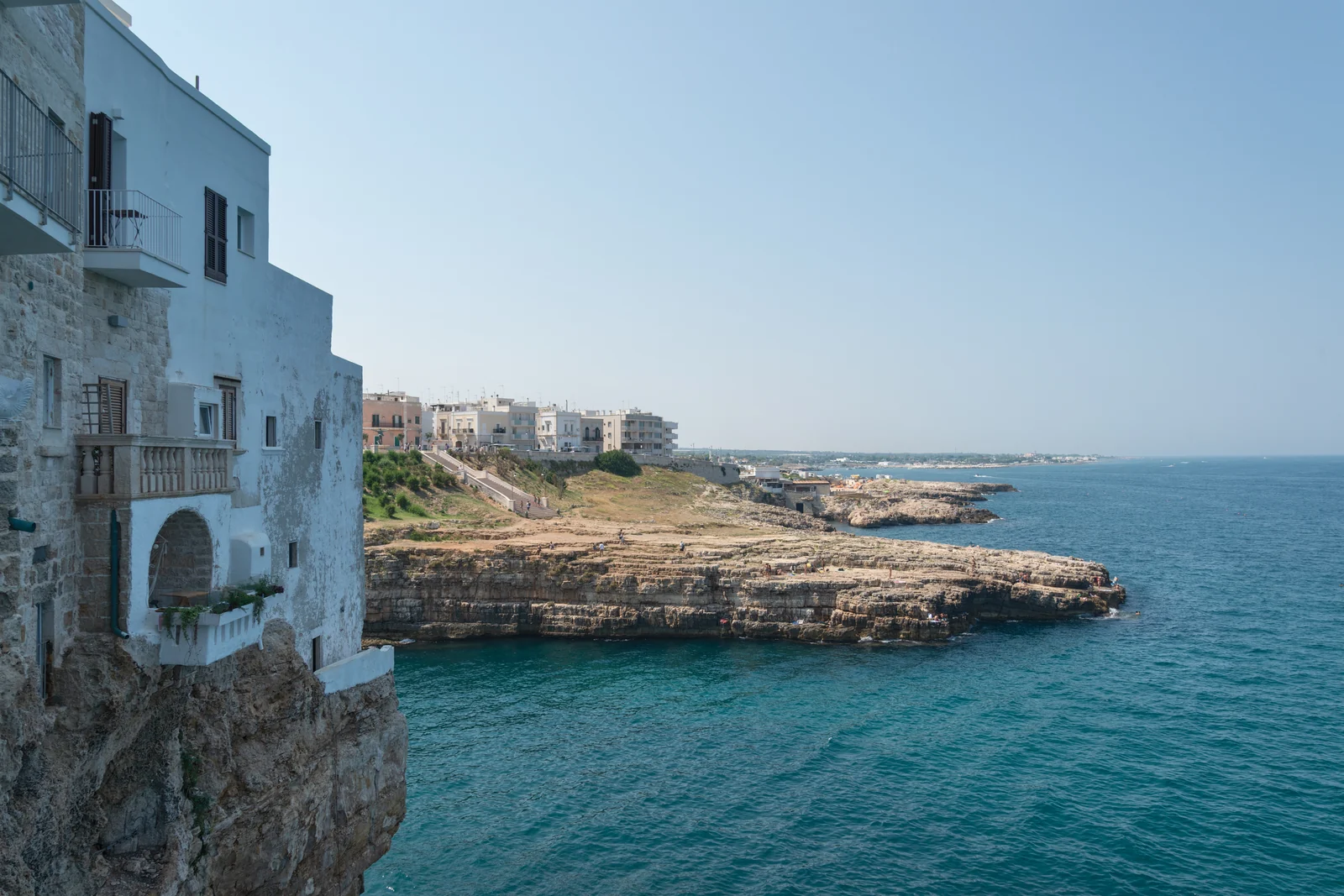
Photo: Giorgio Galeotti / Wikimedia Commons — CC BY-SA 4.0 · Resized and converted to WebP.
Nearby
Polignano is a good starting point for the coast between Bari and Monopoli and for the hinterland. The regional portal links Polignano to the other towns of the Bari coast: Bari, about thirty kilometres away, with the lanes of its old town and craft workshops; Giovinazzo, with its fortified citadel and small harbour; Monopoli, a few kilometres further on towards Brindisi, with a territory divided into many rural districts. In the nearby hinterland, Conversano and Turi are known for their cherries.
Inland, Castellana Grotte is the closest destination: the Ministry of Tourism describes the descent into the Grave, the great crater discovered in 1938 by speleologist Franco Anelli, and the route to the White Cave, among stalactites and alabaster formations. From there the Itria Valley opens up with Alberobello, Locorotondo and Martina Franca.
Along the coast beyond Monopoli, towards Fasano, the regional portal mentions the archaeological area of Egnazia, where you can swim near excavations overlooking the sea. From a base in Polignano you can alternate days at the sea, cave visits and valley towns without long transfers.
Between Polignano and Monopoli, Regional Law no. 30 of 21 September 2020 established the Costa Ripagnola regional nature park, across the two municipalities, to conserve species and habitats, restore the lame, the old watercourses, and protect the landscape, archaeological remains and rural settlements. On 5 November 2026 the mayors of Polignano and Monopoli signed the agreement for the consortium that will manage the park; the next step, the municipality writes, lies with the Region, for the park’s statute and governing bodies.
Sources: Viaggiare in Puglia, Regione Puglia — Bari e la costa · Italia.it, Ministero del Turismo — La Valle d'Itria: i luoghi da non perdere · Italia.it, Ministero del Turismo — Valle d'Itria · Viaggiare in Puglia, Regione Puglia — Valle d'Itria e Murgia dei trulli · Regione Puglia — Legge regionale 21 settembre 2020, n. 30, «Istituzione dei parchi naturali regionali Costa Ripagnola e Mar Piccolo» (BURP n. 132 del 21-9-2020) · Comune di Polignano a Mare — Costa Ripagnola: firmata la convenzione tra Comuni per il consorzio di gestione del parco (2026-11-05)
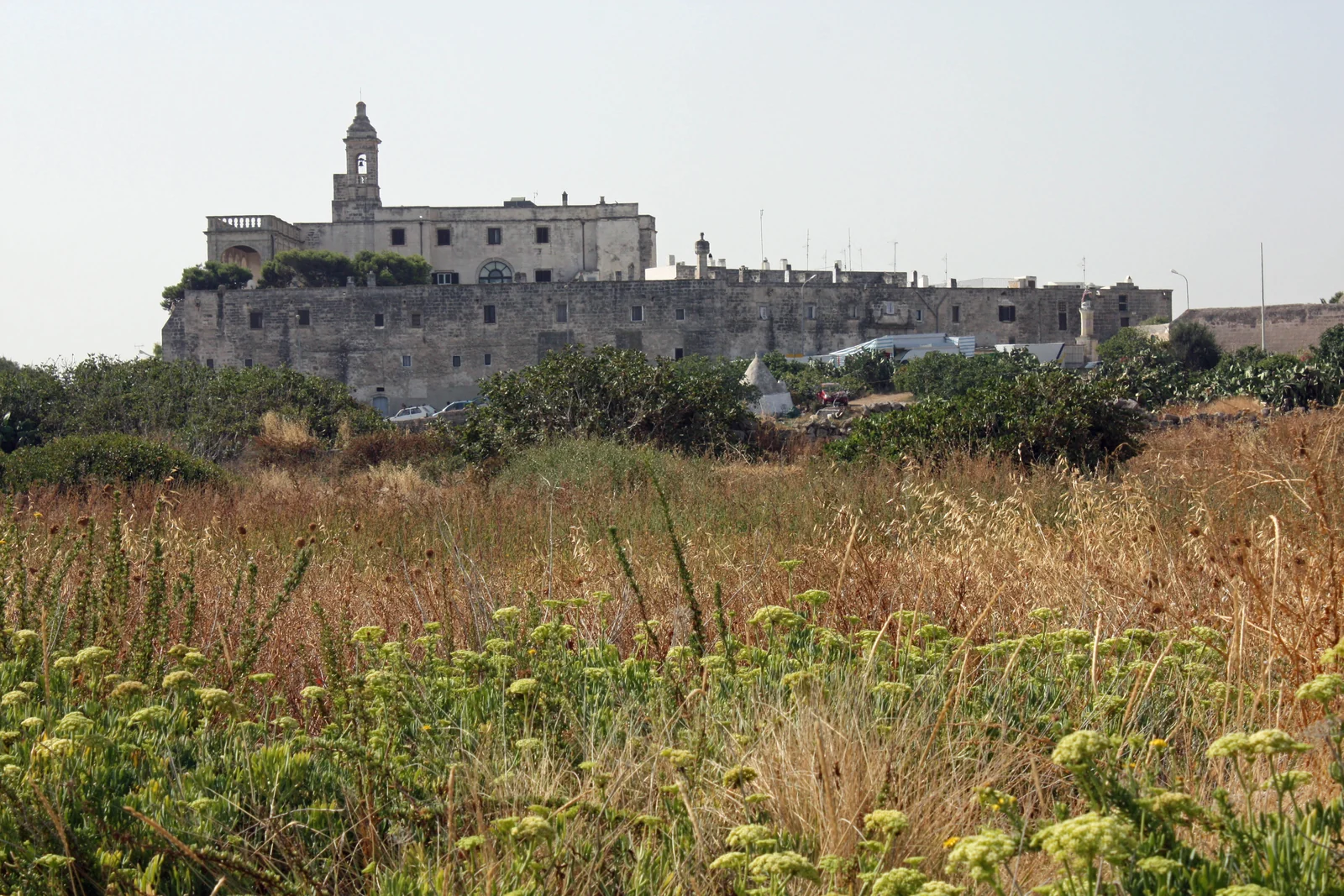
Photo: Carlo Pelagalli / Wikimedia Commons — CC BY-SA 3.0 · Resized and converted to WebP.
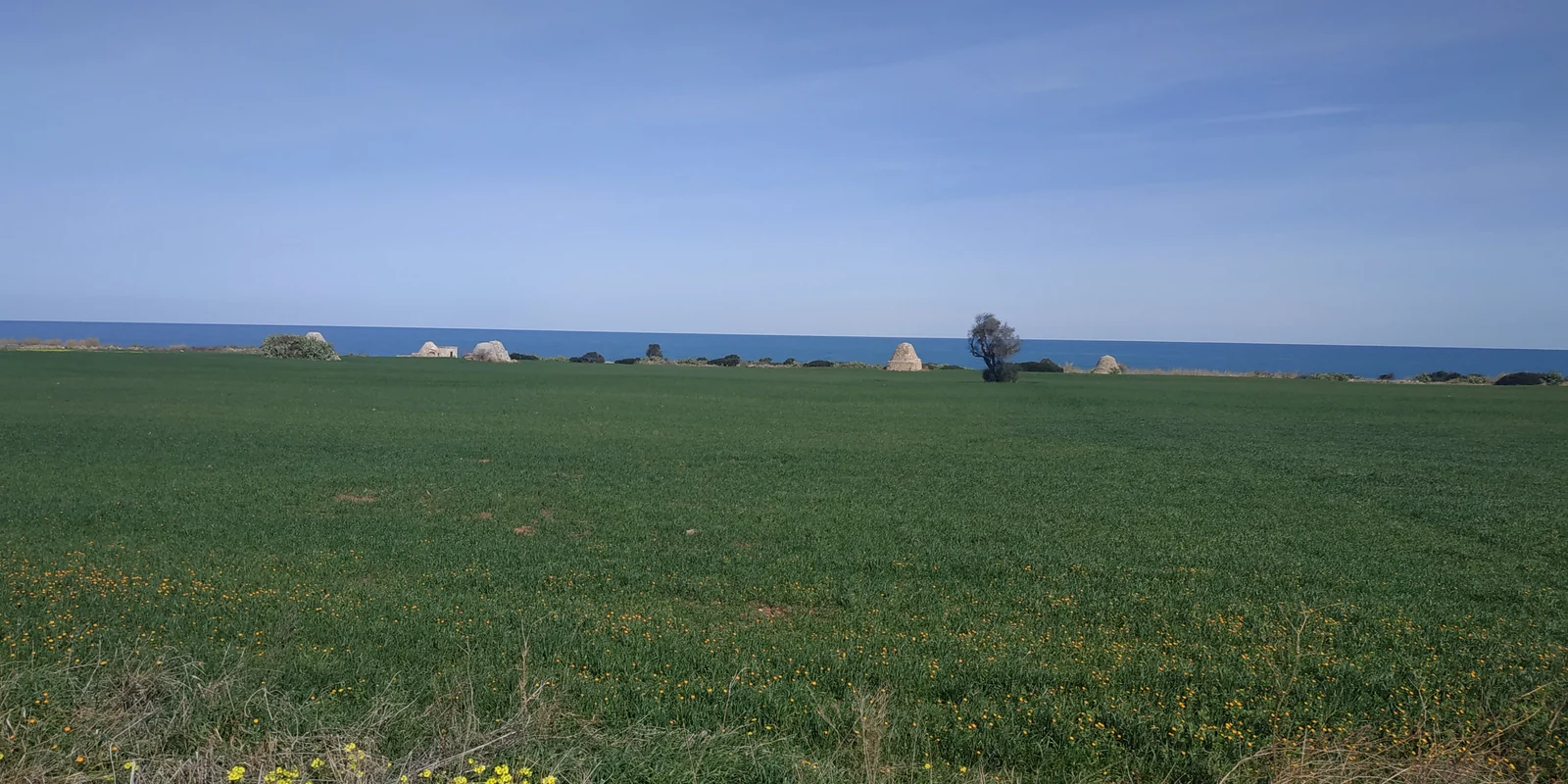
Photo: Ri4tito / Wikimedia Commons — CC BY-SA 4.0 · Resized and converted to WebP.
Local tourist information
Local tourist offices help with opening times, events and transport on the day.
- Info-point Polignano a Mare · Via Martiri di Dogali 2, 70044 Polignano a Mare (BA) · +39 080 4252336 · [email protected]
Source: Viaggiare in Puglia, Regione Puglia — Info-point Polignano a Mare · Viaggiare in Puglia, Regione Puglia — Polignano a Mare · Comune di Polignano a Mare — Ufficio Turistico (punto di contatto) · Comune di Polignano a Mare — Largo Gelso (luogo, orari estivi 2026 dell’Ufficio Turistico) · checked on
Where to stay
In the municipality of Polignano a Mare the national database of the Ministry of Tourism lists 1246 accommodation businesses with a verified CIN code: 15 hotels, 564 other licensed accommodation and 667 other types such as B&Bs and private rentals.
Licensed businesses from the official list of accommodation named as the source in this section. Where the list gives it, the property's official identification code appears next to its name: the national CIN code, or the code assigned by the Region or by the body that keeps the list. Private individuals are not listed. This list is the official census of licensed businesses, not a list of Apulica partners: to stay in Polignano a Mare you do not have to check one property after another yourself; write to Apulica and we look for the stay that suits your journey, checking availability and conditions before any confirmation.
BorgoBianco Resort & SPA
Hotel · ★★★★★
CIN IT072035A100112379
LE LAMIE
Residence
CIN IT072035B400052908
MASSERIA DEL CROCIFISSO
Farm stay
CIN IT072035B500022857
A POCHI PASSI B&B
B&B
CIN IT072035B400027346
36 Metri quadri di Stoppa Valerio
Guest rooms
CIN IT072035B400109329
A CASA DEL GIORNALISTA DI OGGIANO ROSAMARIA
Holiday home
CIN IT072035B400120925
GROTTA PALAZZESE BEACH HOTEL
Hotel · ★★★★★
CIN IT072035A100041665
MASSERIA LAMACERASE RESIDENZE
Residence
CIN IT072035B400110129
AERIS SUITE & RELAX
B&B
CIN IT072035B400088029
A Casa di Elena
Guest rooms
CIN IT072035B400069576
First the places that presented themselves to Apulica, the latest first; then one place of each type in turn, by official category and stars, then by name. No position is paid for.
All 425 entries in alphabetical order
Page 1 of 43
| Name | Type | CIN |
|---|---|---|
| 36 Metri quadri di Stoppa Valerio | Guest rooms | IT072035B400109329 |
| A CASA DEL GIORNALISTA DI OGGIANO ROSAMARIA | Holiday home | IT072035B400120925 |
| A Casa di Elena | Guest rooms | IT072035B400069576 |
| A POCHI PASSI B&B | B&B | IT072035B400027346 |
| A POLIGNANO ROOMS | Guest rooms | IT072035B400096509 |
| AD & DIMORE L'ANTICO TRULLO | Guest rooms | IT072035B400088097 |
| AERIS SUITE & RELAX | B&B | IT072035B400088029 |
| AFFITTACAMERE "A POCHI PASSI" | Guest rooms | IT072035B400027348 |
| AILANTHUS HOLIDAY SUITES | Holiday home | IT072035B400034385 |
| Al 22 Suite & Spa Luxury Experience | B&B | IT072035B400096516 |
Ask Apulica for a stay in Polignano a Mare We reply shortly, within a few hours at most, with a proposal for you to consider.
Sources: Regione Puglia – ARET Pugliapromozione (DMS), CC BY 4.0, 2026-10-12 · Ministero del Turismo – Banca Dati Strutture Ricettive (dashboard pubblica), 2026-10-12
YOUR JOURNEY
How to shape a journey here
We can design Polignano around coast, art and carrot cultivation, choosing the season by travel purpose and completing it with food and accommodation.
Plan your tripKeep exploring
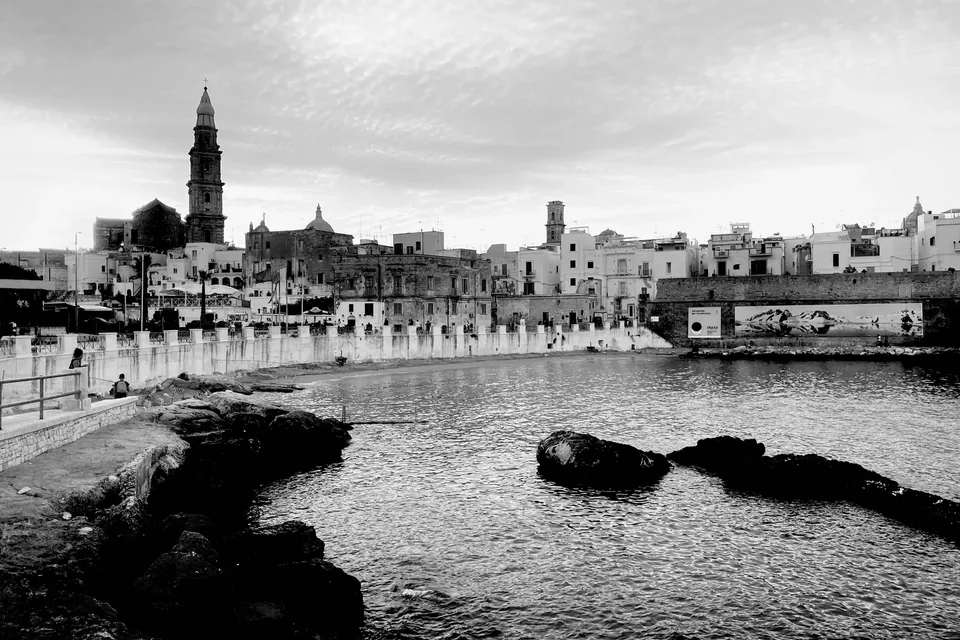
Monopoli
An Adriatic conclusion connected to the rural landscape. A harbour reaching into the old town, the cathedral, rural contrade and ‘mareterra’ cooking.
Read the guide →Photo: RaTio65 / Wikimedia Commons — CC BY-SA 4.0 · Resized and converted to WebP.
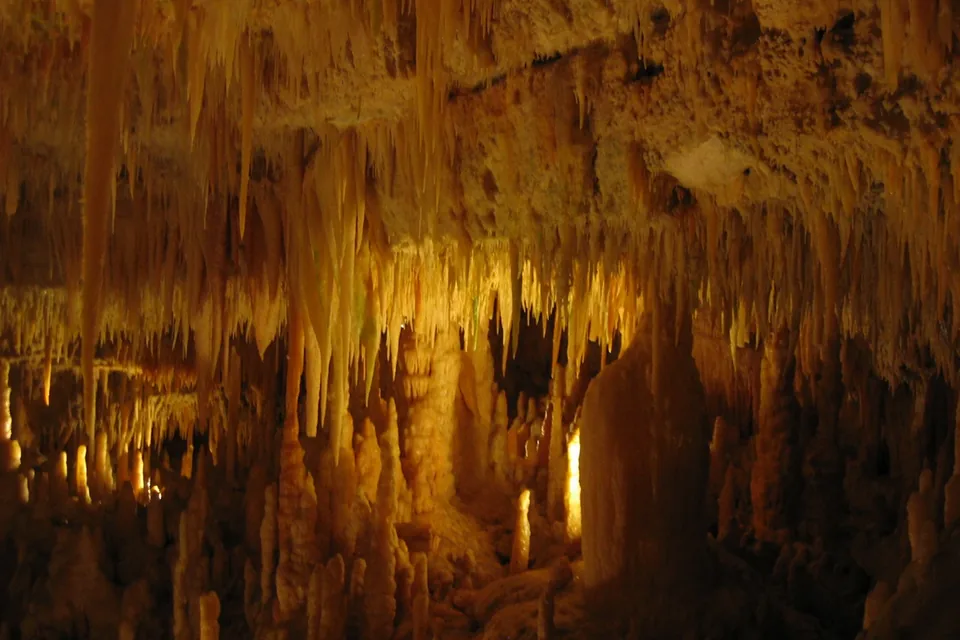
Castellana Grotte
Karst, caves and the town within a journey connected to the Itria Valley.
Read the guide →Photo: ReMagio at Italian Wikipedia / Wikimedia Commons — Public domain · Resized and converted to WebP.
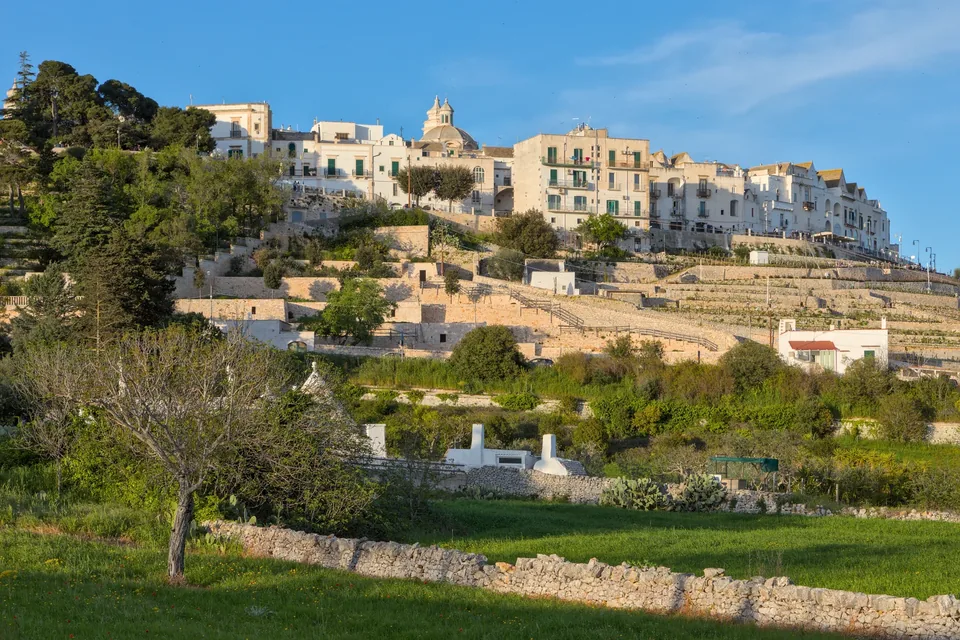
Locorotondo
Cummerse roofs as a way to distinguish the Itria Valley’s towns. A circular old centre on a hilltop and Locorotondo DOP wine.
Read the guide →Photo: Benjamin Smith / Wikimedia Commons — CC BY-SA 4.0 · Resized and converted to WebP.
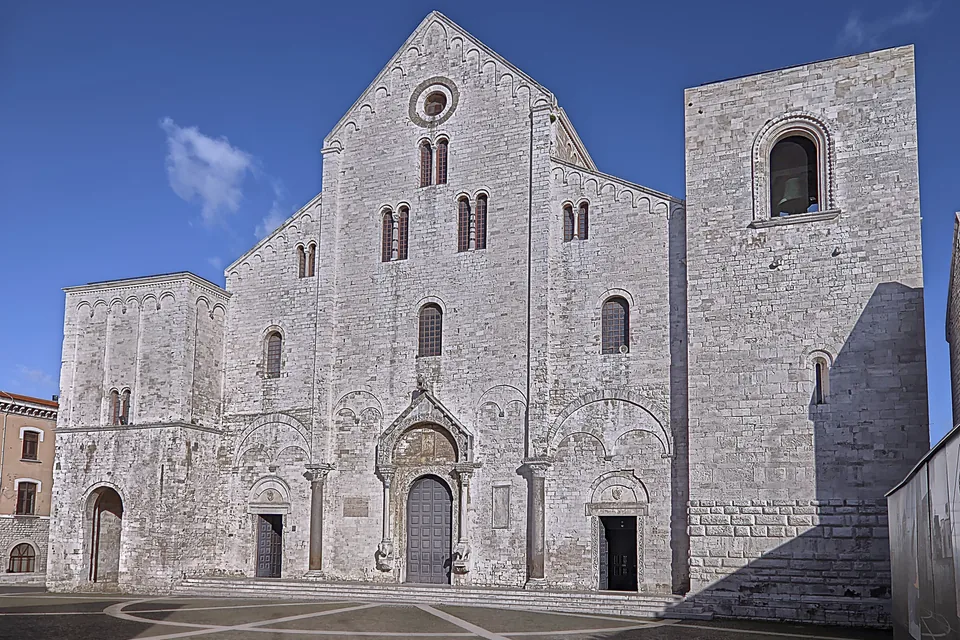
Bari
The old town as a first encounter with Puglia. The Basilica and relics of Saint Nicholas, Bari Vecchia between its two harbours, the Murat district, focaccia and orecchiette with turnip tops.
Read the guide →Photo: Acquario51 / Wikimedia Commons — CC BY-SA 4.0 · Resized and converted to WebP.
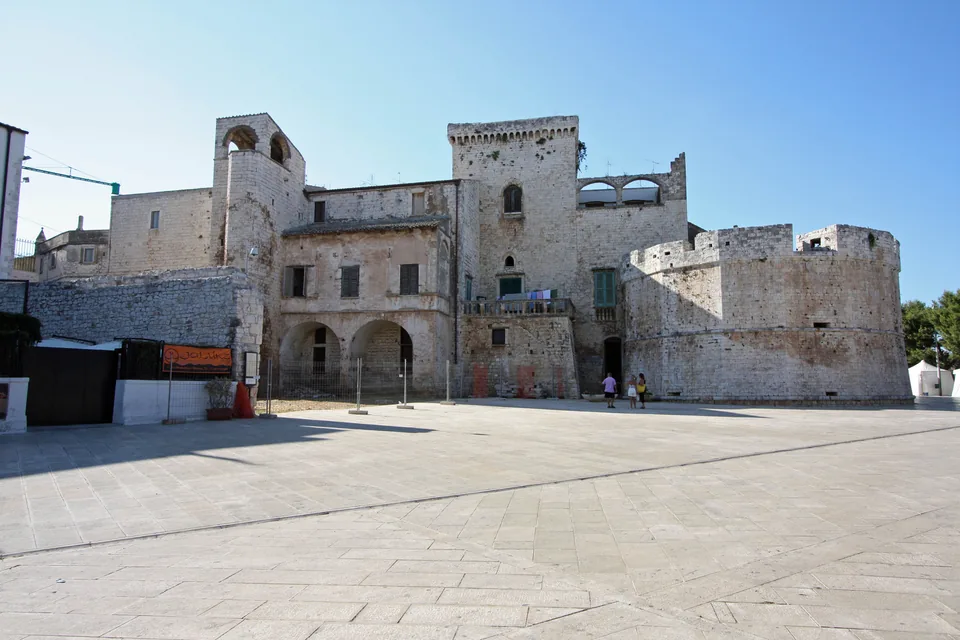
Conversano
Conversano (BA), Puglia: 25,938 residents, 128.42 km². The official facts of the municipality, its town council website and its registered accommodation. The castle of the Acquaviva d’Aragona with Paolo Finoglio’s canvases, the Romanesque cathedral, the monastery of the mitred abbesses, the karst lakes, the cherries and the “Terra di Bari” PDO olive oil.
Read the guide →Photo: Carlo Pelagalli / Wikimedia Commons — CC BY-SA 3.0 · Resized and converted to WebP.
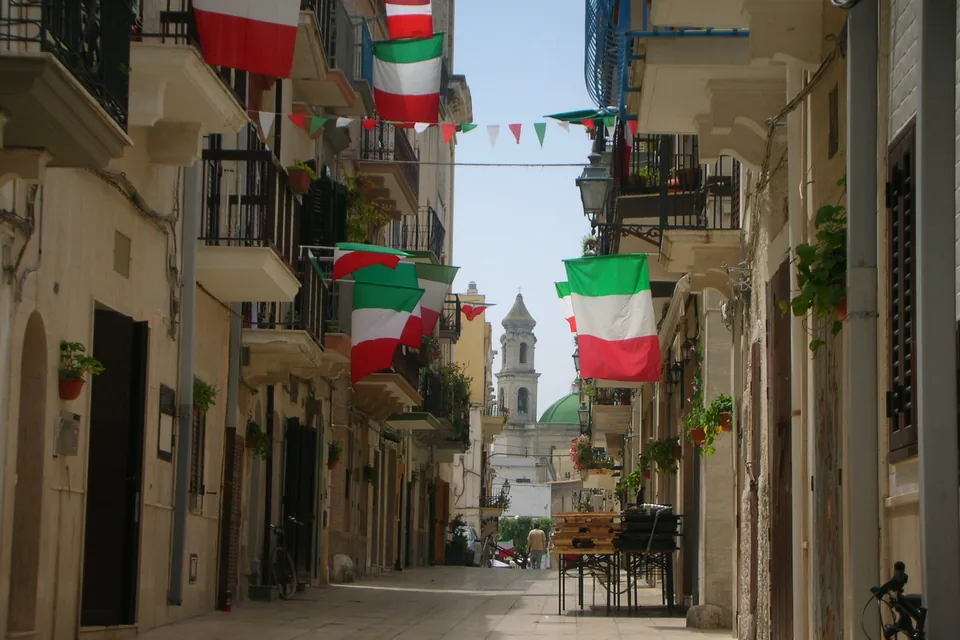
Mola di Bari
Mola di Bari (BA), Puglia: 24,245 residents, 50.94 km². The official facts of the municipality, its town council website and its registered accommodation.
Read the guide →Photo: Galber / Wikimedia Commons — Public domain · Resized and converted to WebP.
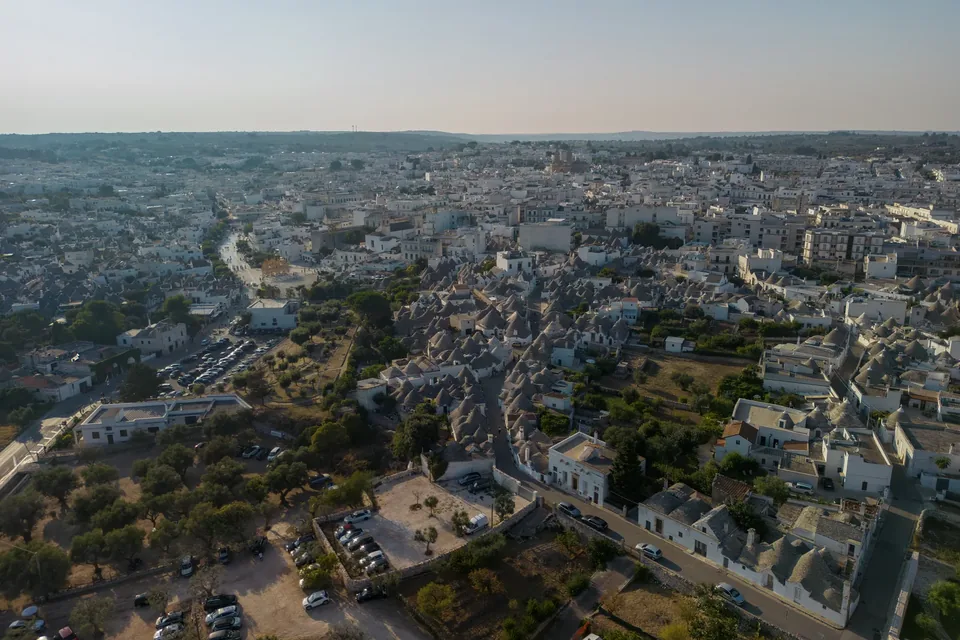
Alberobello
Trulli through their shape, space and everyday use. The Monti and Aia Piccola districts hold more than a thousand trulli, a World Heritage Site since 1996.
Read the guide →Photo: ParisTaras / Wikimedia Commons — CC BY-SA 4.0 · Resized and converted to WebP.
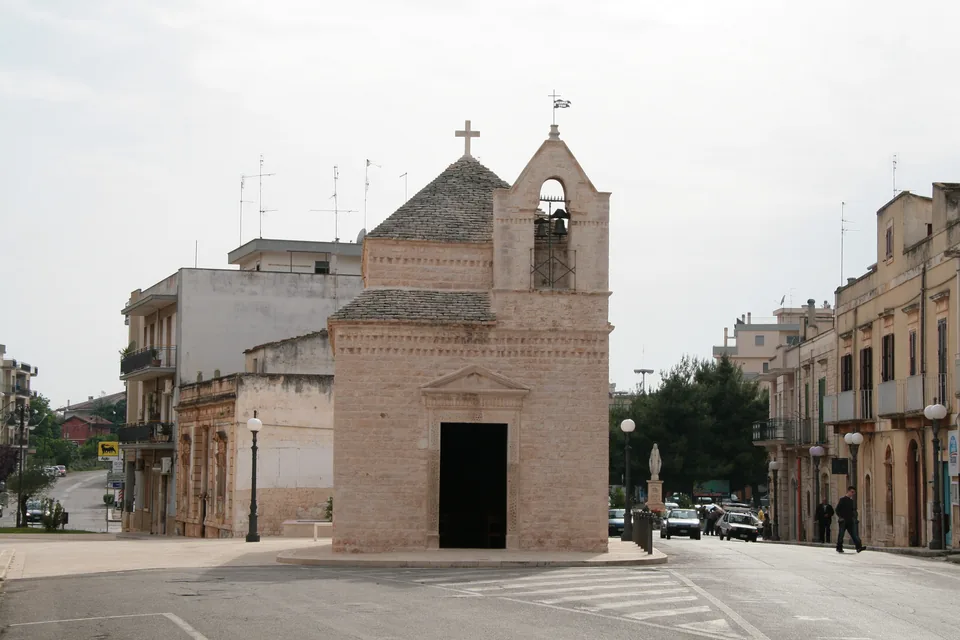
Turi
Turi (BA), Puglia: 12,968 residents, 71.40 km². The official facts of the municipality, its town council website and its registered accommodation.
Read the guide →Photo: C.S. / Wikimedia Commons — CC BY-SA 3.0 · Resized and converted to WebP.
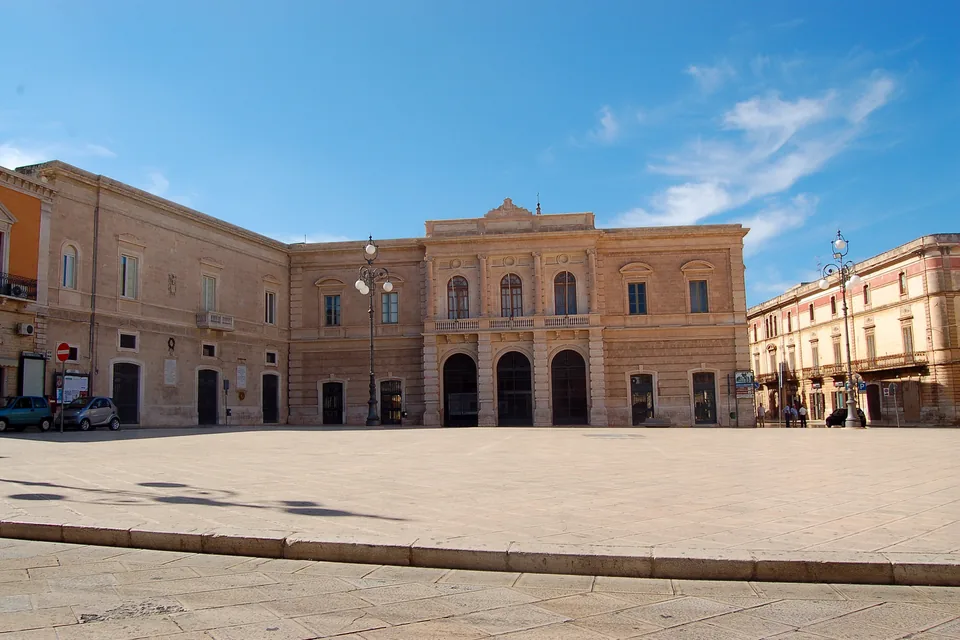
Fasano
Fasano (BR), Puglia: 38,863 residents, 131.80 km². The official facts of the municipality, its town council website and its registered accommodation.
Read the guide →Photo: Michael Paraskevas / Wikimedia Commons — CC BY-SA 3.0 · Resized and converted to WebP.
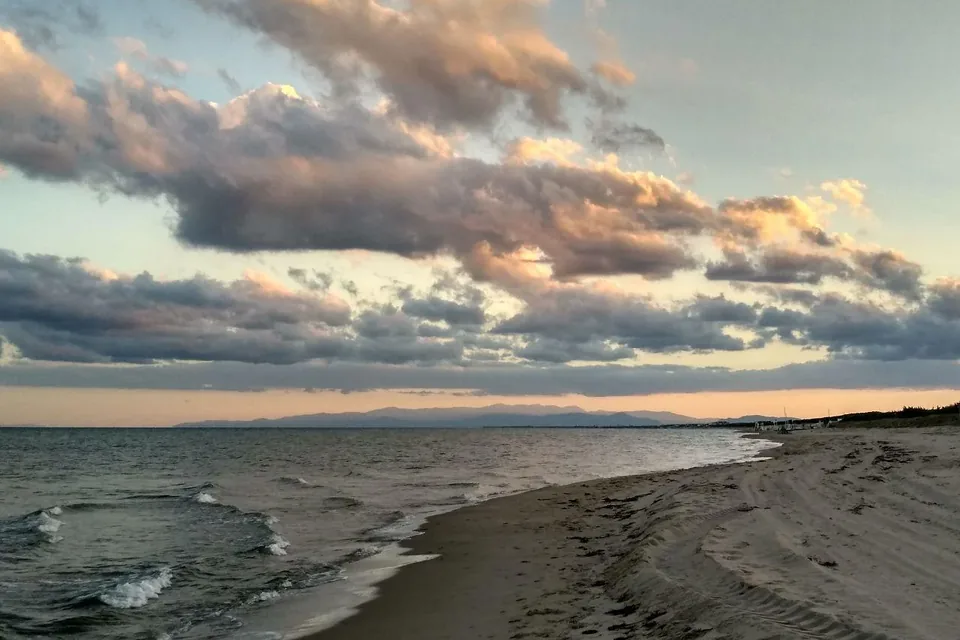
Castellaneta
The historic centre and Rudolph Valentino’s story in inland Puglia. A town on the edge of the Gravina Grande ravine and its frugal ciallèdda bread.
Read the guide →Photo: Archeolucia / Wikimedia Commons — CC BY-SA 4.0 · Resized and converted to WebP.
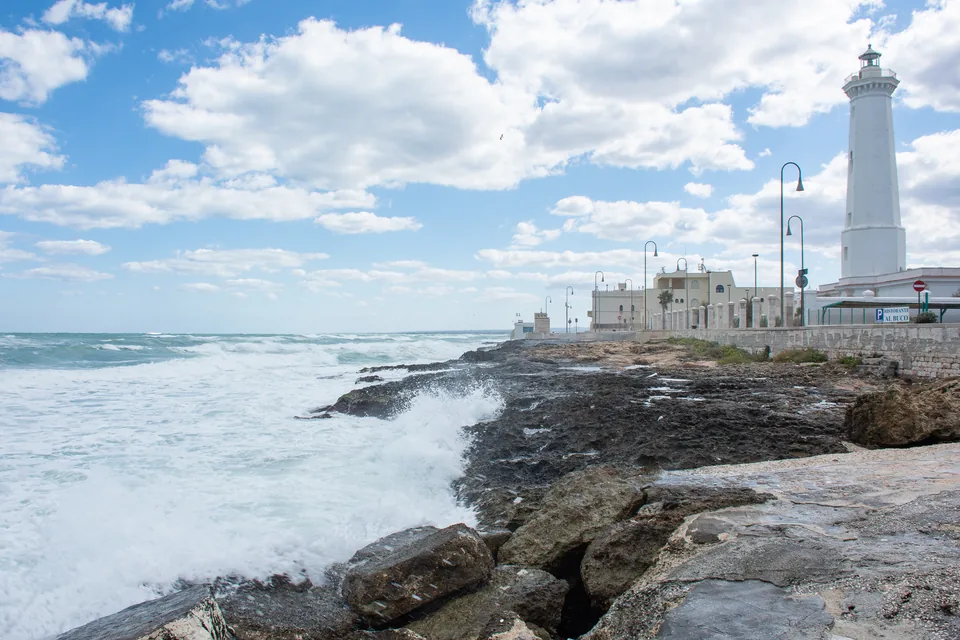
Torre Canne
The seaside village of Fasano with the Punta Torre Canne lighthouse, a long sandy beach with shallow water, the Coastal Dunes Park, the thermal waters, the fiorone fig and the regina tomato.
Read the guide →Photo: Okidoki1982 / Wikimedia Commons — CC BY-SA 4.0 · Resized and converted to WebP.