APULICA / Food guides
BiodiverSO: the University of Bari and Puglia’s local vegetable varieties
BiodiverSO, short for Biodiversità delle Specie Orticole della Puglia (biodiversity of Puglia’s vegetable species), is the research programme that since late 2013 has recovered, studied and conserved the region’s local vegetable varieties, with the support of the Puglia Region and coordinated by Professor Pietro Santamaria of the University of Bari Aldo Moro. Its Nuovo Almanacco BiodiverSO, 2026 edition, gathers 293 of them, counting local varieties and candidates. This guide explains how the project began, reports the results stated by the project and shows how to meet these vegetables while travelling and at table.
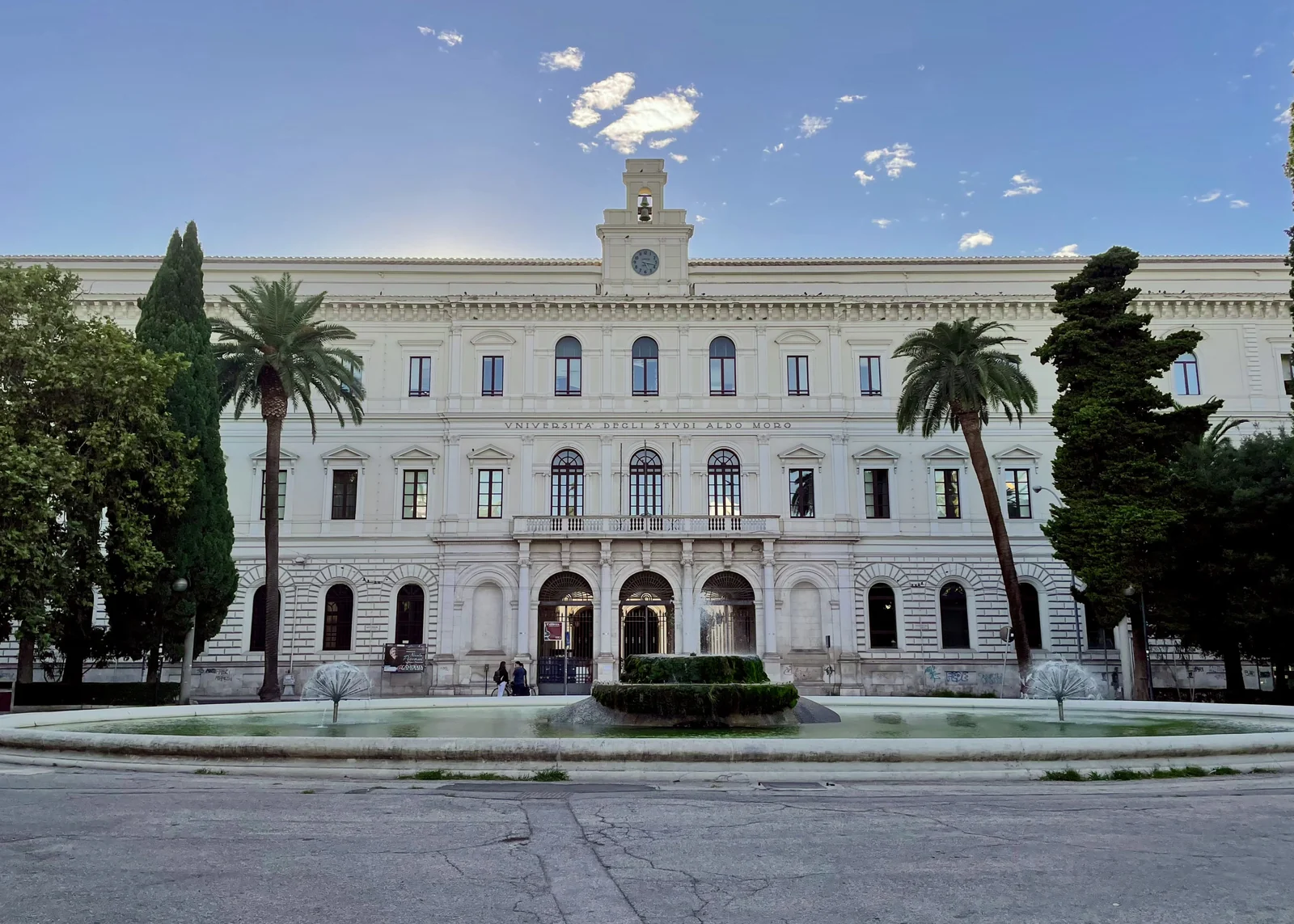
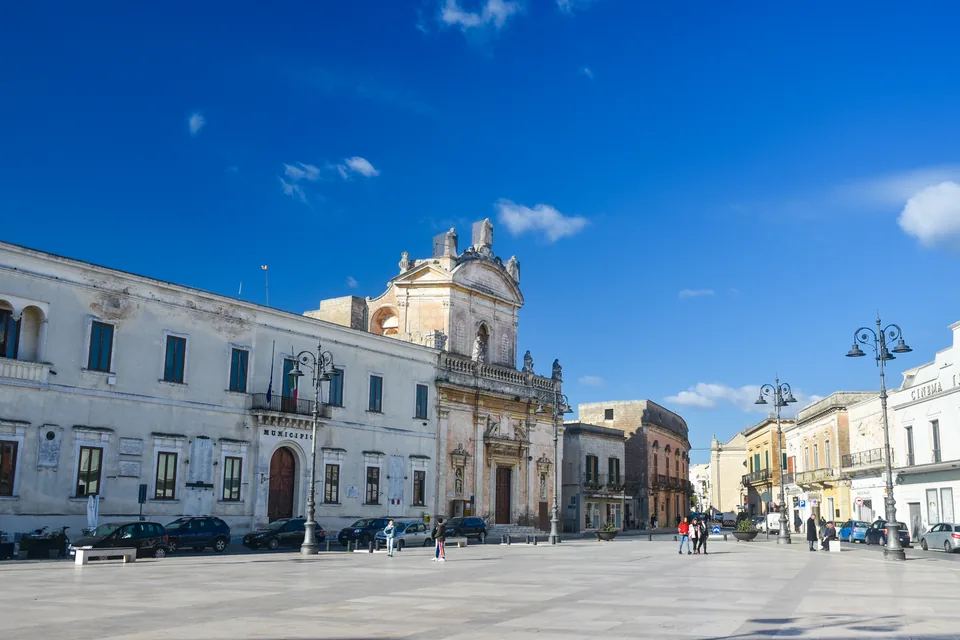
Photo: Augusto Aulenta / Wikimedia Commons — CC BY-SA 4.0 · Resized and converted to WebP.
The document: the Nuovo Almanacco BiodiverSO
The reference for getting to know the project is the Nuovo Almanacco BiodiverSO, 2026 edition, by Rita Accogli, Giulia Conversa, Gabriella Sonnante and Pietro Santamaria, published by the University of Bari Aldo Moro (ISBN 978-88-6629-072-8). The volume, in Italian, contains the variety sheets, the introduction on the main results, a section on seeds and an additional chapter in the digital edition. The project’s website offers it for reading and download, as a 78 MB PDF file.
A project in three acts
In his introduction to the Nuovo Almanacco, Professor Santamaria recalls that the name was coined in 2012, when the research group submitted its first proposal to the Puglia Region, under the 2007-2013 Rural Development Programme, with the aim of reducing the extinction rate of local varieties. The work is described as a piece in three acts.
The first, from late 2013 to 2015, looked mainly to the past. The second, completed in 2018, developed the initial idea and showed the potential of the varieties recovered, characterised and conserved. The third, under the 2014-2022 Rural Development Programme, aimed at valorisation through two projects: BiodiverSO Karpos, for vegetables grown for their fruit, and BiodiverSO Veg, for those of which other parts are eaten.
The 2026 edition closes that third act. The projects are declared concluded, but the introduction announces that work will continue on the seed system for local varieties. The additional chapter of the digital edition is, fittingly, titled «BiodiverSO, Atto IV» (Act IV).
Who has run it
The coordinator is Pietro Santamaria, full professor of horticulture in the Department of Soil, Plant and Food Sciences (DiSSPA) of the University of Bari Aldo Moro. The same department is home to the Horticulture Seed Laboratory, headed by Dr Beniamino Leoni, who edited the volume’s section on seeds. The work is published by the University.
The projects do not belong to a single institute. The partner lists of BiodiverSO Karpos and BiodiverSO Veg bring together DiSSPA and the former DiSAAT of the University of Bari, DiSTeBA of the University of Salento, DAFNE of the University of Foggia, and the Institute of Sciences of Food Production and the Institute of Biosciences and Bioresources of the CNR, Italy’s National Research Council, along with local cooperatives and farms. Karpos also lists the Costa Otranto, Santa Maria di Leuca and Bosco di Tricase Regional Nature Park.
Funding comes from the Puglia Rural Development Programme 2014-2022, Measure 10, Sub-measure 10.2, Operation 10.2.1. The volume also acknowledges the contribution of thousands of people: researchers, technicians and administrators, collaborators, custodian farmers, enthusiasts and citizens.
Sources: Accogli R., Conversa G., Sonnante G., Santamaria P., Nuovo Almanacco BiodiverSO. Biodiversità delle Specie Orticole di Puglia. Edizione 2026, Università degli Studi di Bari Aldo Moro, 2026, ISBN 978-88-6629-072-8 · BiodiverSO Karpos — Partner · BiodiverSO Veg — Partner
What a local variety is
The volume adopts the definition of the Working Group on Biodiversity in Agriculture (GIBA, 2010): a variable but clearly identifiable population, usually with a local name, that has not been through an organised breeding programme, is adapted to the conditions of a given area and is tied to the customs, knowledge, dialects and festivities of those who grow it.
From this follows a distinction the project keeps with care. Regional biodiversity laws set fifty years as the minimum presence in an area for a genetic resource to be considered local. Where documents and direct testimony allow it, the volume speaks of a local variety; where they are lacking, it uses the word «candidate», specifying that this takes nothing from the resource’s value.
That is why the Almanac’s 293 entries are not all of one kind: 166 are local varieties and 127 are genotypes the research group expects to confirm as such. This edition also includes wild species being domesticated, such as borage, caper, samphire and saffron, grown on small and large farms alike.
The results reported by the project
The figures below are those stated by the project in the Nuovo Almanacco. The varieties gathered rose from 140 in the first edition of the Almanac (2015) to 240 in the Nuovo Almanacco of 2018 and to 293 in this edition.
Thanks to BiodiverSO, 37 vegetable varieties have entered the Regional Register of Native Genetic Resources and the National Register of agricultural and food biodiversity, established by Law 194/2015. The best represented species is the tomato, with 14 varieties.
The introduction speaks of more than one hundred Traditional Agri-Food Products (PAT) registered with the project’s contribution; the dedicated chapter lists 136 between 2015 and 2025, about a third of those recognised in Puglia, including 54 vegetable products and 71 vegetable-based recipes. The volume links this work to Puglia’s fourth place among Italian regions, with 414 products, reached with the February 2026 revision of the national list.
In September 2025 the Cima di cola was also registered, described as Puglia’s first vegetable conservation variety. Finally, the volume reports the morphological, molecular and nutritional research, with a list of scientific publications.
Some of the varieties, from carrot to aubergine
The Polignano carrot, also known as Bastinaca di San Vito after the hamlet where it is mainly grown, forms yellow, orange or purple roots. It is a Slow Food Presidium, has been on the national list of traditional products since 2015, and the volume presents it as the most emblematic case: a variety once thought close to extinction, which has now reached markets in northern Italy too.
The Violetta di Ostuni aubergine, sweet and delicate in flavour, was grown more than eighty years ago in the countryside around Ostuni and in the town’s peri-urban gardens. Entered in the Regional Register and recognised as a Slow Food Presidium, it appears on the cover, yet its extinction risk index stays at 26 on a scale that reaches 27.
The Cavolo riccio, Cole rizze in dialect, is found in the province of Bari and at Fasano; in the past, broad beans and this kale were a Christmas lunch dish and a cold snack during work in the fields. The Mùgnulu is a broccoli of the Salento already described by Albino Mannarini in 1914, still grown mainly for family use. The Cima di cola, a lemon-green cauliflower, has Bari as its representative municipality.
How a variety is saved
The project’s website sums up the method in five verbs: recover, characterise, conserve, register and valorise. Recovery starts by gathering documents and genetic material. Characterisation describes the plant using the GIBA descriptors and, case by case, analyses its composition or genetic profile. Conservation takes place both in situ, in the fields, and ex situ.
The volume also reports more specific measures. The Lucera artichoke, for example, was cleared of fungi and viruses through micropropagation and thermotherapy. For each local variety the volume gives an extinction risk from 9 to 27, calculated on nine factors, including the number and age of growers, the areas cultivated, the market and the presence in registers and in ex situ conservation.
The decisive part remains in people’s hands. Custodian farmers reproduce the seed and keep the variety in cultivation: the Tiggiano carrot, according to its sheet, is less and less available as custodians age and their growing practices are lost, so much so that researchers worked to produce seed using the farmers’ techniques.
Sources: BiodiverSO Karpos — Il progetto BiodiverSO · Accogli R., Conversa G., Sonnante G., Santamaria P., Nuovo Almanacco BiodiverSO. Biodiversità delle Specie Orticole di Puglia. Edizione 2026, Università degli Studi di Bari Aldo Moro, 2026, ISBN 978-88-6629-072-8
The question of seed
The volume devotes a section to seeds and explains why they matter so much: most of those presented are not available on the market and are reproduced and kept by farmers, women and men. In «Atto IV», Adriano Didonna and Pietro Santamaria identify two obstacles to the spread of local varieties: the difficulty of finding seed and the lack of a structured promotion chain. The principle is summed up in a short formula: «se mi mangi, mi conservi» (if you eat me, you conserve me).
The figures reported concern the EU Common Catalogue, which in 2026 lists 23,432 vegetable varieties, 93% of them conventional. Conservation varieties, the regime designed for local ones, number 259, just over 1%: 109 registered by Spain and 43 by Italy. In a 2024 article in Horticulturae, which they also signed, the group concluded that the regime has failed because of its limited use.
This is the setting for the Cima di cola, registered by the Ministerial Decree of 9 September 2025 thanks to the activities of BiodiverSO Veg: its seed can now be marketed throughout the region. The authors describe this as a first step and announce the registration of other local varieties.
What PAT means
Readers of the sheets often meet the acronym PAT, Prodotto Agroalimentare Tradizionale, or Traditional Agri-Food Product. The volume recalls that PATs originate with Legislative Decree 173 of 1998 and that Ministerial Decree 350 of 1999 defines them as products whose processing, preservation and ageing methods have been established in an area for at least twenty-five years. The Regions ascertain the traditional nature and send the data to the Ministry to update the national list.
The authors specify what a PAT is not: there is no single mark, no compulsory production specification, no control bodies. It is not a quality certification like the European geographical indications, but a tool of memory and communication, whose value shows if producers use it.
It can also be a first step: according to the volume, almost 60% of the products now recognised as European geographical indications were already on the PAT list. The Puglia case cited is the white onion of Margherita di Savoia, which became a PGI in 2015. The regional website patpuglia.it, overseen by the same research group, gathers information on traditional products.
How to meet these vegetables while travelling
These varieties keep their own time, and the sheets give their harvest periods: the Polignano carrot from November to May, the Violetta di Ostuni from May to October, the Regina tomato in July and August, the Fiaschetto of Torre Guaceto from June to September, the Cima di cola from October to April, the red onion of Margherita in May and June. These are indications observed in the area, which the volume declares variable with place, climate and growing technique.
Not everything is easy to find. The Tiggiano carrot is grown mostly for family use, around Tricase, Martano and nearby towns, and wilts after two or three days; the project’s portal notes that it is sold at the fair of Sant’Ippazio on 19 January. Others, such as carosello and barattiere, are melons that in Puglia are eaten unripe, raw in salads or with first courses.
The simplest way is to ask for the local name at a market stall or a restaurant, read the sheet before setting off and accept that a variety may be missing: that is part of its condition.
Sources: Accogli R., Conversa G., Sonnante G., Santamaria P., Nuovo Almanacco BiodiverSO. Biodiversità delle Specie Orticole di Puglia. Edizione 2026, Università degli Studi di Bari Aldo Moro, 2026, ISBN 978-88-6629-072-8 · BiodiverSO (https://biodiversitapuglia.it), portale del progetto, distribuito con licenza Creative Commons Attribuzione – Non commerciale – Condividi allo stesso modo 4.0 Internazionale · BiodiverSO — Termini d’uso del portale · CC BY-NC-SA 4.0
To keep reading
Beyond the Almanac, the project’s websites offer further reading. The Biopatriarchi section gathers the stories of those who have kept a variety, such as the Cascavilla tomato of San Nicandro Garganico or the Barletta tomato. The Ricette section offers dishes made with local varieties, including the brined pipirussi peppers of the Salento and the Bianca di Francavilla aubergine.
The project also welcomes contributions from readers: its Collabora page allows local varieties missing from the volume to be reported. The Settimana della Biodiversità Pugliese (Puglia Biodiversity Week), organised by the Puglia Region and DiSSPA, reached its ninth edition in 2026, devoted to seeds; Professor Santamaria is its curator.
On our own pages, the product sheets listed below use BiodiverSO among their sources: from the Polignano carrot to the Acquaviva red onion, from the Regina tomato of Torre Canne to the Manduria cherry tomato. Each sheet gives the project articles on which it draws, so that readers can trace the source.
Sources: BiodiverSO Karpos — Biopatriarchi · BiodiverSO Karpos — Ricette · BiodiverSO Karpos — Collabora · BiodiverSO Karpos — Ditelo con un seme (IX Settimana della Biodiversità Pugliese)
The project
BiodiverSO, University of Bari Aldo Moro
Official website
BiodiverSO is the project on Puglia’s local vegetable varieties coordinated by Pietro Santamaria in the Department of Soil, Plant and Food Sciences of the University of Bari Aldo Moro, with university, CNR and local partners. Its portal gathers varieties, publications, a database and contacts.
We thank Professor Pietro Santamaria, coordinator of the BiodiverSO projects, for his availability and for pointing us to the Nuovo Almanacco as a reference. The text is by Apulica’s editorial team, which is responsible for any errors.
Source: BiodiverSO (https://biodiversitapuglia.it), portale del progetto, distribuito con licenza Creative Commons Attribuzione – Non commerciale – Condividi allo stesso modo 4.0 Internazionale · BiodiverSO Karpos — Partner · Accogli R., Conversa G., Sonnante G., Santamaria P., Nuovo Almanacco BiodiverSO. Biodiversità delle Specie Orticole di Puglia. Edizione 2026, Università degli Studi di Bari Aldo Moro, 2026, ISBN 978-88-6629-072-8
A thread for your journey
Journey idea: a trip to Puglia chosen around a vegetable’s calendar, for example the Polignano carrot in winter or the Violetta di Ostuni in summer, with the Nuovo Almanacco to hand and time to ask for local names at the markets. The idea comes from Apulica’s editorial team and is not organised by the project.
Plan your trip