
APULICA / FRUIT, VEGETABLES AND PULSES
Giallorosso tomato of Crispiano
Slow Food Presidium · Fruit, vegetables and pulses · Puglia
In brief
- An old variety selected in the Vallone of Crispiano, the town's most fertile farmland, among dry-stone walls. (Fondazione Slow Food — Presidio Pomodoro giallorosso di Crispiano)
- The fruit is round, with thick yellow-orange skin and soft flesh, tart with a herbaceous note. (Fondazione Slow Food — Presidio Pomodoro giallorosso di Crispiano)
- It also keeps as a winter tomato, tied in strings called nzerte and hung under farmhouse porches through the winter. (Fondazione Slow Food — Presidio Pomodoro giallorosso di Crispiano)
- It is harvested from late July to early September. (Fondazione Slow Food — Presidio Pomodoro giallorosso di Crispiano)
History and origin
The giallorosso is an old tomato variety selected in the Vallone di Crispiano, the most fertile farming area of the municipality, enclosed by dry-stone walls. Crispiano, inland from Taranto between the gulf and the Itria Valley, is the land of the hundred masserie, farmhouses built between the fifteenth and nineteenth centuries, and it is in the masserie that this tomato found its story.
It was a storage tomato: after harvest it was tied into garlands called «nzerte», which were hung under the porticoes of the farmhouses so it could be used all winter. This way of keeping tomatoes is found all around the Mediterranean and, in Puglia, survives where farming traditions remain strong.
Today the giallorosso is a Slow Food Presidium, and the town presents it as a pride of its cuisine.
Sources: Fondazione Slow Food — Presidio Pomodoro giallorosso di Crispiano · Crispiano Turismo, portale turistico collegato dal Comune di Crispiano — Enogastronomia · Atlante dei PAT di Puglia — Pomodori appesi
How to recognise it
The giallorosso is recognised by its colour: the fruit is round, with a thick yellow-orange skin, and the flesh is soft. The taste is tangy, with a grassy note.
The colour has a precise explanation. Analyses by the regional BiodiverSO project, comparing three local Apulian tomatoes, showed that the Crispiano tomato has the highest alpha and beta carotene content: this is why its fruits do not turn deep red but stay yellow or orange.
Another quality is how long it keeps: picked in high summer, it stays fresh and tasty until the following year, which is why it lends itself to being stored hanging.
Sources: Fondazione Slow Food — Presidio Pomodoro giallorosso di Crispiano · BiodiverSO (PSR Puglia, Università di Bari e CNR) — La caratterizzazione dei pomodori Manduria, Regina e Crispiano · Crispiano Turismo, portale turistico collegato dal Comune di Crispiano — Enogastronomia
In the kitchen
The giallorosso is versatile, but the traditional dish the town of Crispiano links it to is acquasale, an emblem of Apulian peasant cooking. In the Crispiano version the tomato is combined with basil, crunchy celery and onion, all dressed with extra virgin olive oil; the base is stale bread soaked in water, which softens and soaks up the aromas of the dressing.
Acquasale is listed among Puglia's traditional products in many variants: it was once the farmworkers' supper, made by heating water with tomatoes, parsley and oil and pouring it over pieces of bread, with a drizzle of oil and, if liked, sharp cheese.
Kept in nzerte garlands, the giallorosso brought tomatoes to the table even in winter.
Sources: Crispiano Turismo, portale turistico collegato dal Comune di Crispiano — Enogastronomia · Atlante dei PAT di Puglia — Acquasale · Fondazione Slow Food — Presidio Pomodoro giallorosso di Crispiano
Where to taste it
Look for the giallorosso in Crispiano, in the Vallone and in the countryside of the hundred masserie, within the Terra delle Gravine Regional Park. Harvest runs from late July to early September, peaking in August, but thanks to the nzerte garlands the tomato also lasts through the cold months.
A visit can combine the tomato with the rest of the area: the Grotte del Vallone, a rock settlement inhabited since the twelfth century, the Byzantine crypt of Santa Maria, the Torre Cacace with its view of the Gulf of Taranto, and the Bosco delle Pianelle, the nature reserve on the border with Martina Franca and Massafra. The town's tourist information point is in the Chiesa Vecchia in the centre.
Crispiano is a short distance from Taranto and from Martina Franca, gateway to the Itria Valley.
Sources: Fondazione Slow Food — Presidio Pomodoro giallorosso di Crispiano · Crispiano Turismo, portale turistico collegato dal Comune di Crispiano — Enogastronomia
Protection
- Slow Food Presidium — pomodoro-giallorosso-di-crispiano (Fondazione Slow Food — Presidio Pomodoro giallorosso di Crispiano)
When
- Harvest: July–September (Fondazione Slow Food — Presidio Pomodoro giallorosso di Crispiano)
- Summer
- Autumn
Where
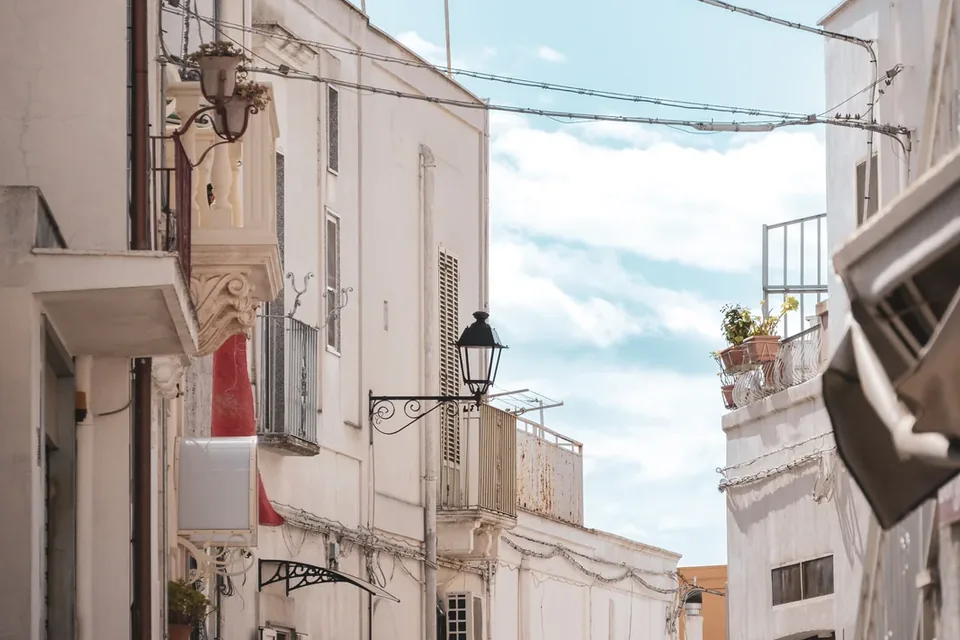
Crispiano
Crispiano: farm estates and the Ionian countryside.
Read the guide →Photo: Azelf Lele / Wikimedia Commons — CC BY-SA 4.0 · Resized and converted to WebP.
