
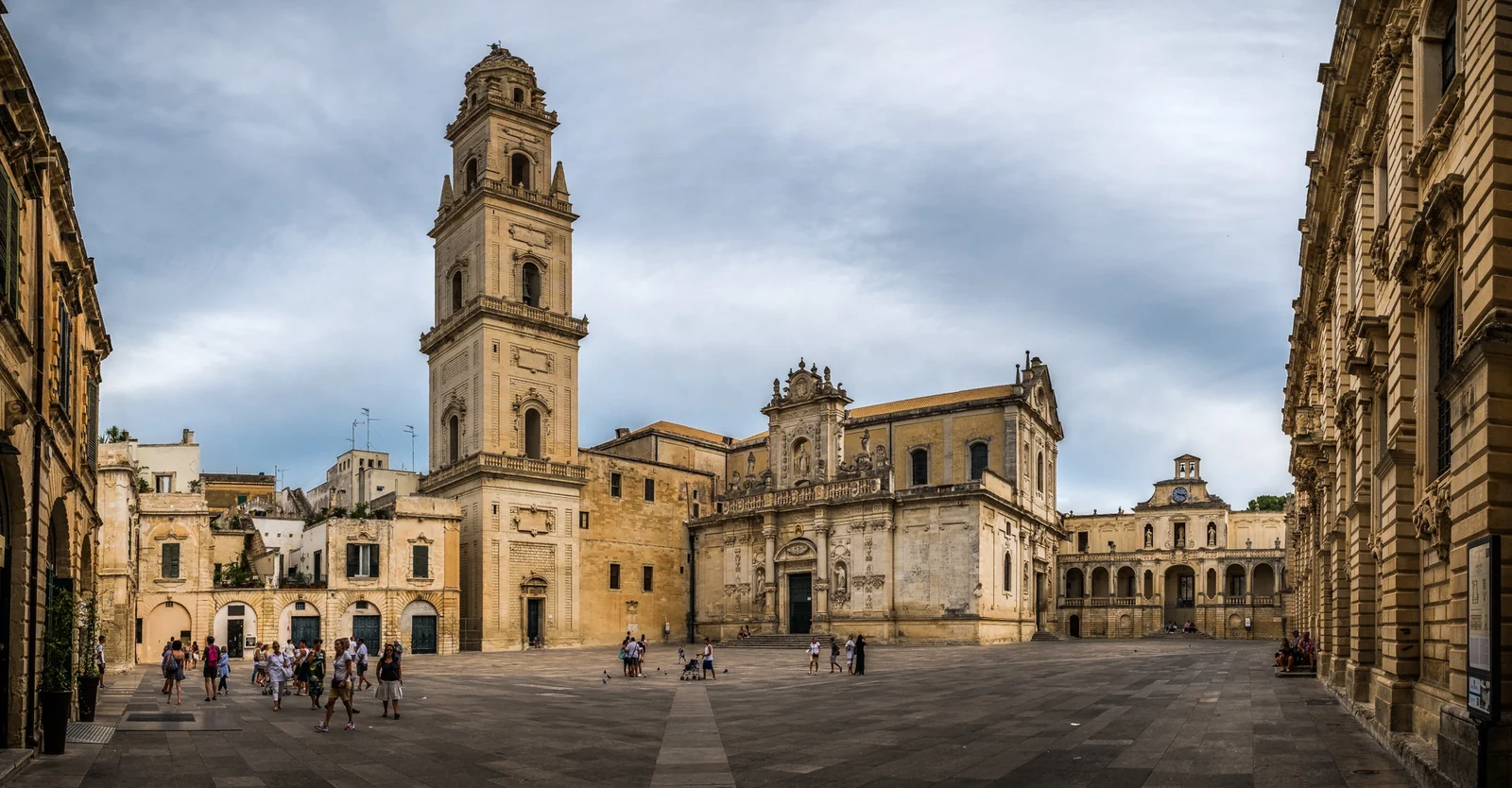
Lecce and the Salento of Loose Cannons
Apulia Film Commission has an entry on Loose Cannons (Mine vaganti) by Ferzan Özpetek, a 2009 film written by the director with Ivan Cotroneo and produced by Fandango with Rai Cinema. The location given is Lecce and Salento. The story follows the Cantone family, owners of a family-run Salento business, who await son Tommaso’s return from Rome to hand the company to their two sons; during a dinner, the elder brother Antonio pre-empts the confession Tommaso was about to make.
The cast includes Riccardo Scamarcio, Nicole Grimaudo, Alessandro Preziosi and Lunetta Savino. The entry notes that the film received the Special Jury Prize at the 2010 Tribeca Film Festival and was backed by regional film funds.
For travellers the film offers a precise question: what binds people to a house, a job, a family expectation? It is a theme Lecce makes visible in its palaces, courtyards and the relationship between private space and city, far more than any single shot.
Walking on Sunshine: Salento as a musical
The same territory takes on a completely different register in Walking on Sunshine, a British musical produced by Vertigo Films. Apulia Film Commission announced the start of filming in Lecce on a 13 September, specifying that the film, directed by Max Giwa and Dania Pasquini, would be shot entirely in Puglia, between Lecce, Nardò and Presicce.
According to the Film Commission, the production, initially headed for another country, chose Puglia thanks to funds for international productions and the services on offer; the Lecce Cineporto became the set’s logistics hub, hosting costume fittings for over two hundred dancers. The official presentation describes the film as a joyful anthem built on the great hits of the 1980s, about family, friendship and summer romance.
Putting Loose Cannons and Walking on Sunshine side by side is a useful exercise: the same stones, squares and light support a family drama and a musical comedy. Salento does not change; the gaze of the storyteller does, and that is exactly what travellers can learn to recognise.
Sources: Apulia Film Commission — Inizio riprese del musical Walking on Sunshine
Lecce beyond the scene
Italia.it describes Lecce as the heart of Salento, with Roman monuments and above all seventeenth-century buildings in a local stone with a blond hue. The historic centre, made of elegant lanes, lends itself to evening walks; the sea is a few kilometres away.
Among the monuments the source highlights the Basilica of Santa Croce, on Via Umberto I, considered the city’s first Baroque building: the first stone was laid in the fourteenth century, but the expansion lasted almost two centuries and involved architects such as Gabriele Riccardi, Francesco Antonio and Giuseppe Zimbalo and Cesare Penna. Beside it stands the former Celestine convent, now housing public offices. Italia.it also mentions the Politeama Greco Theatre, near the castle of Charles V, home to opera and symphonic seasons.
After watching a film set here, look for what the screen does not show: decorated façades read up close, inner courtyards, the city’s rhythm at different hours. The story offers a focus, while the place adds what did not fit into the scene.
Sources: Italia.it — Lecce
Polignano: Io che amo solo te
Io che amo solo te, by Marco Ponti, was released on 22 October 2015. Apulia Film Commission summarises the plot: Chiara and Damiano, two young people from Polignano a Mare, are about to marry, unaware that years earlier their parents, Ninella and Don Mimì, were also meant to. Amid secrets, unforgotten loves and relatives from afar, the two learn in two days what love really is. The cast includes Riccardo Scamarcio, Laura Chiatti, Maria Pia Calzone and Michele Placido.
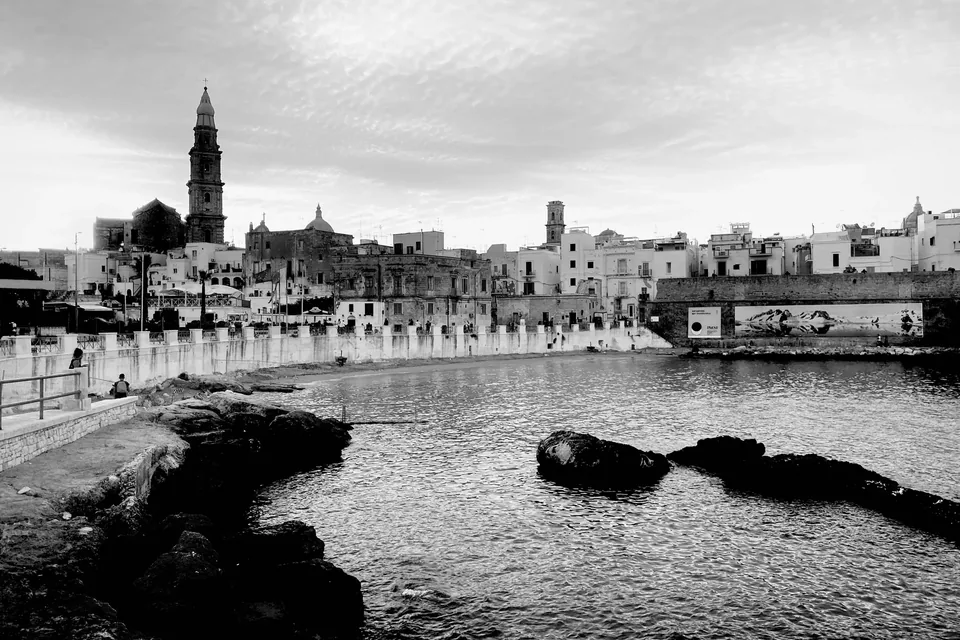
The locations listed by the Film Commission are Polignano a Mare, Turi, Monopoli and Martina Franca. Monopoli, Italia.it recalls, is a port town that over the centuries saw Byzantines, Normans, Spaniards and Venetians pass through: the harbour reaches into the historic centre, the castle dominates the Punta Penna promontory and the cathedral, medieval in origin, was transformed in the Baroque age.
The film tells of a wedding, but the traveller’s question is another: how does the perception of a town change when seen through two generations of the same family?
Sources: Apulia Film Commission — Io che amo solo te · Italia.it — Monopoli
La cena di Natale and the Polignano cliff
With La cena di Natale, from 2016, Marco Ponti returns to the same characters. Apulia Film Commission describes a Christmas Eve in a snow-covered Polignano, where Matilde, Don Mimì’s wife, throws a dinner to challenge her son’s mother-in-law Ninella; Chiara, Damiano and many other relatives gather at the table. The locations are Polignano a Mare, Monopoli and Torre Guaceto. The snow, it should be remembered, is part of the fiction, not a promise about the coastal climate.
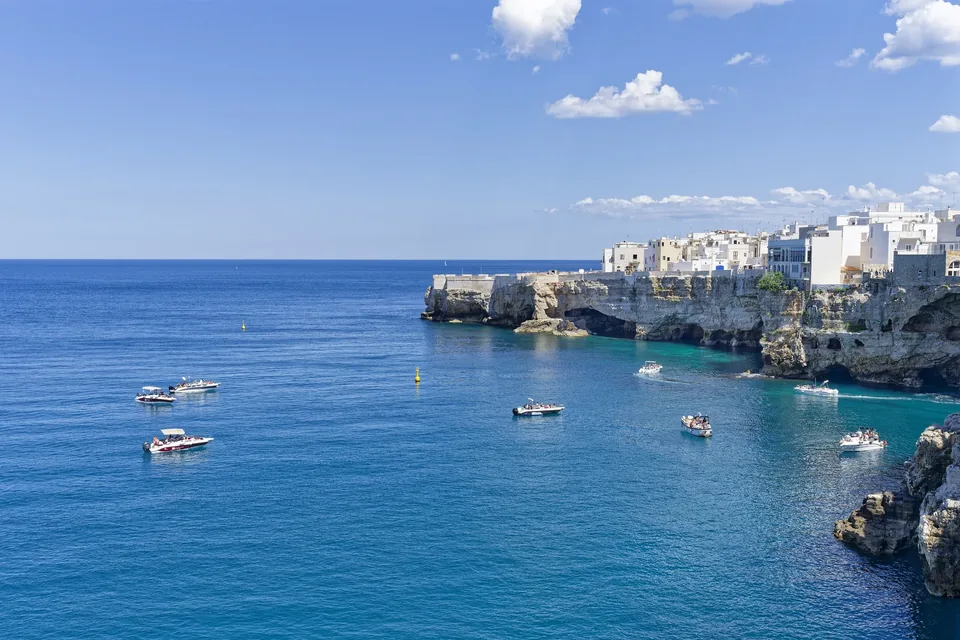
Italia.it presents Polignano perched on a high Adriatic cliff. The historic centre, inhabited since the Neolithic, is a web of white medieval houses entered through the Arco Marchesale; Lama Monachile, the small beach cutting the cliff in two, is overlooked by a bridge built on a Roman bridge of the Via Traiana. Some twenty sea caves open beneath the town.
The town of the films is also a town of daily life: walk along the cliff and through the lanes before looking for a recognisable spot, and let the real town set the measure of the story told.
Sources: Apulia Film Commission — La cena di Natale · Italia.it — Polignano a Mare
L’uomo nero: a return across Puglia
L’uomo nero, directed by Sergio Rubini and written with Domenico Starnone and Carla Cavalluzzi, begins with a return. Apulia Film Commission tells of Gabriele, who comes back to Puglia to say goodbye to his dying father Ernesto, a stationmaster with an obsessive passion for painting, and through that moment relives a childhood full of ambivalence, between a father frustrated by criticism and a far more fascinating uncle.
The cast includes Sergio Rubini, Valeria Golino, Riccardo Scamarcio, Fabrizio Gifuni and Margherita Buy. The entry lists many locations: San Vito dei Normanni, Acquaviva delle Fonti, Mesagne, Brindisi, Taranto, Oria, Torre Santa Susanna, Altamura and Bari. The film won two awards at the 2010 Bif&st, for best leading actor and for production design.
The variety of places is meaningful: memory does not coincide with a single town but with a landscape of stations, squares and provincial homes. For travellers it is an invitation to see inland and coastal towns as places of family memory, not only as tourist stops.
Sources: Apulia Film Commission — L’uomo nero
Bari: The Life Ahead
The Life Ahead, by Edoardo Ponti, is set in Bari. Apulia Film Commission summarises the story: Madame Rosa, an elderly Jewish woman with a difficult past, runs a sort of day-care for children in trouble in her small flat and reluctantly agrees to look after Momo, a twelve-year-old street boy of Senegalese origin. After a conflictual start, a deep friendship grows between them.
The cast includes Sophia Loren, Ibrahima Gueye and Renato Carpentieri; the film is produced by Palomar with support from Regione Puglia, Puglia Promozione and Apulia Film Commission. The locations listed are Bari, Trani and Ostuni.
Here landscape takes second place to people. The film approaches the city through relationships between different generations, cultures and religions, and suggests a way of visiting Bari attentive to encounters and neighbourhood life. Alongside L’uomo nero, it offers two distinct ways of approaching people before landscape: the memory of someone returning and the unexpected meeting of those who share the same space.
Polignano and Bari: two rhythms to compare
We suggest keeping the Polignano chapter separate from the Bari one. In the first you can start from the link between a family story and the image of the town; in the second from encounters, urban spaces and daily life. The comparison becomes more interesting if each stop has its own walk and its own question.
There is no need to rank the most beautiful locations. Instead, notice how the story changes when attention moves from a wedding to a relationship between characters, or from a view to an interior. The variety of cinema opens a variety of perspectives on the territory, and each film suggests a different pace: slow and convivial for the Polignano comedies, intimate and urban for the Bari films.
For a stop in Lecce, take a question from Loose Cannons: what binds people to a house or a job? A pause at the table allows impressions to be compared without retelling the whole plot. This approach also suits those who have seen only one film: the journey starts from a precise curiosity and lets it change during the day.
Watch first, discuss later
To prepare the route we would choose two titles at most, in different registers. Before departure note an image, a sound or a gesture; after the visit return to that note and ask what has changed. Those travelling in a group can give each person a different film and compare observations in the evening.
The film theme can work at various times of year because it does not necessarily depend on a festival. Choose the season according to the kind of day you want, between city walks, interiors and the coast: summer brings out the Polignano cliff and the Salento sea, while the milder months suit visits to the historic centres of Lecce and Bari.
A screening in an official programme, or a series organised by the regional film institutions, can be an extra occasion, but the journey’s thread remains the meeting between the story told and the place lived. Finally, remember that people living in these places are not extras: discretion is part of a good journey in the footsteps of cinema.
A thread for your journey
Choose one or two films as an introduction to Lecce, Polignano or Bari, then discover the places beyond the scene.
Talk to us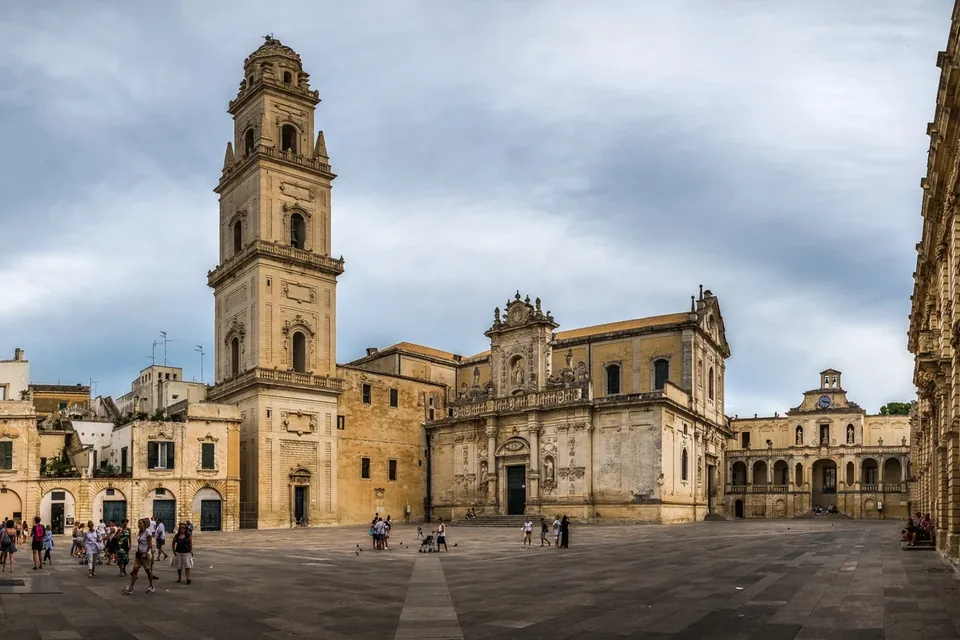

.jpeg)


